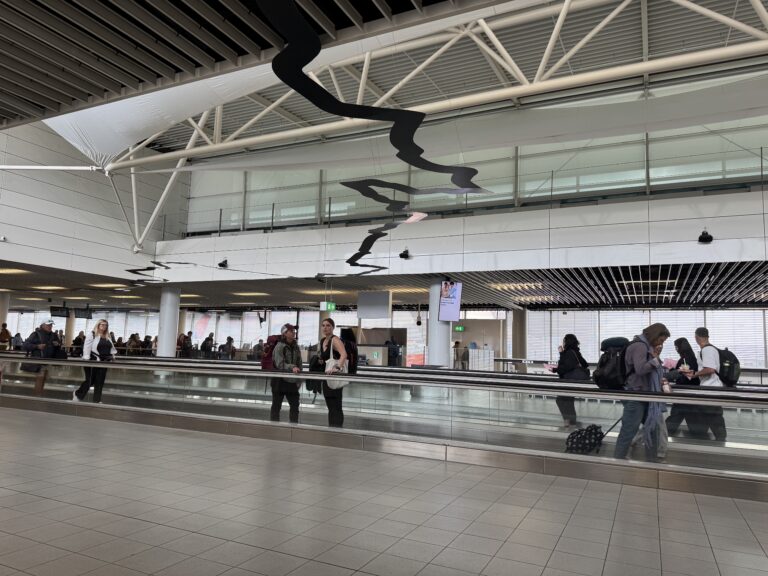
Schiopol is full of contrasts: the business of arrival and departure gates is minimal and monochromatic, but its shops level is colorful and full of flowers.
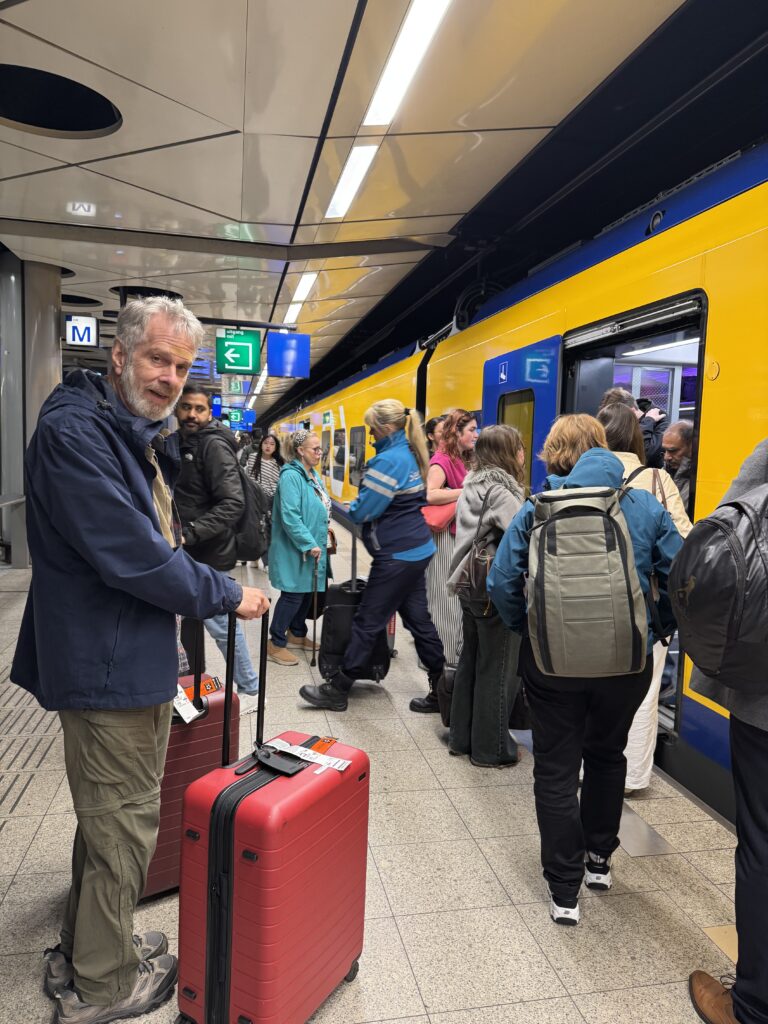
Trains depart from the lower airport level for downtown and Amsterdam environments as well as international destinations. We’re headed to Brussels, Belgium.
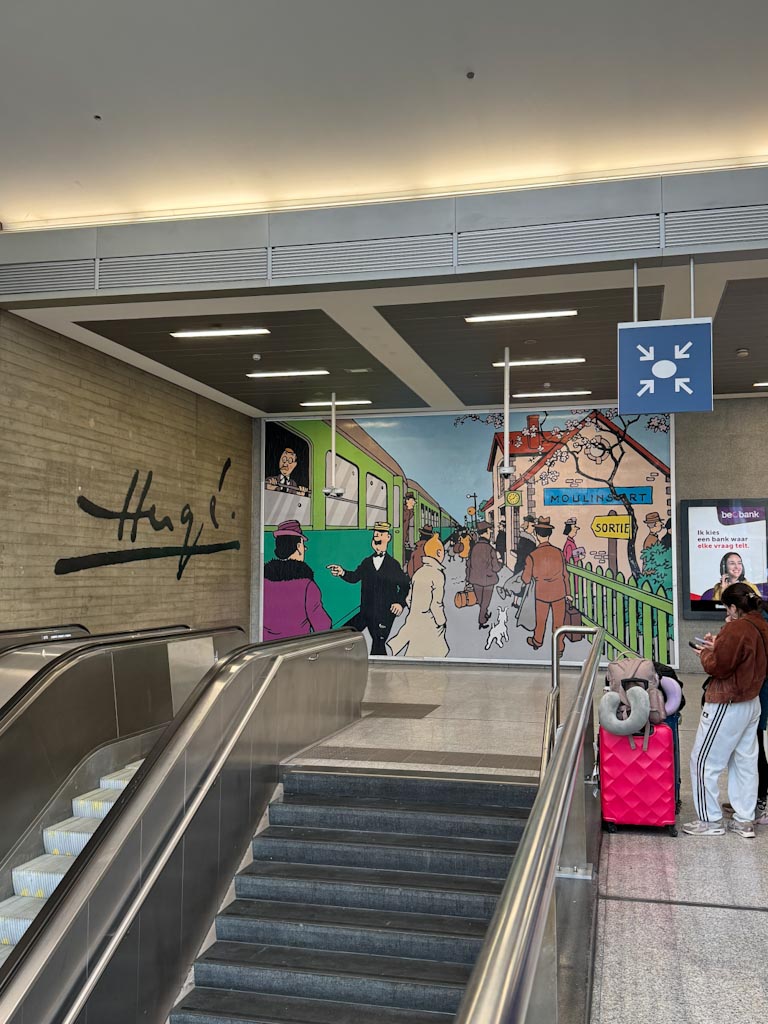
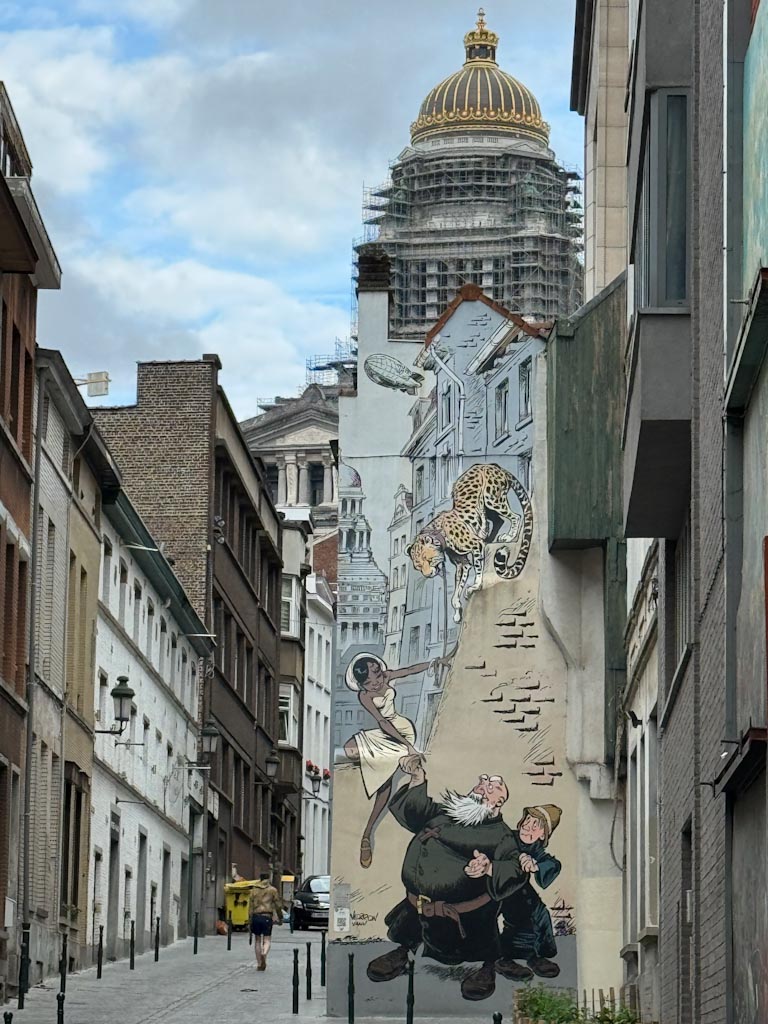
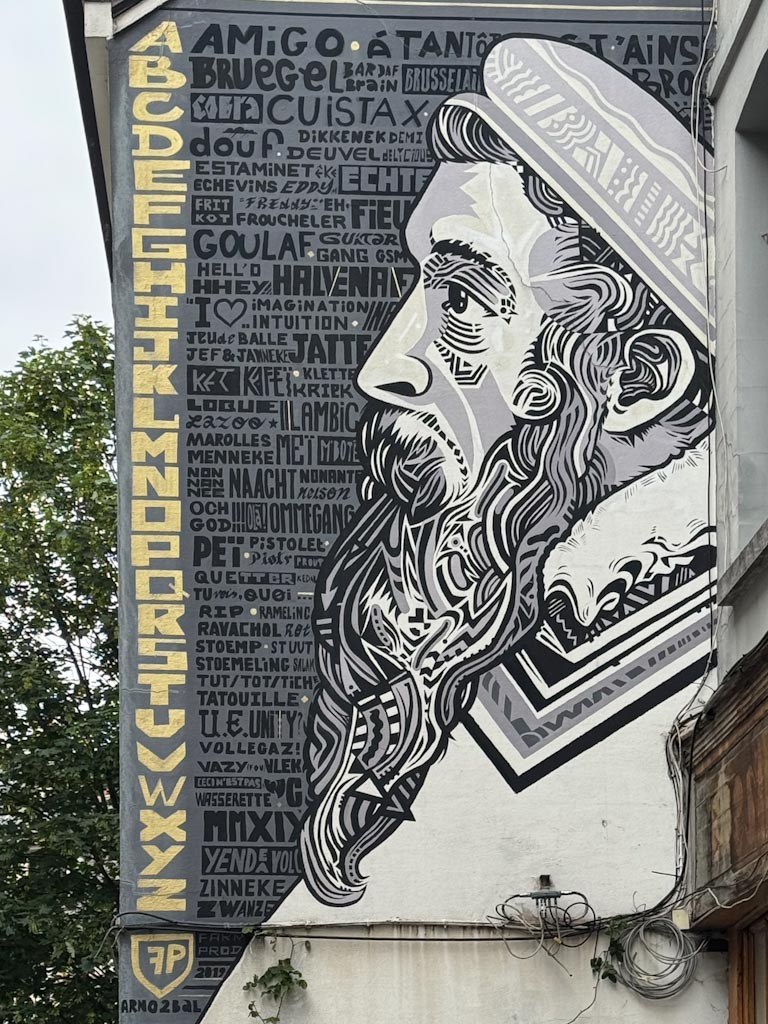
Brussels Midi is a major transportation network south of downtown Brussels (complete with art).
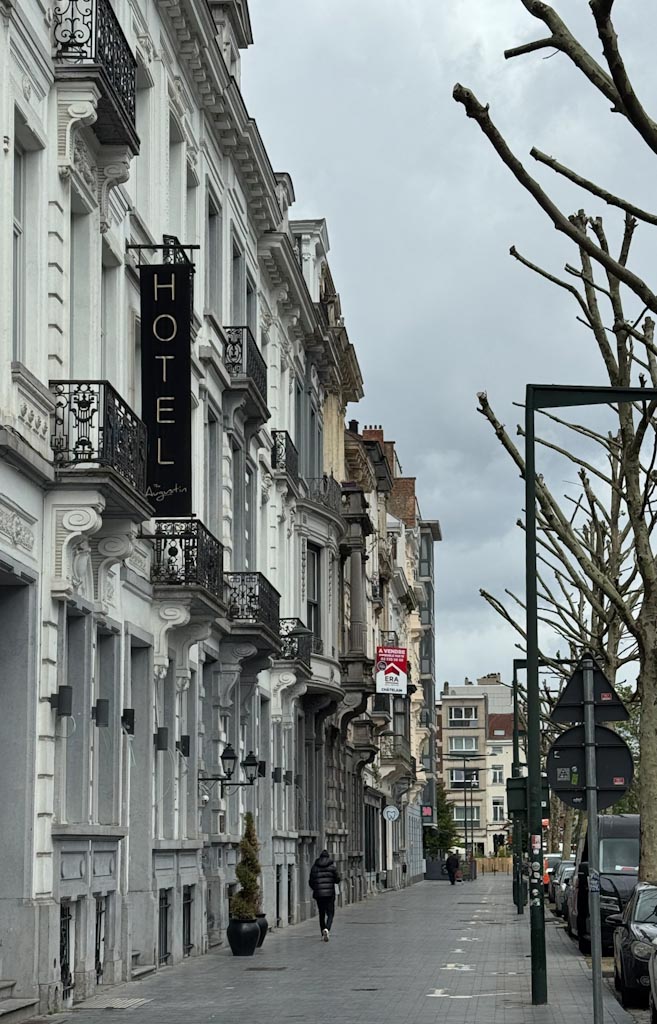
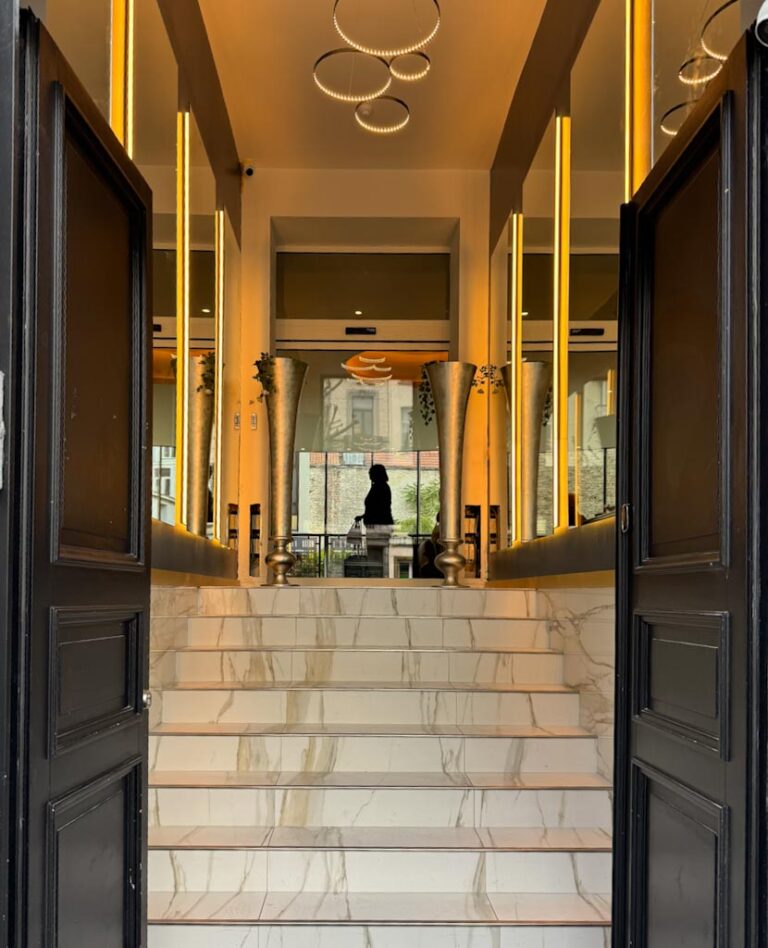
Our hotel, The Augustin, is walking distance from the train station. Despite the subtle street appearance, it has an elegant interior and lobby.
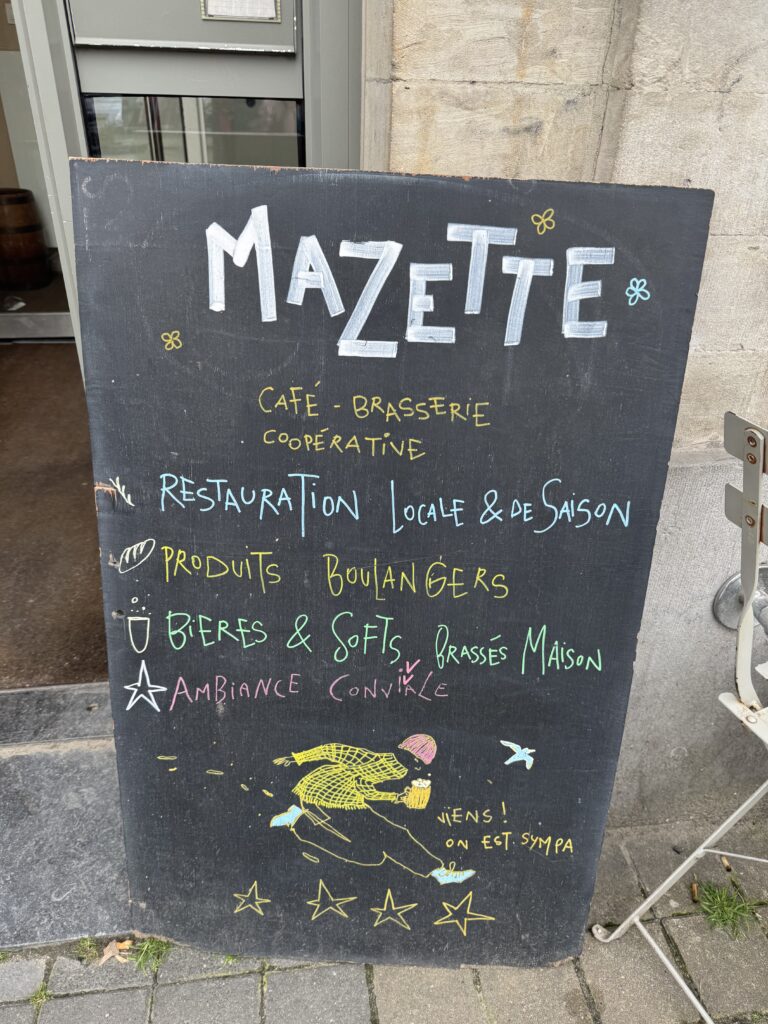
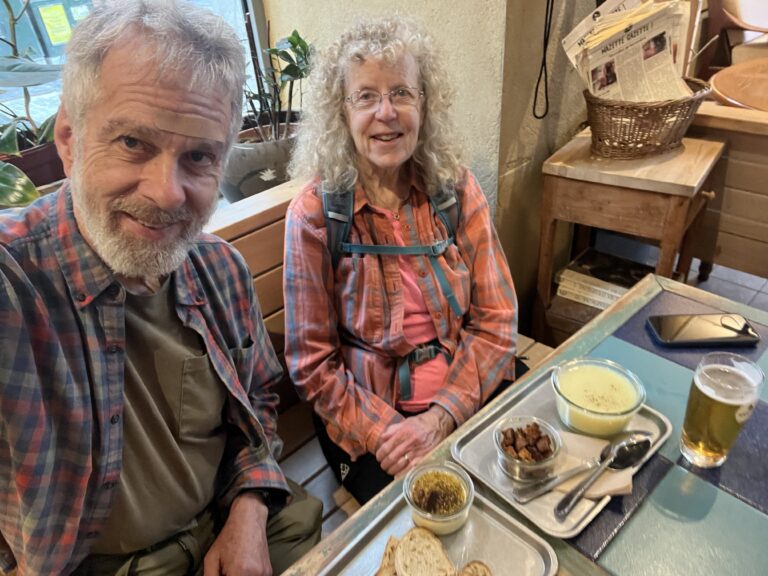
After an afternoon of rest (jet lag!), we headed out to explore the neighborhood and get a light dinner. The local residents are a diverse crowd, including artists and musicians. The pub offered local brews in a convivial atmosphere with persons studying, having meetings, or just sharing companionship. Musicians were arriving to set up as we were ready to leave.
Last year we learned about these “stumbling stones” called stolpersteine in the Netherlands and pietre d’inciampo in Italy. They are 10×10 cm brass cobblestones installed in front of homes and businesses to mark victims of the Nazi regime, meant to make pedestrians “stumble” emotionally and force the reader to keep the memory alive. They form the world’s largest decentralized memorial with over 100,000 stones across Europe.
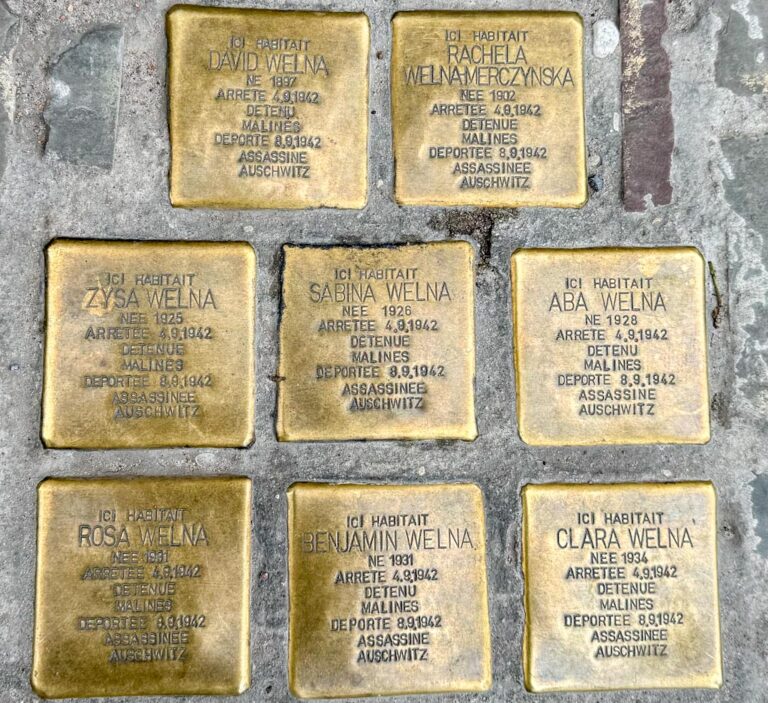
There are an incredible number of these stones in our neighborhood— many on each block. This multi-generation Welna family’s stones are in front of a local theatre. Each stone represents a person with their birth year, arrest date, place detained, deportation (to a camp) and place of death (assassination). There are so many stories! Here are a few examples.
The presumed grandfather, David, was born in 1897, while the youngest, Clara, was only eight years old.
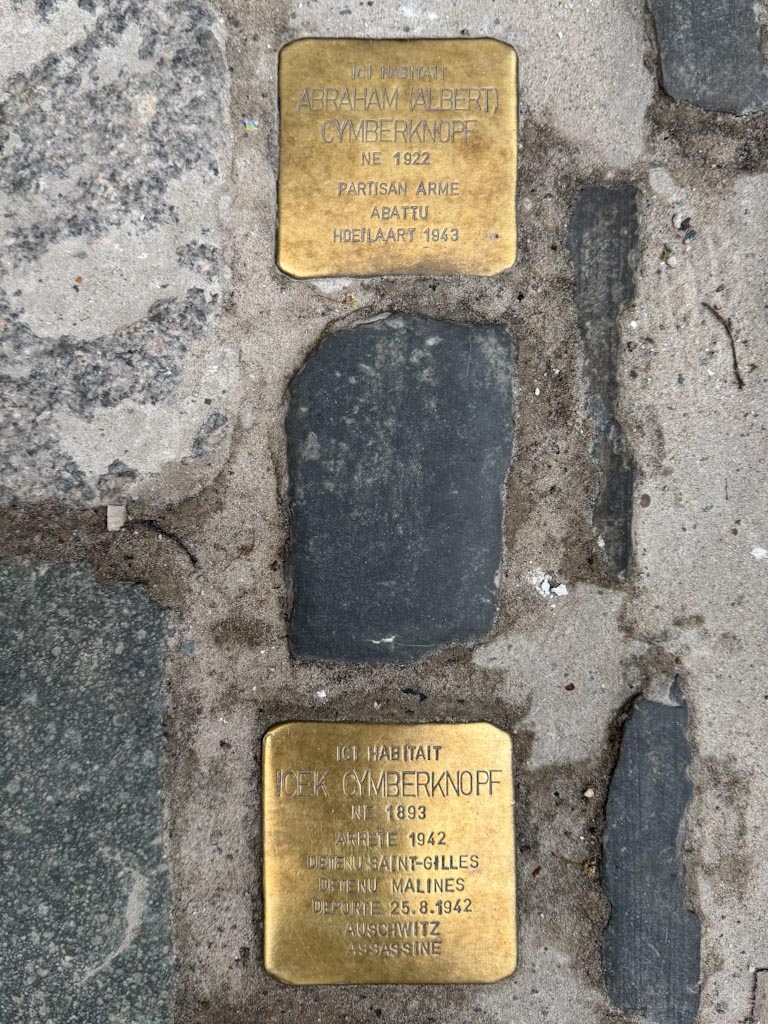
The top stone marks the home of Albert Cymberknopf, a 22-year-old Partisan Army member, part of a prominent Belgian Resistance group during WWII. He was captured at Hoeilaart, Belgium in 1943.
The bottom stone marks the home of Icek Cymberknopf, detained (before deportation to a camp) at both Saint-Gilles, a Brussels neighborhood, and Malines, now called Mechelen in the Antwerp district of Belgium. He was deported in the same time period as most of the local residents—August and September 1942. And like most, he was killed at Auschwitz.
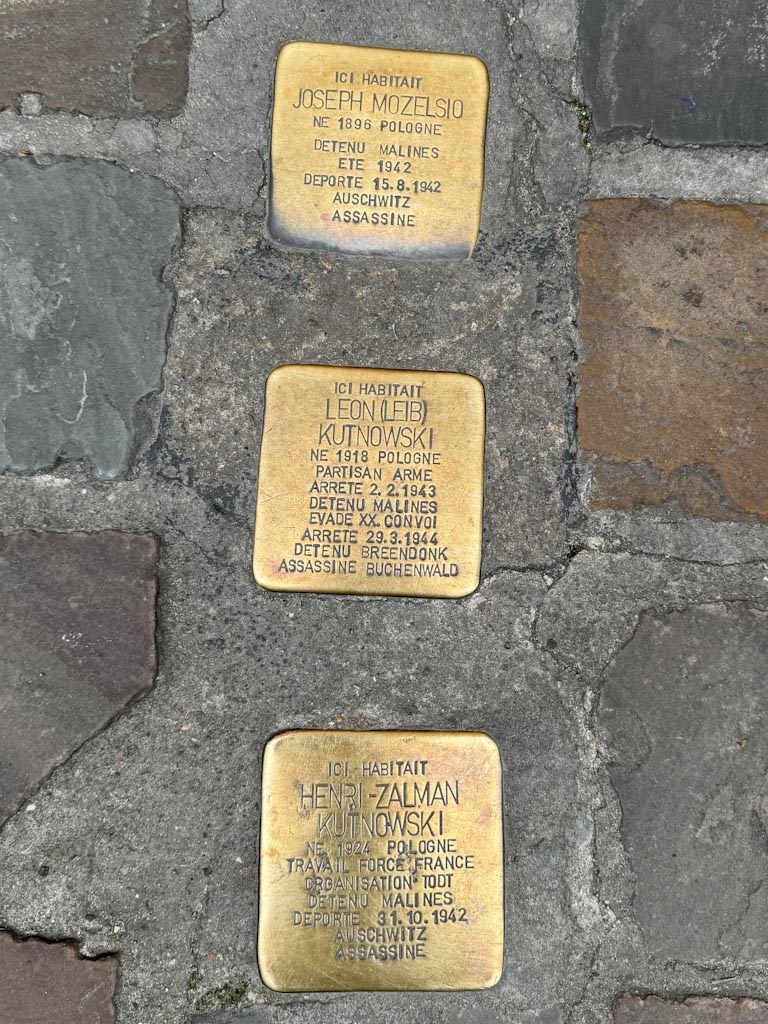
The top stone, Joseph Mozelsio, memorializes a Poland-born 46-year-old detained in the summer of 1942 and killed at Auschwitz.
The middle stone remembers Leibniz Kutnowski, another Partisan Army member arrested in 1943, detained but freed when fellow Resistance fighters halted his transport convoy carrying 1631 Jewish prisoners to Auschwitz April 19, 1943. He was re-arrested March 29, 1944 and died at Buchenwald.
The bottom stone for Henri-Zalman Kutnowski memorializes an 18-year-old Polish immigrant who was sent to a forced labor group to support the Nazi war effort working in German factories, mines, and farms. He also died at Auschwitz.


4 Responses
Sort of depressing reminders of the evils the world has experienced but also an important reminder we must stay alert to injustices like the holocaust. Have fun with your friends you are meeting up with and enjoy this next (of the many) international trip. Look forward to reading about and sharing your adventures!
Dan and Wendy
After the lessons learned in Minneapolis, I can’t help but remember “say their name.” These stories are but a few of the sad tales of people lost. It makes me want to know more.
The art on the buildings very stunning and bold.
I agree. There is so much art everywhere!