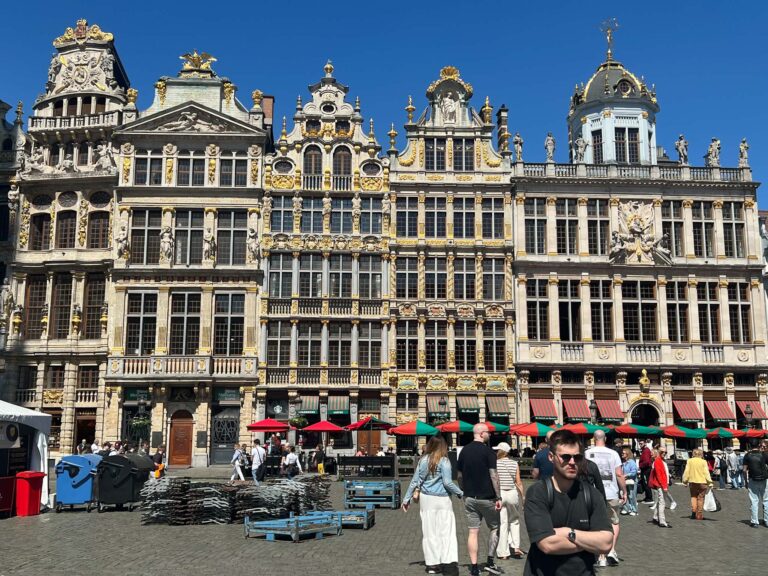
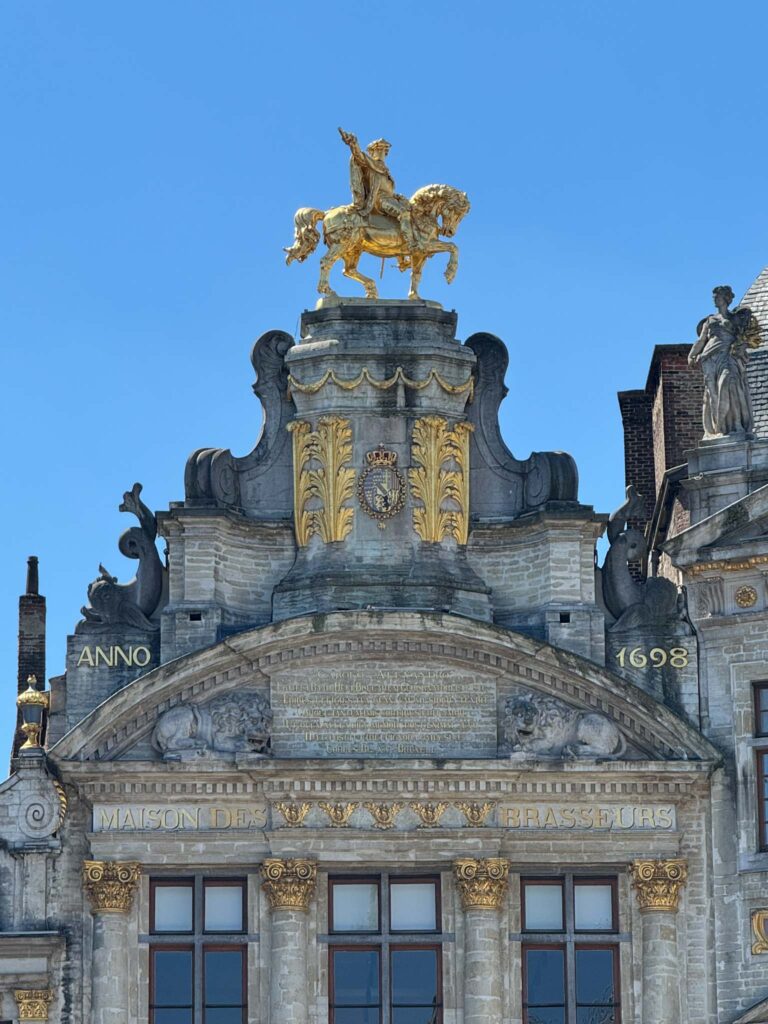
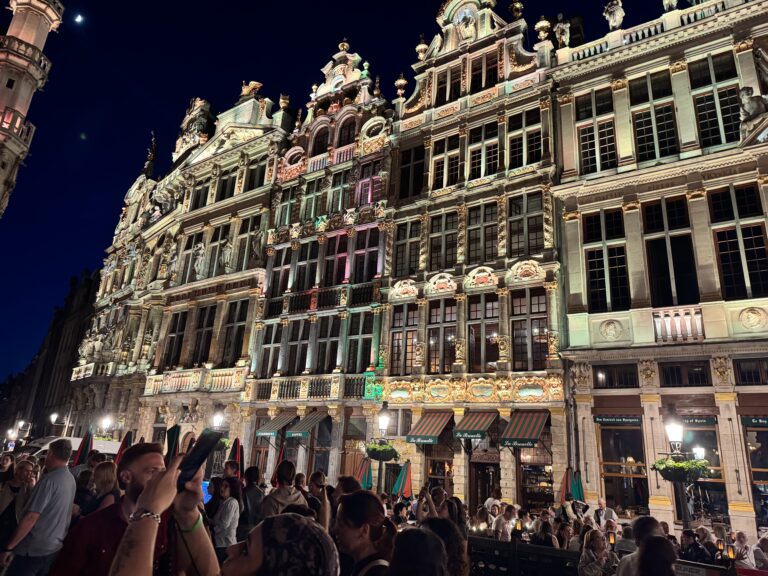
Brussels Grand-Place is the central square surrounded by Baroque guildhalls and two buildings: the Town Hall and King’s House.
Construction began in the 11th century and was largely complete by the 17th century.
The Grand-Place is the most memorable landmark in Brussels and has been recognized as a UNESCO World Heritage Site since 1998.
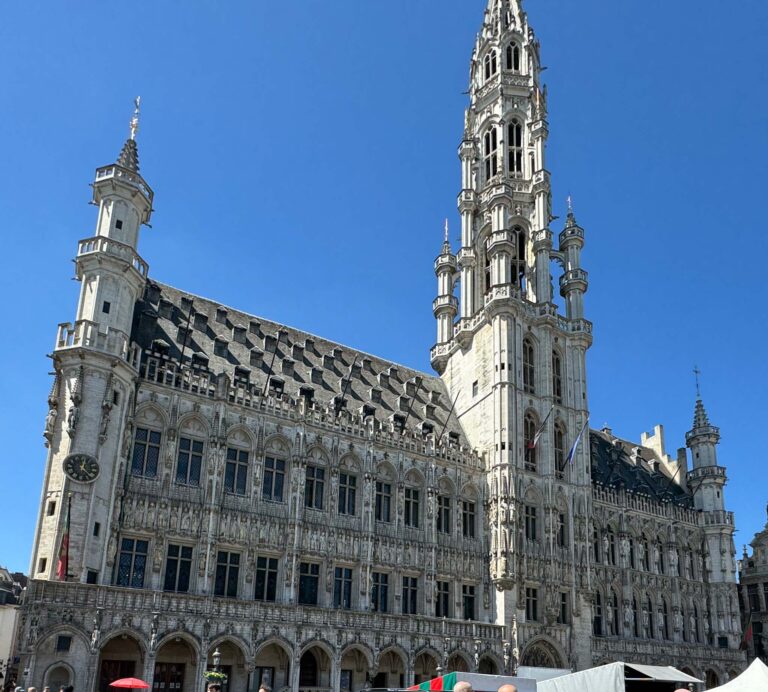
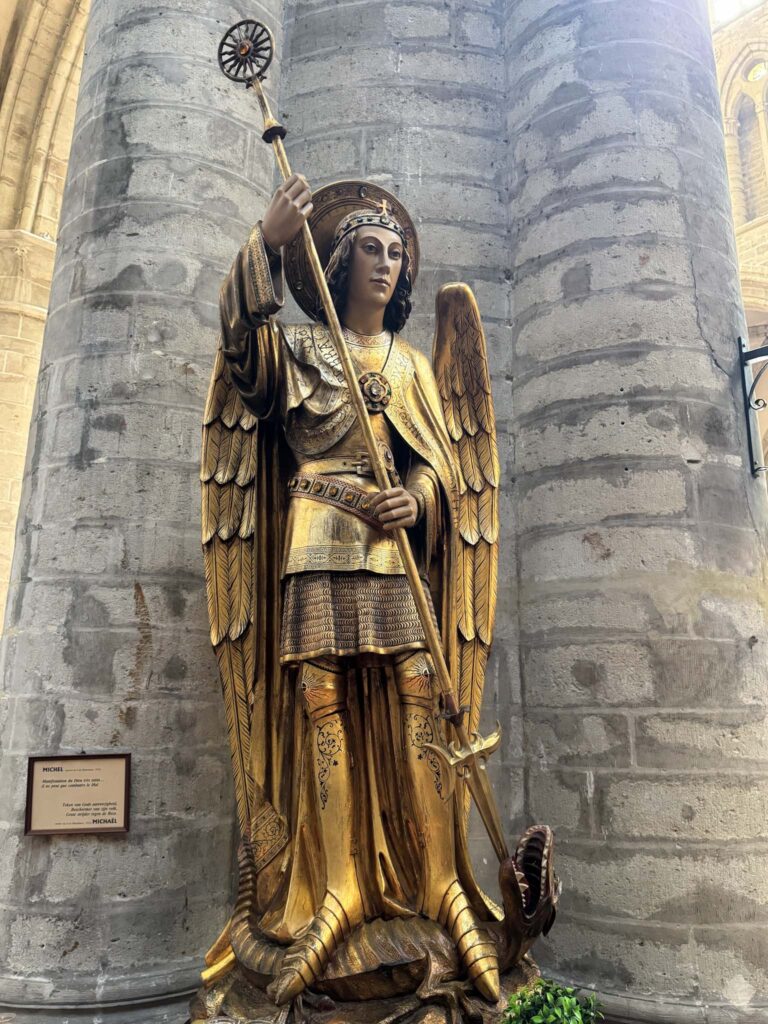
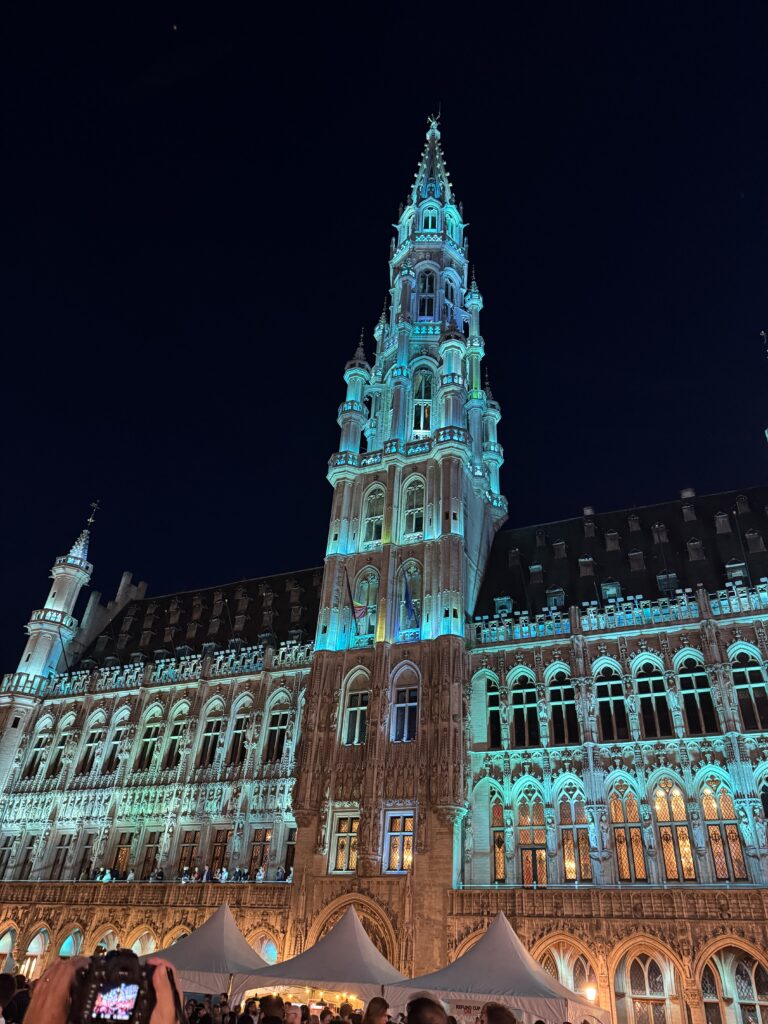
The Brussels Town Hall is one of the major examples of gothic civil architecture in this land. The belfry is adorned by a spire towering 96 meters, topped by Saint Michael.
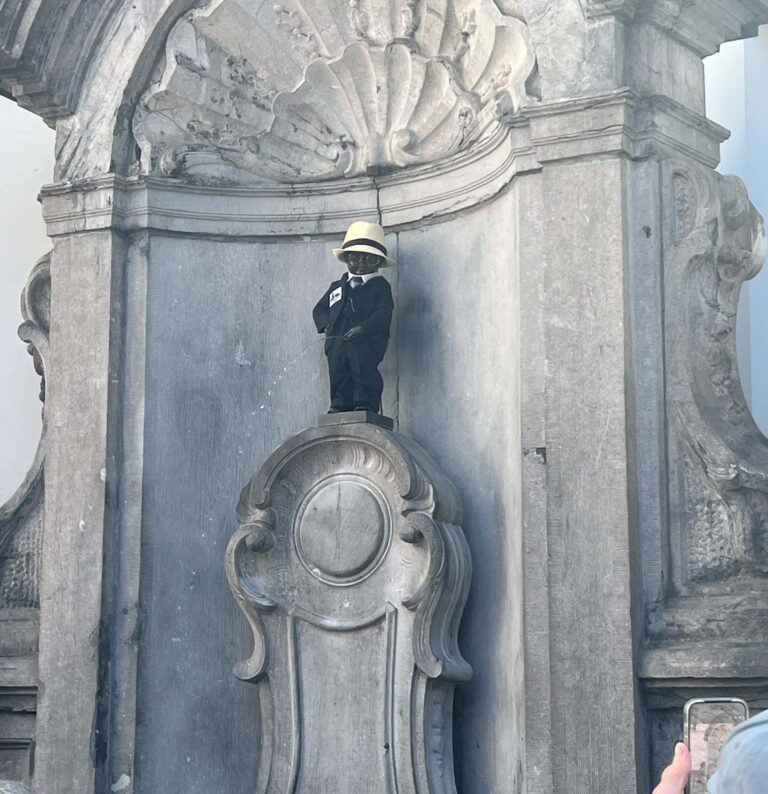
Manneken Pis is a recognized landmark in Brussels. It is a small bronze statue of a boy urinating, dating from the 17th century. Tourist replicas are everywhere, and he is regularly dressed for the season.
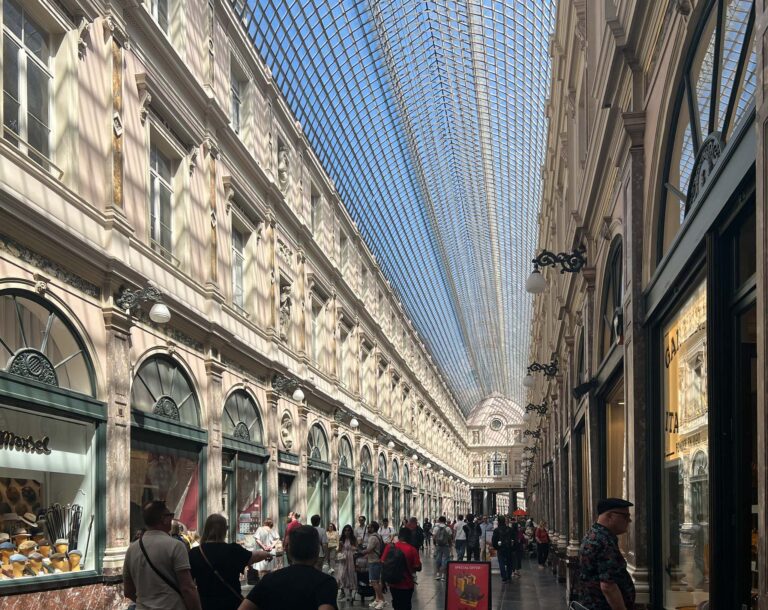
The Royal Saint-Hubert Galleries is a covered connector between two commercial areas. It was one of the first of this size built in Europe. It offers shopping, restaurants, and two movie theaters.
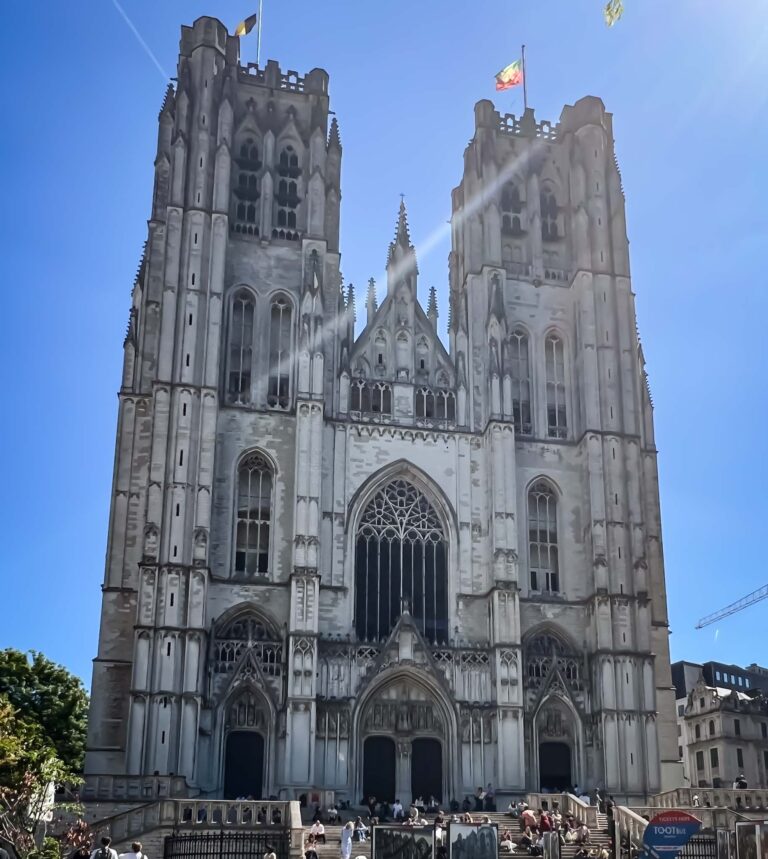
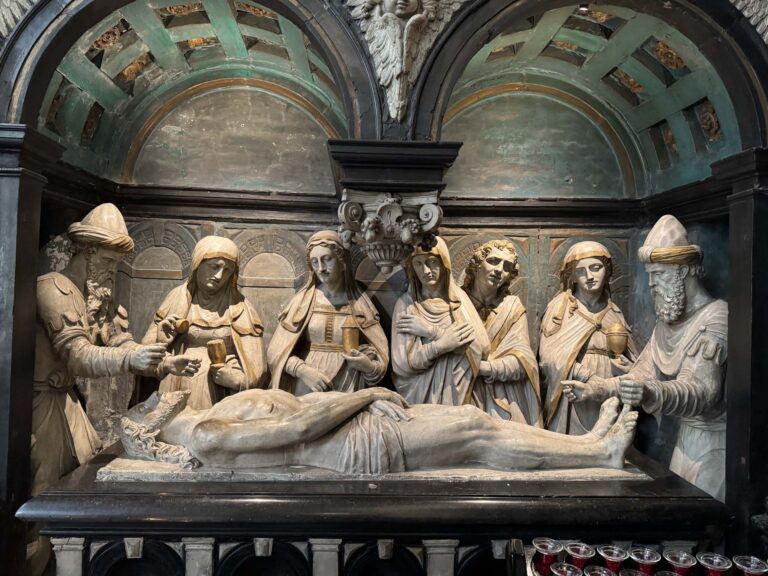
St. Michael and St. Gudula Cathedral.
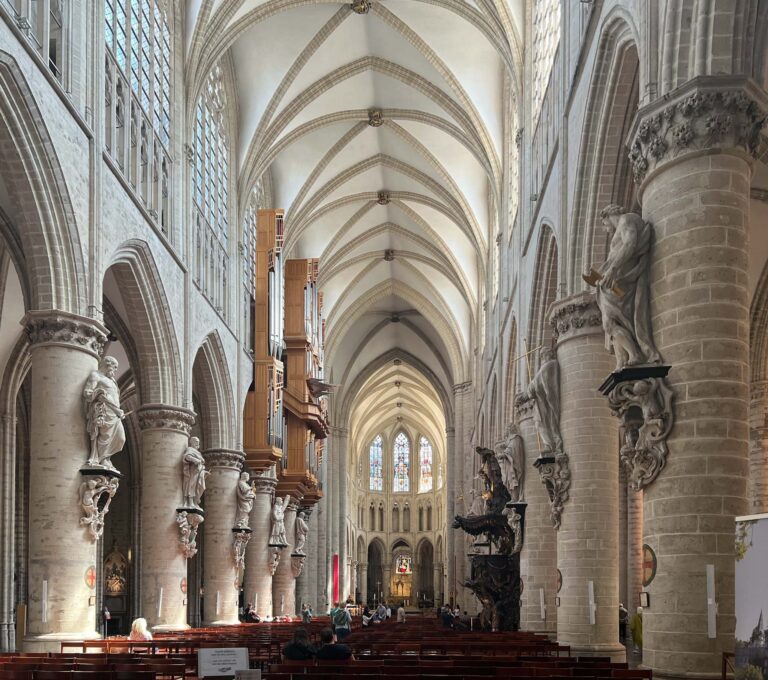
The nave is lined with cylindrical columns supporting the twelve statues of the apostles.
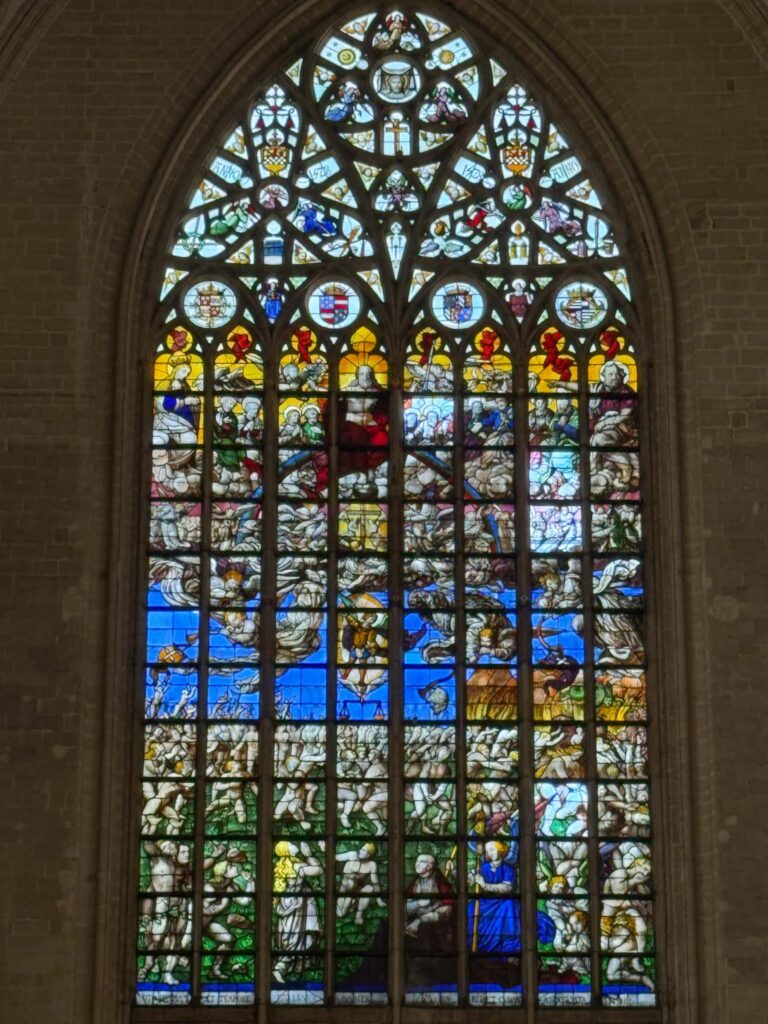
This window of the last judgment covers (t-b) Paradise, Heaven, The Earth.
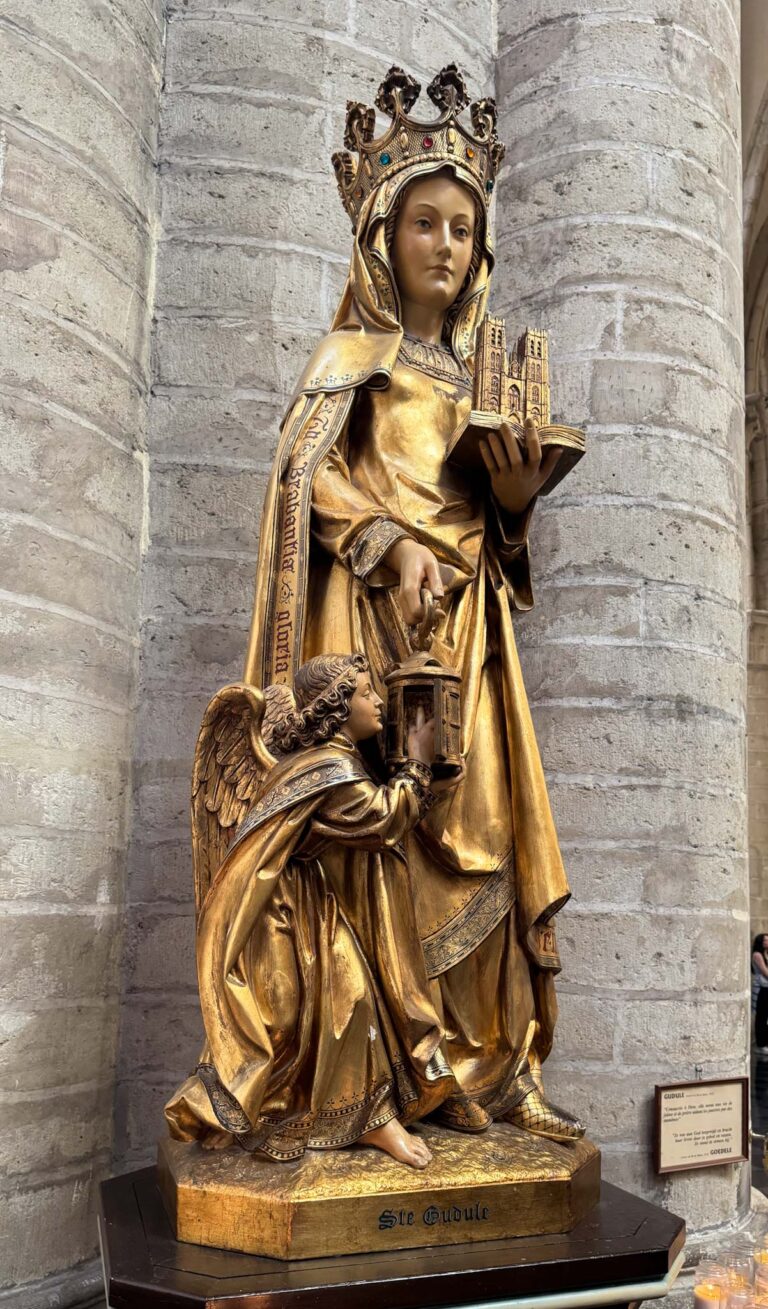
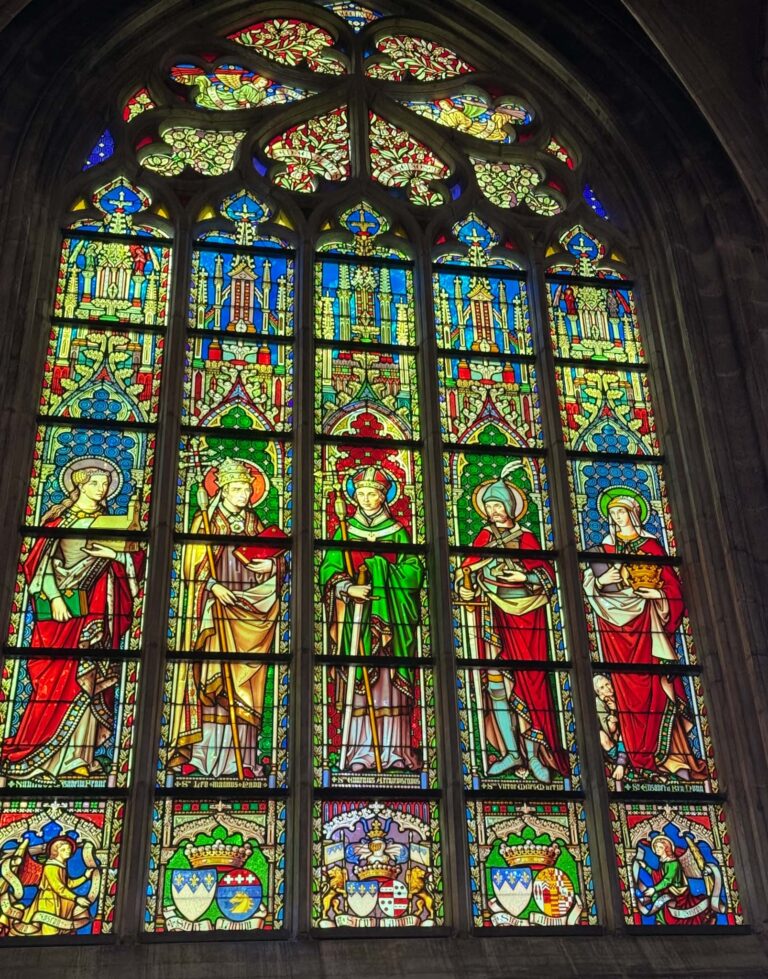
St. Gudula, born in 650 in Moorsel, near Alston, Belgium. Her education was entrusted to her aunt and godmother, Saint Gertrude, Abbess of the Abbey of Nivelles. She dedicated her life to prayer, service to others, and charity. She died in 712.
Her relics were transferred to the church in the 11th century, and the building was renamed for the saints.
The saint holds an open Bible on which rests a miniature cathedral, and in her right hand she carries a lantern. According to legend, the devil would blow out the flame to prevent Gudula from going to a nearby chapel to pray in the evening. The saint would have knelt down and implored Heaven to help her.
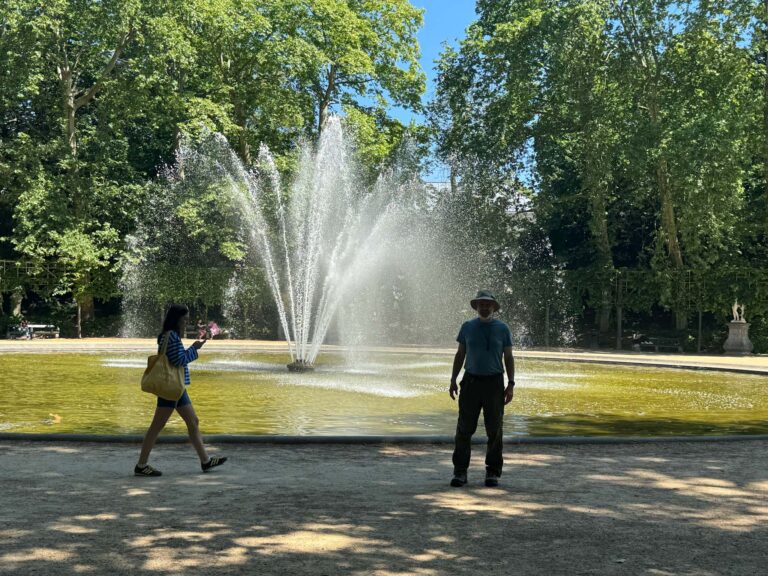
The Parc de Bruxelles offered shade on a warm day. It leads to the Palais Royal de Bruxelles.
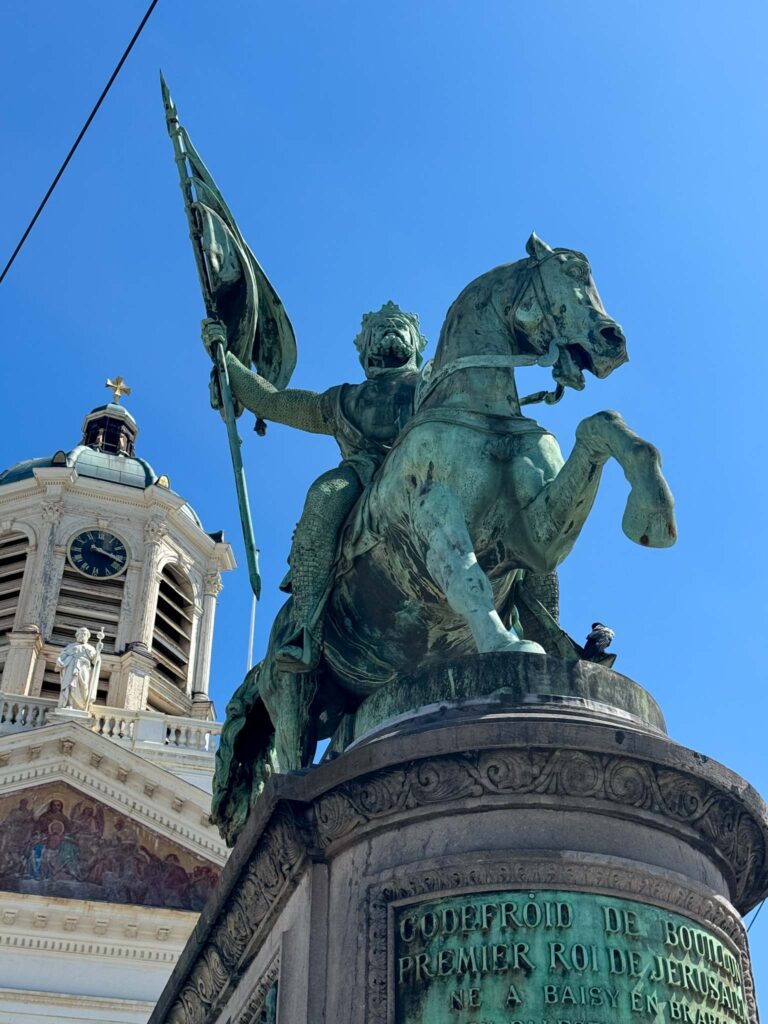
Godfrey of Bouillon was a leader of the First Crusade, and the first ruler of the kingdom of Jerusalem from 1099 to 1100.
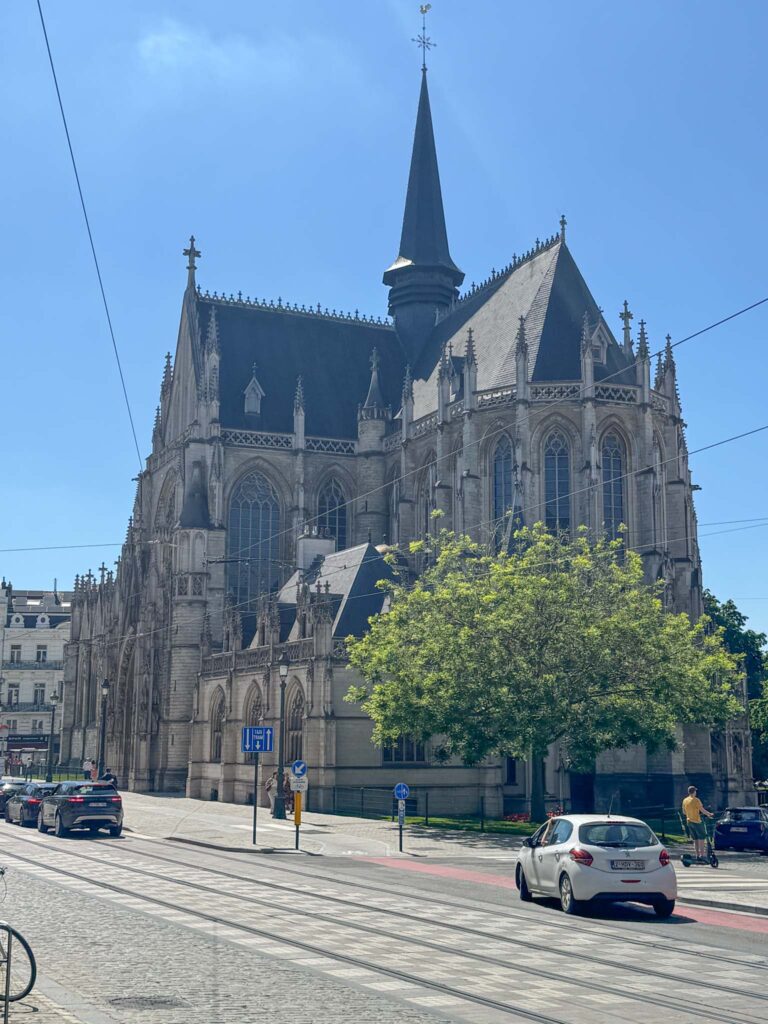
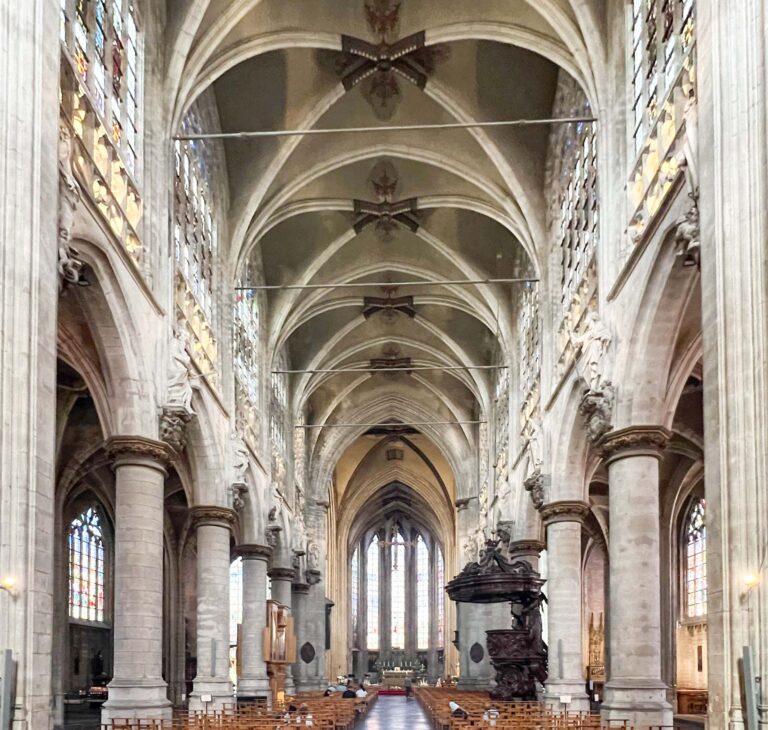
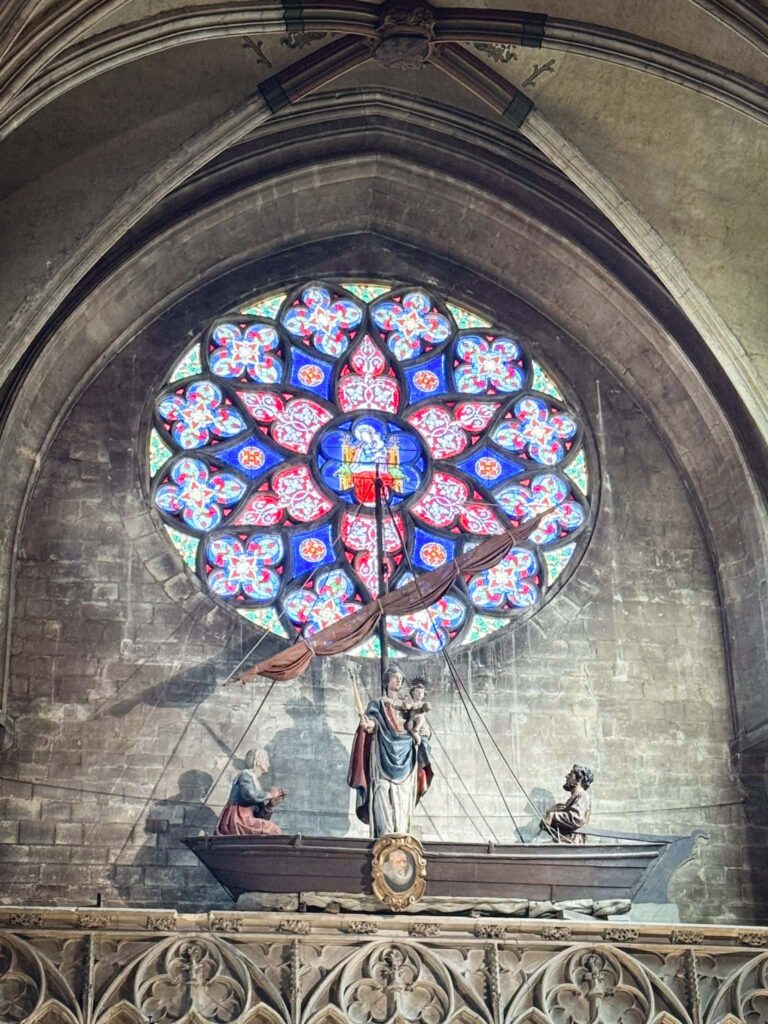
Eglise Notre-Dame des Victoires au Sablon is a 15th century Catholic church.
The nave pillars have no capitals to accent the vertical effect. The columns hold twelve statues of the apostles.
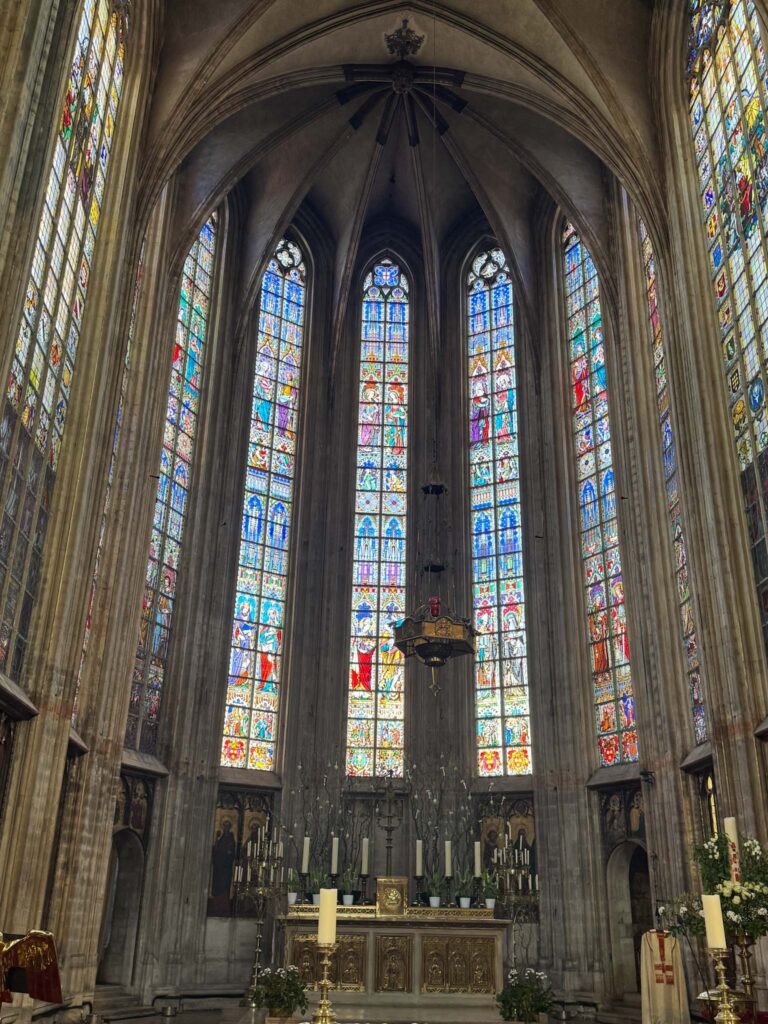
Stained glass windows over the altar are a relatively recent addition.
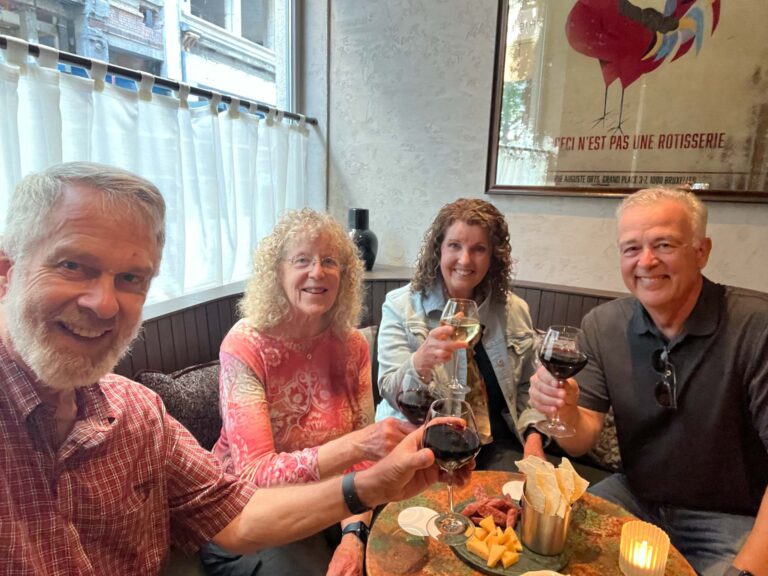
Finally we were able to meet cousins Mary and Jorge Font from the Houston area.
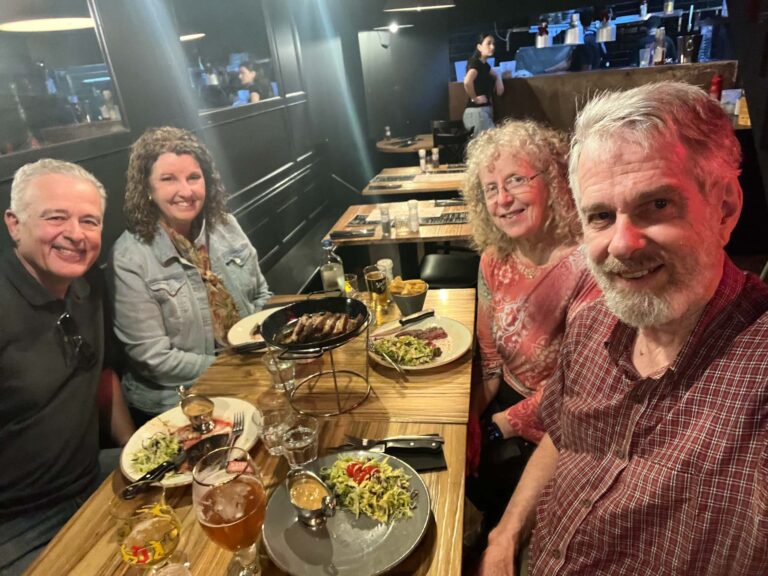
Dinner was a splurge—Richard and I split Chateaubriande.
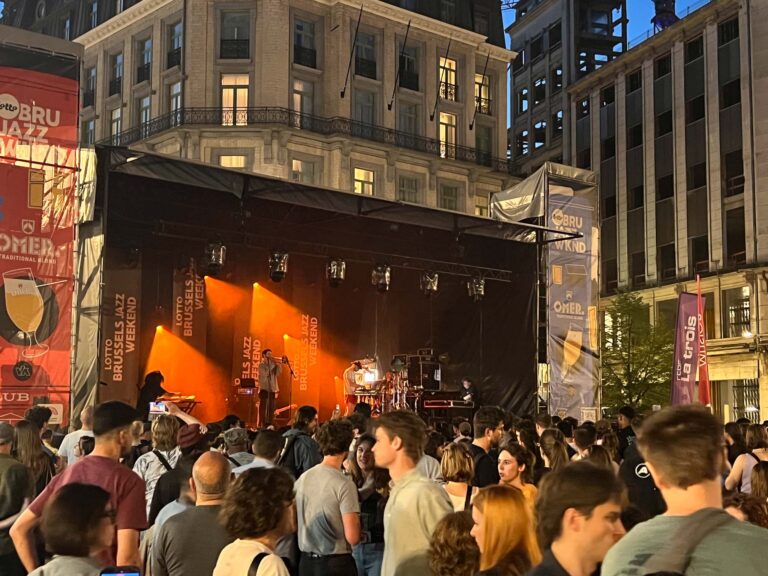
There was some sort of jazz festival set up in the Grand-Place so we had to check it out.
The Town Hall was colorfully lit . . .
. . . As were the guild halls. Off to our hotel for the night.

3 Responses
I just love the architecture and the stain glass, wow! Gorgeous!
It is an interesting city — so much of the famous architecture is clustered in a relatively small space. We didn’t see much downtown when your grandparents lived in Brussels, so it’s fun to see it now.
Love Brussels. Glad you are able to spend a few days without feeling hurried. The churches are majestic.
Dan
What a spectacular city! I love all the beautiful stained glass and the way they light up the buildings at night. Looks like you are having a grand time without having to worry about falling into the ocean! Wendy