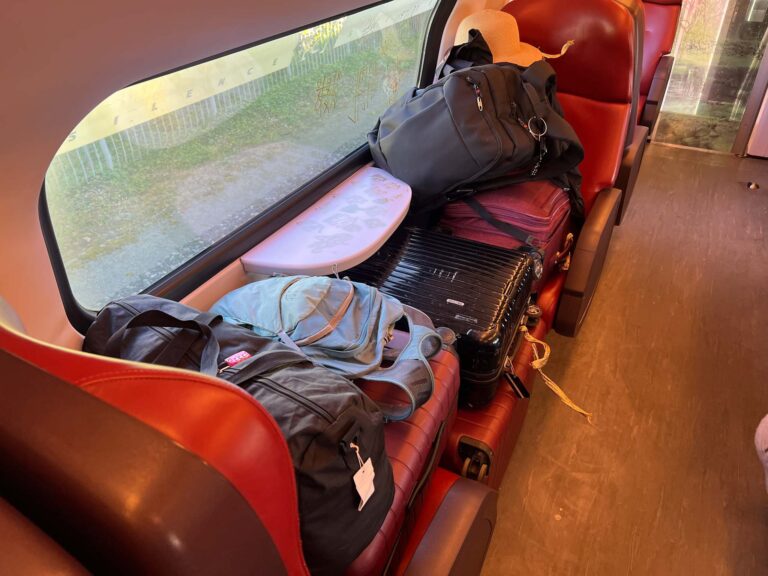
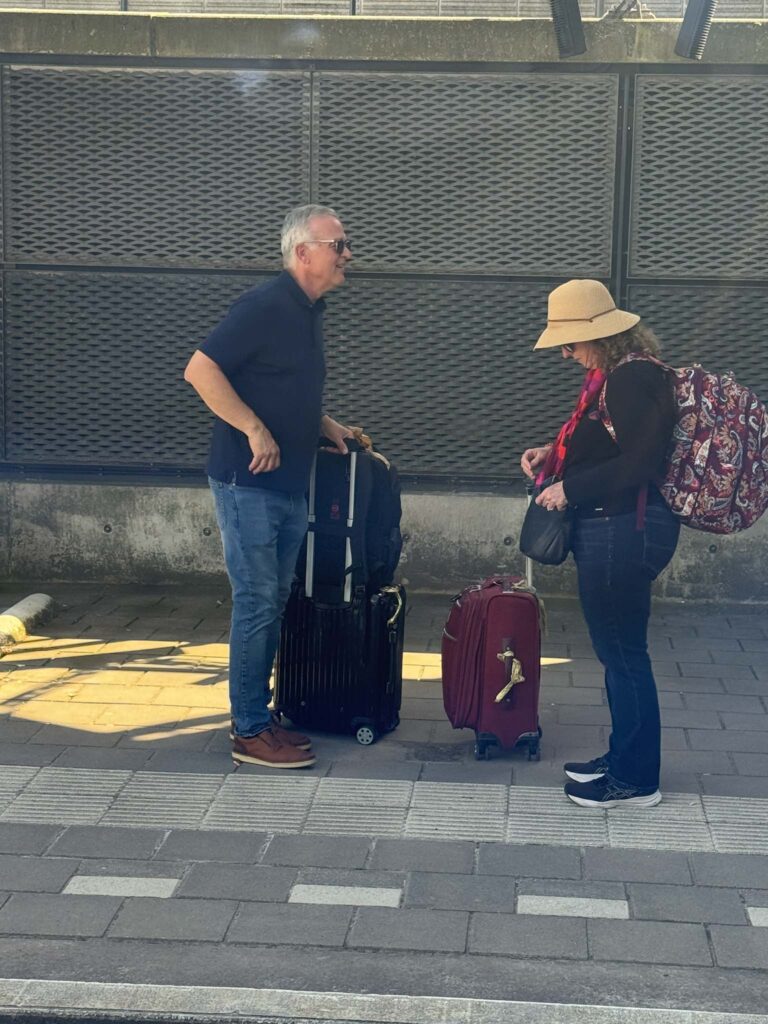
Unfortunately, the Dutch trains are not configured with space for luggage. We were lucky that trains early in the day were not too busy, so we commandeered seat space for the many suitcases.
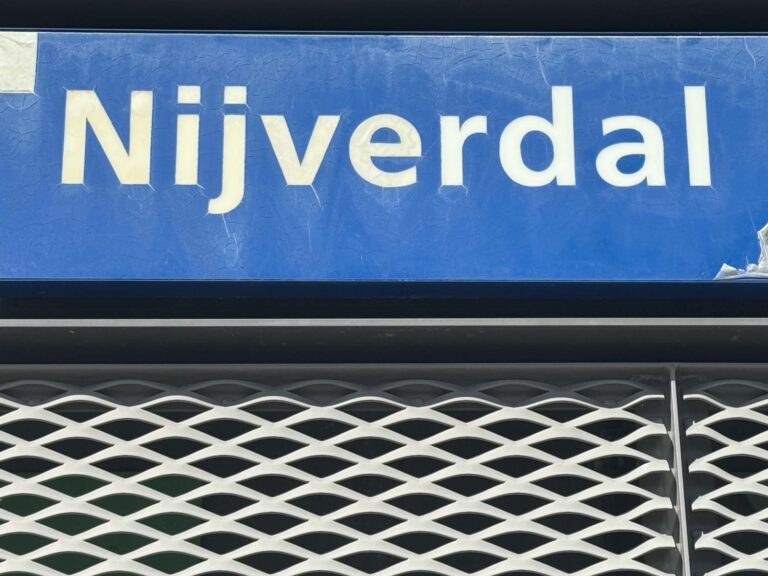
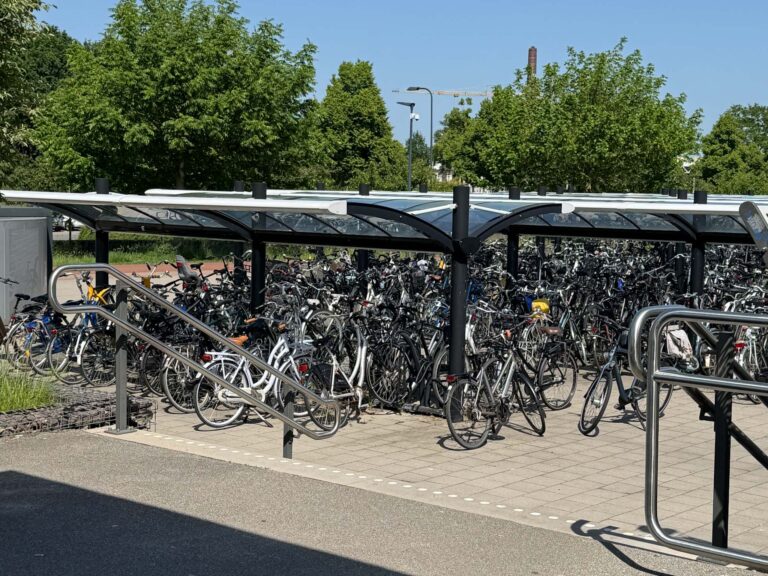
Nijverdal is not large enough to have a train station, but it does have a lot of bicycle traffic and frequent train service to surrounding communities.
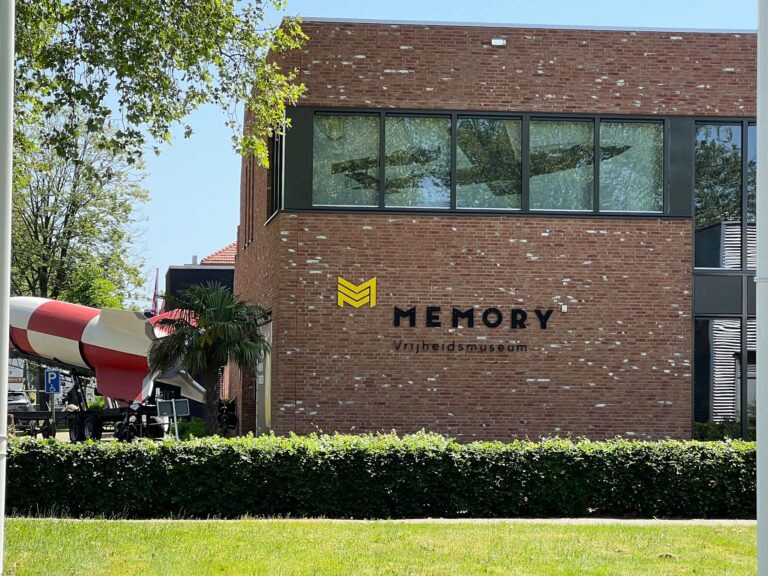
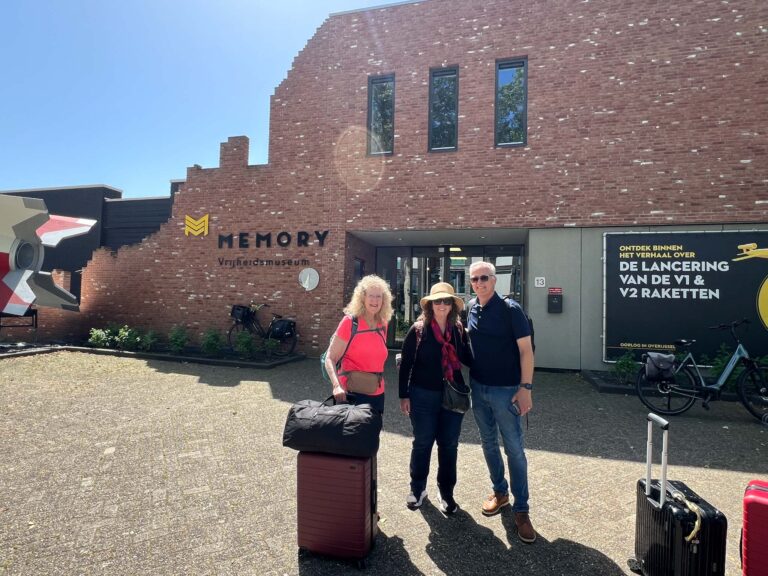
The Memory Museum is only a short walk from the station.
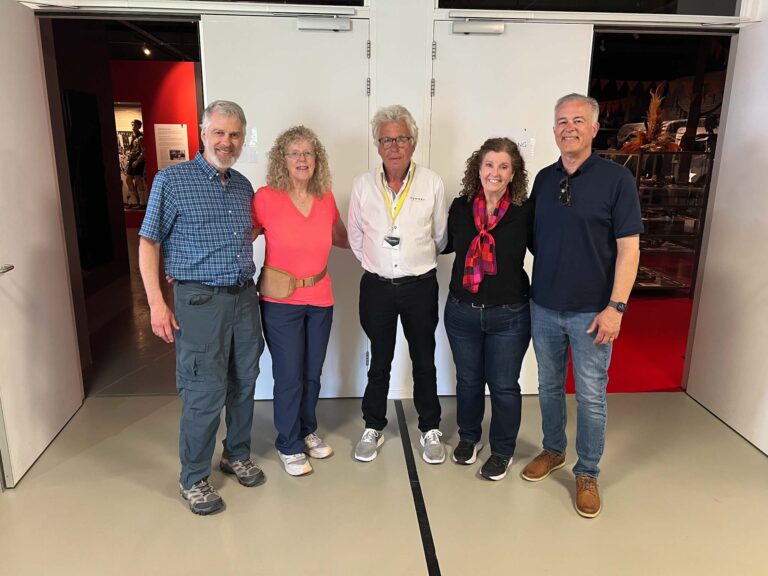
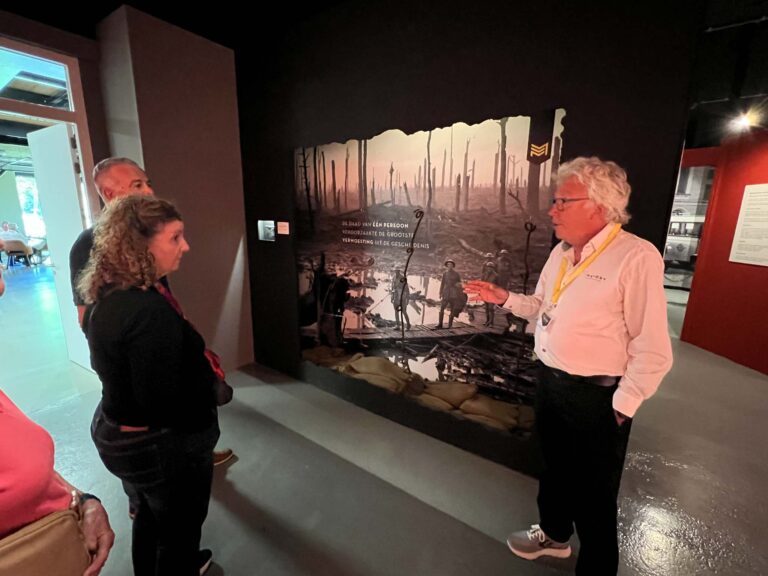
We had communicated in advance asking for an English-speaking guide. Joost Alting was our guide.
The tour begins with the aftermath of WWI with the terrible devastation and financial burden on Germany that crushed their economy and allowed groups to jockey for power,
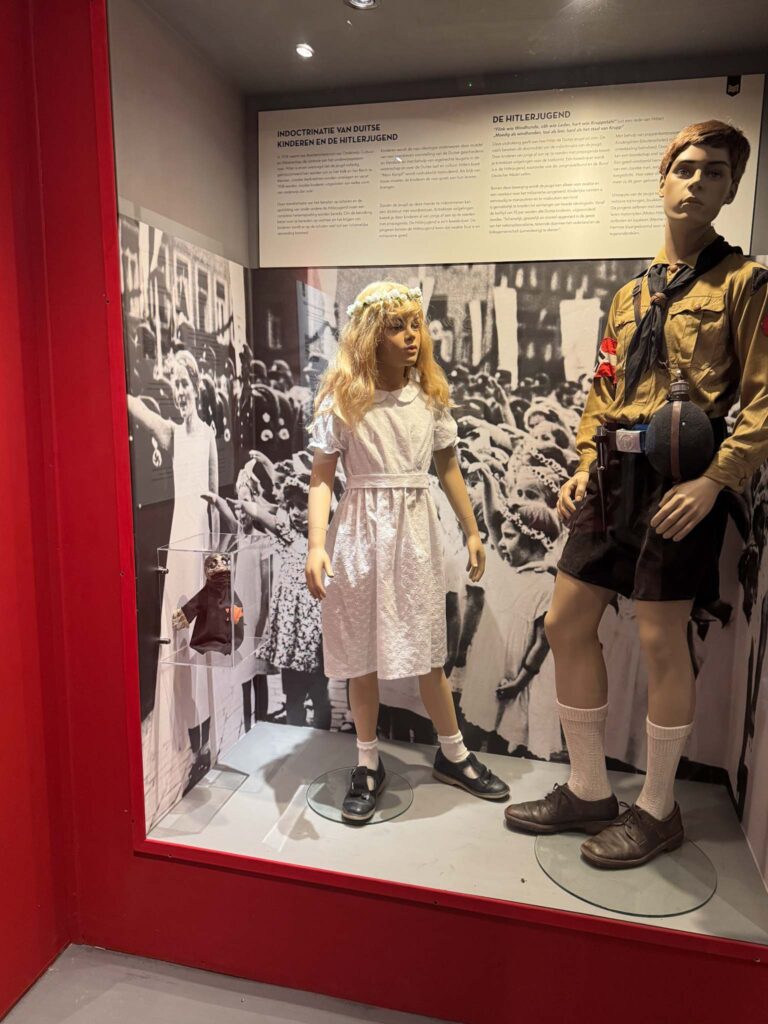
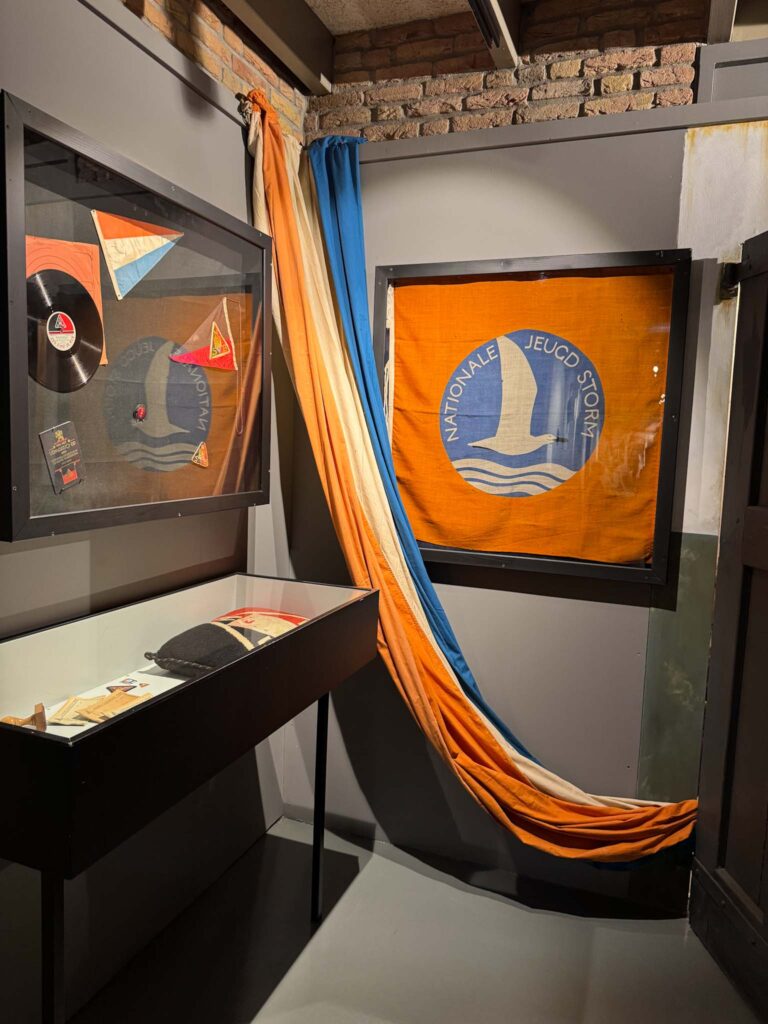
Some of the earliest propaganda was used on the children. “If you tell a lie many times people will believe it.” Jews became the scapegoats. Children joined patriotic groups like the Nazi Youth. “Ugly Dolls” were used to convince children that their friends they played with previously were to be blamed now.
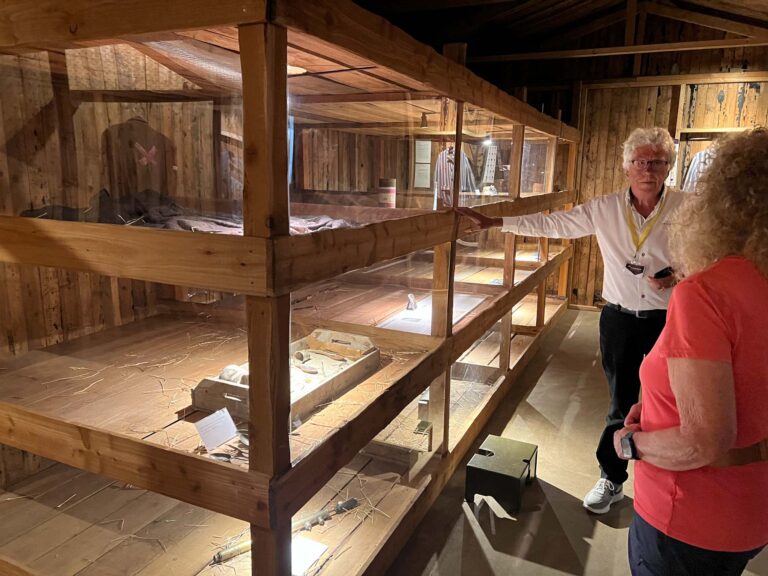
There is a replica of the concentration camps. Barracks are multilevel, and each section would sleep five people. Every morning there would be a line up to be counted.
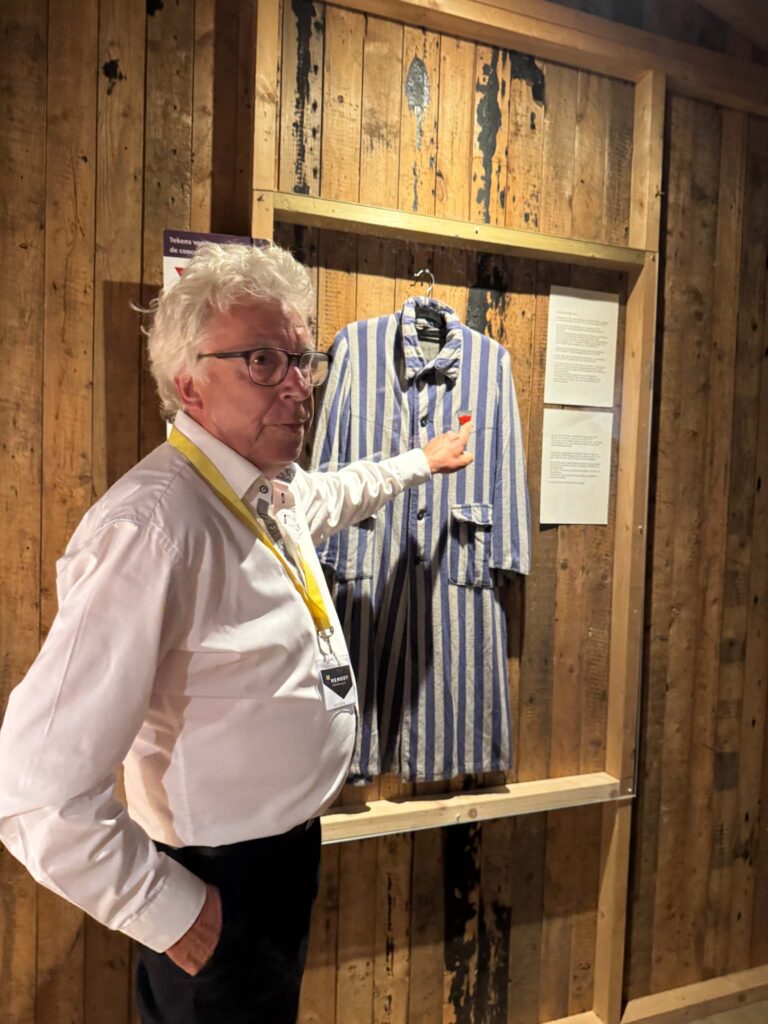
Joost showed concentration camp clothing and the triangle indicating the status of its wearer. Red was for those in the Resistance, pink for homosexuals, purple for Jehovah’s Witnesses, and green for criminals. Jews wore two yellow triangles that formed the Star of David. The green star wearers (criminals) were often the barrack leaders.
Although the flag of the Netherlands is blue, white, and red, the resistance changed the red to orange. When the Dutch were liberated May 5, 1945, orange flags were everywhere.
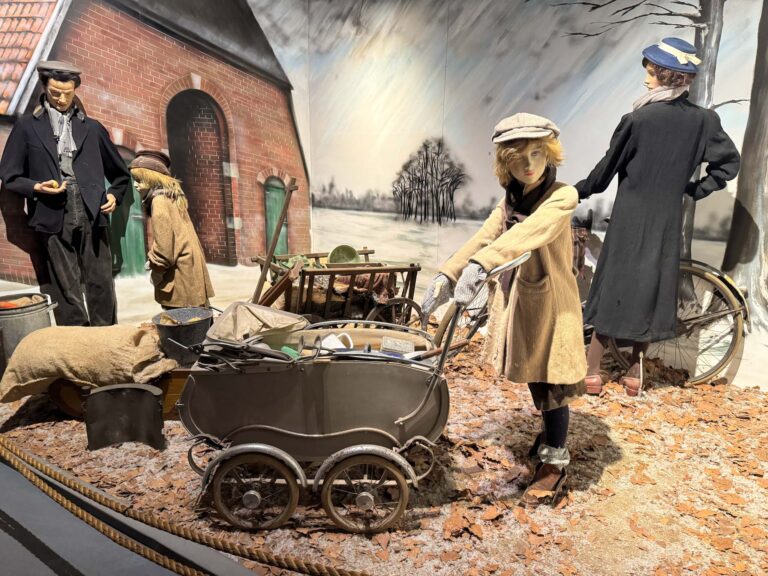
Operation Market Garden was fought nearby but the effort failed. It destroyed crops and ways to transport food, so residents were starving in the harsh winter of 1944. Women and children had to walk long distances toward western Holland to buy or beg food, even flower bulbs.
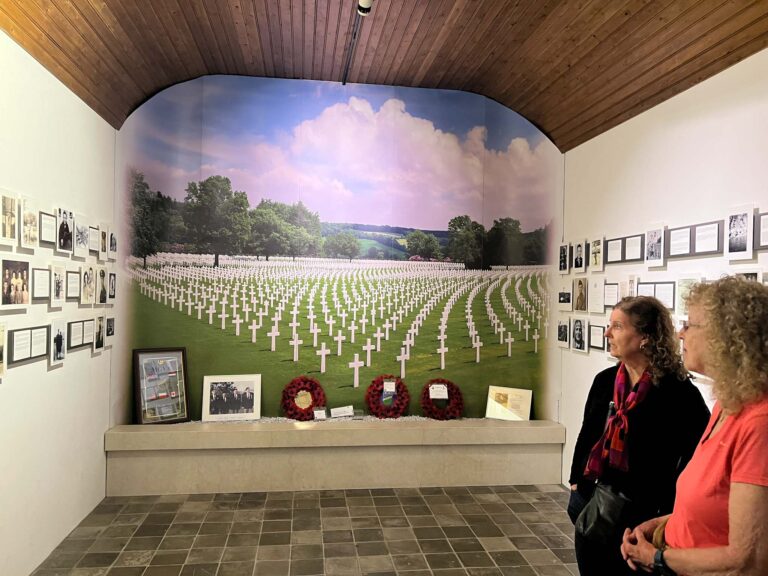
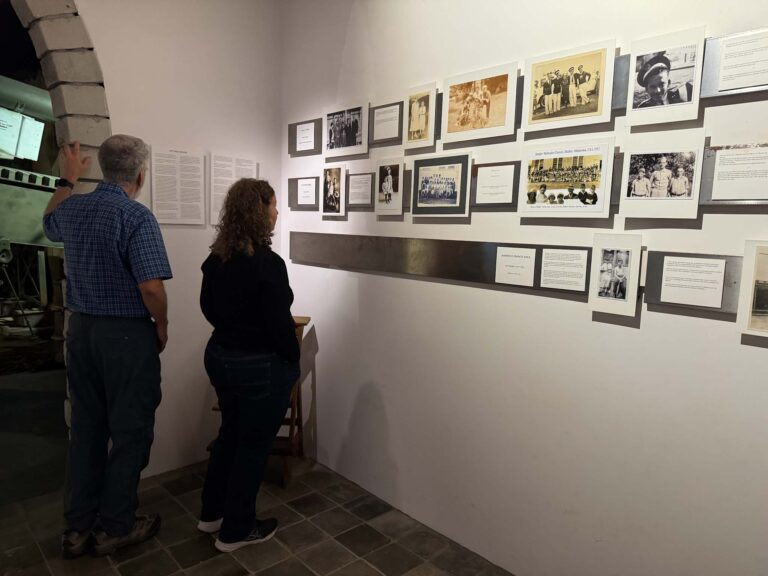
The chapel is an emotional reminder of sacrifices made. My uncle is remembered as one of the stories behind each cross in the cemetery. Pictures of his life from a little boy through to his service years are included.
Goodbye to Mary and Jorge heading to Berlin and then home. We’re off to Rotterdam and more adventures.
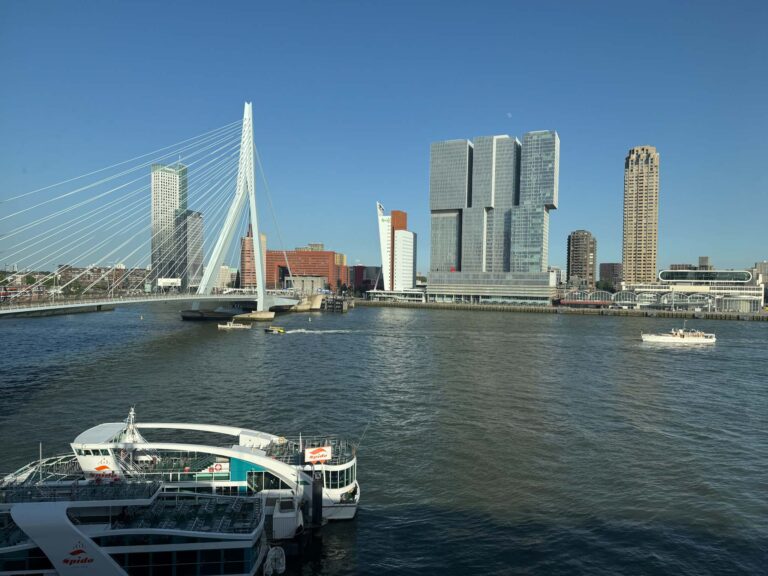
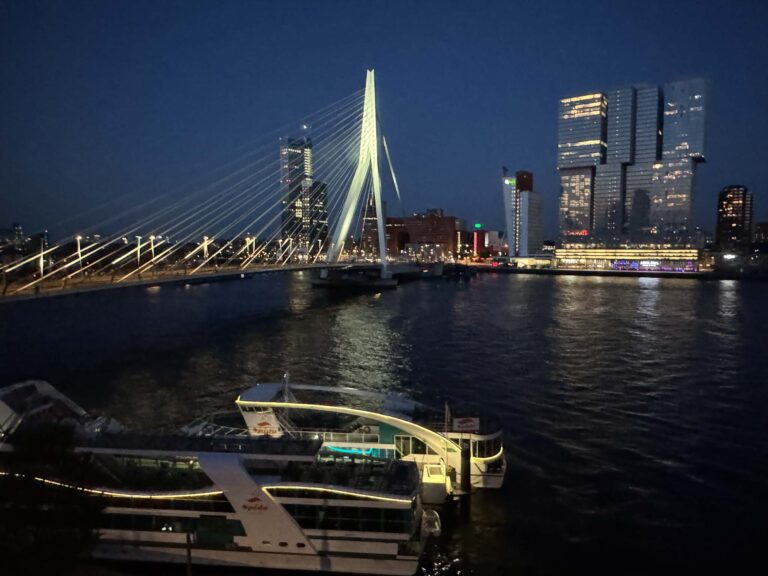
Our view of the Erasmus Bridge and the Maas River from our Rotterdam hotel room.

2 Responses
Another well planned out day. You both should think about becoming professional guides! The hardest part of your trip seems to be moving your luggage from place to place. Hard to pack light on a 10 week trip. Don’t think I’ve accessed your full itinerary yet. Really appreciate the Relive as it makes it easier to picture where you are.
We love planning the trips but it always seems we include differing itineraries—celebrations requiring dress clothes, hiking, coats, sun clothes, etc. It seems impossible to pack light. It helps when trains allow at least a little space for luggage, but they are heavily used by commuters and not too many tourists. We seem to be the exception.