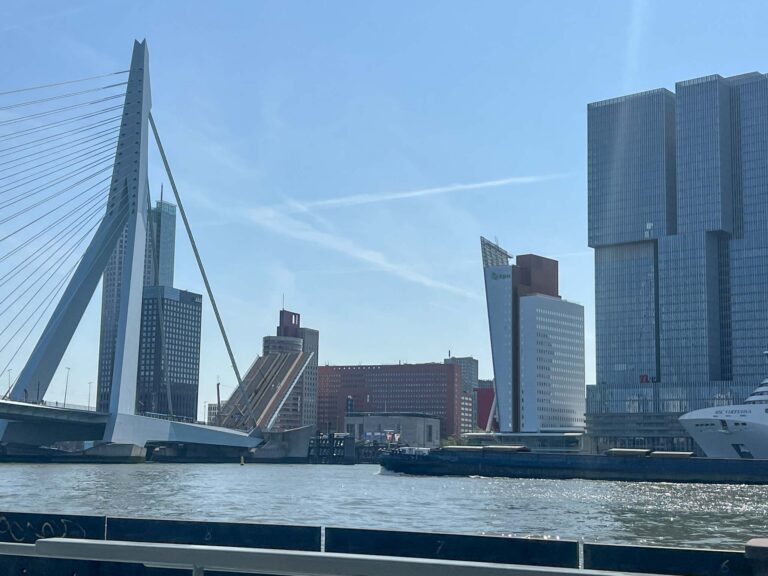
We were preparing to leave Rotterdam when we saw the Erasmus Bridge raise a part of the far side to let a tall ship pass.
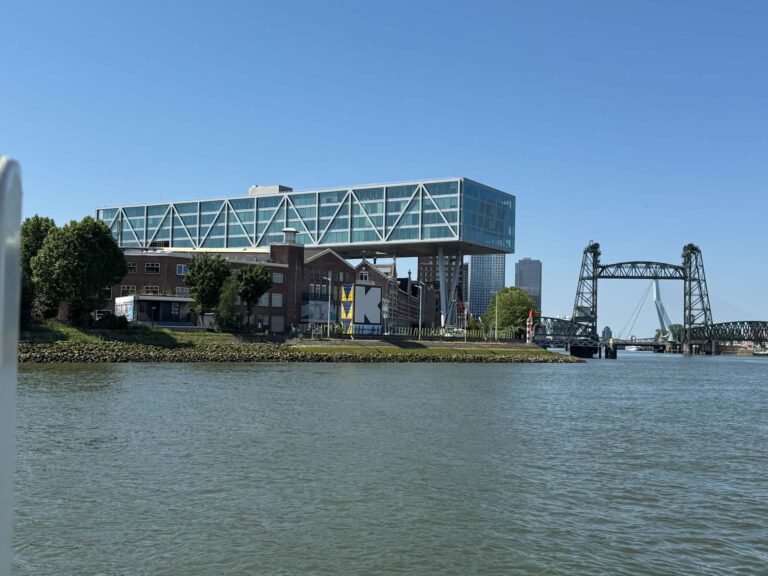
Another interesting bridge and architecture on our way to Kinderdijk.
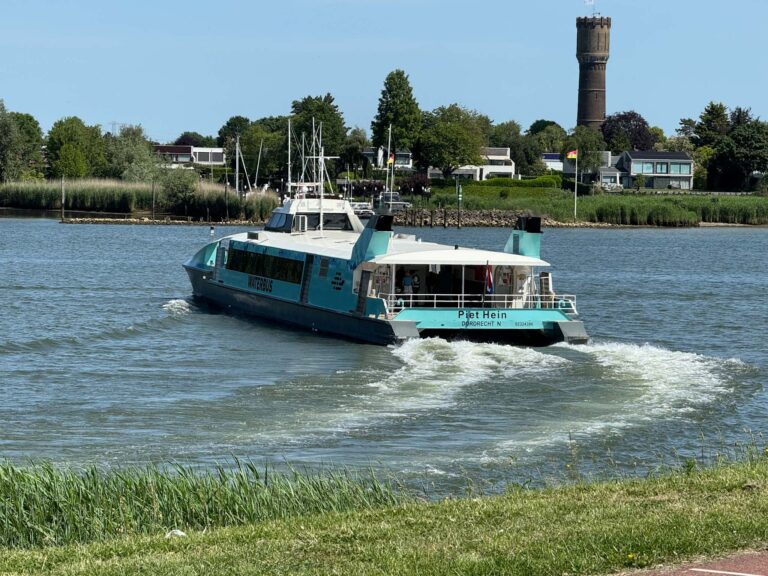
After our thirty minute ride, the Waterbus dropped us off with our luggage ready to hike to out B&B for two nights.
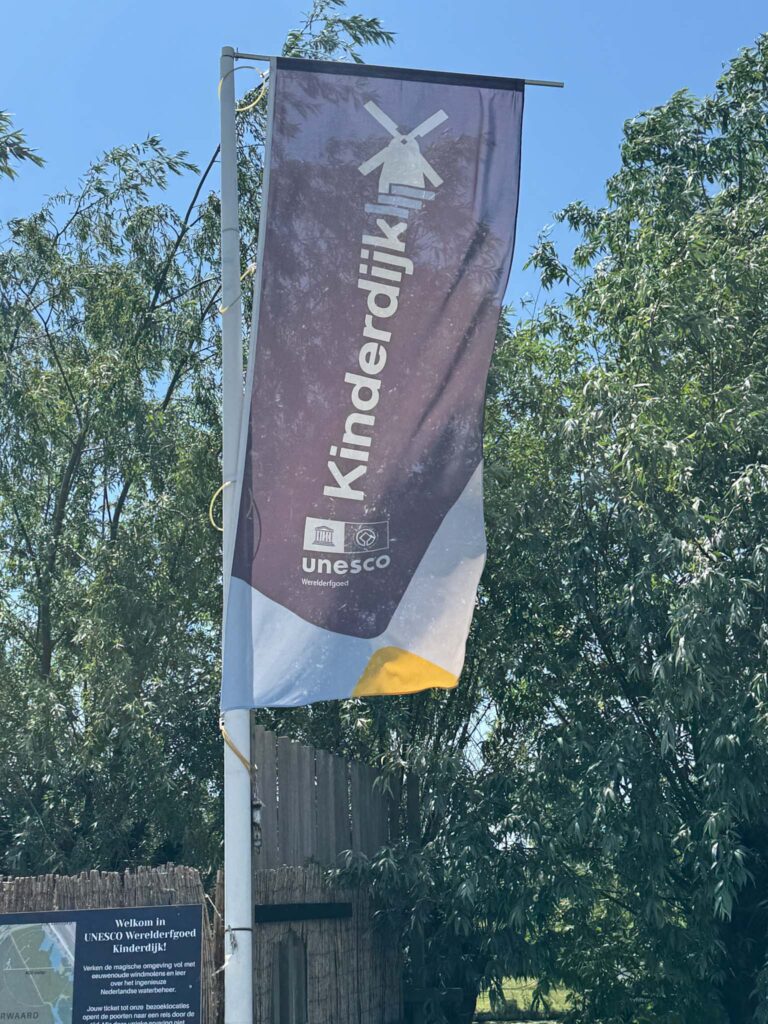
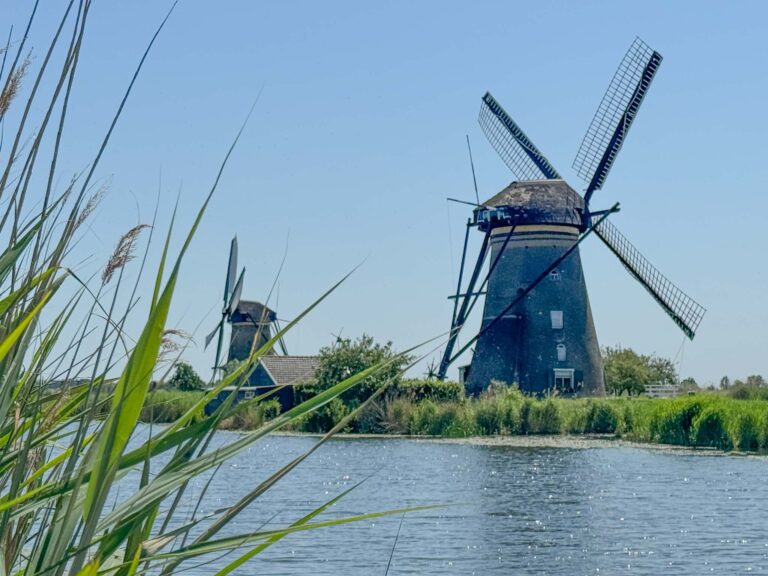
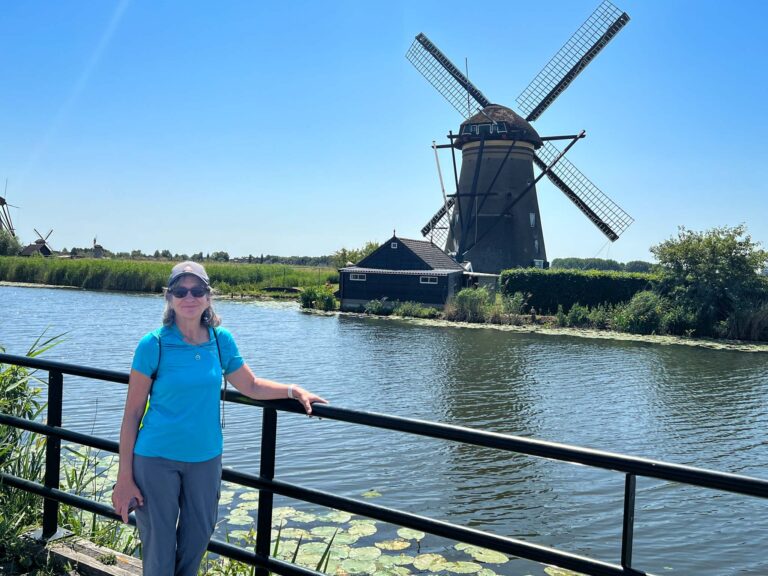
Kinderdijk with its 19 windmills has been a UNESCO World Heritage Site since 1997. Its name comes from a legend connected with the great flood of 1421 called St. Elizabeth’s Flood.
People who inspected the dike once the storm was over found a cradle floating on the waves. Remarkably, a cat had done everything it could to keep the cradle in balance in the turbulent water by springing backwards and forwards. There was a baby girl in the cradle (“kind” in Dutch).
It reminds the Dutch that no matter how terrible the suffering, the compulsion to survive was always present.
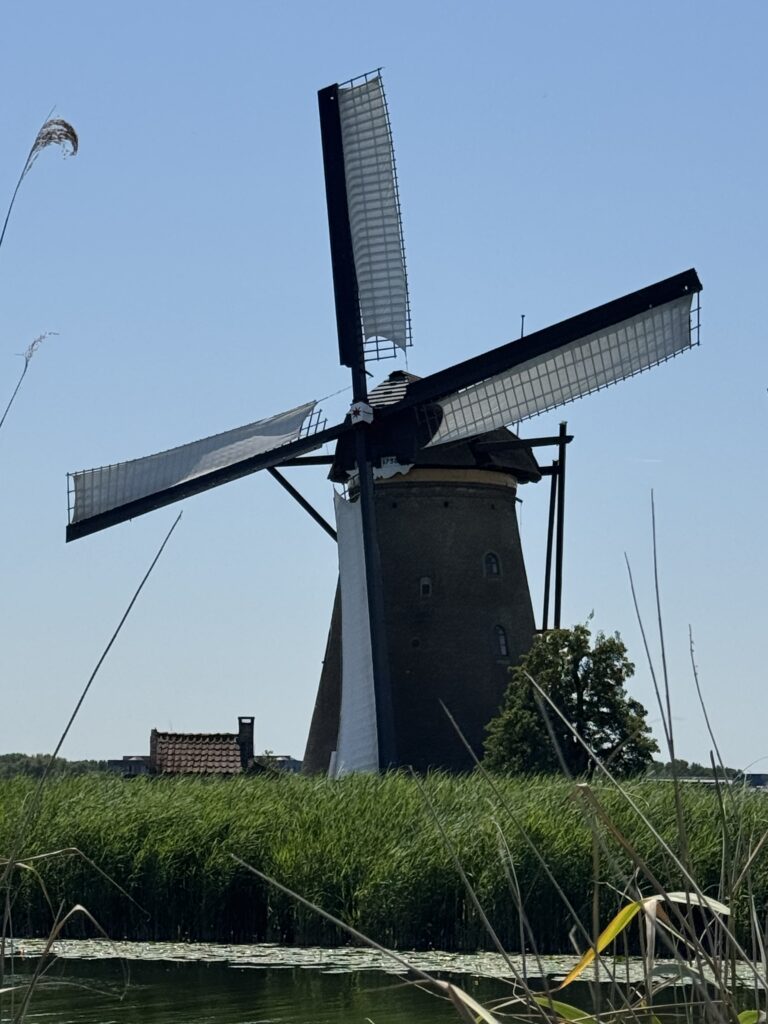
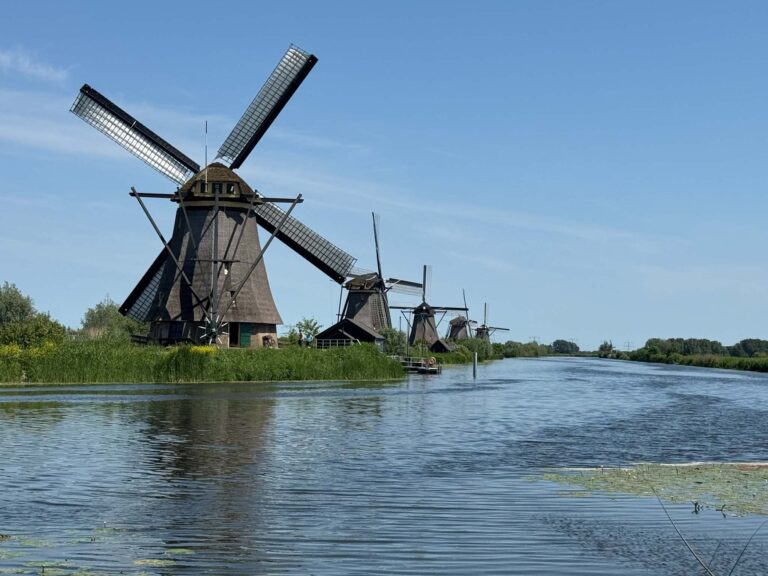
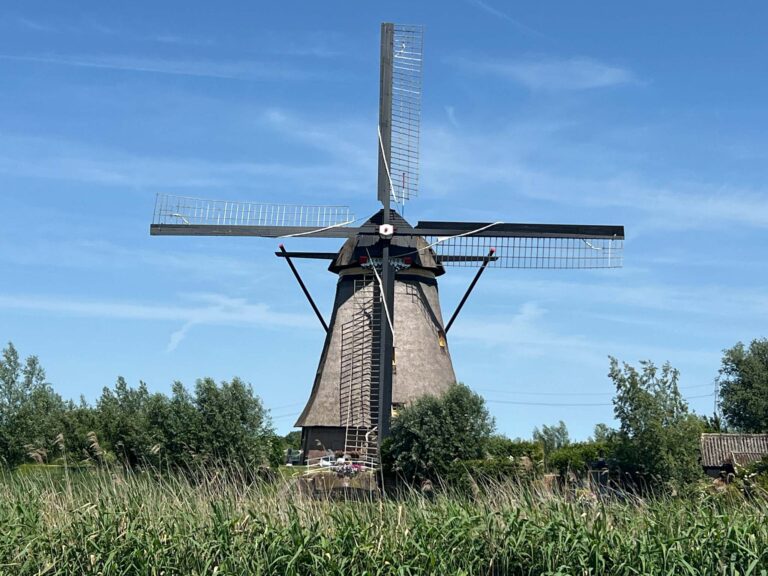
Eight windmills on the right as you walk out on the path are round and built of stone. They were built in 1738 and are Dutch drainage pool windmills intended to pump water from a low drainage pool to a drainage pool 1 1/2 meters higher. They are called ground sails because they race close to the ground. Sail cloths can be affixed and they are top turners because the round upper section can turn. The are also called outside turners as the wooden beams used to turn the cap are located outside the windmill.
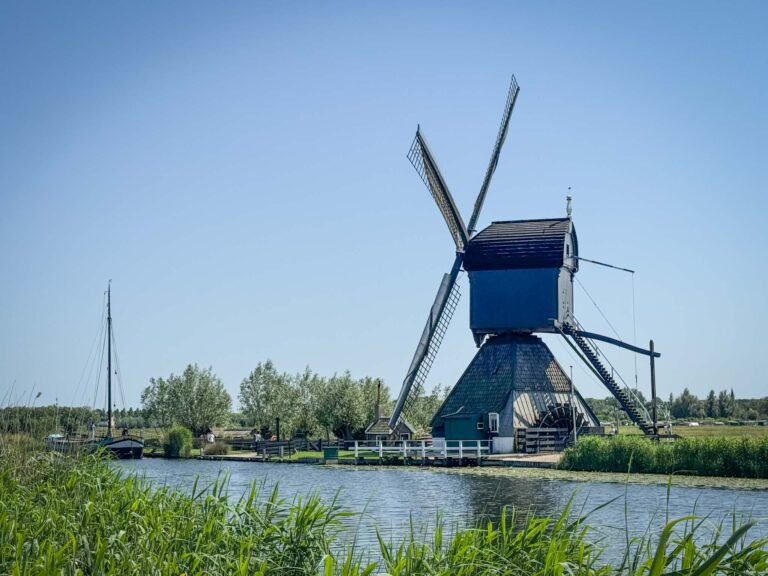
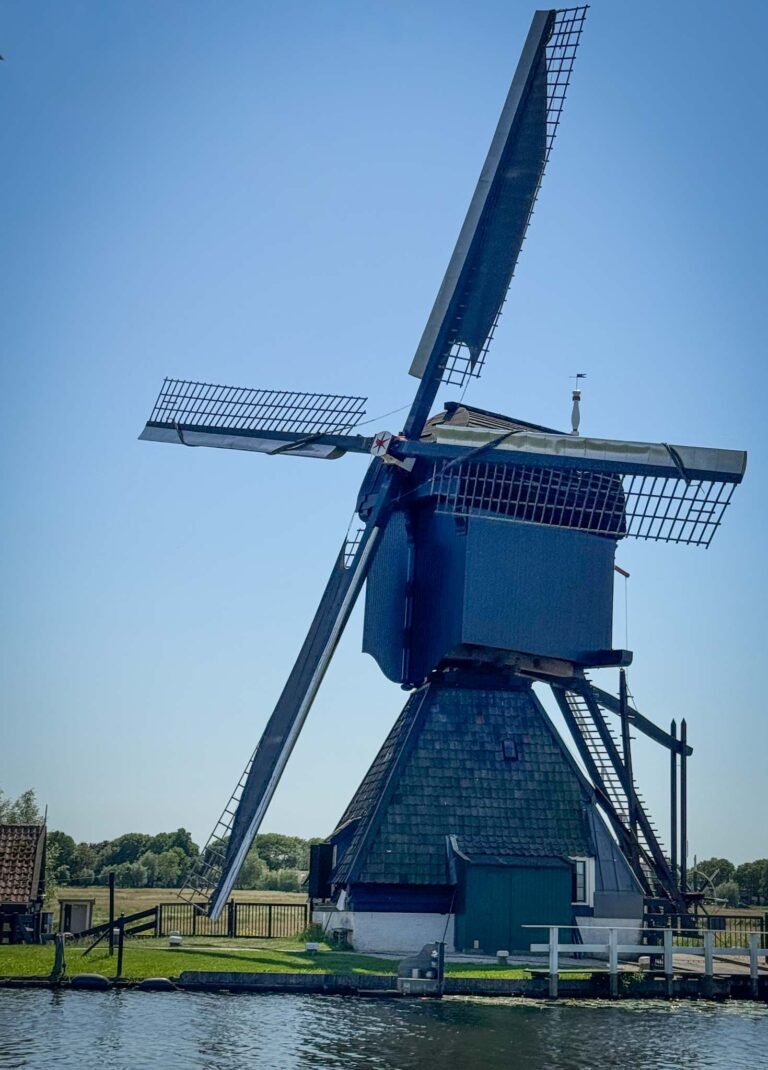
The smock windmill is the oldest windmill for pumping water. It has a square upper section that contains the sail shaft. The upper section can turn so the miller can position the sails at the correct angle to the wind. The square section sits on a triangular-shaped lower section.
There is a stop beam on the outside of the upper section that can be used to stop the sails in case if a storm, a brake to keep the windmill from overheating and catching fire.
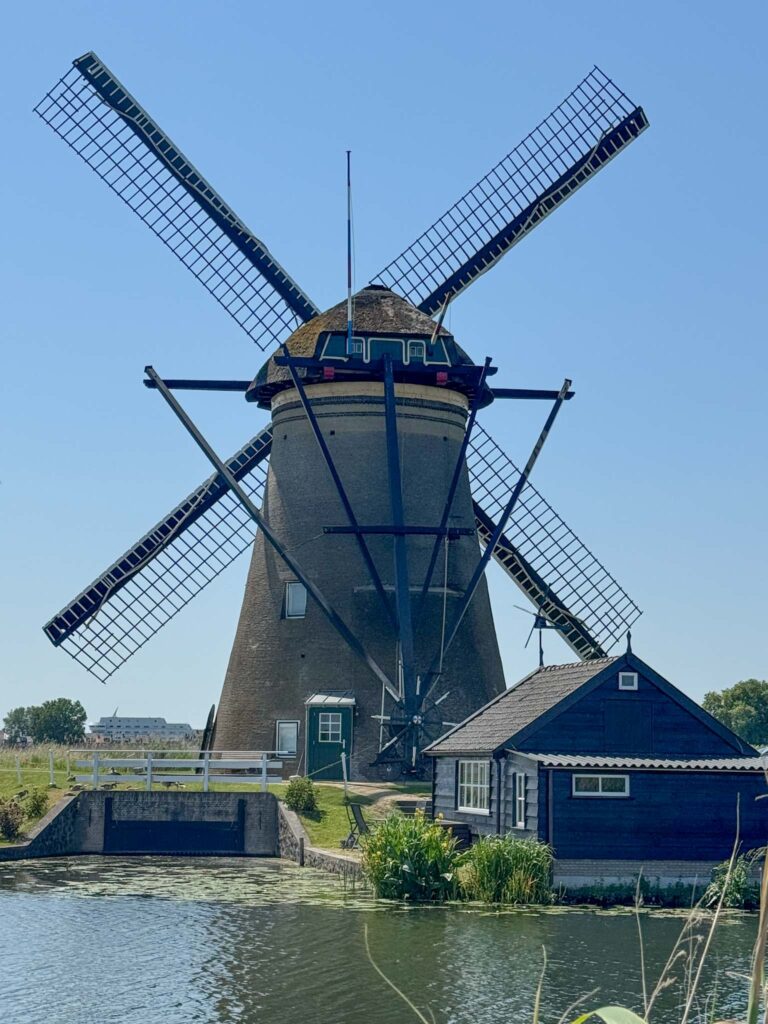
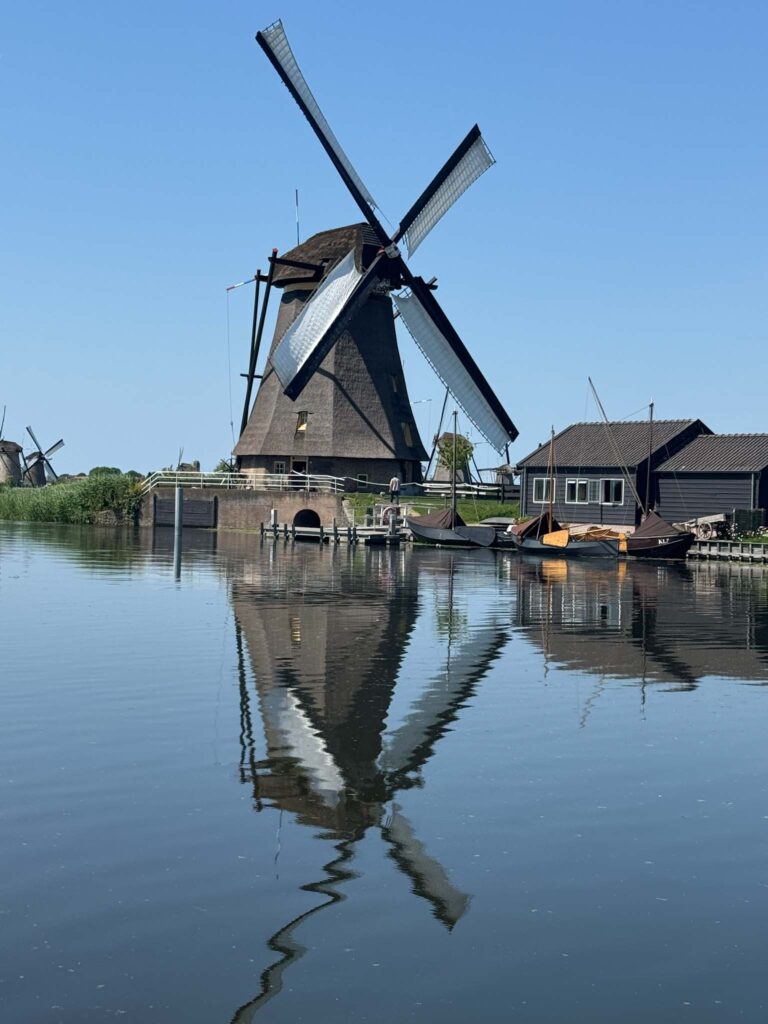
A year after the stone windmills became operational., eight more windmills were contracted to be built in octagonal shapes out of wood covered with reeds. These windmills were not so heavy, but cost more. They were completed in 1740.
The operation is similar to the smock windmill with a wheel operated by rotating cogs, but unlike the smock windmill, the wheel is underneath the windmill instead of outside., and the sails are larger and more robust.
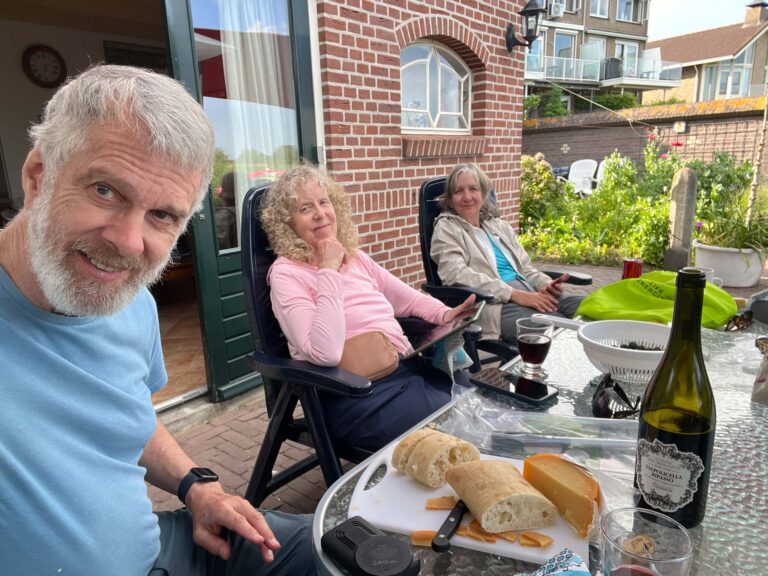
After a full hot day of hiking through the park, we headed back to our B&B to enjoy a supper on our patio.
Tomorrow we will see more of the museums in Kinderdijk.

7 Responses
Brings back similar memories when we were at Kinderdijk. You have so much more information than we received on our trip. Glad you are spending time with Ann and so many other family members. What a fun trip! Dan and Wendy
We’re having a wonderful time and really enjoyed Kinderdijk. Good that it can be a shared memory for us both.
Fascinating photos and explanations of the watermills – I confess I have never given them nor their purpose much thought.
I have to also comment about the (to me) weird architecture of the buildings in Rotterdam. The few that I have seen in your photos look….unstable….especially the building which appears to have been modeled after a child’s unsteady attempt at stacking building blocks. I certainly get an education in following your travels abroad! Thanks!
The architecture is definitely out-of-the-ordinary but that seems to be very common in Rotterdam. Perhaps the unstable appearance bothers those of us who live in earthquake country a little more.
The wind/waters are beautiful! Lovely pictures! Kids are missing you and Amelia is so excited for you to come to her birthday she reminds me everyday “Grandma and auntie Juju are coming because they love me!”
Grandma and Grandpa do love Amelia and are excited to celebrate her birthday soon! We loved the windmills when we first saw them 16 years ago and were happy to see them again.
Wind/water mills*
Just learned you can’t edit your posts 🙂