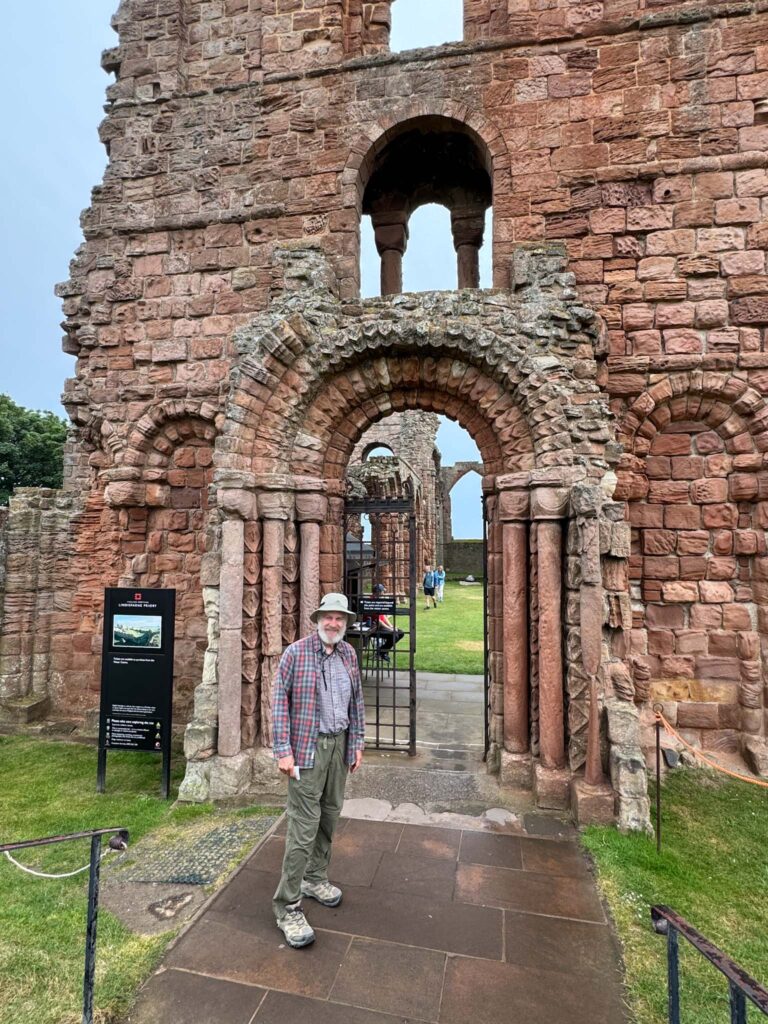
We began the day at Lindisfarne Priory and its associated museum. The medieval priory was begun by St. Aiden in AD 635. St. Cuthbert, one of the most important saints in northern England, was buried at Lindisfarne in 687. Monastic life declined in the late 9th century after Viking raids on the island. In 995 the community settled in Durham.
When Durham Cathedral was built between 1093 and 1140, an outpost was established at Lindisfarne and this priory was built. Monastic worship continued for 400 years until King Henry VIII’s Suppression of the Monastery Act of 1537.
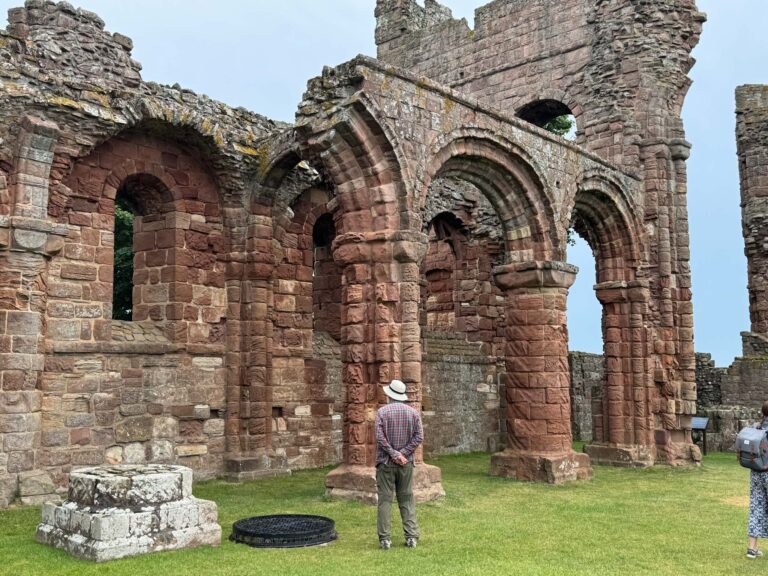
The priory church at Lindisfarne closely resembled the Durham Cathedral. Both had patterned columns, unusual for the times because the practice of building in stone had mostly died out in northern England in the 11th and 12th centuries as they were generally building with wood. The skills of quarrying, stone masonry, and construction had to be reintroduced.
Although there were several outposts of the Durham monastic group, Lindisfarne is the most magnificent church, believed to be because of its link to St. Cuthbert.
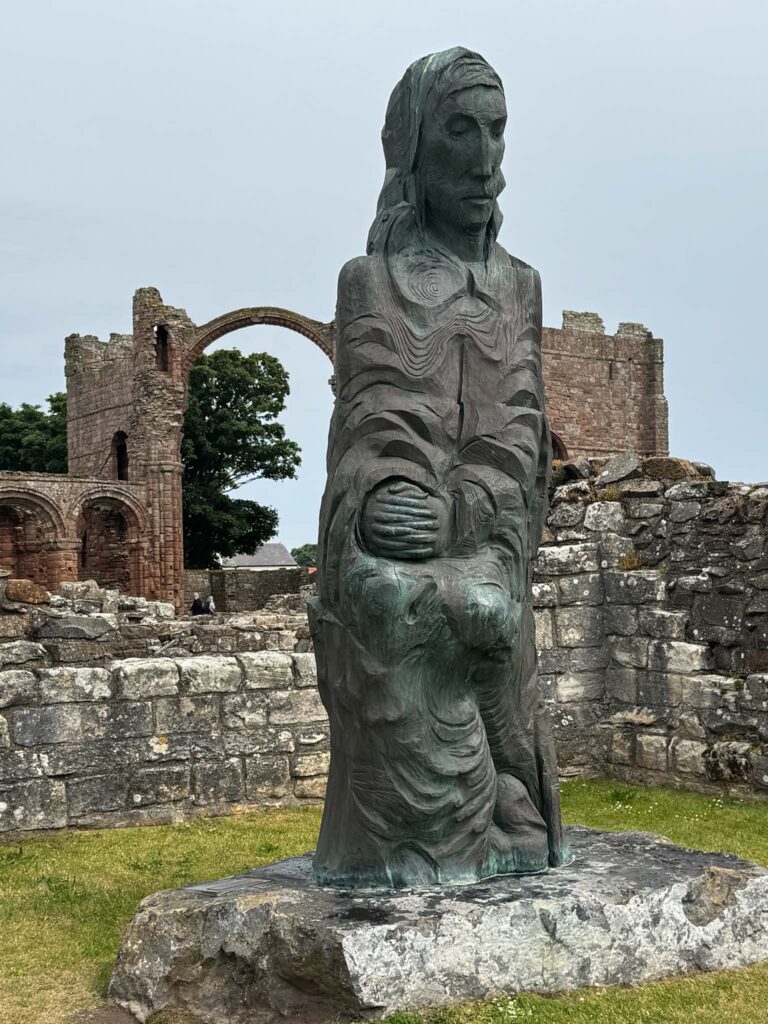
St. Cuthbert is remembered in this modern statue. He is known to be close to animals and birds, particularly the eider duck, or “Cuddy duck” as it was named for him. He encouraged people to respect animals and birds and leave them in peace. A Cuddy duck is at his feet in the statue.
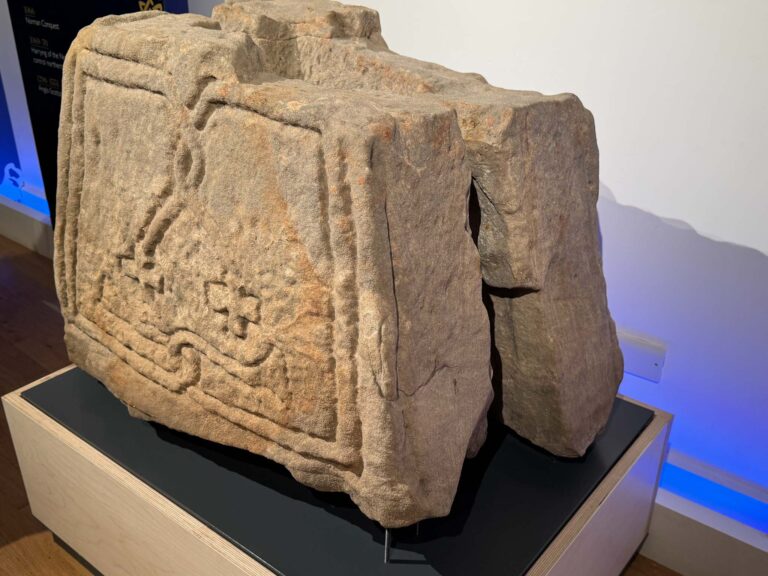
This cross base is thought to have been damaged by Viking raiders but may have supported the first stone cross known at Lindisfarne, 775-800. It was reused as a foundation stone positioned before the high altar at the church built in the early 1100’s.
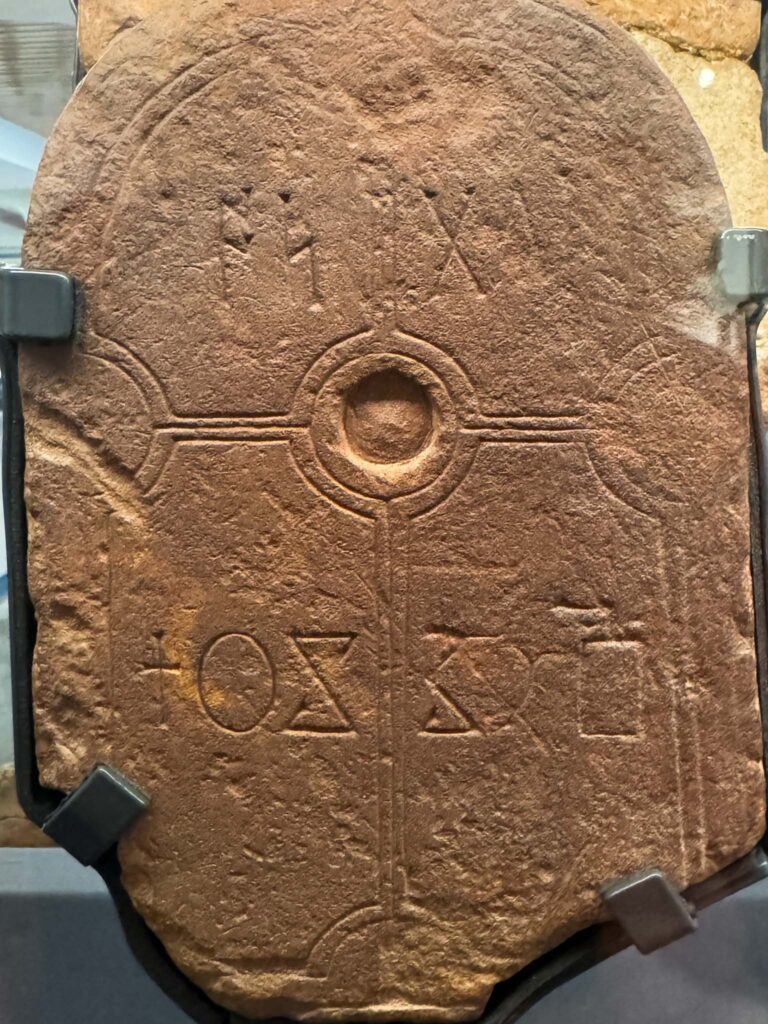
This is one of the finest name stones from Lindisfarne, as gravestones were called in northern England. It still bears some paint, and has runes at the top and Anglo Saxon capitals below, spelling out in two alphabets the feminine name Osgyth.
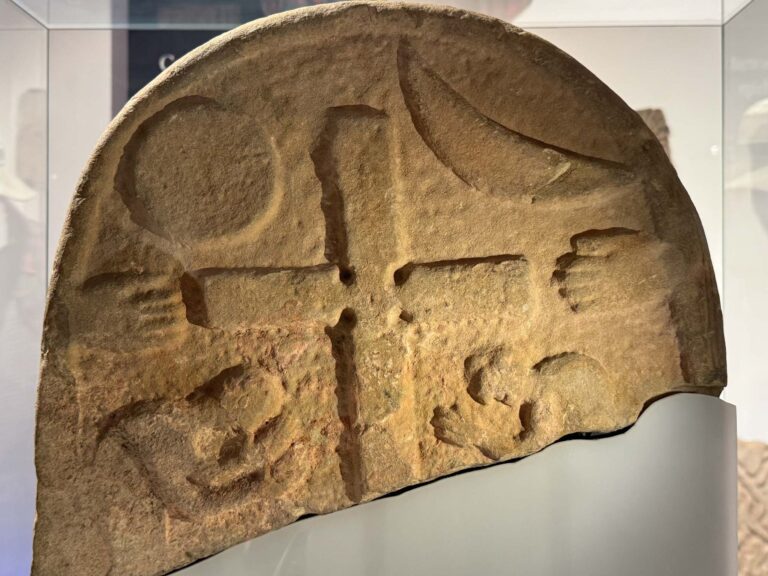
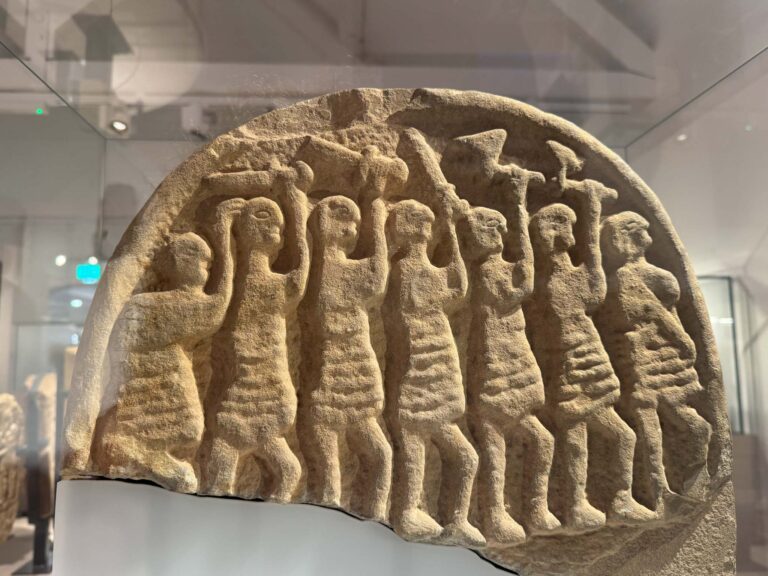
The Viking Raider – Judgement Day stone from 800-825 is carved on both sides.
In the year 800, people thought the judgement day was imminent. As in the book if Revelation, the sun and moon would dim, stars would fall, and seven angels would sound trumpets. Christ would emit good people to heaven, while the bad would remain on earth to be consumed by fire.
This stone face shows two bowed figures praying at a cross with the sun and moon above nd hands pointing at the cross.
This is the other side of the stone showing a procession of seven men, six with axes and swords, resembling the Viking raids. The scenes are reminders that Christ sits in judgement on the sins of people.
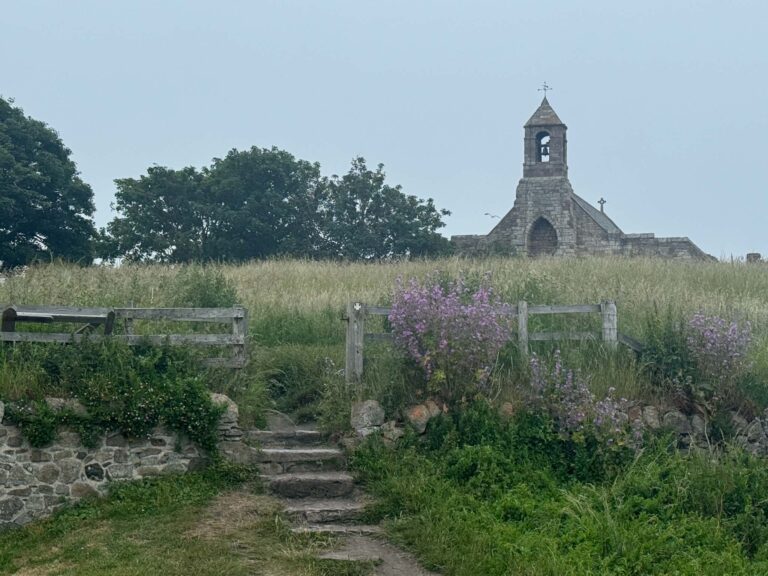
The parish Church of St. Mary the Virgin, here seen from the shoreline, sits next to the priory ruins.
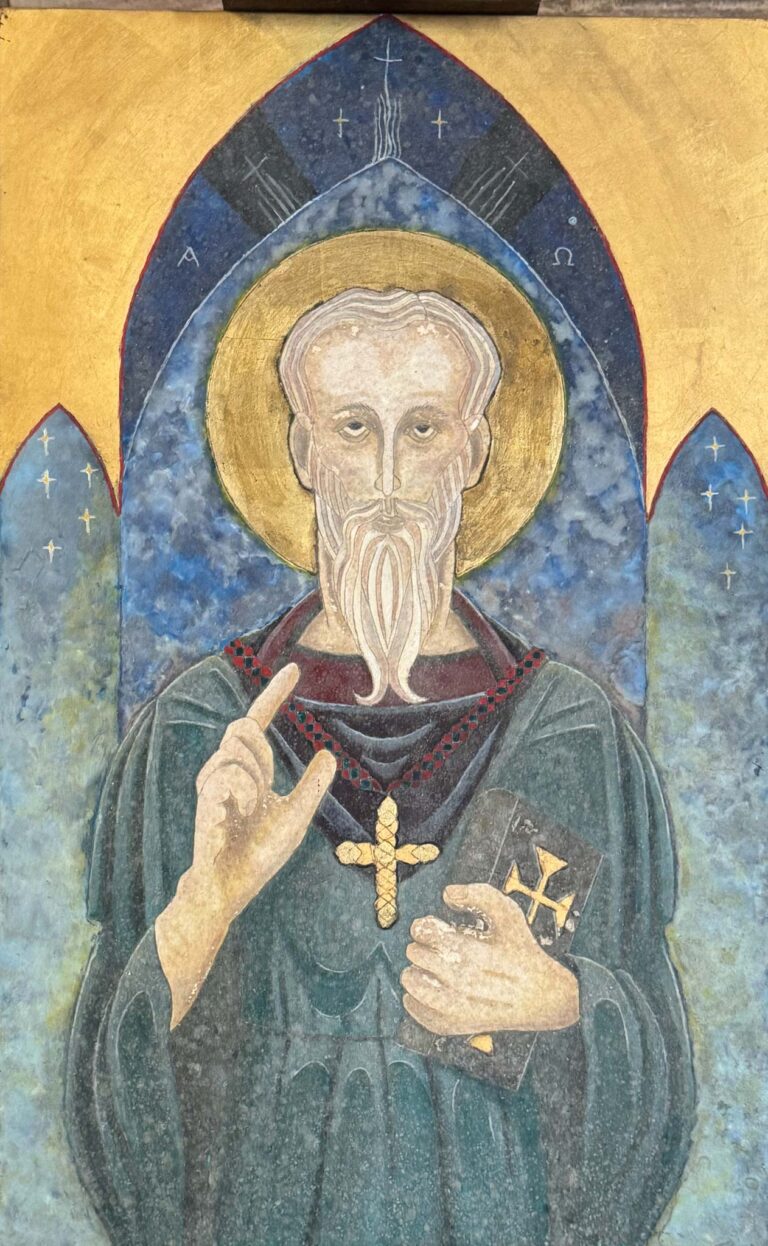
St. Aidan, Irish founder of the priory was brought to northern England by King Oswald (later St. Oswald) to spread Christianity to the pagans. St. Bede says of Aidan “he never sought for or cared for worldly possessions — he always travelled on foot — he and his followers lived as they taught.” He died August 31, 651 and was buried at Lindisfarne.
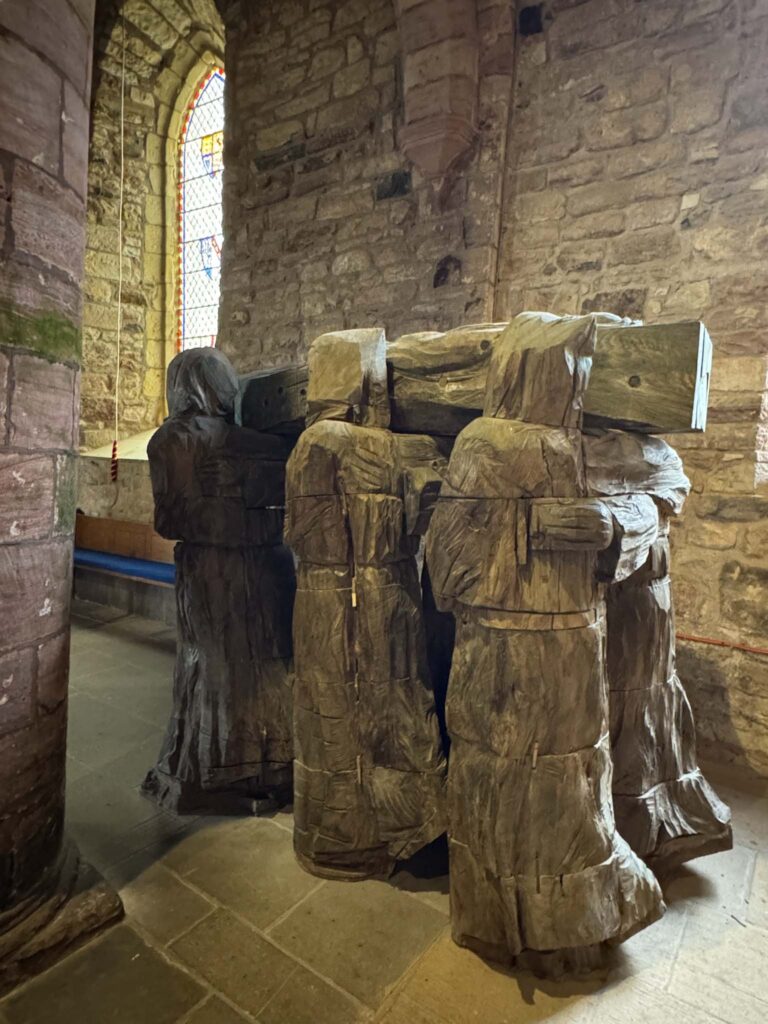
When the Vikings attacked Lindisfarne and plundered the church, monks took the body of St. Cuthbert and other priory treasures and escaped the island. Here the monks’ trek is remembered.
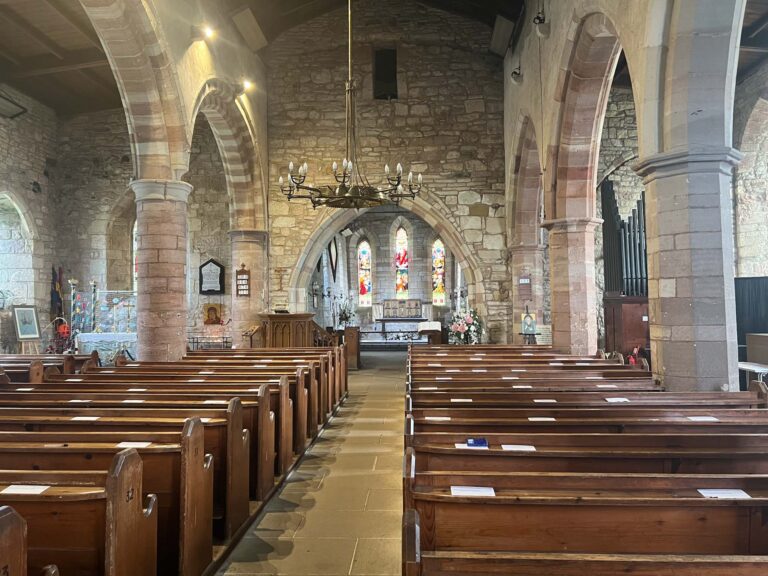
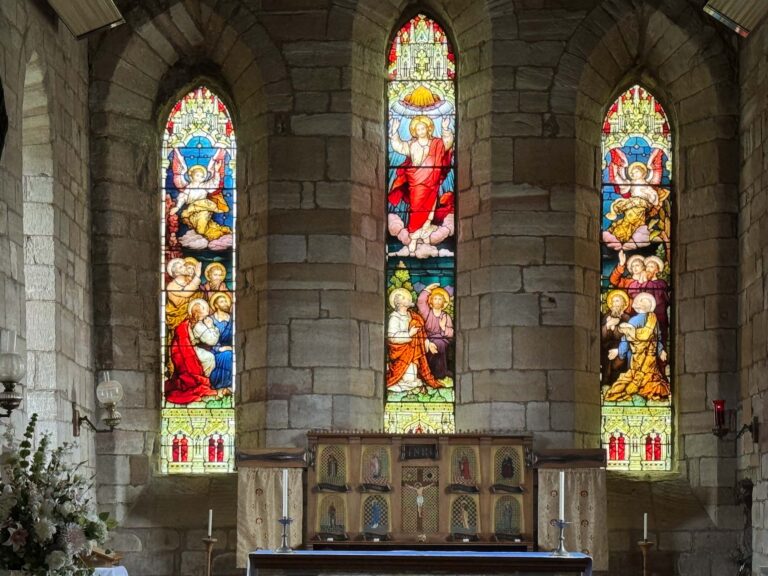
The chancel of the church.
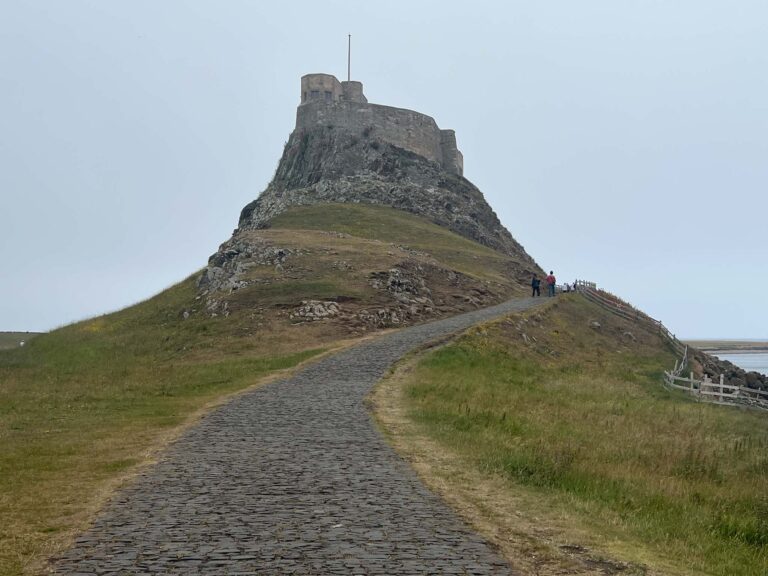
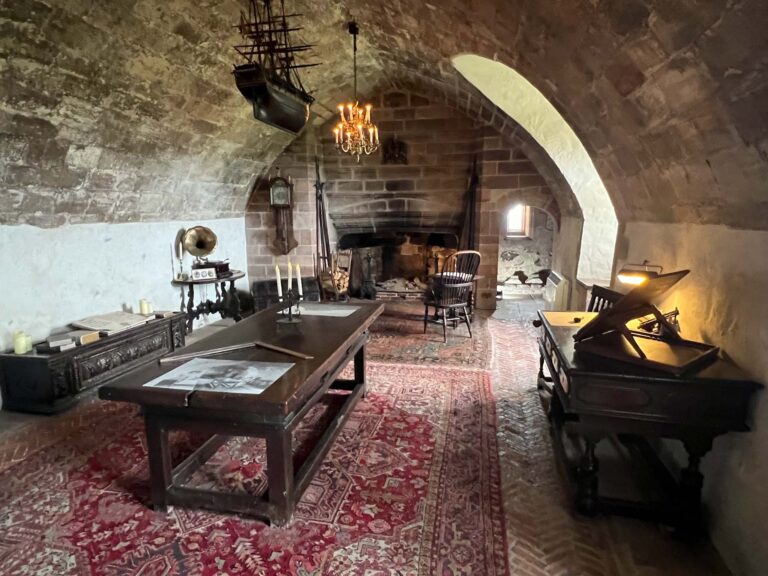
When the priory was closed by King Henry VIII, the lands were seized by the Crown. Lindisfarne castle was built on a rock in 1570-1572 at the entrance to the harbor and a garrison was stationed to defend against the Scots.
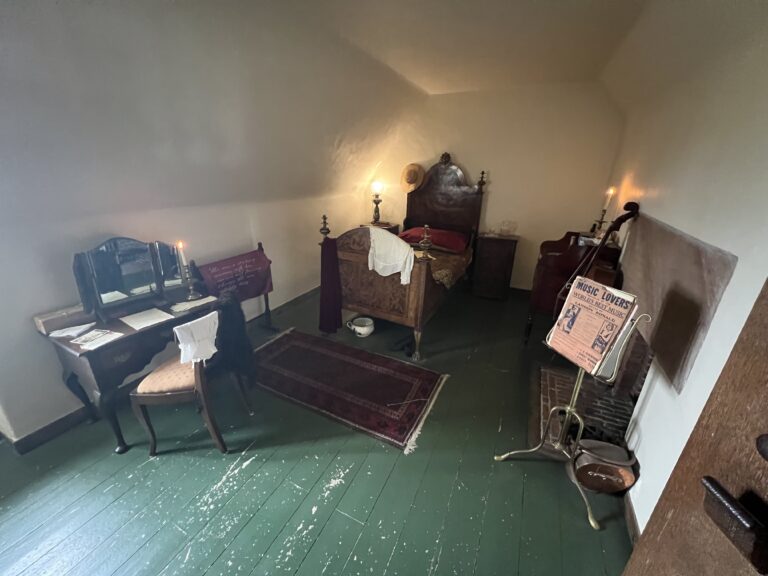
The castle fell into ruin in the 17th century. In the early 20th century, it was renovated by architect Edwin Lutyens as a holiday home for Edward Hudson, founder of Country Life magazine.
Madame Guilhermina Suggia was a celebrated and internationally renowned cellist and a frequent guest at the castle.
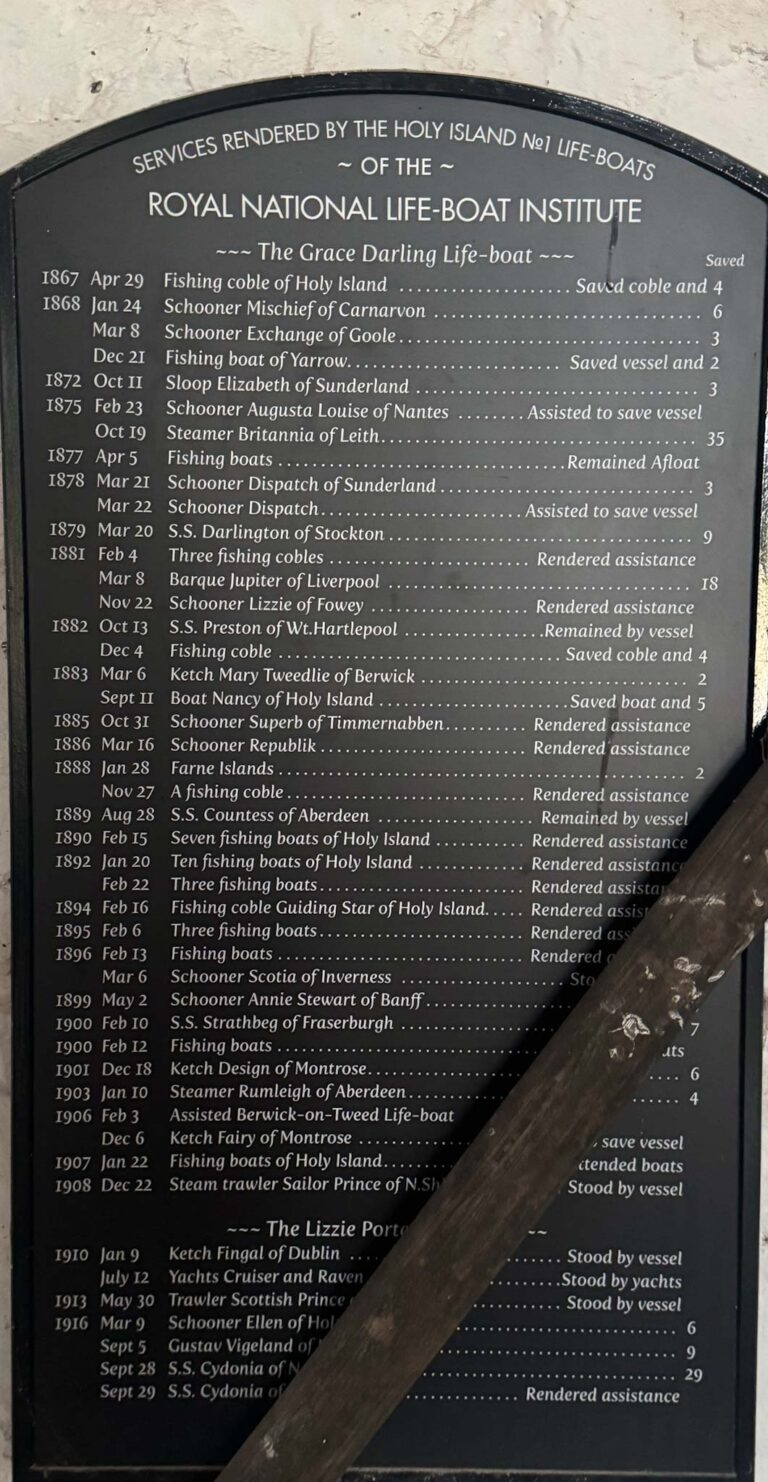
Holy Island lies close to a busy local and international shipping route. It offers a safe natural harbor but is surrounded by hidden hazards.
Local people came to the aid of vessels in trouble around the coastline as early as 1802. In 1865 the Royal National Lifeboat Institution took responsibility for lifeboat service on the island.

One Response
Very special traveling in Europe and being able to see these historic sites. Looked like an interesting day.