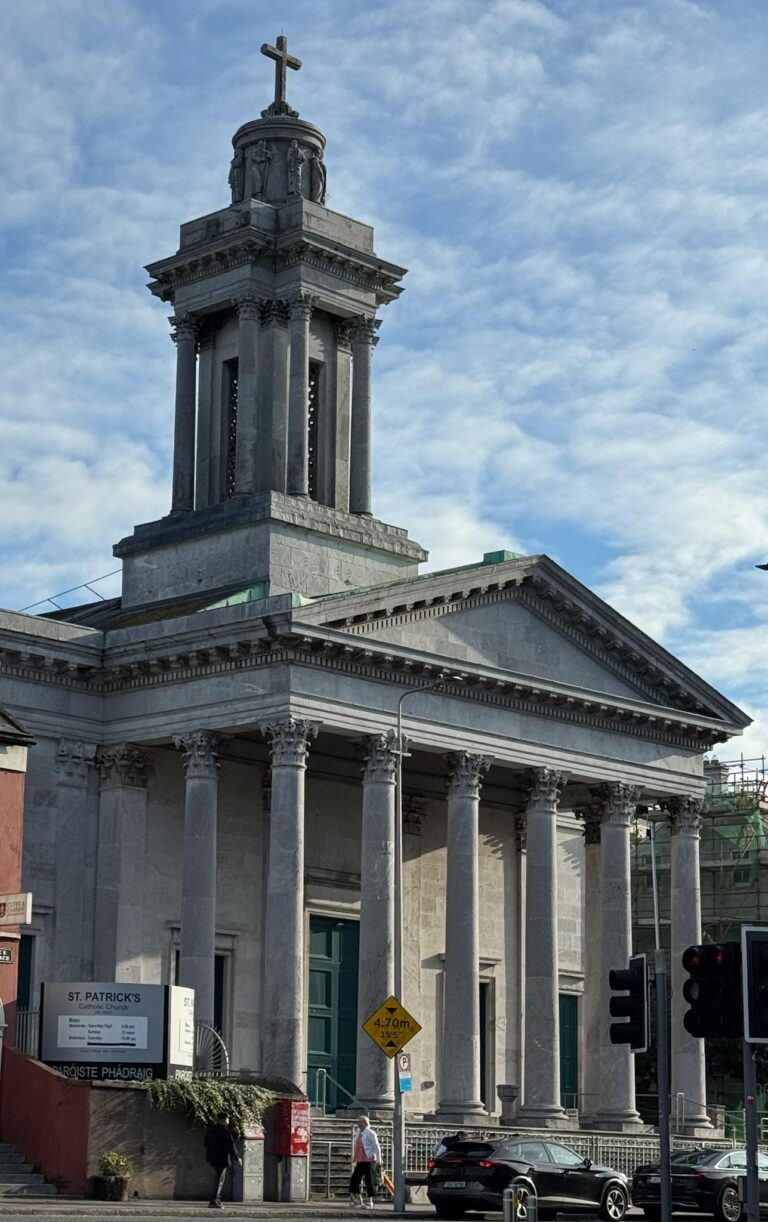
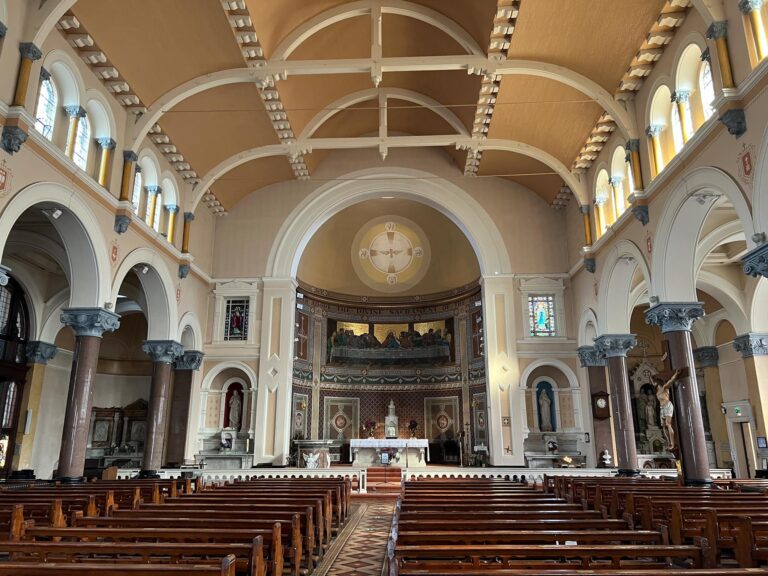
St. Patrick’s Cathedral was open for a visit this morning. The church building began in 1832, constructed of Cork limestone.
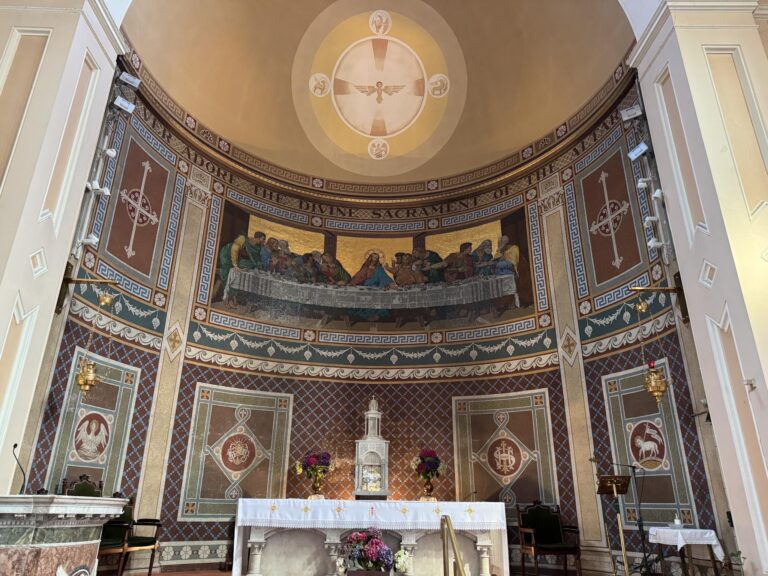
The Last Supper is the work of 19th c. Italian artists. Below are the four symbols of the Eucharist: the Pelican nourishing her young, the Host and Chalice surrounded by the Crown of Thorns, the IHS (Jesus) monogram, and the Agnus Dei.
Cork Kent station—off to Cobb on the train.
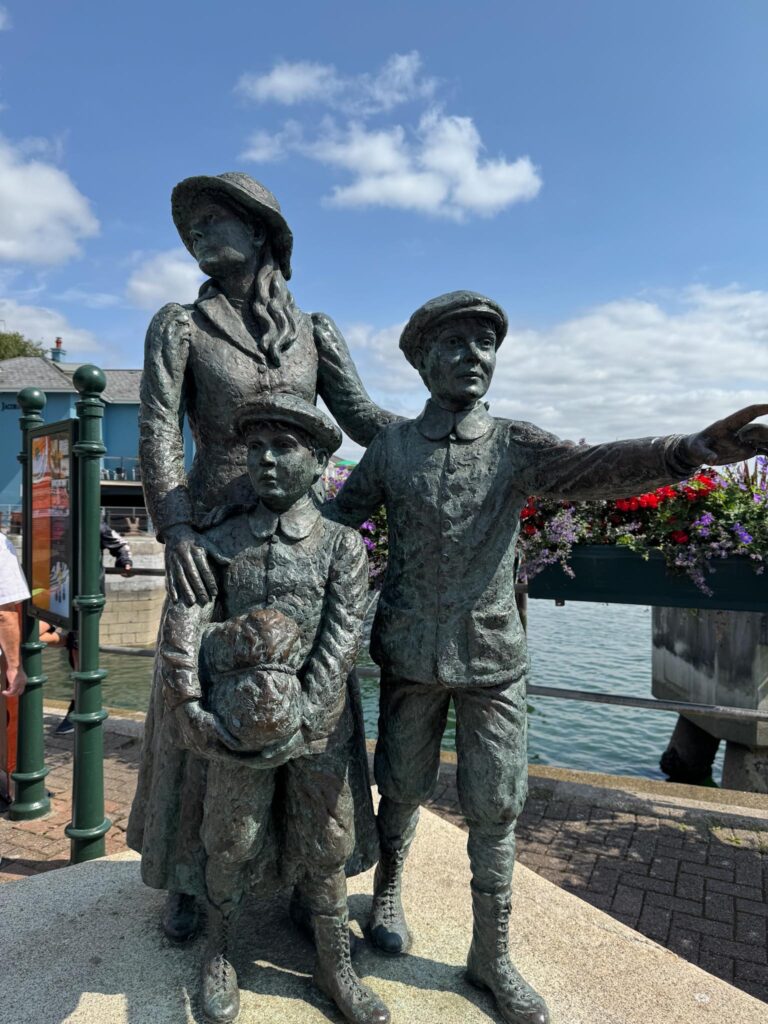
Outside the Cobh train station, this statue of Annie Moore her little brothers Anthony and Philip memorializes the first person to be admitted to the USA through the new immigration center at Ellis Island. They left Cobh in 1891 to join their parents and older siblings in the USA, and entered Ellis Island January 1, 1892.
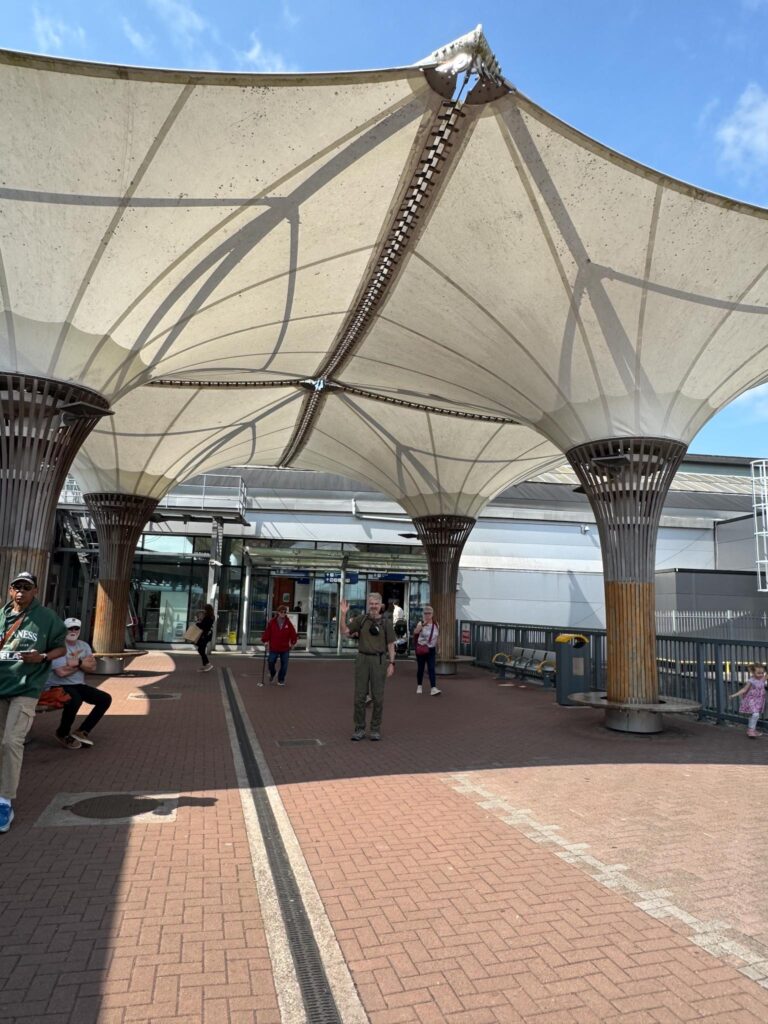
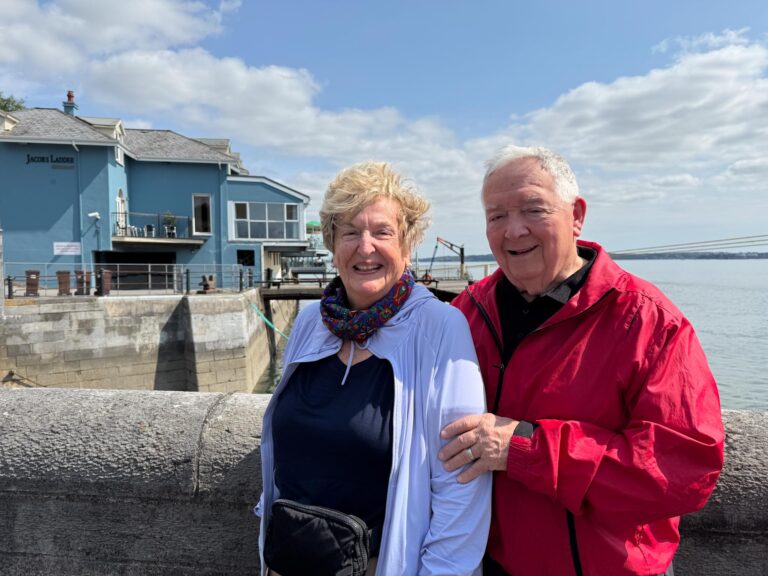
Vicky and Warren Phelps were traveling on the Oceania ship anchored in the port for the day. We took their picture and chatted—they live in California near Woodland Hills.
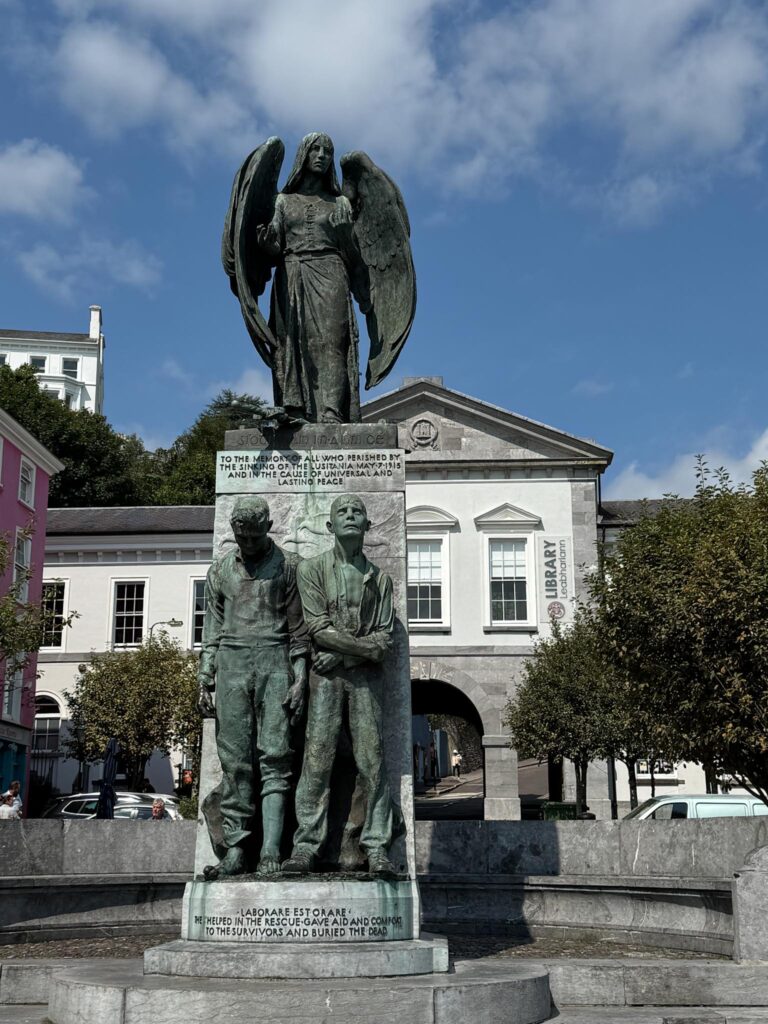
The Lusitania was torpedoed off Kinsale by a German U-Boat in 1915. It was en route from New York to Liverpool, and sank in a half hour killing 1198 of the 1959 passengers. This monument remembers the victims and the rescuers.
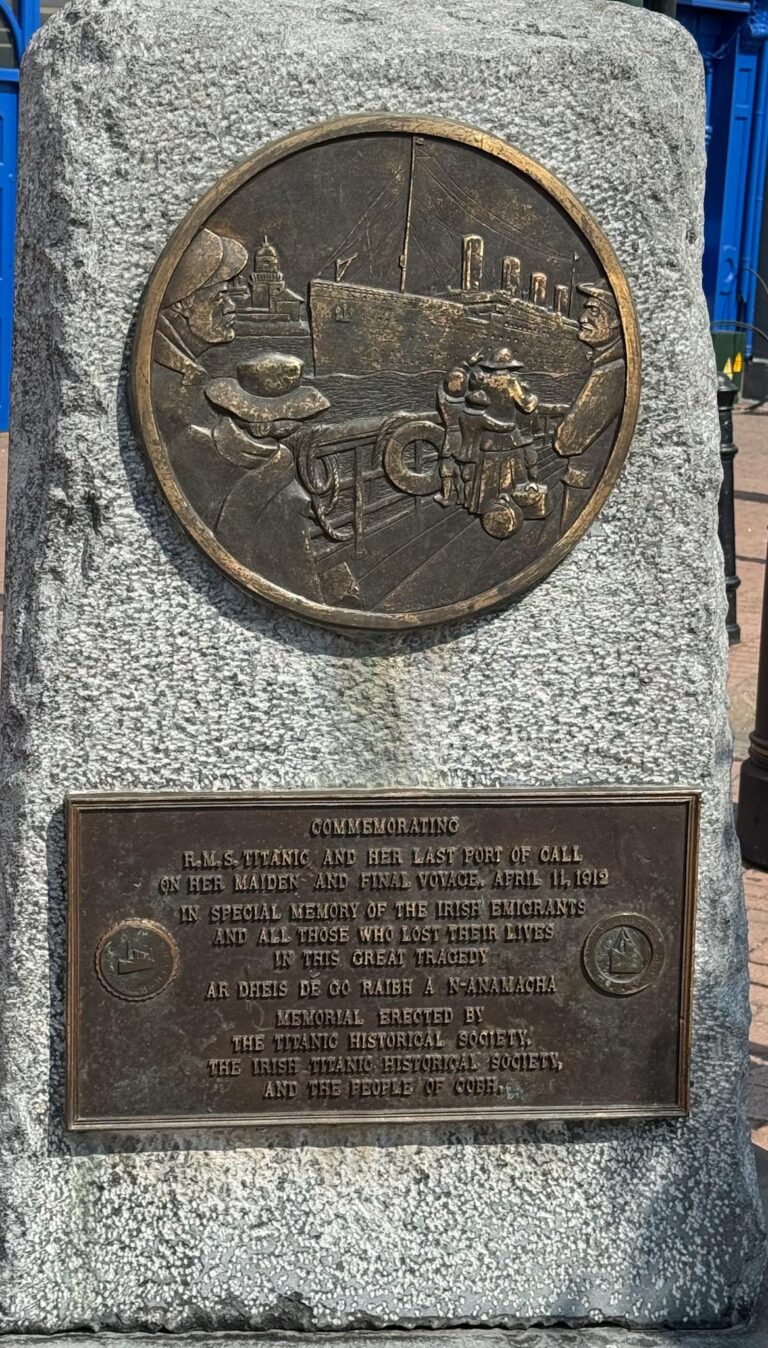
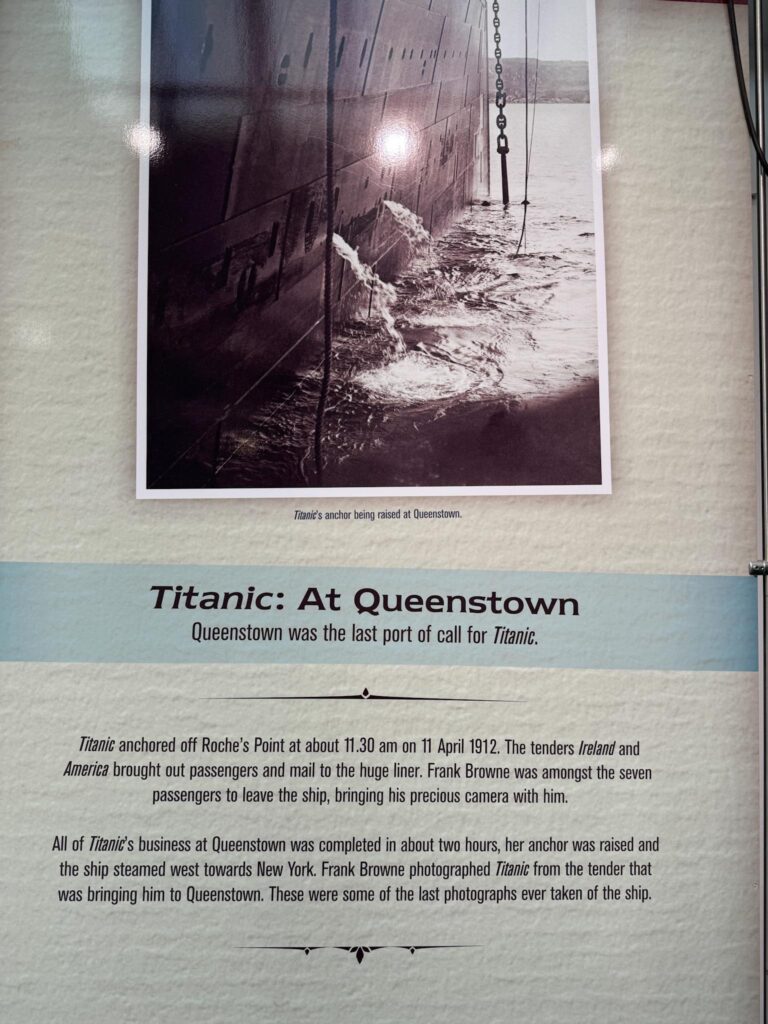
This plaque commemorates the Titanic’s last port of call before its sinking April 14, 1915.
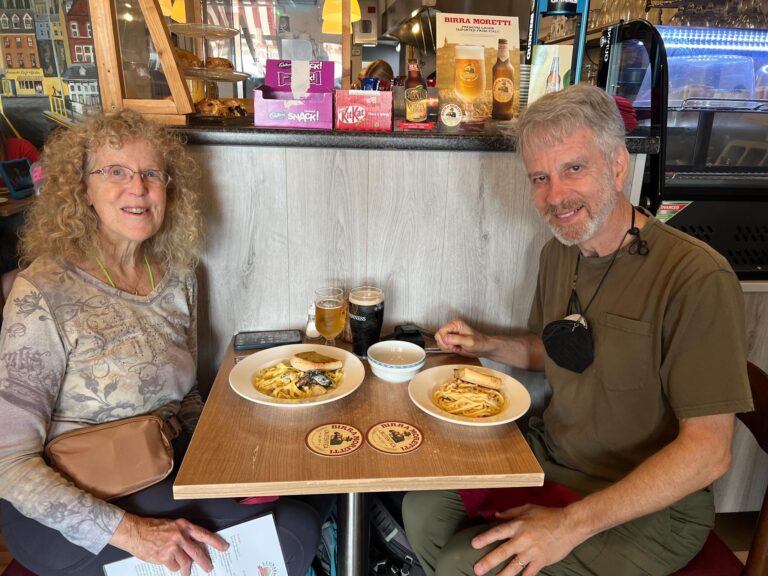
Lunch was wonderful at Leonardo’s Kimbo Cafe. Richard had Spaghetti Carbonara, and Jan had Seafood Tagliatelle.
We climbed the hill to view the cathedral, but a funeral mass was in progress, so no visit was possible.
Later we returned but now there was a marriage, so still no visit.
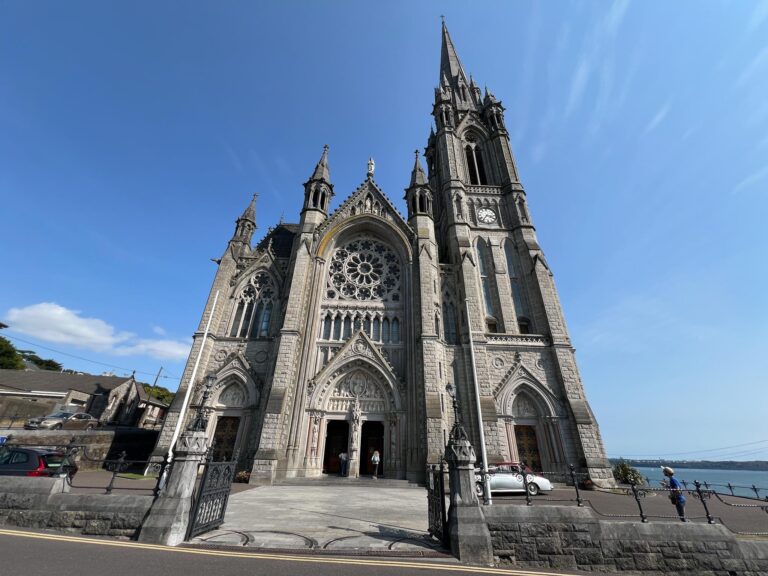
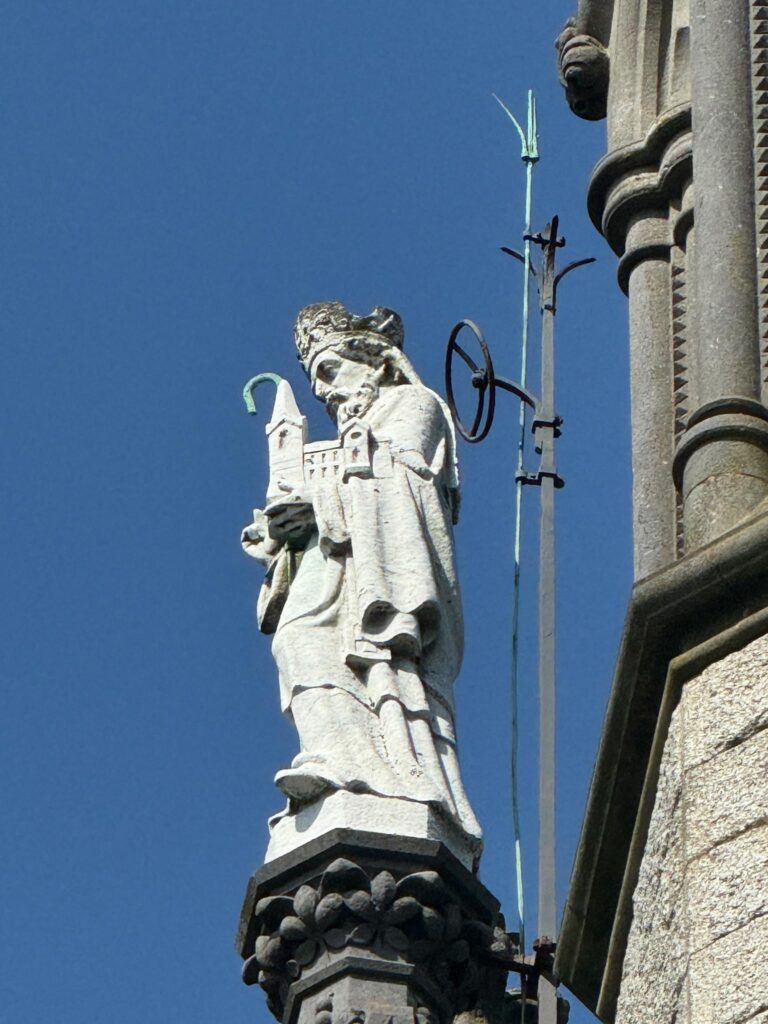
St. Colman’s Cathedral is relatively new, from 1919. It is named for the founder of a monetary at Cloyne that became a renowned center of learning.
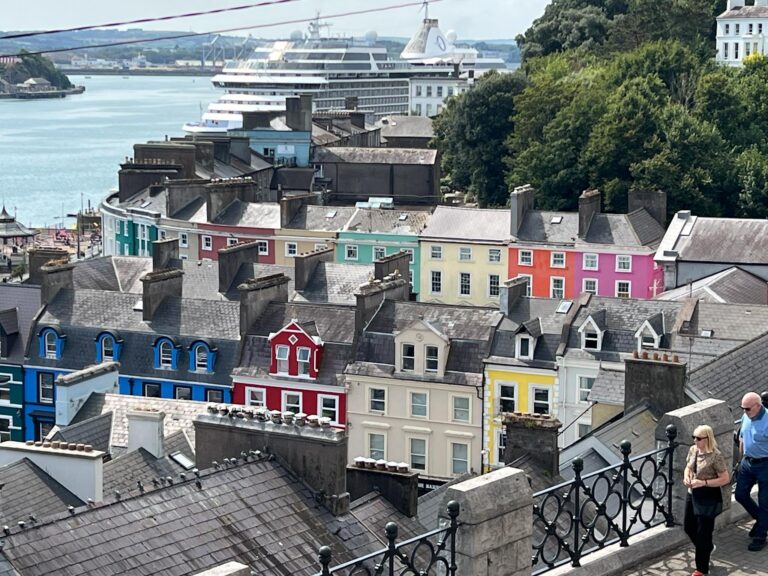
These homes are known as the Deck of Cards homes, extending from near the cathedral to the port area. Even the laundry in the backyards was colorful.
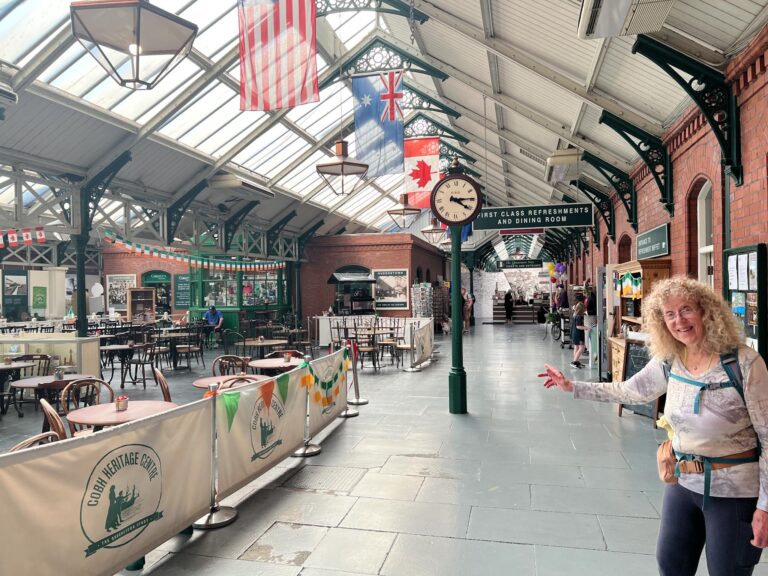
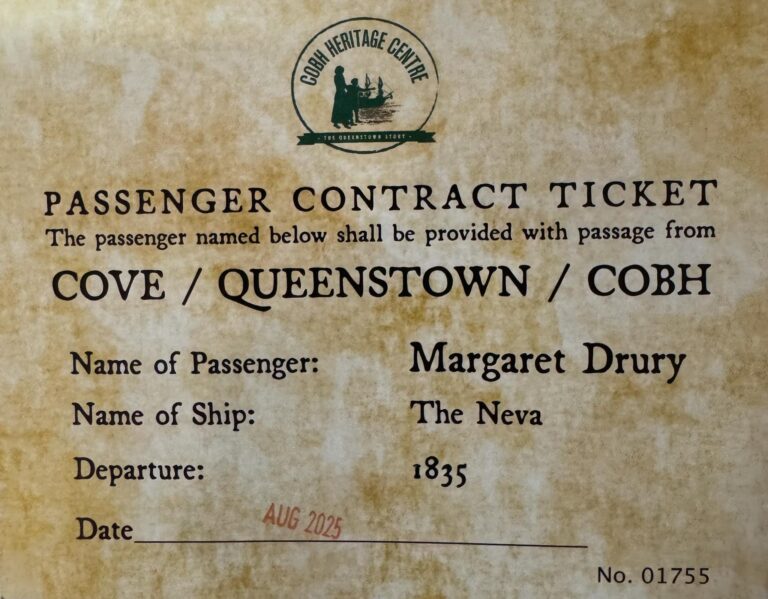
Our last stop in Cobh was at the Cobh Heritage Center. They create an interactive learning experience by giving each of us an emigrant name on our entry ticket.
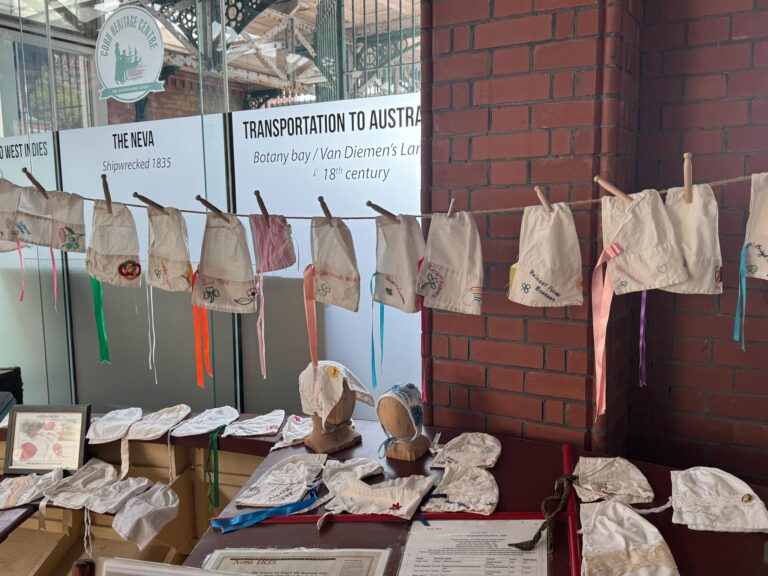
Jan’s ticket was a Cork lady accused by her Aunt and Uncle of stealing a watch worth 7 pounds. She was sentenced to 7 years and transported on the convict ship Neva bound for Australia. The ship hit a reef and broke up. There were not enough lifeboats to save even half of the passengers and the captain and crew abandoned the ship. Margaret Drury was only one of 15 survivors. She was immediately placed in jail after her rescue, but a crew member petitioned the local convict department for her release, and he married her.
The 150 bonnets displayed memorialize the lives of women exiled to Australia as convicts from 1788 to 1853.
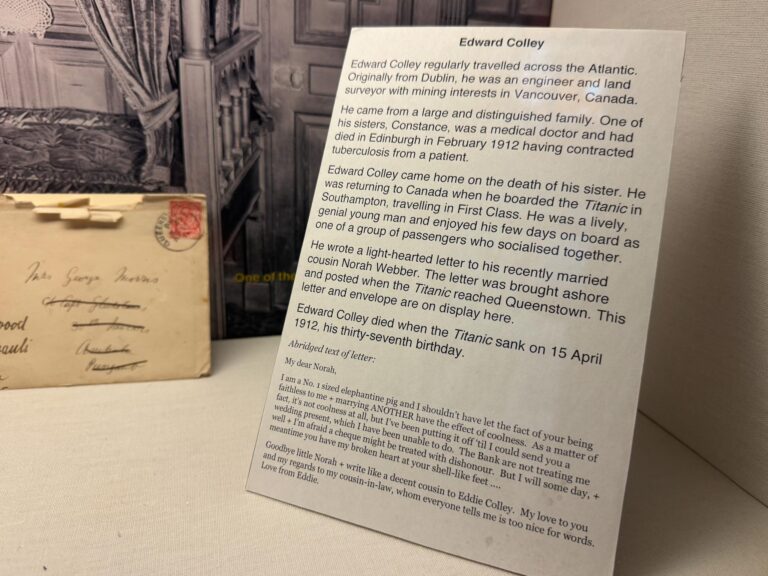
Richard’s ticket highlighted the Titanic passenger, Edward Colley. Sadly, he was a victim of the disaster on the eve of his 37th birthday.
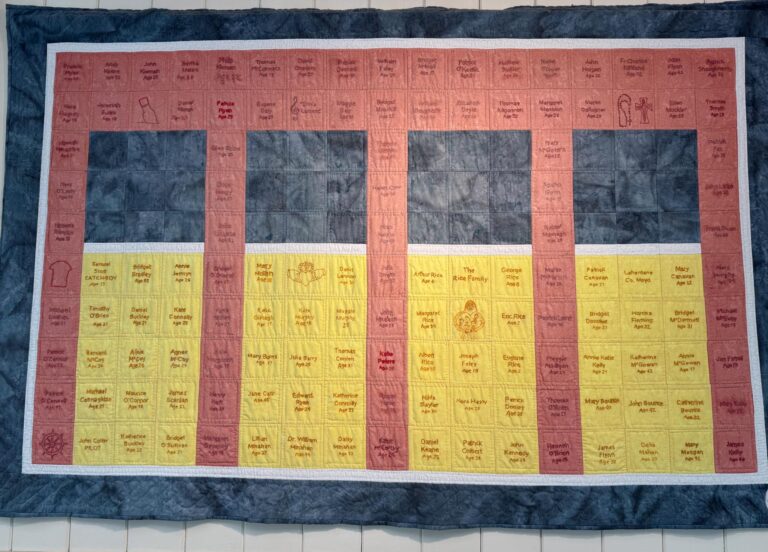
This quilt by the Cobh Active Retirement Group is a tribute to the centennial anniversary of the Titanic’s sinking. One hundred twenty-three people boarded at Cobh, most of whom were lost in the disaster. There are symbols describing some people: the Claddagh ring for an eloping couple, rosary beads, the Mercy symbol for a woman who became a nun in the USA, and a ship’s wheel for the Cobh pilot who boarded and was the last person to leave the Titanic.
Back to Cork and dinner at the Thomond Bar (billed as the best rugby pub in Cork). Richard had Irish stew (billed as the best in Cork) and Jan had fish and chips.






6 Responses
Really cool video again. Also loved the museum ticket. Poor Martha! Thanks for sharing. It really piques my interest.
It’s always a good reminder to hear the back stories about immigrants. This museum made it very personal.
Are you finding your city adventures as exciting as being out on a trail? You are really seeing a lot. And the weather seems much nicer? Dan
We mix our vacations with city tourism as well as country walking. Each has pros and cons. We have had no rain so far but we understand that a storm is coming. We’ll see how that changes things.
I’m learning a lot from your travels! Love the bright colors of the village and the museum! So interesting about the emigrant stories. How was the Irish stew?
Richard loved it!