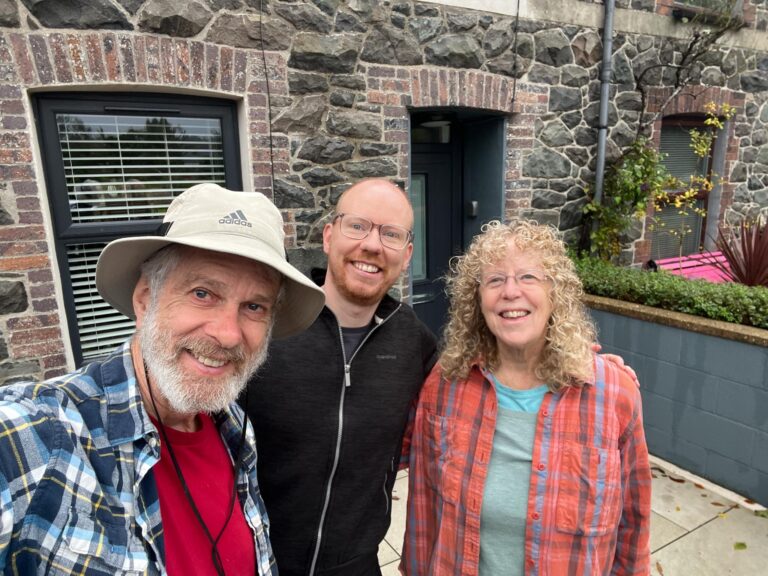
Ready to go. One last selfie. Don’t be fooled—it’s raining on us.
After a long and grueling drive for Simon, we made it to the Newport car park where we will leave the car for a week. Laura from VIP Wales picked us up in their van.
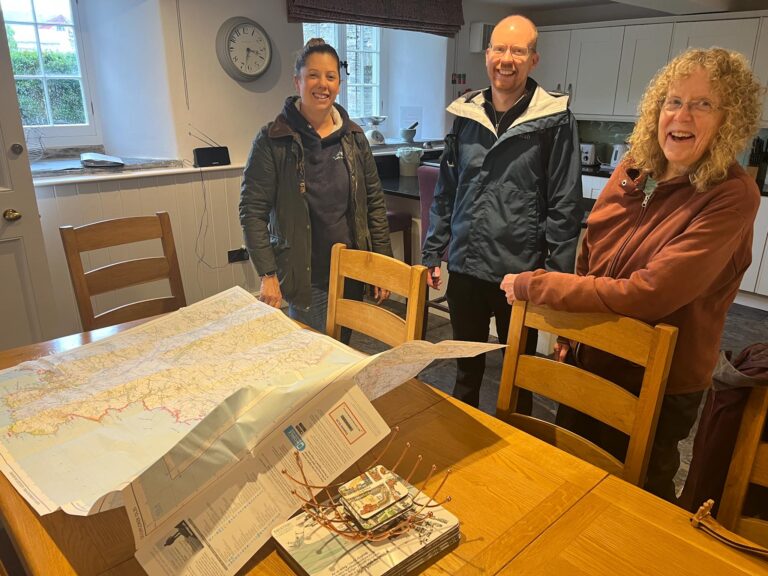
Laura took us to our accommodation and explained the hike essentials including this giant map where she has marked the route and interesting features.
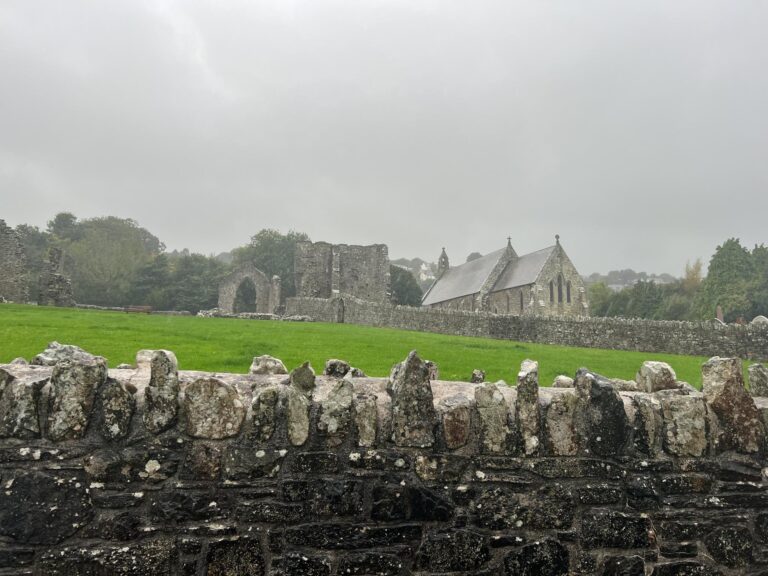
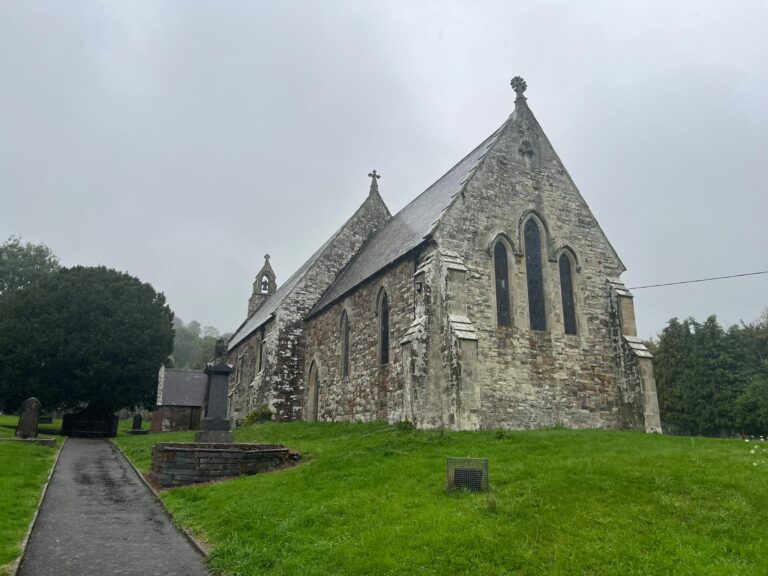
Laura dropped us off at St. Dogmael, about a mile outside Cardigan, where we could visit the church and abbey. Of course, it’s still raining.
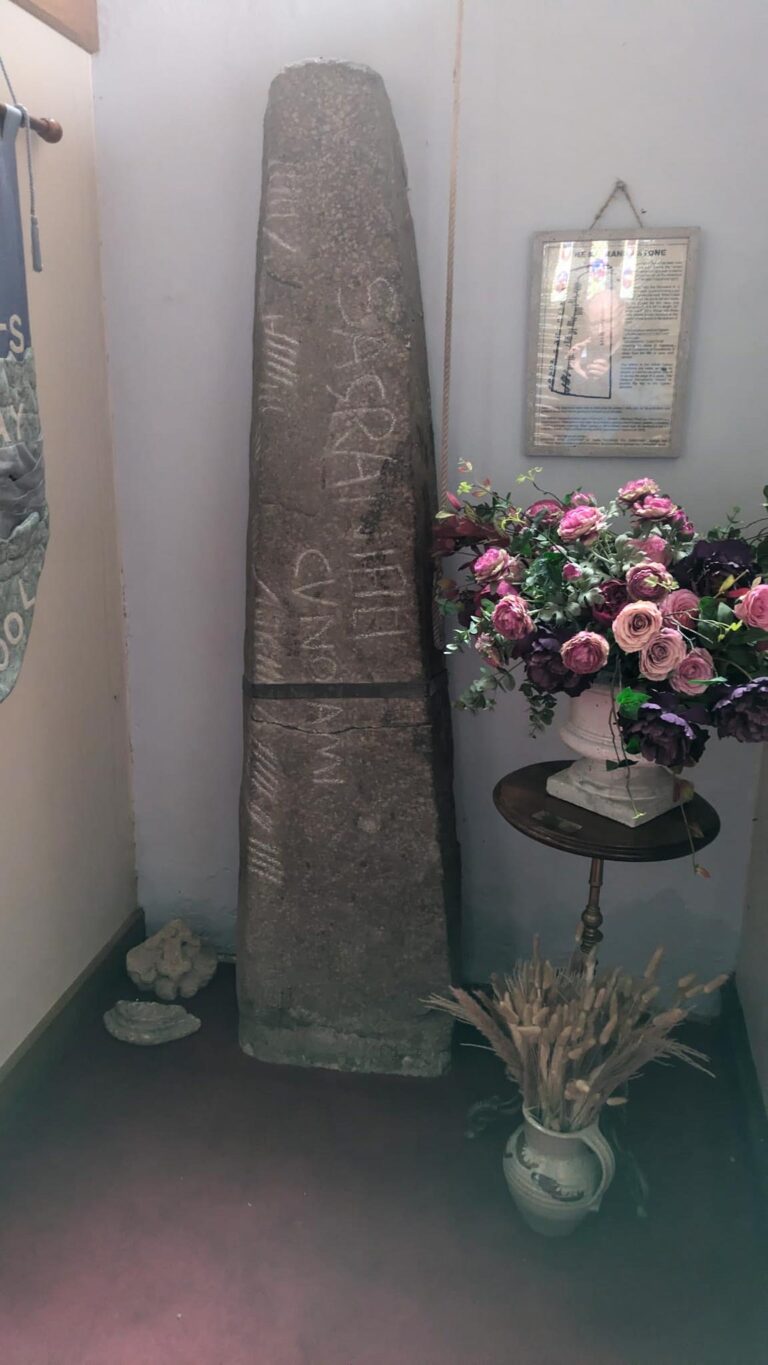
The 19th c. St. Thomas the Apostle parish church in St. Dogmael is home to the Sagramus Stone, a 5th c. pillar stone inscribed with both Ogham and Latin inscriptions to the memory of Sagranus, son of Cunotamus.
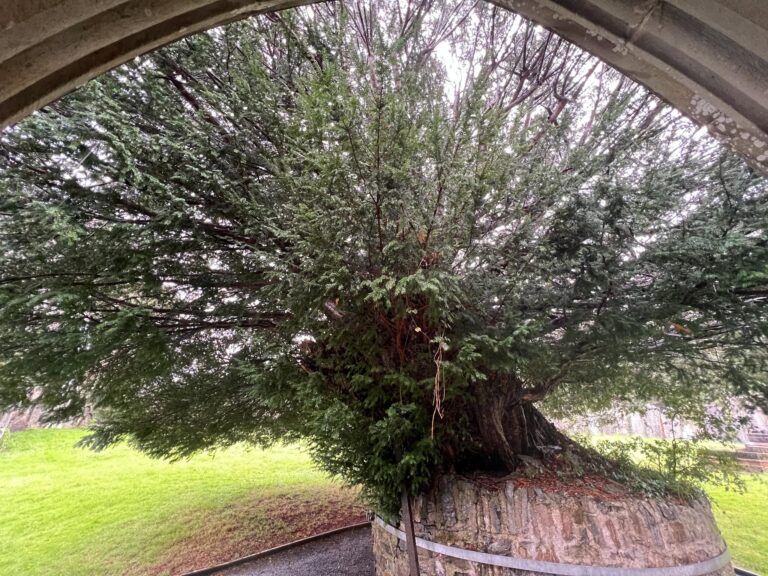
This ancient yew tree guards the door to the church.
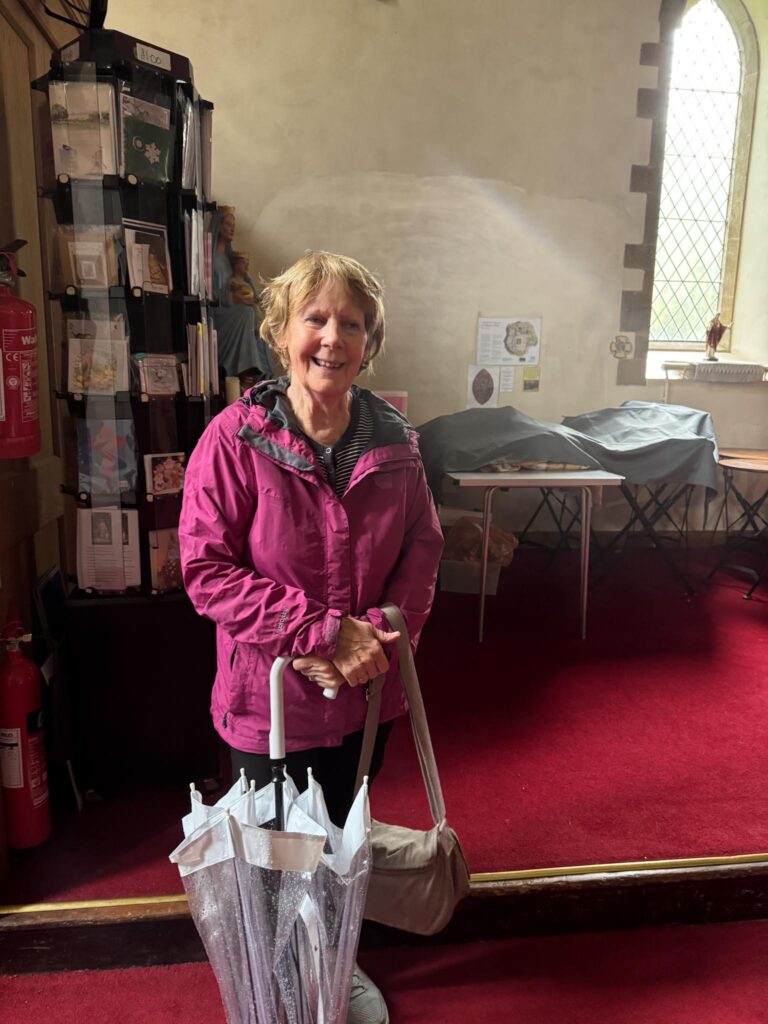
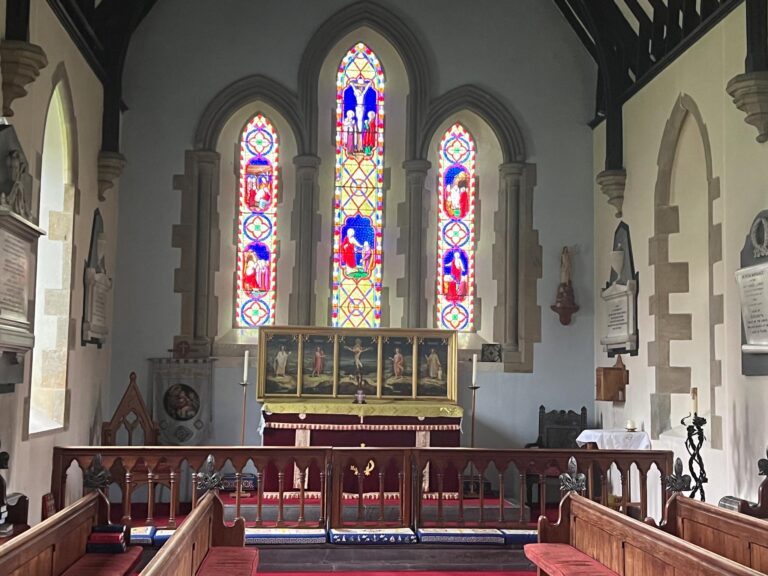
When we arrived, Gwen had just locked the door and was preparing to go home. Seeing our disappointment, she graciously reopened the church and welcomed us.
The Sagranus Stone is about seven feet tall and is thought to be from the late 5th to early 6th century AD, corresponding to the time when the Romans left Wales. The stone probably came from the original Celtic monastery. It has two holes indicating it may have been a gate post, and some believe it might have been a stepping stone.
The real importance is its value as a bilingual inscribed stone that allowed scholars to decipher the Ogham notches or strokes with the Latin inscriptions. Akin to the Rosetta Stone, it allowed historians a link to this early Irish (Gaelic) language.
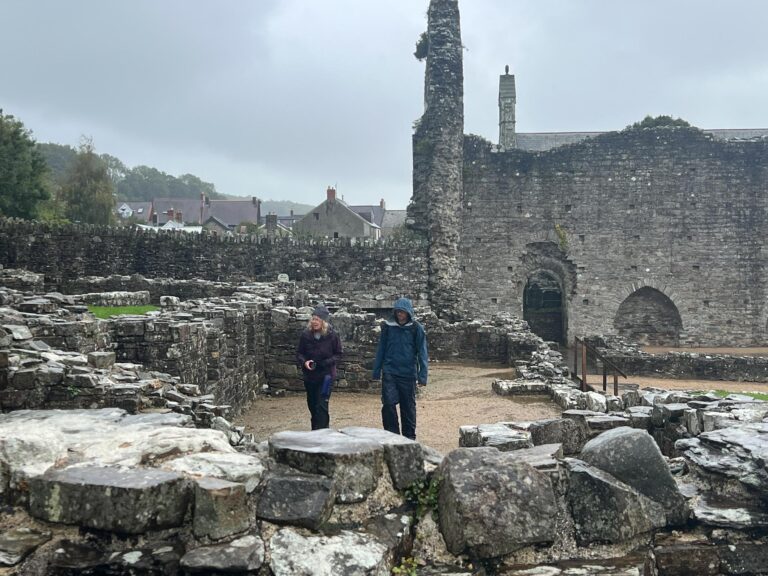
These ruins were the 12th c. St. Mary’s Abbey of the French Tironesian religious order. Before that, there was a 5th c. Celtic monastery here founded by St. Dogmael, a Welsh monk born in the area. The monastery was destroyed by invading Vikings in 987 AD.
The Abbey of St. Mary, at the same location, dates to 1115. The monks followed a simple and austere life influenced by the self-disciplined life of St. Benedict.
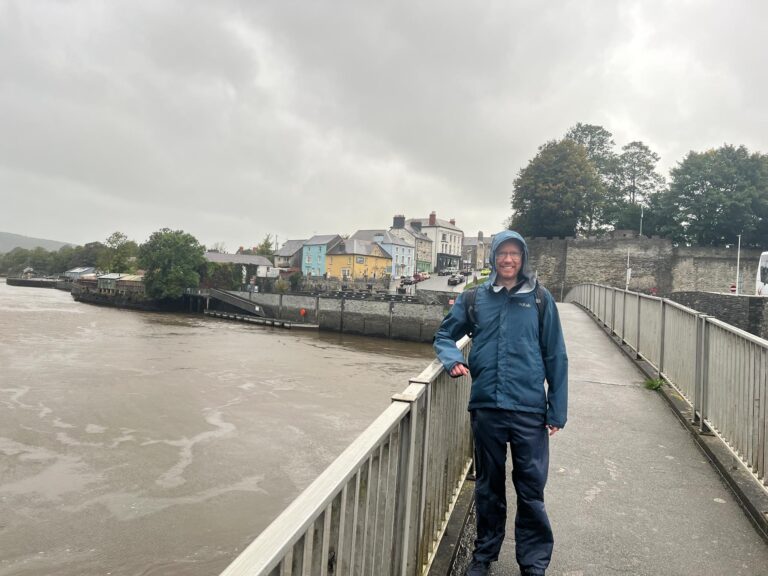
Cardigan’s castle is surrounded by the River Teifi. It was a wet walk back to the castle.
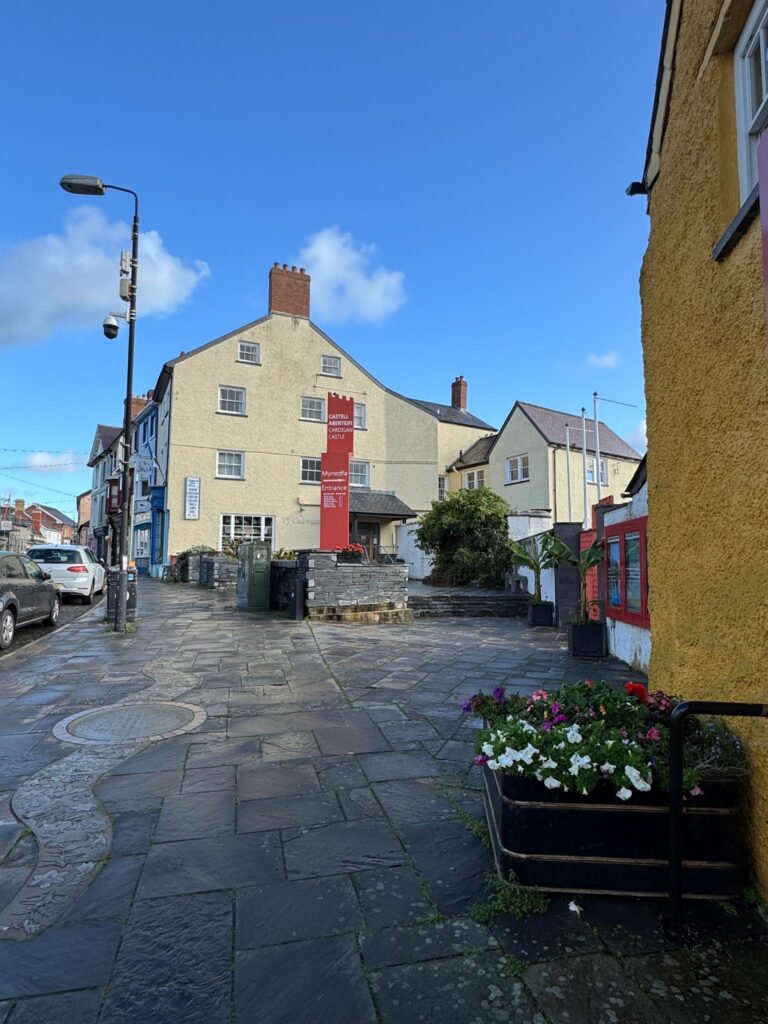
There are a few stone walls but most of the castle is now modernized as part of the town.
The yellow building was our castle home for the evening.



4 Responses
For some reason I am drawn to the tree! It’s beautiful outside the church it’s beautiful:)
We all loved the yew tree but could never find out how old it is. Grandpa Holman loved yew trees as well.
You must be “really charming” that everyone is so nice to open up their buildings after closing time. Seems this has happened multiple times! I think when you host a site like this it brings pleasure to know people are interested in it, especially foreign tourists. Glad you were able to see this church and cross it off the bucket list. Dan and Wendy
I think the locals are genuinely proud of their history and want to show it to us. Gwen and her son, Wyn, were delightful and shared more than we asked.