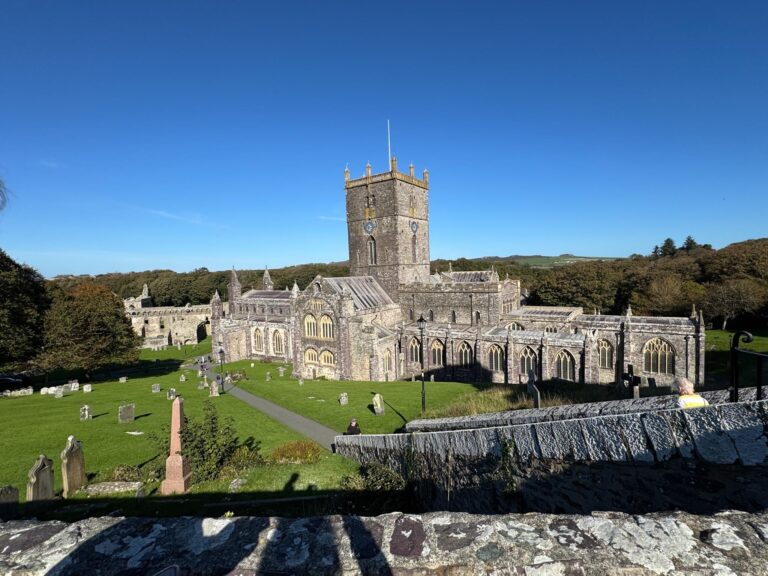
The church is unusual in that it is below much of the town instead of high on a hill. It’s gigantic!
it is built on the site of the monastic community founded by Saint David in the 6th century. The present cathedral was begun between 1180 and 1182 and has been rebuilt and expanded.
William the Conqueror visited St. David’s to pray in 1081. In 1133 Pope Calista II bestowed a papal privilege upon St. David’s, making it a center of pilgrimage for the Western World.
When King Henry II of England visited in 1171 after the murder if St. Thomas of of Becket, the numbers increased as did the need for a bigger cathedral. Plans were begun in 1181, but the new tower collapsed in 1220 and progress was slow.
There have been swings between efforts of restoration and deterioration over the years. However, in 2000 the British Government decided to reinstate the title “city” to St. David’s, the organ and west front were refurbished, and new bells were hung.
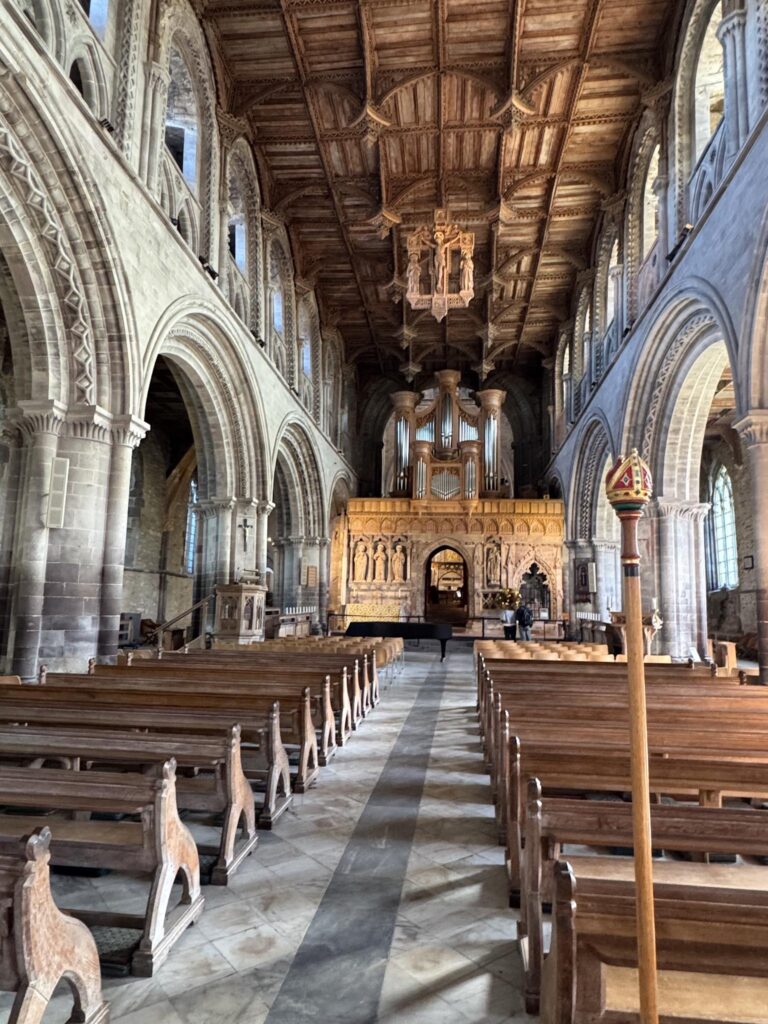
The nave ceiling is wooden from the 1530s, carved from Welsh oak. Twenty-two ornately carved pendants hang below the ceiling.
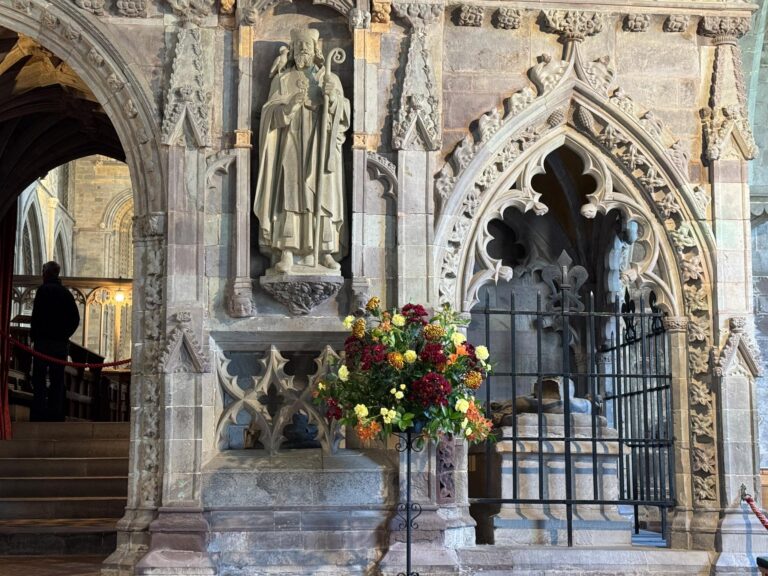
The statue of St. David is part of the stone screen installed when Bishop Gower repaired and remodeled the nave in the 14th century. St. David has a bird on his shoulder, a common view. When he was preaching among the people, it was difficult to see and hear him among the crowd. Supposedly a miracle occurred to raise him into the air to be better seen, and a bird landed on his shoulder.
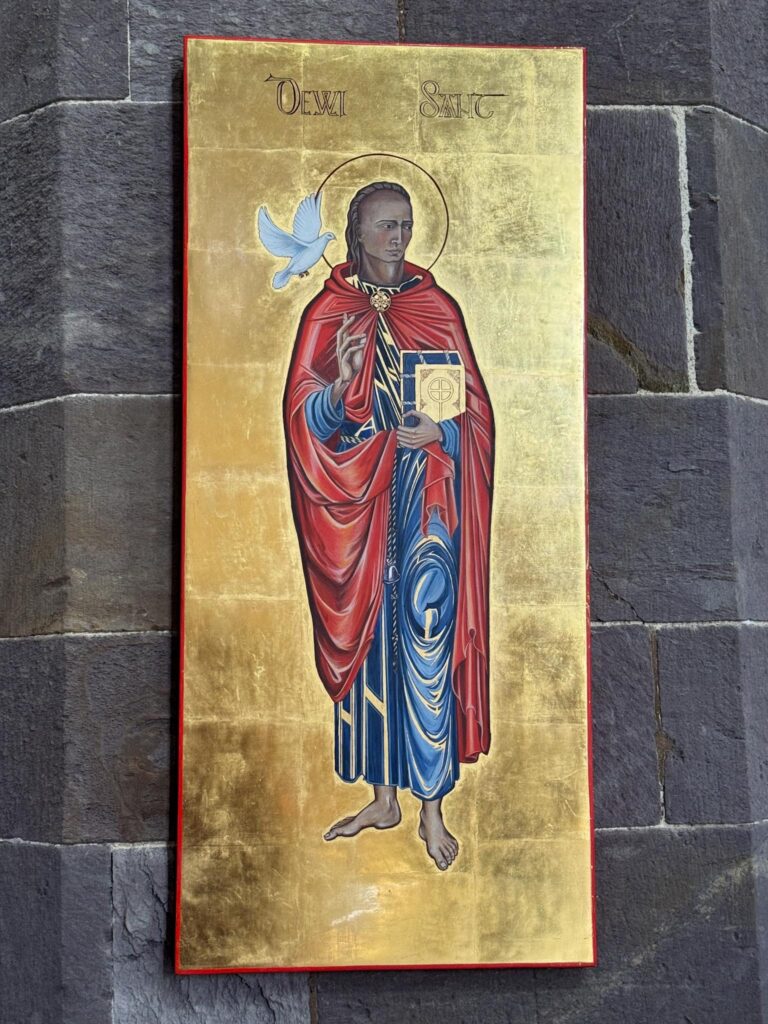
Another view of St. David from the recent representations in St. David’s shrine. Dewi Sant comes from the Welsh language.
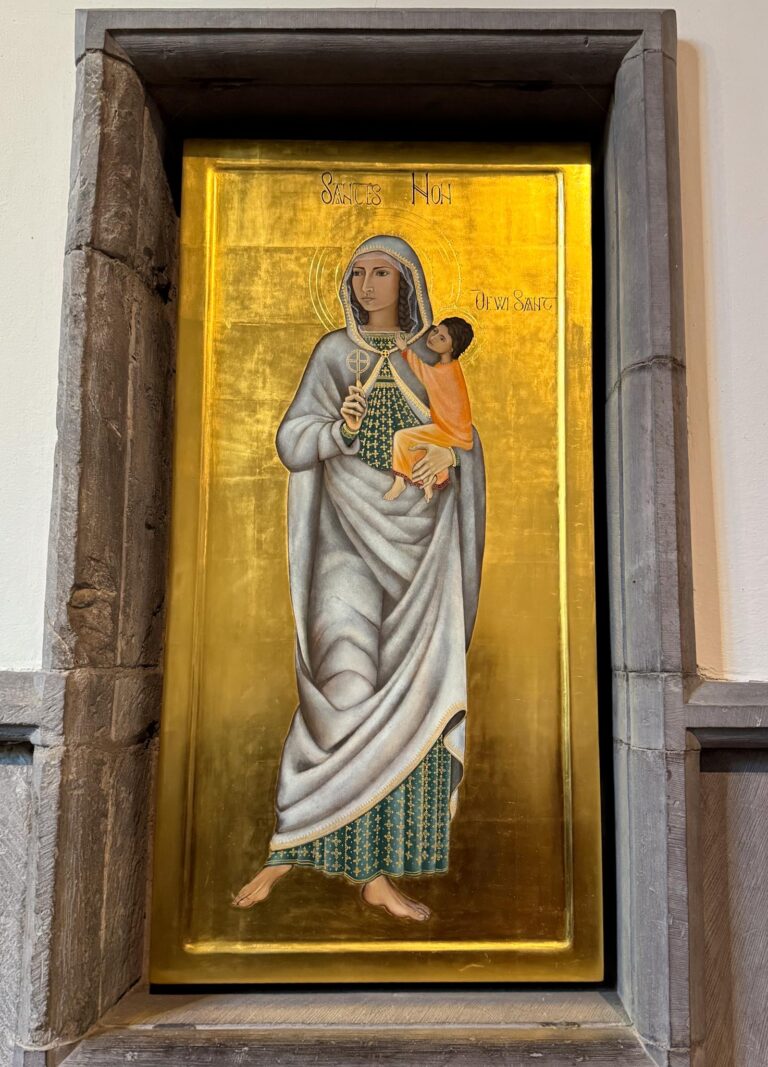
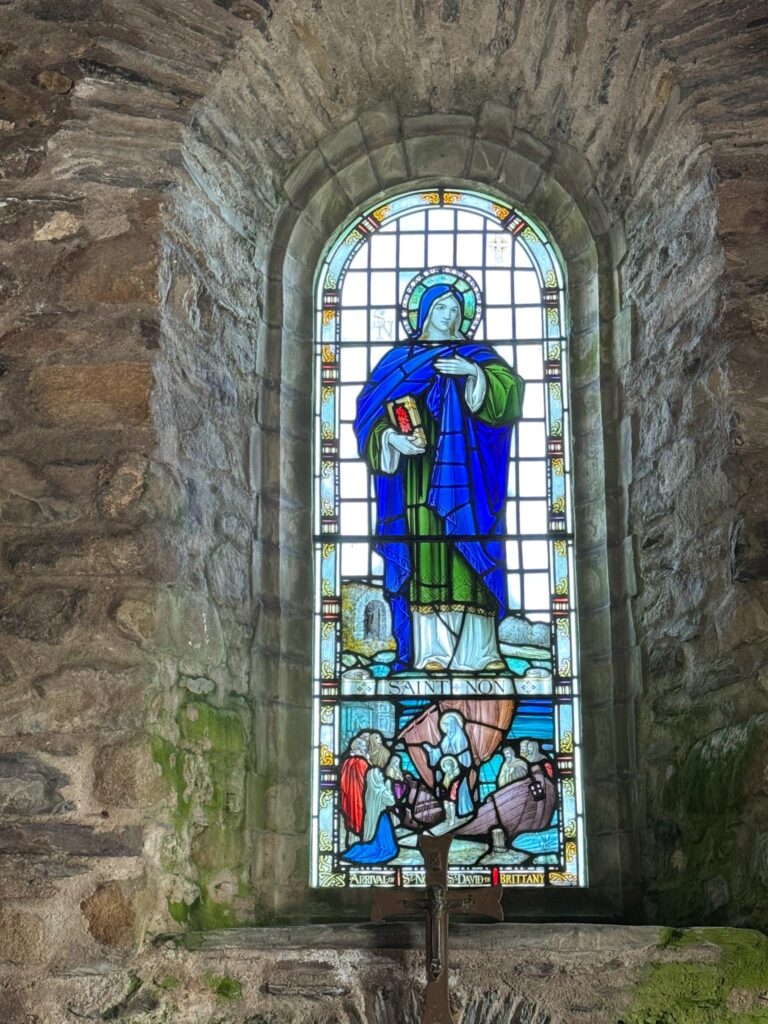
Saint Non is David’s mother, in this representation also from St. David’s shrine. There are many tales about the birth but she is revered in Wales and Brittany.
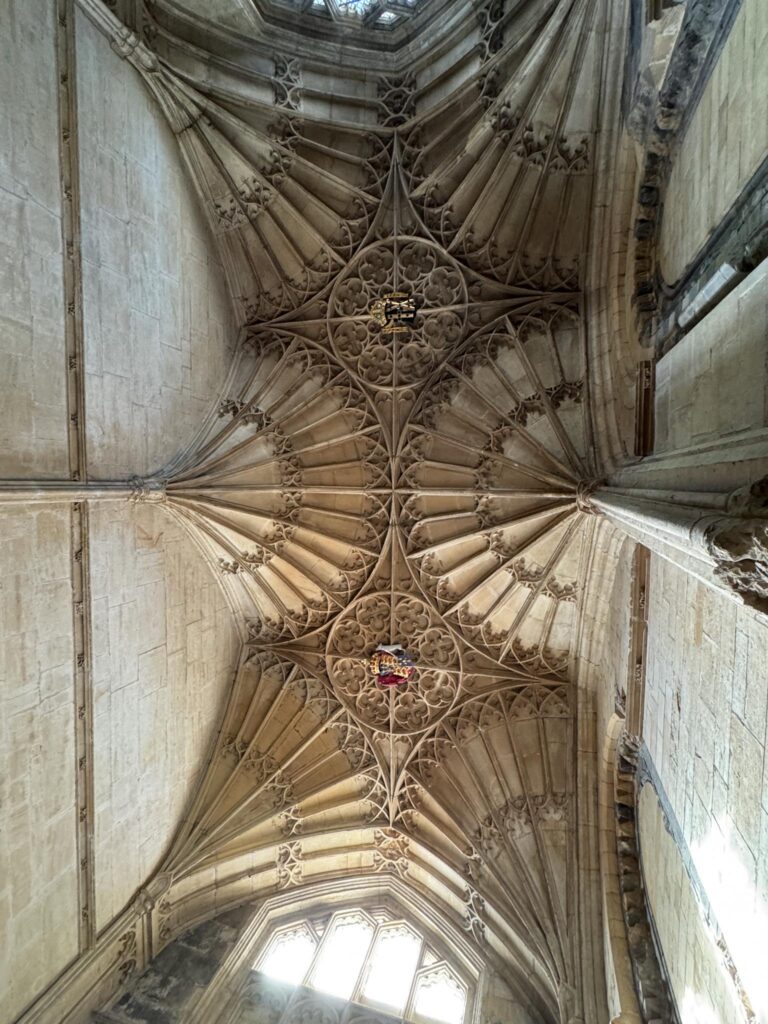
The ceiling of the Holy Trinity Chapel.
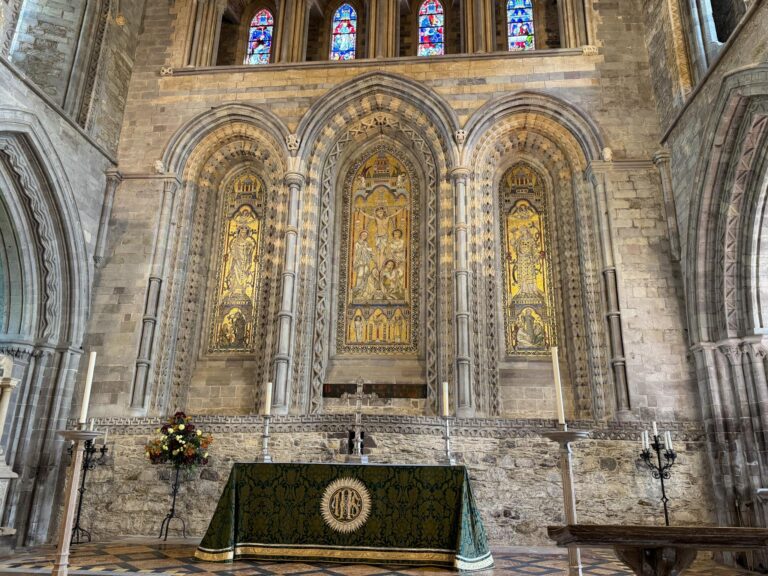
These mosaics above the altar were in the area where we attended Pilgrim Prayers Friday at noon. This is also the home of the shrine of St. David and several graves.
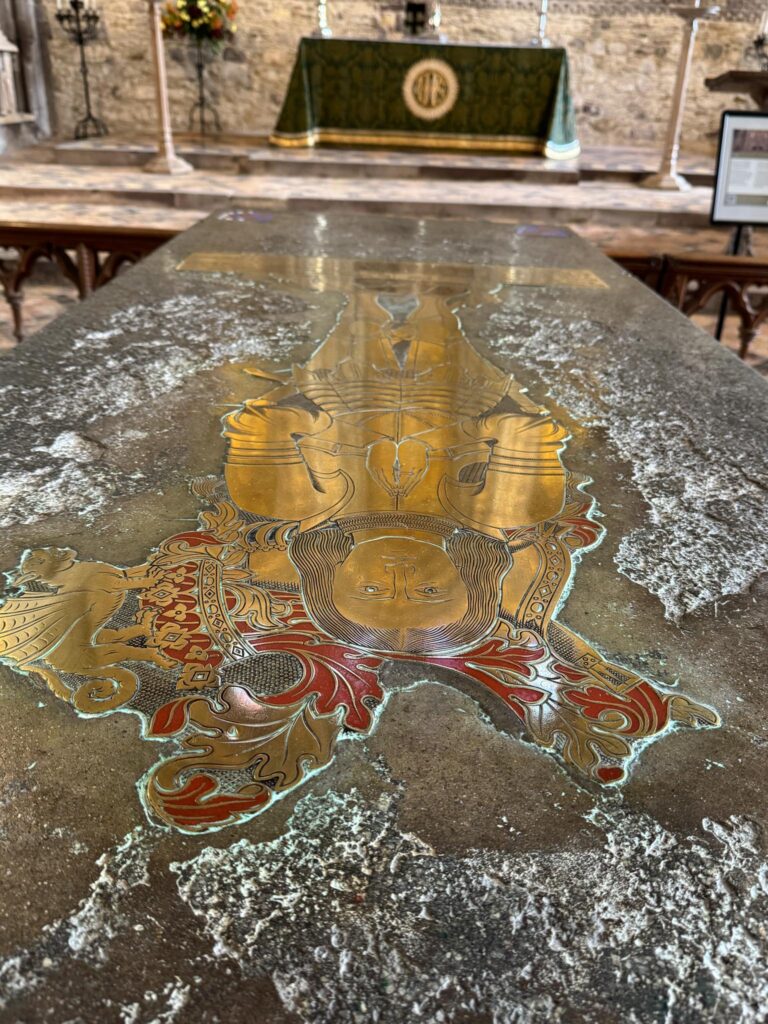
The tomb of Edmund Tudor is in the presbytery. He was half-brother of Henry VI and father of Henry Tudor who became Henry VII. Henry VIII was destroying tombs during the Reformation, so this tomb was brought to St. David’s for safekeeping. The brass is a copy of what was destroyed, but the medieval stonework survives.
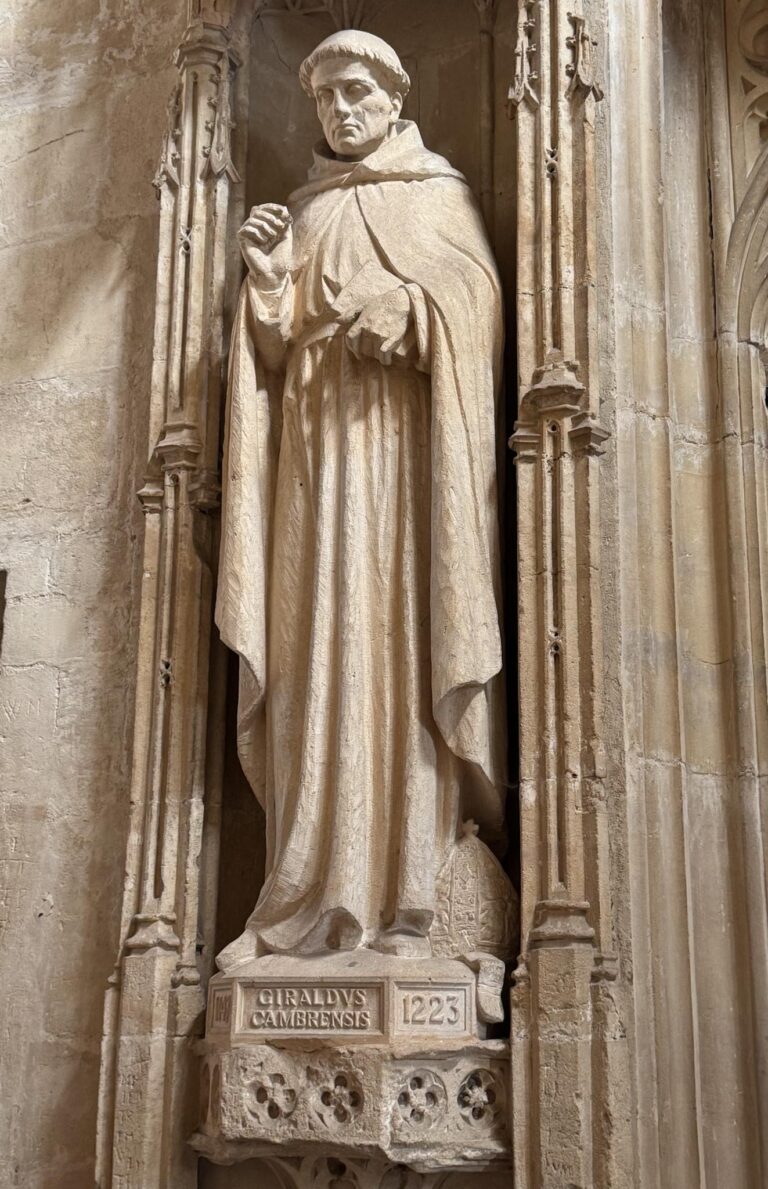
Gerald of Wales was a Welsh churchman who lived in the 12th century. He is a distant relative of Simon who has worked on his family tree.
Gerald hoped to be Bishop of St. David’s but neither the King nor Archbishop of Canterbury would confirm him. Despite two trips to Rome to plead his case with the pope, he was never made Bishop. He is buried at St. David’s Cathedral and the Bishop’s mitre is shown in this statue at his feet.
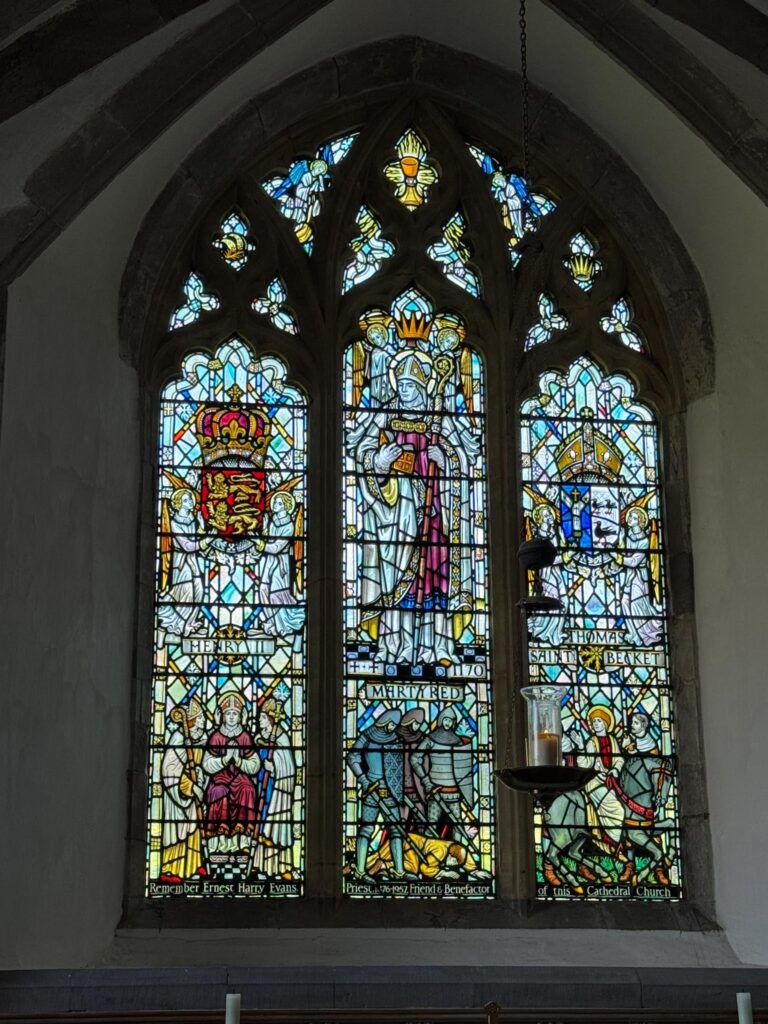
This window includes King Henry II in the left panel and St. Thomas Becket, Archbishop of Canterbury, in the right panel. In 1170, King Henry was frustrated with the Archbishop who was showing more allegiance to the pope than he was to him as King. He made some offhand comments and four knights from his household murdered Thomas Becket in the Canterbury Cathedral. The murder shocked medieval society and Becket was seen as a martyr. To seek forgiveness, Henry II dressed in sack cloth and prayed at St. David’s.
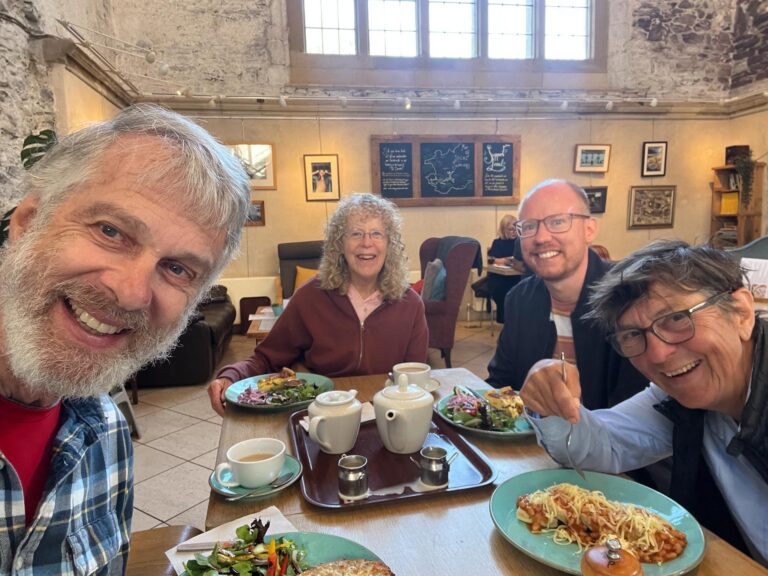
We were taking a break over lunch when a fellow hiker, Kate from Darbyshire, joined us. She was a bundle of energy and kept us laughing. She was heading back shortly so we only had a quick lunch together.
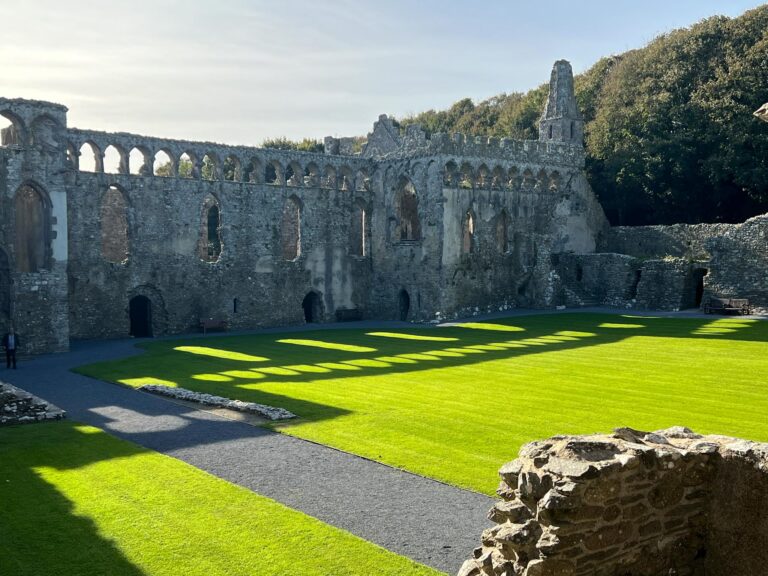
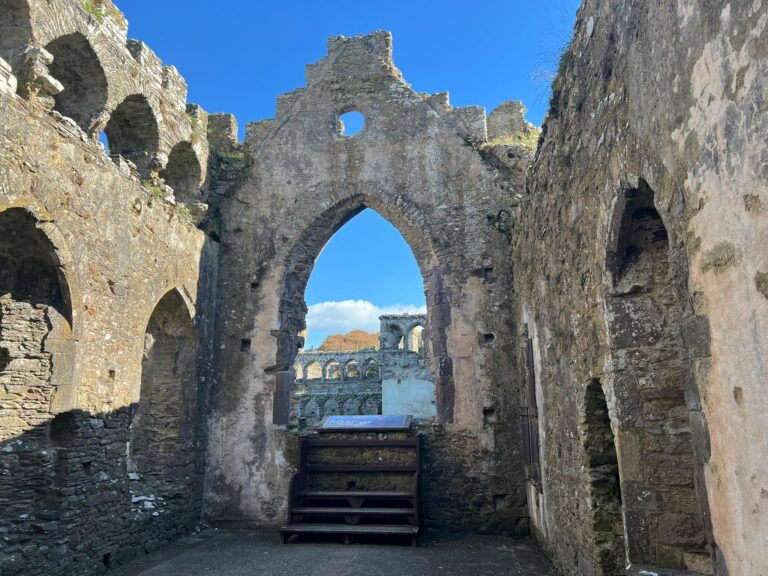
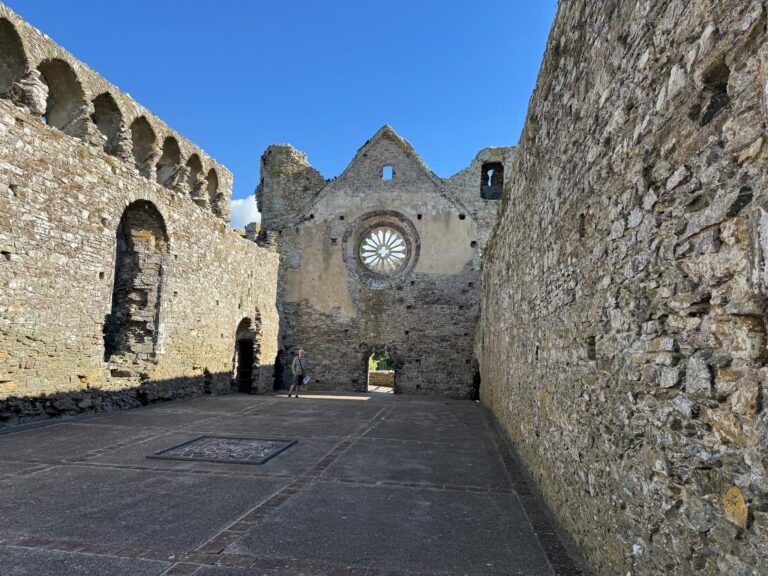
Bishop Gower is responsible for much of the Bishops Palace alongside St. David’s Cathedral. It housed the monks but was impressive enough for kings. He used local stone but designed chequerboard patterning in quartz.
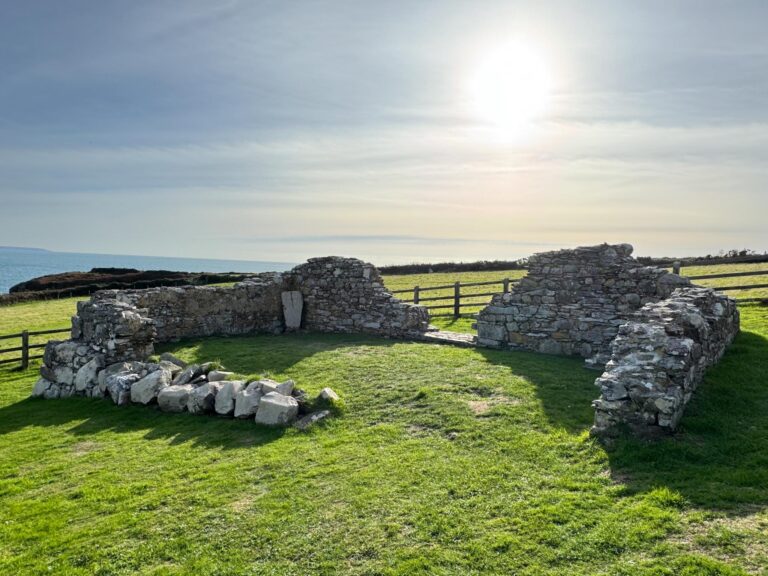
The ruins of St. Non’s Chapel where she gave birth to St. David about 1500 years ago. According to legend, she was alone during a thunderstorm but she was protected by a beam of golden light. She gripped a rock hard during labor and it split in two. Later, a spring welled up to baptize the baby.
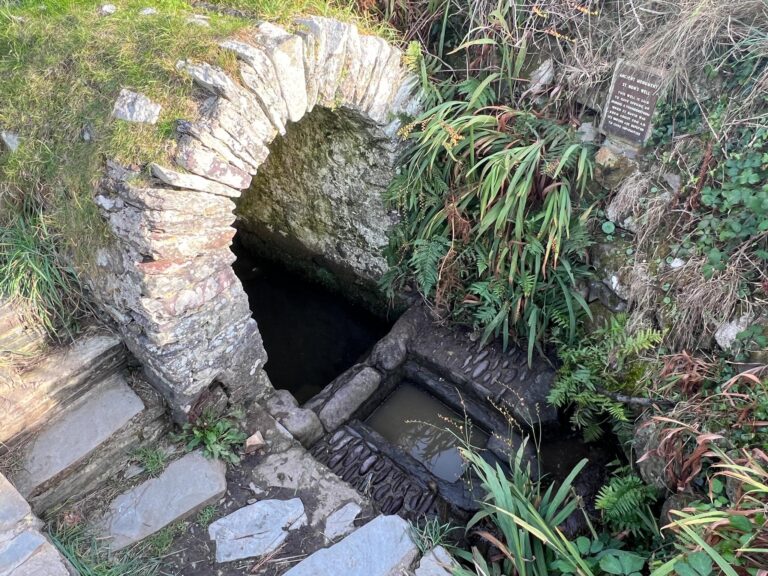
The holy well was probably a sacred healing spring even in prehistoric times. The story of Non and David adds to the mystique that the waters could cure infirmities.
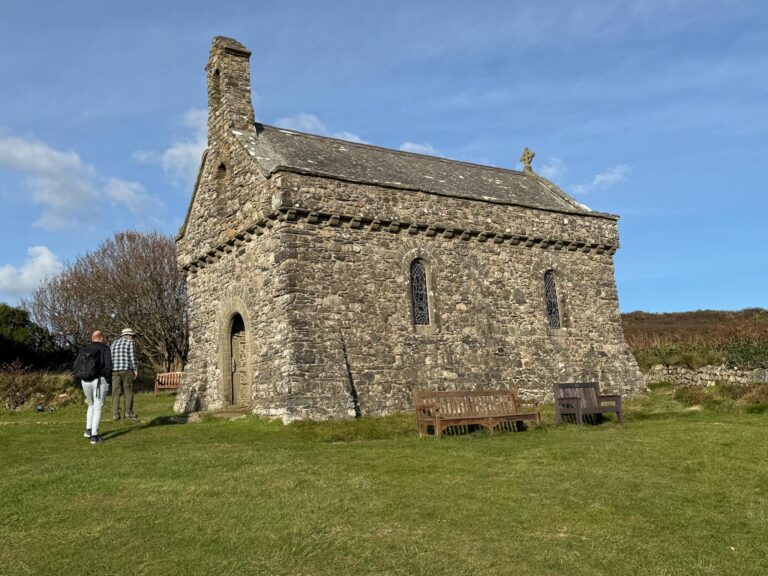
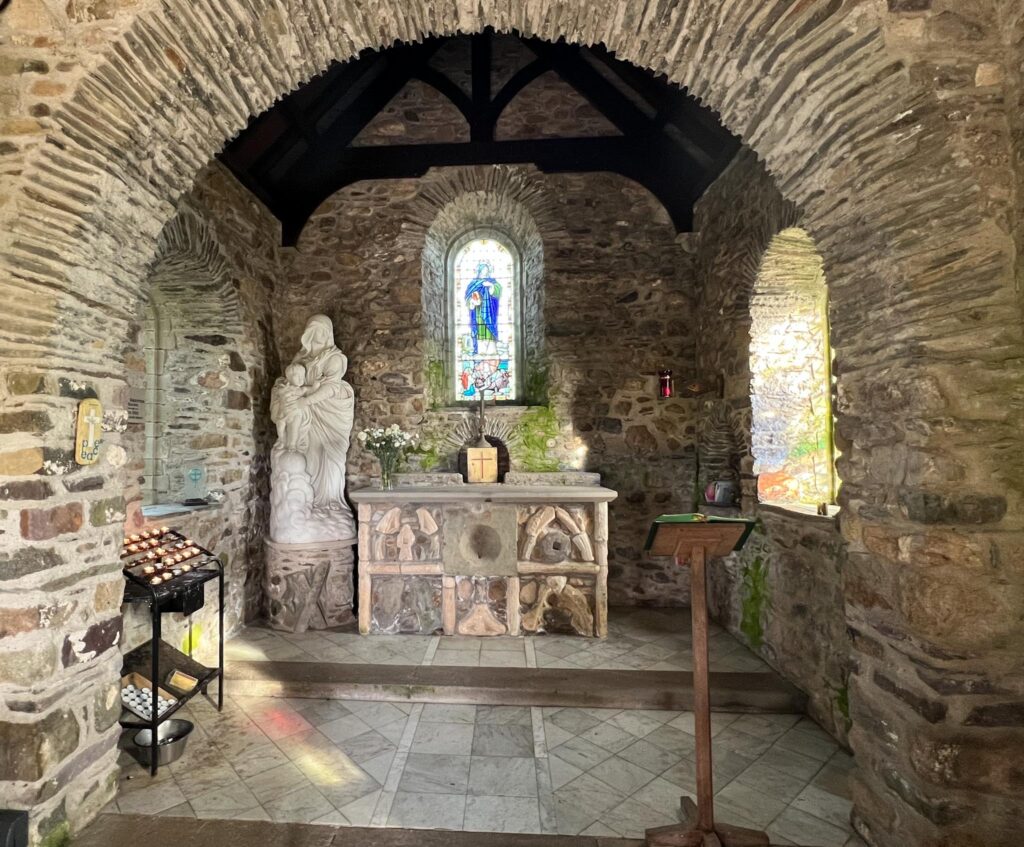
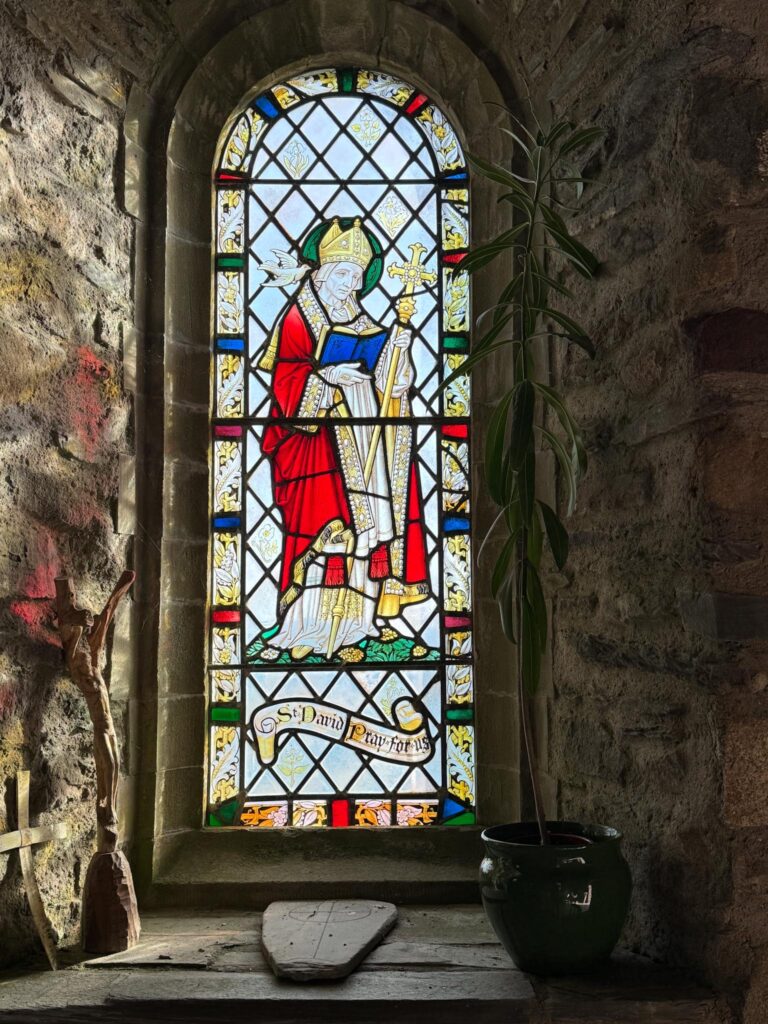
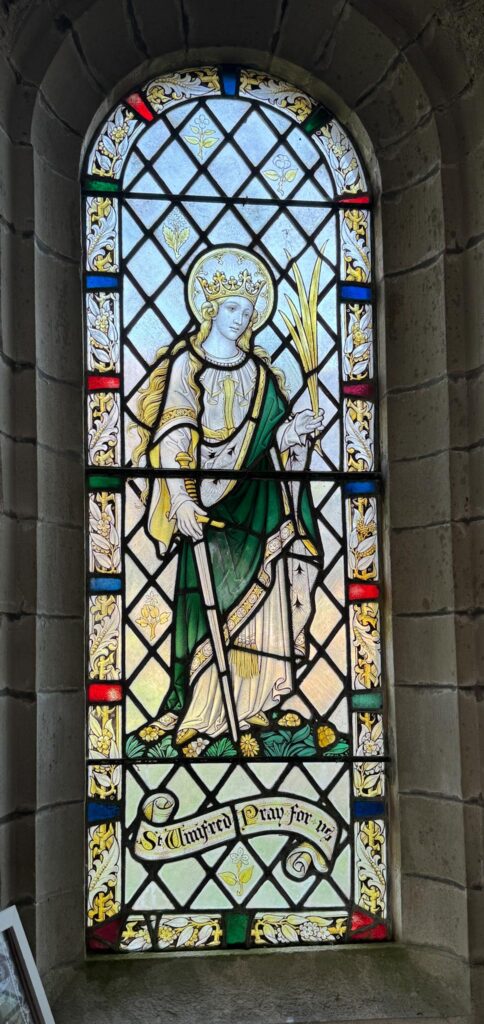
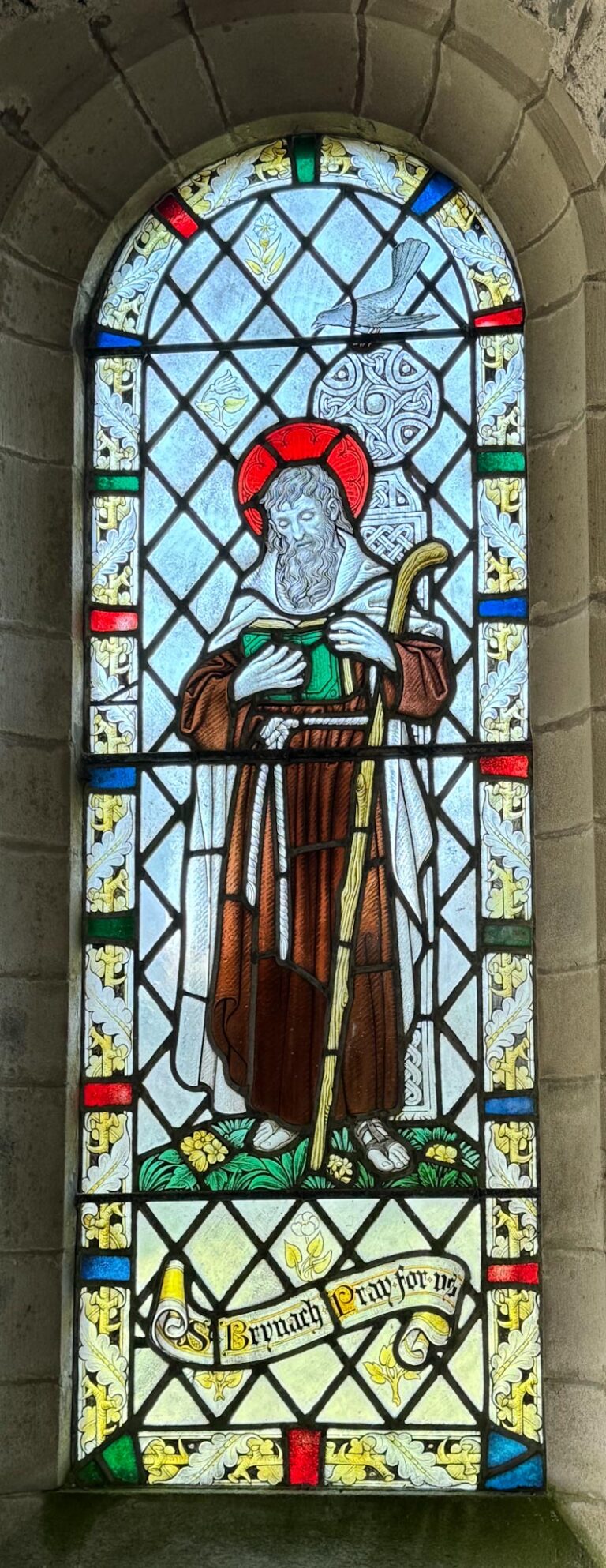
This newer St. Non’s chapel is nearby. Inside there are stained glass windows for St. Non, St. David, St. Winifred, a Welsh saint also associated with a healing spring, and St. Brynach, a Pembrokeshire saint .
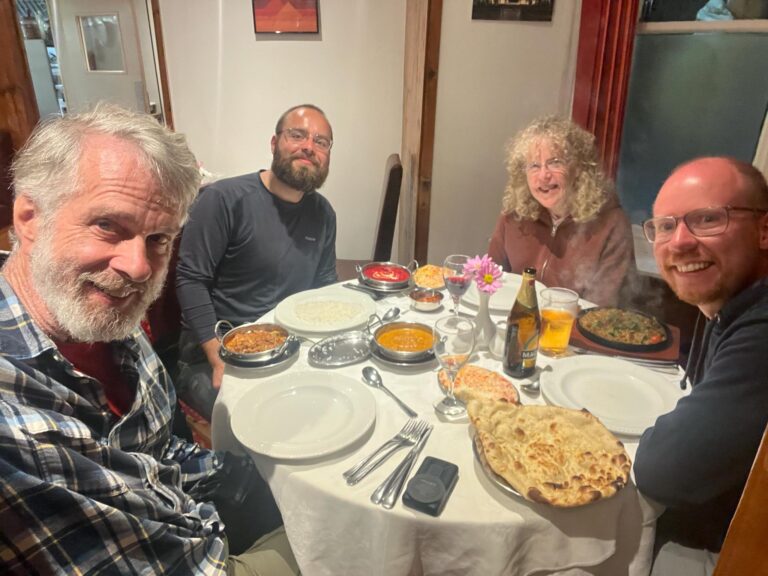
Louie arrived in St. David’s one day behind the three of us, but he arrived in time to have dinner and celebrate our walks together. Until we meet again, . . .

2 Responses
Amazing!
This is a very small out-of-the-way place but definitely worth a visit in my opinion. One of many surprises!