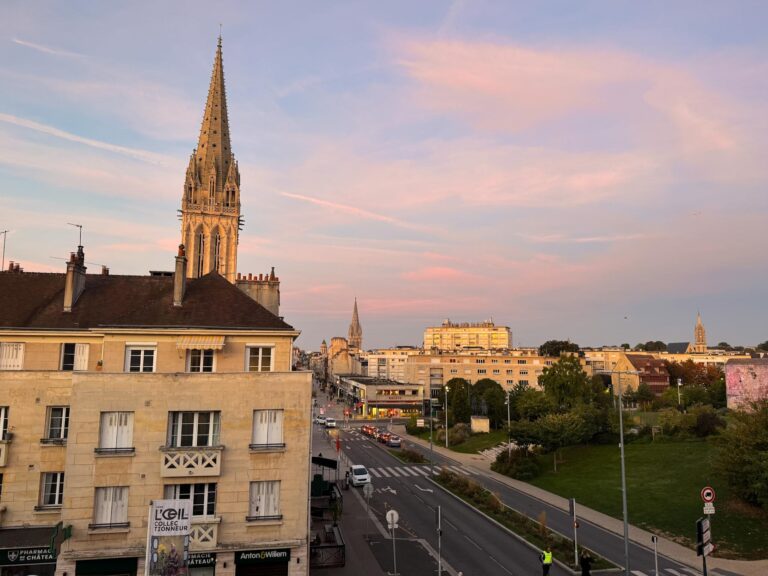
Early morning from our apartment.
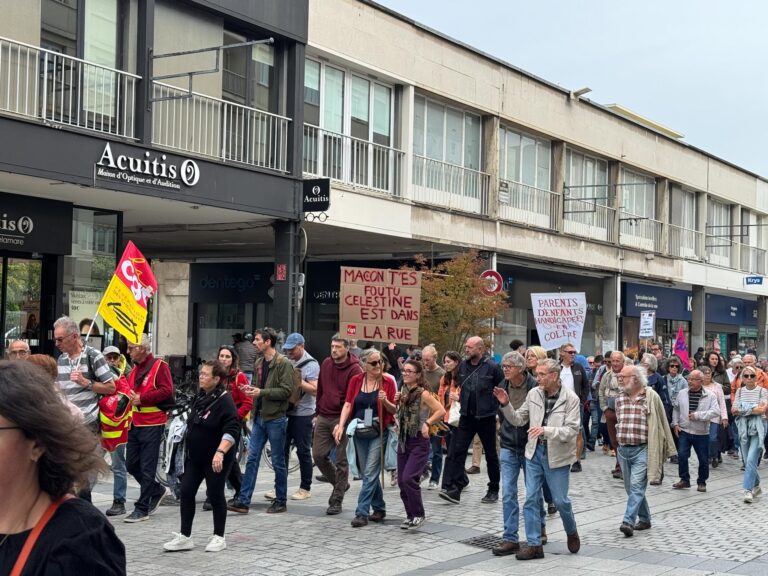
There was a demonstration about noon in the main pedestrian thoroughfare of town. First it appeared to be led by groups with uniforms and signs for their group. As the “parade” progressed, it seemed there was more of a non-uniformed crowd.
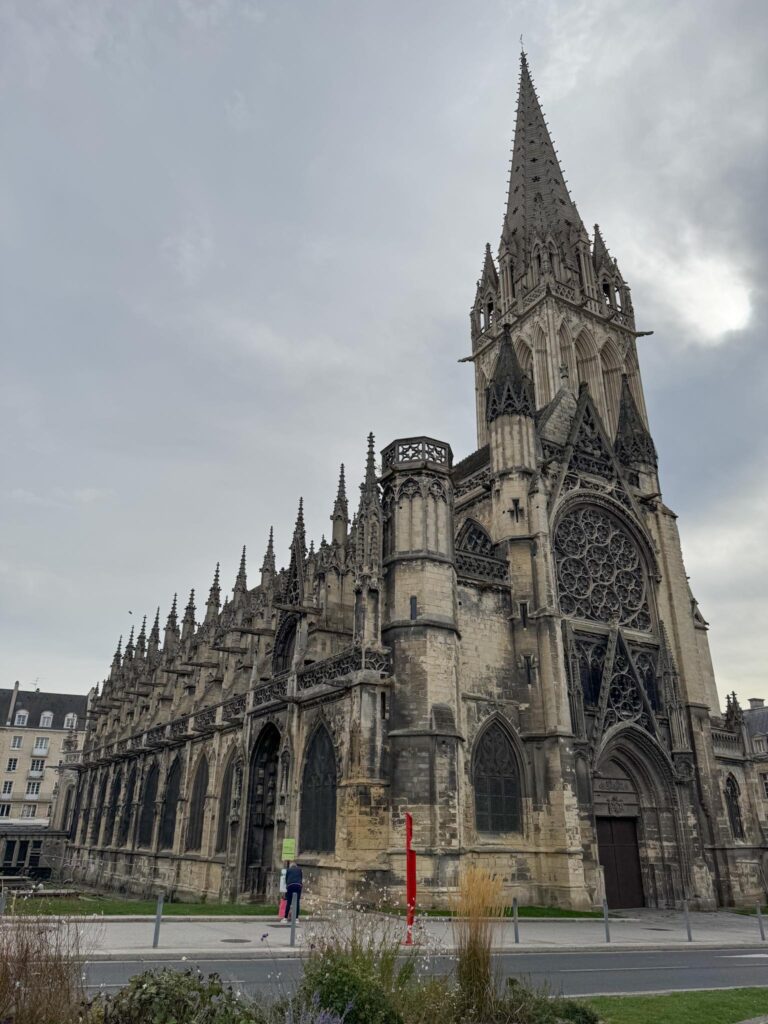
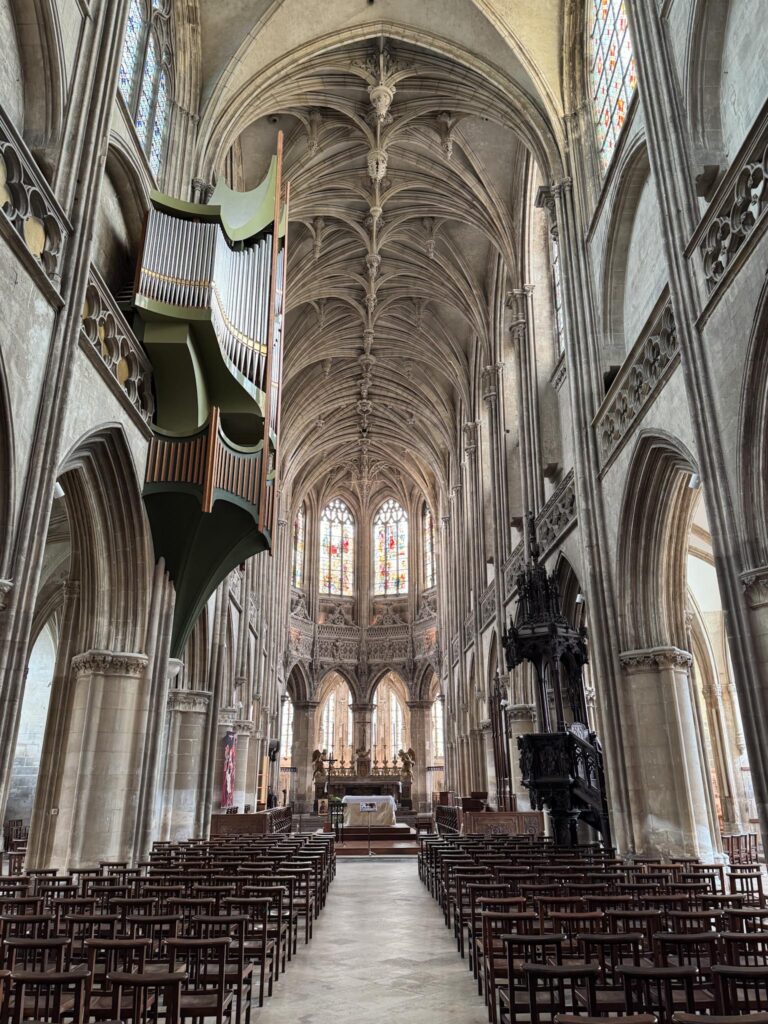
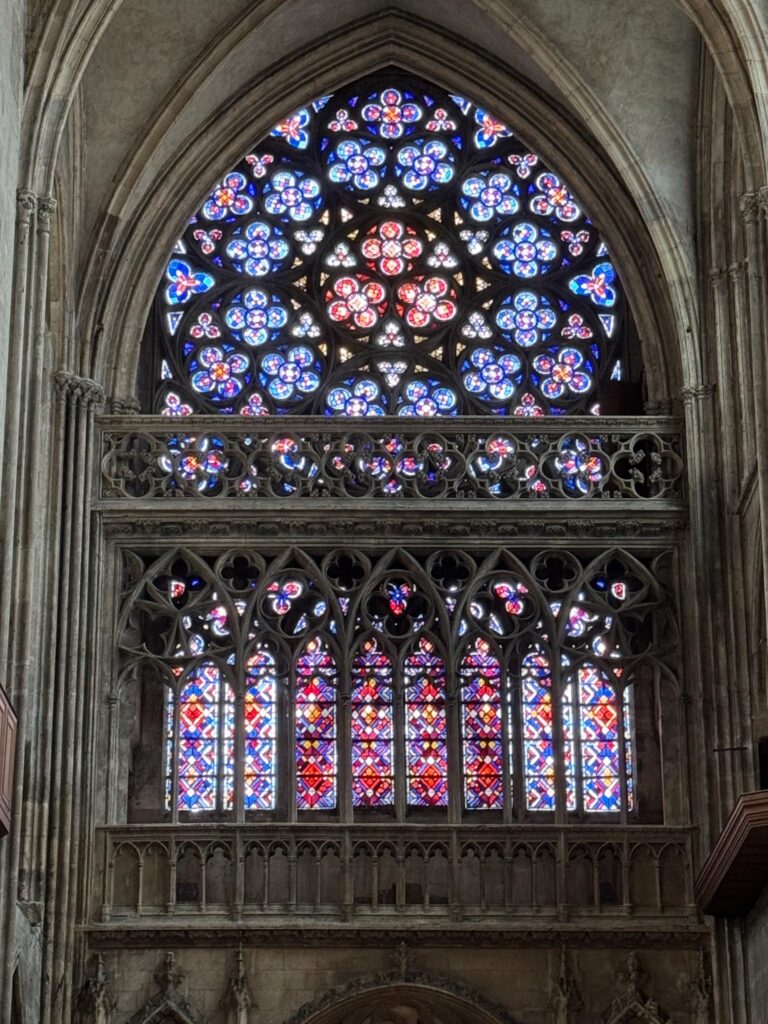
The church of Saint-Pierre was built from the 13th to 16th centuries and is one of Caen’s major churches.
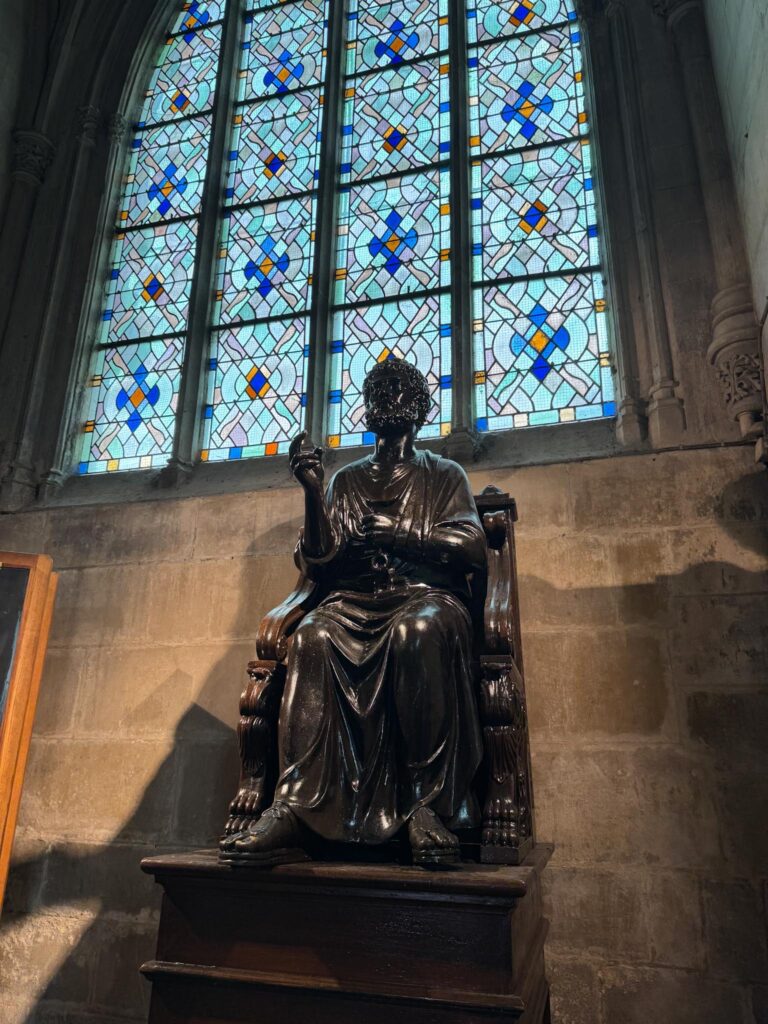
A copy of the statue to Saint Peter from the Vatican sits inside this church.
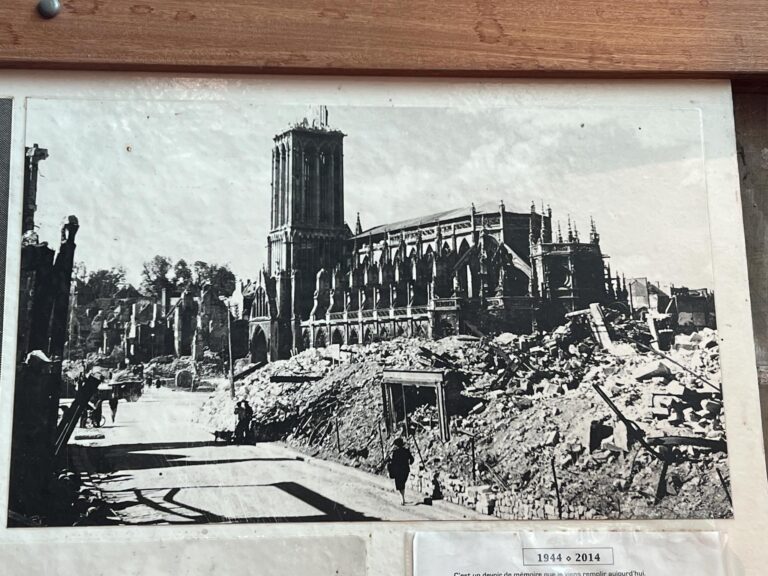
On June 9, 1944, the spire was destroyed by a shell fired at German forces from the Royal Navy battleship HMS Rodney. It was later rebuilt.
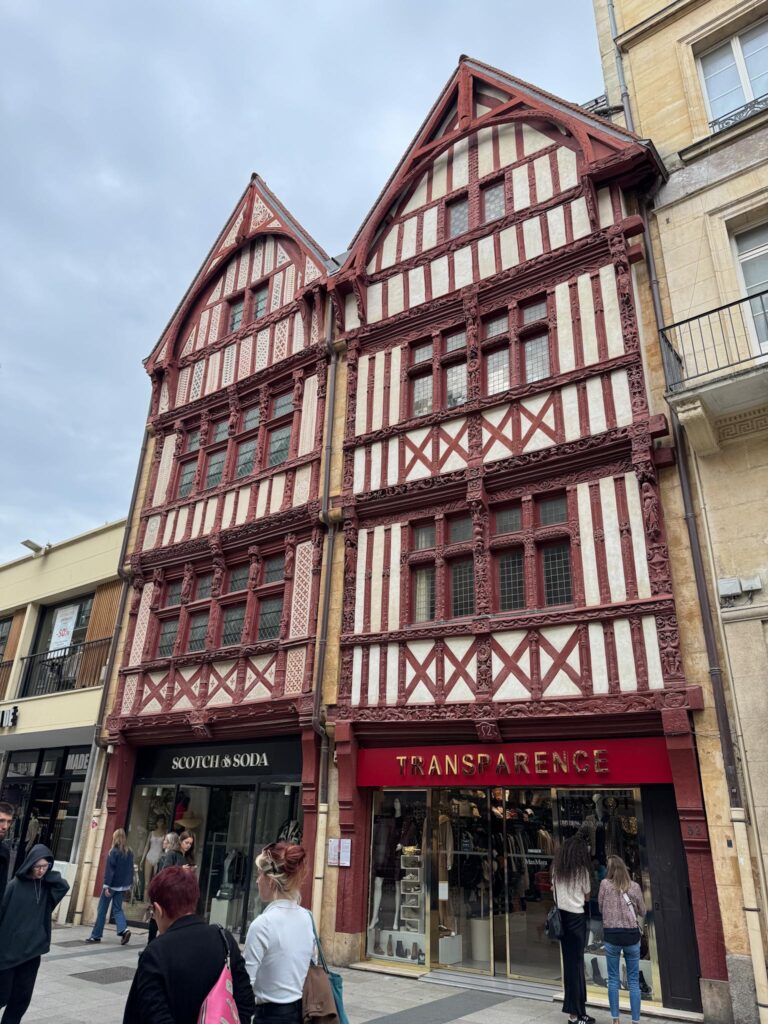
There are several medieval half-timbered houses in Caen. Because of the abundance of stone for building, timber was used for the aesthetic effect on the front of the building only.
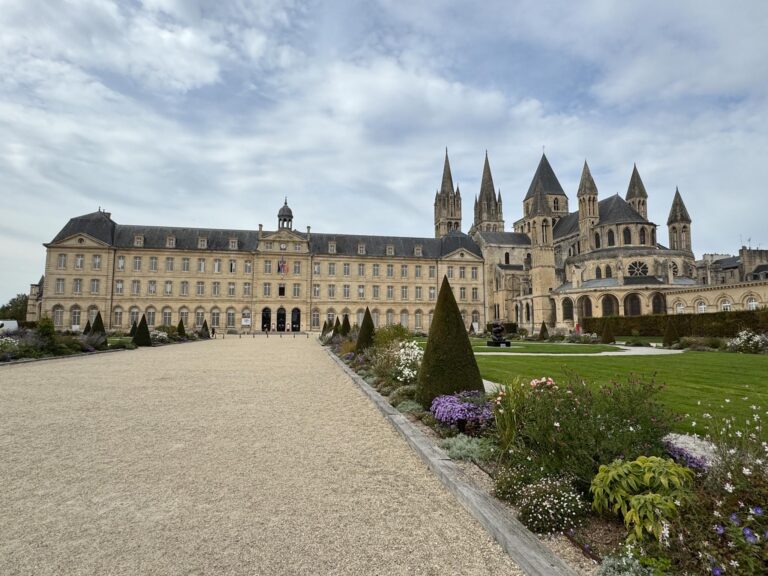
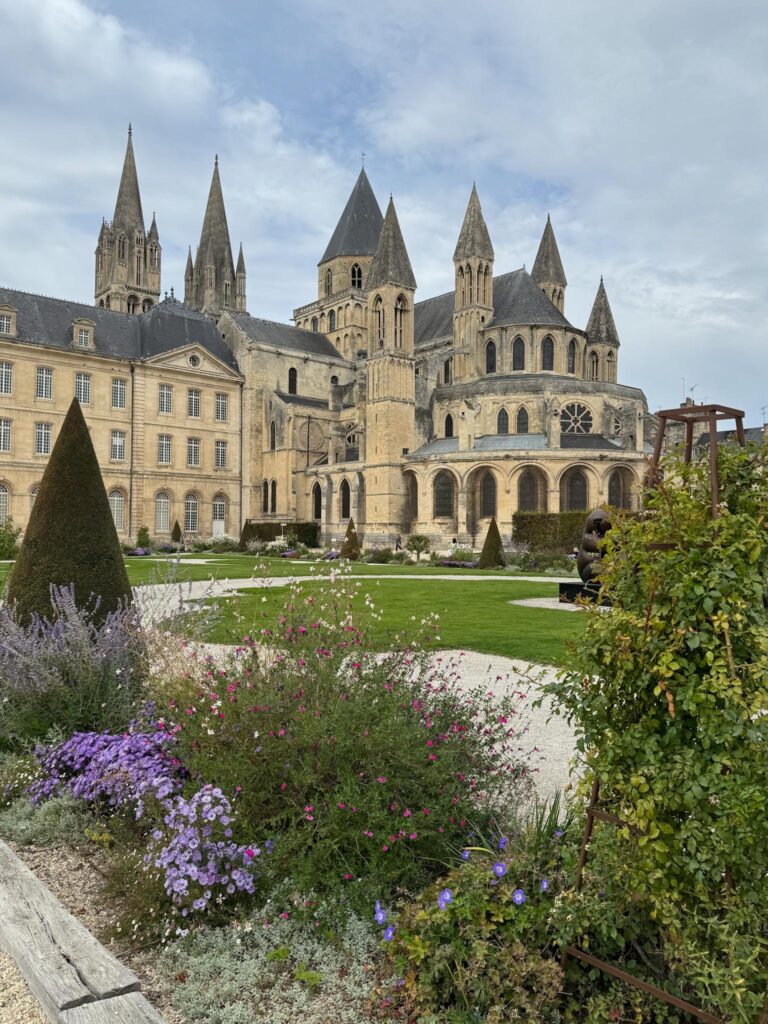
The Abbaye aux Hommes, Saint Etienne, was begun about 1063 by William the Conqueror to appease the Pope after he married his cousin and was threatened with excommunication.
The abbey has also been a school and some parts are the Town Hall.
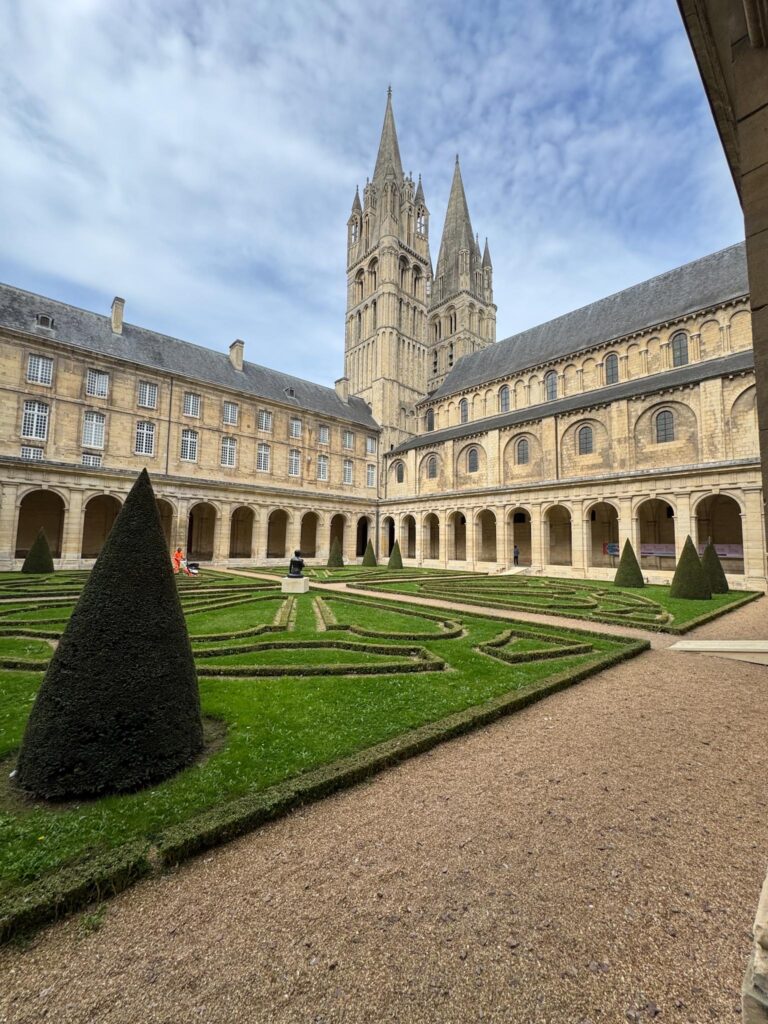
The cloister is a place for monks to walk, read, and meditate. They also grew plants with medicinal properties here. The garden is isolated from the outside and only visible to the sky, symbolic for the monks to represent God. The two symmetrical towers enclosing a central gable was copied throughout Norman Europe.
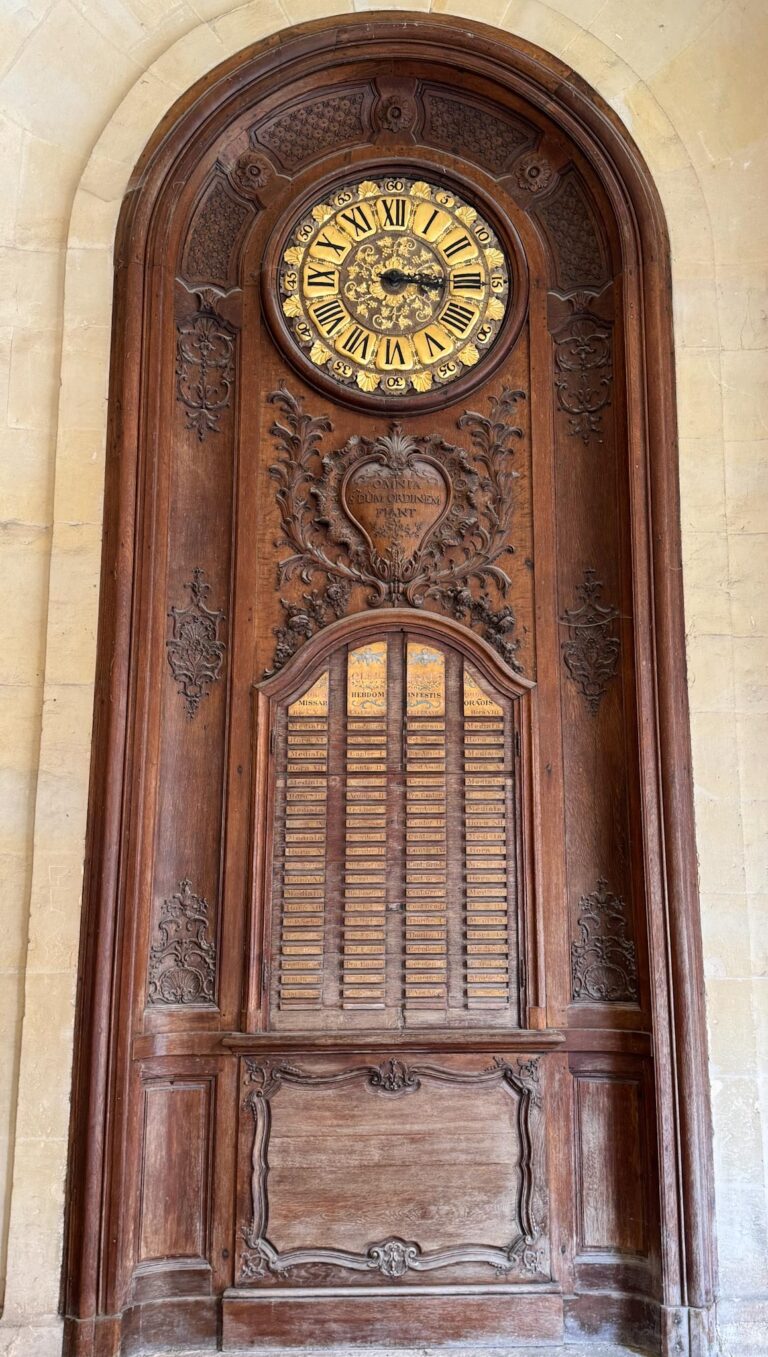
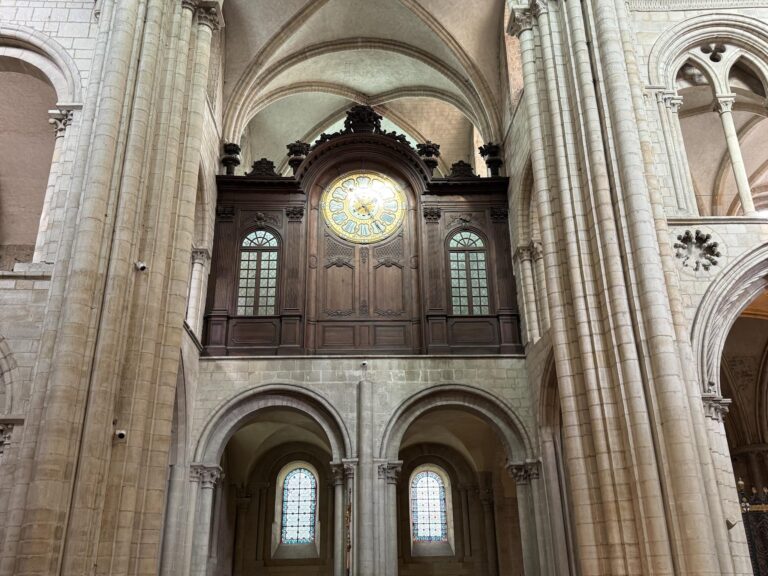
The Table of Services is a timetable for monks dating from 1744. Individual prayer times and roles played during religious services are indicated in four columns. The clock kept track of time, as Benedictine routines were very strict and prompt.
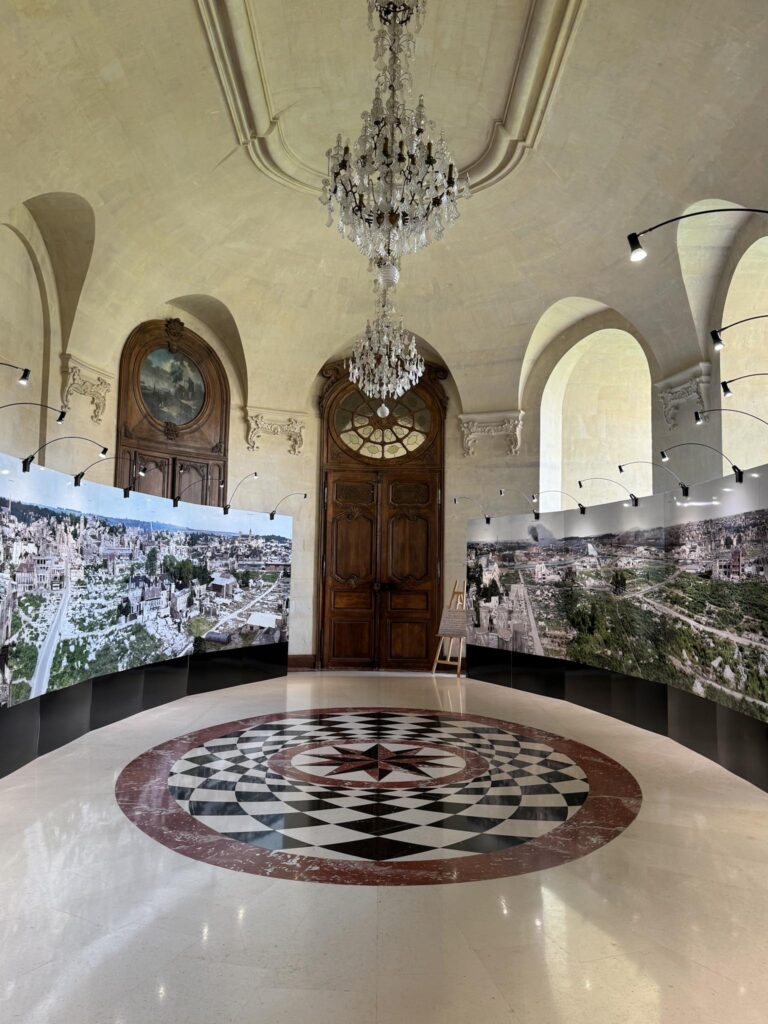
The Gatehouse is now permanent exhibition space for “the summer of ‘44.”
On June 6, 1944, the Allies began a plan to destroy the four bridges across the Orne River at Caen. In the early afternoon, six American bomber squadrons dropped 200 tons of bombs over the city. Citizens took shelter in the abbey in hopes that it would be spared in the bombing.
For just over a month, the German army put up a fight, but on July 9, the Allies finally took the city without destroying any of the bridges. More than 2000 citizens died under Allied bombs and German shells during the liberation of Caen.
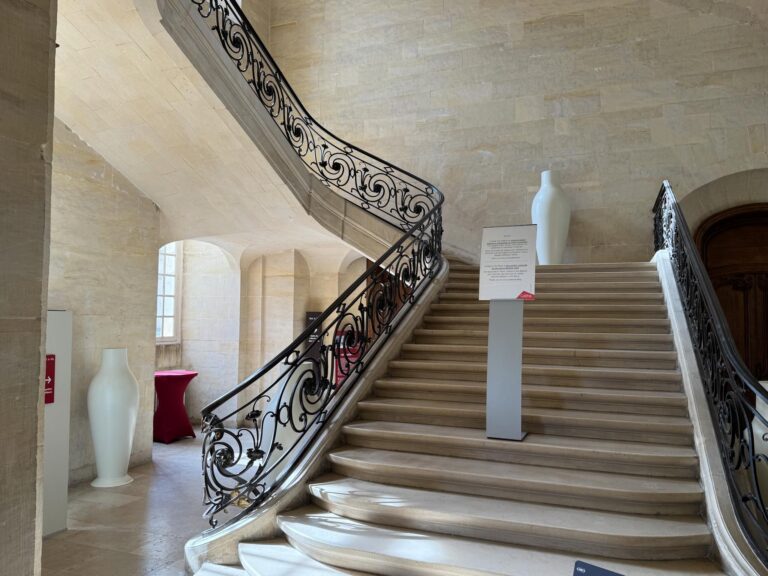
This grand staircase was built between 1760 and 1763. The Art of stereotomy was used in its construction: stones are cut into different volumes and the vault is held together by the pressure each stone exerts on the other, often holding without mortar. The wrought iron banister was made in the 18th c. And was restored in 1962.
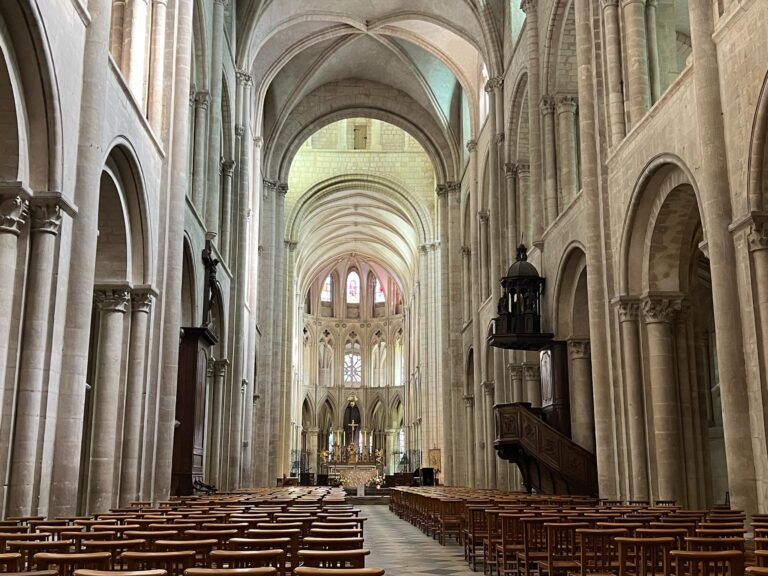
Saint-Etienne Church is attached to the abbey but only accessed from an outside entrance.
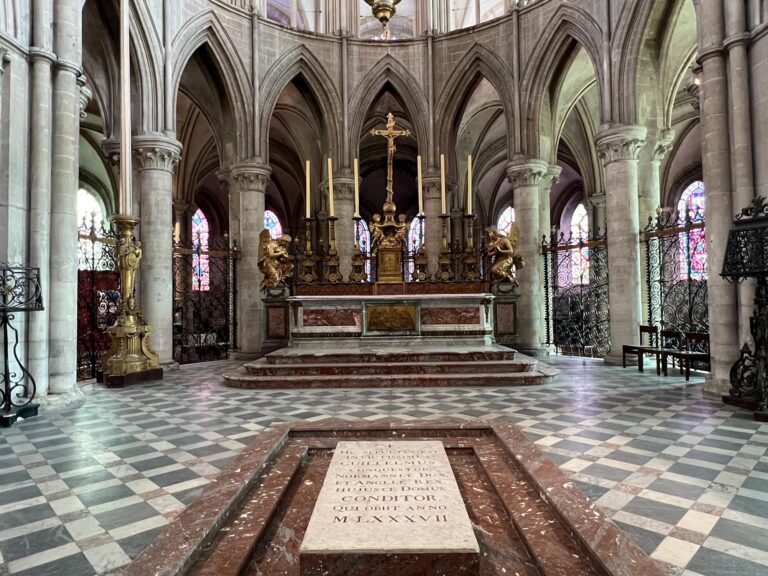
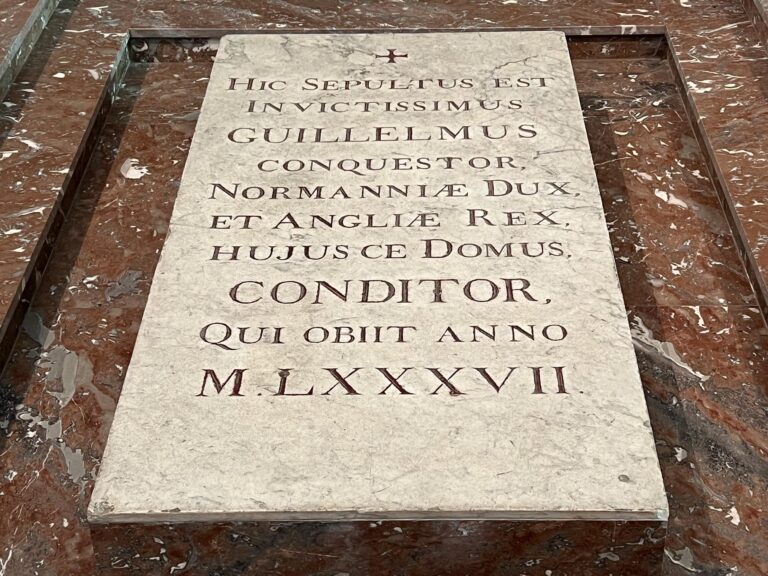
This is where William the Conqueror chose to be buried after his death in 1087.
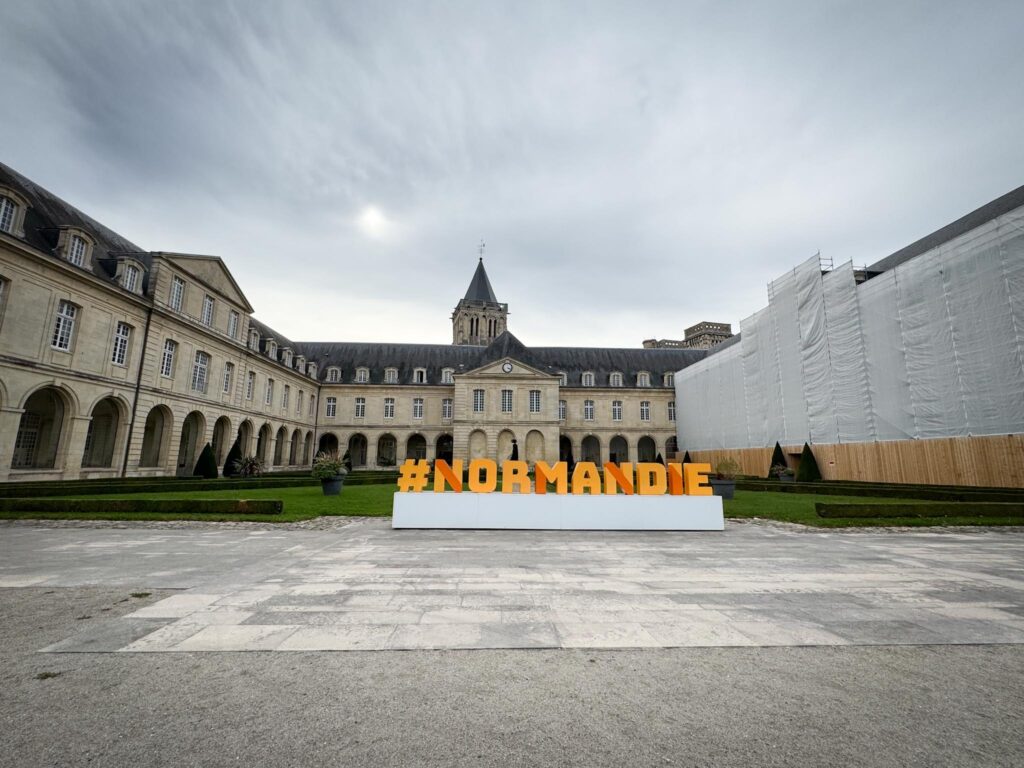
A quick break before heading off to see the Abbaye aux Dames, William’s wife, Mathilde’s monastery to make amends to the Pope for marrying her cousin.
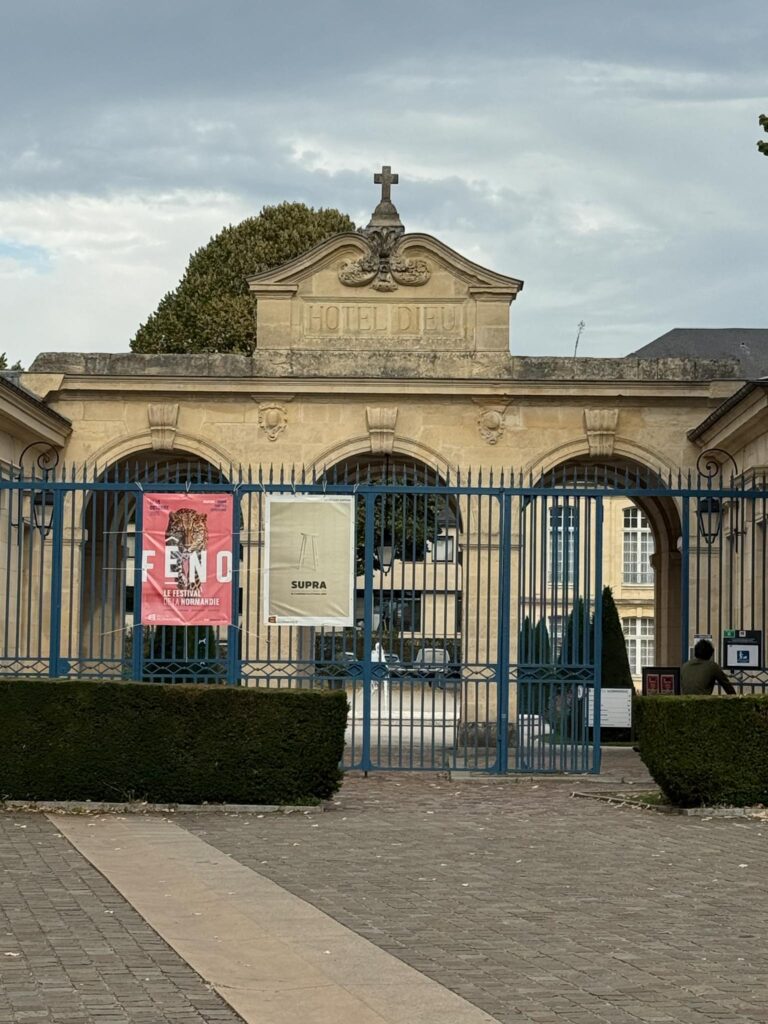
After the French Revolution when the convent was closed and many of its assets sold off, the church became a fodder store and its convents an army barracks. In 1823, the buildings became Hotel-Dieu, an early hospital, and later a care home.now it is headquarters to the Normandy Region.
Until the French Revolution, this Benedictine abbey was home to young ladies of the Norman aristocracy whose families paid a dowry to the abbey in exchange.
These buildings were completely rebuilt in the 18th century. Now most are used for meetings, receptions, and exhibitions.
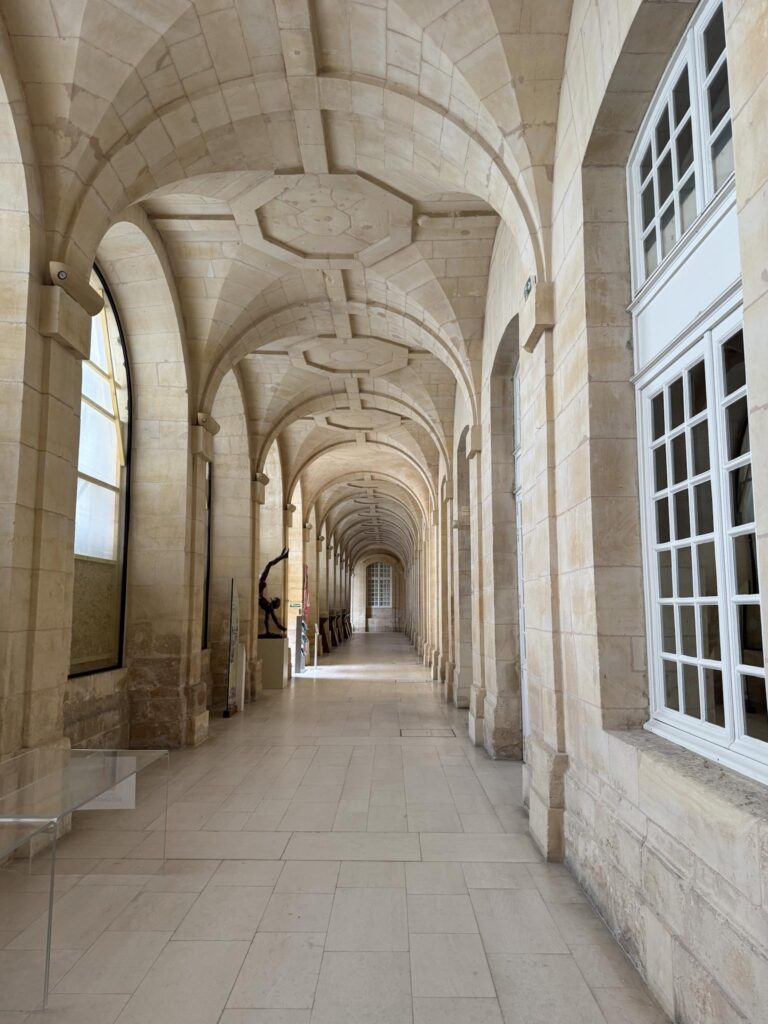
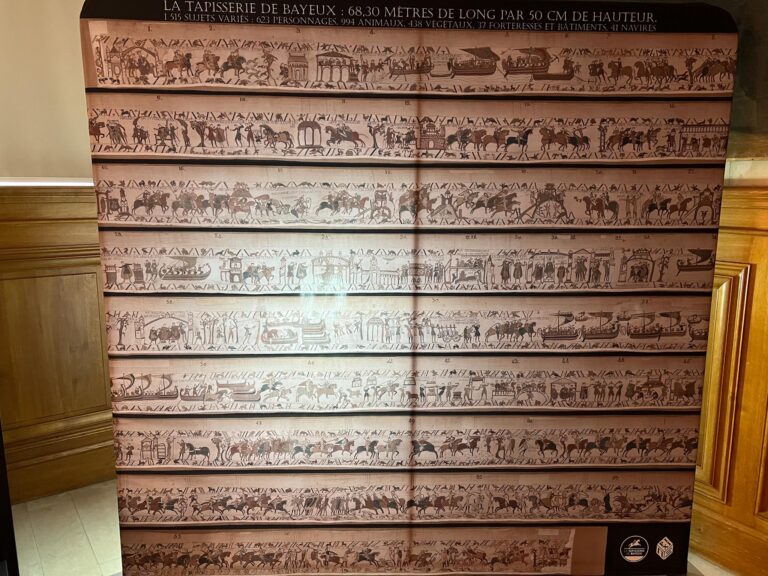
One room off this cloister hallway housed an exhibition to sho a model of the Bayeaux Tapestry. While the Bayeaux Hall is being renovated, the Tapestry showing the battle of a Hastings has been moved to London.
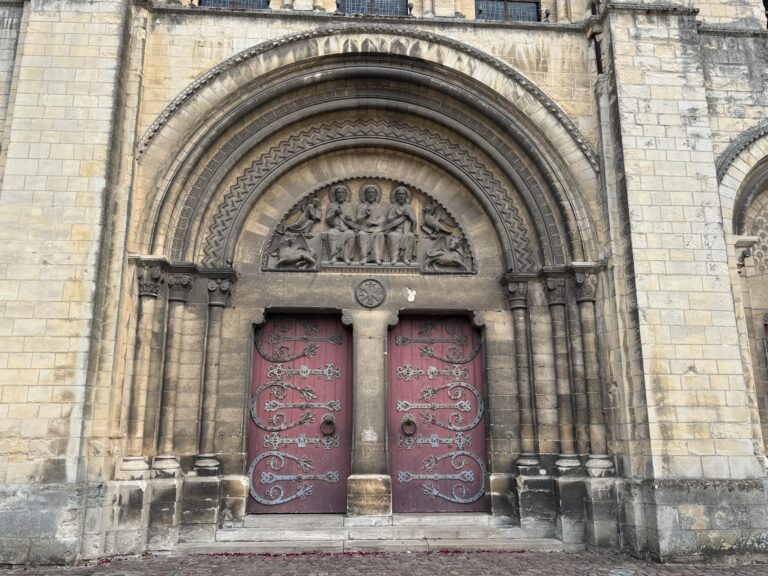
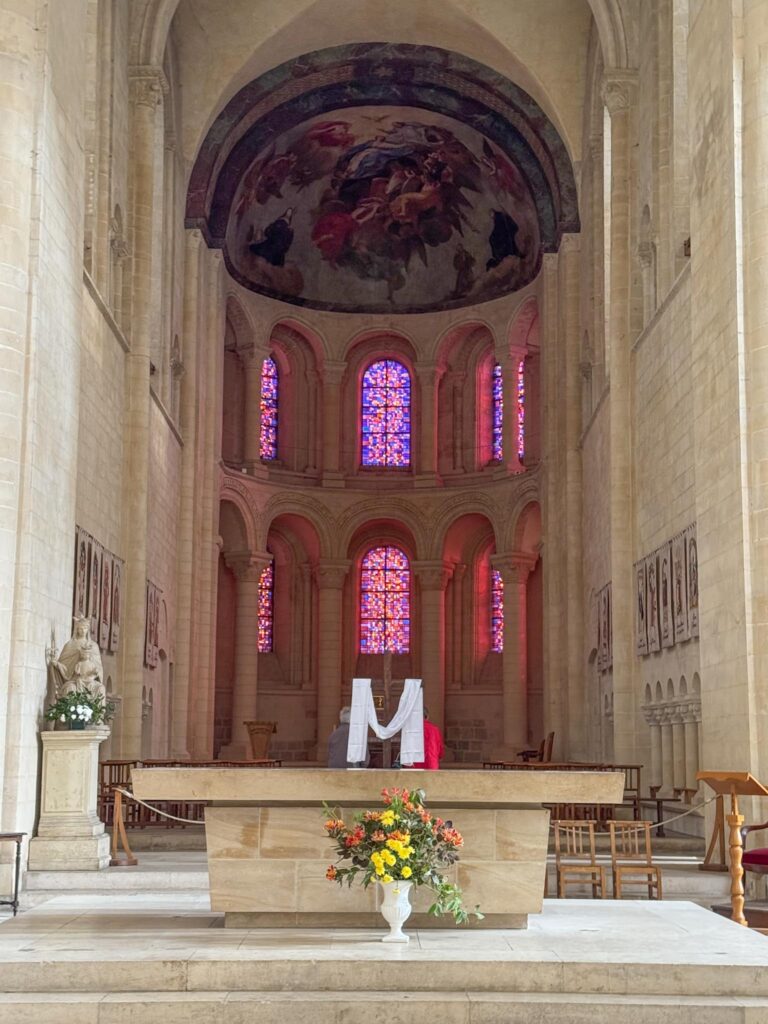
This abbey church was built between 1060 and 1080, and is a masterpiece of Norman Romanesque art. It has been restored and cleaned as recently as the early 1990’s.
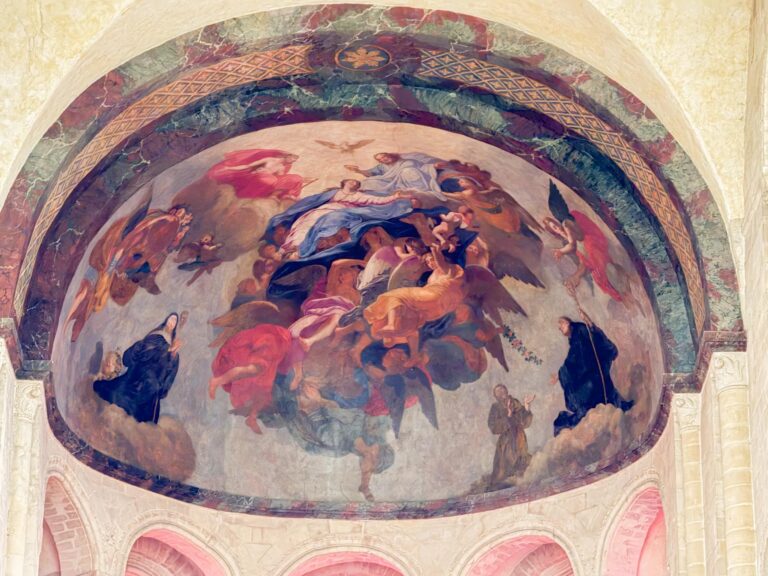
The painting represents the Assumption of the Virgin Mary from the early 18th c.
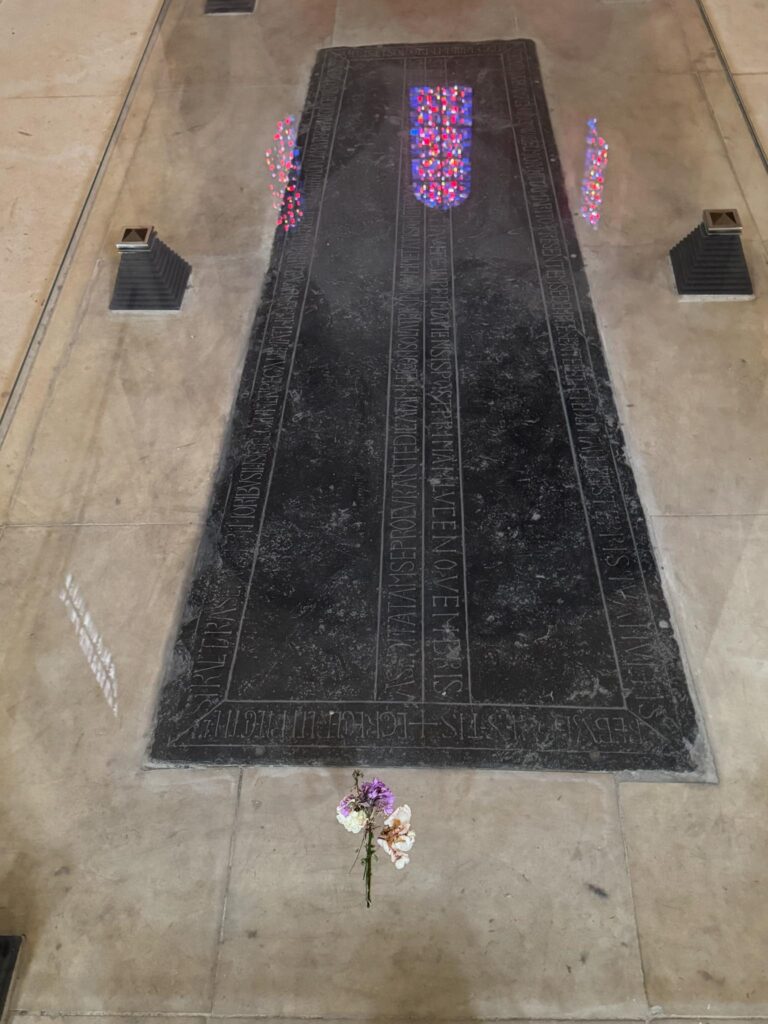
The remains of Queen Mathilde are buried here in 1083 under the black marble slab. The epitaph praises her lineage and great piety.
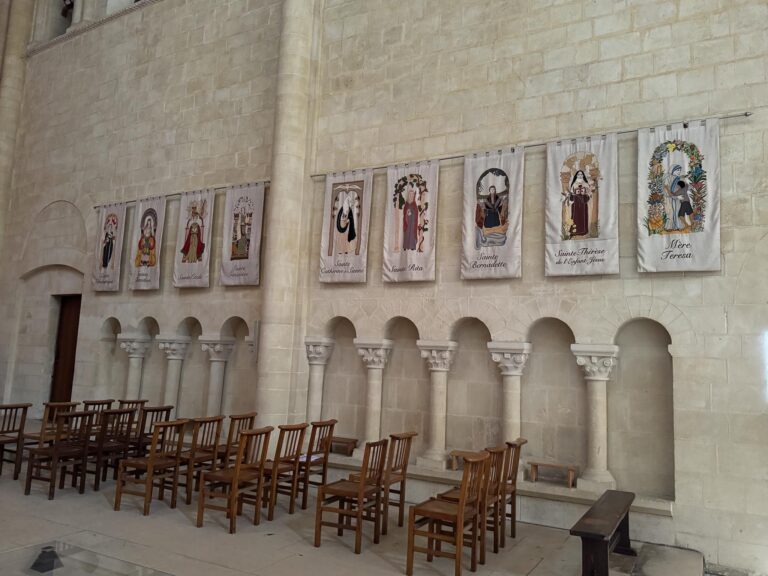
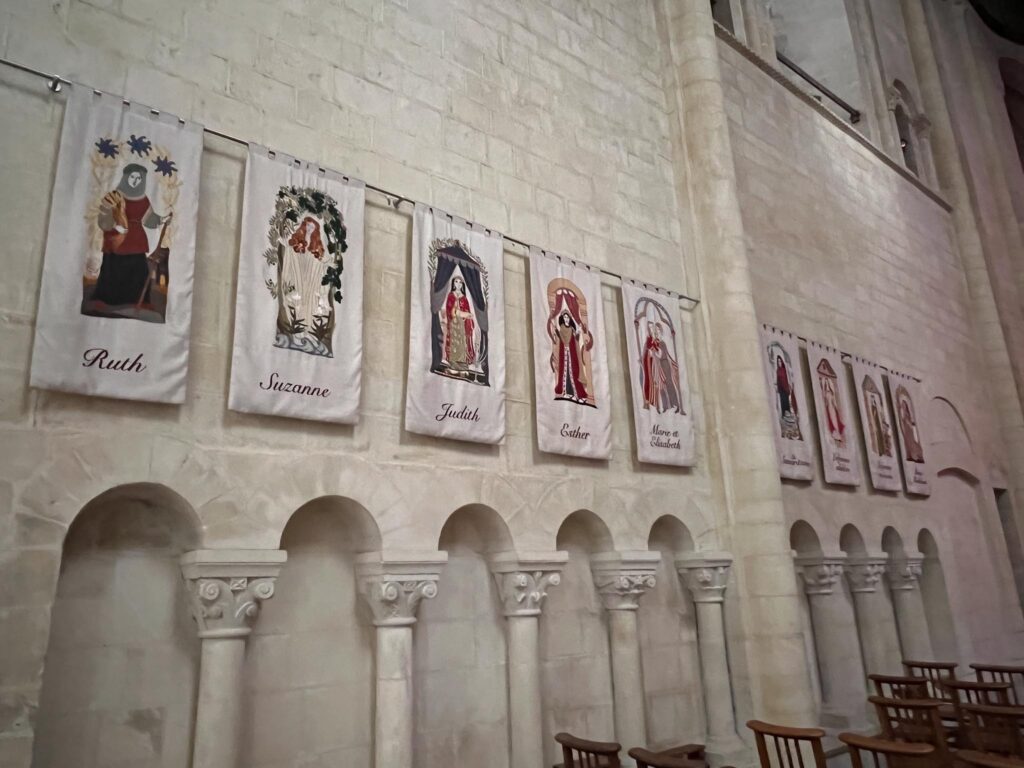
Near the altar, there are female saints on the right and female Biblical characters on the left side.
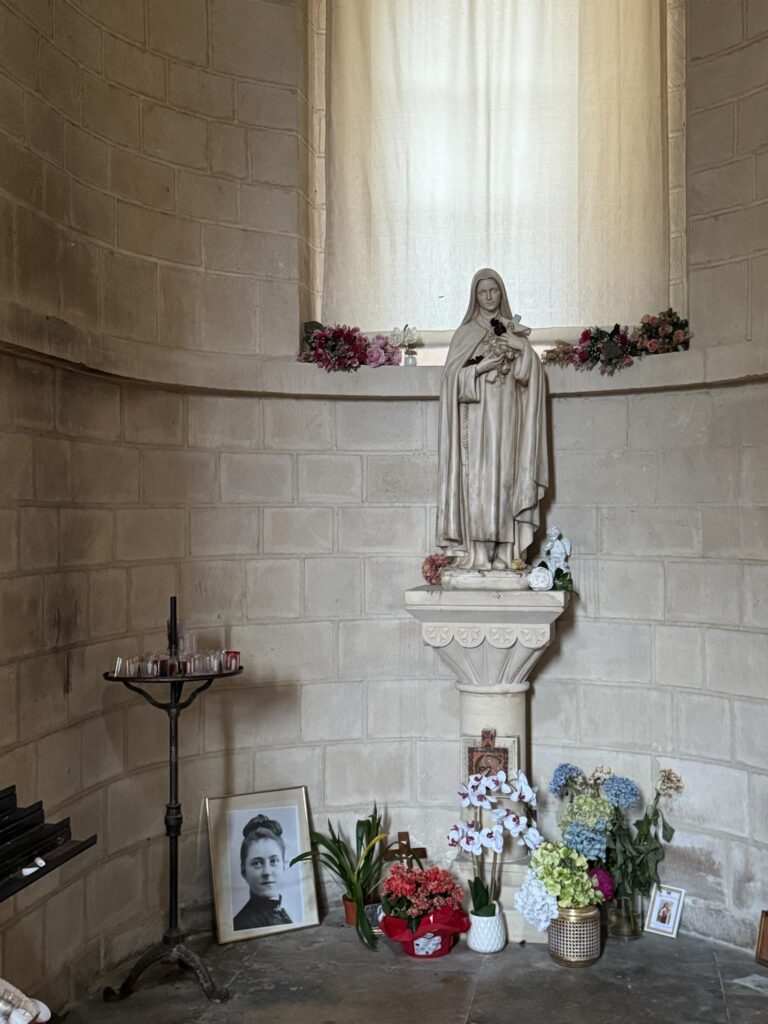
Young St. Theresa has a chapel in this abbey. She was also represented in the men’s abbey.
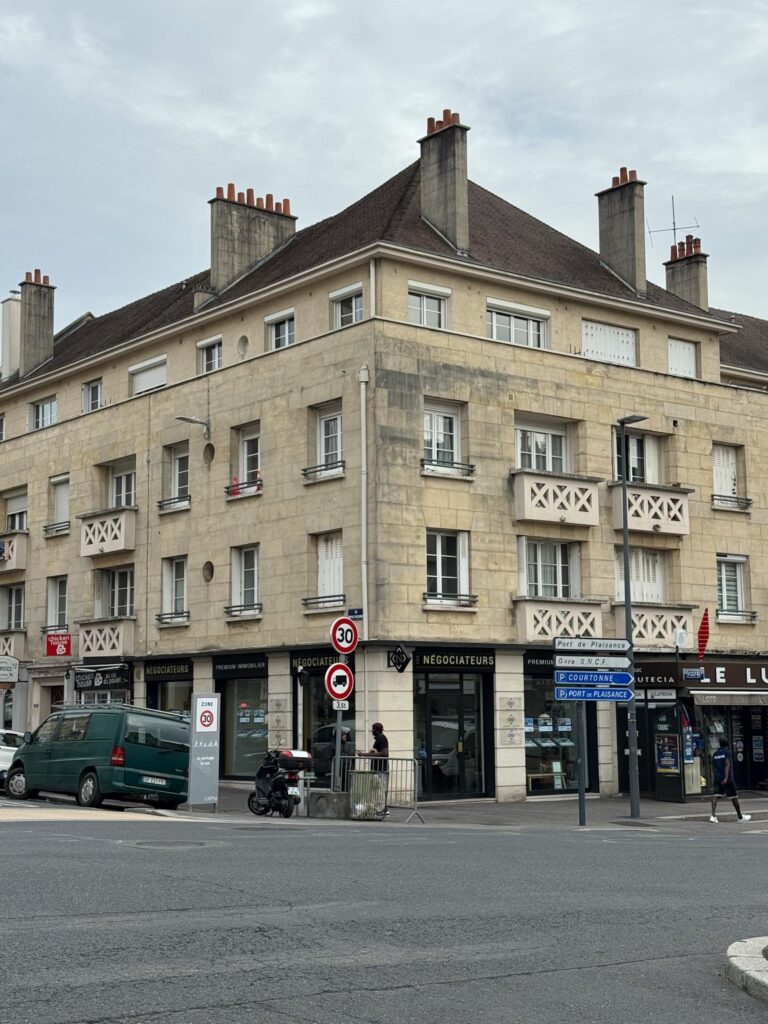
Our home-away-from-home was on the third (top) floor at the corner. There were five windows on one side and two windows on the perpendicular wall.
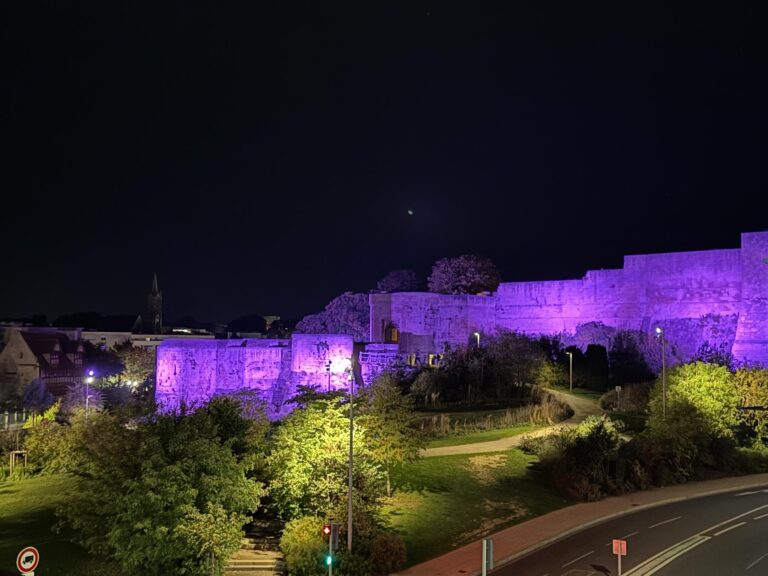
From our balcony, we can view the castle lit for evening.


4 Responses
Hi Jan and Rich….okay I’m caught up on your trip! Enjoying it all. Glad to not see you struggling up and down those hills in Wales in wind and rain! I never made it to Stonehenge or Le Mont St. Michel, so thank you for all the info and photos…I now can check it off my list since I just went there with you! Continued fun and safe travels. Karen
Thanks Karen. Stonehenge and Le Mont Saint-Michel are both worth a visit if you get a chance, but I’m glad we could entice you. The weather has been drizzly and overcast but nothing like the drenches in Snowdonia. It looks like sun in a few days so I’m looking forward to that.
So many beautiful historical sights and majestic churches. Sometimes so hard to decide what to visit on your limited time in each place. How do you decide?
Dan and Wendy
Decision-making was easier in Caen because we wanted to hit all the William the Conqueror sites. Of course, we needed to see the World War II museum that is very well known. More surprising was the discussion of battles in Caen itself, and the bombings of the citizens. Not our finest hour, but then war is hell.