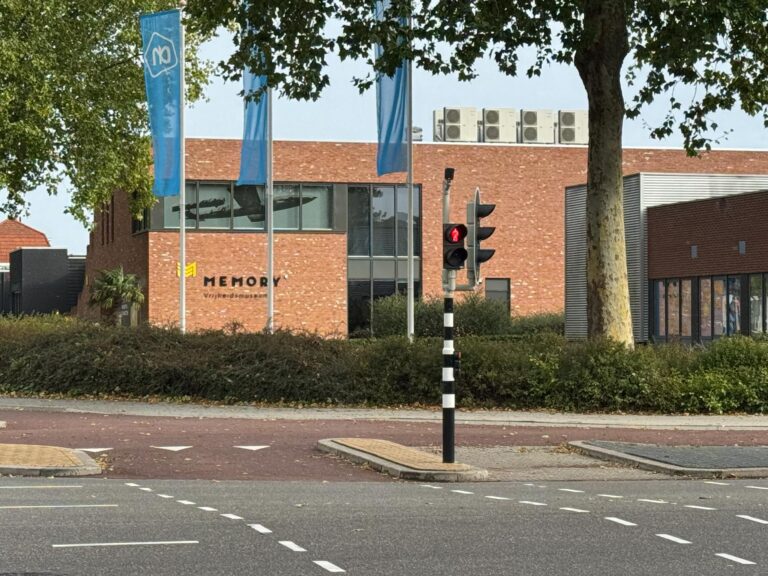
The Memory Museum has changed some and is quite professional. We last saw it three months after its opening.
Joop explained that it was a rundown building in the town so he asked the town council if he could hold an exhibit there. They agreed for a short-term exhibit. Joop and his family were cleaning up the rubbish when neighbors came by asking what they were doing. When they discovered, they volunteered to come help clean the site. It snowballed as townspeople wanted to be in on the exhibition project.
Over time, Joop got the town council to extend the time they could hold it, and finally to sell the building to the museum. They have received government funding for this project and the education aims tied to the museum.
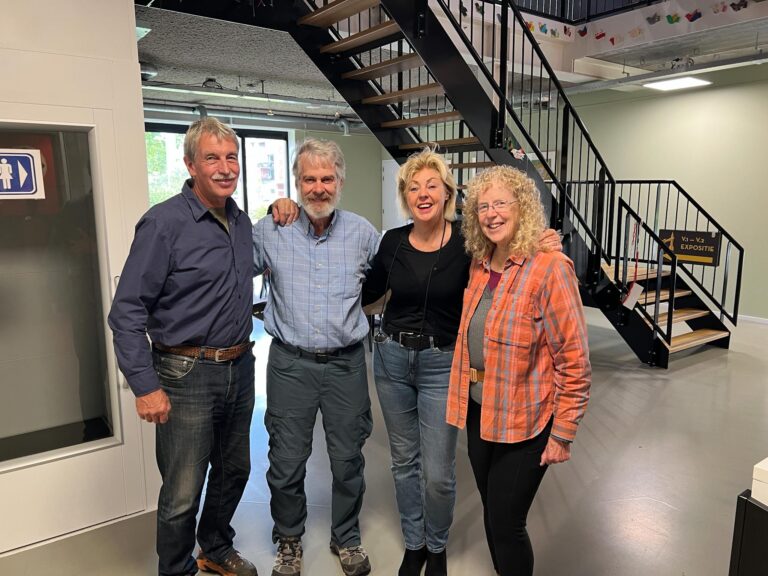
Joop and Marianne have not aged at all. Their son is now running the family business.
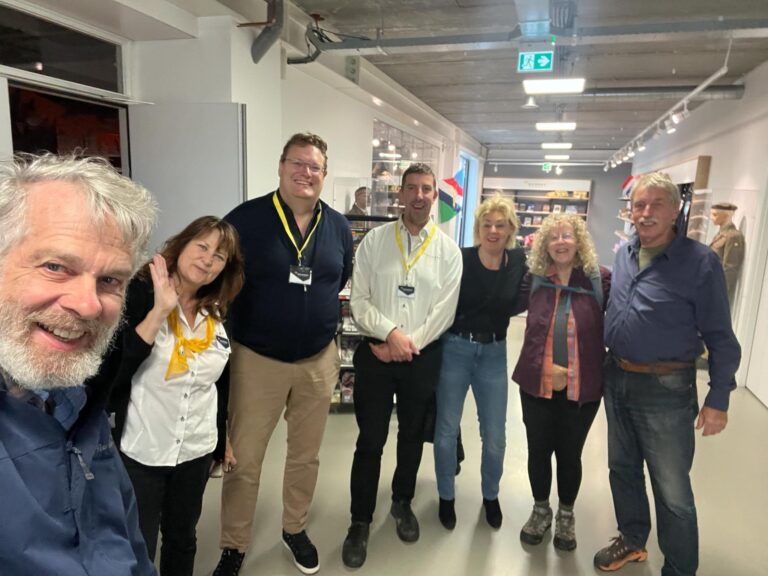
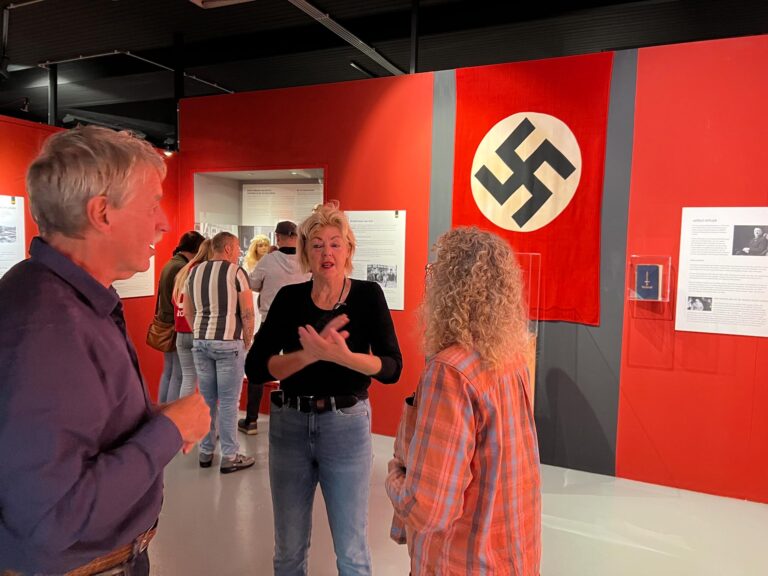
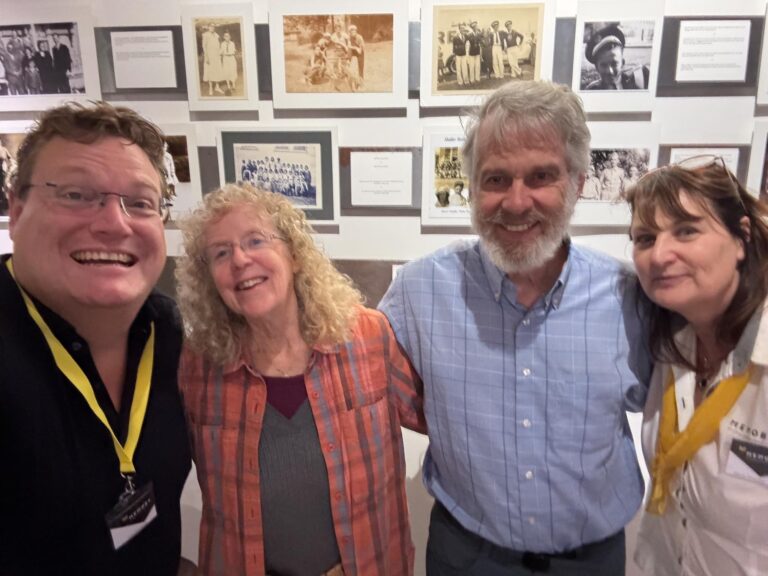
These are some of the 90 volunteers who now help in the museum. They greet guests as they arrive, and circulate to tell stories and answer questions. There is a snack bar where drinks and refreshments are available.
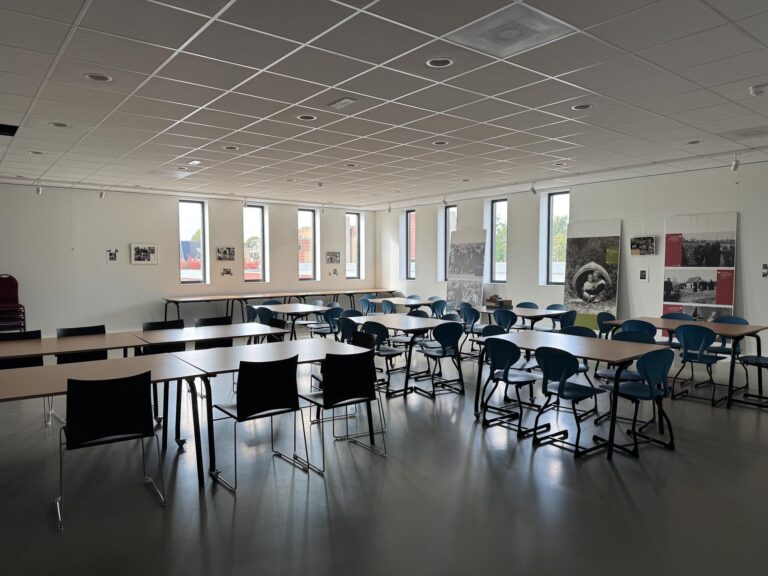
One of the biggest missions for the museum is to educate the next generation about the impact of war. They have a classroom with multimedia available for teaching.
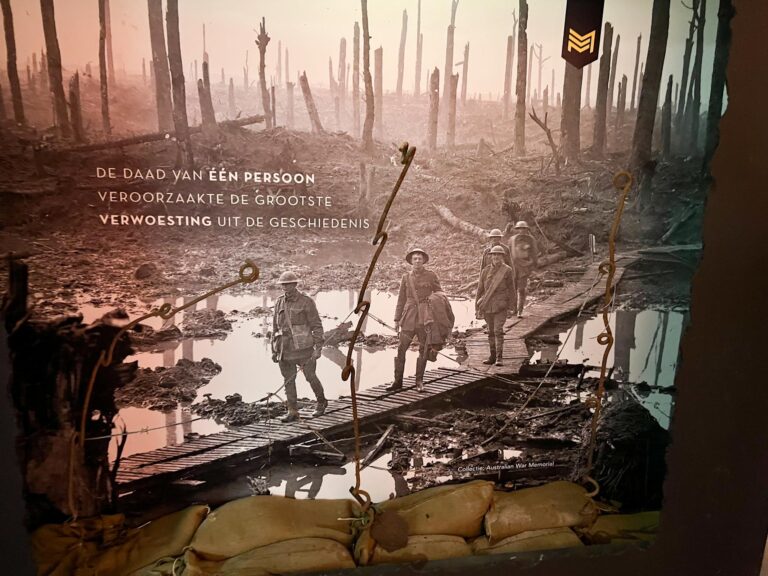
One person’s act
caused the greatest
devastation in history.
Like the Caen World War II Museum, the tour begins with World War I and the rise of Hitler. The First World War ended with peace—for how long? The Second World War ended with peace—for how long? What is next, asked Joop?
World War II officially began September 1, 1939, when Germany invaded Poland and Britain and soon after France declared war. The Netherlands declared itself neutral as it had also done in WWI.
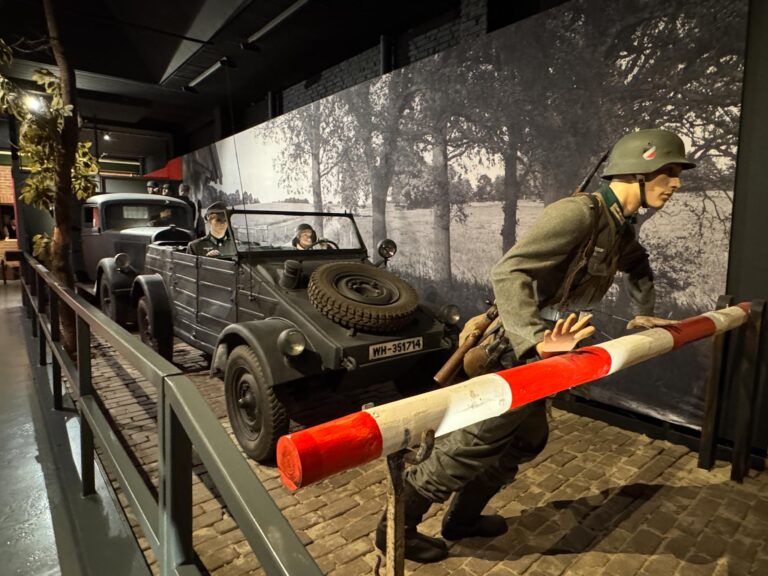
On May 10, 1940, Germany invaded the Netherlands with no warning. Just as this soldier pushes through a border with support behind him, Germany came into the Netherlands.
The Netherlands had no experience and very little equipment, so their only choice was to escape when the invasion first came. However, they were able to fight the Germans and give their royal family a chance to escape to safety.
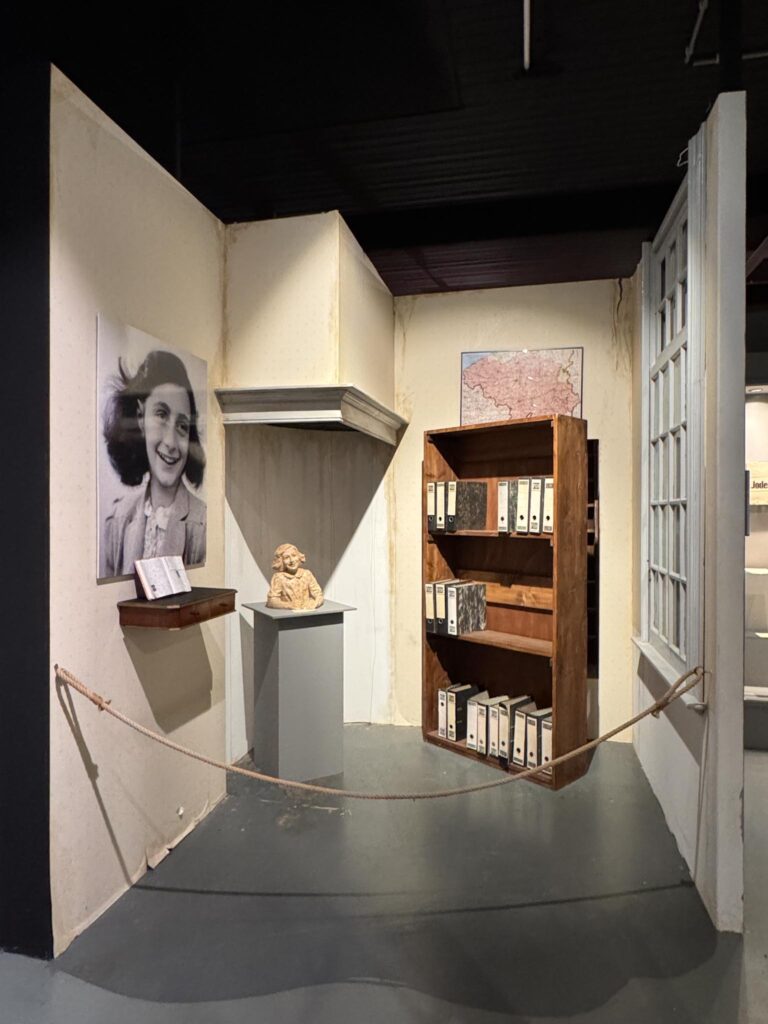
This recreation of the Anne Frank hiding place is meant to show the feeling and restrictions, but also the exact conditions under which she lived. Joop told of going to Amsterdam and measuring and copying exactly what was there, down to the stained wallpaper in the office.
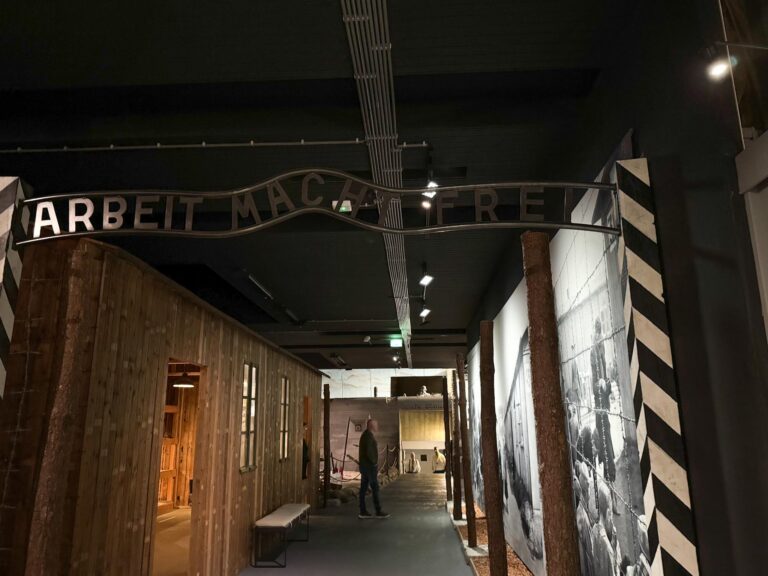
Next we walk through the barracks of the concentration camp. The sign “arbeit macht frei” (work makes one free) is recreated including the upside down B placed by a rebellious Jew. The two windows in the barracks come from a concentration camp.
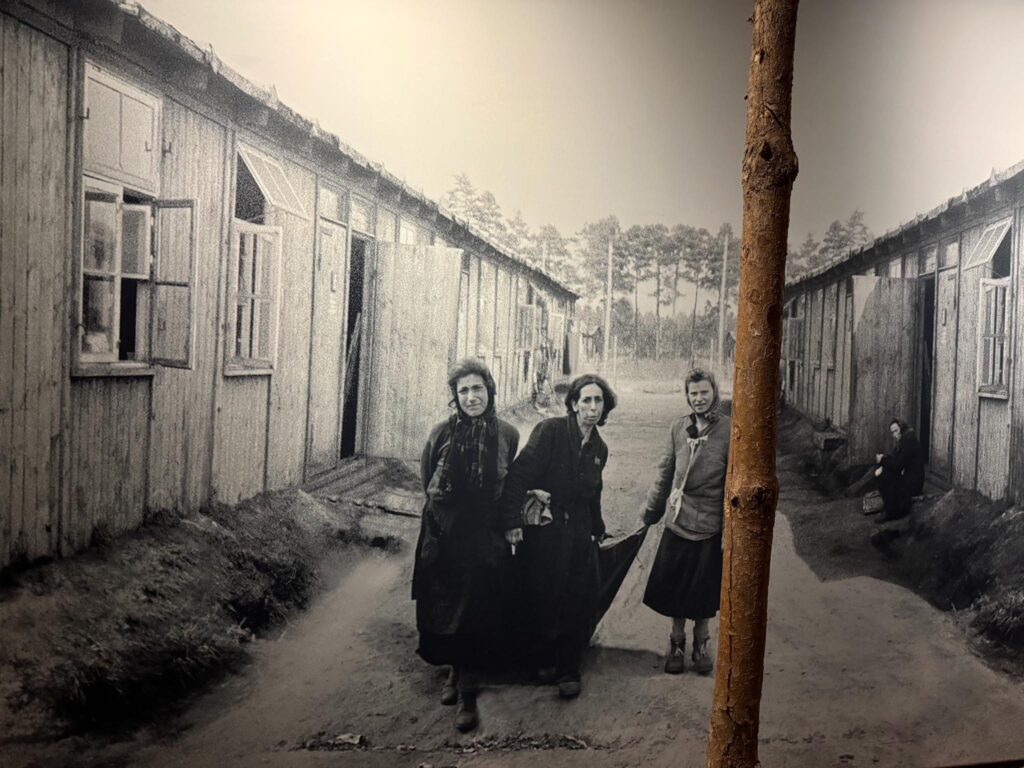
This picture of camp women shows the hopelessness on their faces. There were 5 people sleeping in each bunk, and many were dieing. What are they carrying?
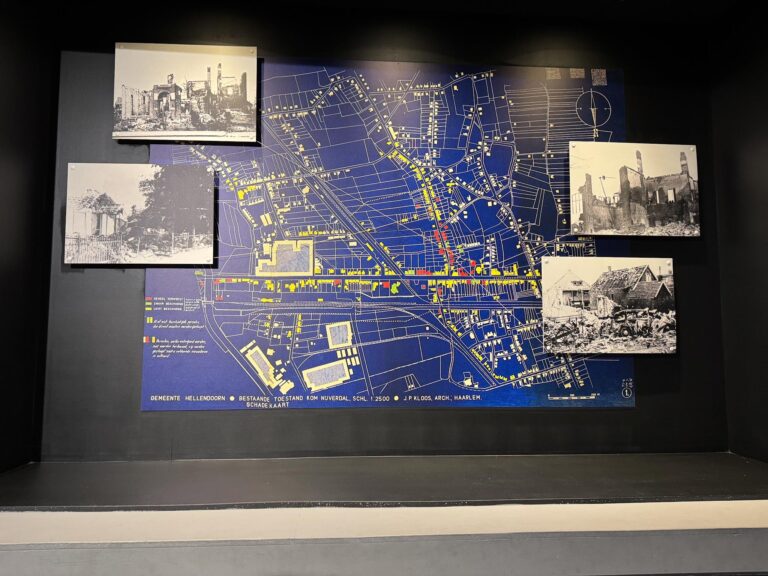
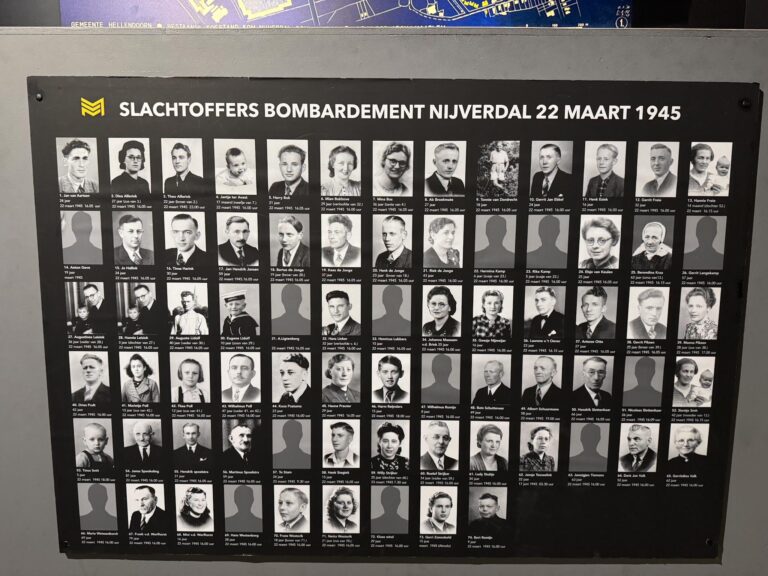
On March 22, 1945, Nijverdal was bombed by the Allies. It may have been that word was received that there was a German camp, or it may have been that extra bombs after a sortie into enemy territory had to be dropped before they could return to camp. In any case, 73 citizens were killed and central Nijverdal was destroyed.
More stories of Nijverdal persons and their work for the resistance were told. Many people risked their lives to shelter and hide pilots who had been shot down.
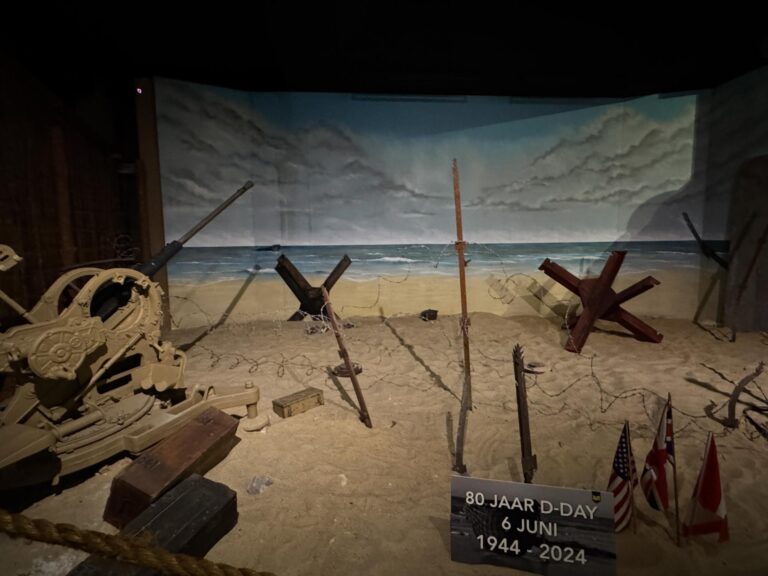
Finally D-day happened on the Normandy beaches. There is some sand from a Normandy in this scene.
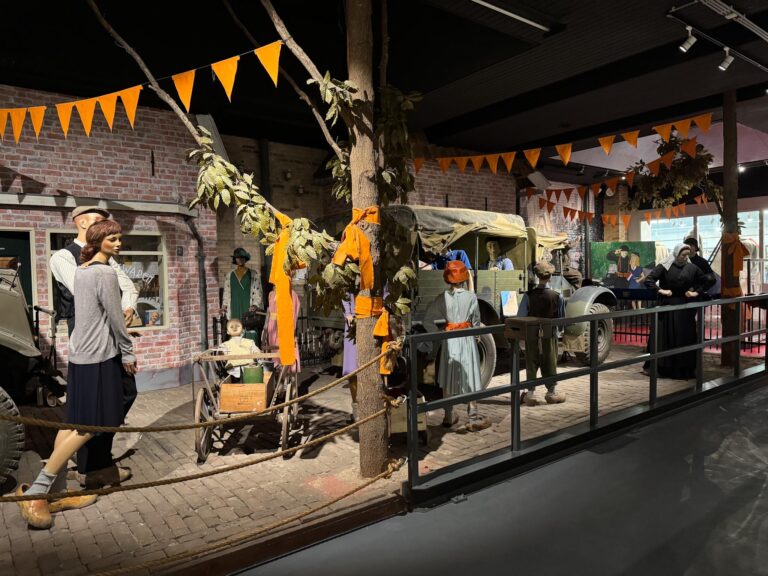
The Netherlands was liberated by the Canadians April 9, 1945. In WWII, identity was forbidden, including the orange flags of the Netherlands. All were to be destroyed, but instead they were hidden and came out for liberation day.
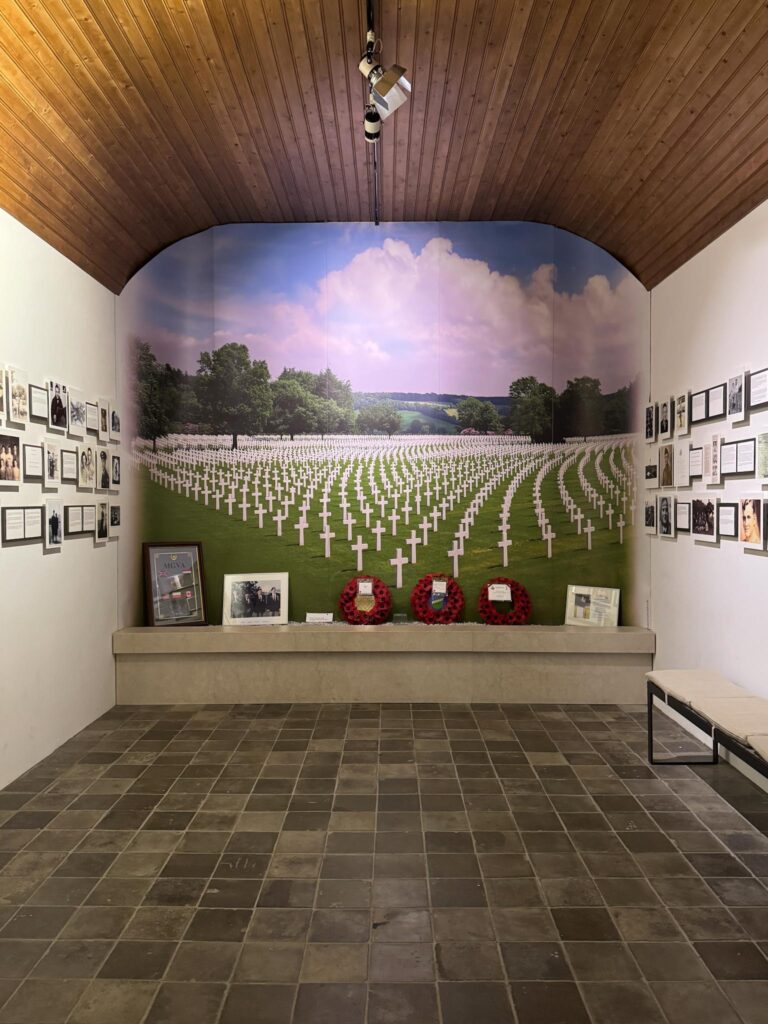
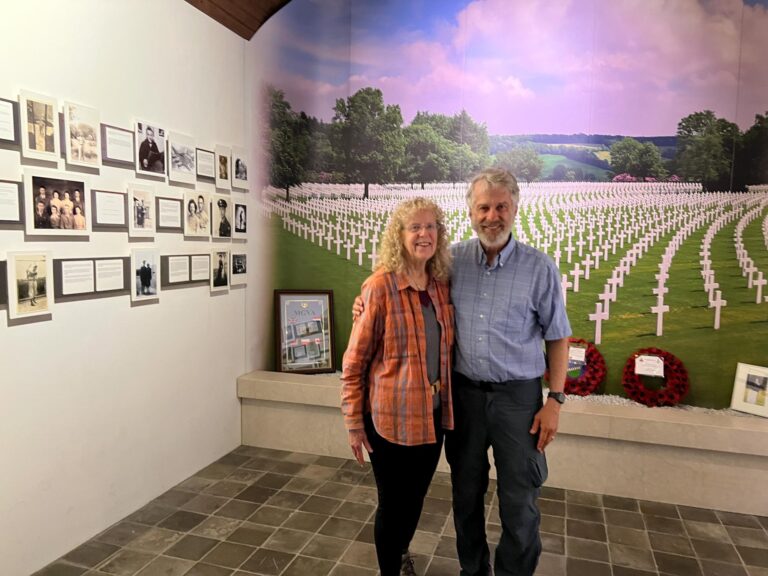
This is the chapel opened in September 2010 to remember those who gave their lives for freedom. The cemetery picture is Henri-Chapelle American Cemetery in Liege, Belgium. Floor tiles are from a Czech chapel. The bench beneath the cemetery picture is the same marble used for each of the crosses. In the picture, names are removed to have people realize the numbers of people lost. Six families donated pictures and stories to make it easier to understand that there was a young person and a life behind each of those crosses.
I am proud that my family’s contribution of pictures and stories is included on the middle row of the left wall.
Joop gives a personal account of my family when he explains one cross to his audience, and he gave the speech to us. Imagine a group of youngsters hearing of a little boy, his sister and parents as his father has returned from World War I. Next he is a boy growing up, going to school, and going to Sunday School. Now the anonymous cross could be any one of these youngsters. Joop said there are many sniffles in the audience.
Thank you, Nijverdal Museum for the education you do, and for your enthusiasm in greeting the public. On the most personal note, thank you for remembering my uncle, Roy Reed Moore, and keeping his life and sacrifice alive for generations.
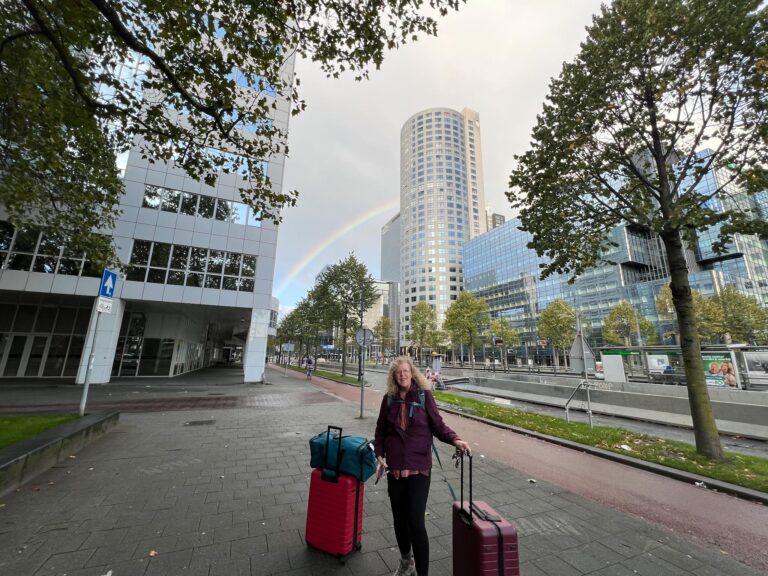
It had been a long day but we had four trains to get to our overnight stop at Maastricht. For the first time, we had train difficulties and faced an extra detour and delay, making this a 7-train day—a new record!


2 Responses
What a wonderful museum. Made me so sad but proud of your family, Jan. So glad you made this trip. It must have been very emotional for you.
We are very happy we made the trip to both Nijverdal and Margraten—both last visited in 2010. There are not enough praises for these folks who value Uncle Roy’s service and freedom in general. It must have been an impossible decision for my grandparents to leave Uncle Roy in Europe, but it is a blessing that every day there are people who remember him.