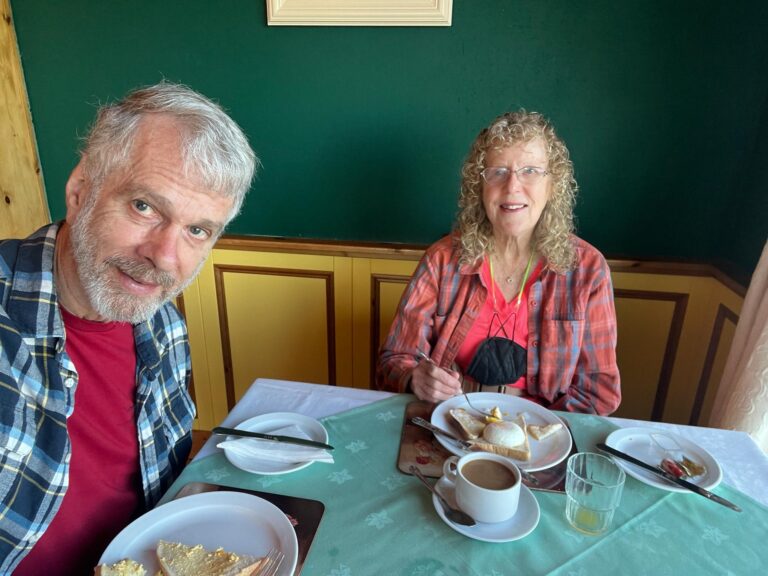
Breakfast looked wonderful but we were in a hurry to make the 9 am ferry so we only had an abbreviated spread.
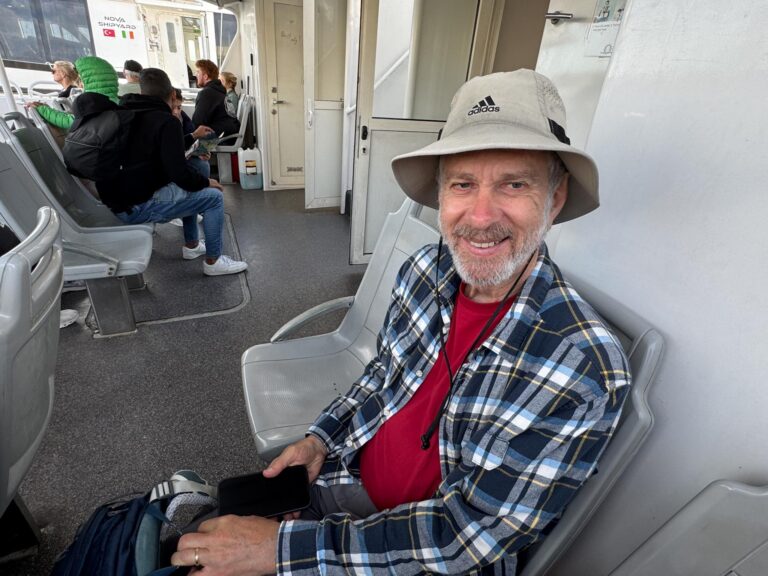
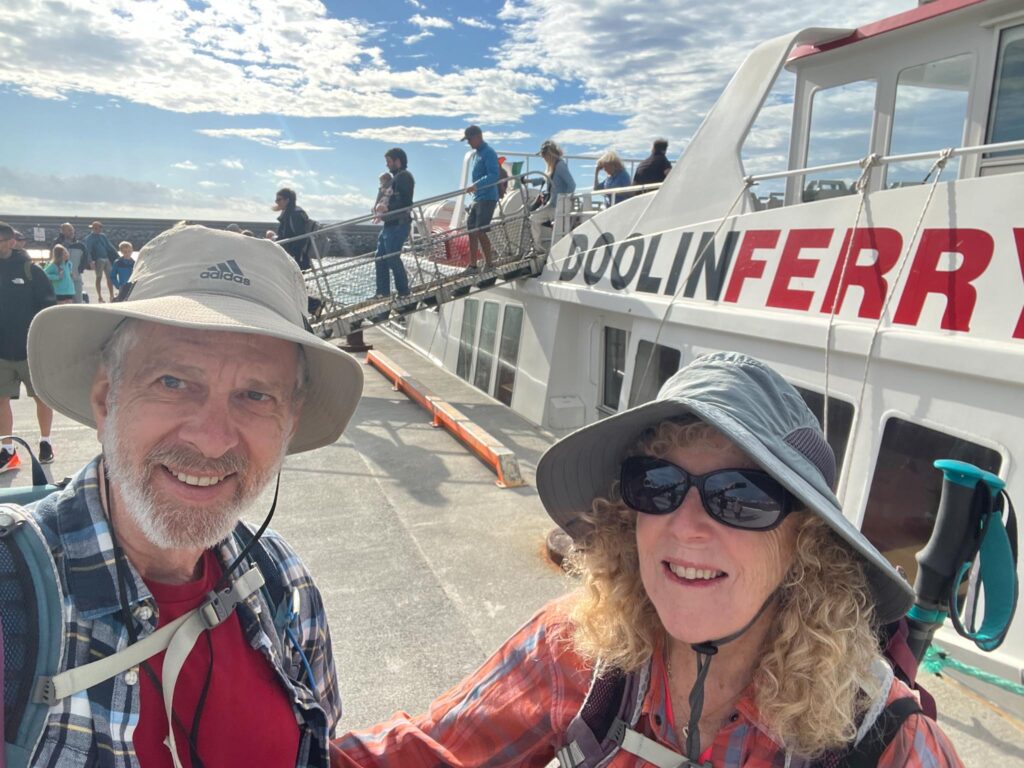
Richard looks fine here but he has already taken his Dramamine. Happily, he made the 35-minute ferry ride with no seasickness.
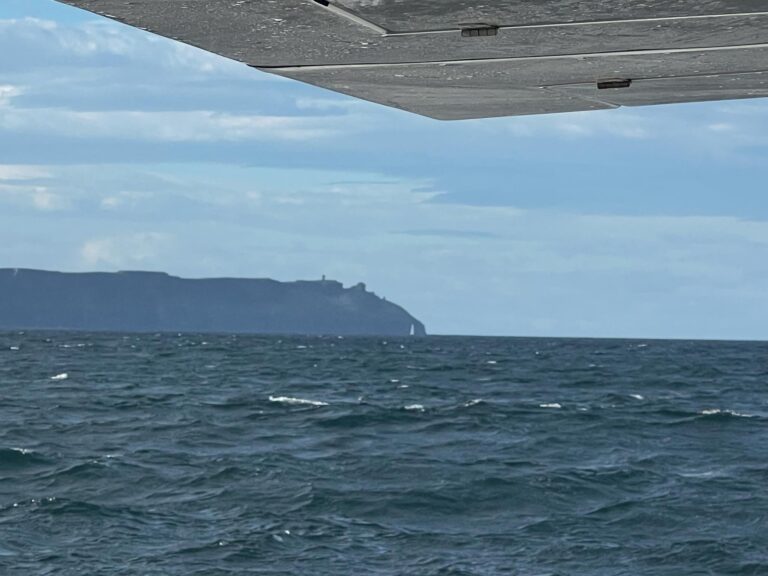
As we sped away from Doolin, we could see Hag’s Head, including the Sea Arch that we had only seen in pictures.
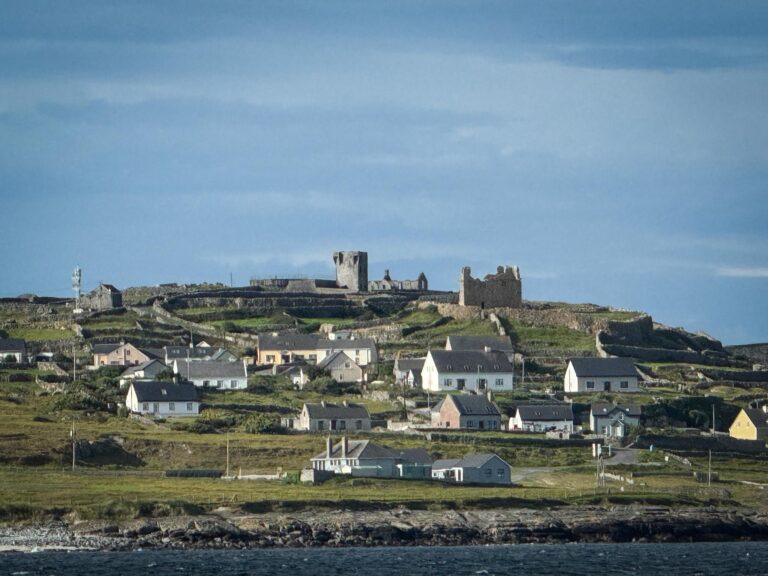
We first passed the smallest Aran island, Inisheer (Inis Oirr). Here you can spot the ruins of O’Brien’s Castle that is built within the ring fort Dun Forman. This island is sometimes visited by tourists, but only boasts a population of 300.
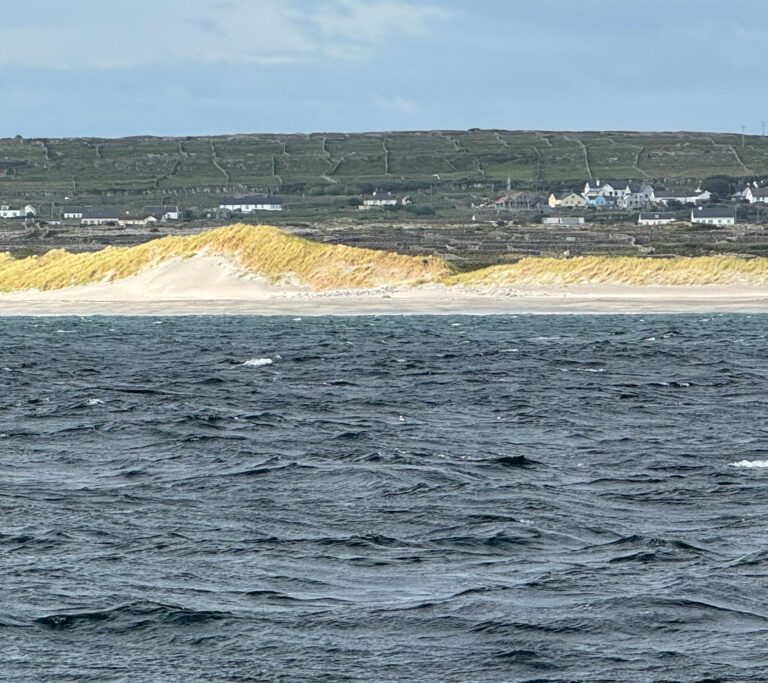
The second Aran Island, Inishmaan (Inis Meain), has only a population of 200 and has a rocky hillside, sandy beach, and tall stone walls.
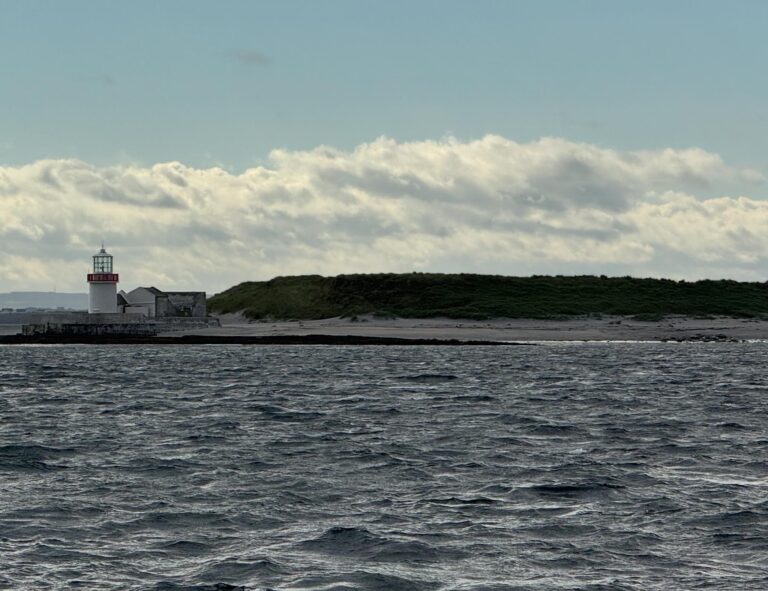
A tiny island, Straw Island, is near the harbor of the third and largest island, Inishmore (Inis Mor). It has a lighthouse.
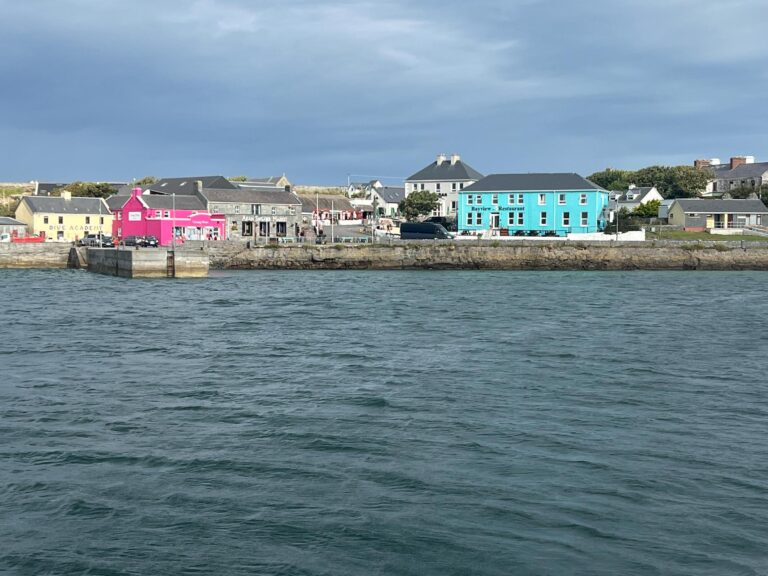
Our 35-minute uneventful ferry ride ends at Inishmore harbor. This is the largest of the Aran Islands, and has 800 residents.
The colorful harbor area is dotted with bicycle rentals, tourist information, restaurants, bars, and shops.
The Dormer House will be our evening home. Although the boat arrived early in the day, the staff welcomed us and allowed luggage storage until the 2 pm checkin time.
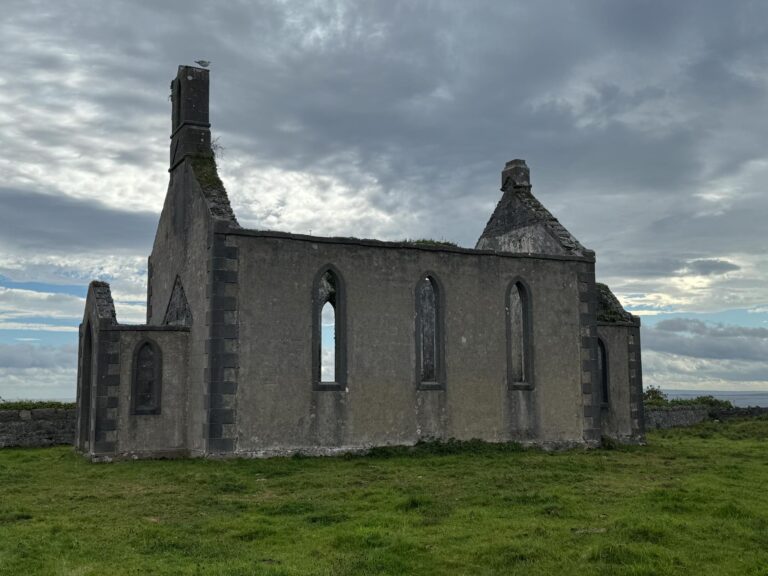
Nearby we found the ruins of St. Thomas’s Church built in 1850. It was the only Protestant church (Episcopal) on the island.
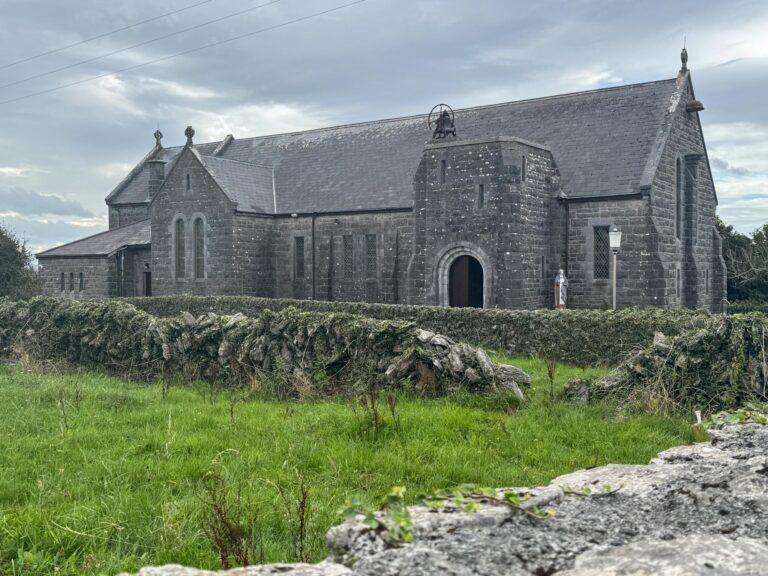
St. Brigid’s Church dates from the mid 19th century, and is still operating today as one of three Catholic Churches on the island. There is one parish priest who serves all three Inishmore churches as well as the other two Aran islands. He commutes mostly by ferry, but when the weather does not permit, services can be online in Gaelic on radio and in English on television.
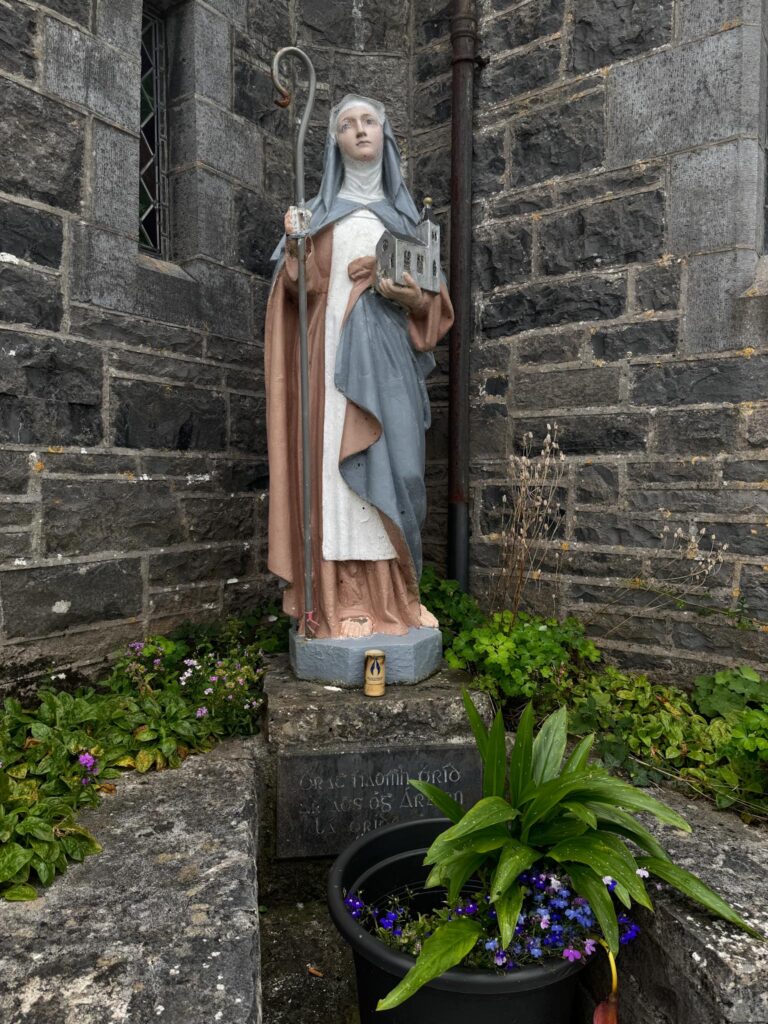
St. Brigid stands outside her church with a church model in her hand. She founded several abbeys and convents of nuns. She is the patroness saint of Ireland, and one of its three national saints.
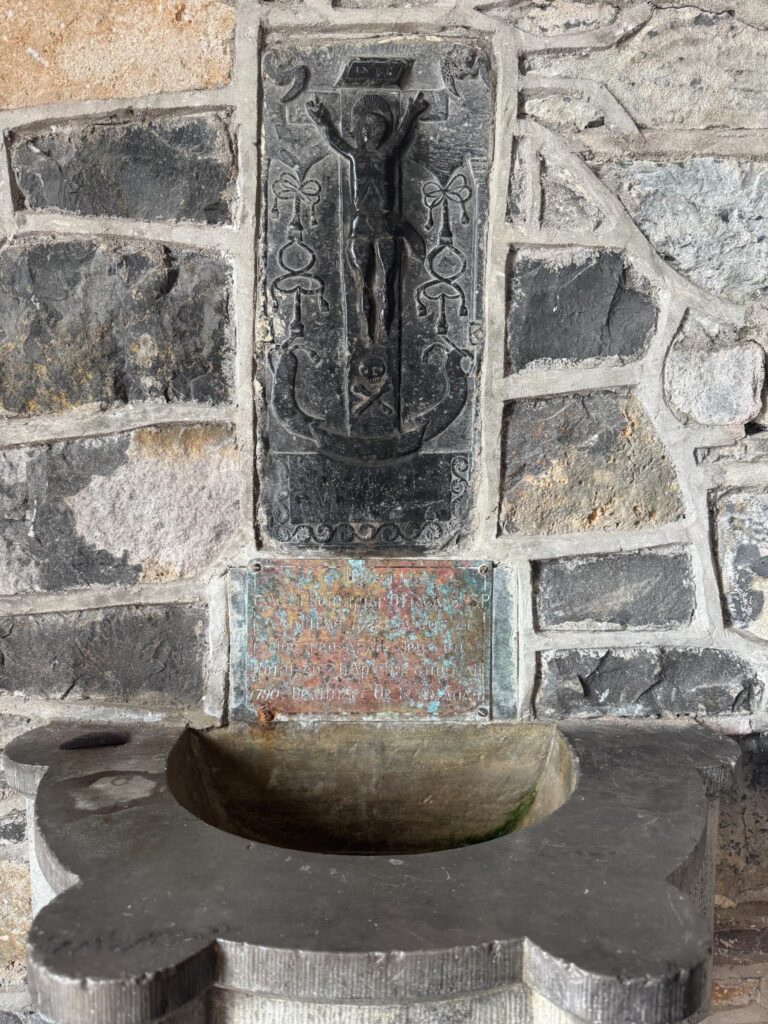
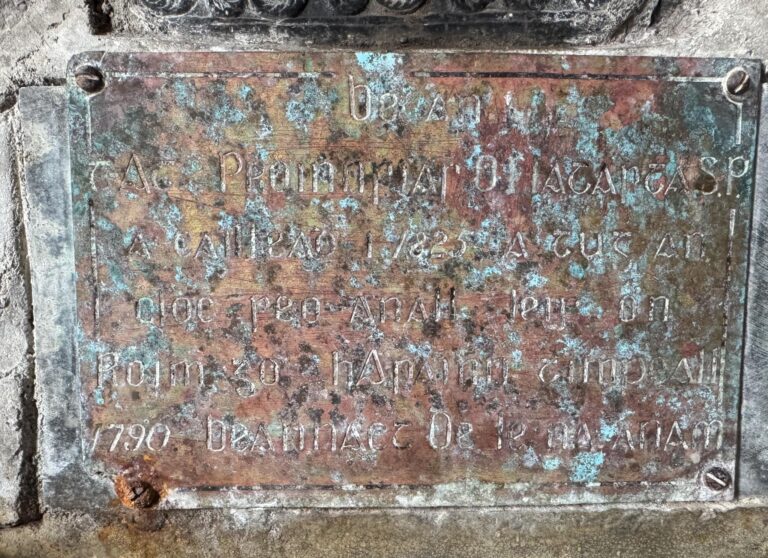
The holy water font has an interesting picture. The stone inscription references a date of 1790, but the tourist office ladies reported that the church dates from 1903-1905. They translated that the stone was actually carried from Rome about 1790.
LLorem ipsum dolor sit amet, consectetur adipiscing elit. Ut elit tellus, luctus nec ullamcorper mattis, pulvinar dapibus leo.
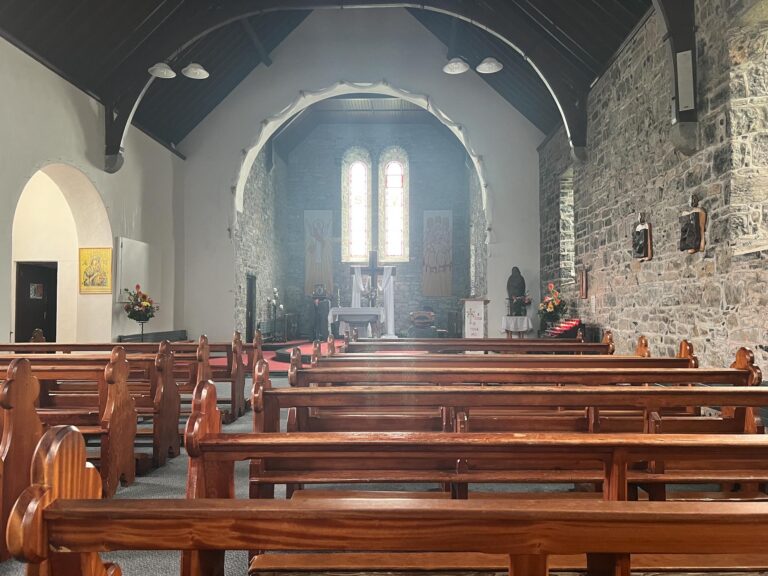
The sanctuary of St. Brigid’s Church.
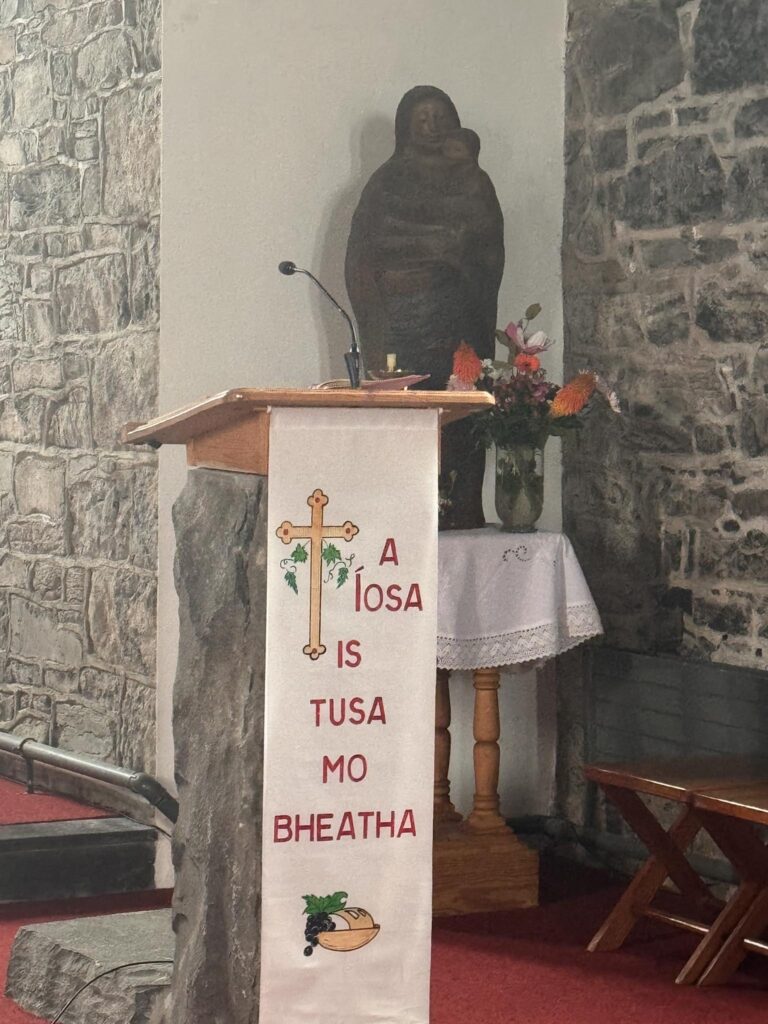
There is mostly Gaelic used here. The tourist office ladies translated for us: “Jesus, you are my life (or sustenance).”
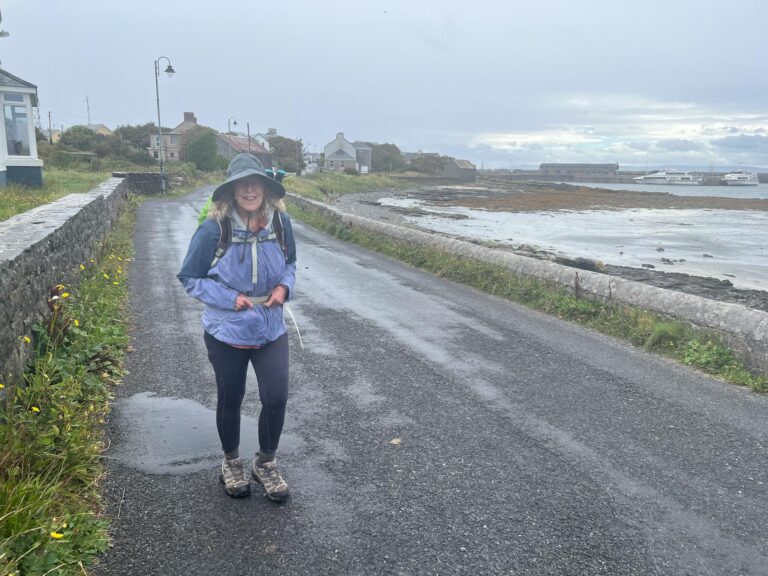
We decided to go to the Black Fort, about 1.5 miles one way. Unfortunately, the rain had started.
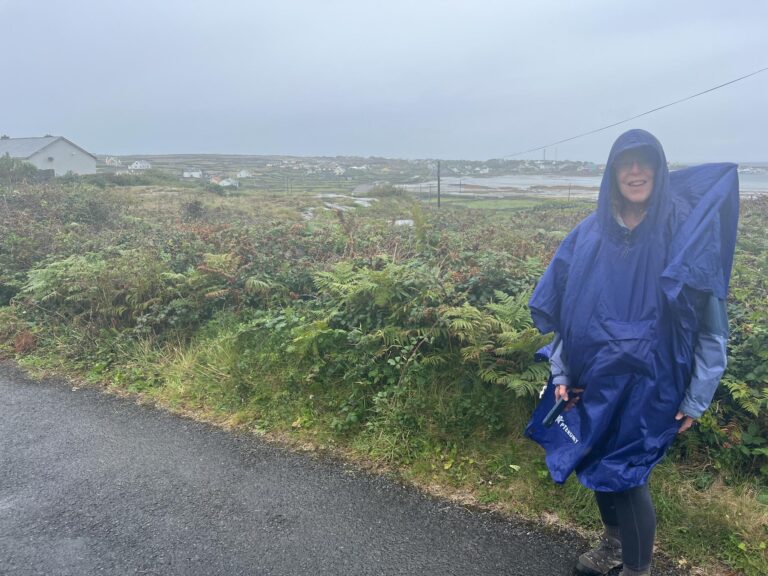
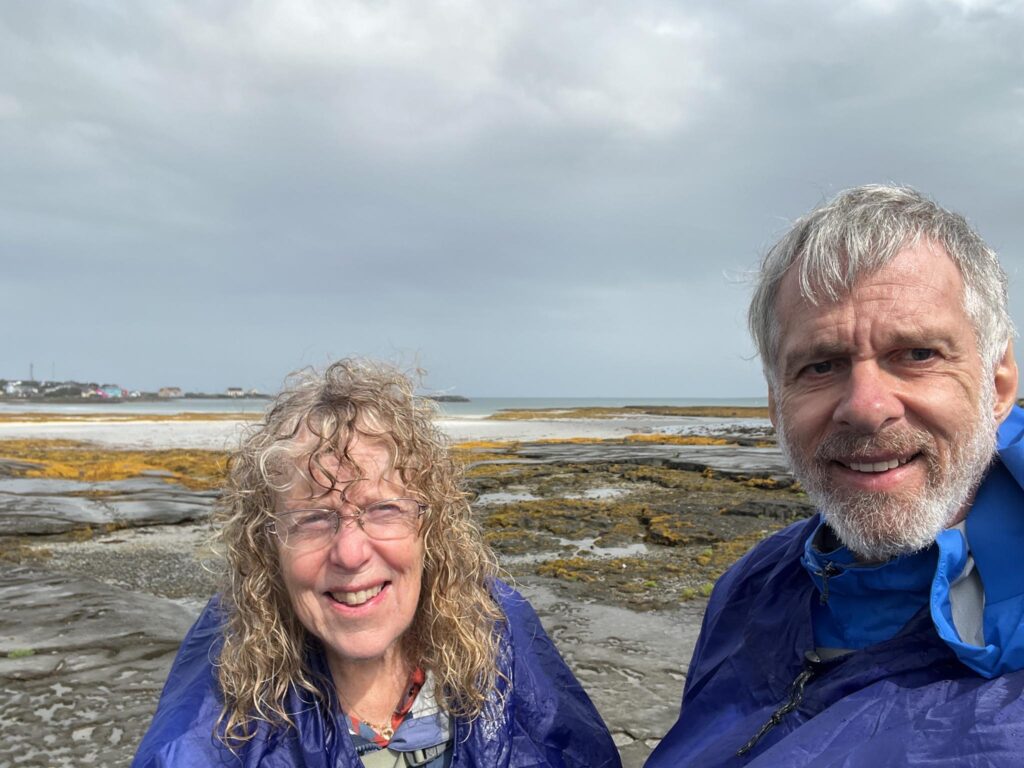
Very quickly it became obvious that a raincoat alone would not handle the rain. Time for the parka.
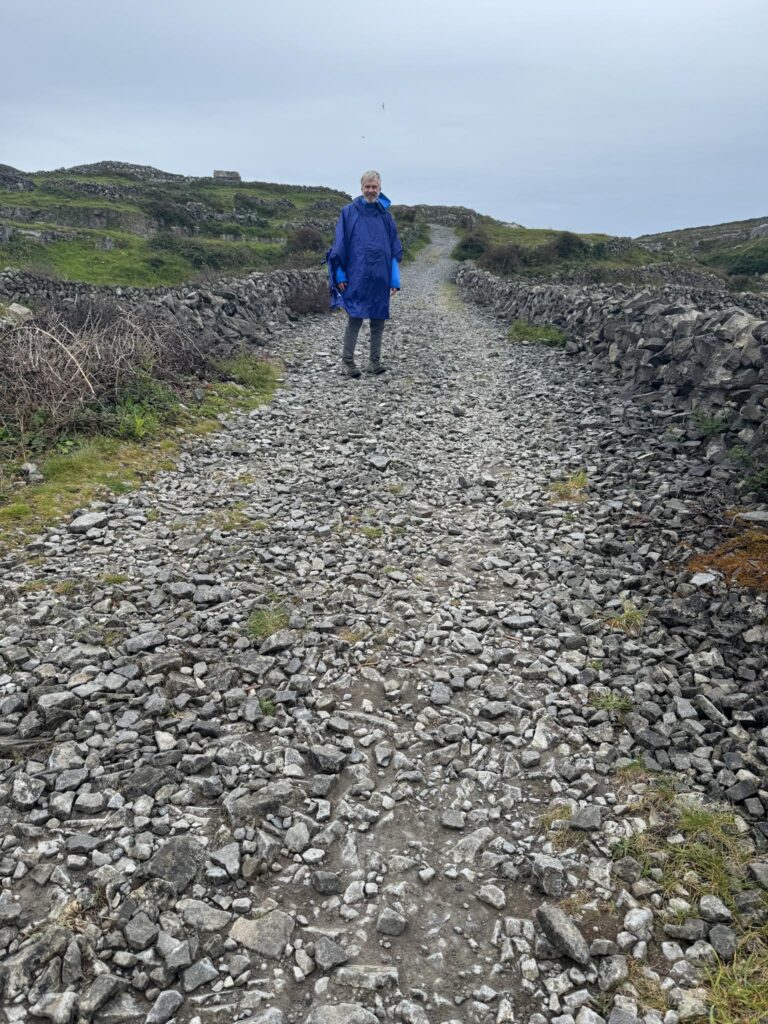
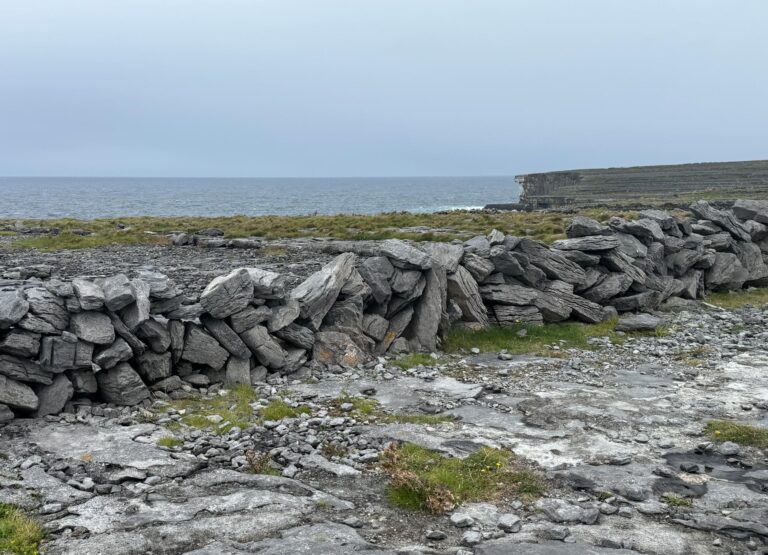
The road to the Black Fort is lined with rock walls on both sides and a rocky surface. It continued to challenge us as we got closer.
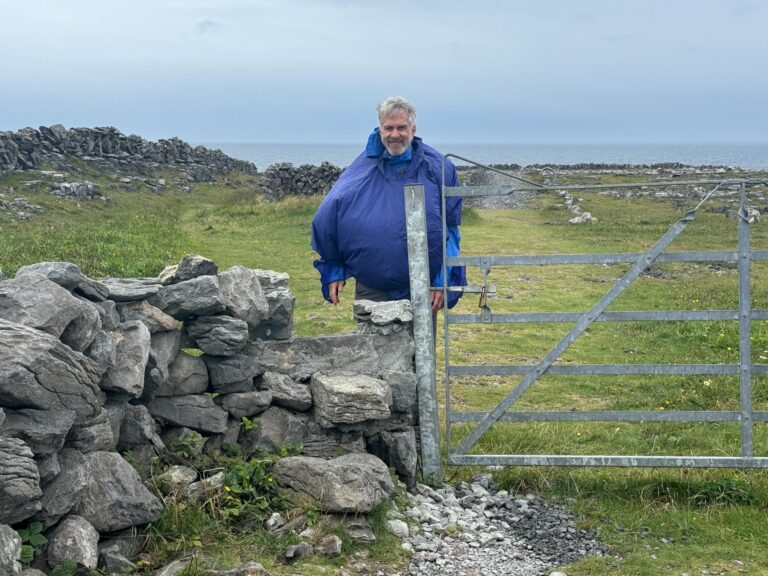
A rock stile provided a way to get past this gate. We could have used several more stiles to move past the walls to reach the fort.
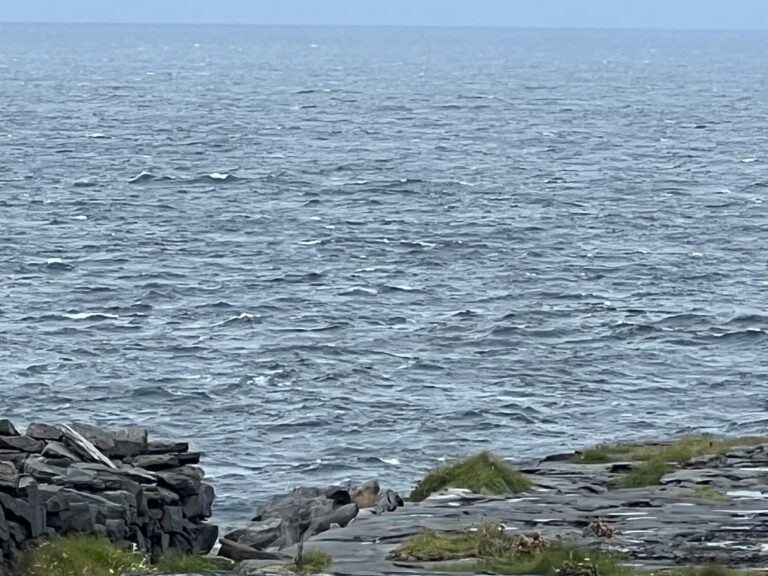
Finally we reached the cliff view but the wind was howling, the stones were wet and slippery, and there was no clear path to get over the walls to the Black Fort overlook. Parkas were a necessary shield from the rain, but it felt like we might fly like a kite. We turned around.
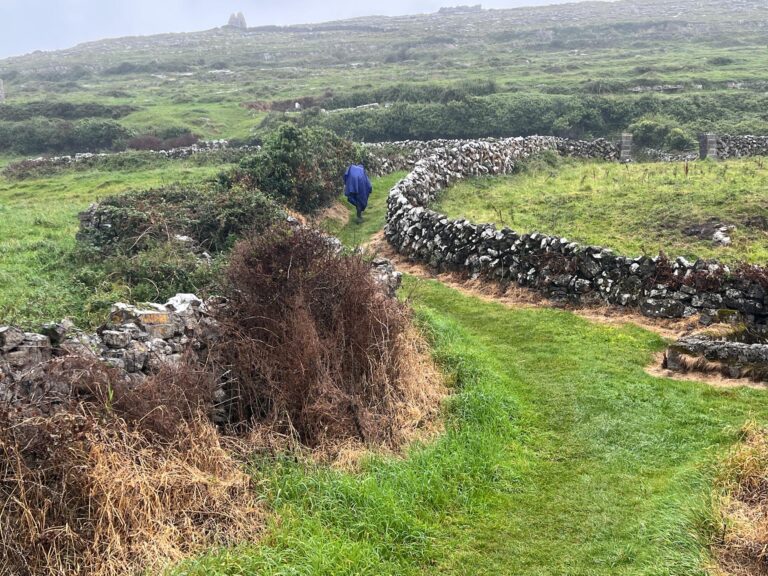
It was slow going over the rocky wet path.
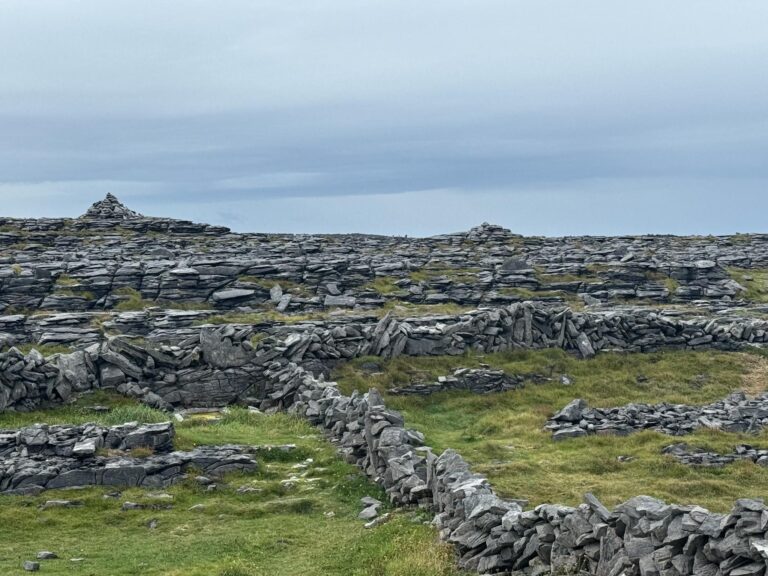
There are rock walls everywhere.
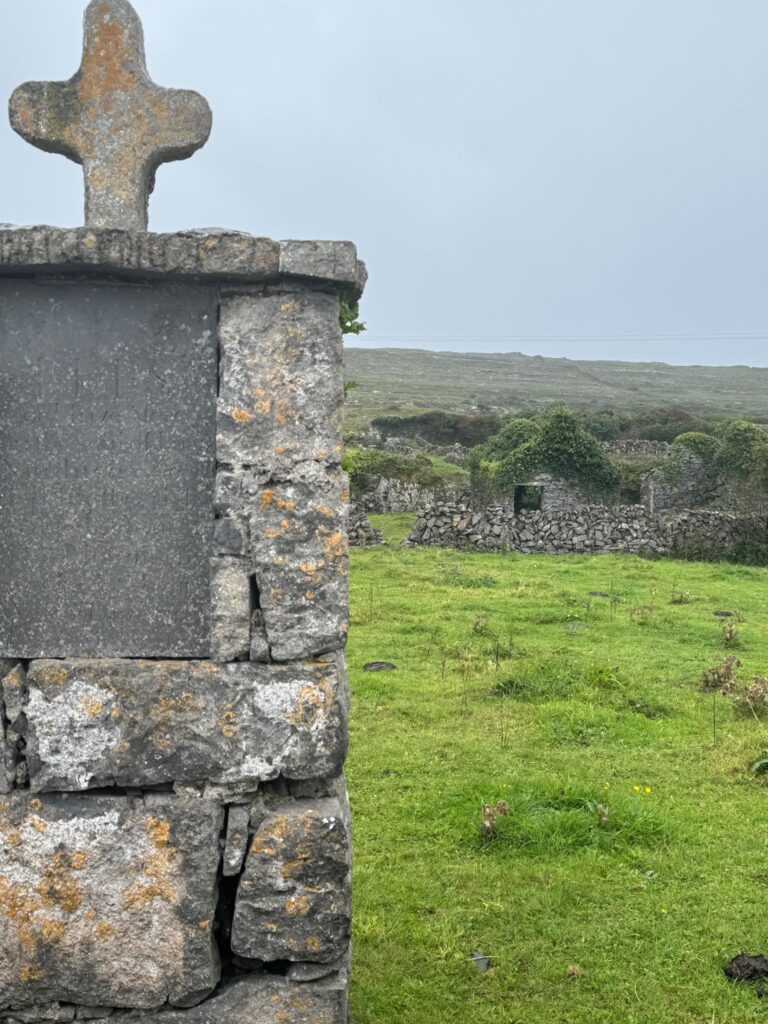
Back on the main road, we saw several of these memorials. We later learned that families will erect these for loved ones who have often moved away. No one is buried here—bodies are either buried in the cemetery or elsewhere (often off the island or out of the country).
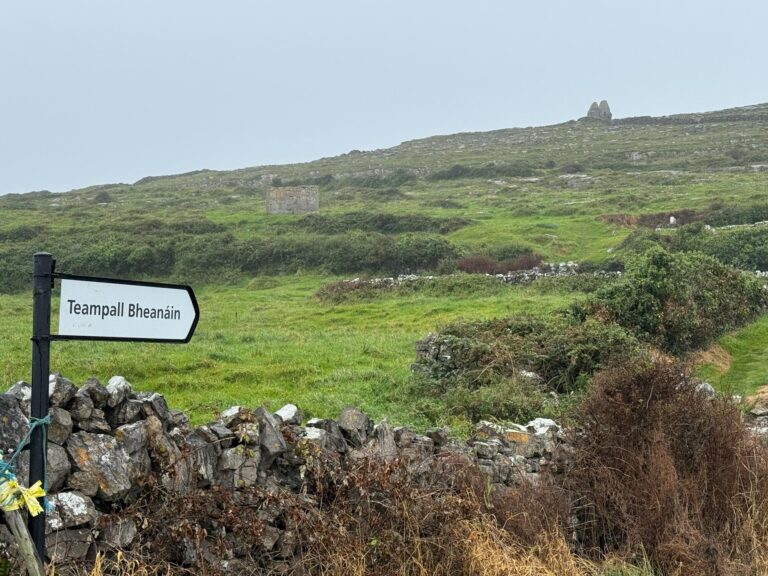
One more hike to the smallest church in Ireland, at the top of this hill.
The path started easier with a grassy surface. Shortly we discovered rocks hiding in the grass, and it was wet slogging.
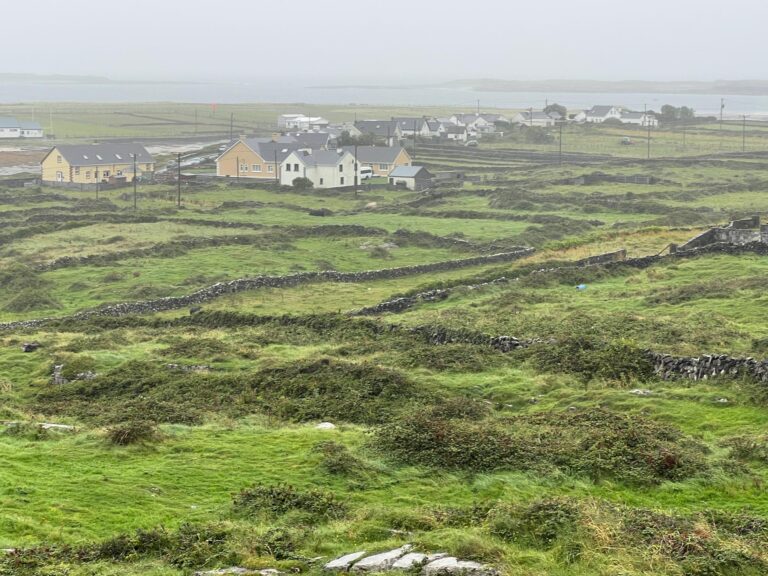
It is a beautiful view with more rock fences and homes near the bay. We enjoyed the view, but decided the path was too risky to continue and settled for a picture.
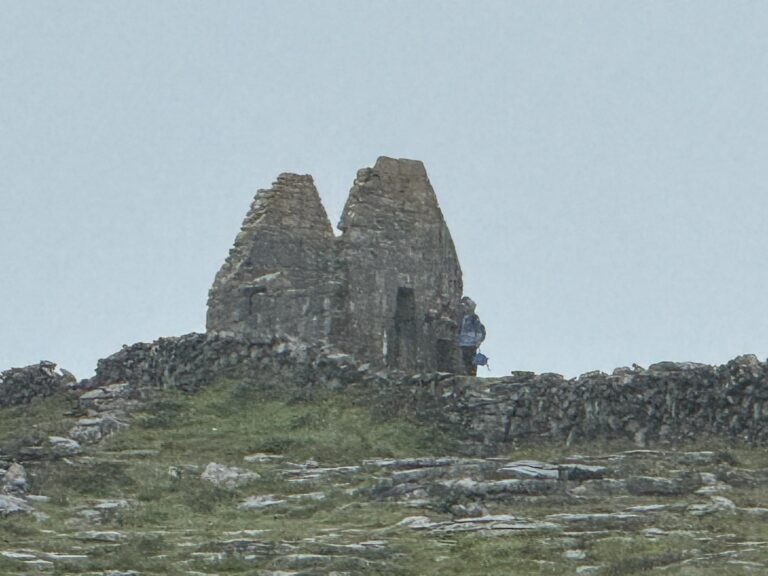
Look carefully and you can spot the young couple who passed us on the trail and made it to the church.
Back on the road again, the sun has come out but we still need to dry and warm up.
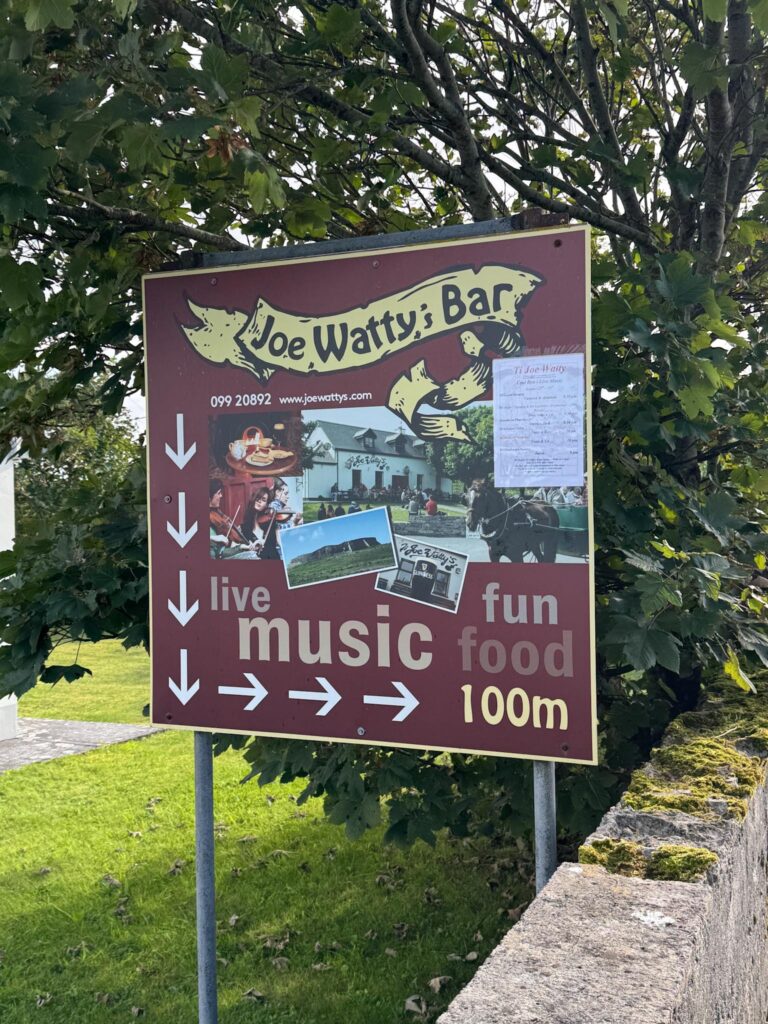
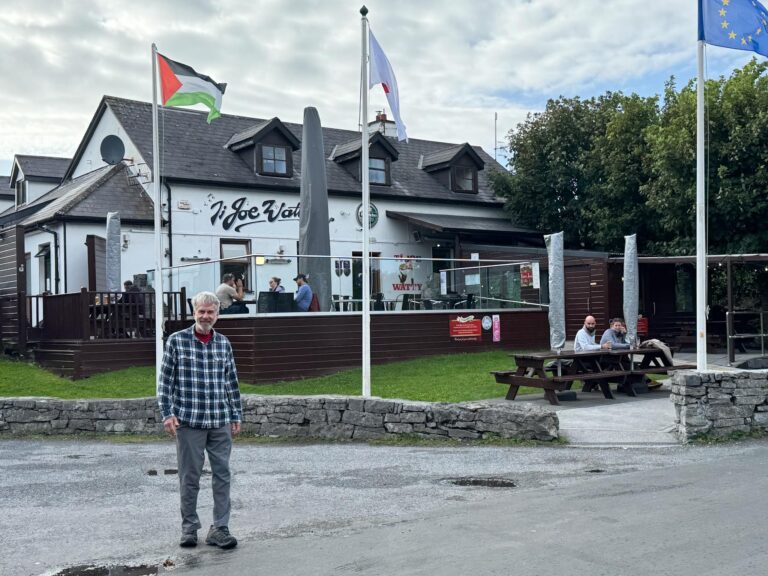
This dinner bar is close and recommended.
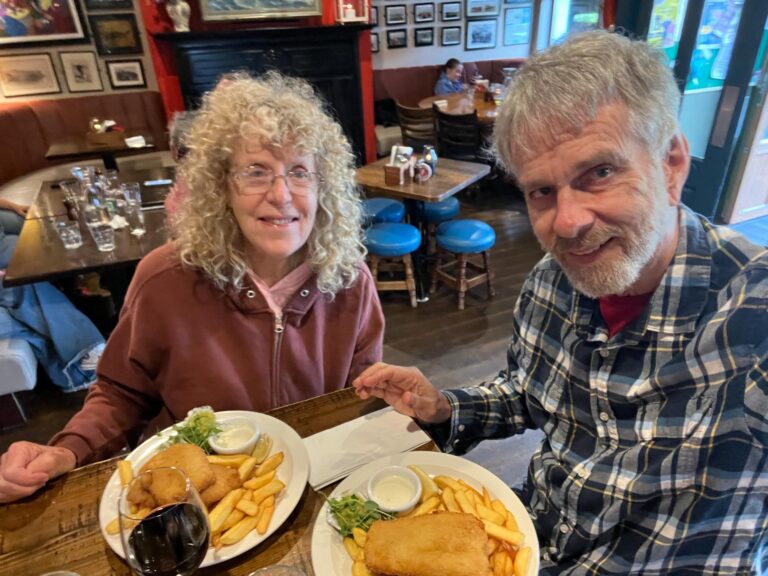
It’s been a long day— we’re hungry (and thirsty).
We both had fish and chips—the best we’ve had in Ireland. The bar was packed with a big group expected shortly, so we enjoyed the meal and then went back to the hotel.
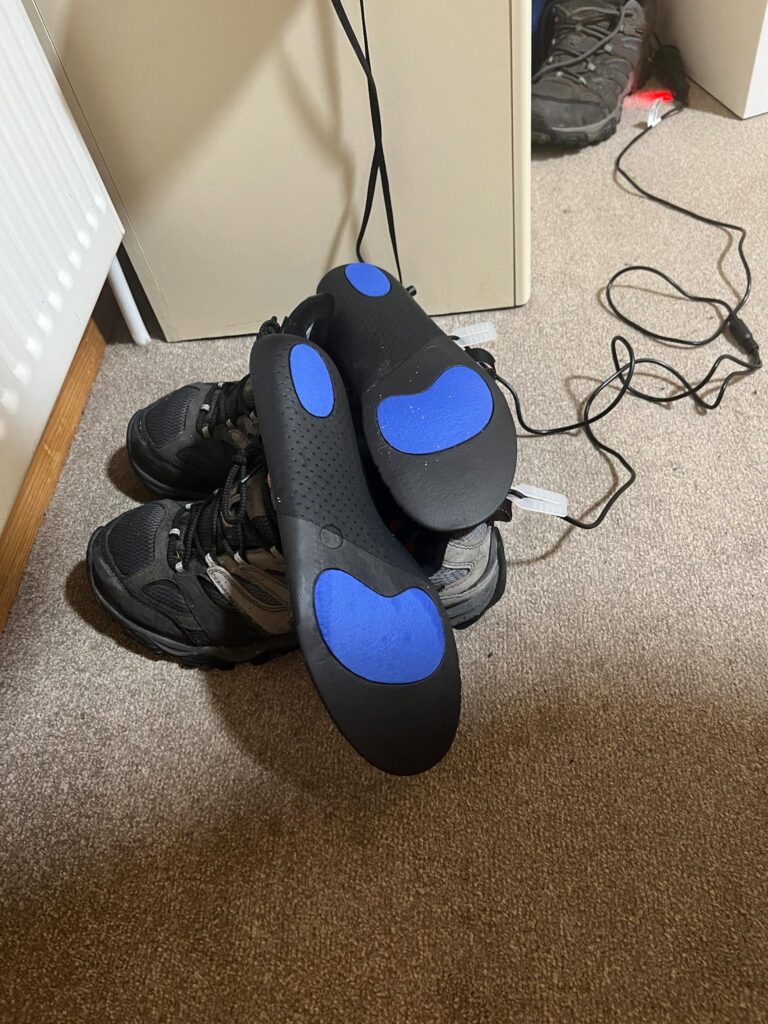
Time to get the wet clothes off, and start the boot driers.

4 Responses
I don’t consider fish and chips “fun food” as advertised. More a staple of one’s diet. Remember lots of rainy overcast days in Ireland and the rare ray of sunshine. Flunked your quiz, didn’t spot the young couple at the church. Dan
Not only is fish and chips a staple, but now the wait staff tells us the type of fish used as well. We’ve enjoyed very nice weather up till now so I guess we can’t complain. Leave it to Hurricane Erin to get us—we thought we dodged her on the US East coast, but she got us in Ireland!
Sorry the picture was not clearer at Ireland’s smallest church. The young couple is on the right side near the doorway. They were hiking with umbrellas, while we had raincoats and parkas and hiking boots, but they’re the ones who made it to the top! Bravo!!!!!!!!
Glad you brought those boot warmers along. You are definitely more outdoorsy than I am, but I love your adventurous spirit! Wendy
The boot driers do a great job and we take them whenever we can spare the weight. There is nothing worse than slipping your feet into cold wet boots as you set out to hike—dry ones save blisters as well.
This day definitely tested my spirit and I was disappointed that we failed to reach each of our goals. Still, we came close, and we have to consider safety first.