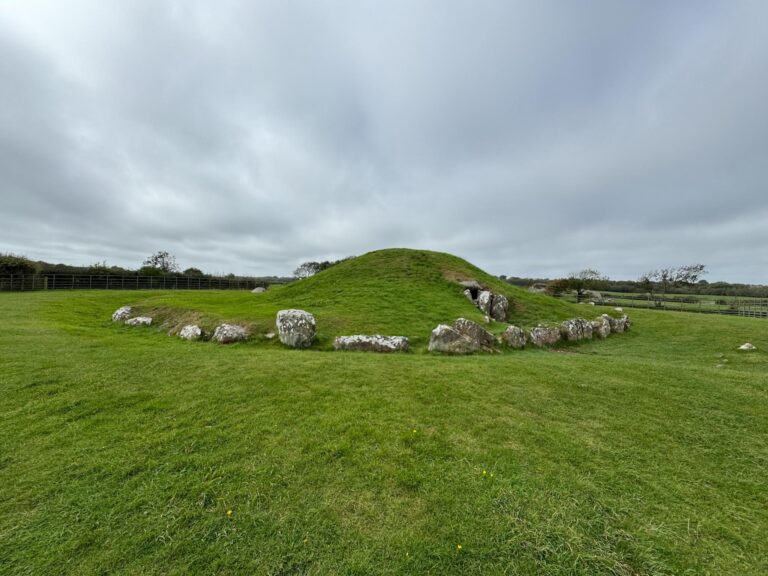
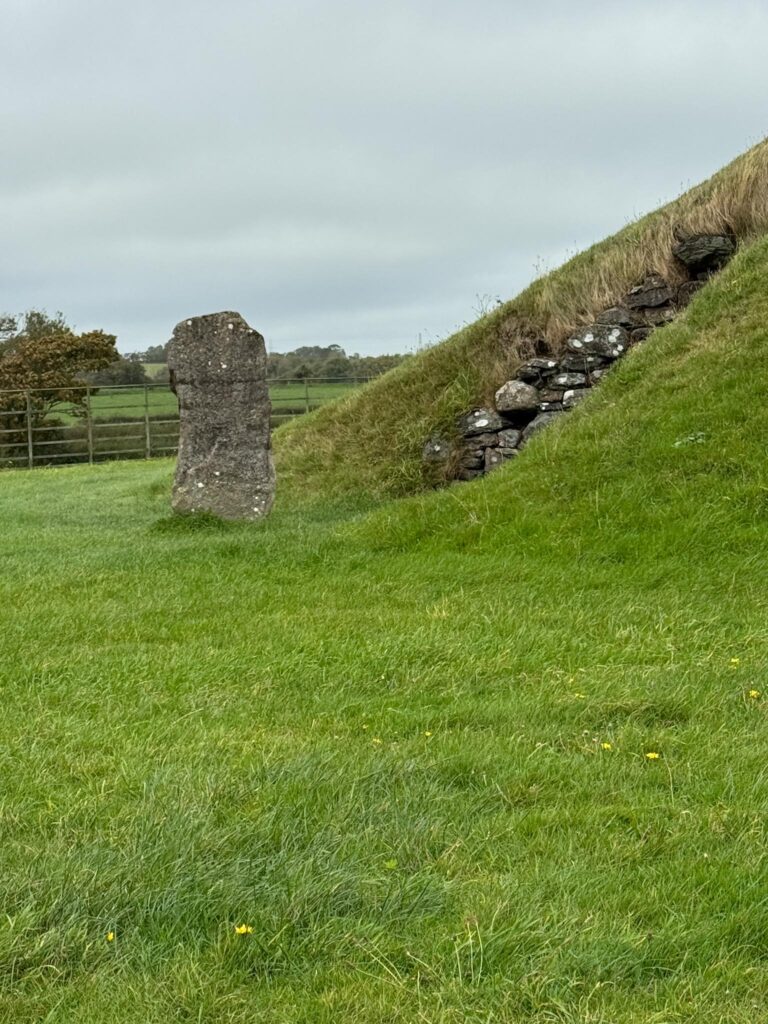
Our first stop was Bryan Celli Ddu, a prehistoric burial chamber. It is the only one of its kind on Anglesey, as it accurately aligned to coincide with the rising sun on the longest day of the year.
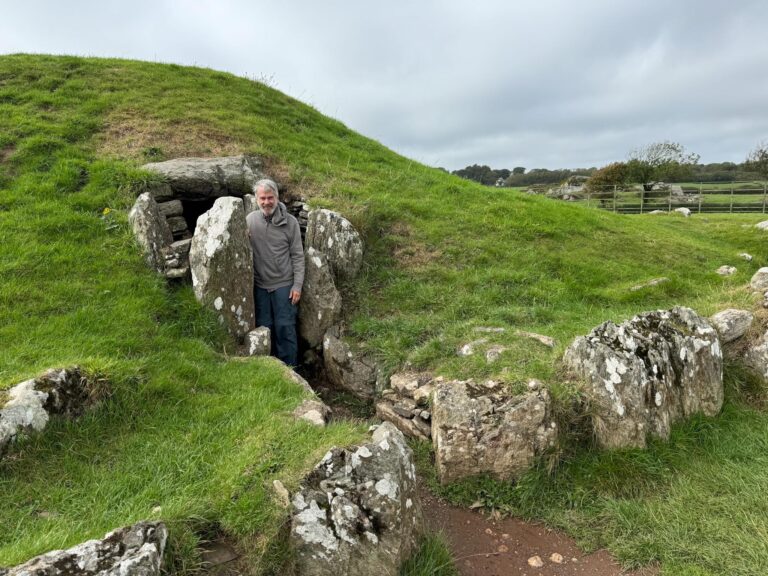
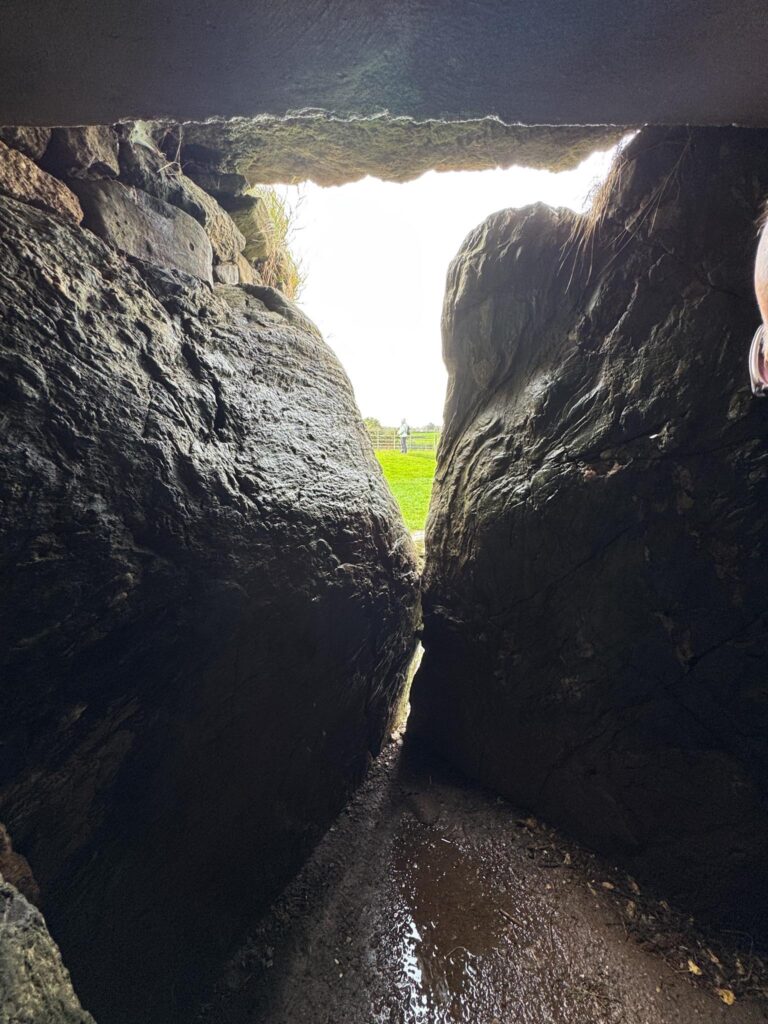
The front entrance of the burial chamber is not wide, and short for Richard to enter.
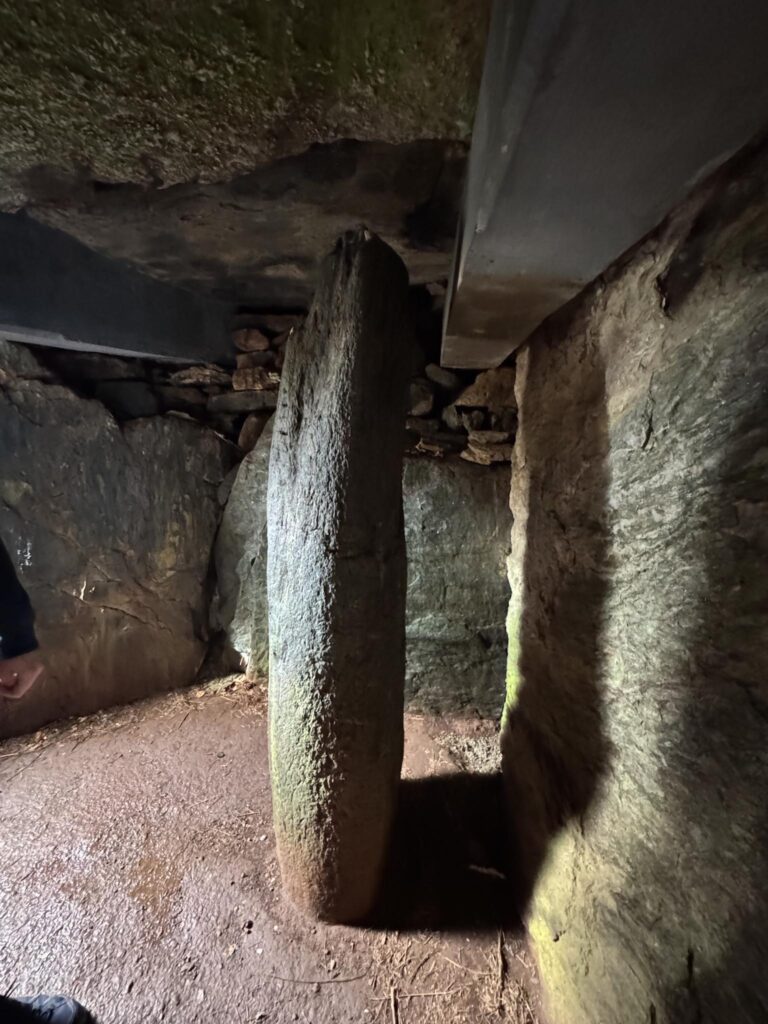
At dawn on the Midsummer solstice, shafts of light from the rising sun penetrate down the passageway to light the inner burial chamber. We surmise that the light might be directed by this stone a few feet away from the back if the chamber, but it was not obvious how it might work.
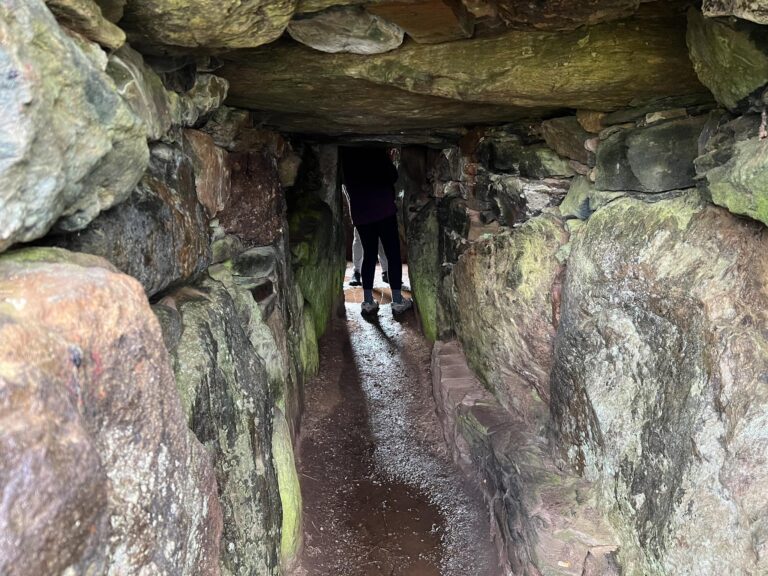
The entrance hallway is short for anyone—here you can see us standing in the burial chamber, and the hallway is at best shoulder height.
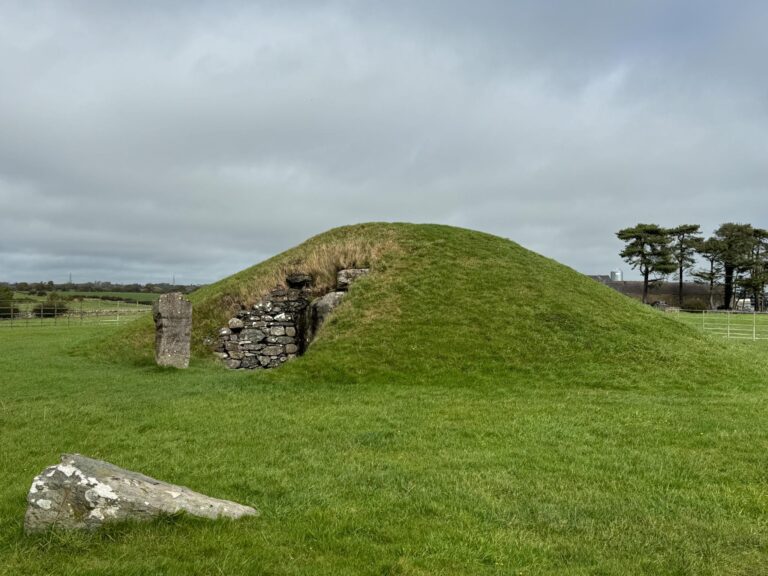
This is a single stone monolith standing guard in the burial chamber. At one time there were two more stone pillars in the burial pit— one with a spiral and zigzag pattern.
This is the back entrance to the chamber, possibly the entrance for the summer solstice light.
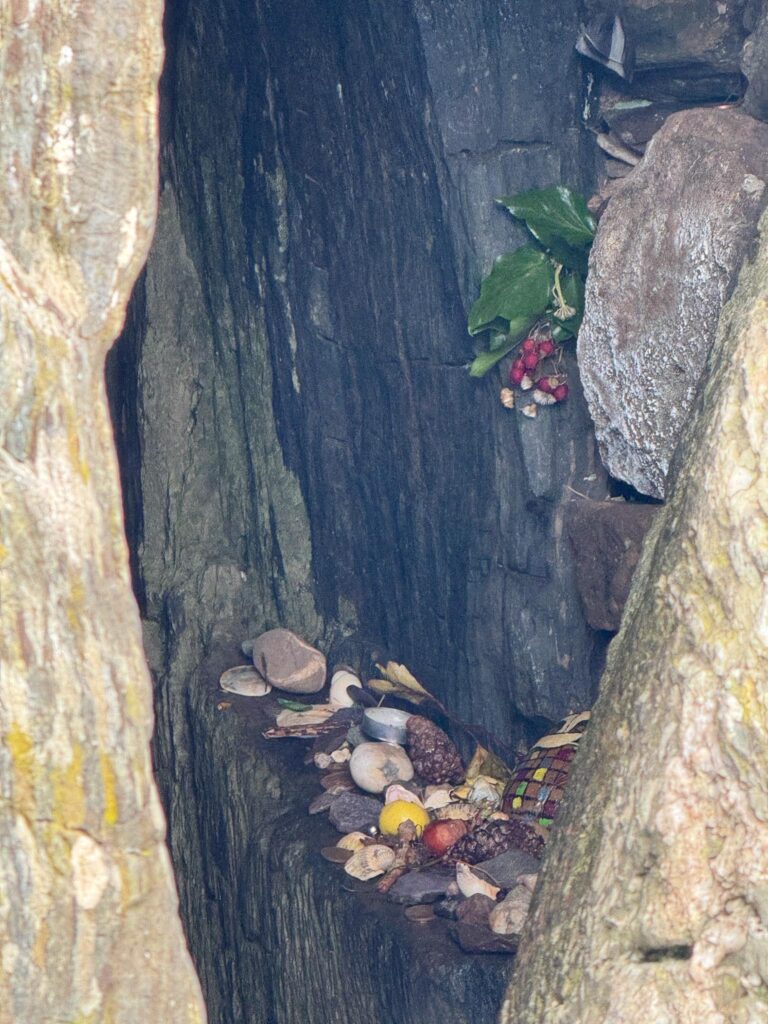
Looking from the outside in, you can see a shelf “altar” where visitors have placed their offerings.
The single stone standing at the back of the burial chamber.
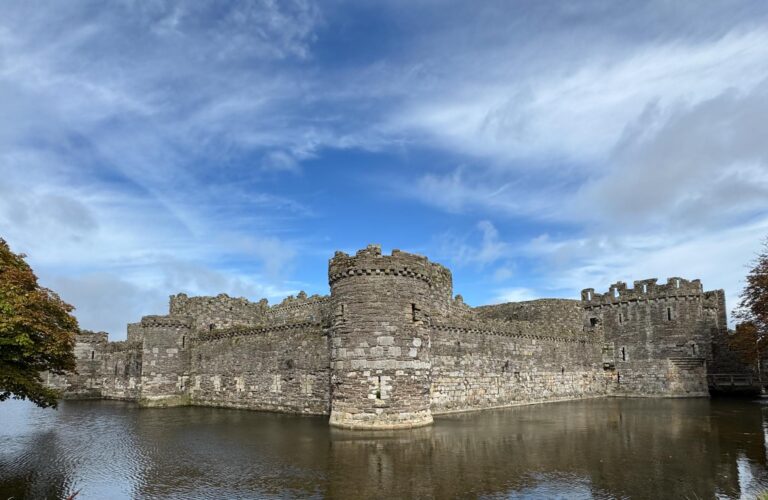
Our next stop on Anglesey is Beaumaris Castle in the town of the same name.
Beaumaris Castle was one of Edward I’s fortresses to defend against Welsh princes, and one of four castles designated as World Heritage Sites.
This was the last of the four castles designed by the same architect, and begun in 1295. The moat allowed ships to moor directly beside the walls.
This castle is known as “the greatest castle never built,” as it was never finished. Edward I got distracted deciding to go after Scotland and funds were not allocated for the castle.
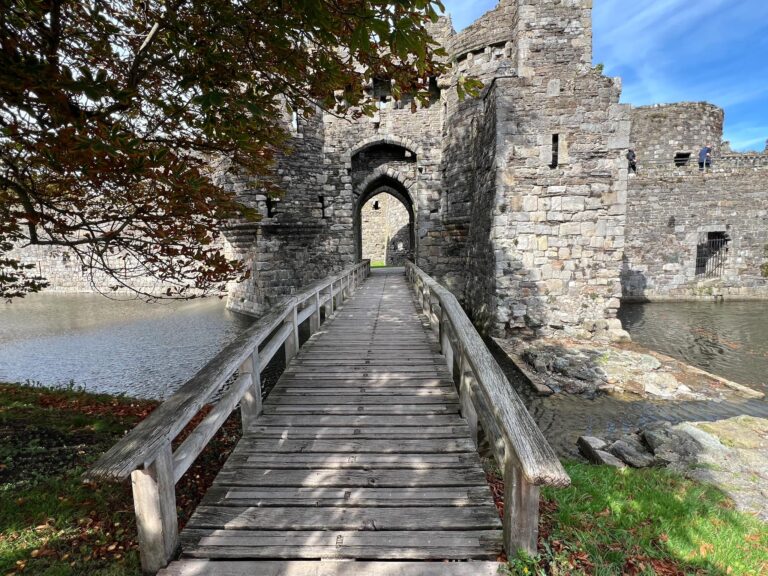
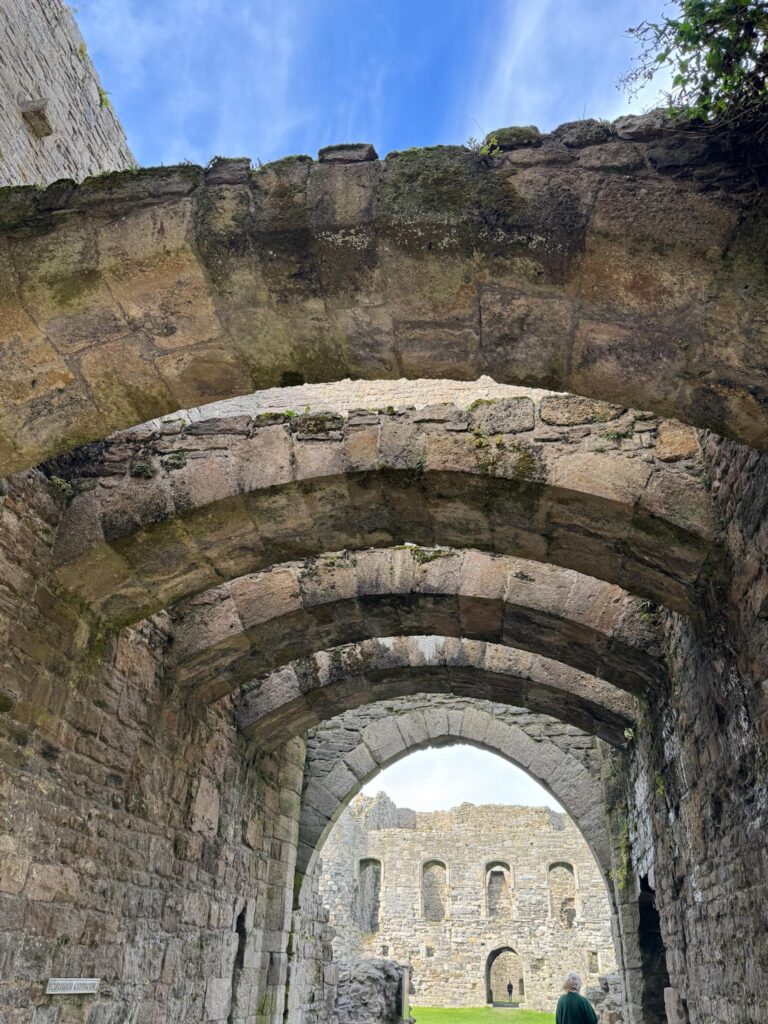
These murder traps were part of the defense of the gatehouse passage to the inner ward of the castle. Guards could pour boiling liquids from the ceiling openings to discourage anyone advancing.
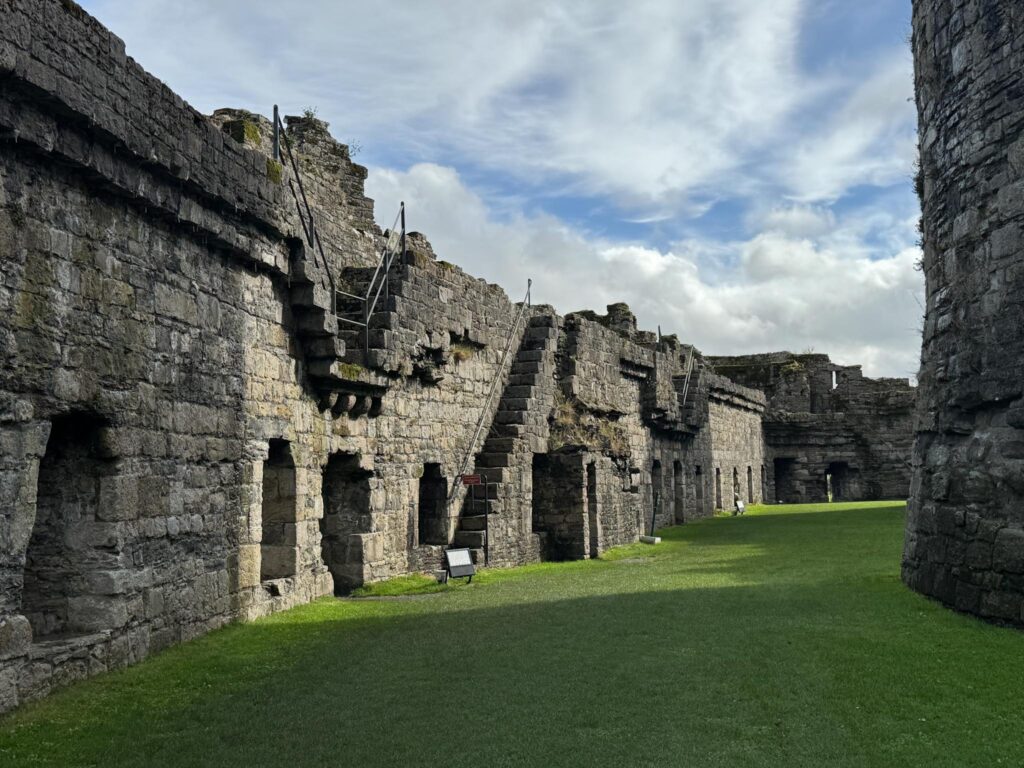
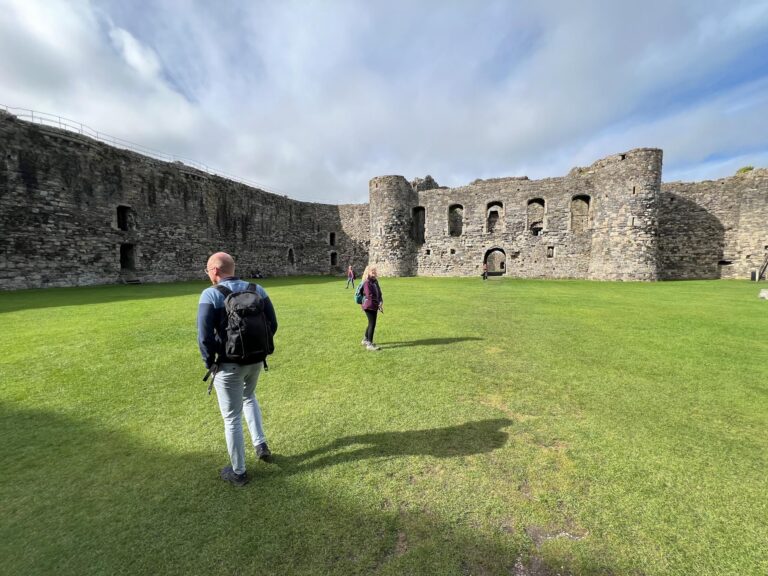
The inner courtyard of this castle is quite large.
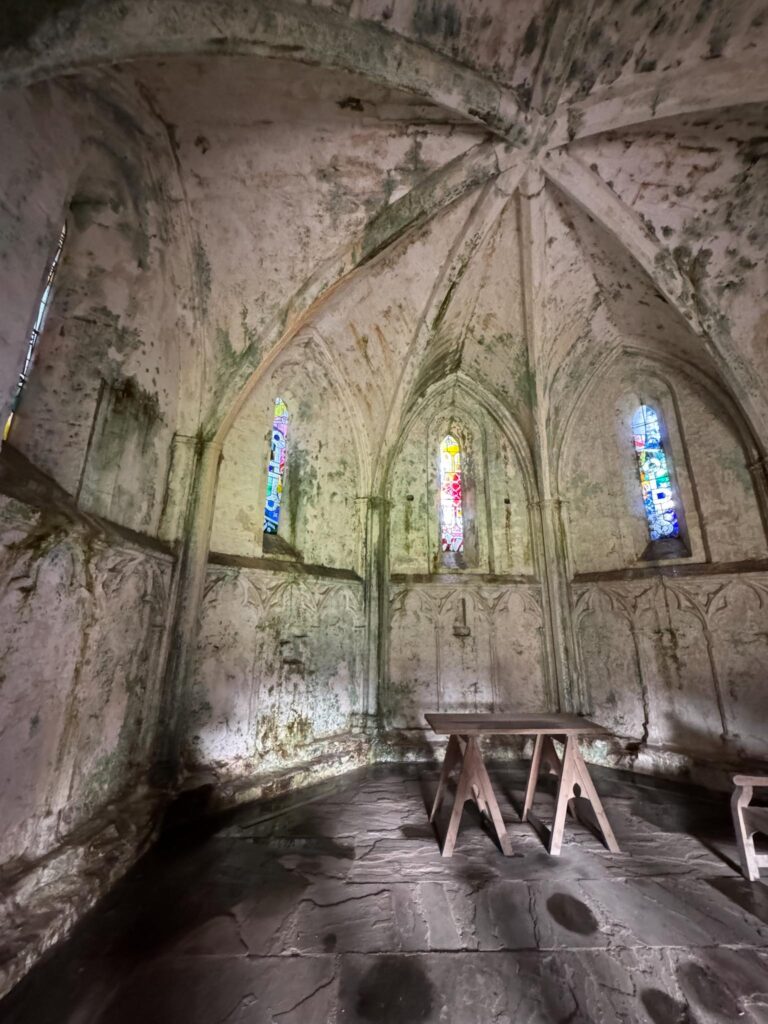
The second floor chapel was meant to show how beautiful it could have been. The stone was imported, and finely-skilled mason perfected their craft.
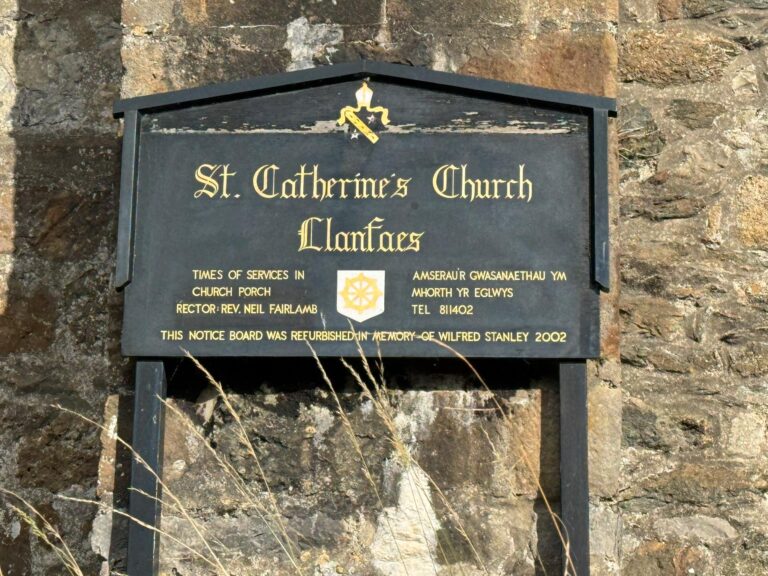
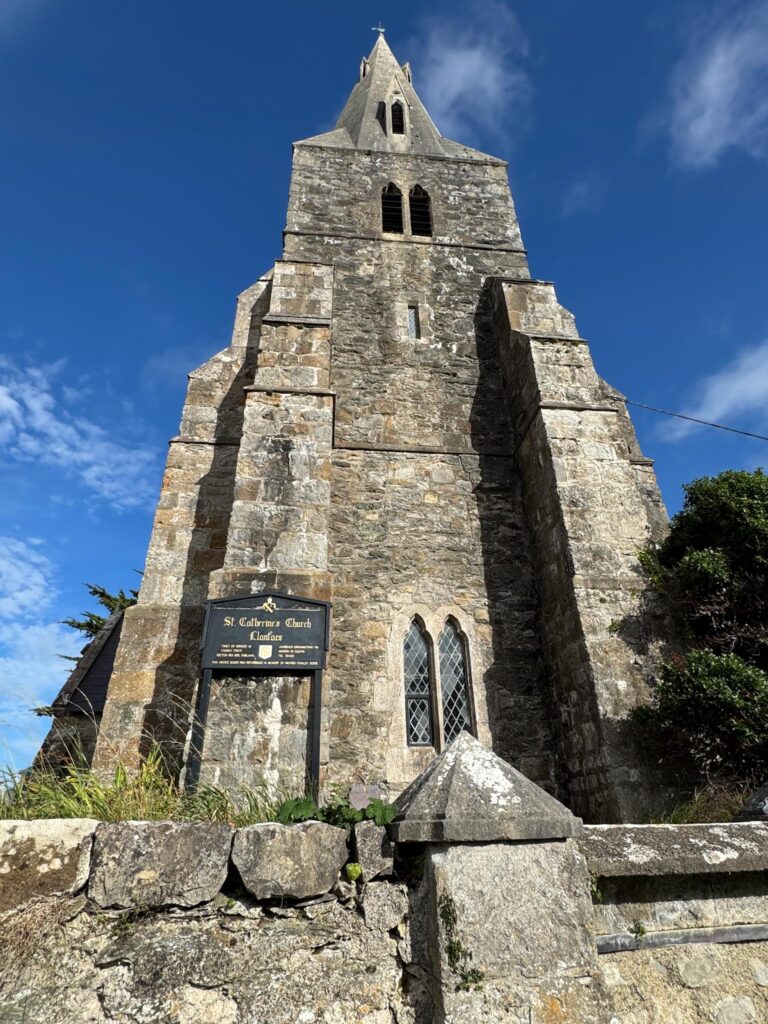
We next tried to visit this church that was near one of the ancient strongholds of the Welsh princes. Unfortunately it has been closed and is now property of the state.
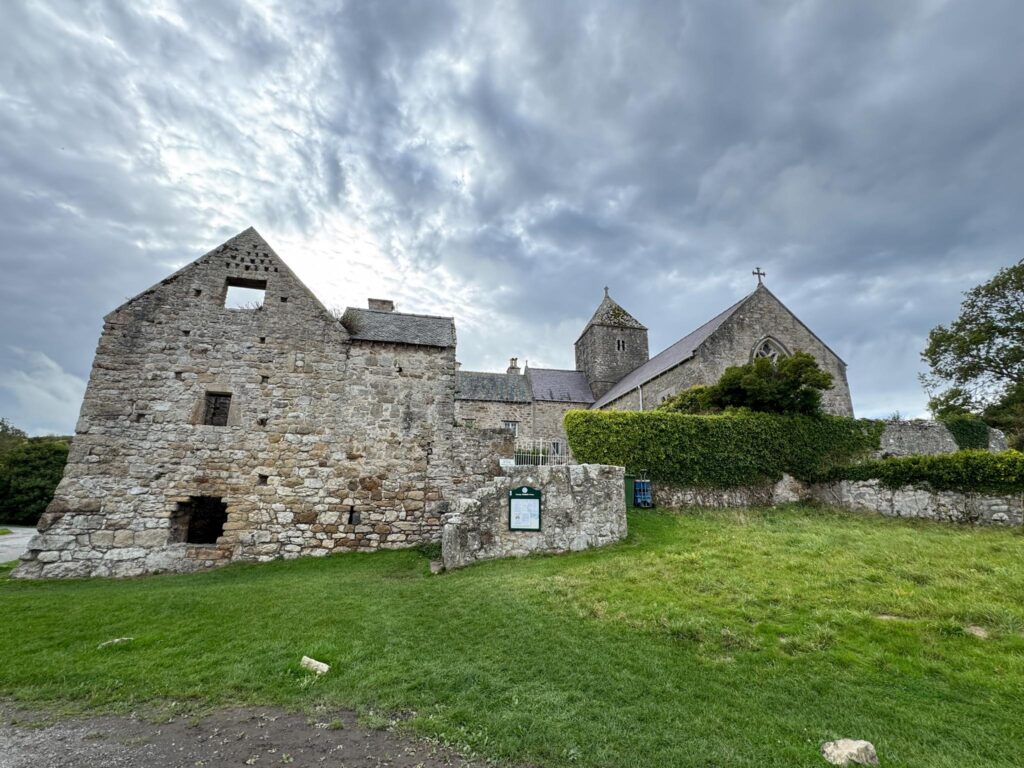
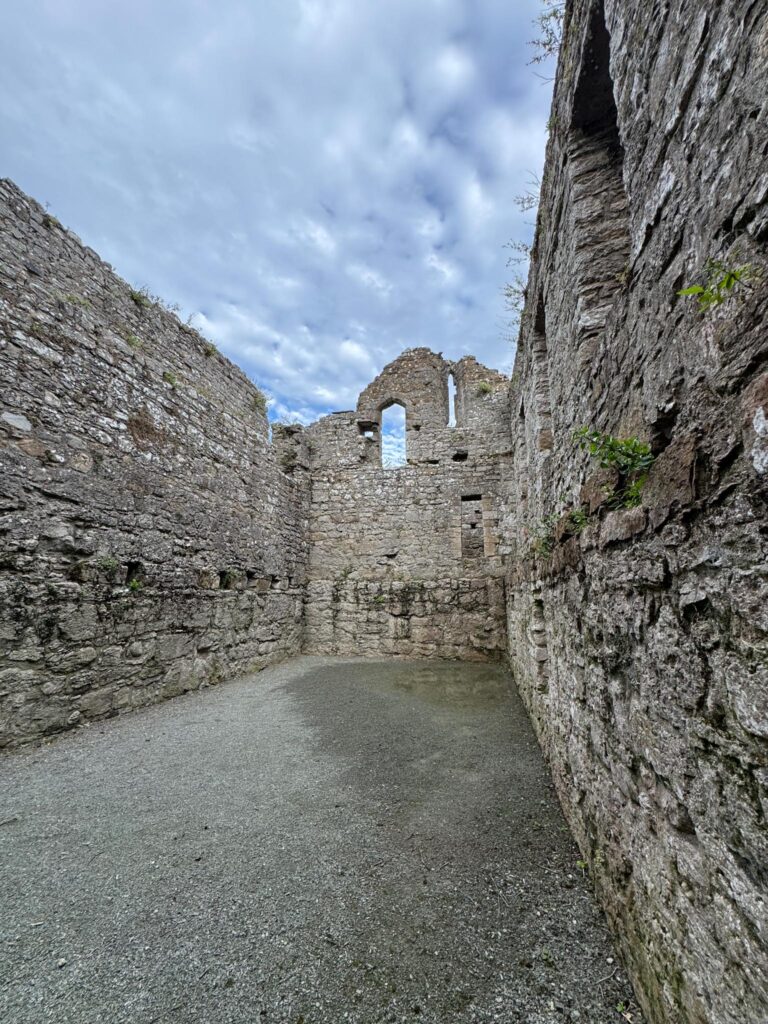
This was our last stop of the day on Anglesey. St. Seiriol Church and priory are here at Penmon on the point at the southeast corner of the island. St. Seiriol founded an early Welsh monastery here in the 6th century. In the early 13th century it was reorganized as a priory of the Augustinians. The priory is in ruins, but the church on the right is an active church.
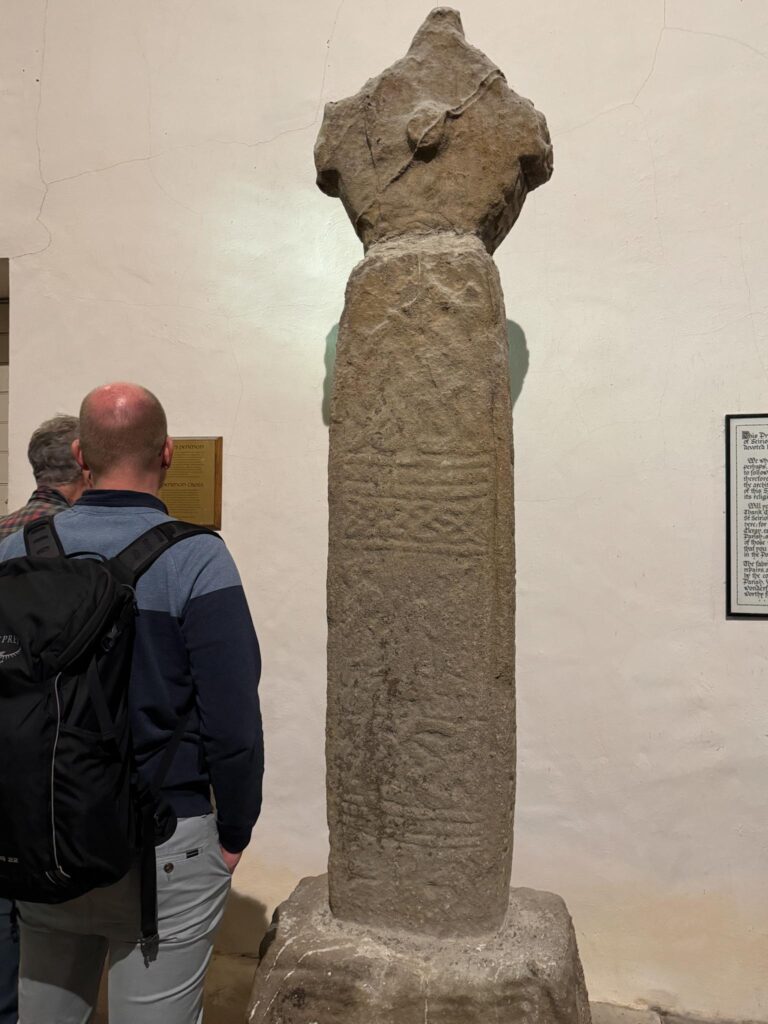
This is one of two 10th century crosses that used to be outside in open air for outdoor worship. They are now displayed within the church.
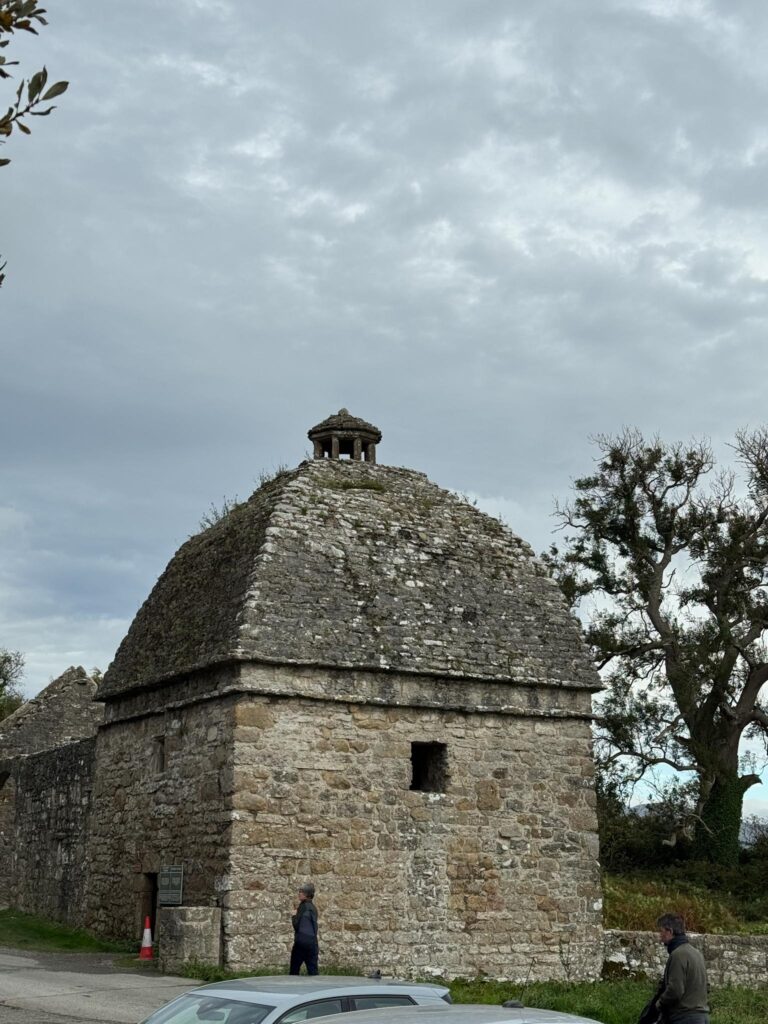
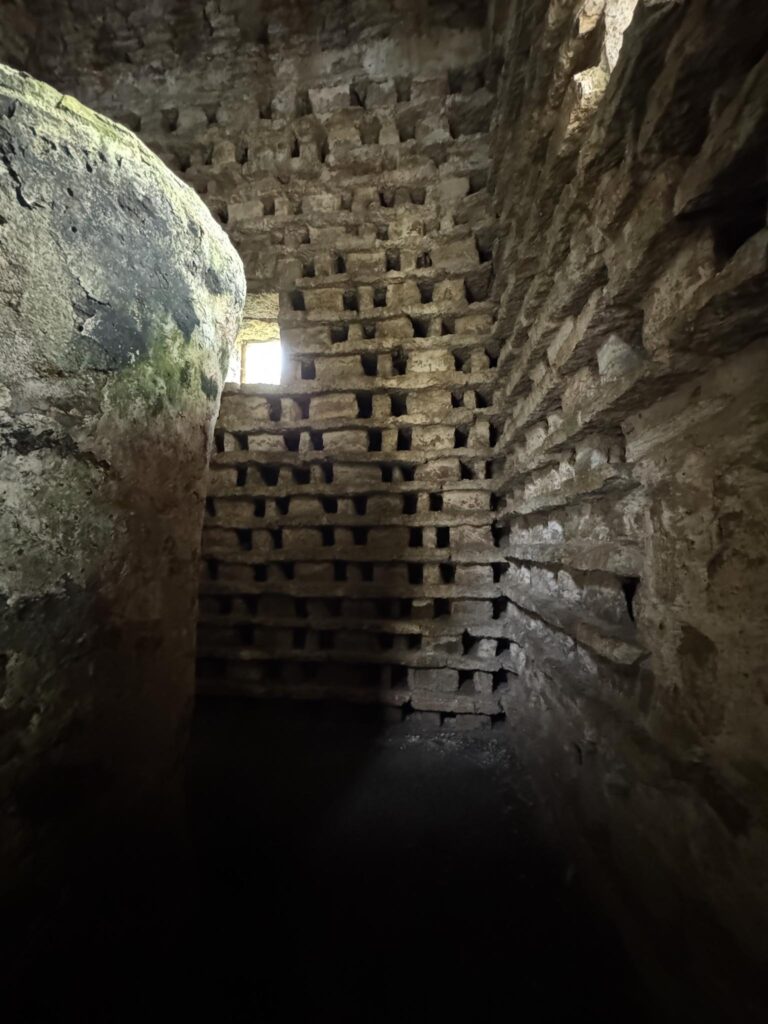
This dovecot was built by the family who inherited the land around the priory after King Henry VII dissolved all monasteries. This dovecot has about 930 nesting holes, and a cupola where doves could fly in and out. The unique central pillar could assist the pigeon-keeper to reach the pigeons, although its exact function is unknown. Pigeons were a prized source of tender meat.
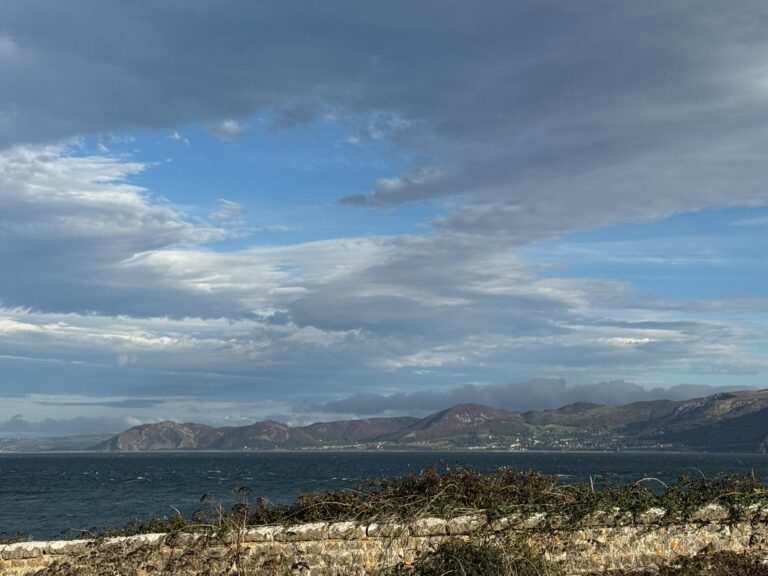
Further toward the point we could view the Snowdonia mountains across the Menai Straight.
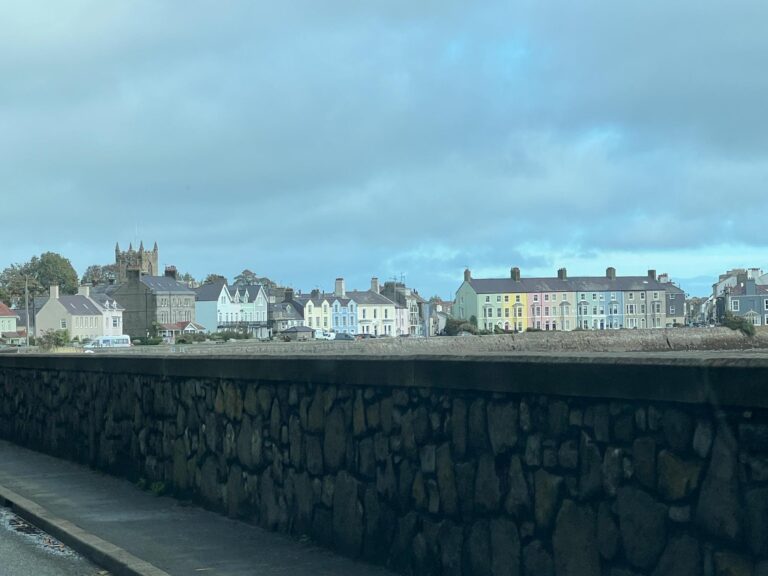
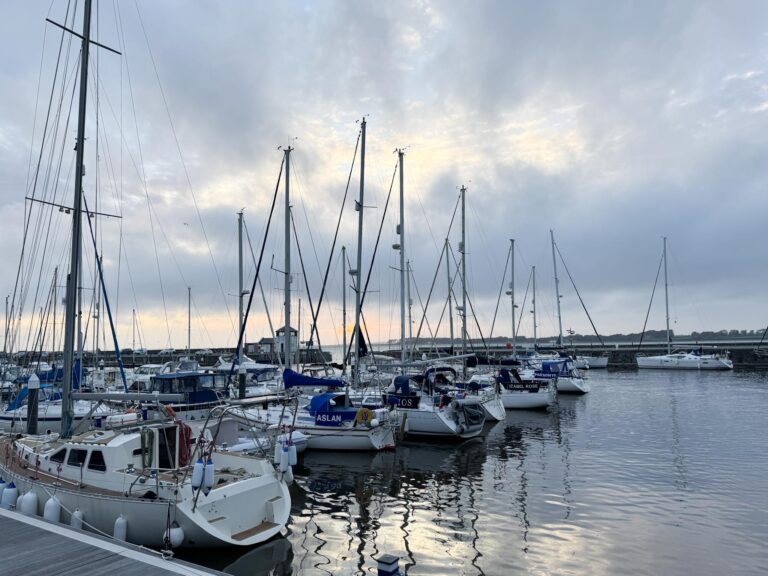
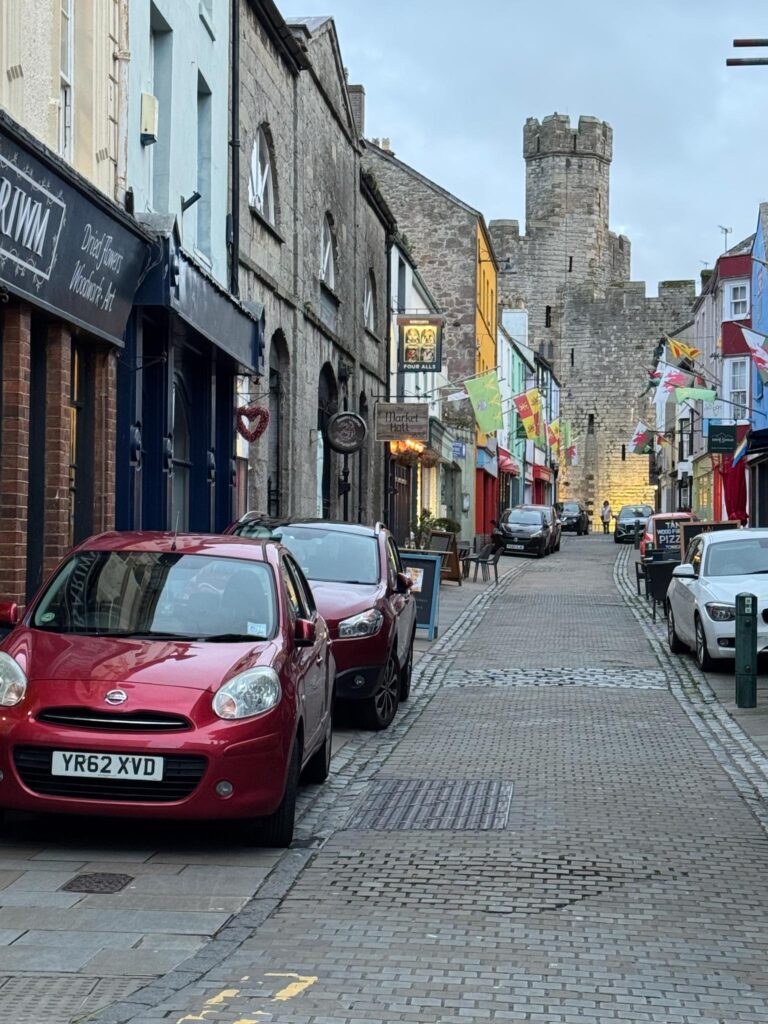
Back across the Manais Bridge to the mainland, we headed to Caernarfon for dinner.
There is another of Edward I’s castles here, but we were too late for a visit and settled for just a glimpse.
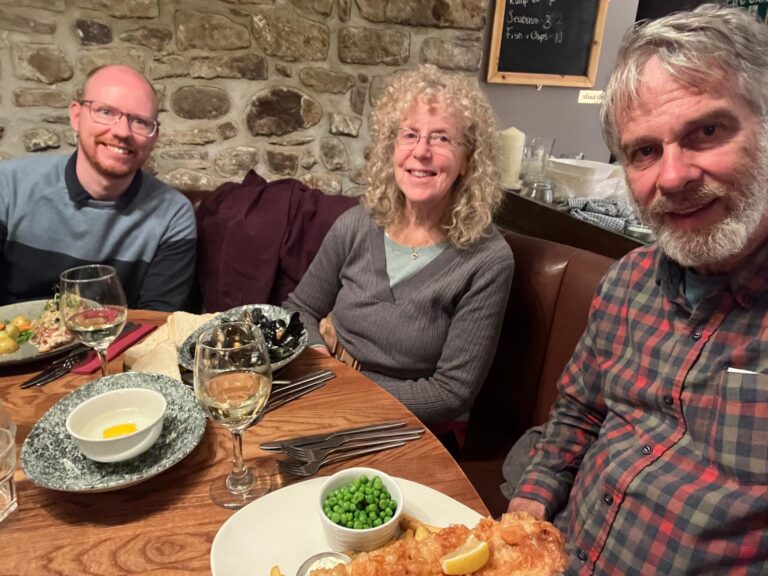
Dinner was chicken, mussels, and fish and chips.

8 Responses
Fun seeing all the historic structures. And not one picture had rain in it. Is it possible that it didn’t rain the whole day?! Do you enjoy having these non hiking days? Great wrap up to the day, fish and chips! Dan
We ran away from the rain and had sunshine much of the day on Anglesey. It’s great to go to these sites with Simon—he is a history buff and we always enjoy his choices.
It is nice to see that Anglesey/Wales had the good sense to preserve the prehistoric burial mound. From what I’ve read, in the early 1800s when first settlers moved into Ohio they saw several Native American burial mounds there, but of course in the name of progress and settlement they were all destroyed. I would have loved to visit them.
Wales looks like a fascinating country to visit, and I love all the historic places you are visiting. Thanks for letting me tag along.
Kathy
It would be hard to imagine losing any of these ancient burial grounds. They are under then control of the state and just seem to be built around: sometimes a sheep pasture, sometimes a neighborhood.
I see architecture, stained glass, stones on ground, stones in the wall. I found the burial site intriguing. It is something away from a traditional cemetery. You could write a mystery around just about all the places you are visiting. I hope the weather cooperates.
I don’t know about writing a book, but it certainly temps the imagination. How did all these stones get moved?
Thanks for sharing the history, scenery, burial sites, etc. Glad you had wonderful weather.
There is lots to see on Anglesey.