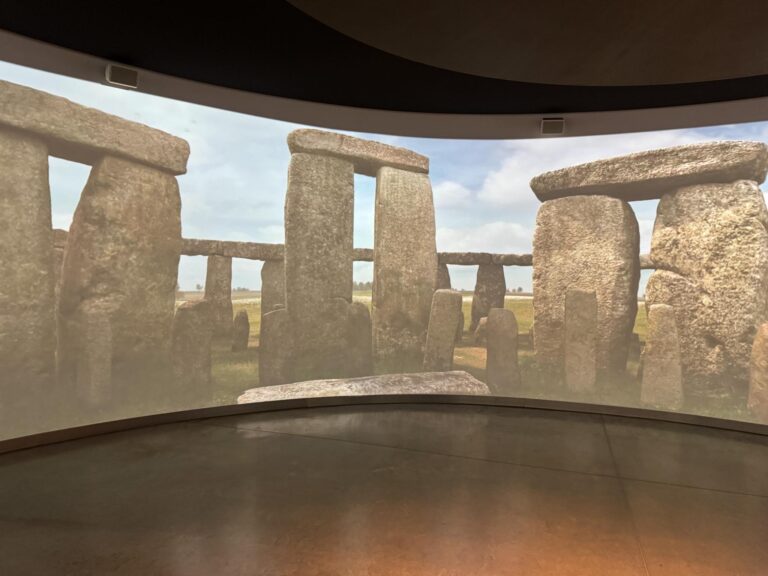
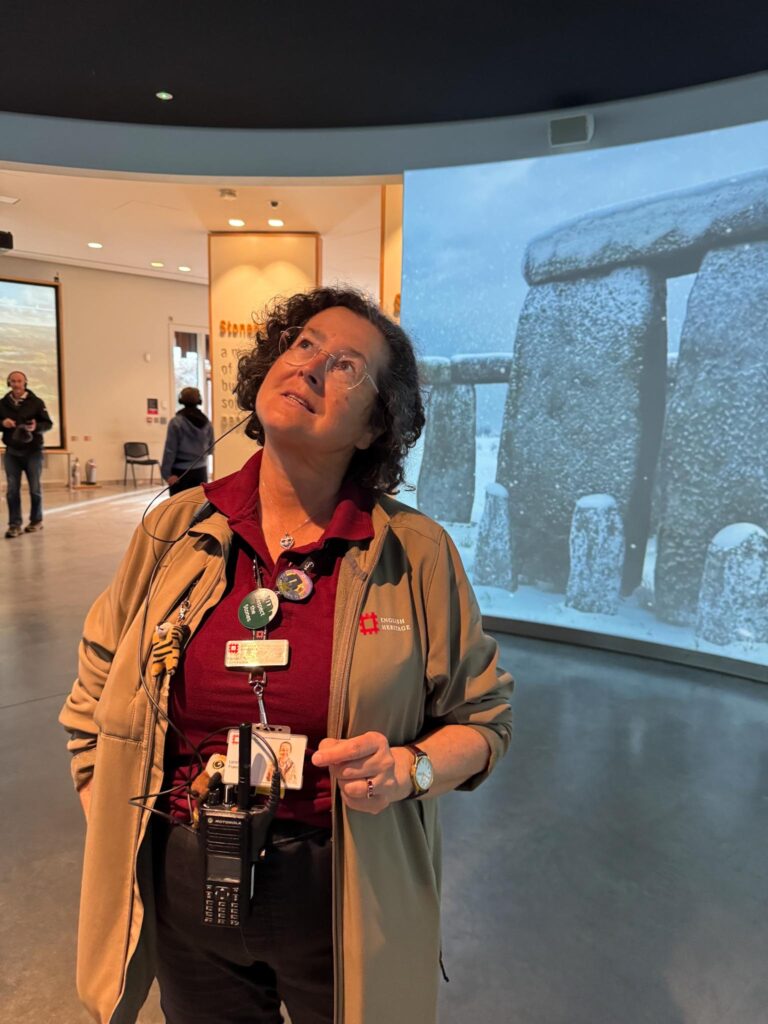
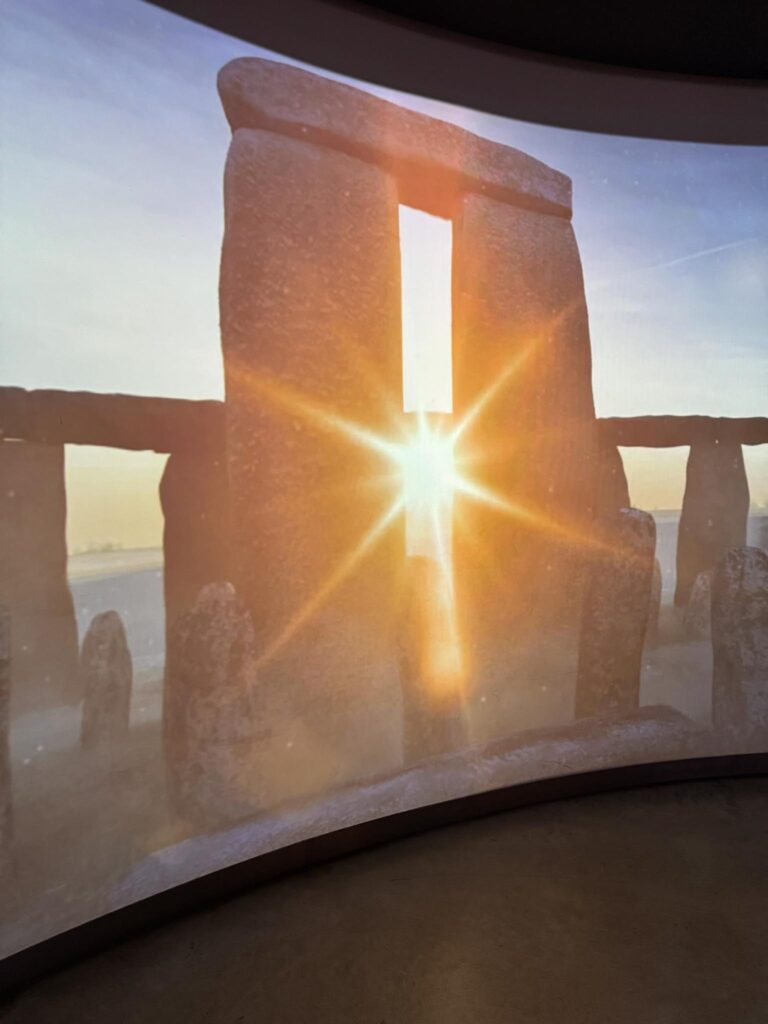
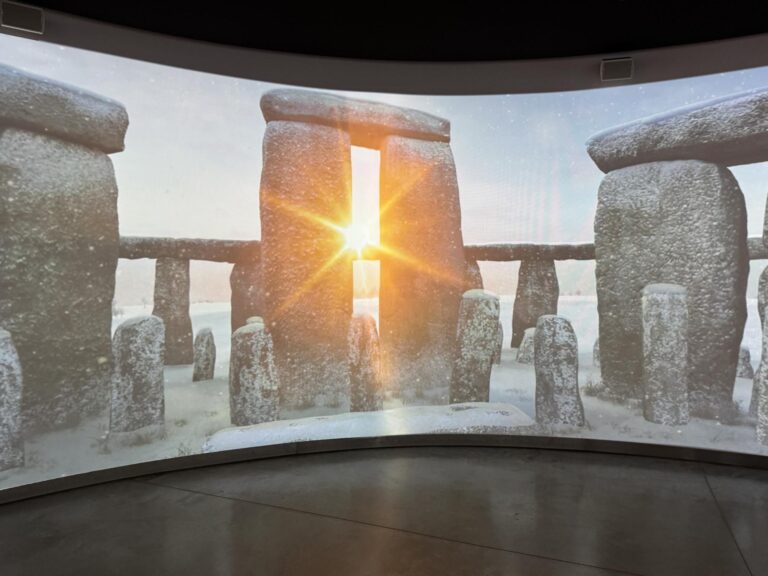
The Stonehenge Visitor Center begins with a 360 degree explanation over time of what we are about to see.
Fran is a volunteer who loves her job, and she made us love her too. She explained that there are many theories of why this spot is important, from spiritual meaning, to community-building, perhaps even with the idea of preserving the species with more diversity. The altar stone has been proven to come from near the Orkney Islands in Scotland, and the blue stones come from Pembrokeshire in Wales, so people traveled distances to get to Stonehenge.
The summer solstice is still an exciting time for visitors. Fran said there were 25,000 people this year for the summer solstice celebration at sunrise.
However, Fran said the winter solstice was probably much more important for ancient people as they realized the days would get longer, babies would be born, and they could plant their fields and begin a new year.
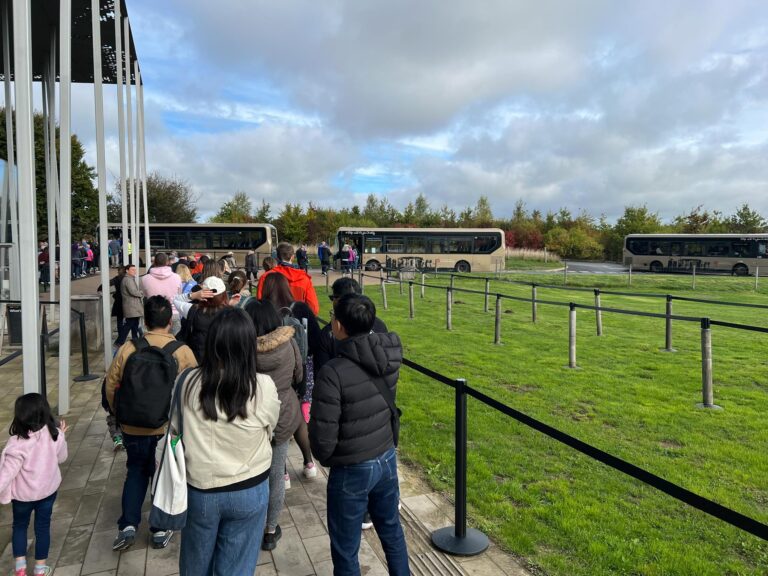
After exploring the Visitor Center, we head out to queue for the bus. There is still no sight of any stones.
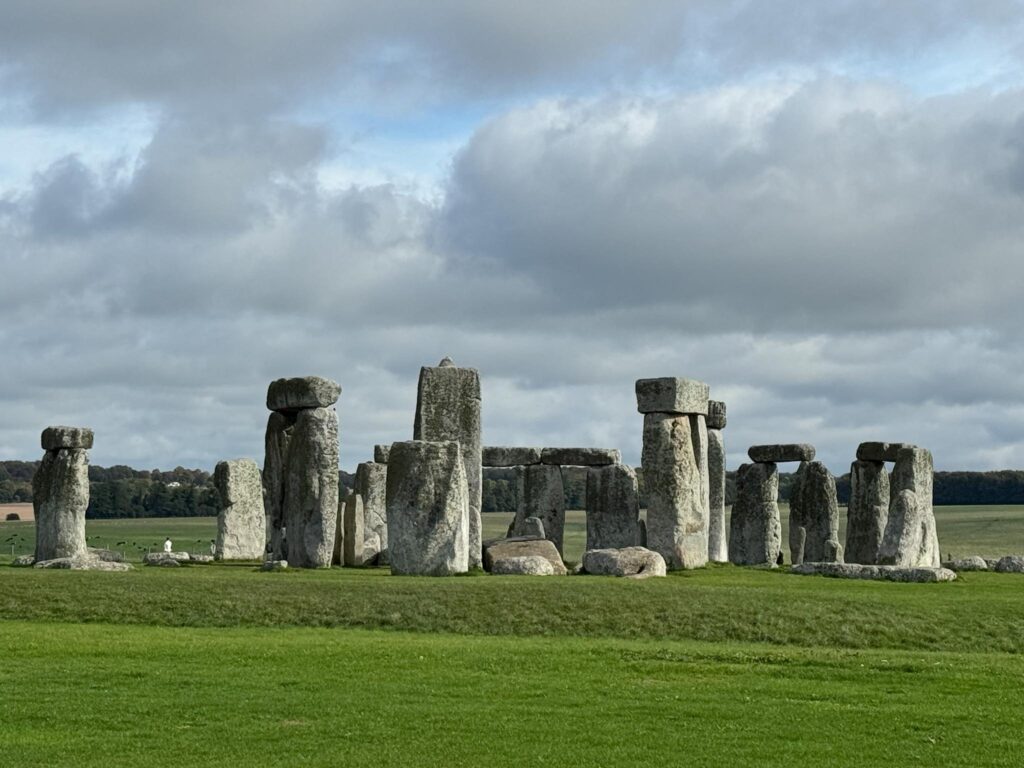
After a short ride, we’re off the bus. The stones are massive, and we’re separated by ropes and the ditch.
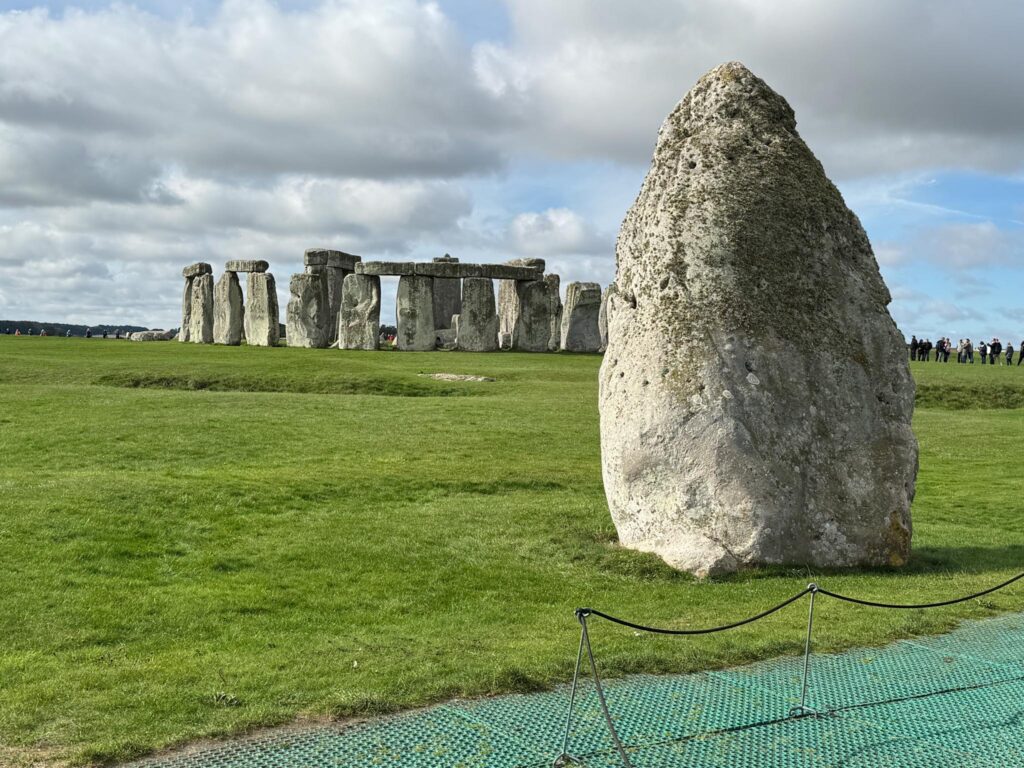
The heel stone is outside the original stone circle. Not a lot is known about its placement purpose.
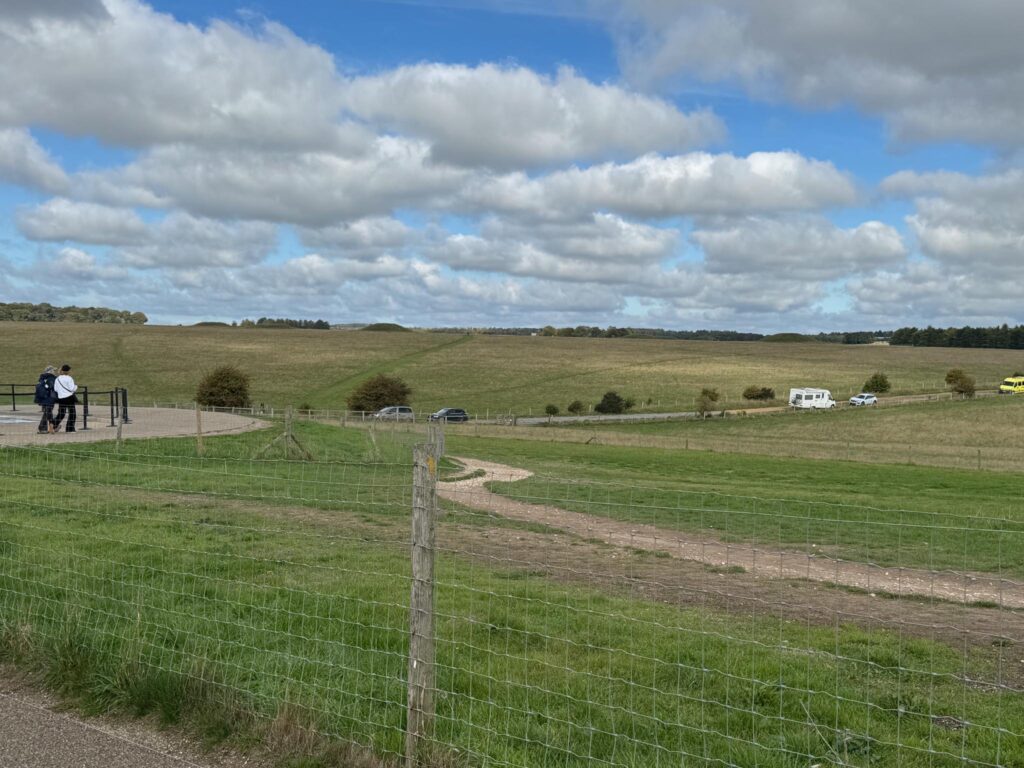
Besides the stones areas, there are burial grounds (mounds) and other lands connected with the Stonehenge builders.
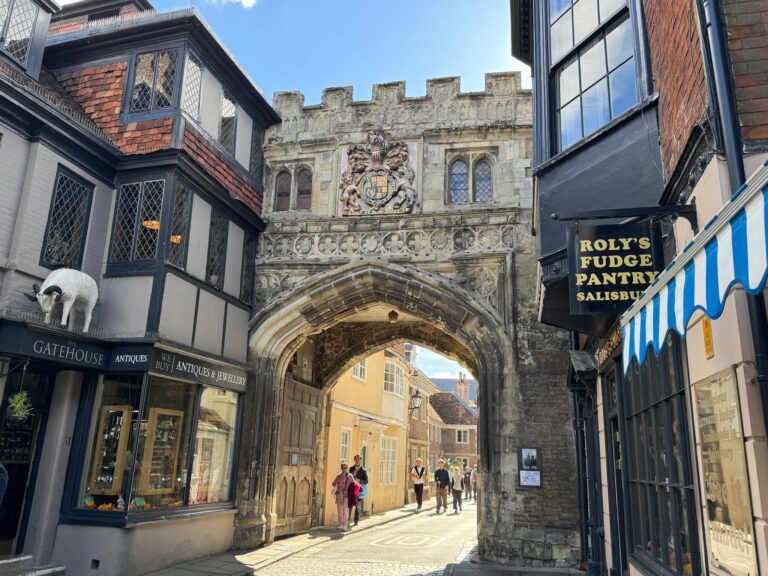
Back in Salisbury, this is one of the city gates.
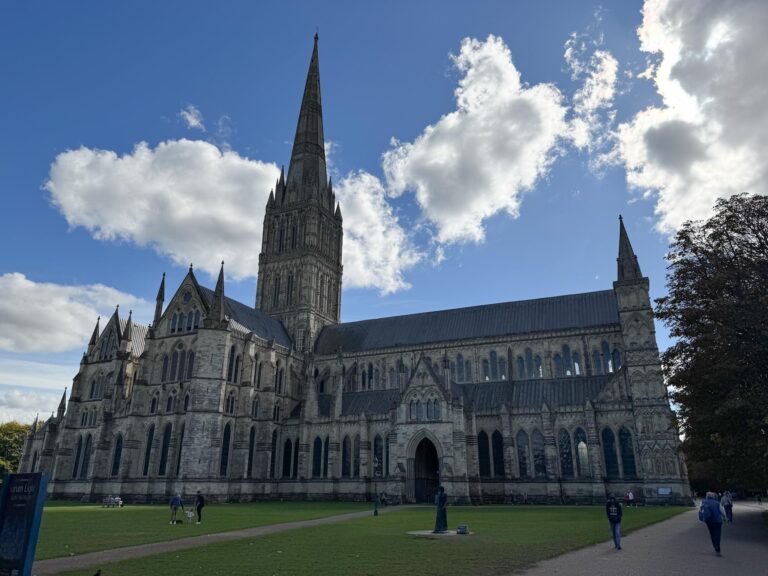
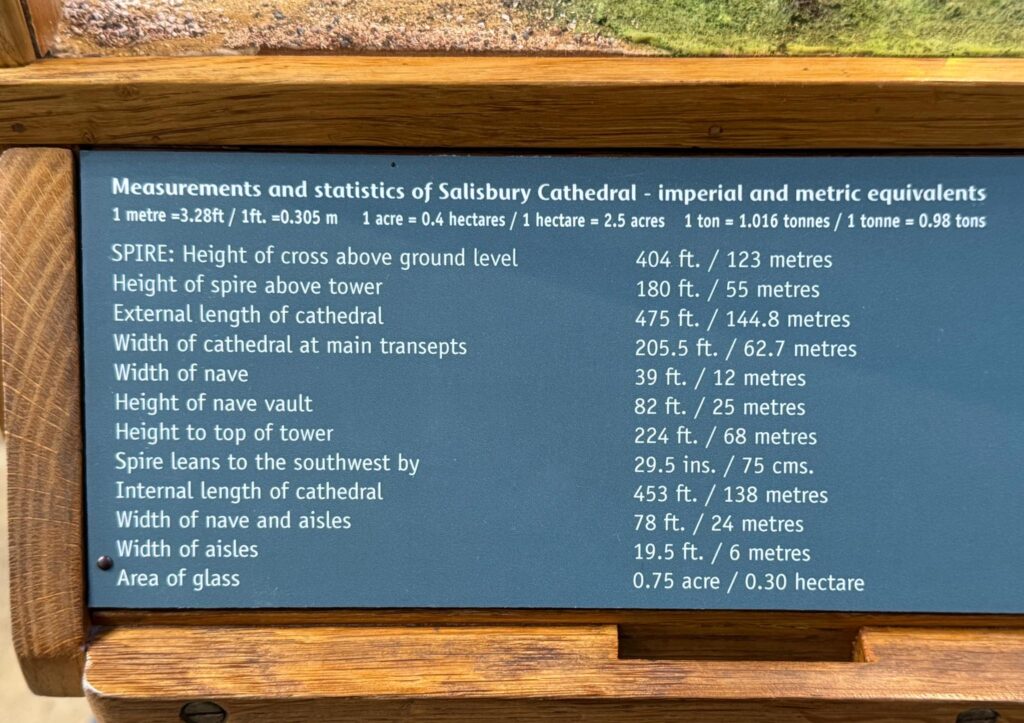
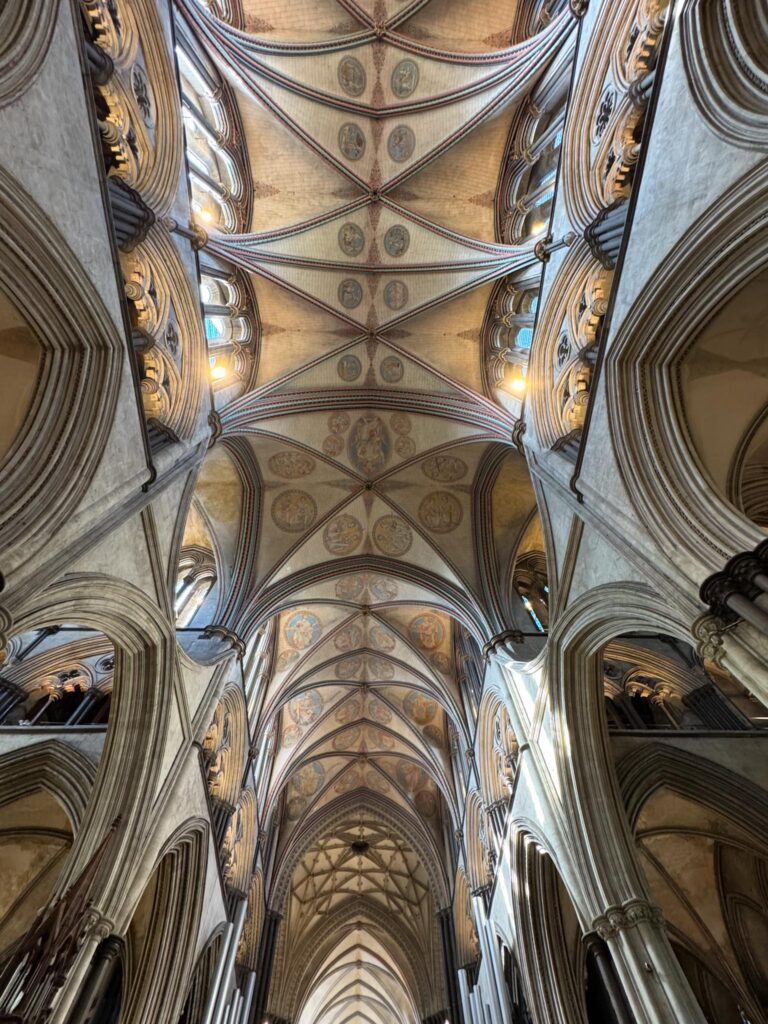
Salisbury Cathedral has the tallest spire in Britain at 404 feet. The first cathedral was at nearby Old Sarum, but it was moved after discovering that there was not enough water available for both livestock and cathedral worshippers. This second cathedral was completed in only 38 years, constructed of Caen stone, a fine-grained limestone that is soft when quarried, and then it hardens. It is renowned for its ability to be carved into intricate detail and beauty, and is also used in the Tower of London and Canterbury Cathedral.
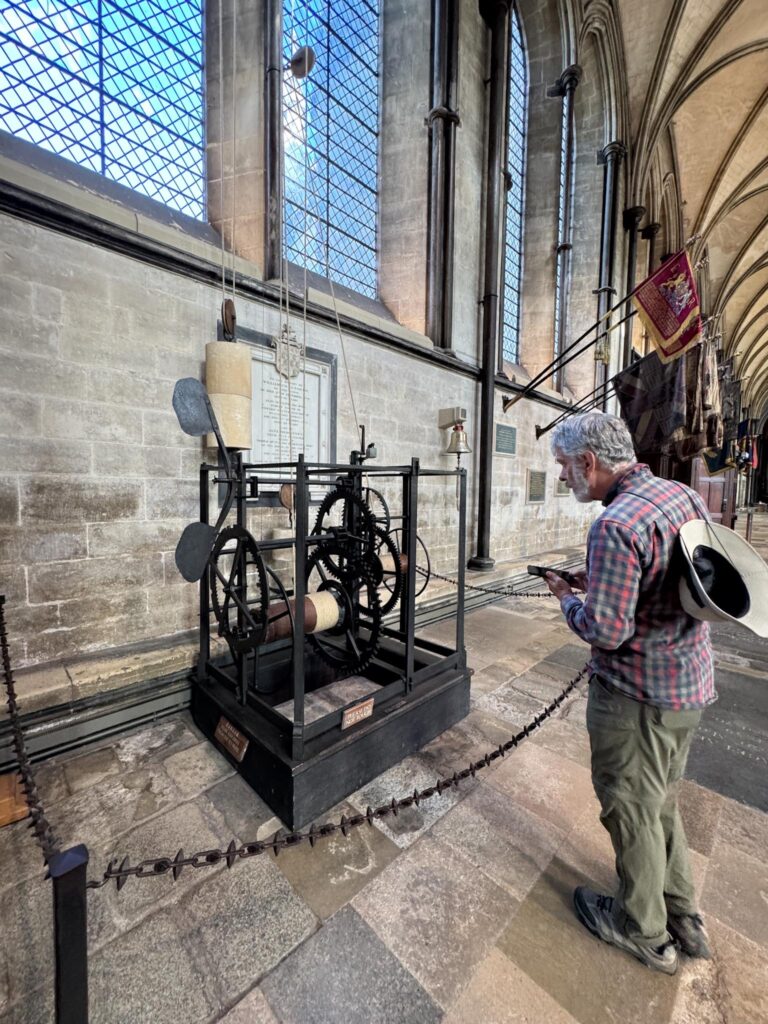
This is the world’s oldest mechanical clock, made in 1386 or earlier. It told priests when to pray and made sure religious services started on time. It has no face or hands, but strikes a bell every hour.
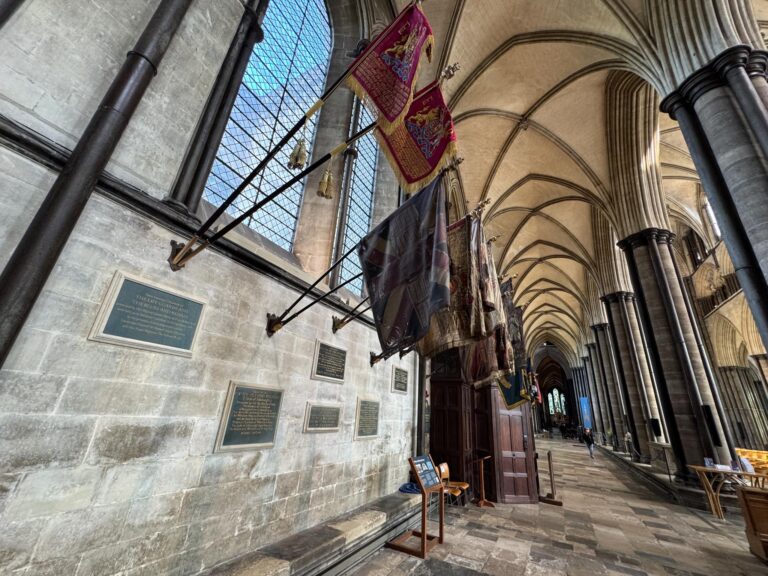
British regimental colors (military flags) were carried into battle until 1882. Old colors are retired in a special ceremony and are left to hang until they fall apart.
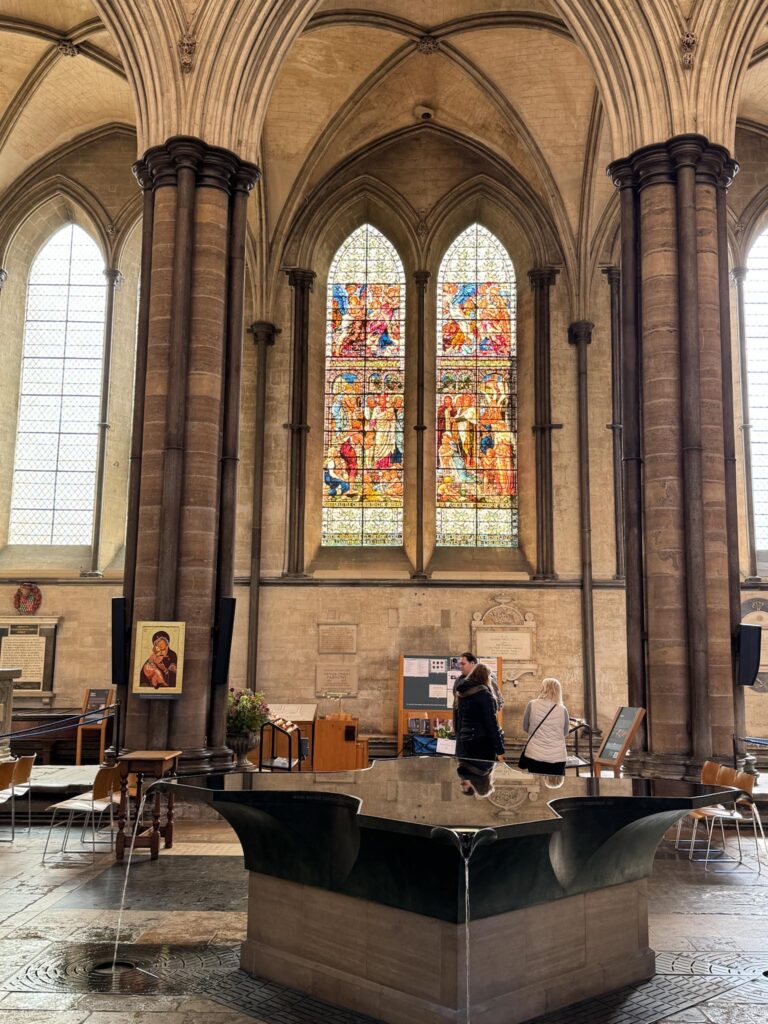
The baptismal font is new, designed by William Pyle. It merges a font with a fountain, and has still water reflecting the Cathedral ceiling. It was consecrated in 2008.
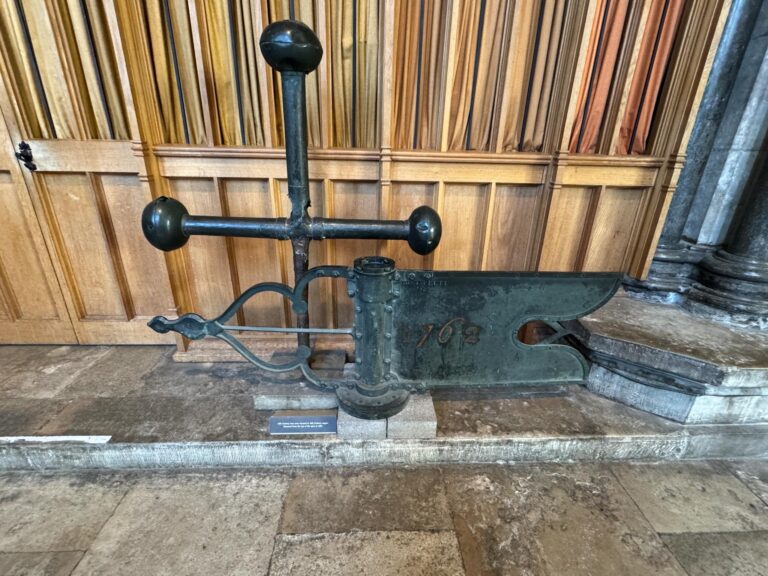
This 14th century iron cross encased in 18th century copper was removed from the top of the spire in 1950.
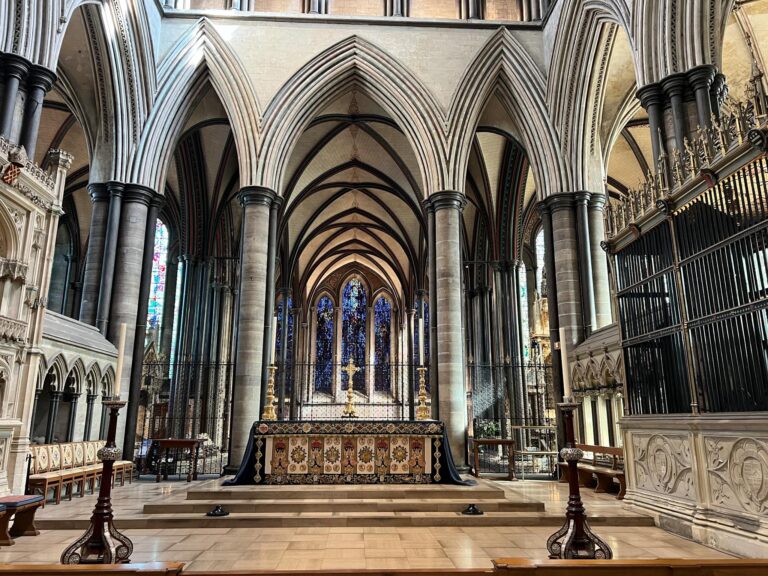
The high altar contains stones from the first Cathedral at Old Sarum.
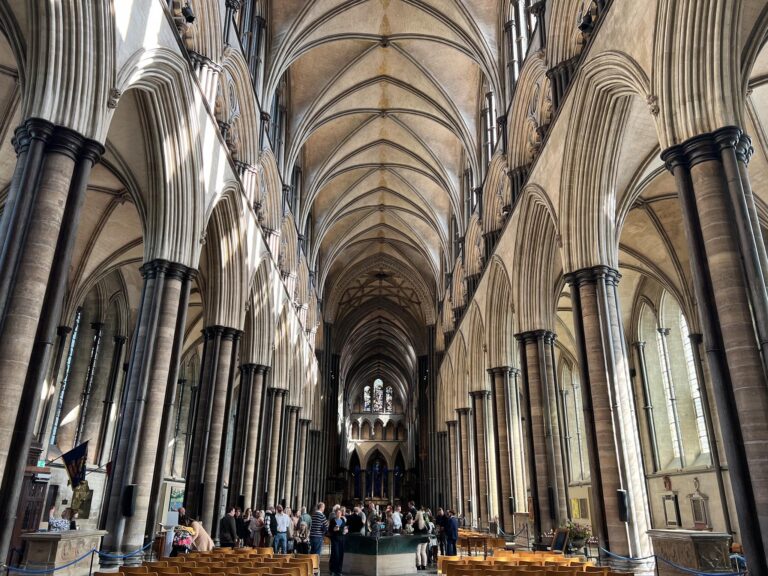
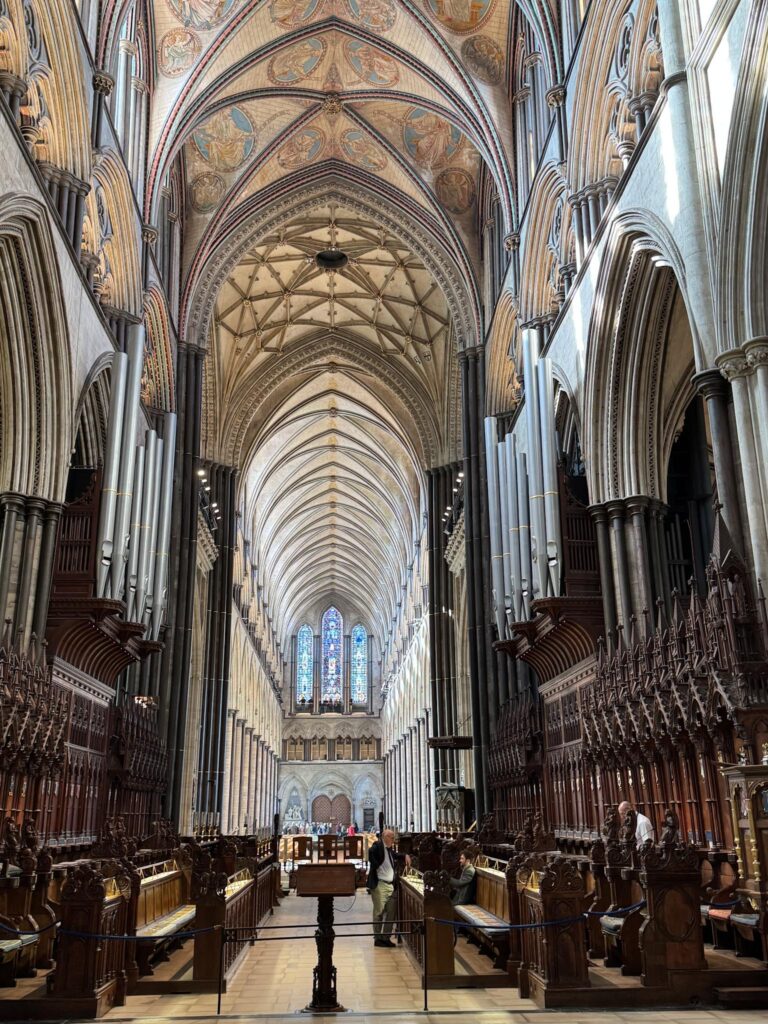
The 106 wooden seats in the altar were made in 1236 from 20 oak trees given by King Henry III. They are the most complete set in England. The wooden canopies were added in the 1900’s.
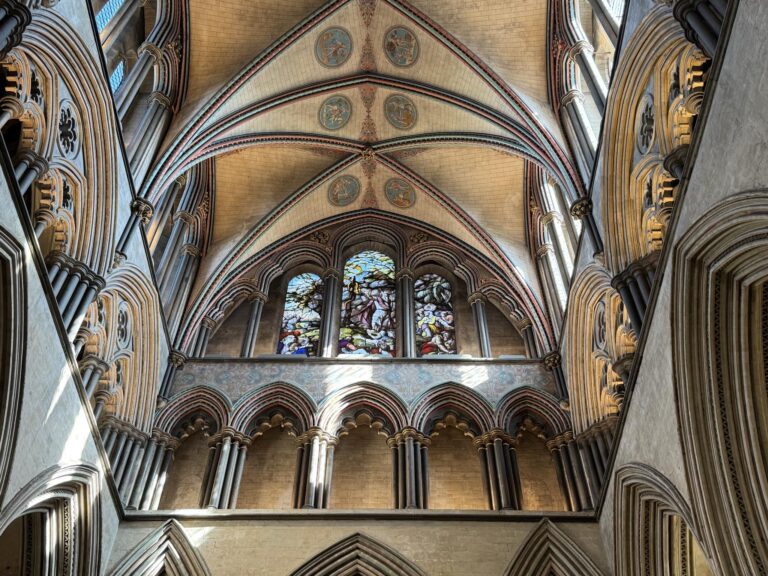
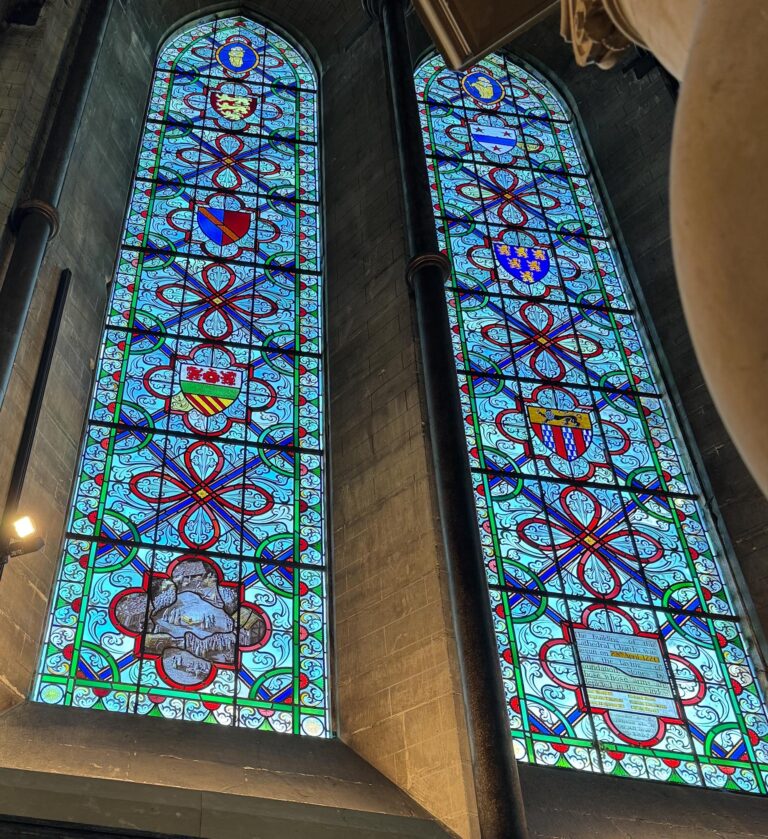
These stained glass windows are new, made in 1989 to celebrate the foundation of Salisbury Cathedral in 1220. The coats of arms represent the people present or represented including King Henry III and Pope Honorius III. The lower left panel shows the foundation ceremony, with the Earl and Countess of Canterbury, William and Elsa Longespee standing with the priests.
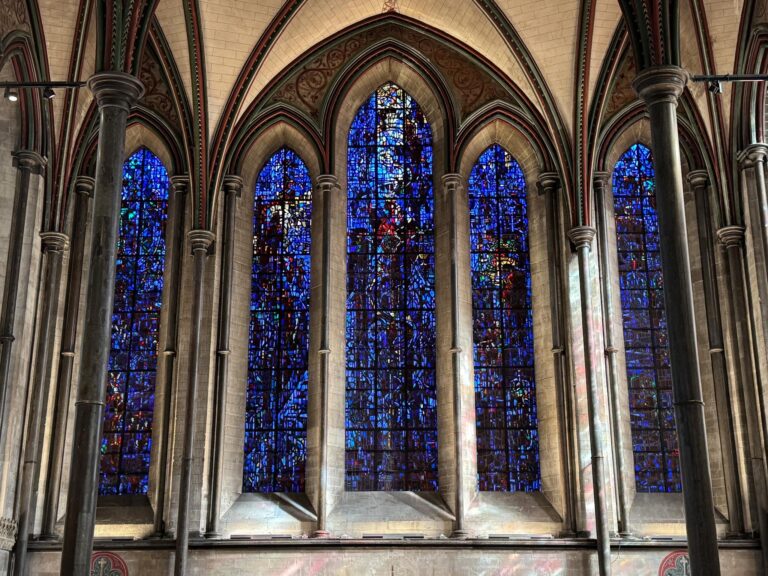
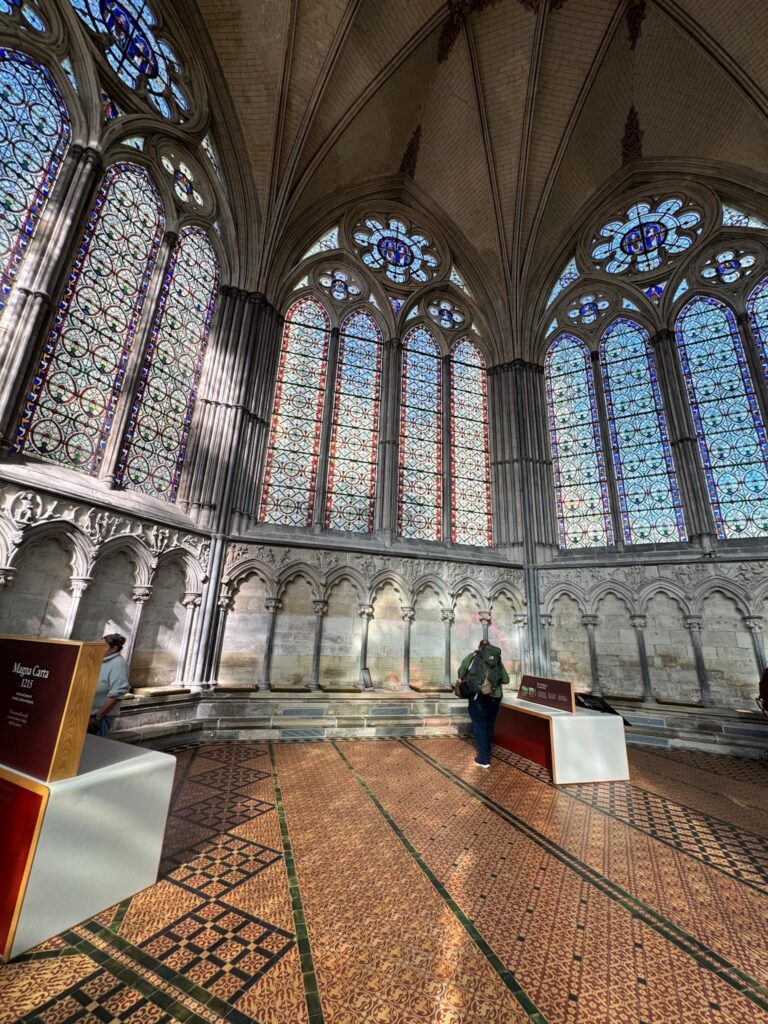
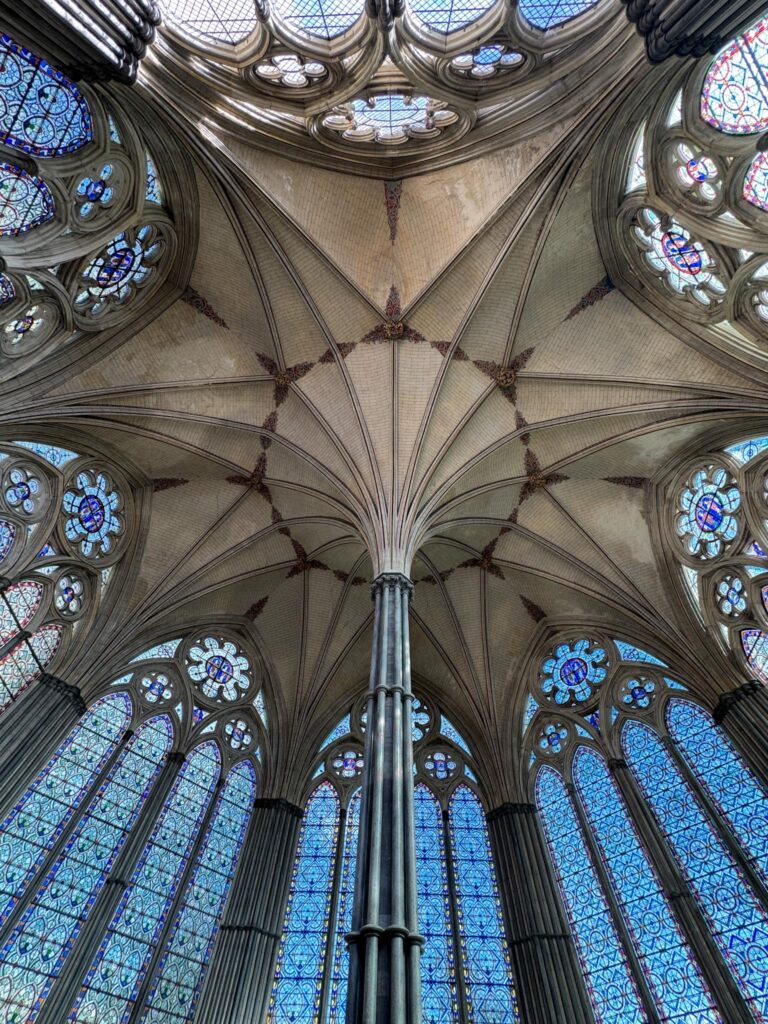
Trinity Chapel is the first part of the Cathedral to be finished in 1225, when a special service of consecration was held to make it sacred.
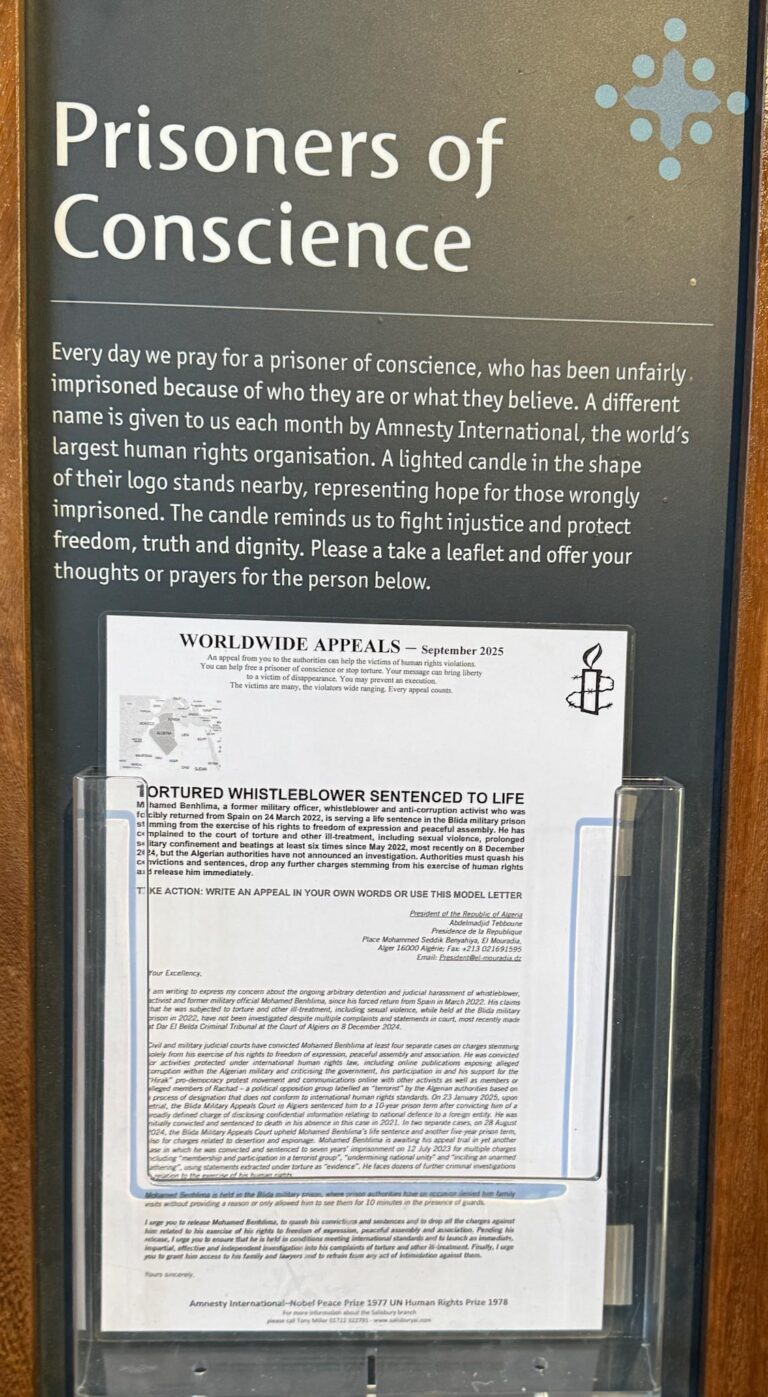
Today this chapel has the prisoner of conscience windows, unveiled in 1980 by violinist Yehudi Menuhin. The middle three panels show Jesus Christ, himself a prisoner of conscience. The outer two panels are dedicated to all who have suffered for their beliefs.
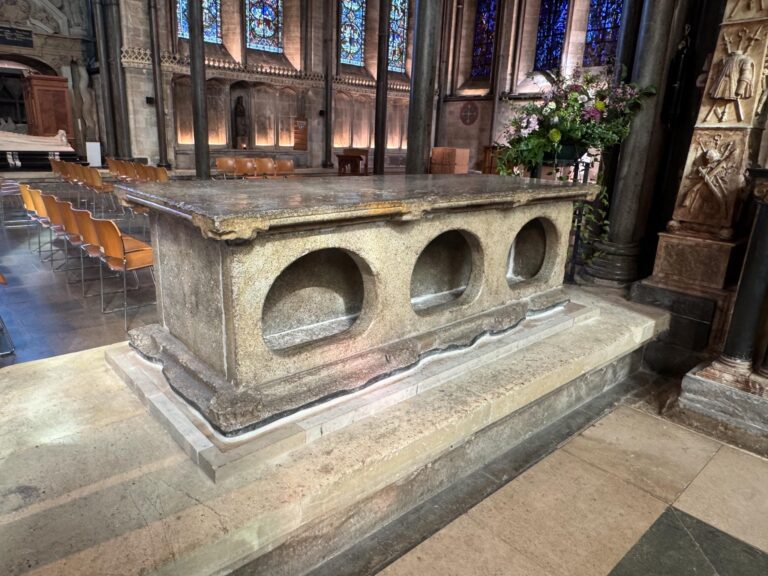
St. Osmund was bishop of the first Salisbury Cathedral at Old Sarum. When the Cathedral was moved, his tomb was moved as well. The foramina (holes) allowed sick people to get closer to the body in the belief that it could heal them.
After he was sainted, this was an elaborate shrine to St. Osmund. The shrine was destroyed in the English Reformation (1534 to the 1590s) when worship of saints was forbidden.
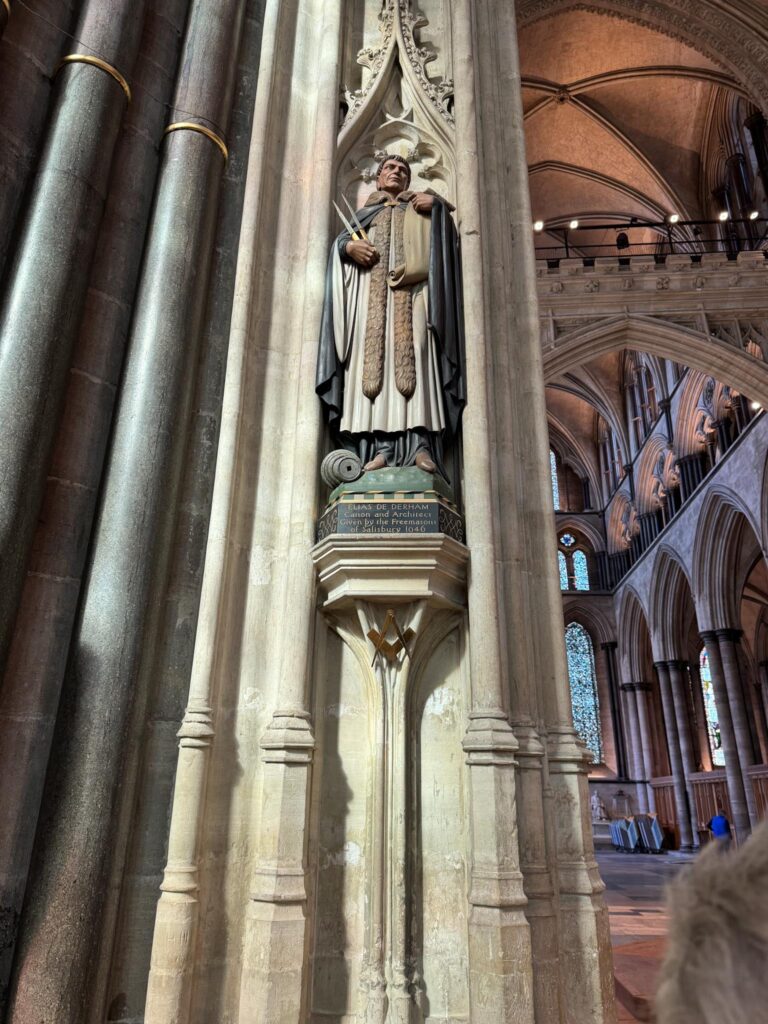
Elias de Dereham had the reputation of being the architect of Salisbury Cathedral. He was a masterful stone mason and was made Canon of Salisbury to oversee the construction of the Cathedral..
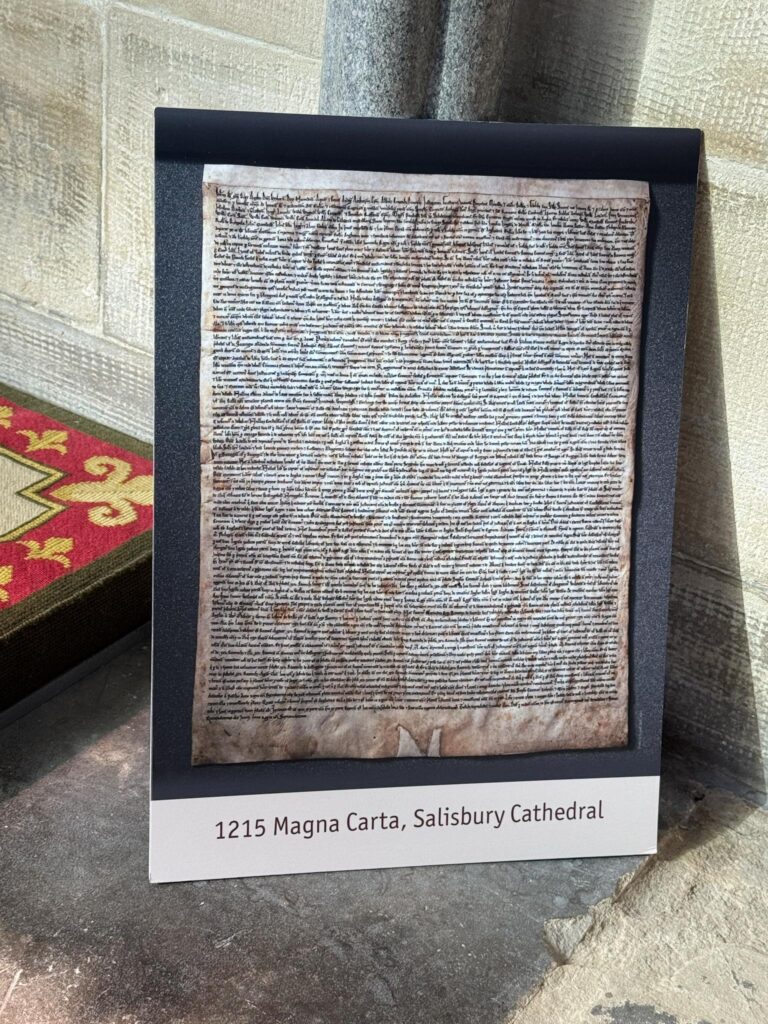
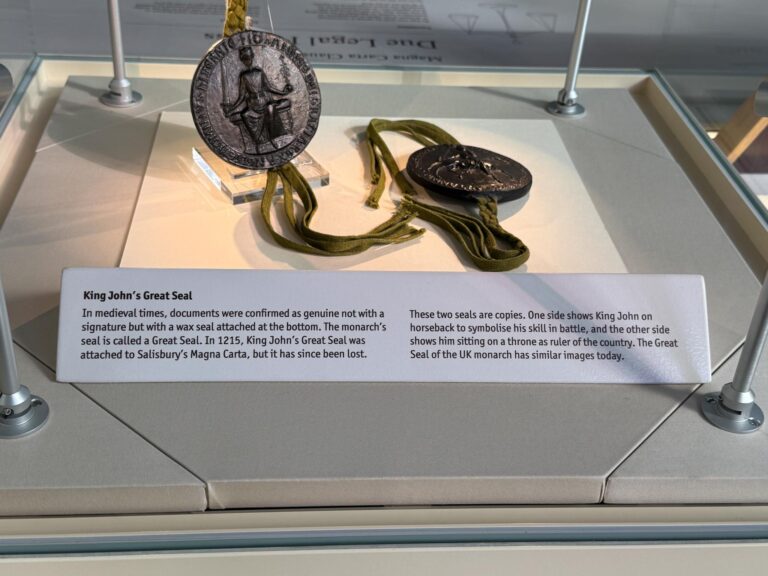
He was also instrumental in getting a copy of the Magna Carta for the Salisbury Cathedral because he was present at Runnymeade in 1215 and was to distribute original copies of the document.
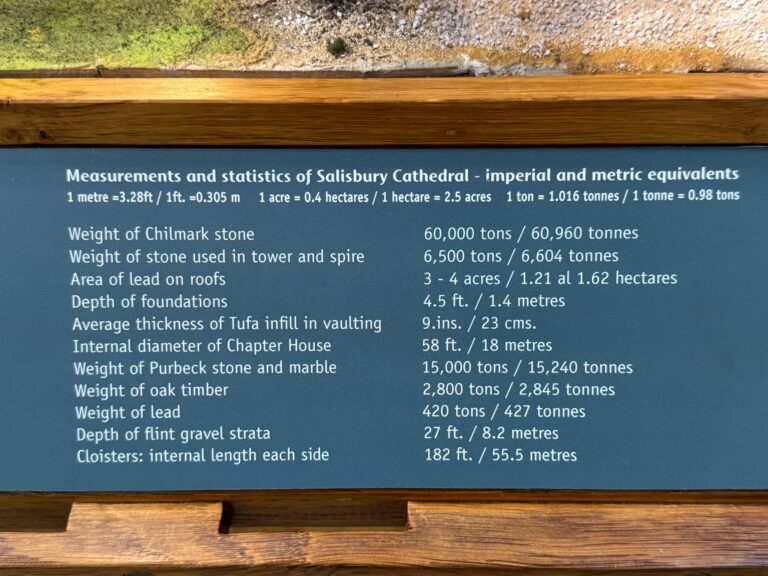
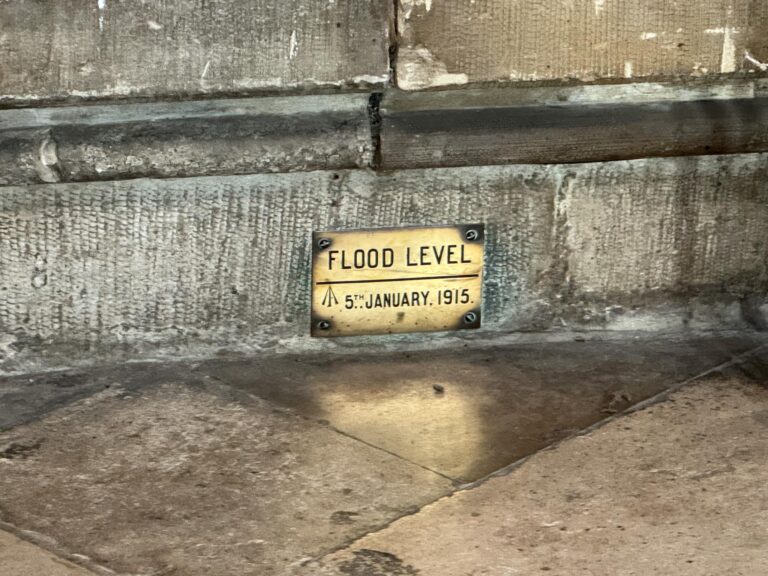
The Cathedral was built on a water meadow near the River Avon. The foundations are very shallow as there is a natural foundation of very hard gravel only a few feet below the surface.
There are floor tiles that can be removed to measure the current water level.
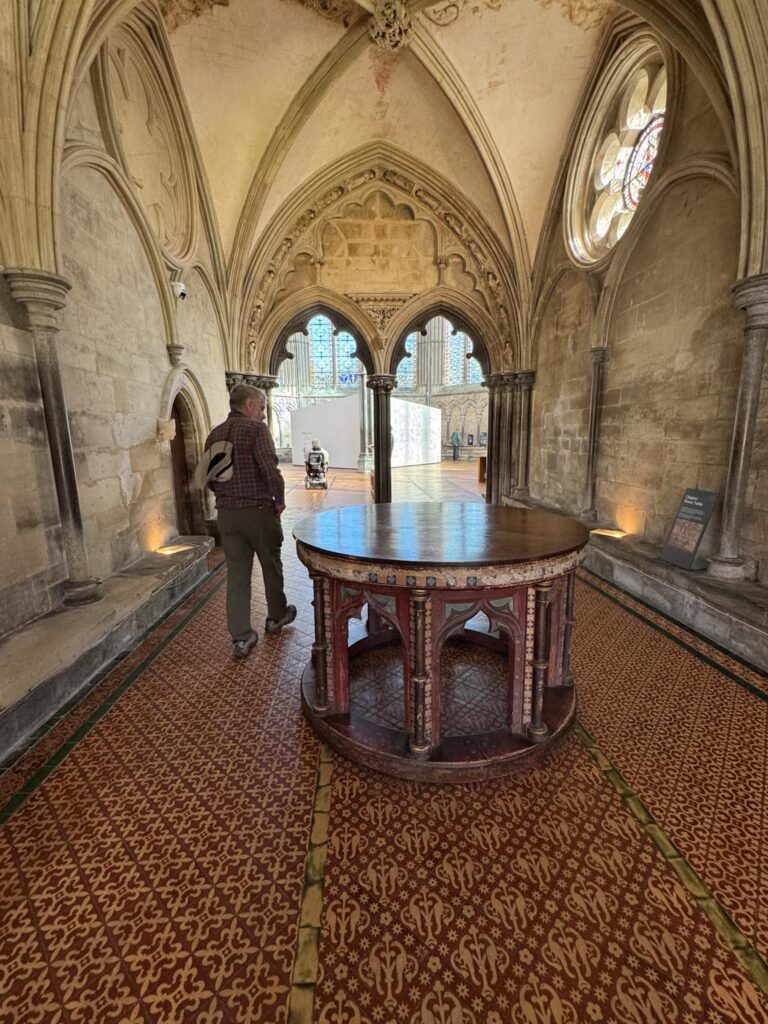
The chapter house table was made in the late 1200s or early 1300s, although the top was added later. Legend has it that the people who worked on the Cathedral were paid at this table. The table has been here in the chapter house for 200 years and will never leave as it is too big to fit through the doorway.
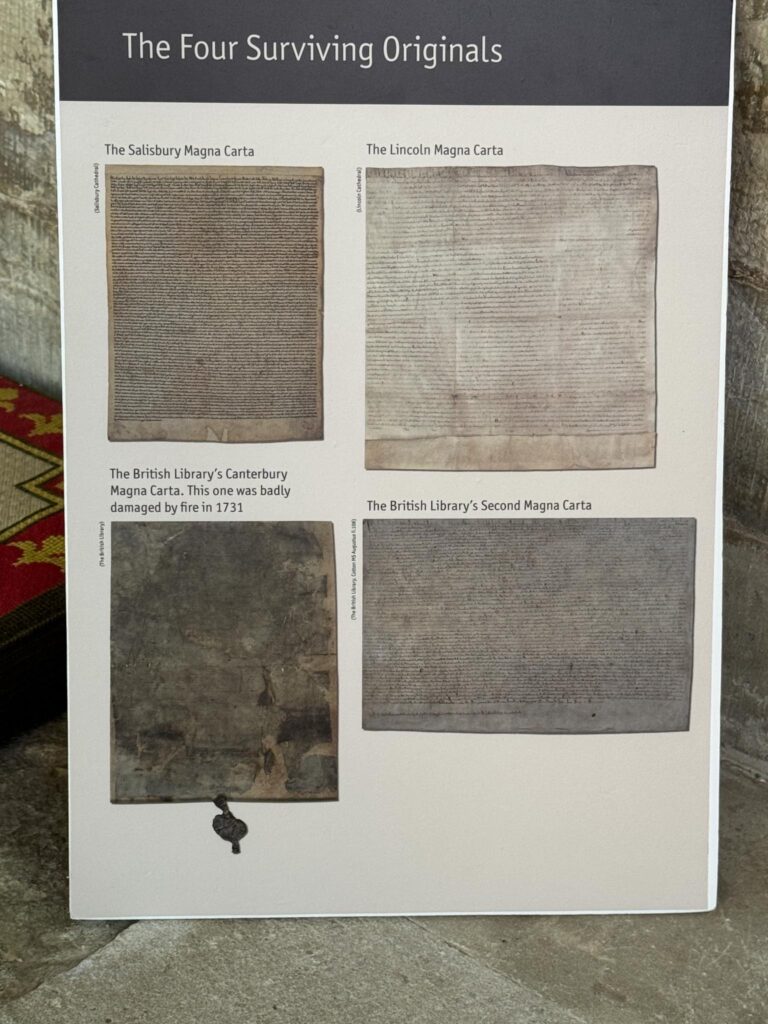
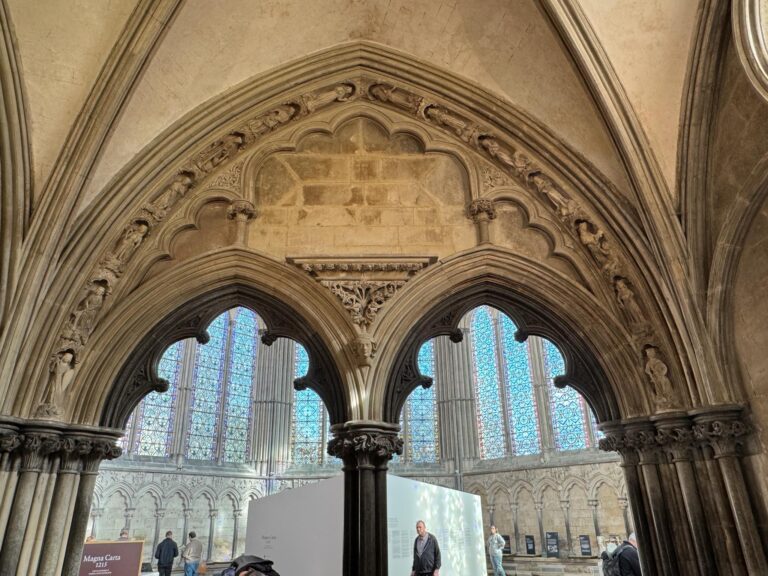
We were allowed to view the original Magna Carta in a darkened corner with no photography allowed. The picture outside allows for memories of what it looks like.
Above the doorway are virtues (represented by women) and vices (represented by men) under the women. Some pairs include justice/injustice, truth/falsehood, faith/disbelief, and charity/want.
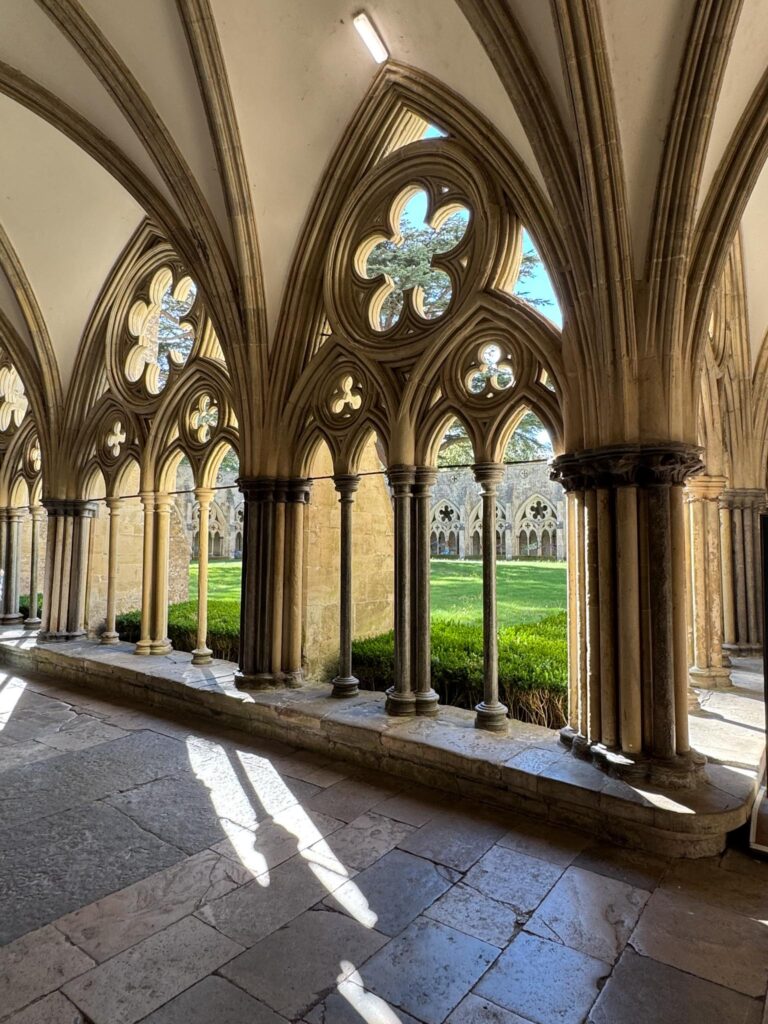
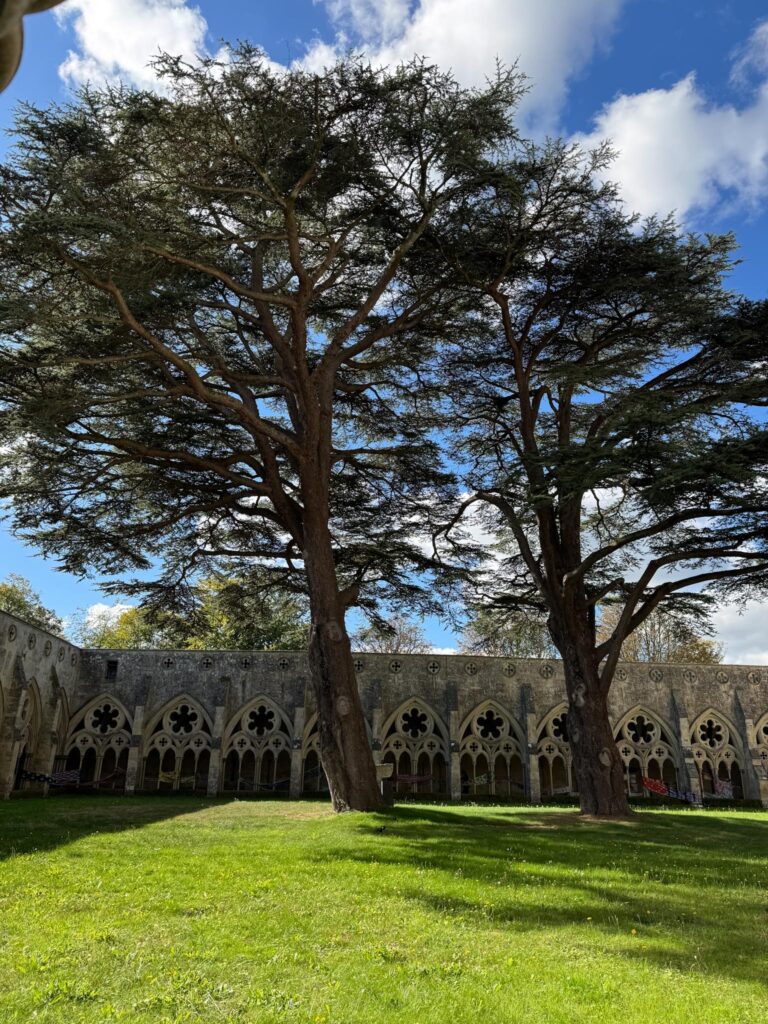
These Cedars of Lebanon trees were planted for Queen Victoria’s ascension to the throne in 1837. Originally there were three trees to signify the trinity but one was lost.
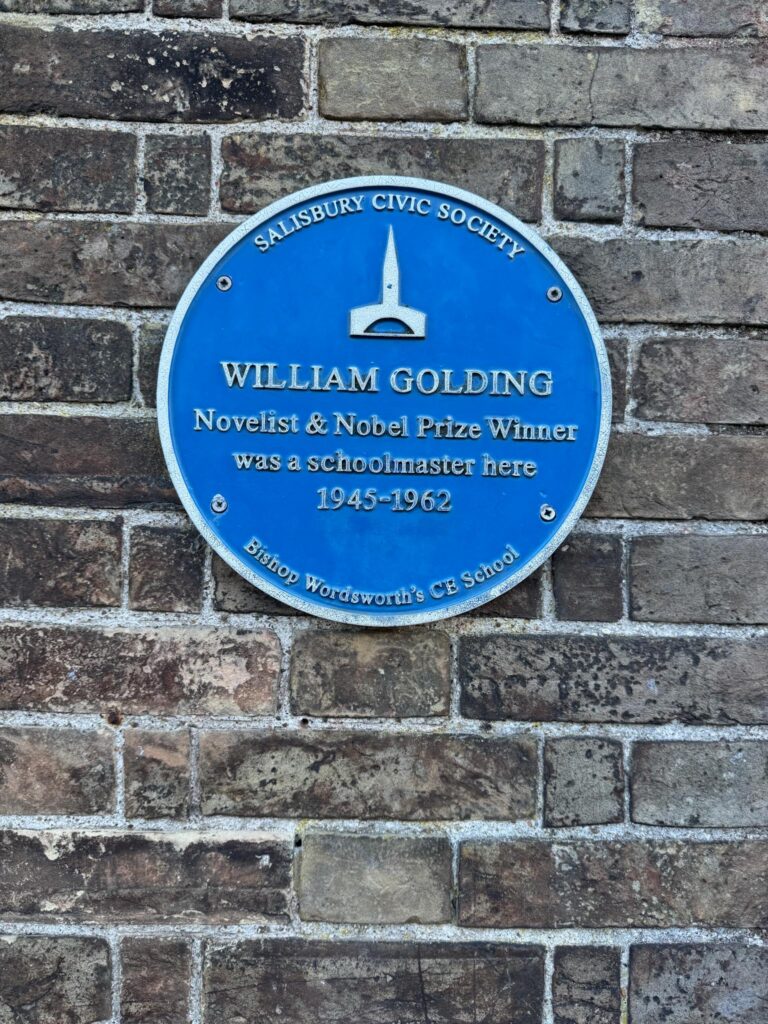
Only a few steps from the Cathedral, we came upon this plaque marking a favorite author.
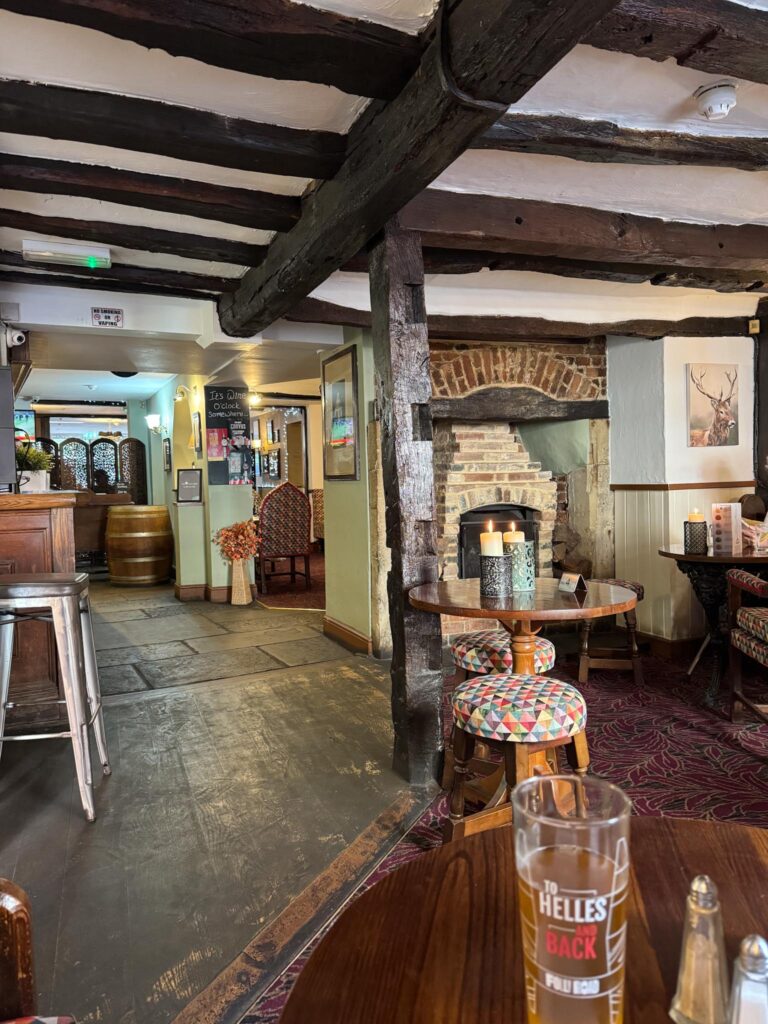
Time for a late lunch. This pub dates from the 1500’s according to the barmaid.
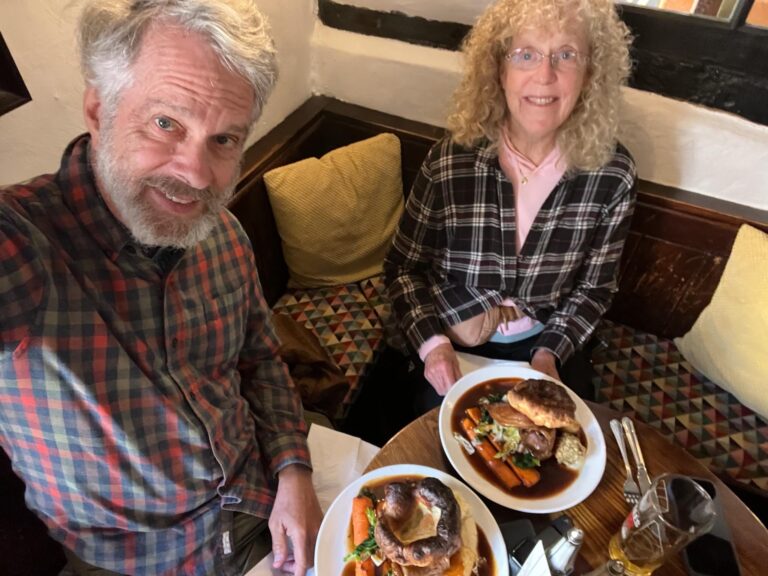
It’s Sunday so roasts are served 12 to 4. All the trimmings are included: roast potatoes, stuffing, Yorkshire pudding, Chantenay carrots, celeriac purée, savoy leeks and kale, gravy. Yum!
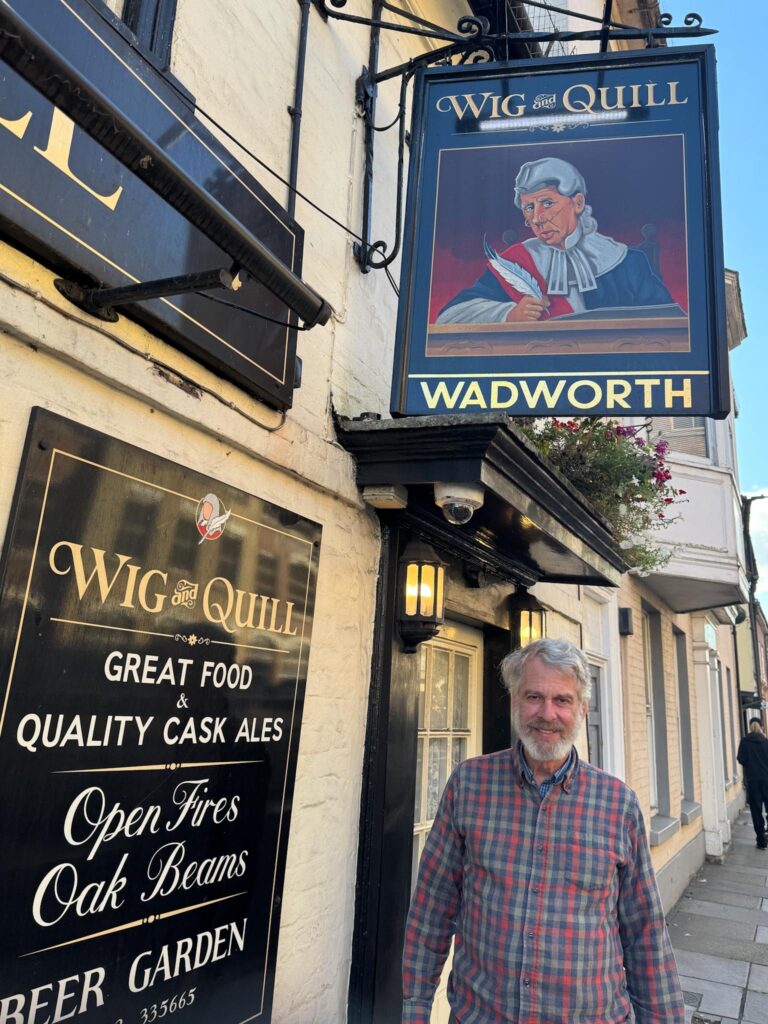
Thank you, Wig and Quill, for a wonderful meal!

4 Responses
Your trip is bringing back many memories about the times we were there.
I’m glad you’ve seen it. Touristy? Yes, but definitely thought-provoking.
What a great day visiting two such historical sites, Salisbury Cathedral and Stonehenge in one day. Two of our highlights from one of our trips to England. Dan
I wish we had a little more time. So much to see.
No comments about our late lunch, Dan? We loved the beef roast with all the trimmings at the Wig and Quill (what a perfect name!)