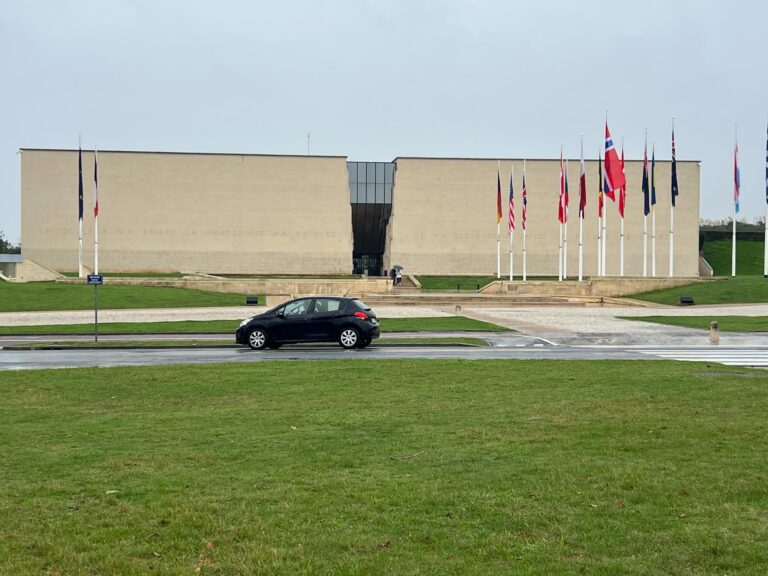
It’s quite a hike to the Caen WWII museum, so we took the bus. There is plenty of walking to be had inside this large museum. We have been warned to allow ourselves at least half a day to visit.
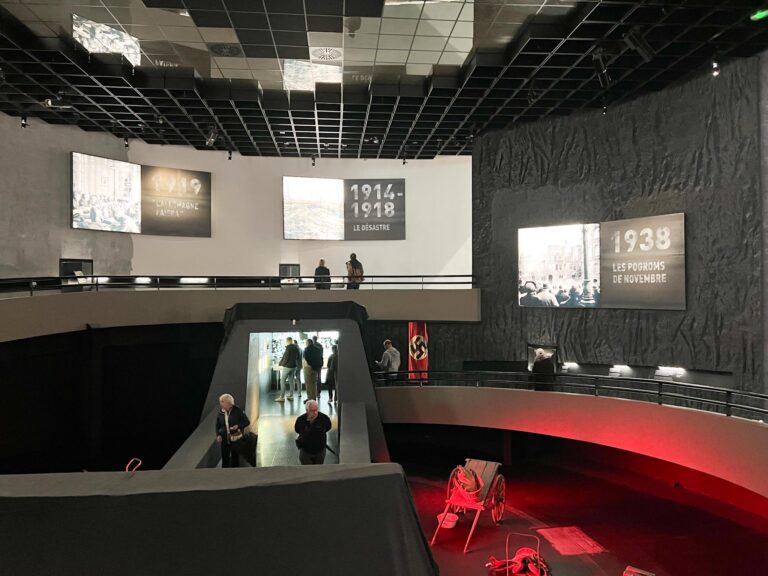
Like most discussions about WWII, the introduction begins with WWI and its effects, particularly with France’s harsh punishments of Germany, and the rise of ambitious Hitler with empty political promises.
As skirmishes ramped up, the French leadership took a wait-and-see attitude. Hitler said what he needed to keep foes at bay, all the time strengthening his troops for what was to come. The war began when Germany invaded Poland.
The exhibits covered battles as well as the sentiments of the time: Churchill’s determination to never give in, antisemitism, resistance ploys and sacrifices. The final Allies push through the Normandy beaches is covered extensively.
After feeling thoroughly spent from the museum visit, we had only a little time left to our Caen visit. Time to return to William the Conqueror and his castle.
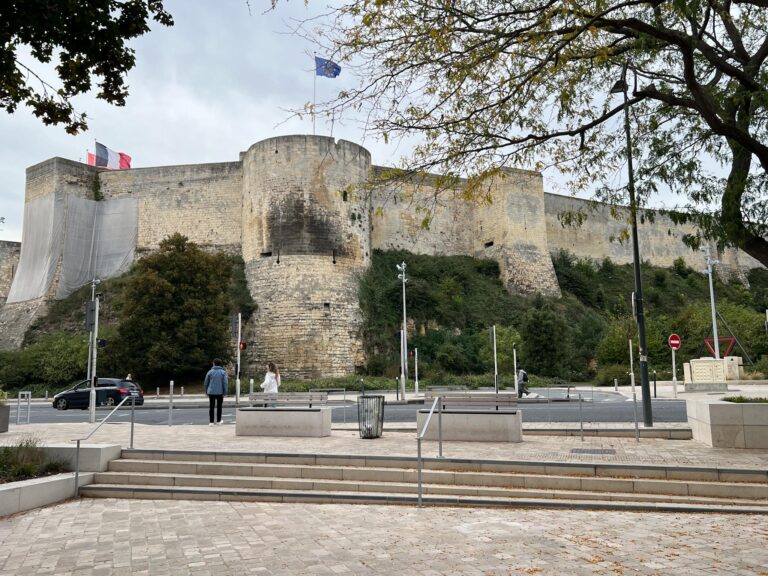
This ducal castle was built in 1060 and became one of the largest fortified enclosures in Europe. It was a favorite residence of the Dukes of Normandy and Kings of England (1066-1204).
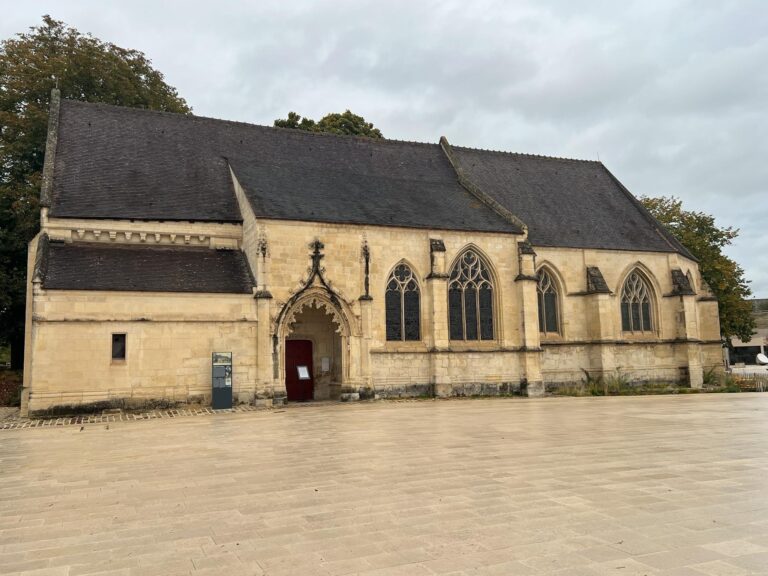
Saint George’s Church received its charter in 1082 for the parish bounded by the castle walls. Over time its elements have changed as have the functions of the building. The nave is covered by a timber frame built by the time of the English garrison occupation during the Hundred Years War. A wooden bell tower was removed when the building became an army service building.
Now no visit was possible as it is being renovated to be a visitor interpretation center and exhibition space.
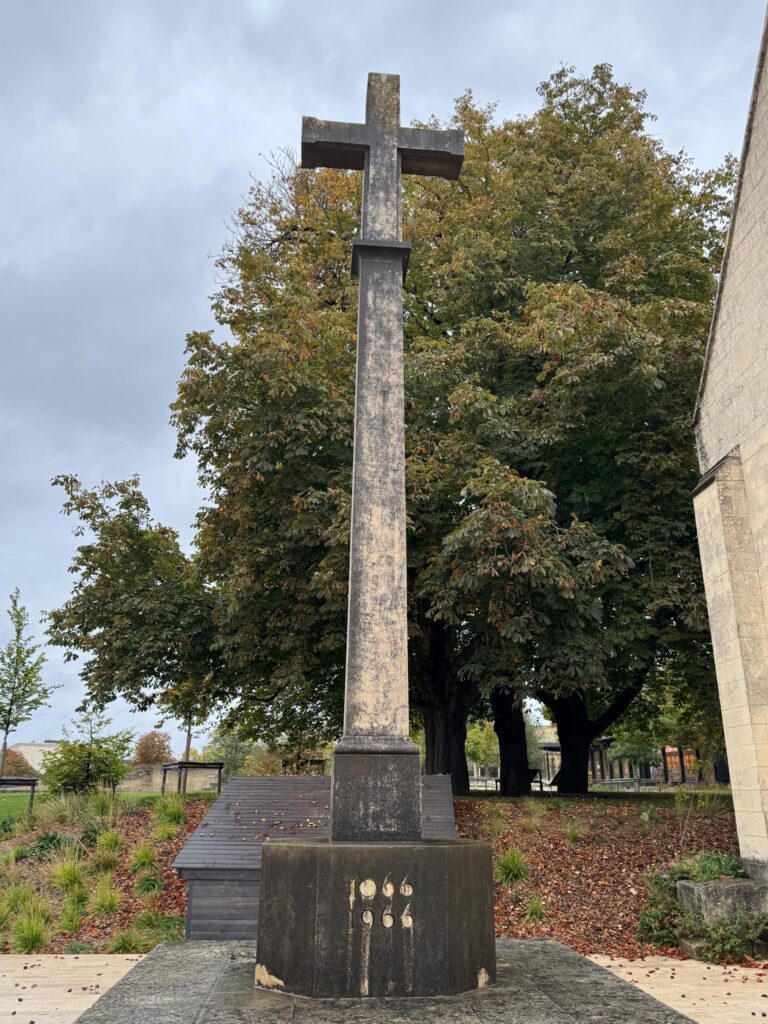
This is the only hint left that this was once a church. The cross, installed in 1966, celebrated the church’s 900th anniversary.
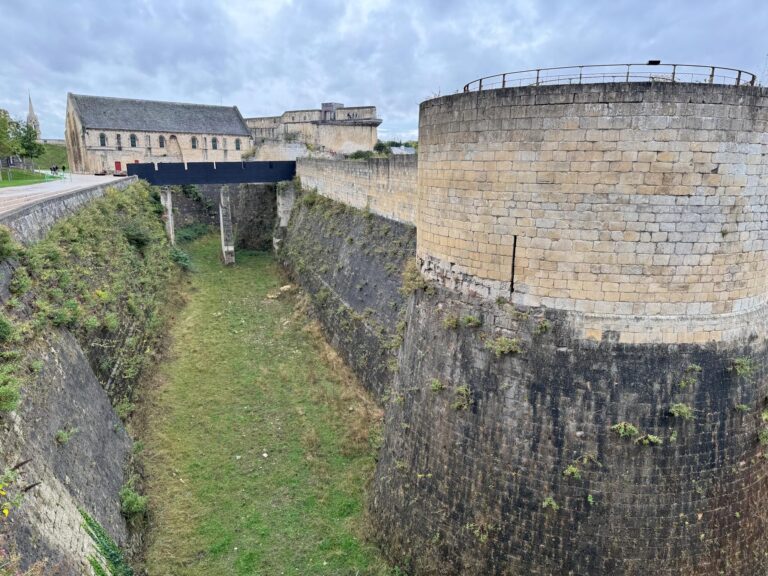
This is the Donjon, a reinforced citadel within the castle. After taking control of the Norman fortresses in 1204, King of France Philip Augustus built a wall with four towers and a deep moat surrounding the 25-meter-tall tower that was built in 1120.
During the French Revolution, orders were given to destroy this feudal monument. It was not completely leveled until the 1800’s and is now being excavated.
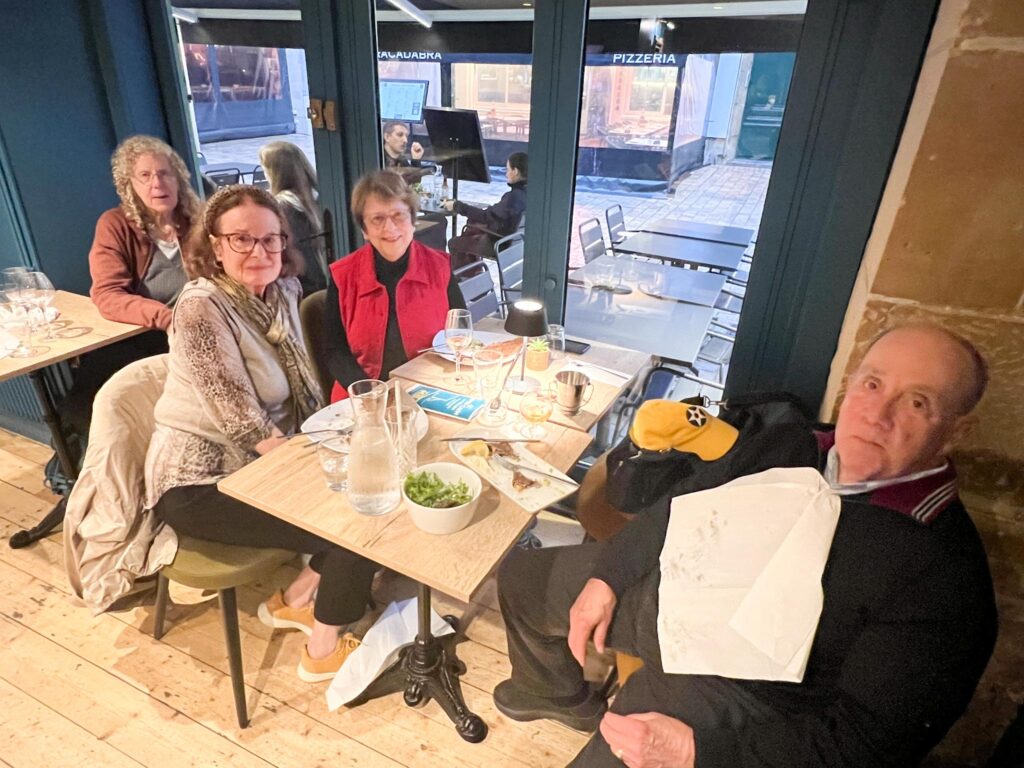
We had a quick crepe dinner and were seated next to these Americans who have been visiting Normandy sights. Mike, Kathy, and Ruth Marie had just toured beaches with a guide to learn about D-Day activities and told us of their impressions. We encouraged their visit to Caen’s WWII museum. They were interested in our next few trip days when we will visit the Dutch Memory Museum and the American cemetery in the Netherlands.
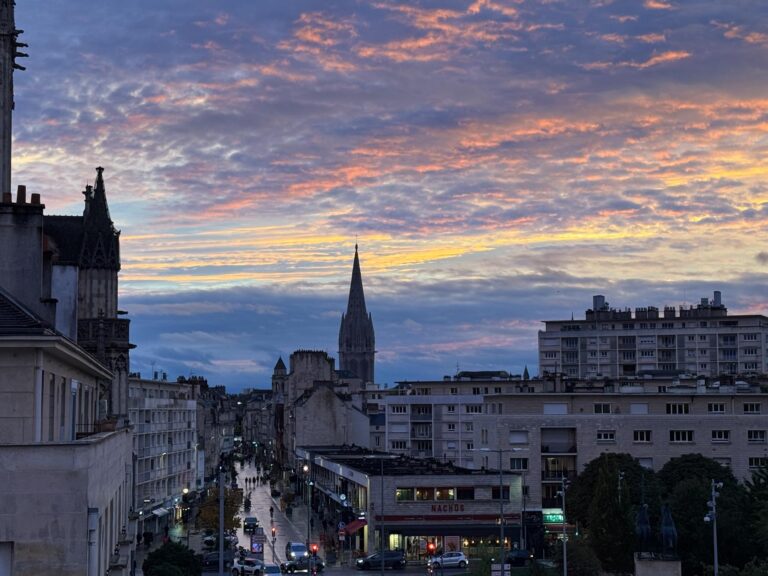
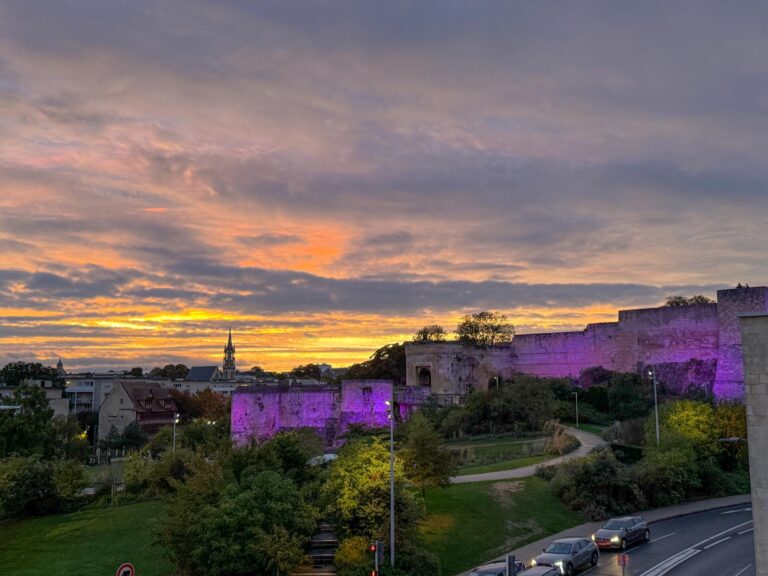
Two more sunset pictures in Caen. After rain today, the sunsets are certainly interesting.

2 Responses
The sunset shot is amazing! I love how they light up the castle wall.
I also loved the purple castle walls, and it was special that we could see both the spire of Saint Pierre’s Church and the castle out of our apartment windows. If the weather had been better, we could even have sat on the balcony.