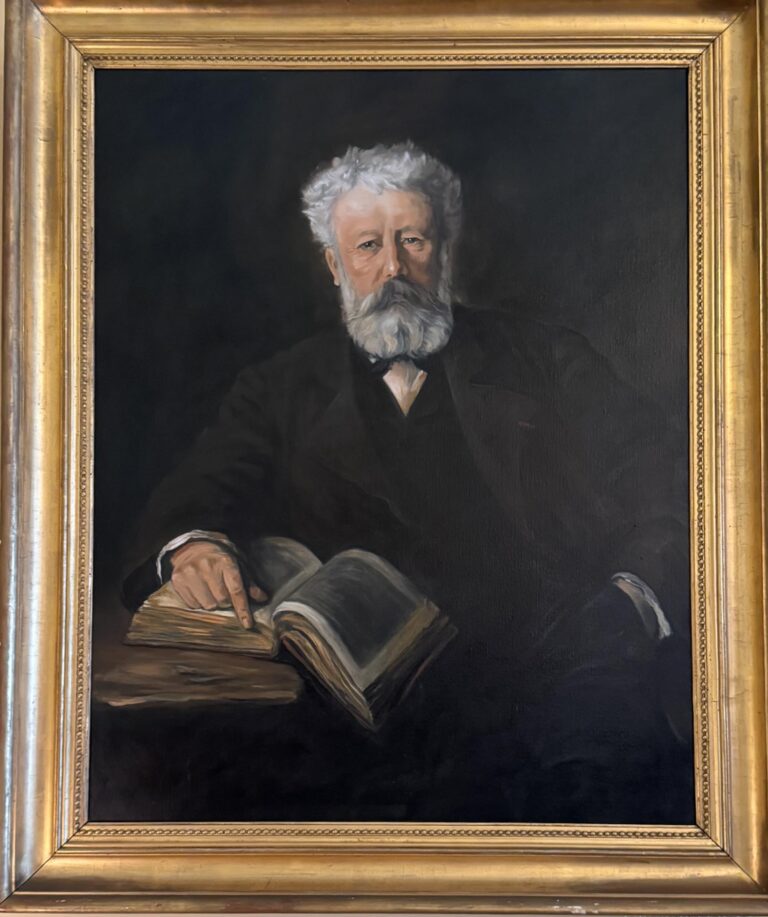
This is a portrait of Jules Verne in 1882. He was an avid reader as a young man and followed his father’s wishes to become a lawyer, as he was. However, his first job was in the theatre. He wrote more than a dozen plays that were not performed in his lifetime, librettos for several operas, and collaborated on a comedy before turning to novels.
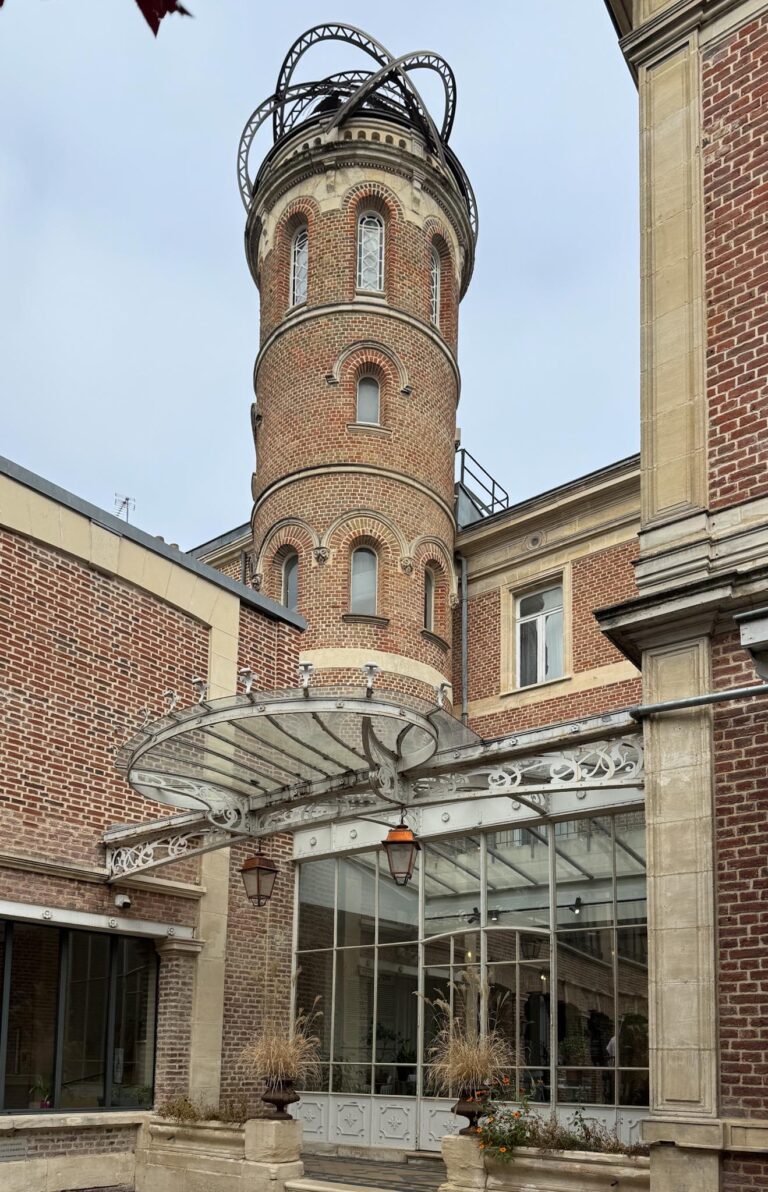
This is his home in Amiens for 37 years, but he also lived in Nantes for 20 years and Paris for 23 years.
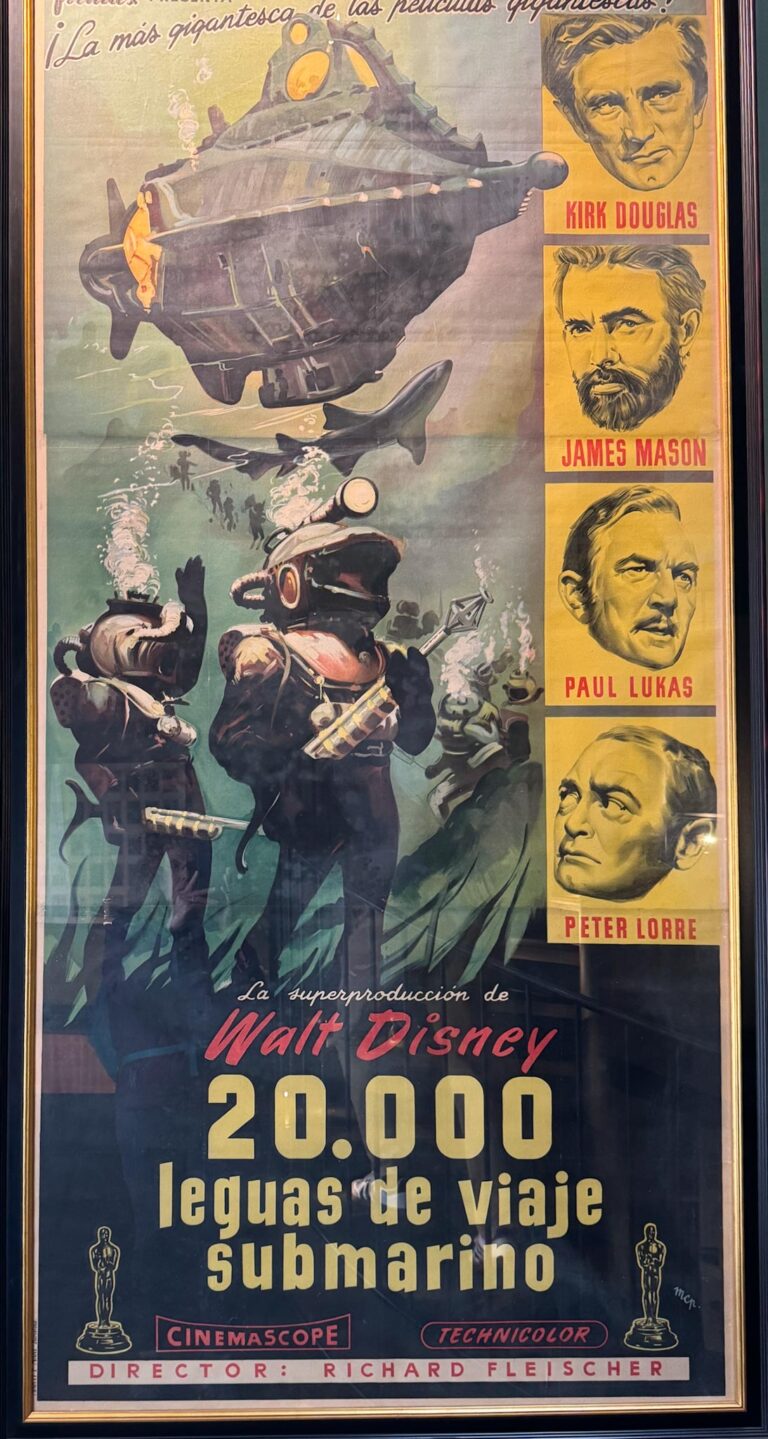
This is probably the story most of us remember best: Disney’s version of “20,000 Leagues Under thecSea.”
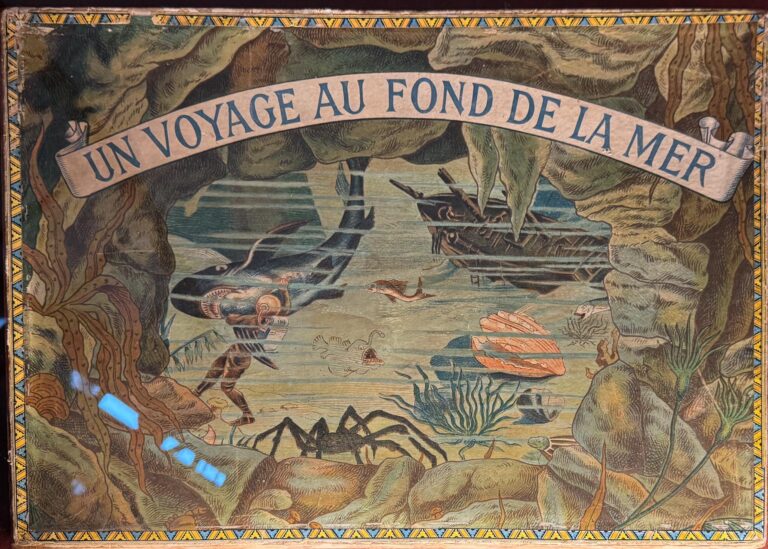
Voyage to the Bottom of the Sea
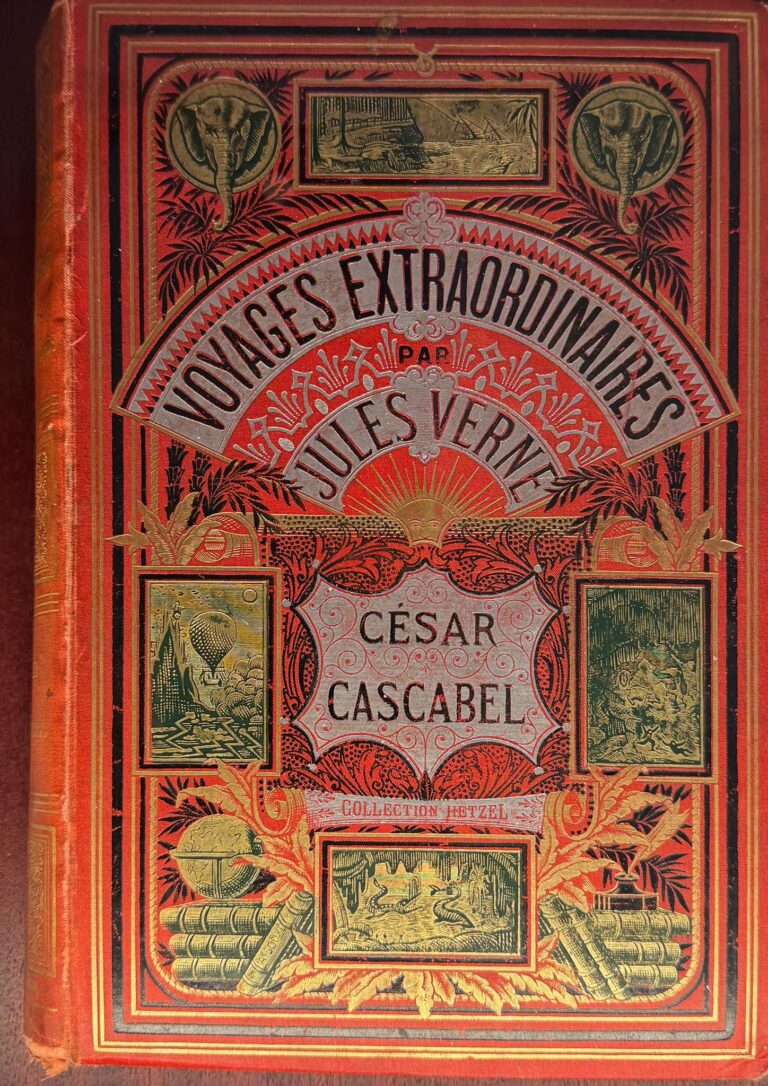
Jules Verne was quite the traveler, and some of his voyages became work for his novels. His “Voyages Extraordinaires” series was well received. This Cesar Cascabel story started in Sacramento and covered travel in Alaska. Sounds interesting.
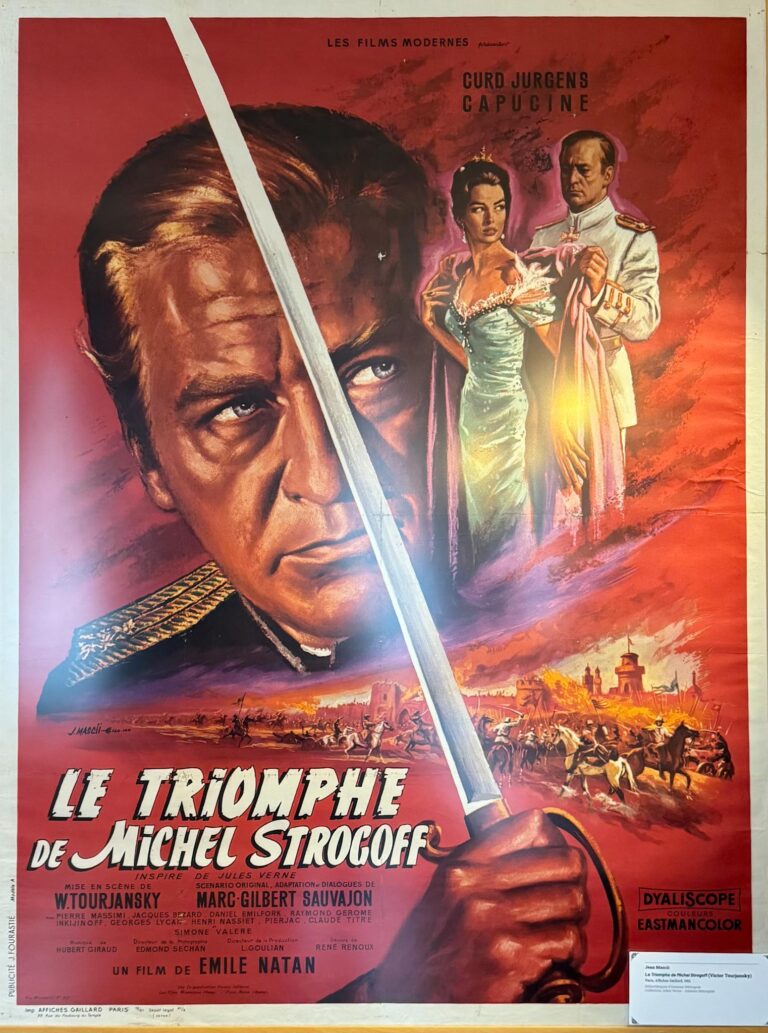
“The Triumph of Michael Strogoff was a novel that Jules Verne used his drama background to make into a movie.
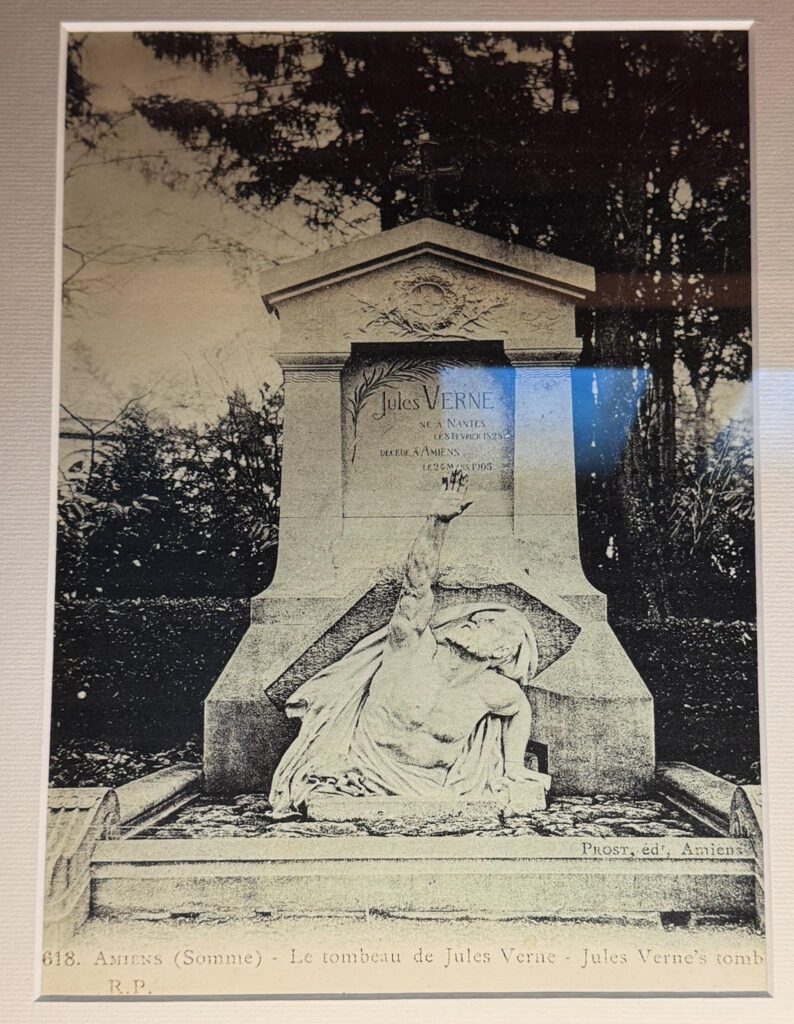
We didn’t get a chance to go to the cemetery but I am intrigued by this picture of Jules Verne’s gravestone from 1905.
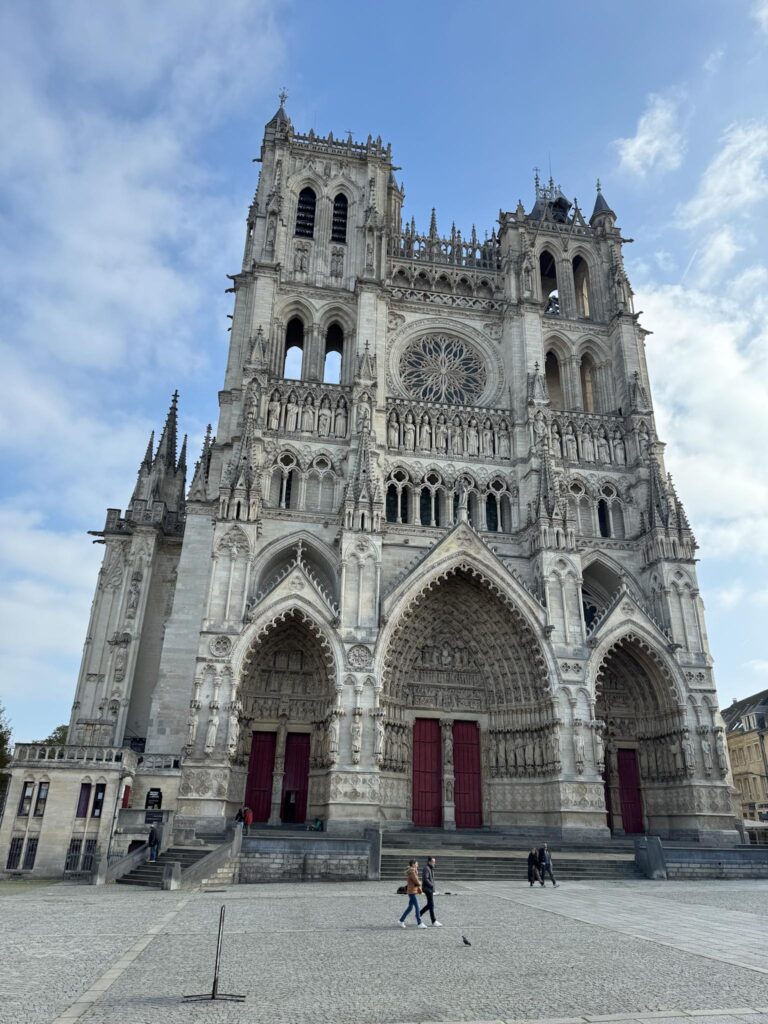
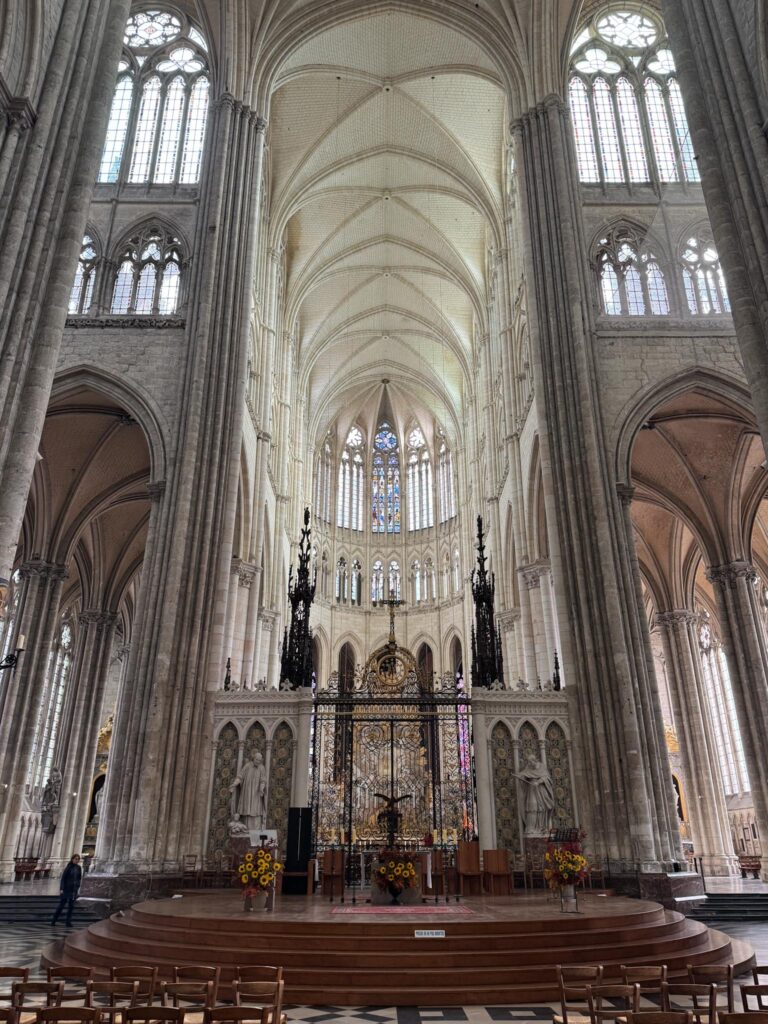
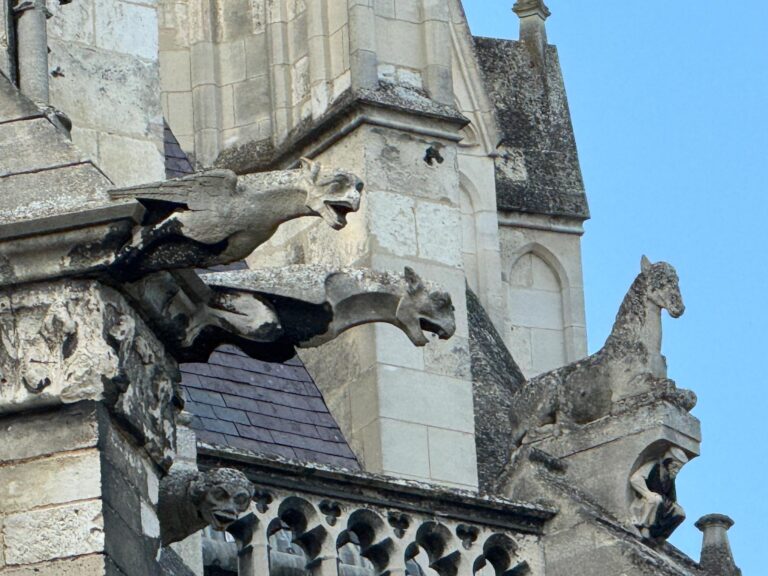
Amiens Cathedral of Our Lady is the largest church in France. The total length is 476 feet, and width of the transept is 230 feet.
An old Romanesque cathedral was destroyed by fire in 1218, and construction of the present Gothic cathedral was begun in 1220 to 1269. The Cathedral was given UNESCO world heritage status in 1981.
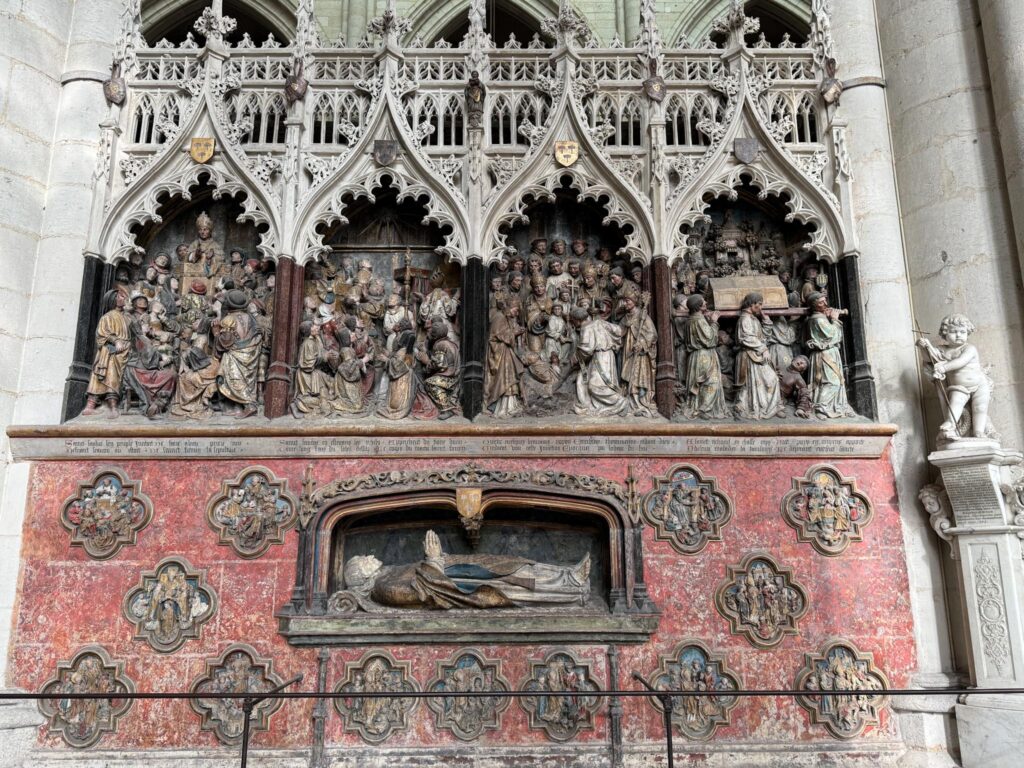
Saint Firmin (traditionally the first bishop of Amiens), came from Pamplona in Spain to evangelize Picardy, the region of Amiens. This choir screen, from 1490-1532, shows the life of the Saint.
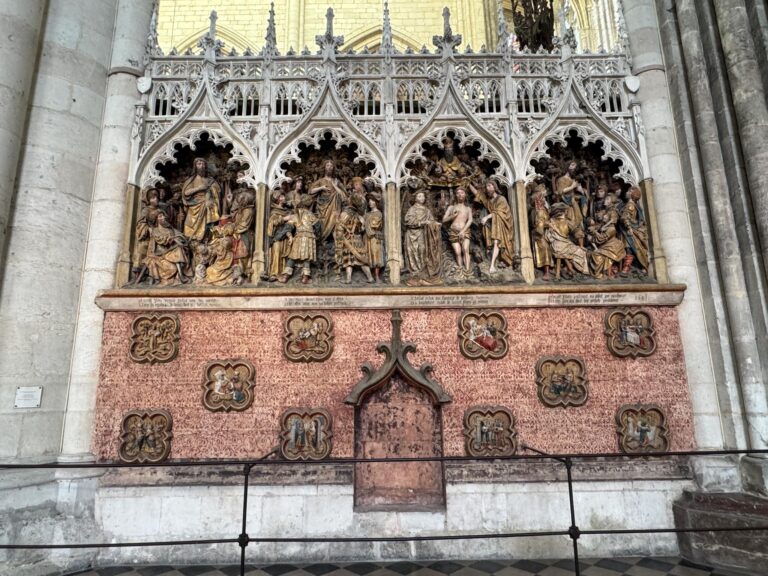
The life of St. John the Baptist is shown in the choir screen on the other side, from 1520-1531. In 1206, the Cathedral received the relic of St. John, his skull. We missed its display this summer.
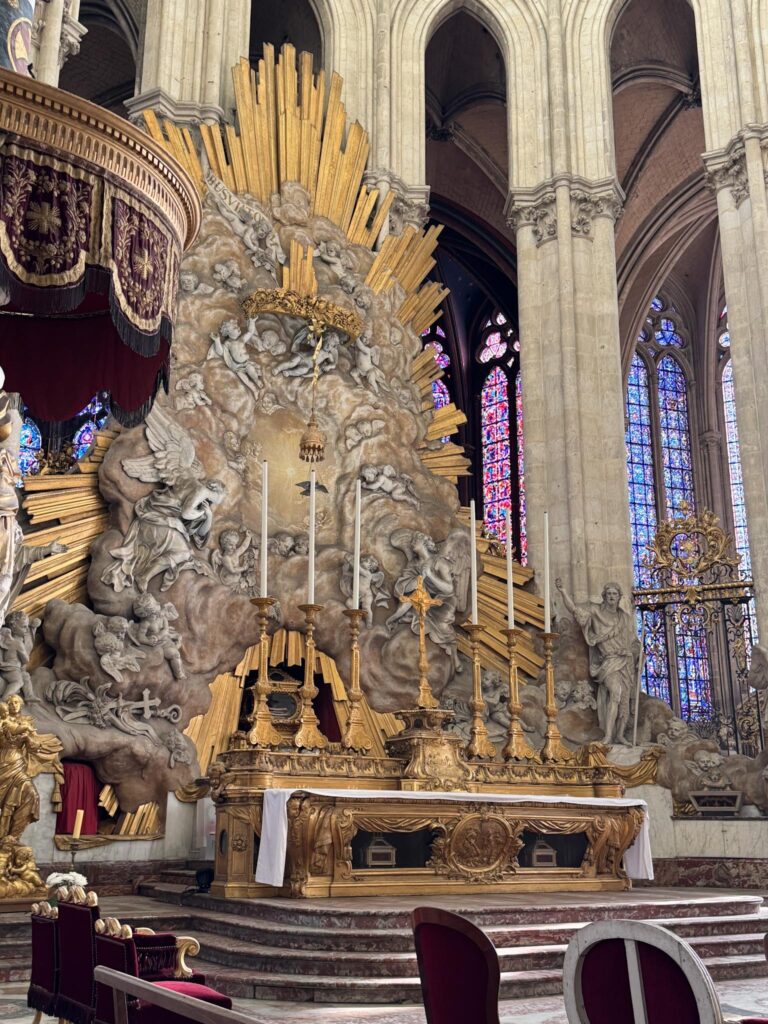
The Baroque altar dates from 1755-1767.
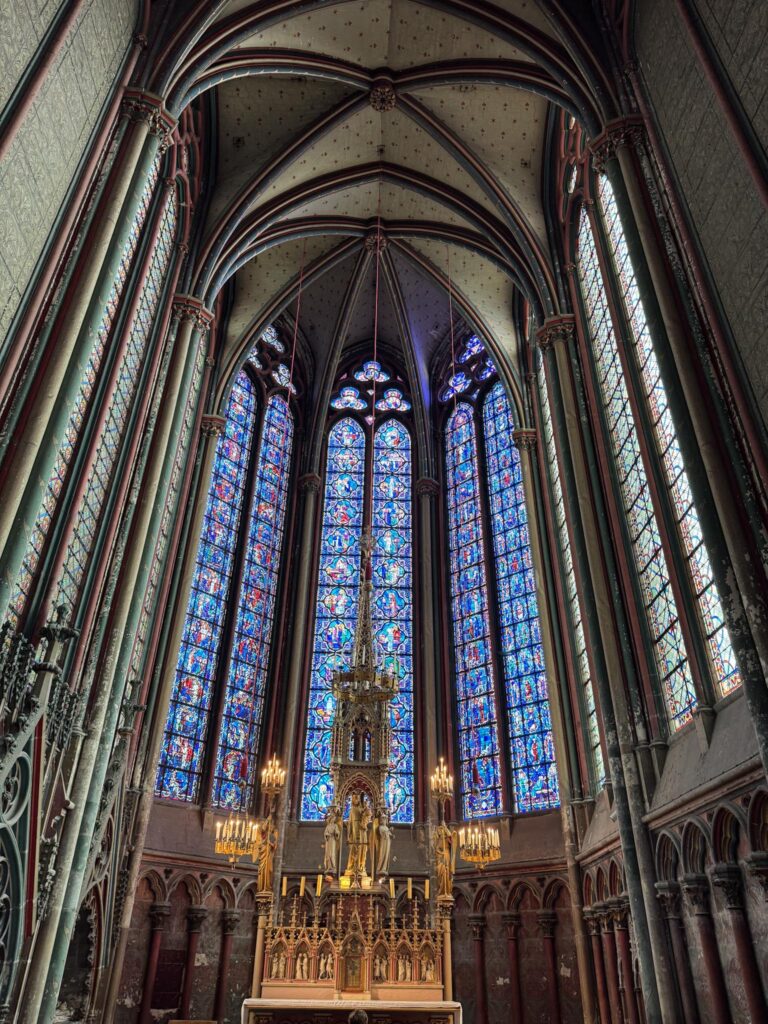
These stained glass windows adorn the chapel of Our Lady of the Drapers, from about 1240.
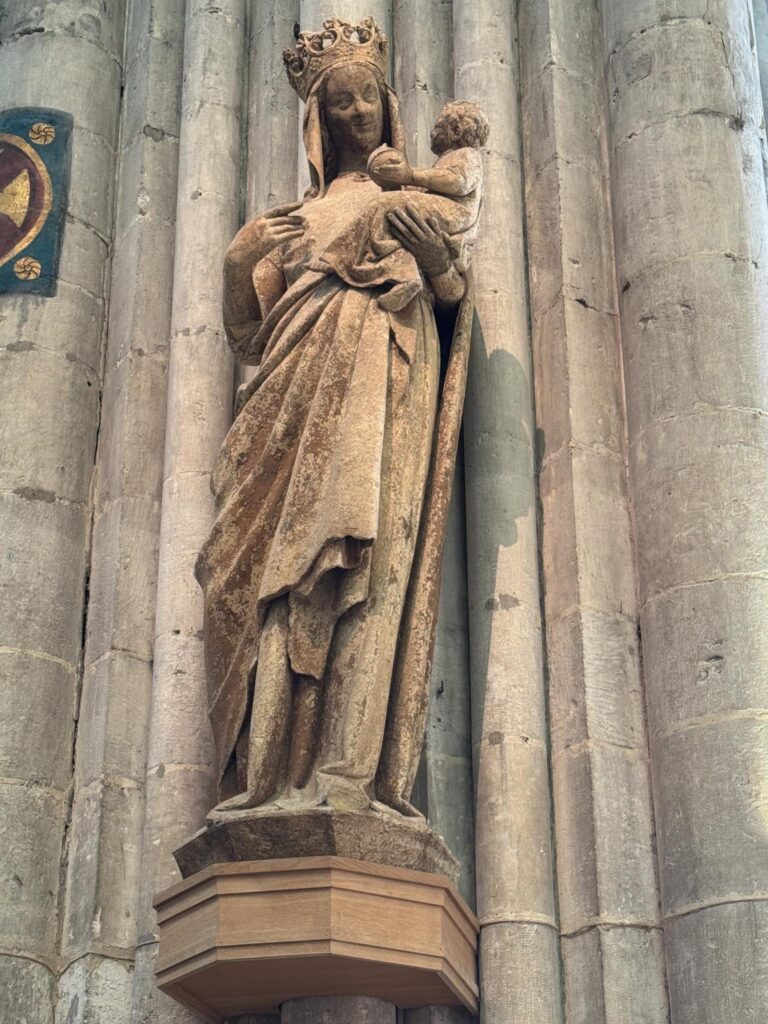
The Golden Virgin, from the late 13th century, was originally on the south portal but has now been replaced outside with a copy.
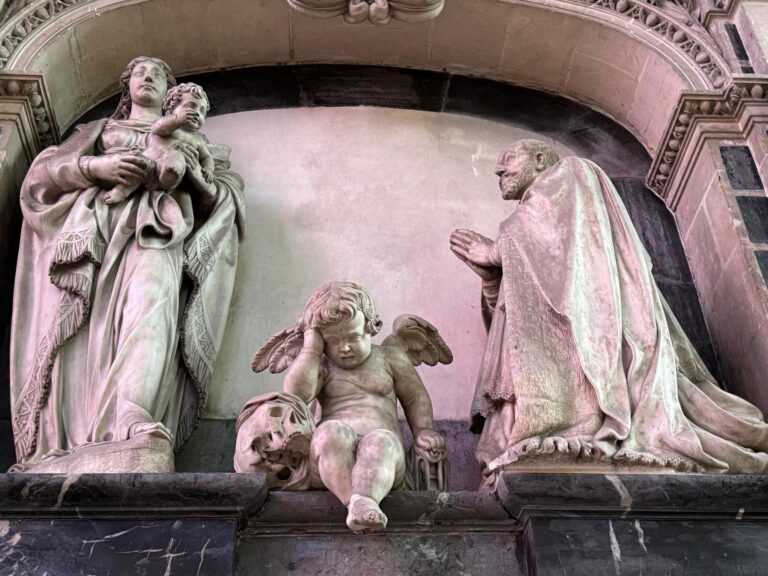
This weeping angel dates from 1636.
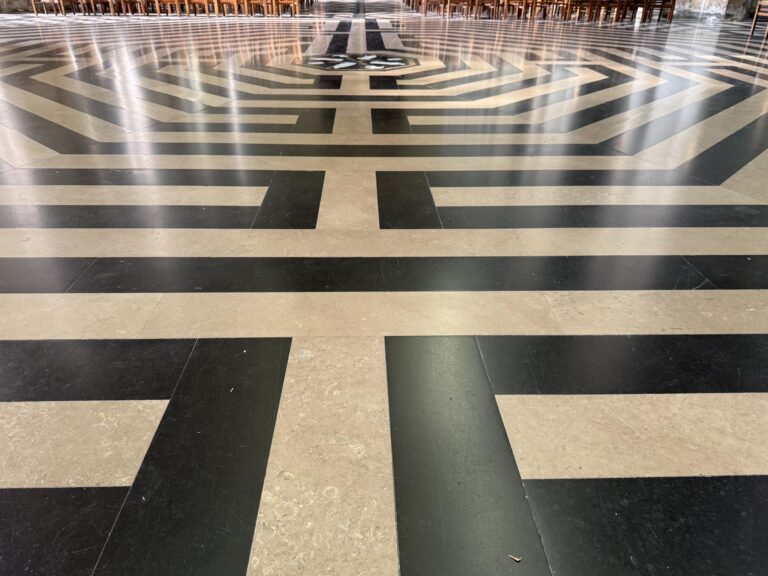
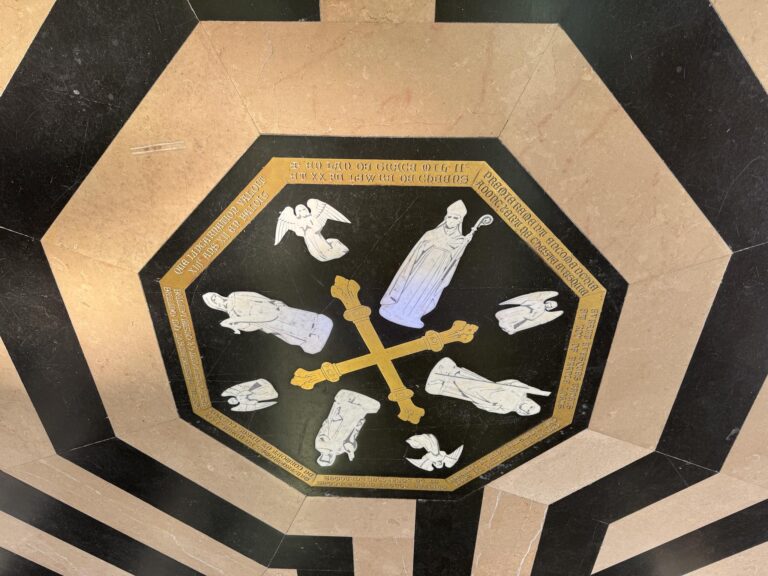
There is a labyrinth from 1288, restored in 1898. Chairs are not placed on it, but it was difficult to walk because tourists did not understand and treated it like any other section of floor.
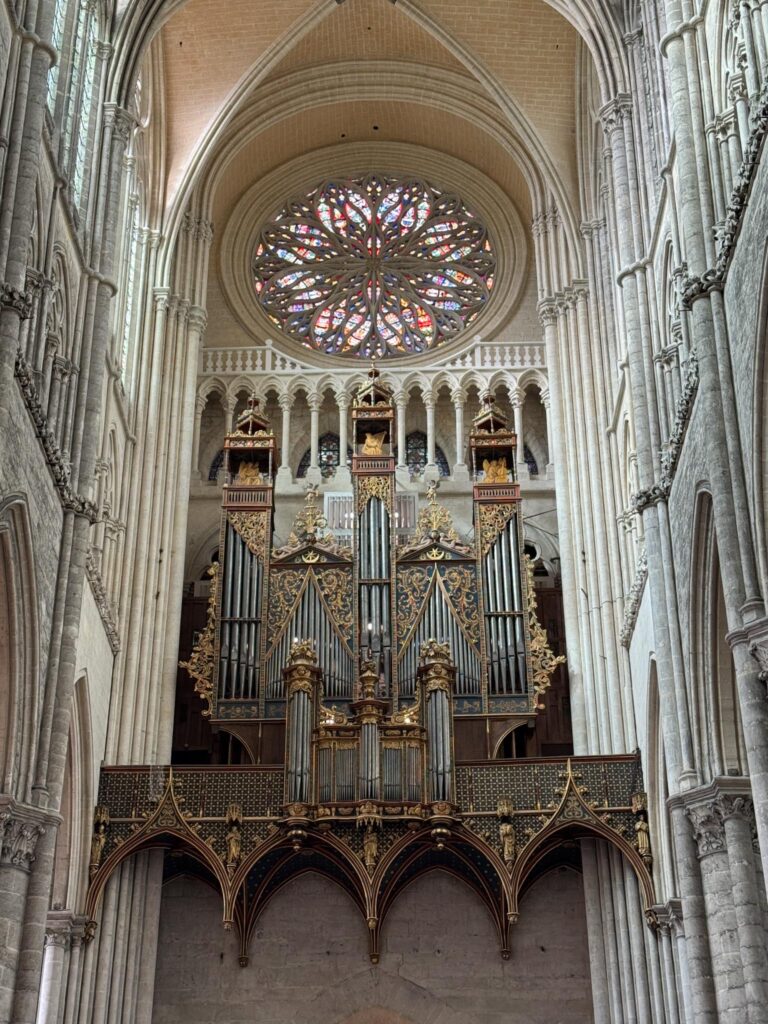
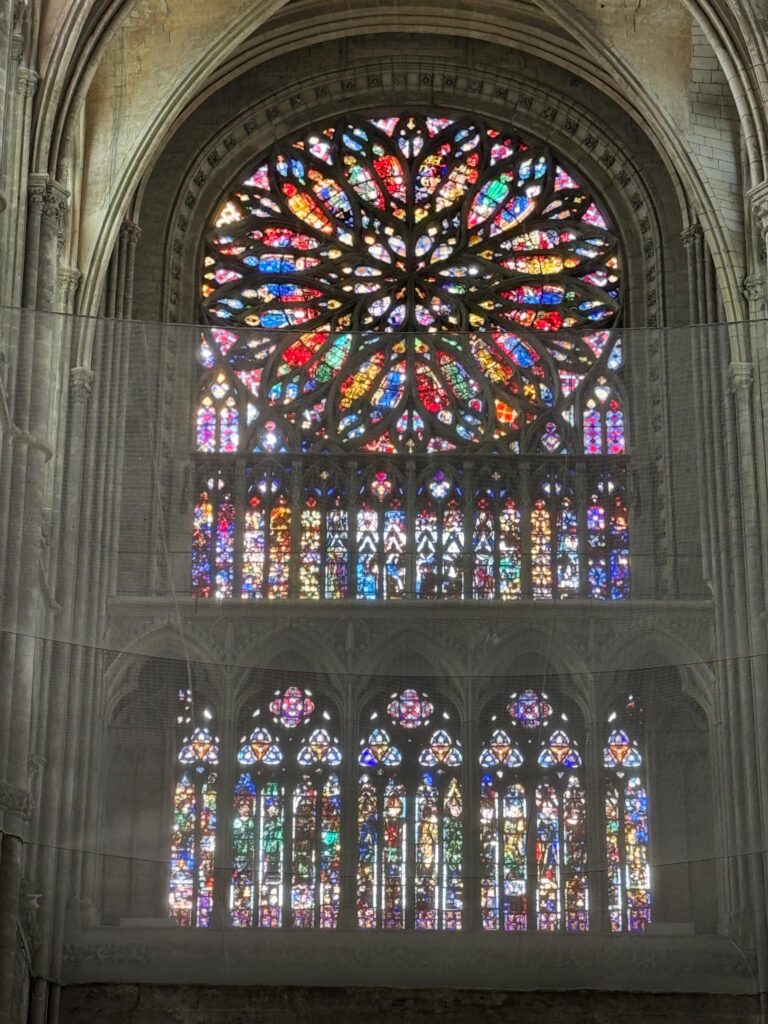
The west rose window dates from the 16th c.
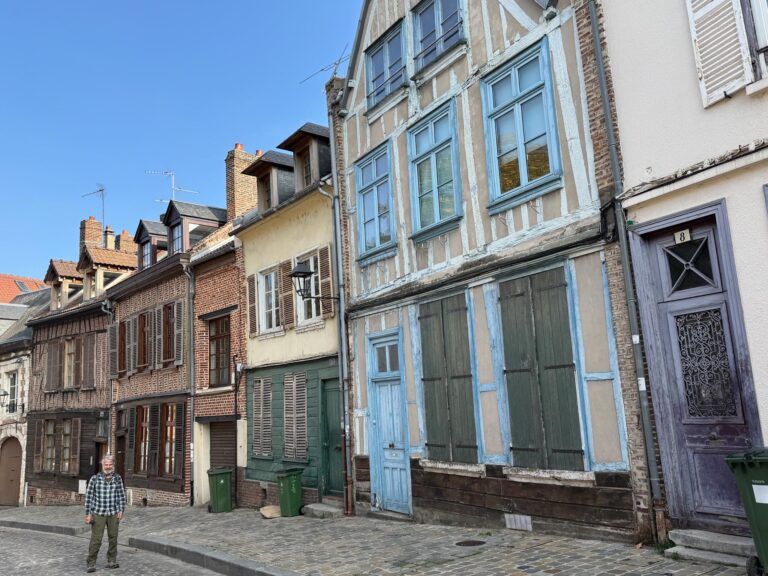
Several medieval buildings still exist in Amiens. This street had several examples.
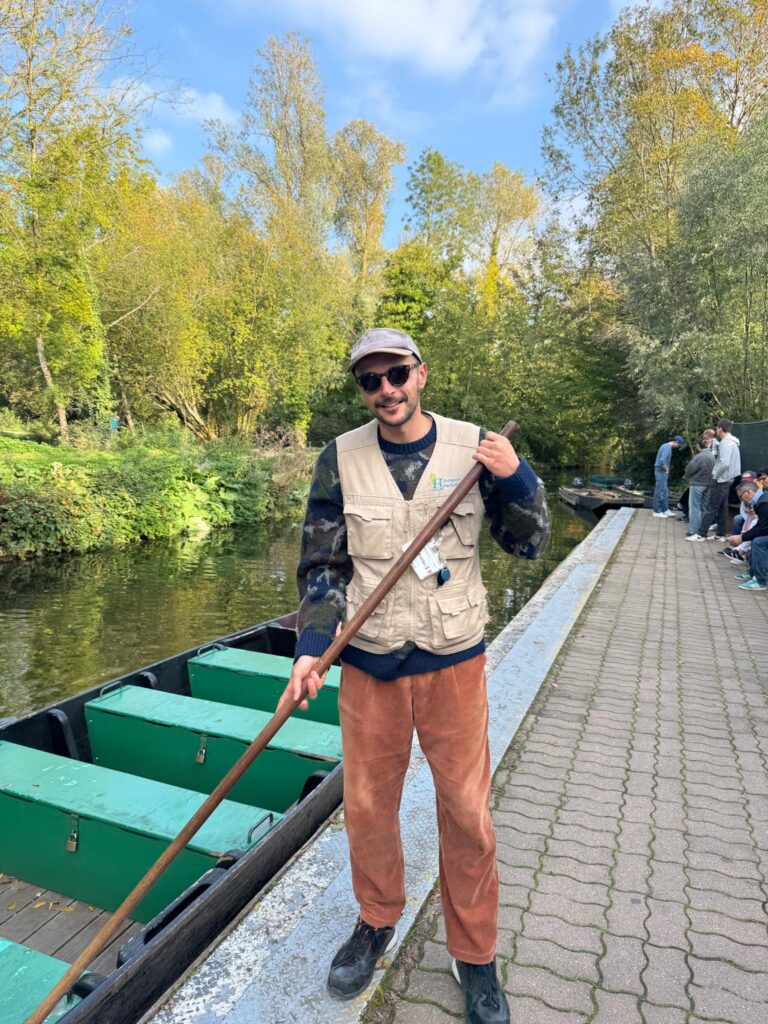
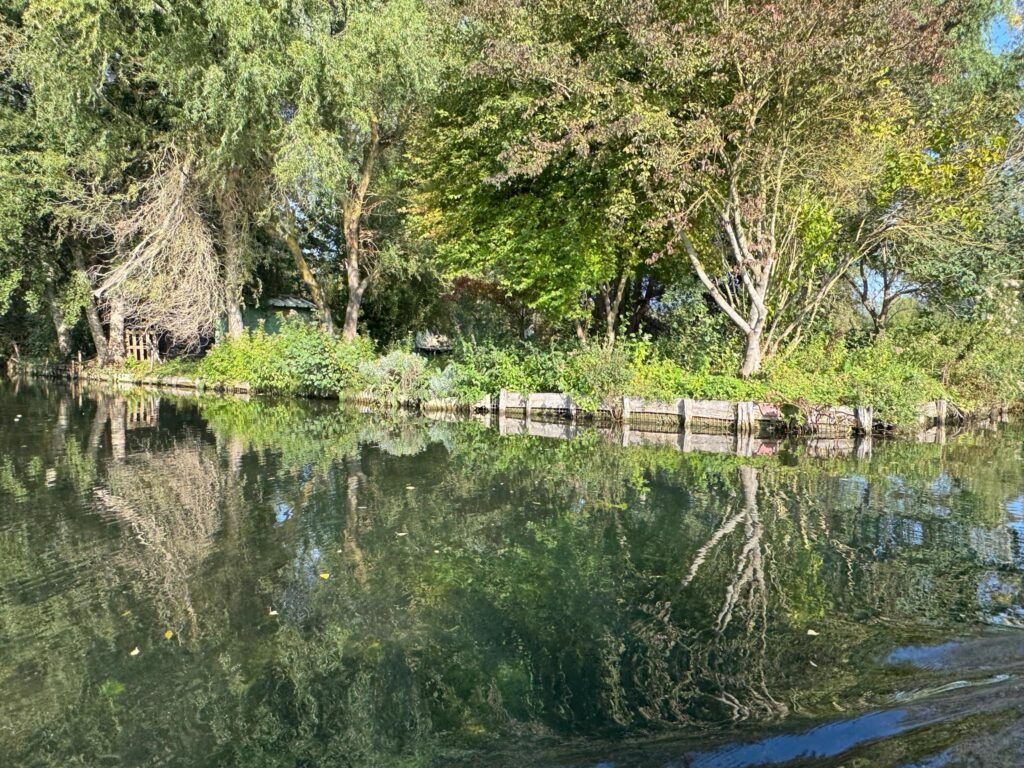
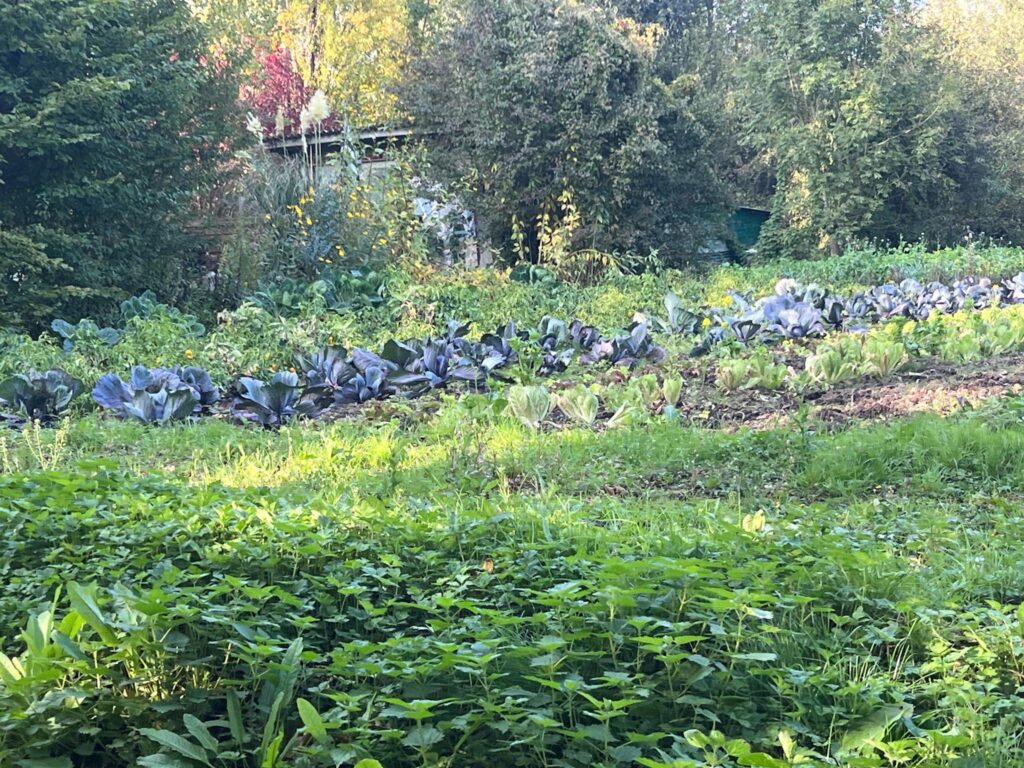
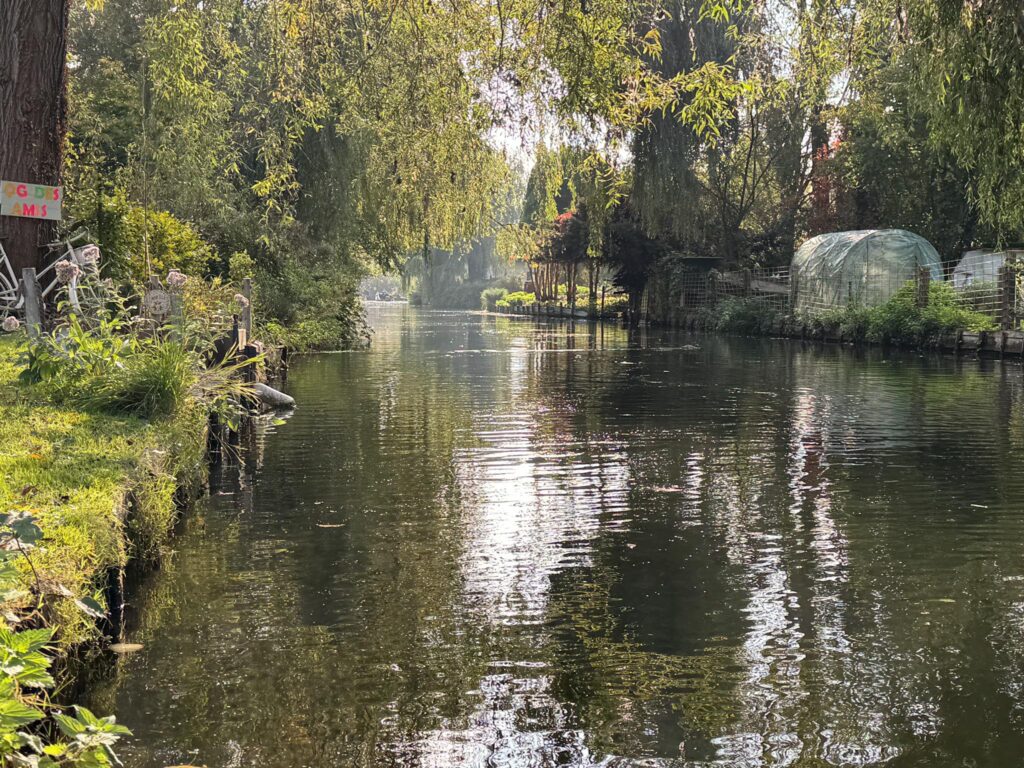
We joined Charles (“like the King,” he says) on a trip through the canals dug in the 1200’s to grow food to feed the town. These floating gardens, Hortillonnages, are mostly privately owned now and not often growing food.
Another full day. Off to the train for our ride back to Paris.

4 Responses
Looked like a great day trip. So many places to venture to within a few hours from Paris. Another spectacular church!
Dan and Wendy
We enjoyed Amiens both for the church and the other unusual stops we made. It’s fun to mix it up!
What a fun day!! Love the gardens and all of Richard’s funny Relive photos of the gardens. Such elaborate carvings on the cathedral! Looks like a great time
It was a great time and fun to do a variety of visits. I always love cathedrals, but other things too!