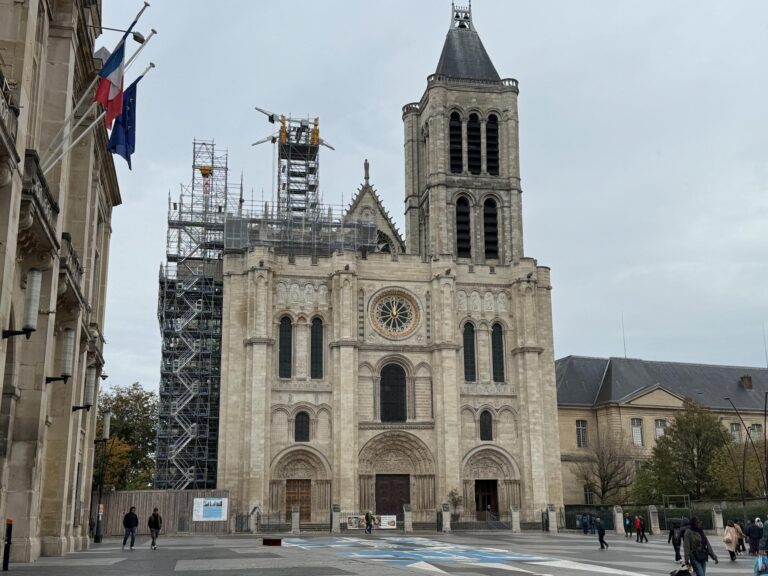
Saint Denis basilica stands on the site of a Gallo-Roman cemetery, and was a powerful Benedictine abbey in the Middle Ages. Most of Kings and queens of France were buried here from the 6th century onwards.
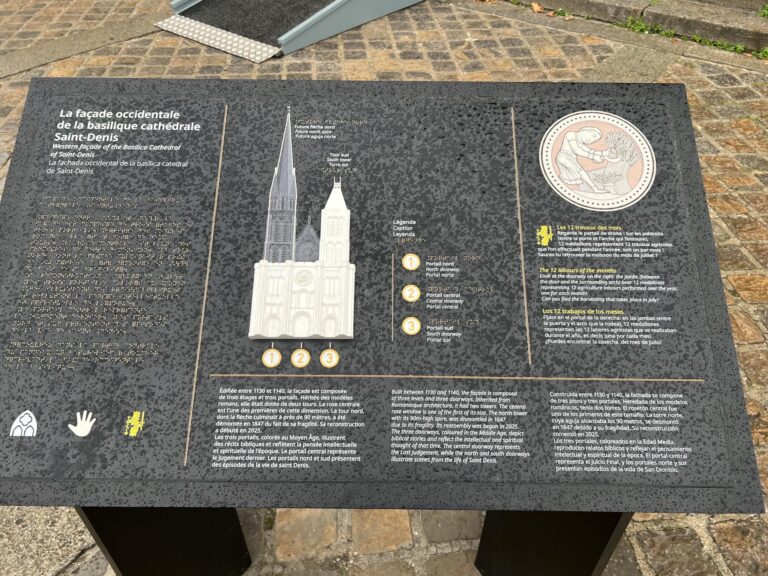
The left (north tower) with its 90-meter spire was disassembled in 1847 due to its fragility. It is being rebuilt starting in 2025.
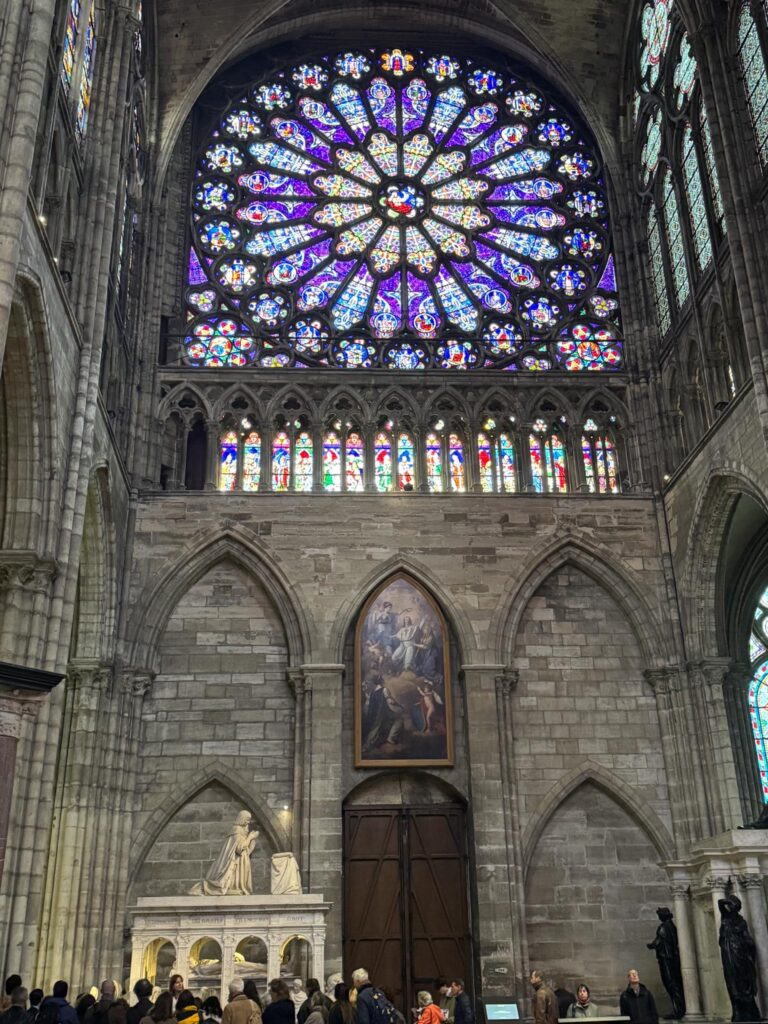
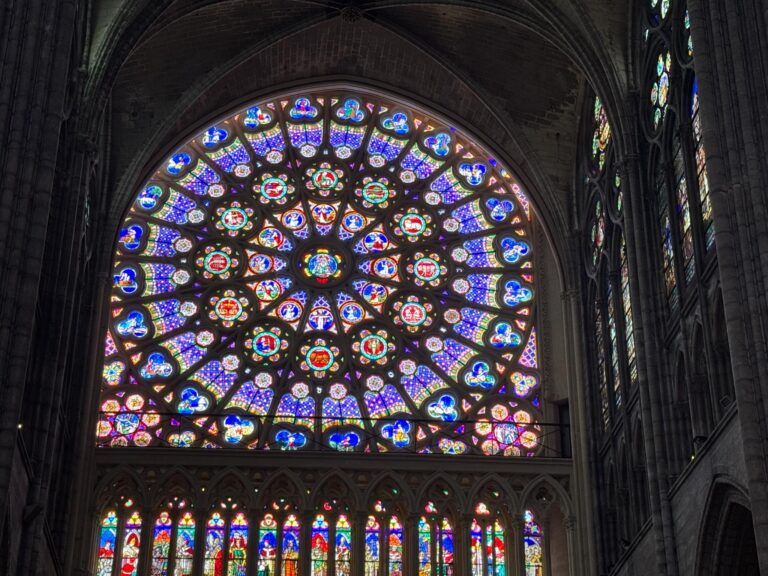
These rose windows were added in the 19th century to replace medieval stained glass windows whose lead was melted during the revolution.
Rose windows were first added in the 12th century by Suger, Abbot of St. Denis, who turned the Abbey into a masterpiece of Gothic art.
The original north rose window from 1250 depicts the Tree of Jesse.
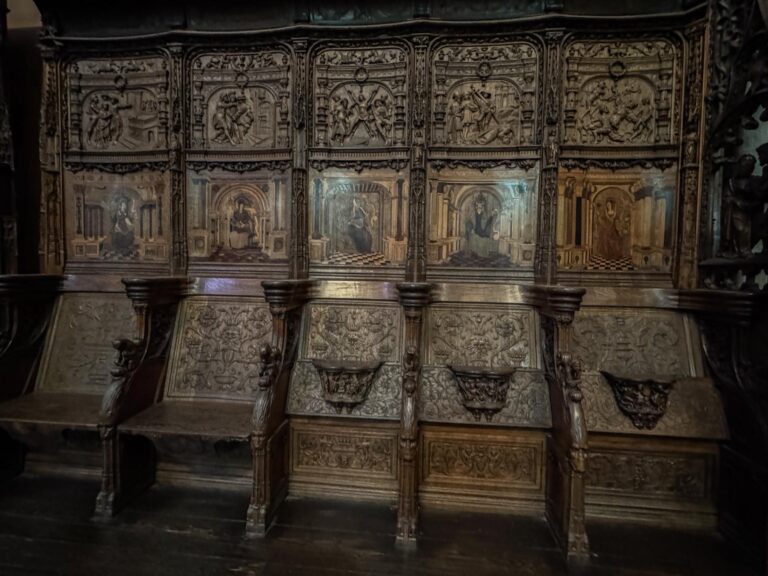
Choir misericords are intricately carved.
The original south rose window from 1260 shows the Gregorian calendar and zodiac signs.
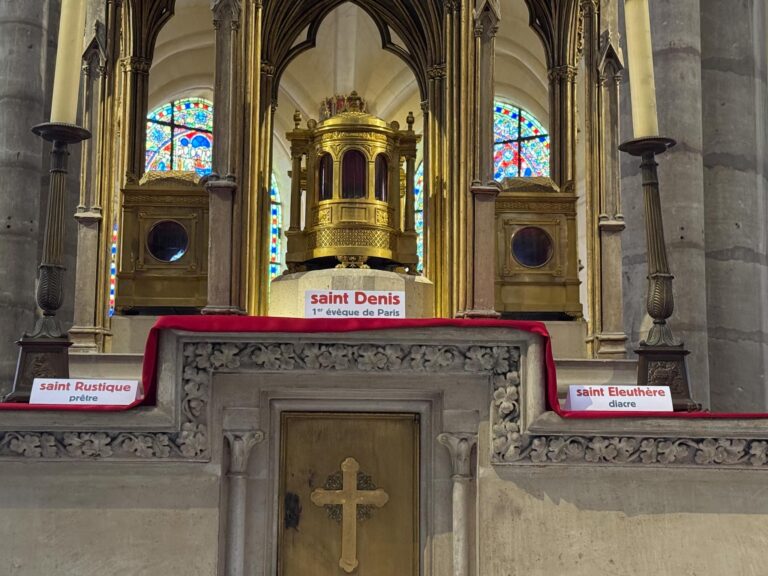
Saint Denis is thought to be the first Bishop of Paris. He was martyred about 250 AD. Other relics on either side are Saint Rustique and Saint Eleuthera, who were martyred alongside Saint Denis.
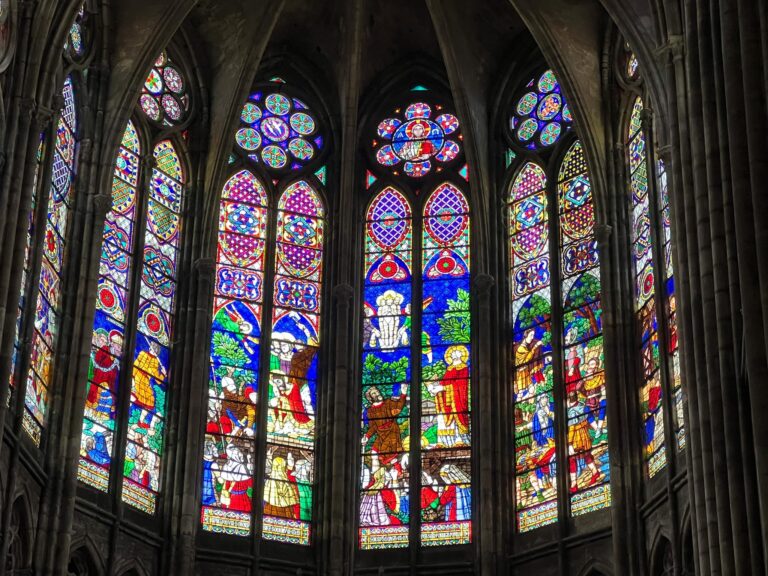
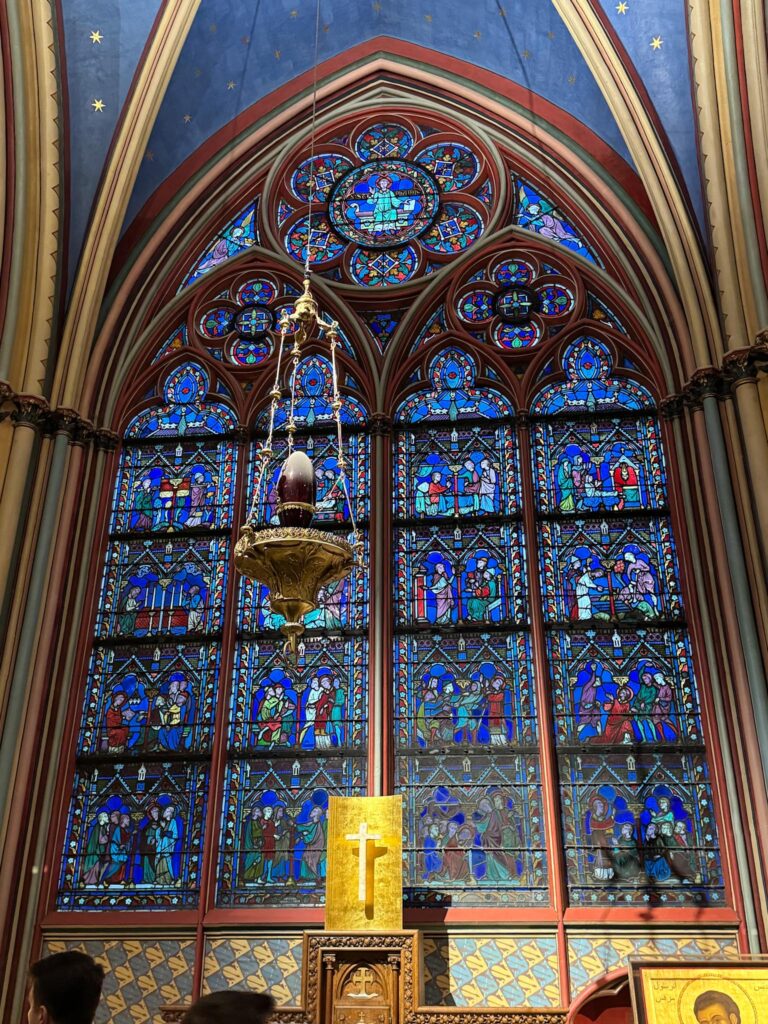
The story of St. Denis is told through stained glass above the altar.
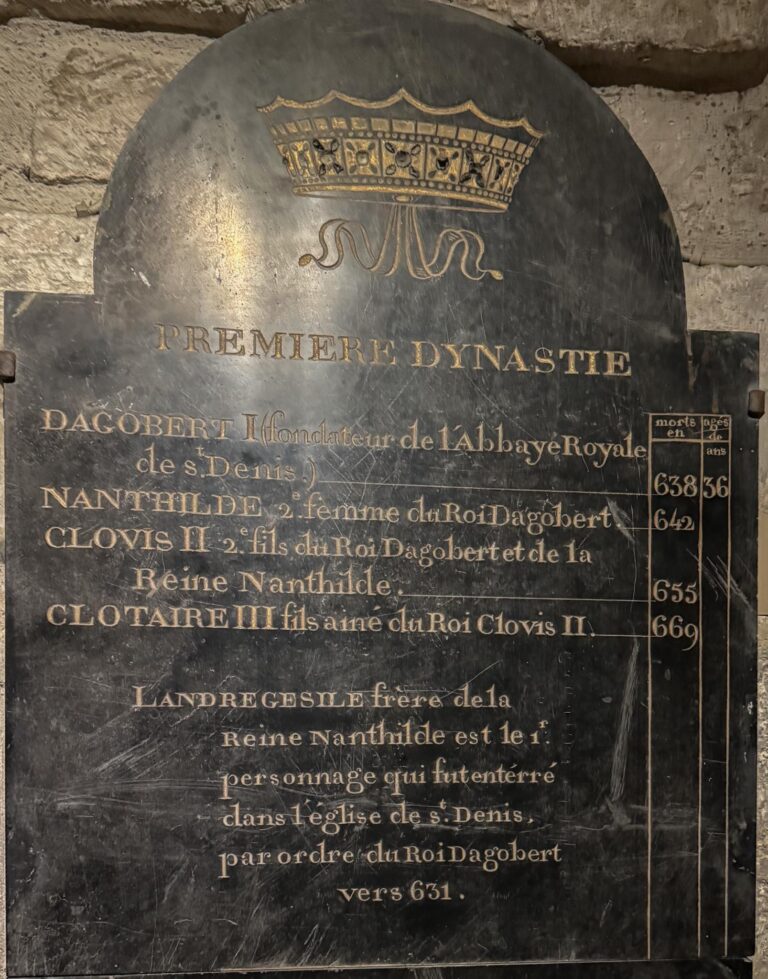
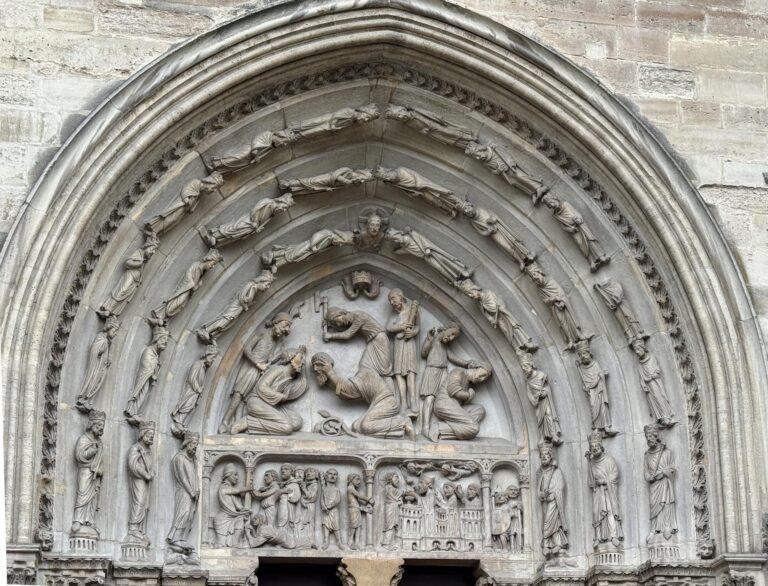
Dagobert I was the first king to choose the basilica as his burial place (died 639). The tympanum contains a legend where Dagobert’s soul was saved from Hell by Saint Denis.
Dagobert was a benefactor to the basilica.
Clovis, the King of the Franks who was baptized on Christmas in 496, is largely credited for the key alliance between the Frankish kingdom and the Catholic Church.
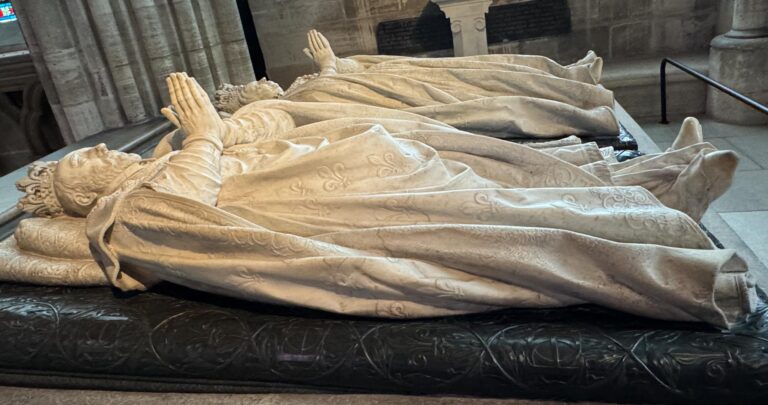
His remains, and those of his son, Childebert I are buried next to each other. Childebert holds in his right hand the image of Saint-Germaine-des-Pres which he founded.
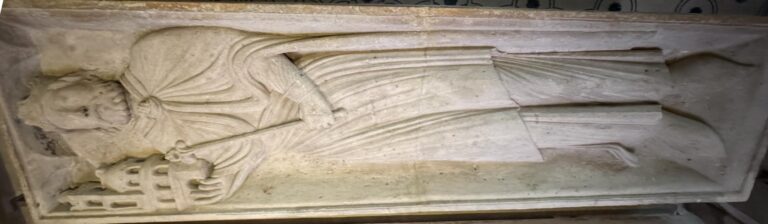
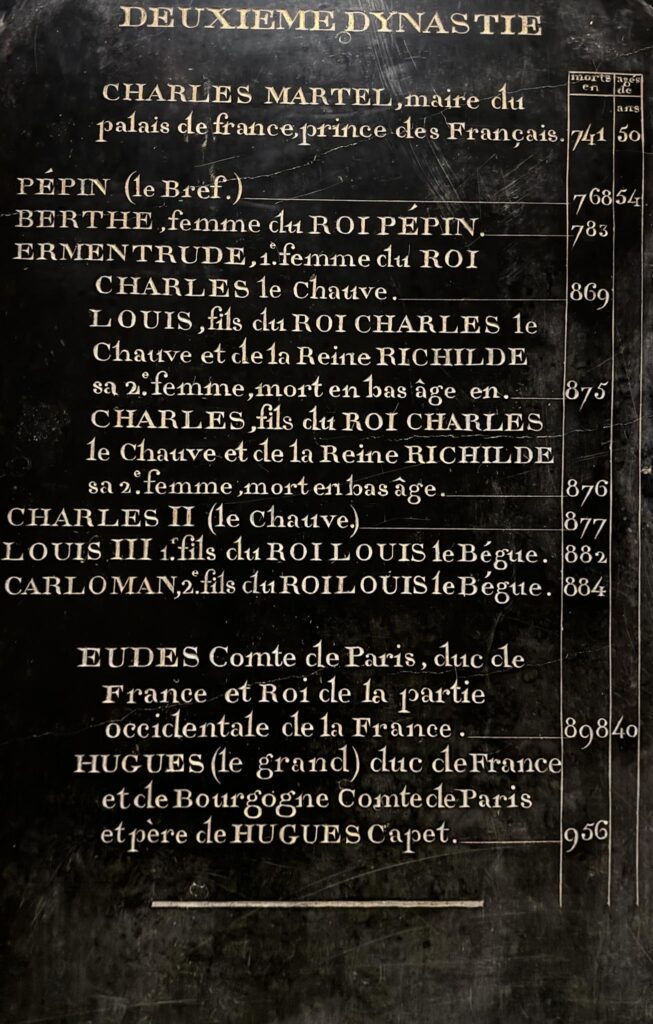
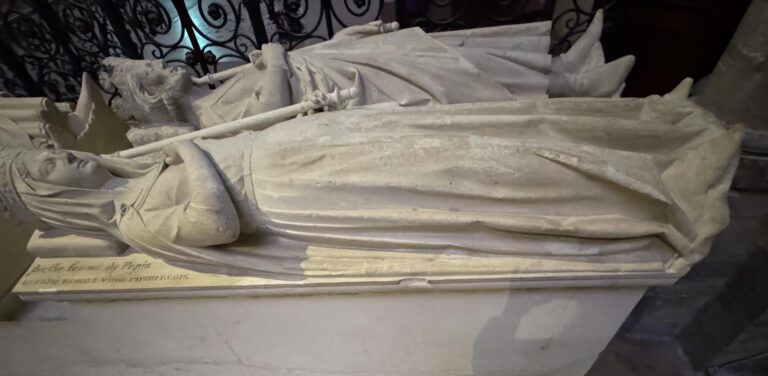
Bertranda of Laron known as Bertha Broadfoot (720-783). Queen of the Franks 751-783.
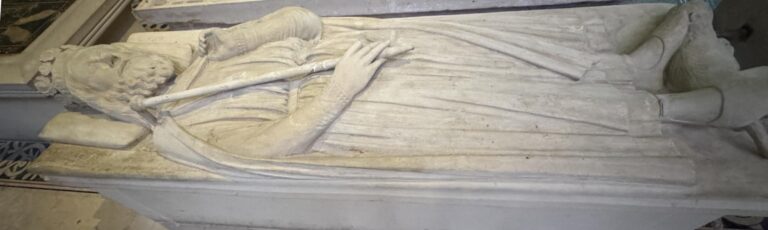
Pepin the Short (714-768). He was crowned king at St. Denis in 754.
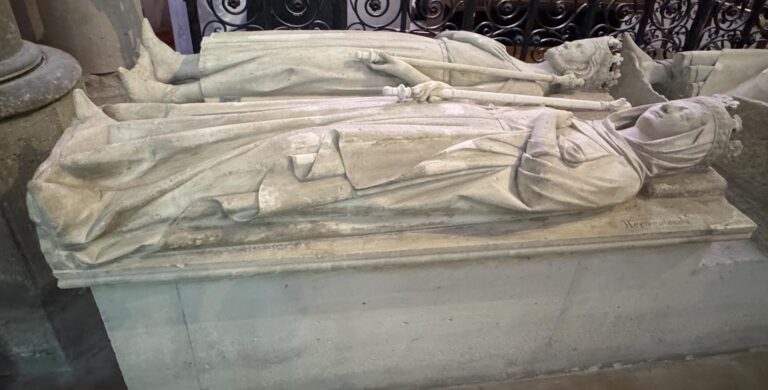
Ermentrude (830-869). Queen of the Franks from 842 to 869, married to Charles II the Bald in 842.
Carloman I (751-771). King of the franks from 768-771, succeeded by Charlemagne after the announcement of his brother’s death.
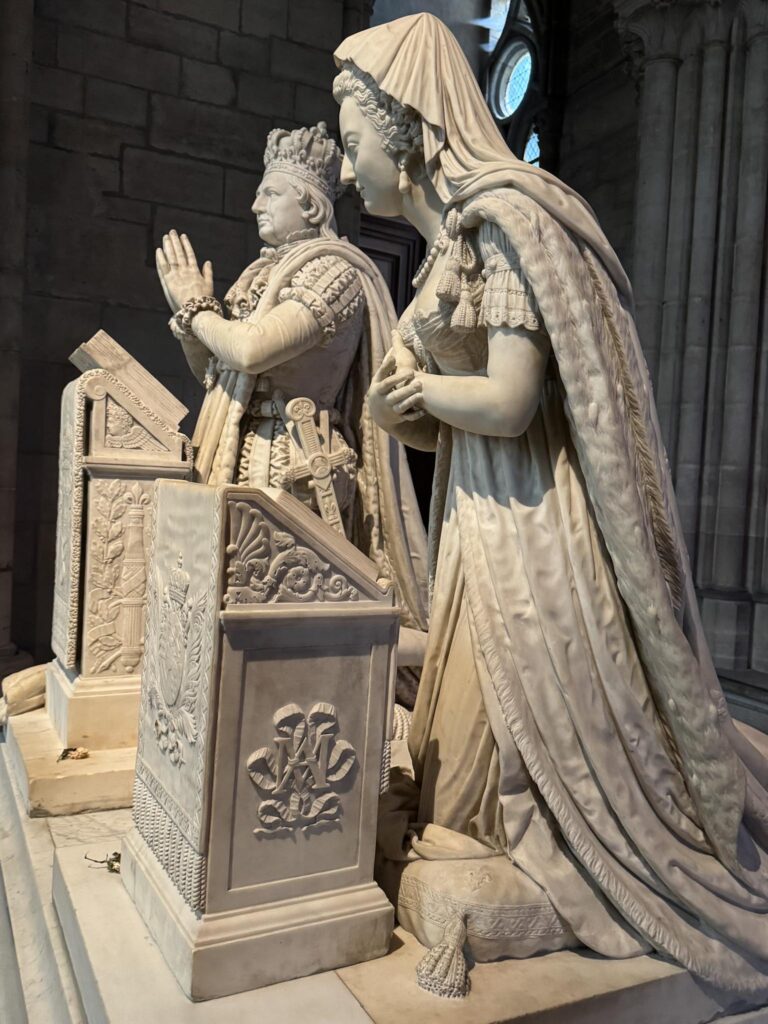
The praying statues of Louis XVI and Marie-Antoinette completed in 1830. Their ashes are interred in the Bourbon crypt.
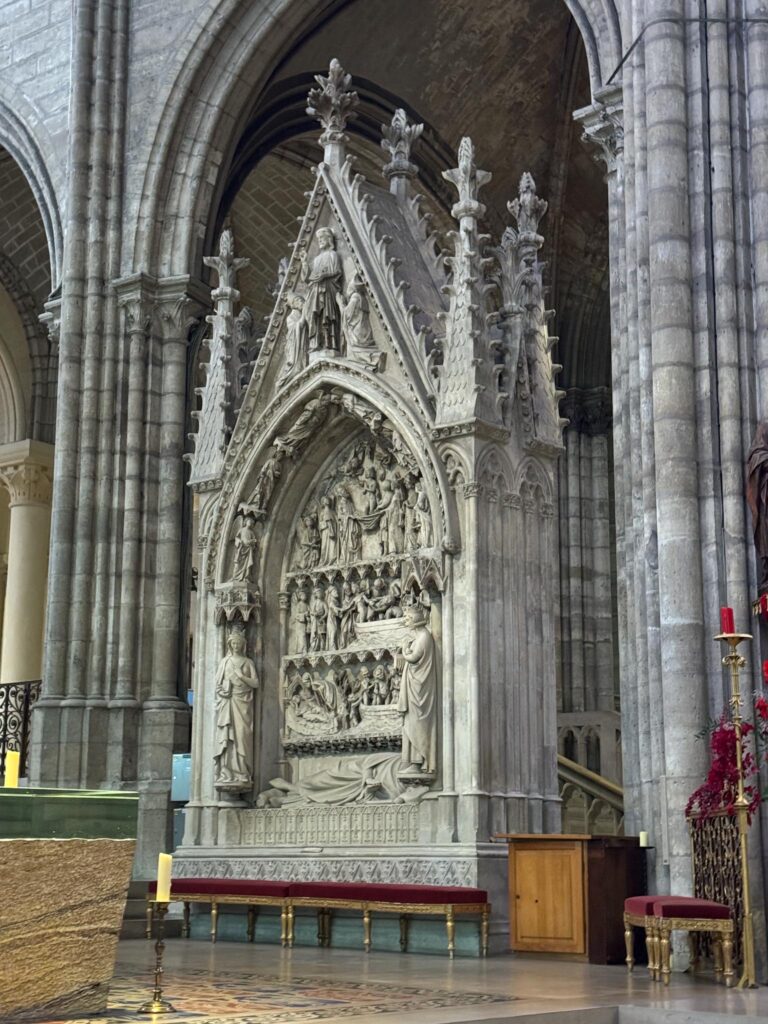
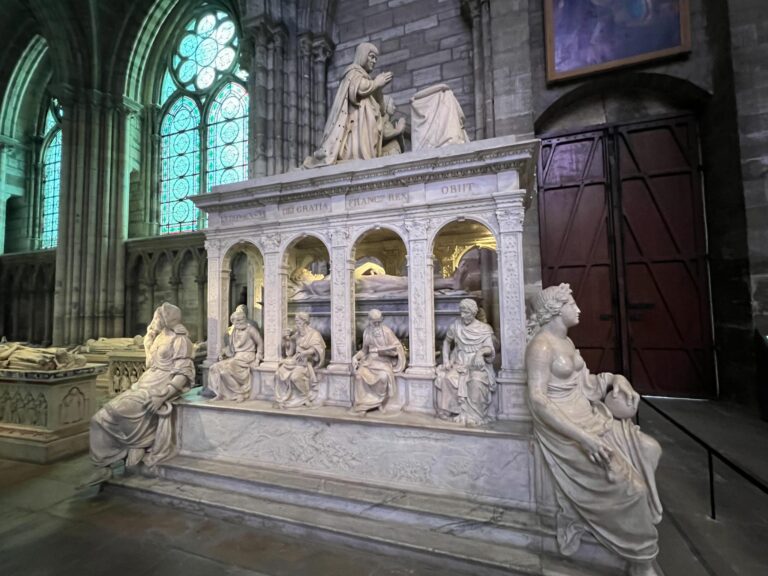
The mausoleum of Louis XII and Anne of Brittany, carved in Carrara marble by Italian sculptors. The temple is surrounded by 12 apostles and four cardinal virtues. The couple are portrayed motionless in death inside the temple, and kneeling sovereigns on the upper level.
Louis XII was King of France from 1498 to 1515 and was the last king of the Valois dynasty.
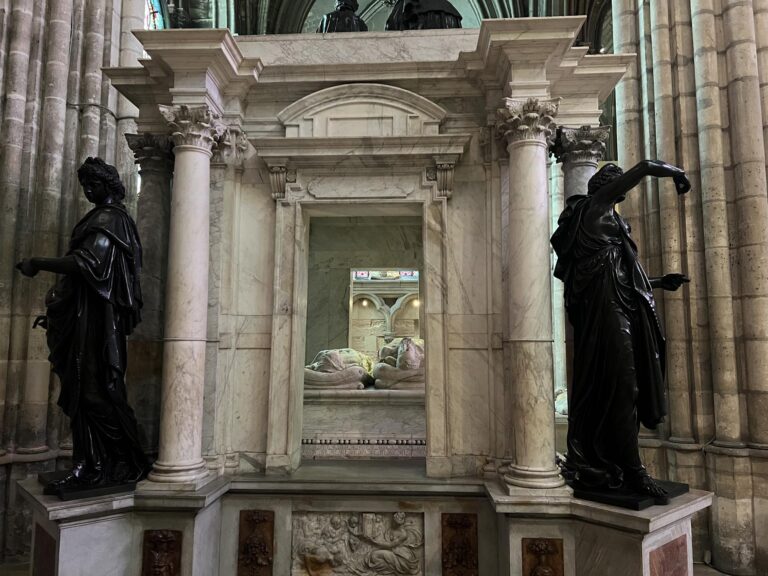
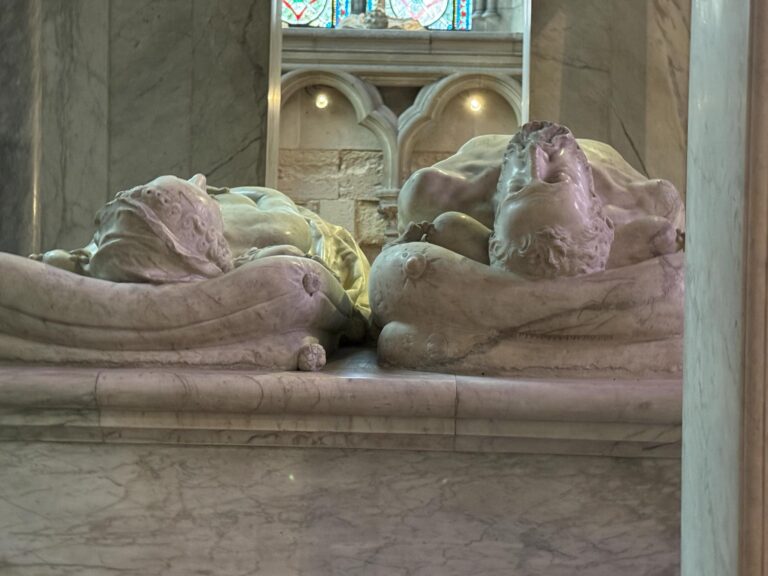
The tomb of Henry II and Catherine de Medici was constructed between 1560 and 1573 and first was in the center of an attached rotunda but now is in the Basilica. It uses marble of various colors and is especially known for the monumental bronze Virtues at the four corners.
These effigies of Henry II and Catherine de Medici near their tomb portray them with eyes open in their coronation robes.
This tympanum over a Saint Denis Basilica doorway shows the martyrdom of St. Denis who was beheaded.
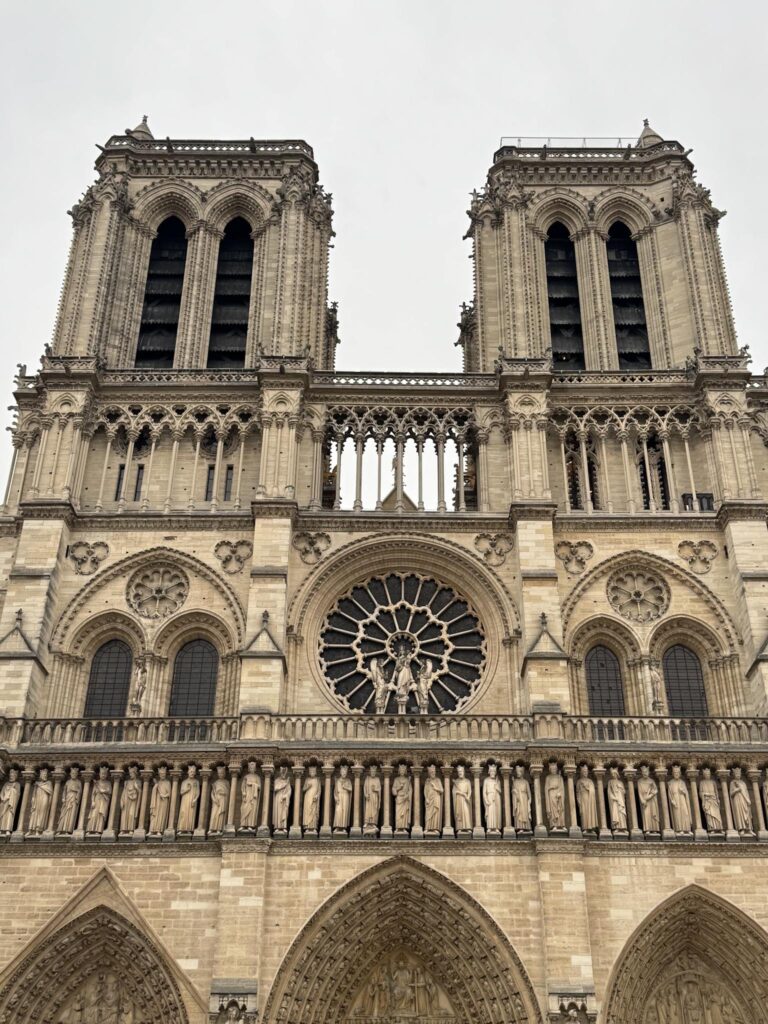
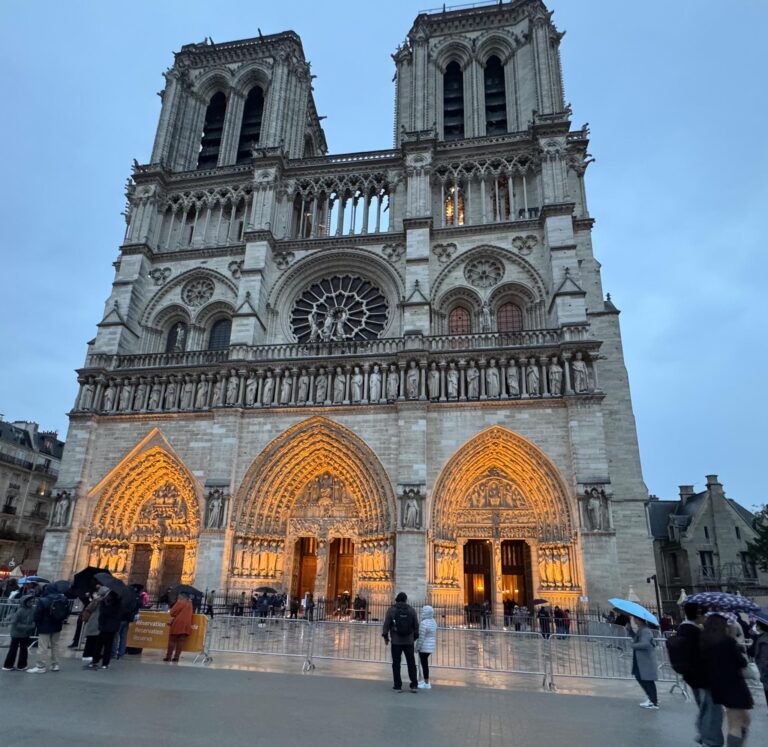
On to Notre Dame. It has been cleaned and repaired, but still shows ongoing building renovations.
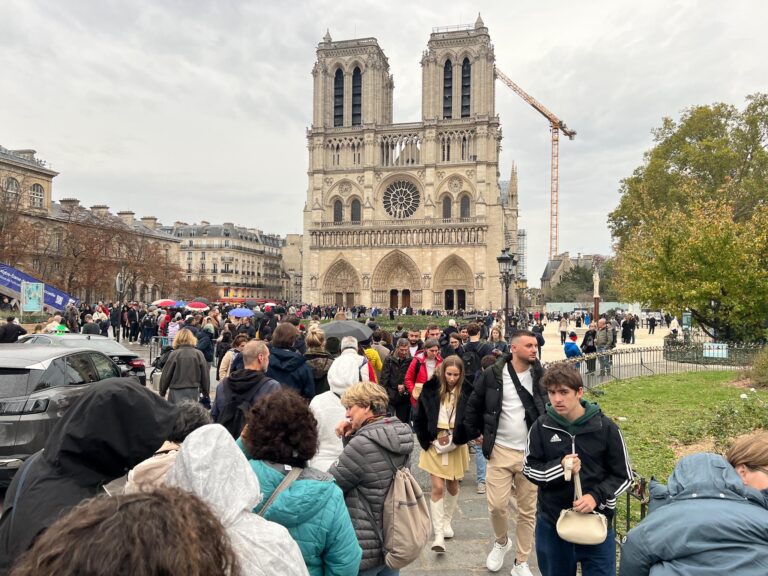
This is the line for admission without timed tickets ( on a rainy Sunday night about 5:30).
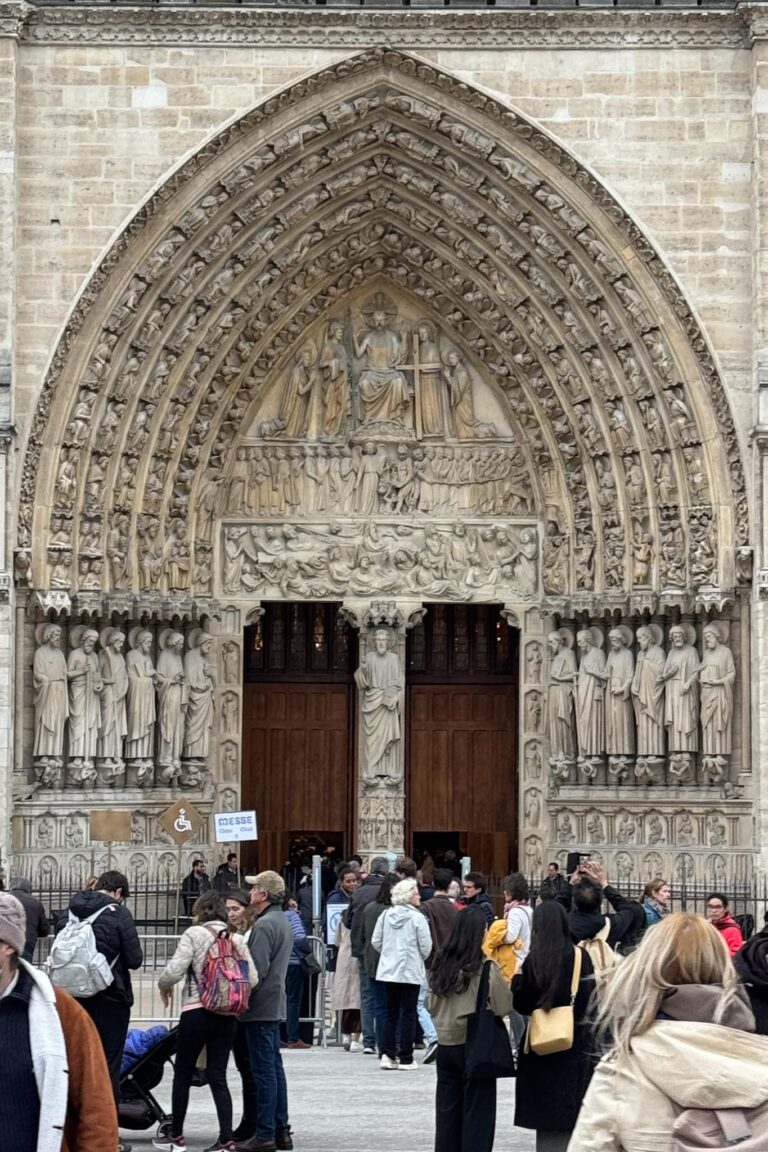
The Last Judgement Tympanum guards the entry door to the Cathedral. It is a 19th century restoration of a 13th century original showing the dead rising for final judgement on the bottom, St. Michael presiding over the weighing of souls in the middle, and the Virgin Mary and St. John flanked by angels praying for mercy for the people below.
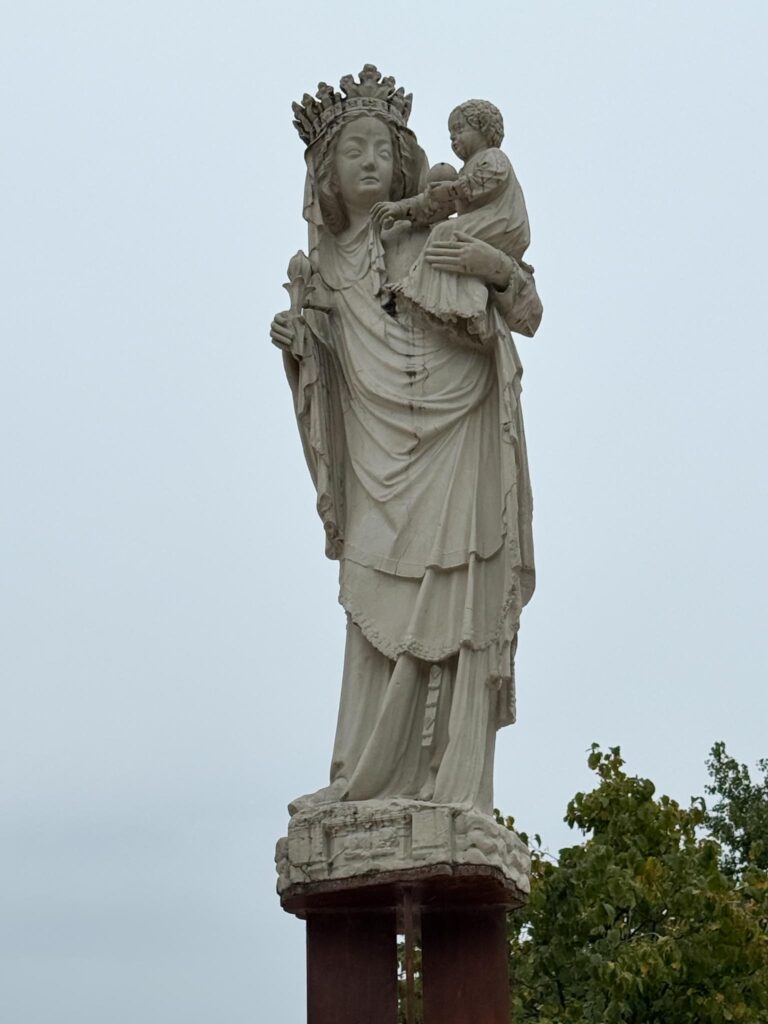
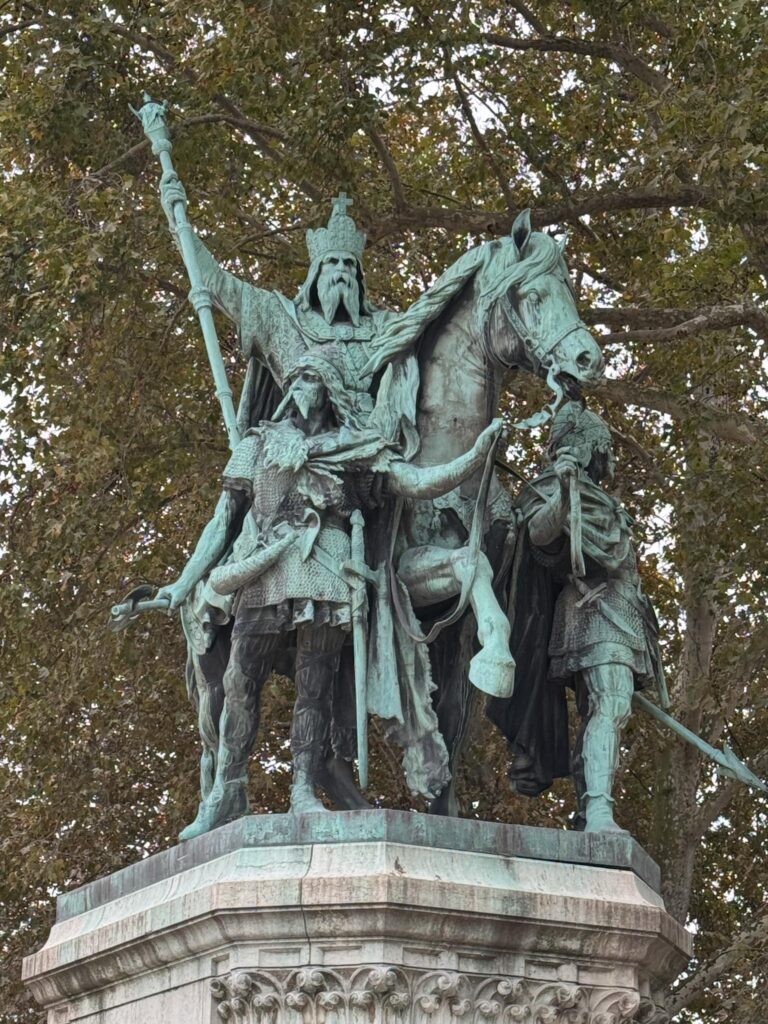
Charlemagne and his guards stand watch outside Notre Dame.
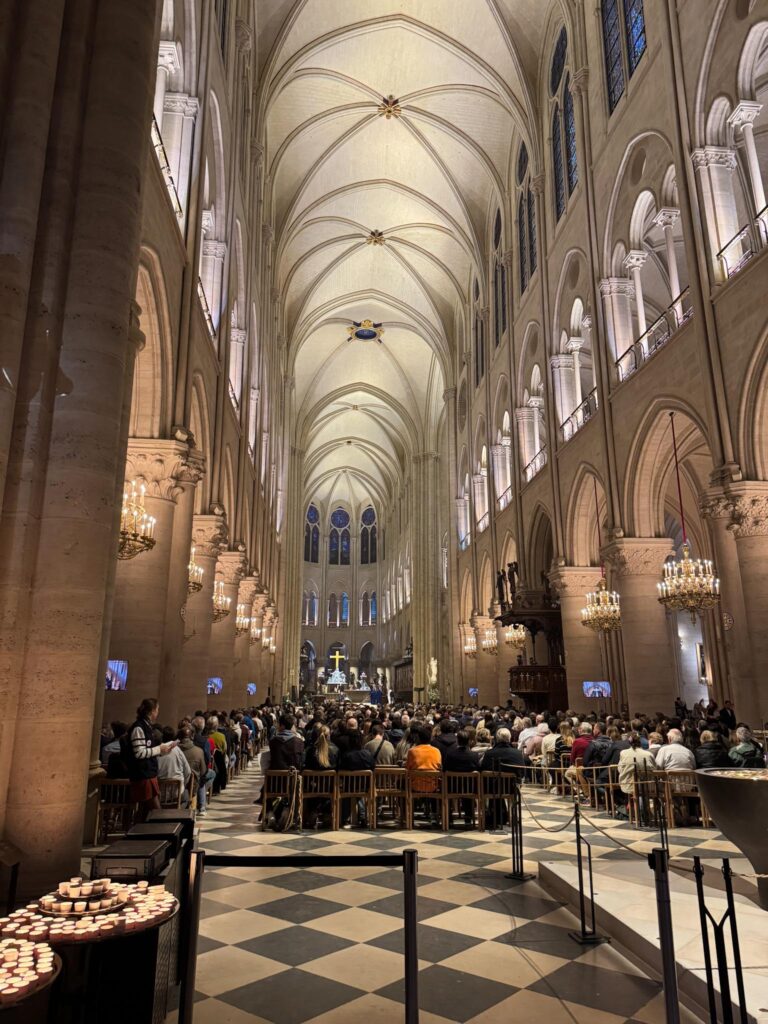
The cathedral is known for its pioneering use of rib vaults and flying buttresses.
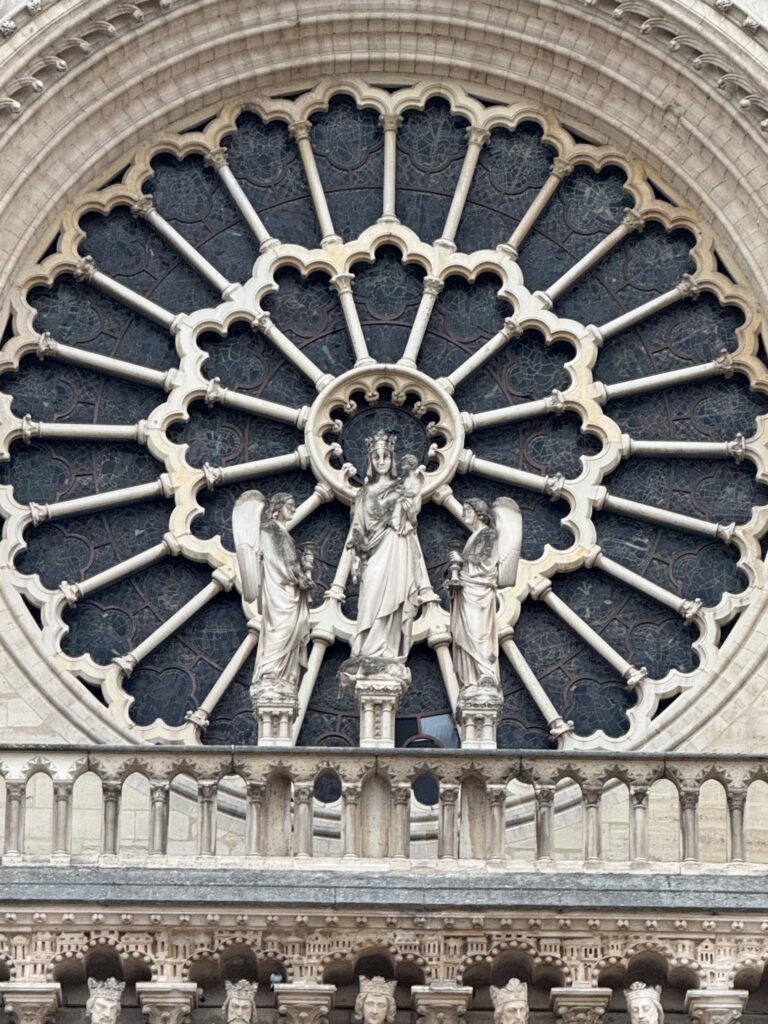
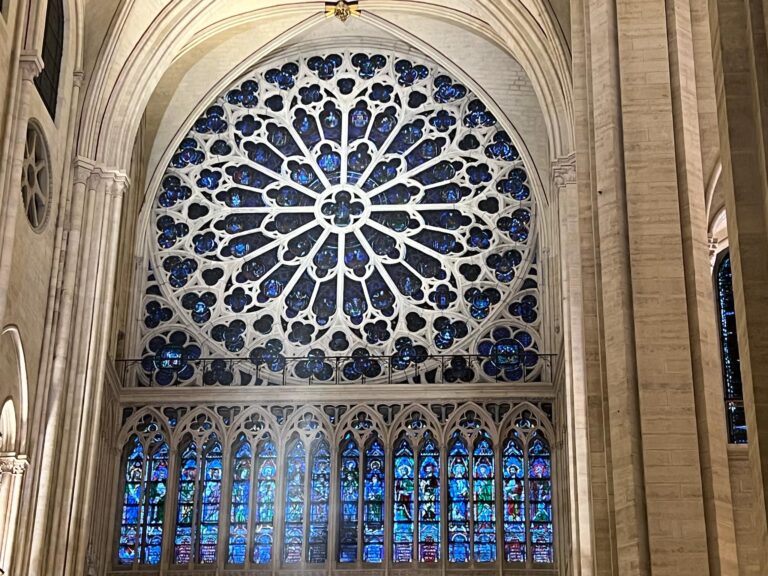
The West Rose Window is the smallest of Notre Dame’s three rose windows, and was originally completed around 1225. It survived the 2019 fire, but the glass dates from the 19th century restoration.
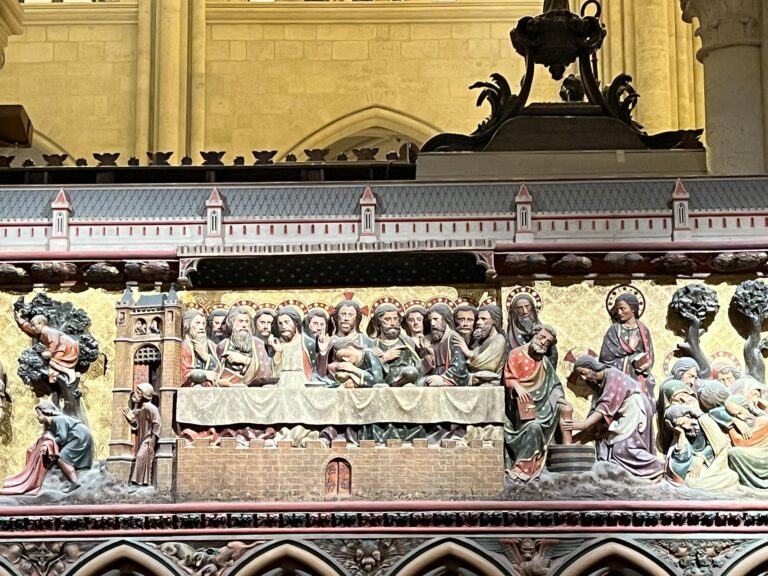
Pictures of Jesus’s life from the north wall of the choir enclosure.
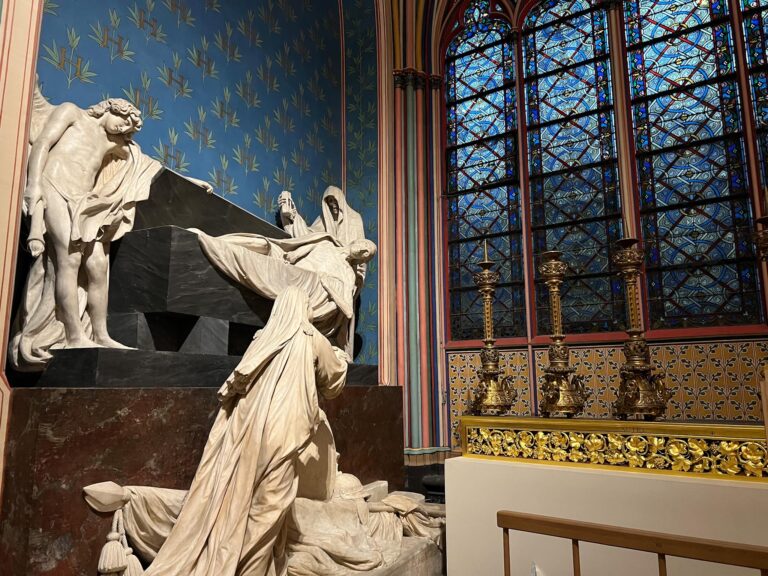
The funerary mausoleum of the Country of Harcourt showing the Countess’s homage to her deceased husband. She commissioned the renowned artist, Jean-Baptiste Pigalle, to create the sculpture in 1769.
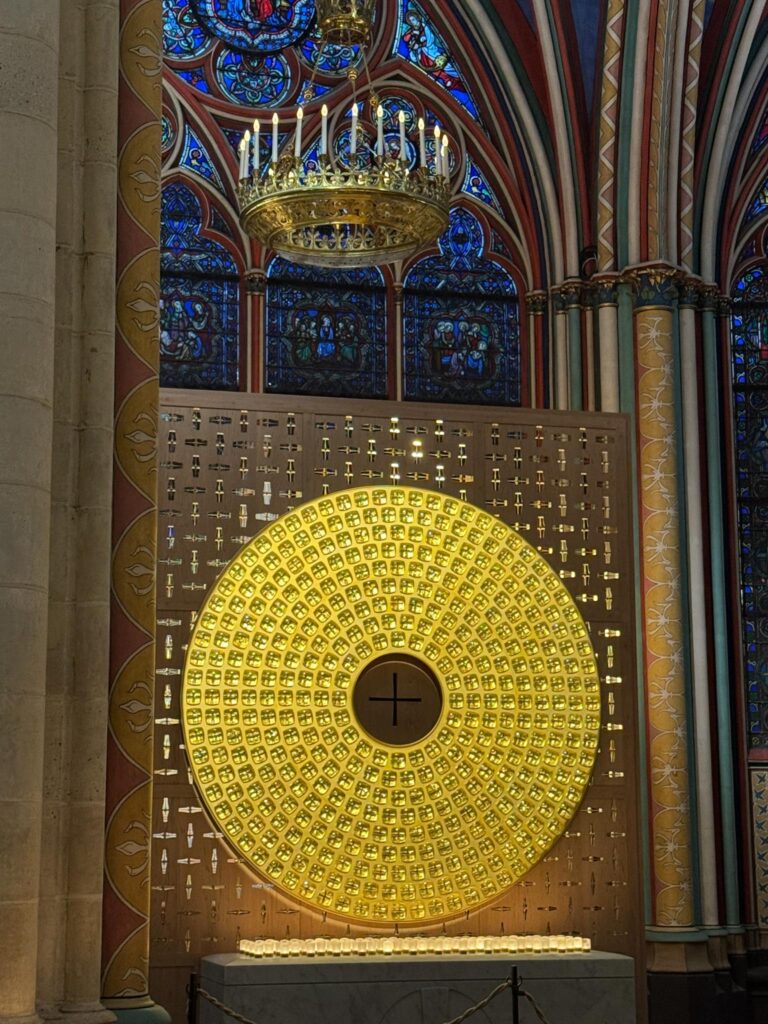
With the 2024 reopening of Notre Dame, a new reliquary was presented to house the Crown of Thorns relic. It is a futuristic design by Placide Pousselgue-Rusand. On special days, the center glows blue with the Crown of Thorns; other days the relic is not visible.
We were happy to get in to see the changes since the fire. It certainly seems lighter and cleaner, so we will check pictures from prior visits to understand the changes.

4 Responses
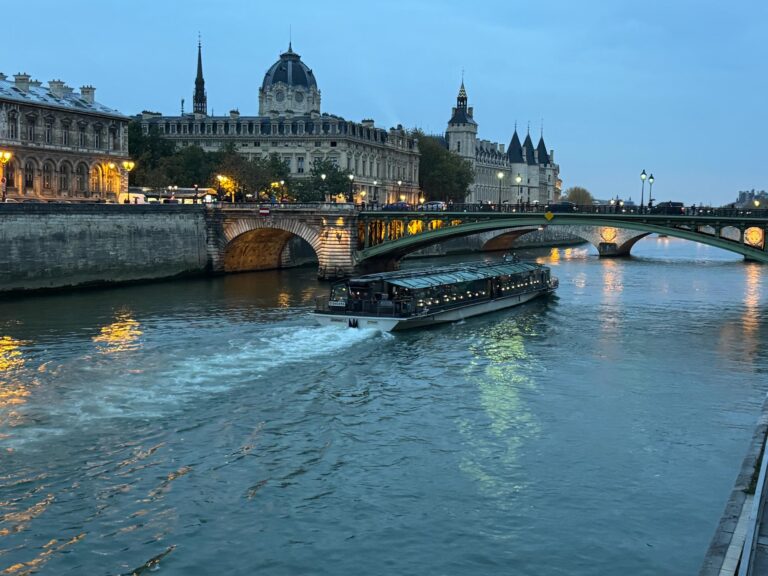
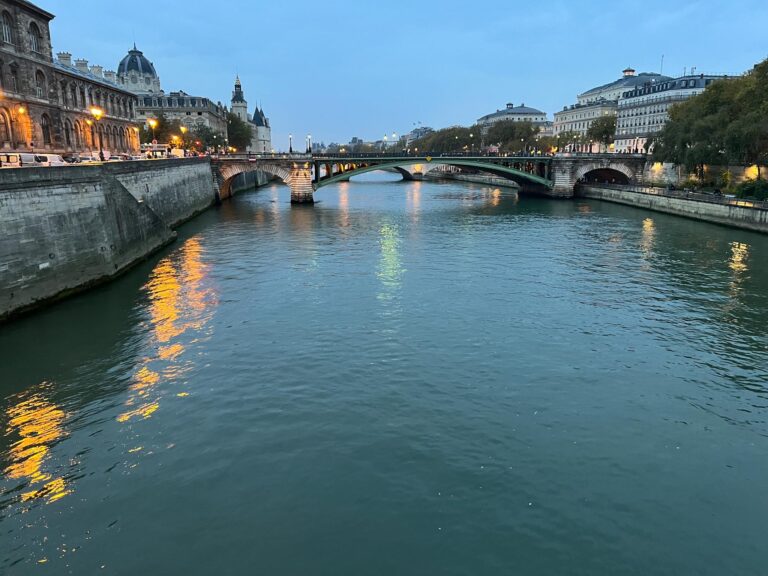
Night time along the Seine is very special. Hope you have time for a night time cruise. The way structures along the river are lit up is really beautiful. Look forward to all daily adventures.
Dan and Wendy
We never had a chance for a cruise but I am sure it would have been beautiful. I’m glad we didn’t give up on Notre Dame when we couldn’t get timed tickets. It seemed so light now; I will review our pictures from 2018 to see changes after the fire.
We enjoyed a short night cruise up to Notre Dame the night before we left for Normandy. You have brought back great memories!
We didn’t have a chance for a cruise, but it must have been beautiful. St. Denis is a favorite and I wish more people had a chance to see that.