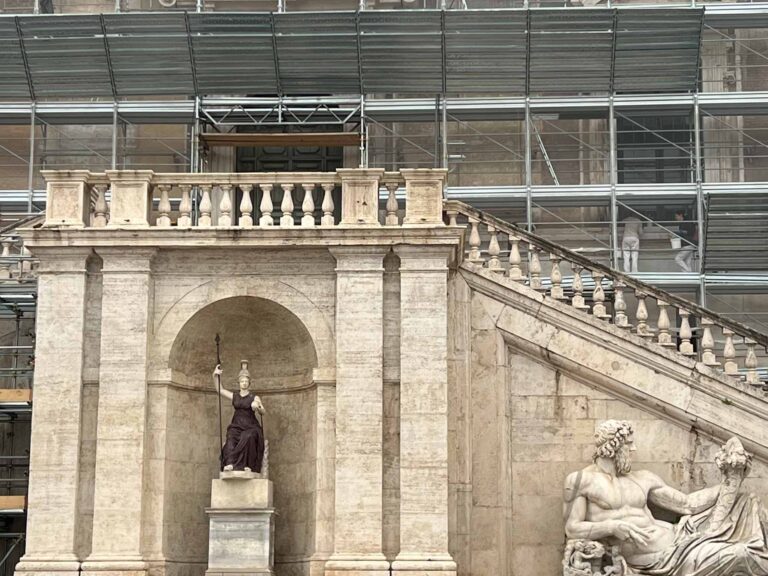
The Palazzo Senatorio is currently under renovation, but the statue of Roma, the female deity who personified the city of Rome, is shown in the center. She is flanked on either side by statues of the River Nile and River Tiger, first century statues found in the ruins of the Baths of Constantine and moved to the Piazza del Campidoglio on Capitoline Hill.
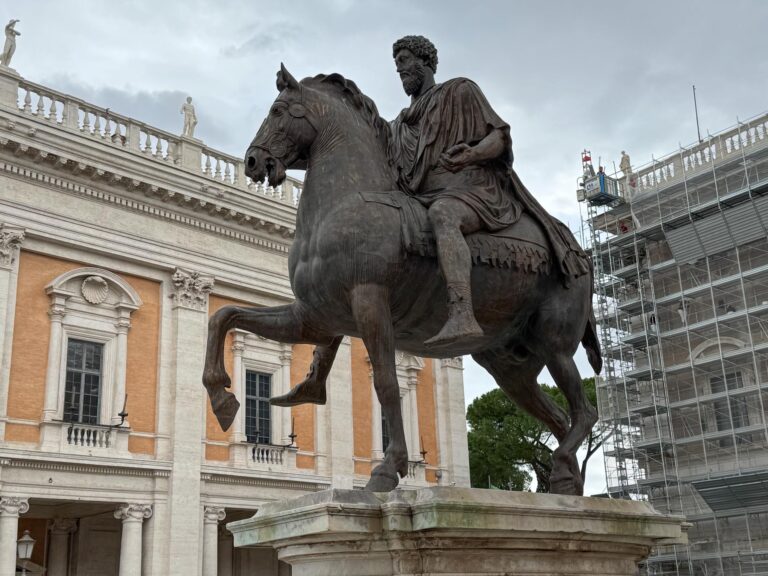
The statue of Marcus Aurelius stands in the center of the Piazza del Campidoglio. This is a copy as the original was moved inside the museum in 1981 to protect it from the elements.
It is thought that the statue only survived when it was thought that it was the Emperor Constantine, the first Christian emperor. Many statues were melted down as pagans, but the error depicting the subject was not discovered until the fifteenth century.
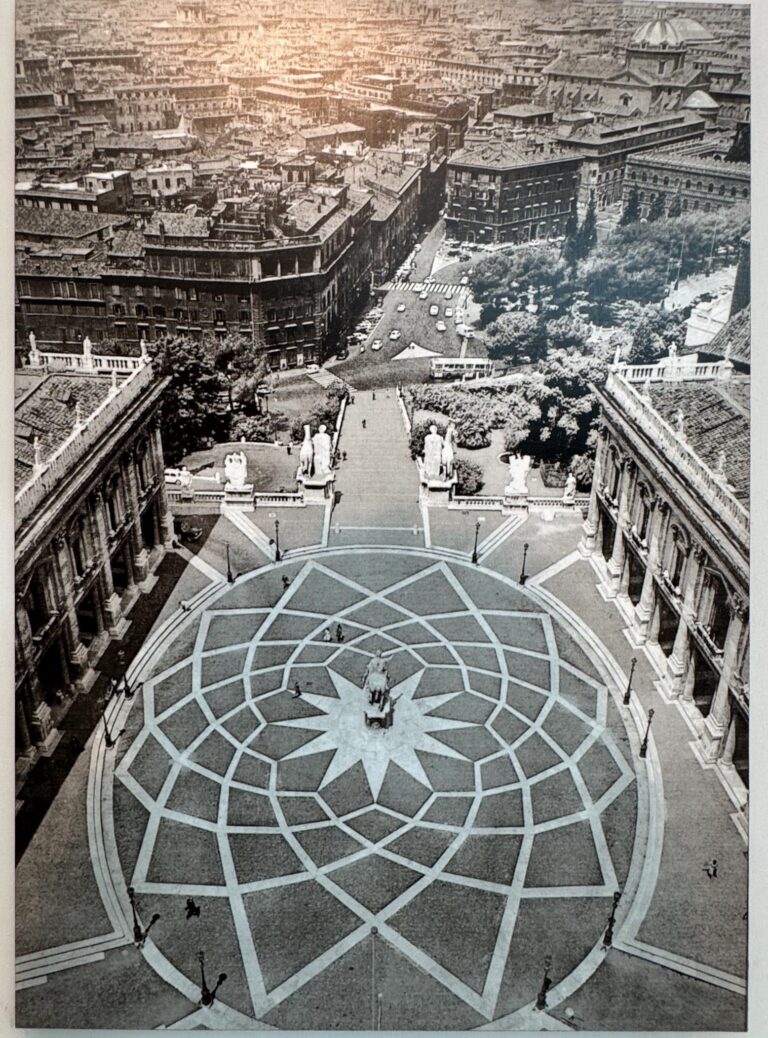
The Piazza del Campidoglio was designed by Michaelangelo with the Palazzo dei Conservatori on one side, and Palazzo Nuovo on the other. The Palazzo Senatorio is not shown but would be at the bottom of this picture. The Palazzo dei Conservatori and Palazzo Nuovo house the Capitoline Museums.
These museums are considered the oldest public collection in the world, dating to 1471 when Pope Sixtus IV donated a collection of ancient bronzes from the Lateran to the people of Rome.
The Museo Capitolino opened to the public in 1734 under the Pope Clement XII.
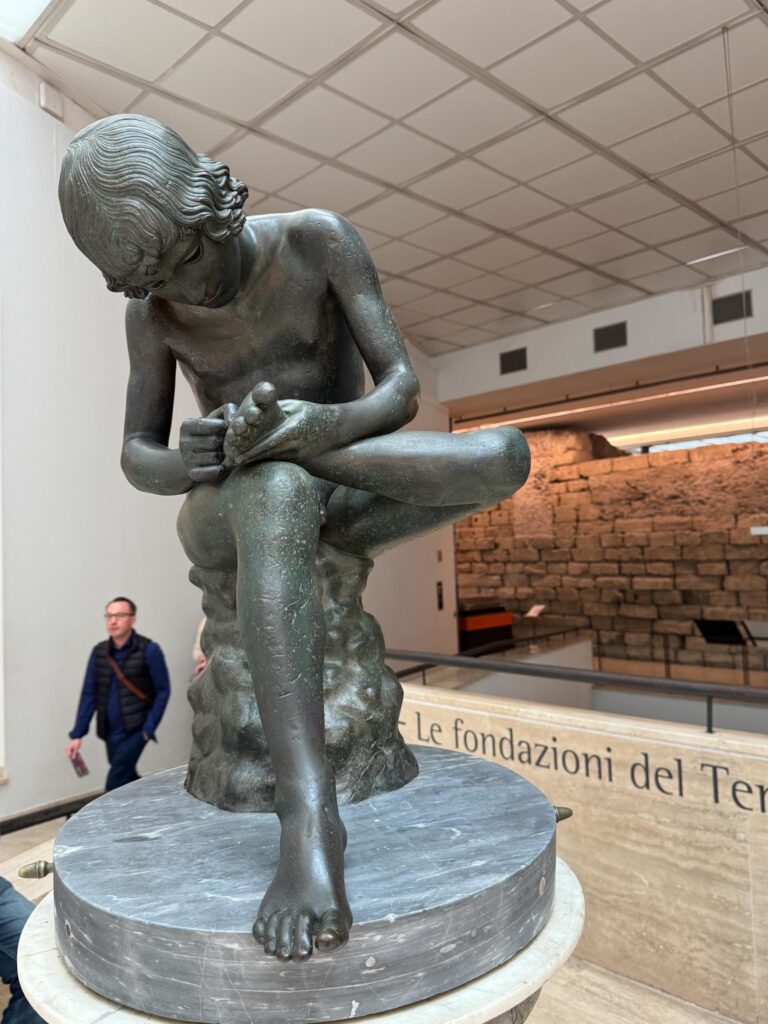
One of the donations was this 1st -3rd century BC statue Boy with Thorn.
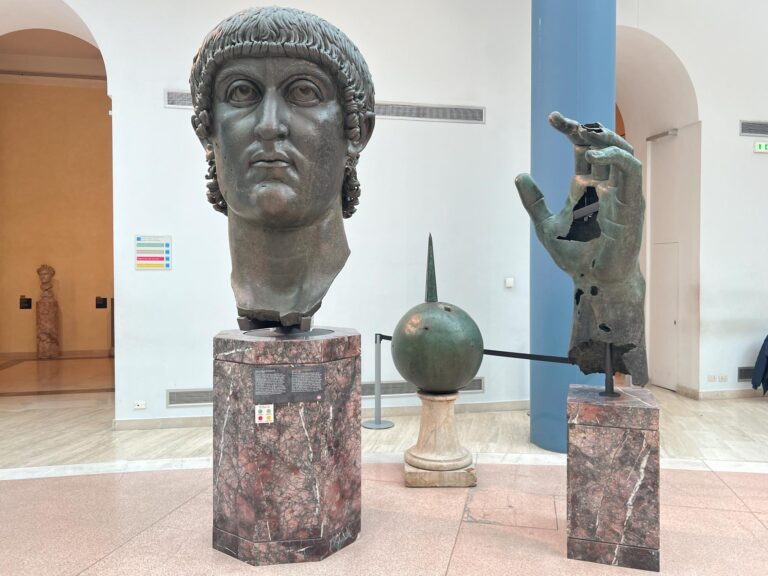
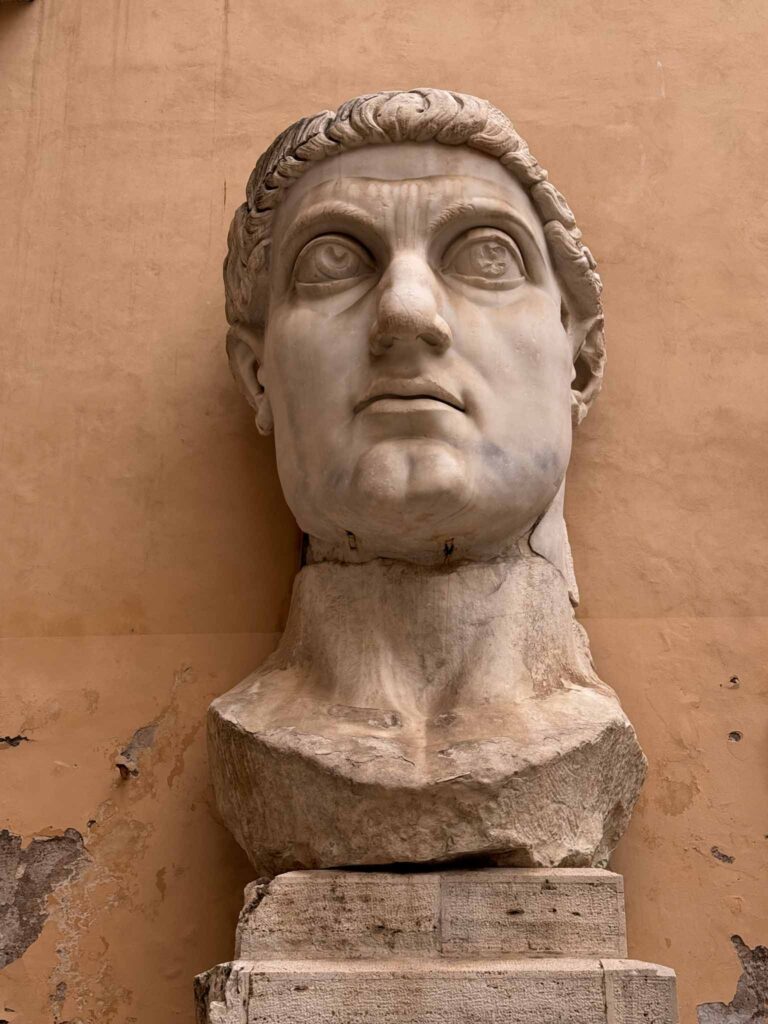
The head and the hand and orb of the colossus of Constantine were another of the initial bronze donations.
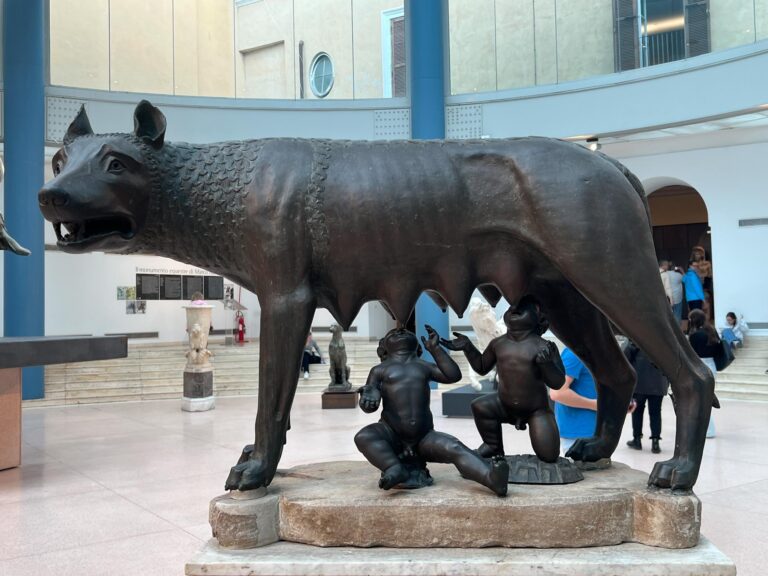
The shewolf is another donation.
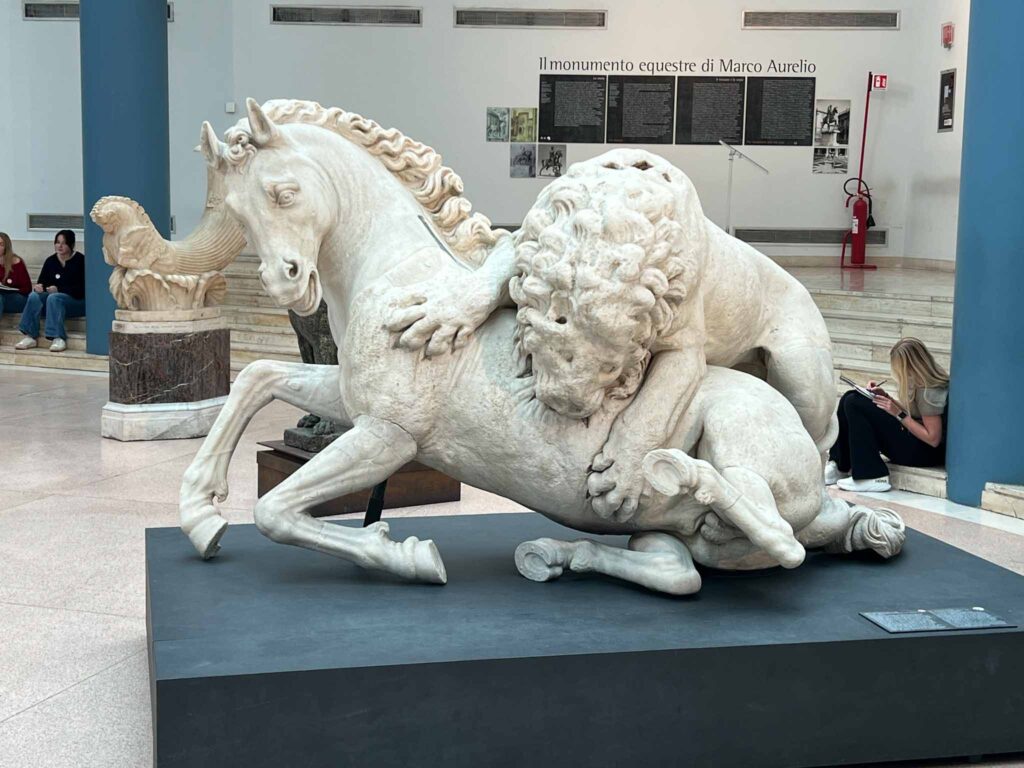
Lion attacking a Horse is an early Hellenistic period piece (late IVth century BC) probably from Greece or Asia Minor commemorating the Persian victories by Alexander the Great. It was previously displayed in Piazza del Campidoglio and was greatly admired by Michelangelo. In 1594 it was restored by one of Michaelangelo’s pupils, who added the horse’s head, legs, and tail, as well as the lion’s rear legs.
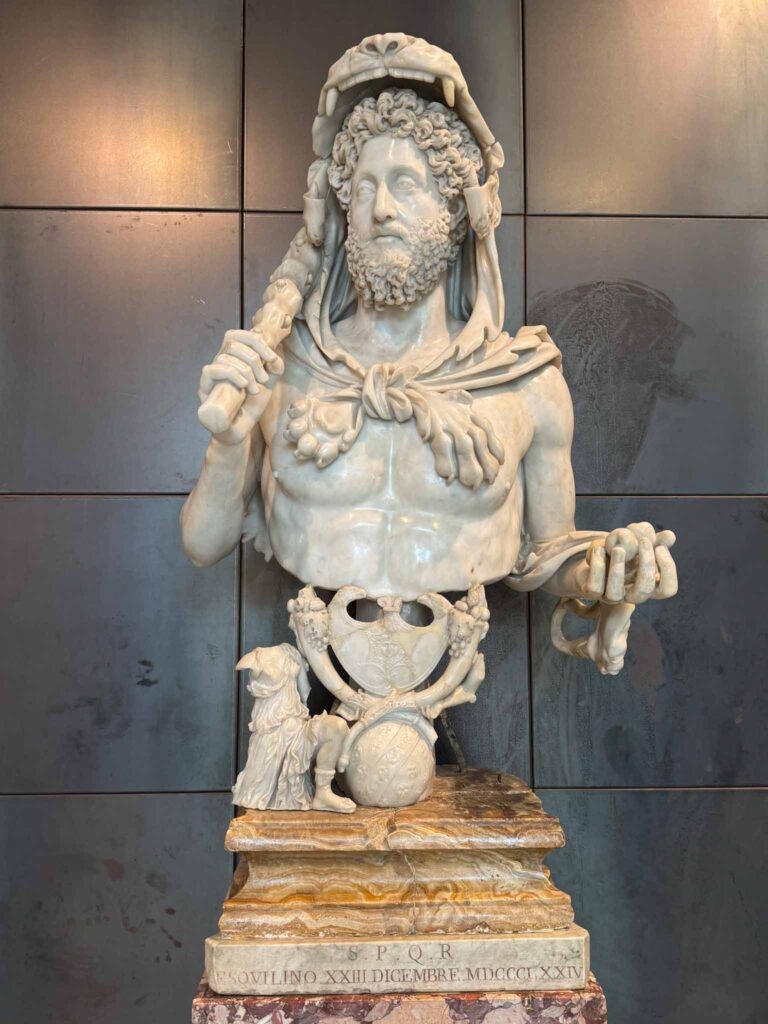
The bust of Commodus as Hercules flaunting his divine attributes: the skin of the Nemean lion, the apples of the Hesperides, and his club. This masterpiece of Roman portraiture was discovered in an underground chamber in 1874 when excavations were going on to lay foundations of new buildings around Piazza Vittorio Emanuele.
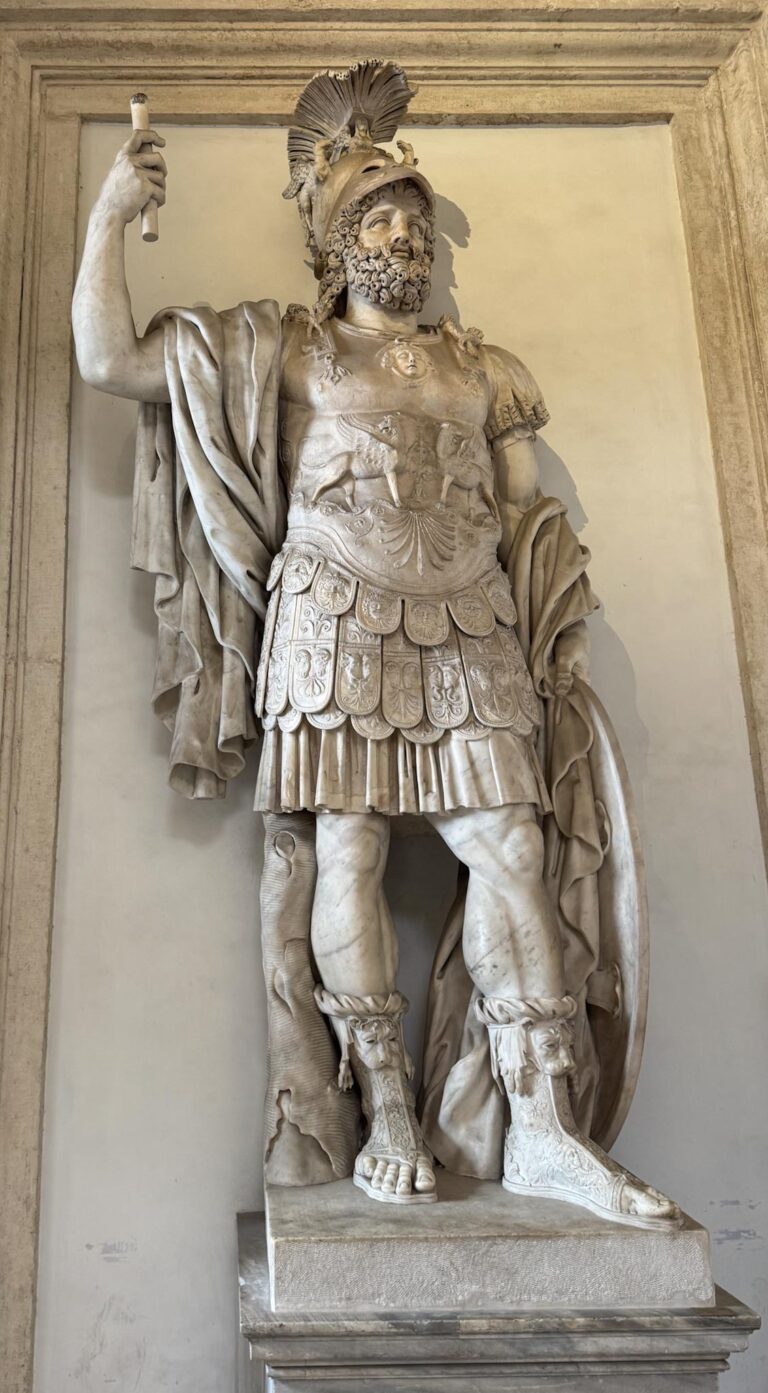
The statue of Mars from the Forum of Nerva, 2nd century AD.
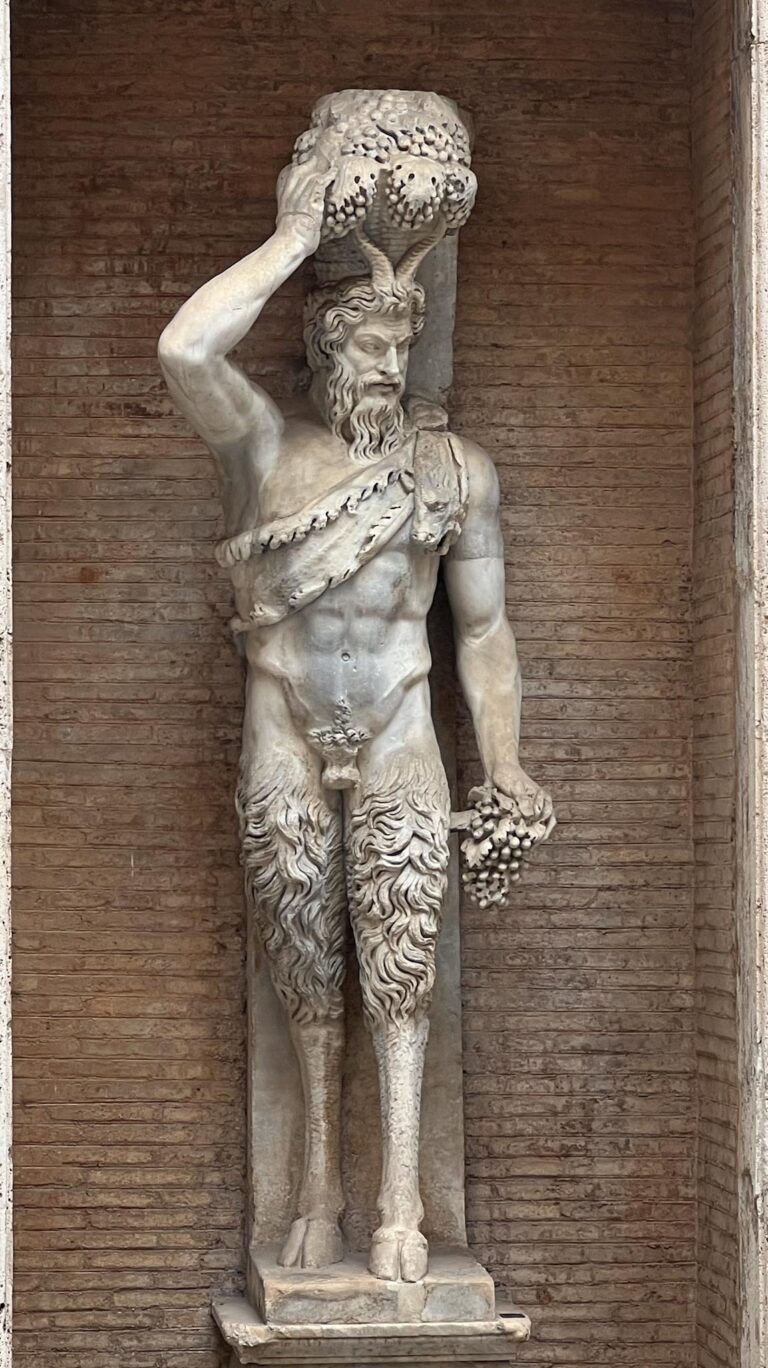
The statue of Pan known as Della Valle Satyr from the second century AD.
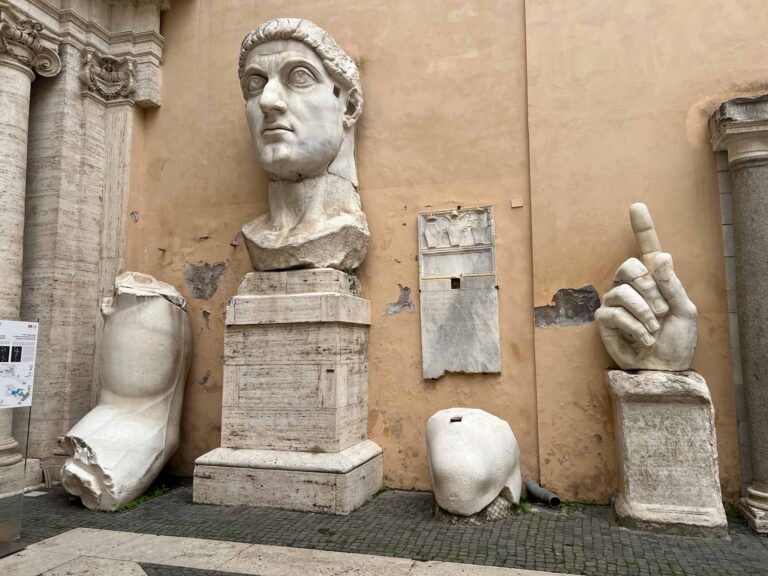
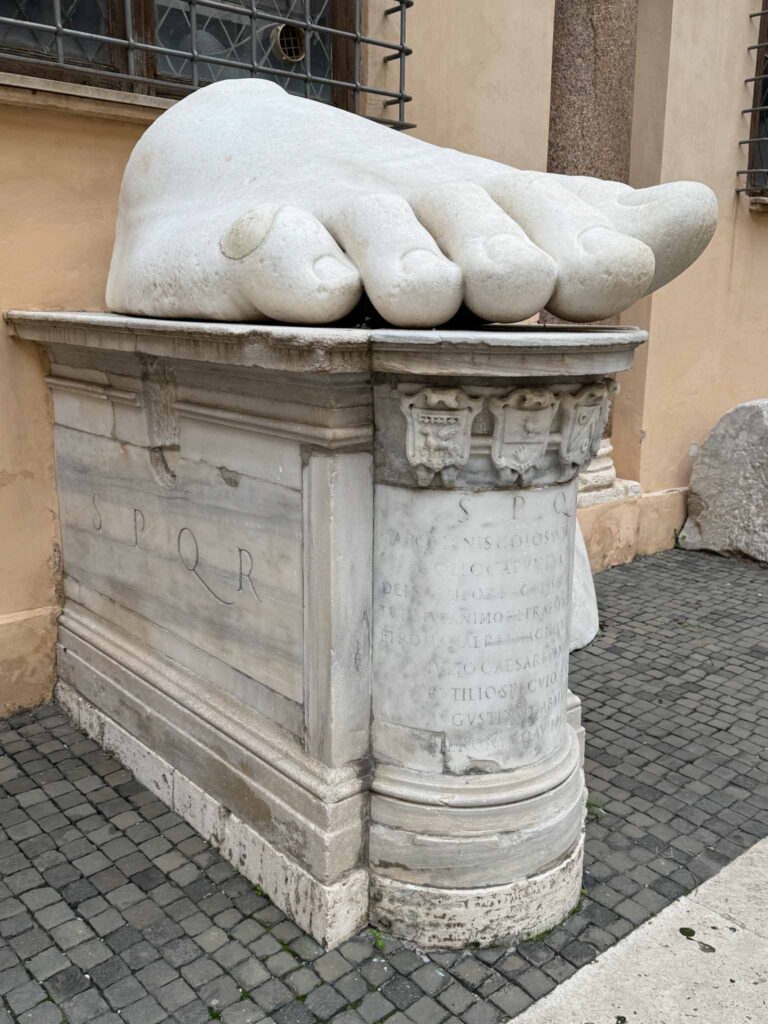
Since the end of the 15th century, nine marble fragments believed to be part of the Colossus of Constantine were housed in the courtyard, without certain identity until the late 19th century.
The statue is certainly a rework of a previous statue. One similar example is preserved in St. Petersburg, and is an acrolith, with naked parts of marble mounted on a supporting structure covered with gilded bronze or precious marble.
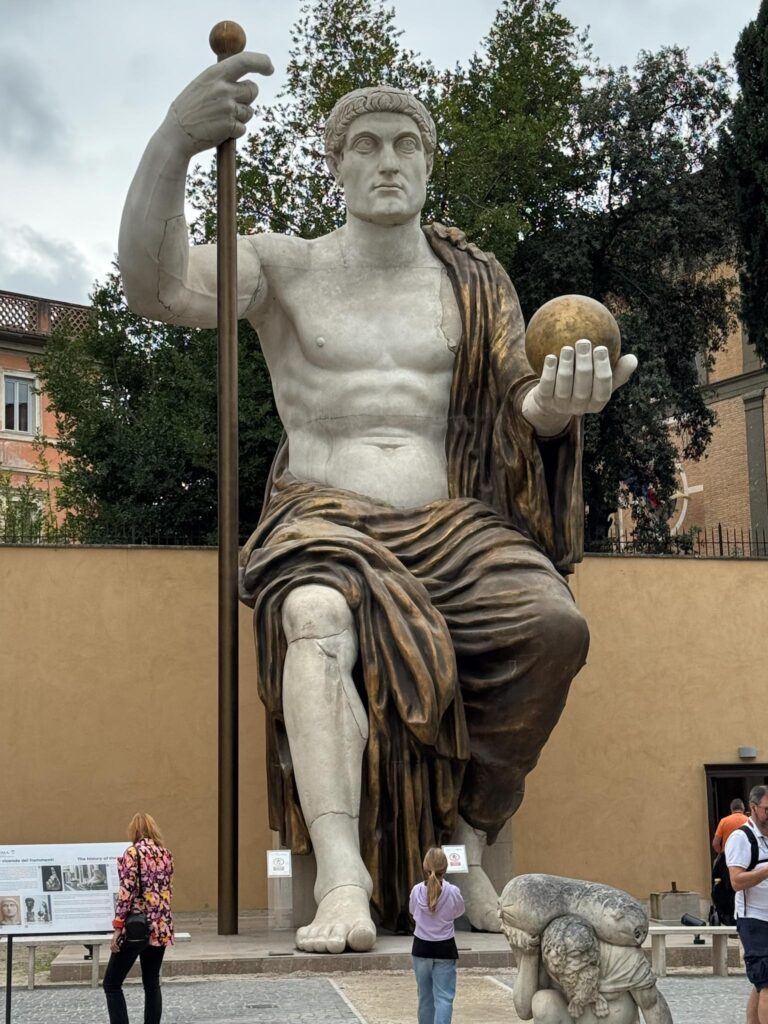
The Colossus was made and exhibited between 2022 and 2023 in Milan, and is now displayed in the Villa Caffarelli Garden.
The project was carried out using ten fragments, assuming the figure was seated and bare parts were marble with drapery in gilded bronze.
The original Colossus was about 13 meters tall.
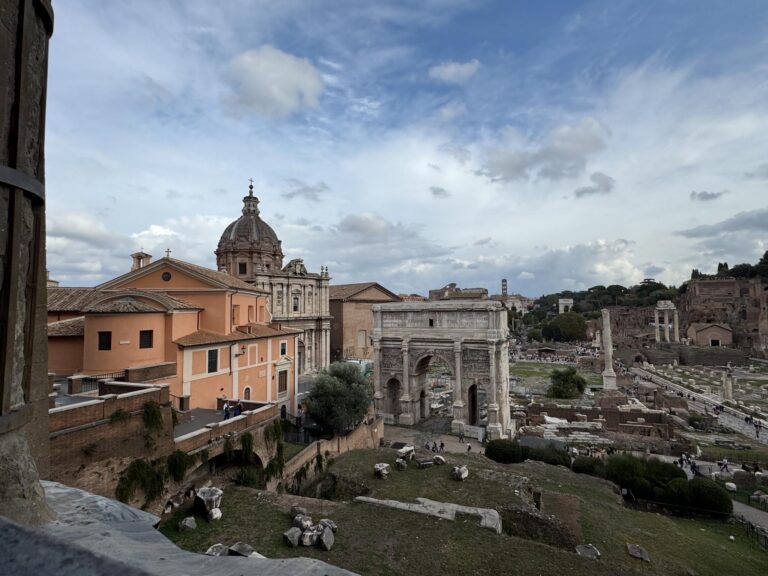
The tabularium on the side of Capitoline Hill is the repository of Rome’s ancient state archives and law tablets, and affords a view into the Roman Forum.
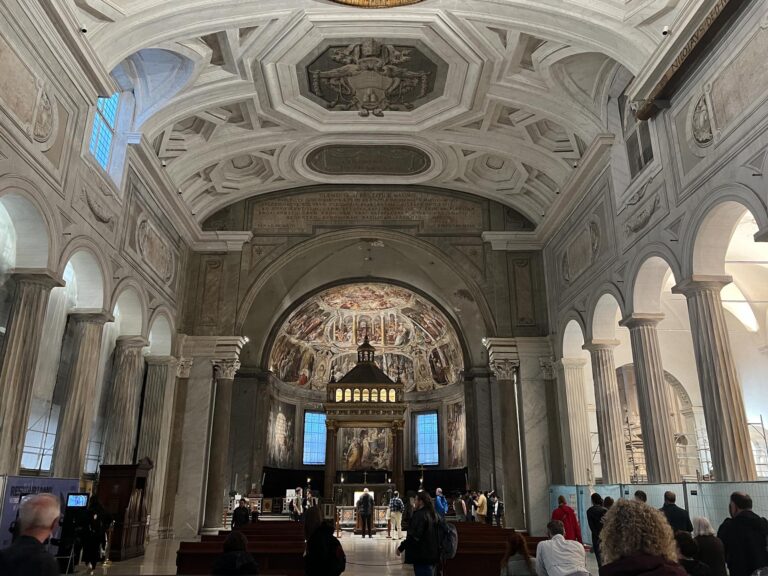
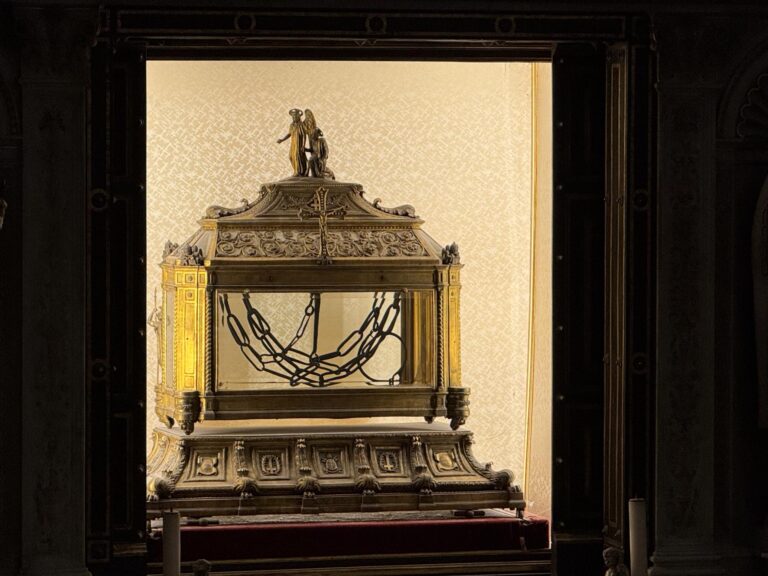
The Church of St. Peter in Chains is a minor basilica that houses the relic of chains that bound St. Peter in Jerusalem, and also in Rome.
The chains are kept in a reliquary under the altar. Legend has it that when Eudossiana, wife of the Eastern Emperor Valentinian III, showed the Jerusalem chains to Pope Leo I, he compared them to the Roman chains that bound Saint Peter, and the two sets of chains merged.
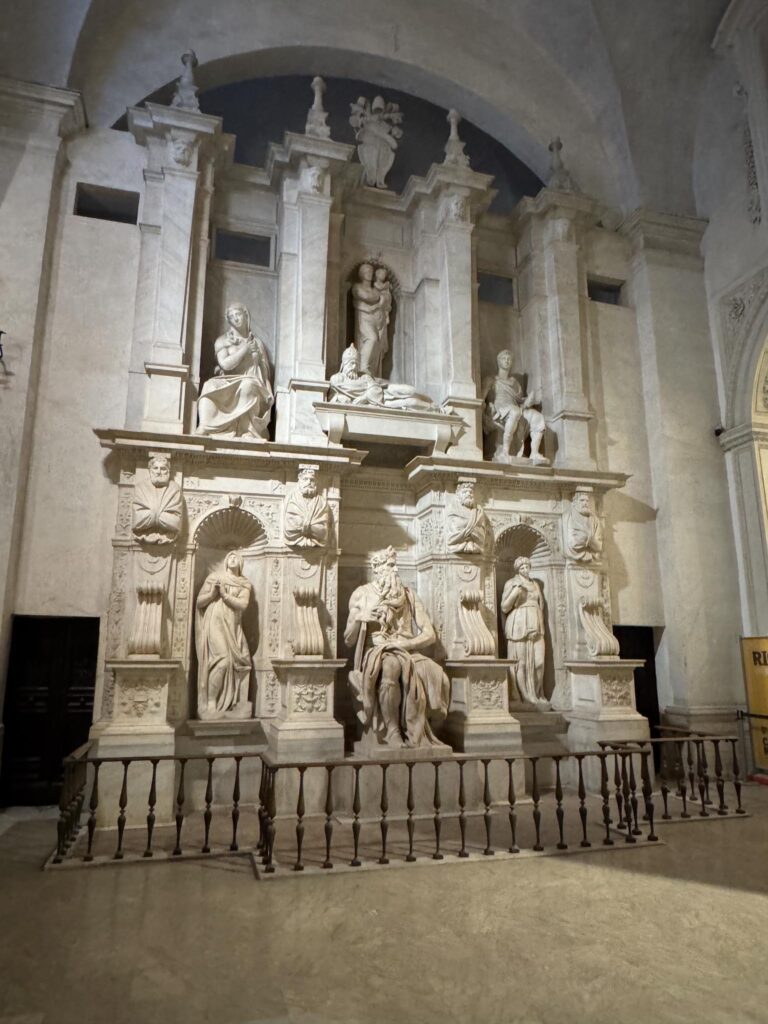
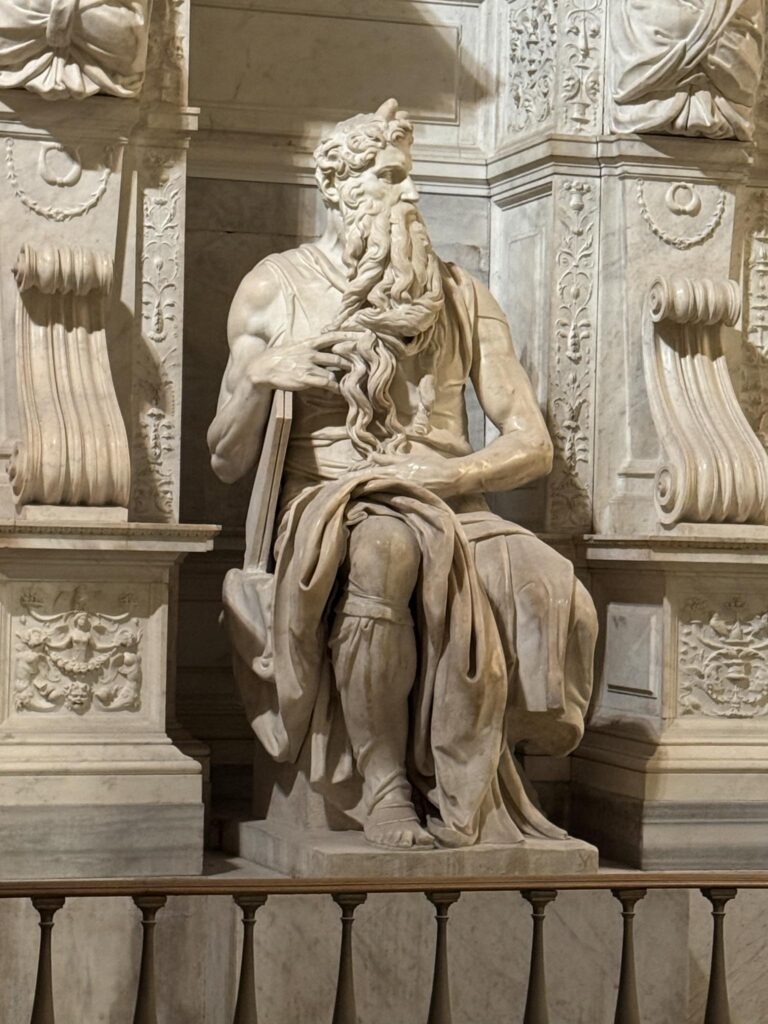
The tomb of Pope Julius II in the church contains the statue of Moses by Michaelangelo.
This version of Moses shows Moses when he receives the Ten Commandments. He is shown with two horns that may be the result of a mistranslation of the Bible, or an alternative means for a sculpture to show a halo of light.

2 Responses
Glad you were able to work the museums into your schedule. Not super highlights but part of the must see exhibits in Rome. Sort of sad your adventure is nearing the end. Your trip brought up so many past memories for us. Safe journey home and think we’ll be seeing you soon! Dan and Wendy
I love the Boy with Thorn sculpture—the figure is so natural and, although created more than 2,000 years ago, a century or two before Christ, it looks very modern and unposed.
My other favorite bronze sculpture is the Capitoline Wolf nursing the mythical twin founders of Rome—Romulus and Remus. Did you know there are replicas of the Capitoline Wolf in Rome, Georgia and in Cincinnati, Ohio? The image of the she-wolf suckling Romulus and Remus is one of the most recognizable icons of ancient mythology—and was on the cover of my high school Latin book!
I also like the Marcus Aurelius sculpture. These figures are a breath of fresh air, particularly because they pre-date Christian theology and iconography.
I look forward to seeing you both upon your return from this amazing journey!
-Markene : )