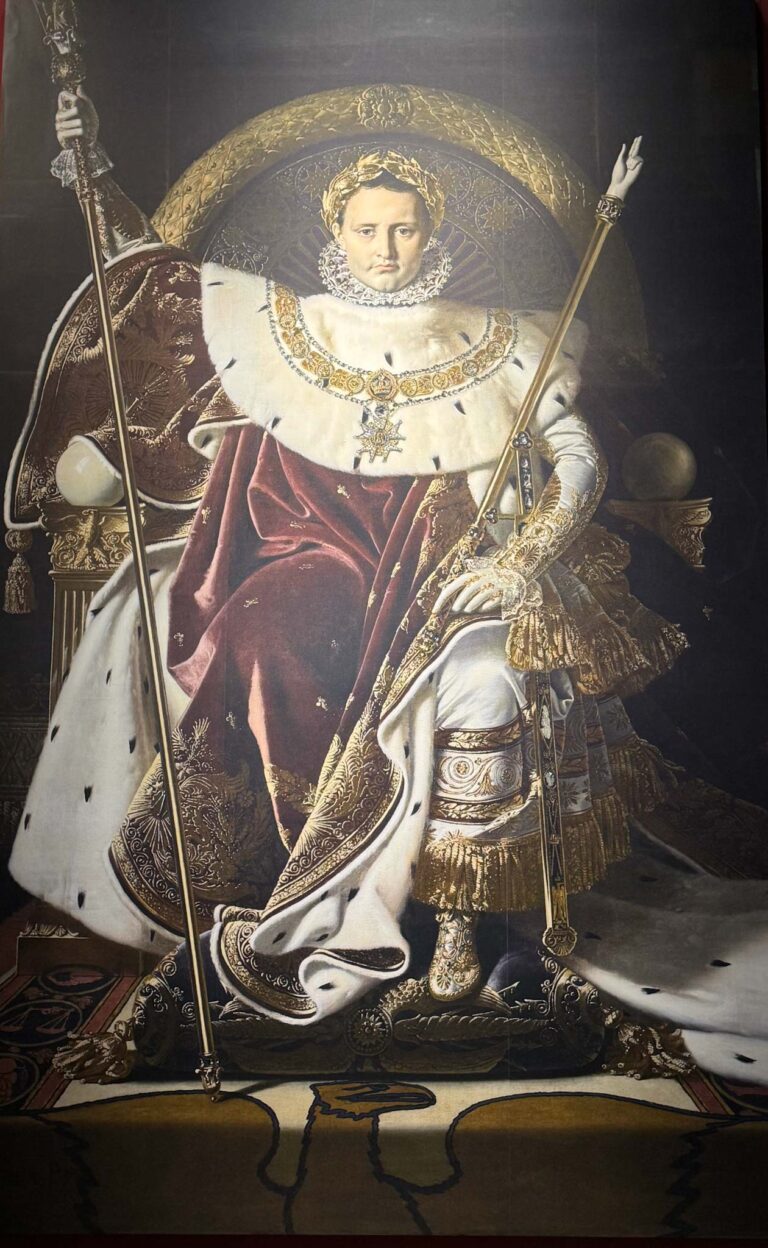
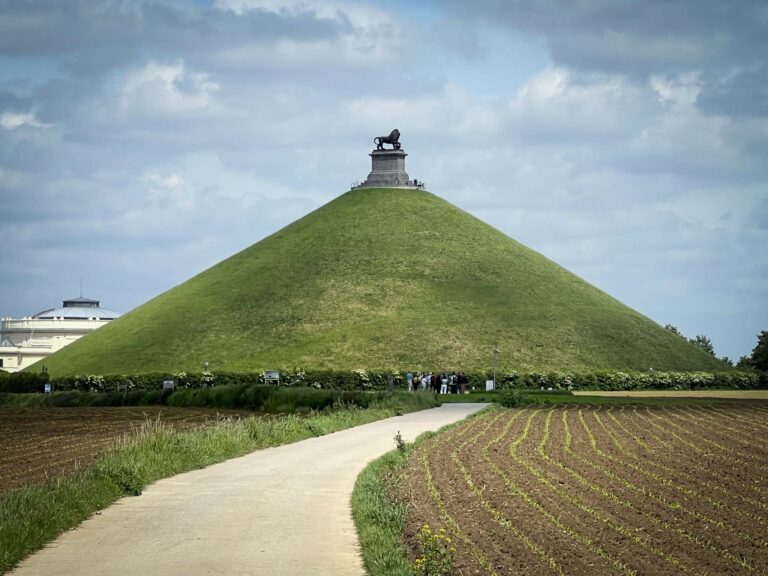
The Battle of Waterloo was fought in 1815 between Napoleon and the Duke of Wellington. Here are a few of the facts:
Napoleon had escaped from his first exile in Elba and quickly formed an army, even turning military companies that were sent to arrest him to add to his army. After his defeat at Waterloo, Napoleon indicated his desire to be sent to America. Instead, he was exiled to the island of St. Helena, far away from France.
The 1st Duke of Wellington, Field Marshall Arthur Wellesley, was an Irish aristocrat who won battles in India, Portugal, and Spain before he faced Napoleon at Waterloo. One of his trusted field generals was Marshall Blucher commanding the Prussian army.
Several features of the battle were highlighted:
- Wellington’s troops fought valiantly at the Hougoumont Farm, Wellington’s crucial right flank defense force, and delayed French troops’ main assault.
- Wellington’s squares, 600 soldiers shoulder-to-shoulder in three lines forming a square were virtually impenetrable to cavalry.
- The Prussian army under General Blucher arrived late in the battle and Napoleon called out his previously-invincible Imperial Guard. When the Imperial Guard broke, there was chaos on the battlefield. Napoleon abdicated four days later.
There are only estimates of lives lost at the Battle of Waterloo, but out of an estimated total of 188,000 soldiers, there would have been more than 10,000 dead and 35,000 wounded. An estimated 3-4 thousand wounded later died of their injuries. Thousands of horses were also dead or dying after the battle June 18, 1815. Between eight to ten thousand French soldiers were taken prisoner.
The Battle of Waterloo is considered the third most brutal of all the Napoleonic battles, exceeded only by Leipzig and Moscow.

4 Responses
Looks like a great day! I’m glad the “bus meets car” incident was minor. Hope everyone was ok. 🙂
Bus meets car was not a big deal for us (we were in the second car of a double us) until we got a demand to exit the bus. Obviously it was a big deal to the major participants but no one was bleeding and they were all on their phones. There were no police, but more importantly, no traffic control. The road went from three lanes to only one usable lane. The bus patrons took it upon themselves to stop ongoing traffic and arrange for a bus to go around and pick us up to continue our journey. Bless them!
Wow,
A very historic adventure and busy day! A great deal to take in especially being in such a different tome zone for you. It’s something we missed when traveling near by. Would have enjoyed the museum. Thanks for the Relive, Richard.
It was a very good history lesson and much better than Versailles or Foutainbleau. We visited here in 1973 but it deserved a refresher visit.