
We were too late trying to get timed tickets to the Anne Frank House for Ann (Richard and I have been there) so we instead decided to concentrate on some areas of the Jewish Quarter and take a highly rated Anne Frank’s walking tour.
There were many more sights we would like to have seen, but time was limited and we were very pleased with what we learned in the day.
Richard’s ReLive video is here: https://www.relive.com/view/vPv41X5LYRO
10.61 miles on another sunny day.
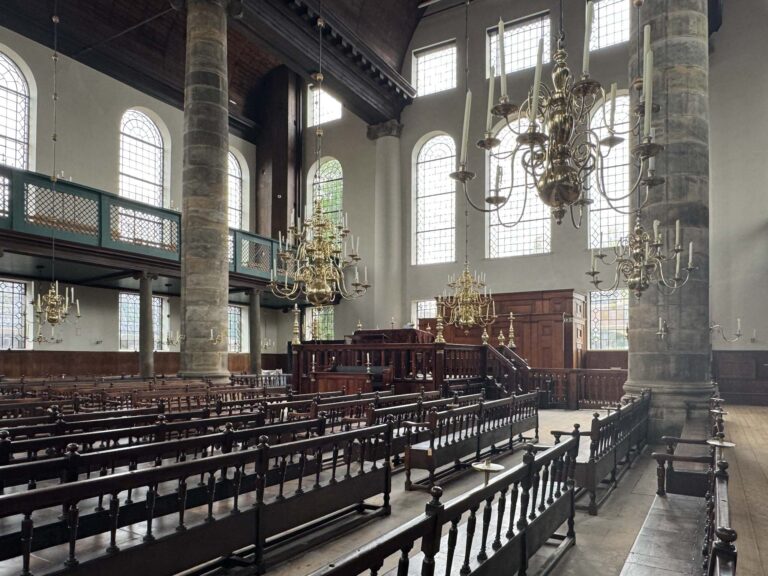
The Portuguese Synagogue of Amsterdam dates from 1675 when Sephardic Jews fled Spain and Portugal’s Inquisition. The community was one of the largest and richest in Europe.
It is still an operating synagogue just as it was in the past: no electricity or running water, the only light coming from the large windows or candles. Pews are placed lengthwise with sand on the floor to control sound and dirt.
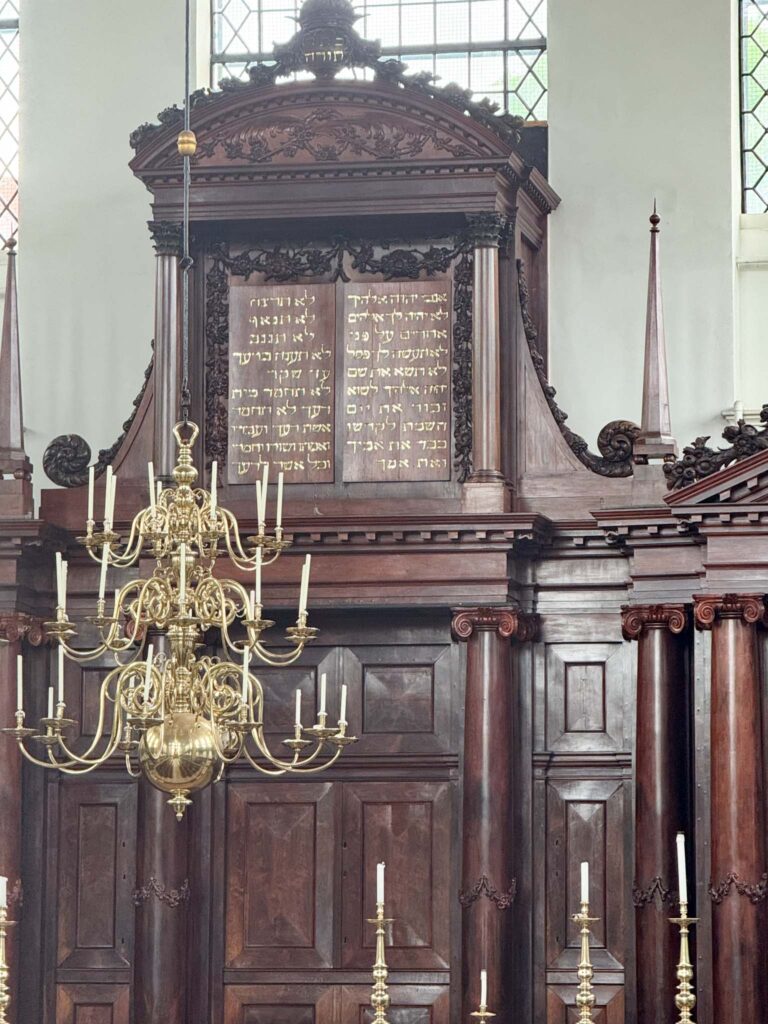
The cabinet containing the Torah is made from Brazilian wood, a gift from a rich benefactor. The words at the top are an abbreviated version of the Ten Commandments.
There is a lit candle that always burns in the chandelier, signifying God and eternal life.
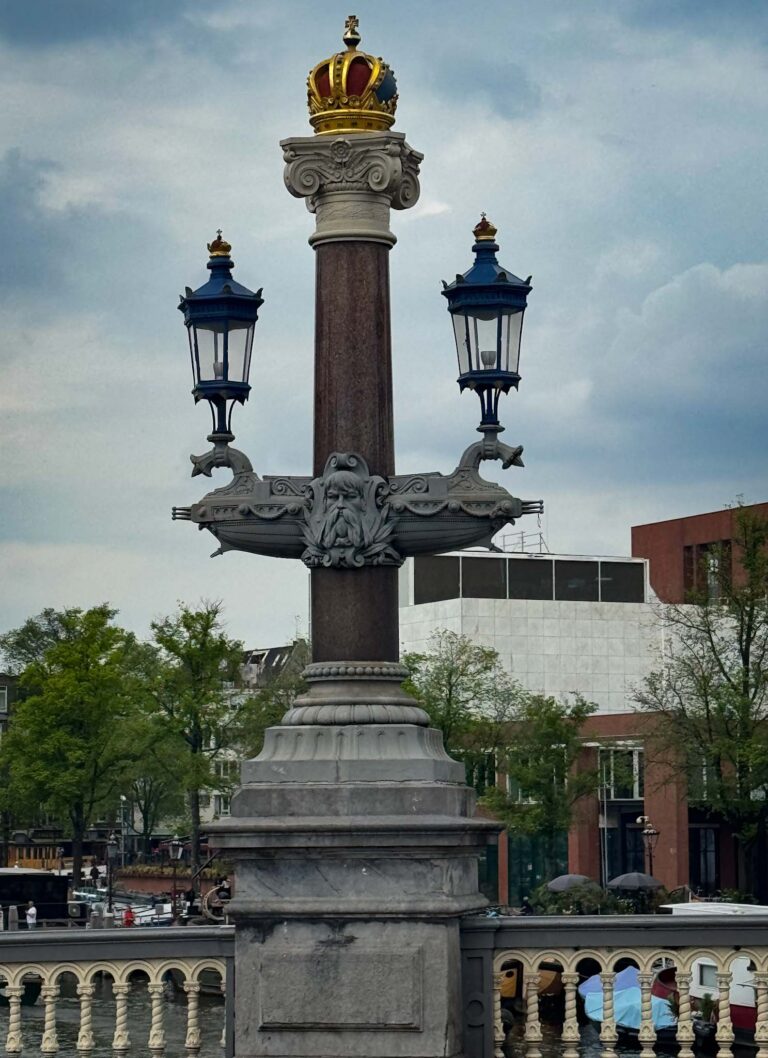
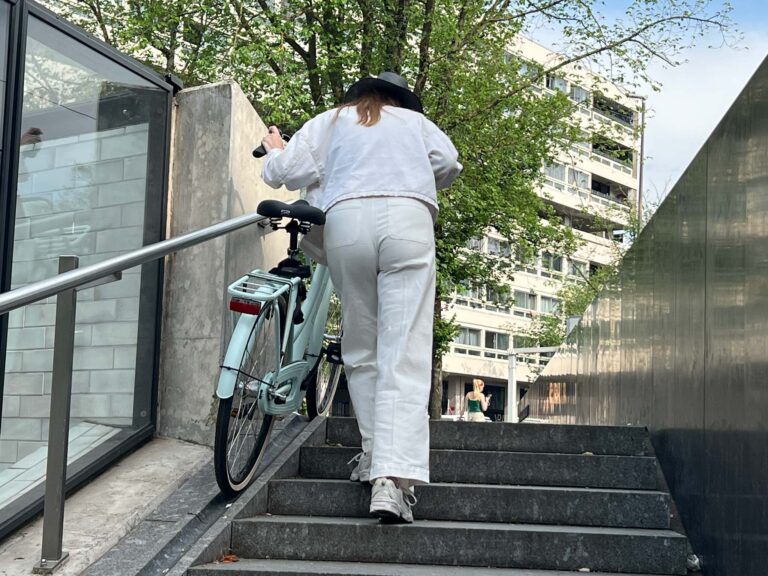
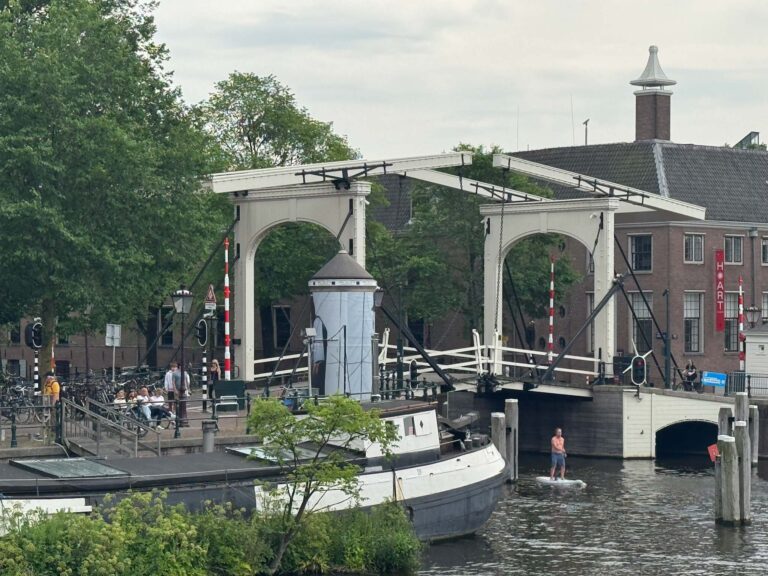
One of the columns on the Blauwbrug Bridge. Like other bridges and stairways, there is a channel to help locals transport their bicycles. Each side of the bridge can be raised for taller boats to pass (or paddleboarders).
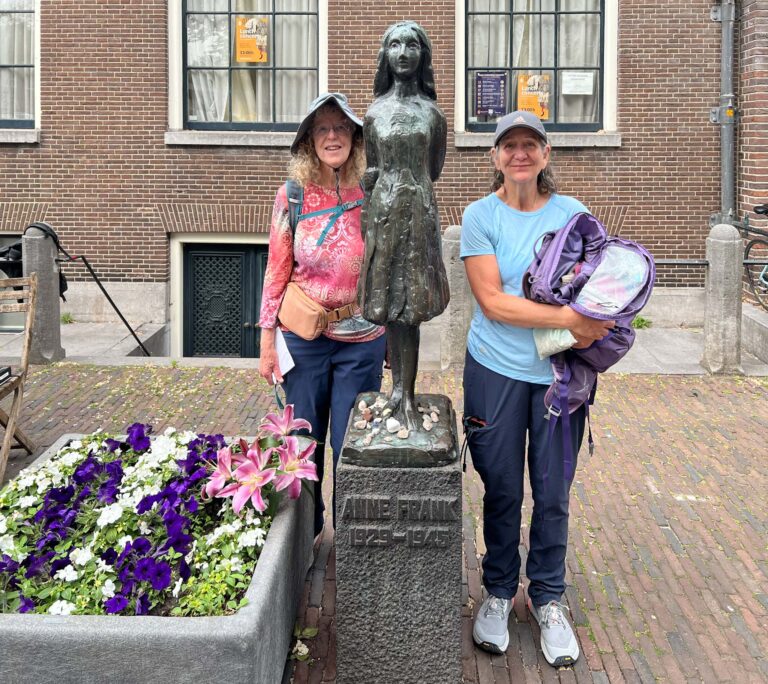
This simple statue of Anne Frank sits outside the Western Kerk near where the Frank family was hiding. We learned that the church bells were their link to the outside world.
Otto Frank was a successful banker in Germany when he decided to move his family to Amsterdam. Like many other Jews, they came to the Netherlands hoping the Netherlands would remain neutral as they had in WWI, and wanting to be part of the thriving Jewish community in Amsterdam. Otto’s sister in Switzerland owned a company, Opekta, wishing to expand further in Europe. Otto became a director of the Amsterdam Opekta office; they later hid in the Opekta attic after first trying to get visas to Cuba or the US.
In the summer of 1942, the Frank family realized that their solution was to hide and they began moving small objects to the hiding place. However, their timeline was accelerated when Anne’s sister, Margot, received orders to report for an arms manufacturing plant. Although Jews were forbidden to ride bicycles, Margot did not wear her Star of David and biked 30 minutes to get to the hiding place. the rest of the family followed along with three others, and they relied on a few employees to smuggle food and supplies to them.
Anne had felt that she had no close friends in whom she could confide so she asked for a diary for her 13th birthday. Her sister Margot also wrote in her own diary but it was unfortunately lost. Three weeks after Anne began writing in her diary, the family went into hiding.
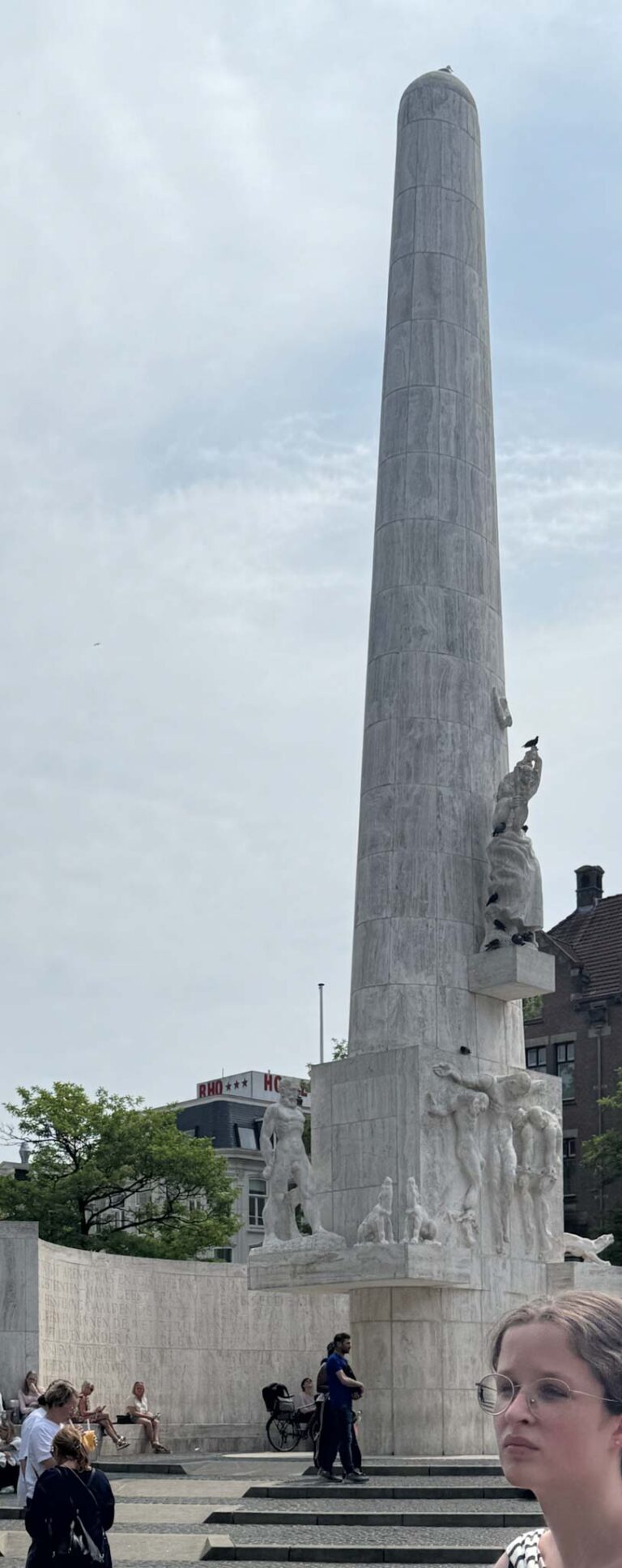
The 1956 Dam Square National Monument honors all fallen soldiers and citizens. There are shackled men in the front, with muscular men on each side representing the resistance and dogs showing their loyalty. There is a newborn baby representing the second chance for the Netherlands.
Dam Square is a major meeting point for citizens, and many were in the square dancing and celebrating the May 5, 1945 Dutch liberation. Two days later during a celebration, German officers opened fire on the crowd from upper windows of a nearby building. 47 celebrants died in the gunfire.
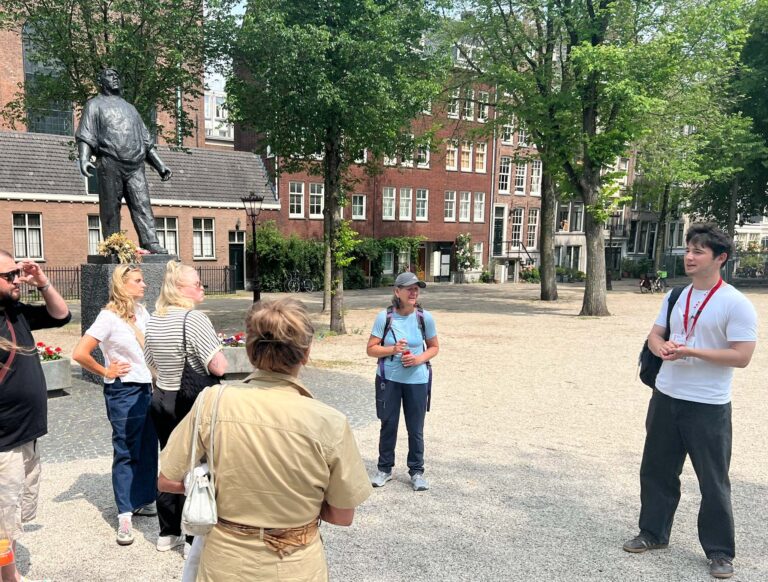
Our excellent guide, Noe, here explains the dockworker strike in February 1941. It was the only mass protest for the Jewish condition. Workers did not go to their jobs; students did not go to school. On February 18, there was a mass arrest of 400 men. Two days later, the Communist party called for people to strike. On February 25 the public responded, but the Nazis brutally responded with firearms on February 26, killing 10 people and wounding 47.
25,000 Jews went into hiding overnight.
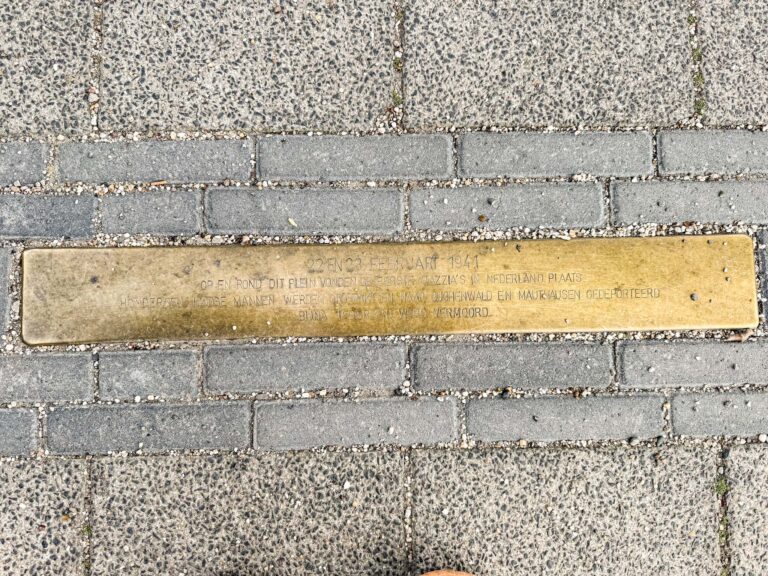
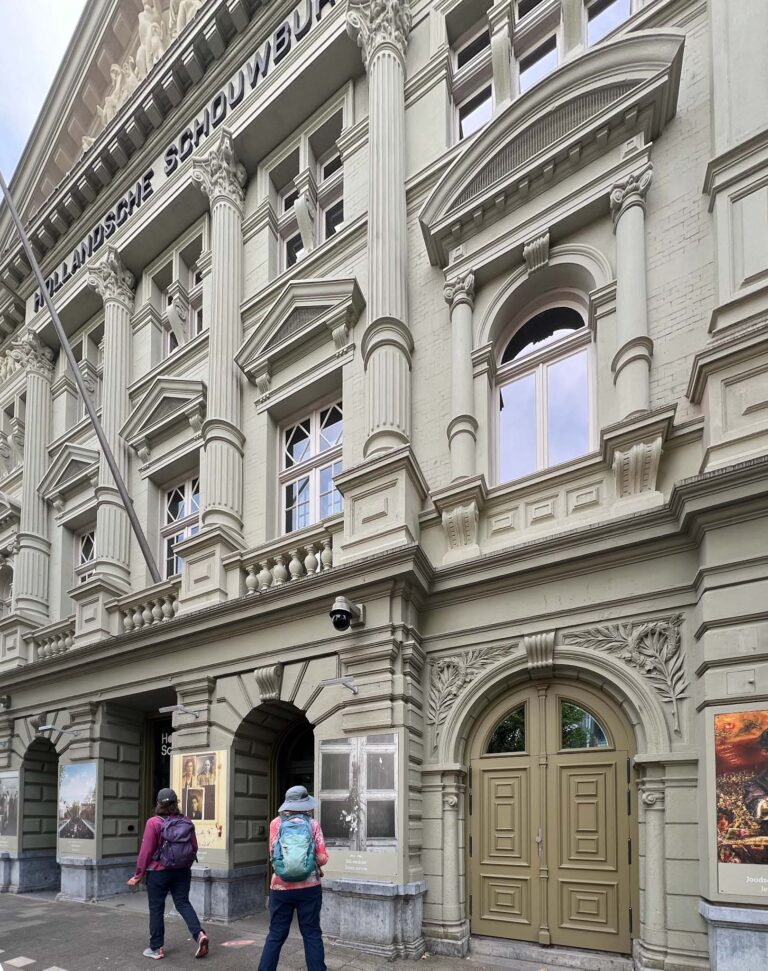
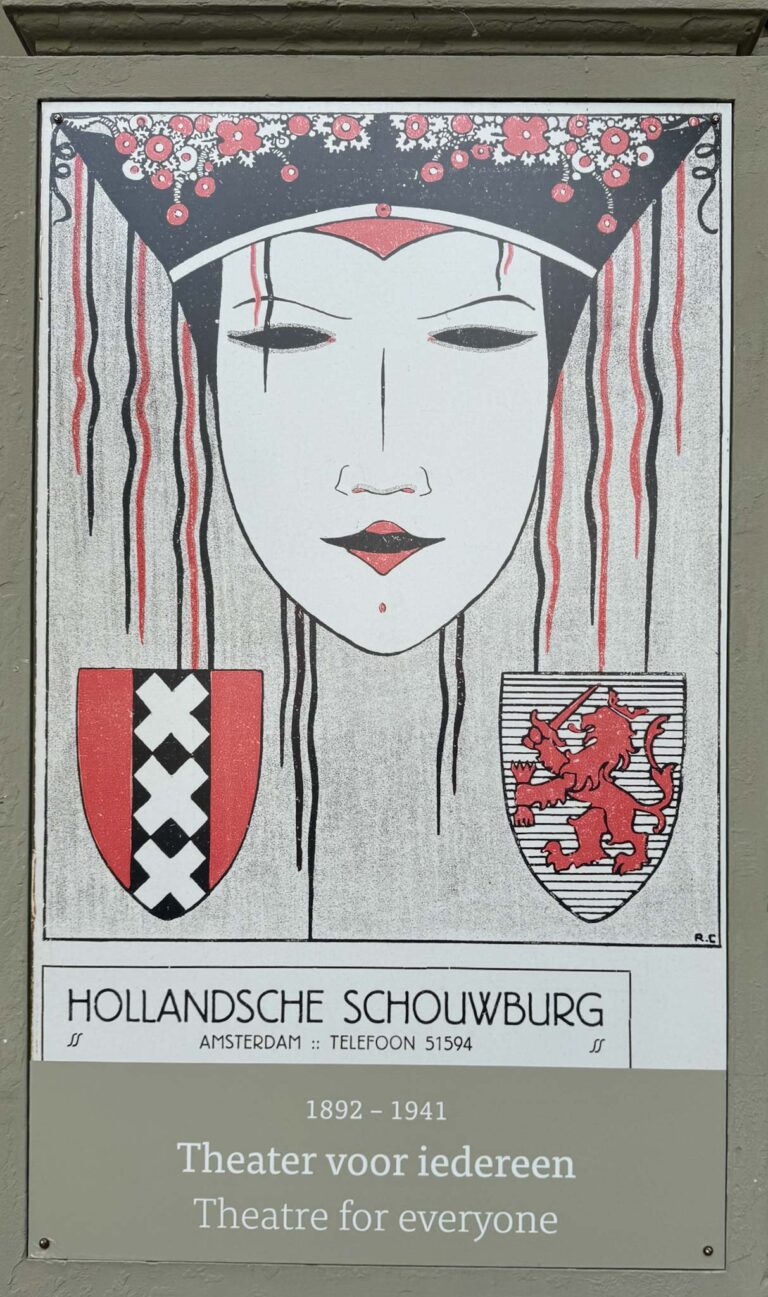
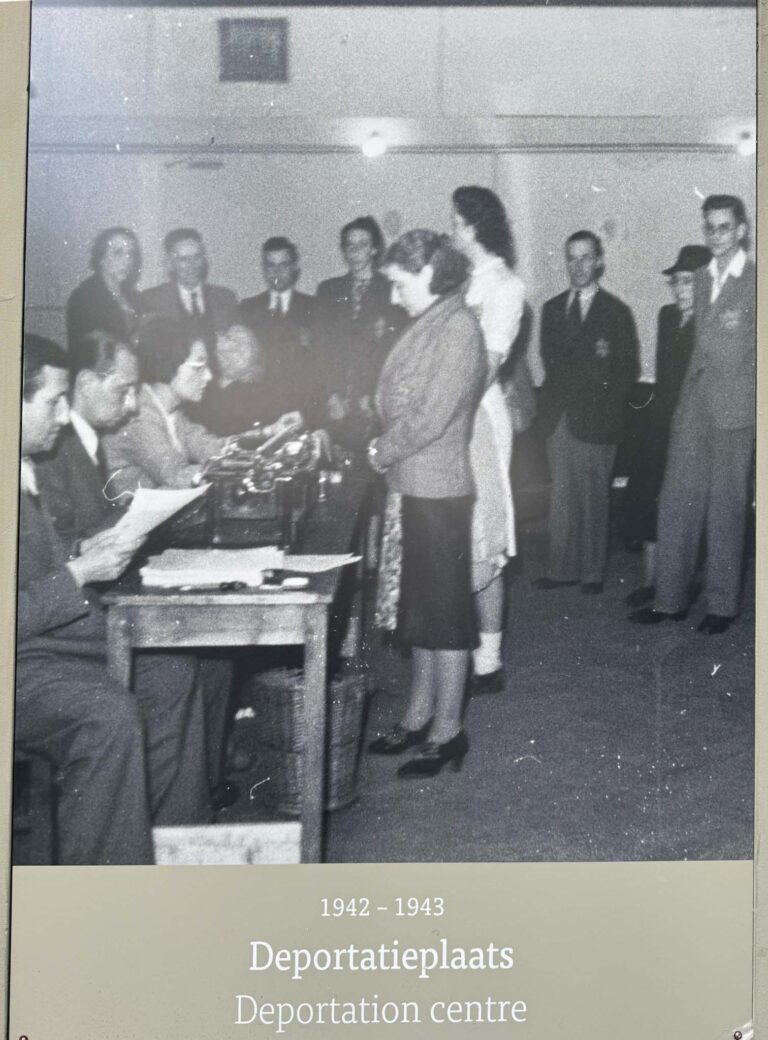
The Dutch movie theatre became a deportation center after years of being a source of entertainment. One of the leaders of the Jewish Council determined a way to save Jewish babies even though he was not popular with the Jews as they felt he cooperated with the Nazis. When mothers came with their babies to the theater/detention center, those who used the code words “tea or coffee” were prepared to hand over their baby to a Resistance member on the far side of the train out of sight of the Nazi guards, and they received a puppet to carry. On the trip to their camp, the mothers would throw the puppet out the window and tell the guards upon their arrival that their young baby had died on the trip. Six hundred young Jewish babies were saved by this plot.
The Jewish Council leader was eventually deported himself and died at Auschwitz, not from the Nazis but by angry Jews. He is one of the unnamed heroes of the war.
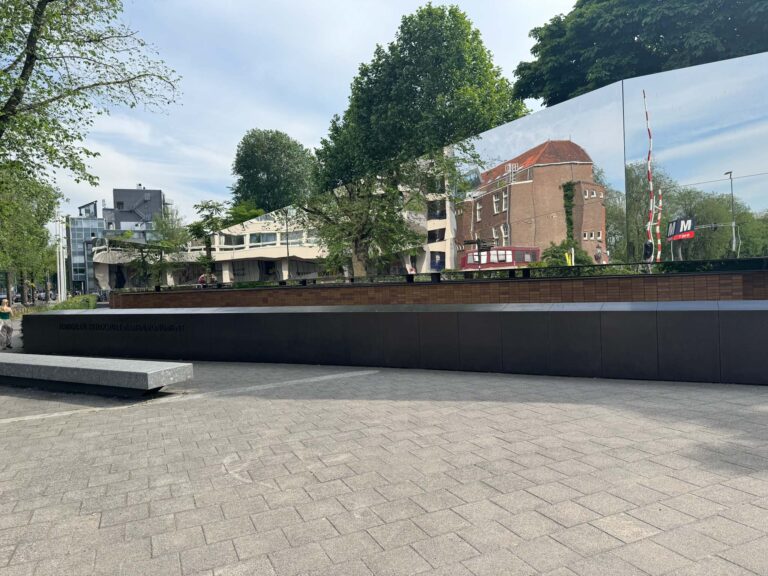
The National Holocaust Name Memorial was our last stop on the tour. Holland had 140,000 Jews before the war, 80,000 of them in Amsterdam. 101,000 Jews died in the war, 66,000 from the city of Amsterdam. There is a brick for every Dutch person killed by the Nazis: Jews, gypsies, developmentally challenged, homosexuals, etc. they are listed in alphabetical order by name , date of death, and age. The first two bricks, placed in 2020, were The Frank daughters.

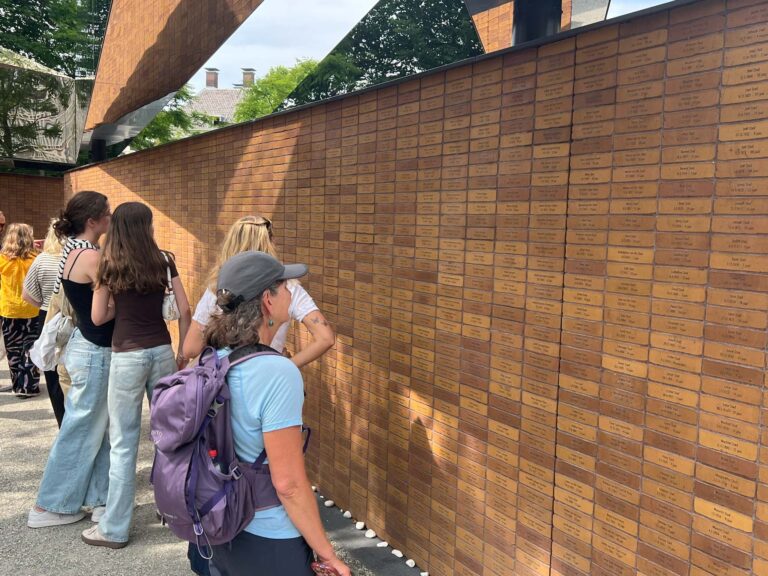
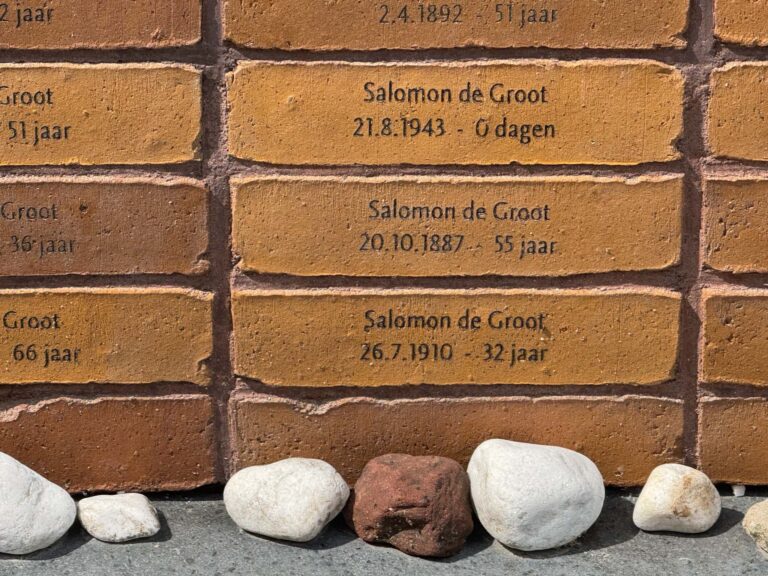
Names are listed in alphabetical order by last name, but not necessarily with families together. Salomon de Groot listed in the top brick, died August 21, 1943, the day he was born. There were bricks for two babies killed immediately after their birth.
in the Jewish culture, stones are laid for respect and remembrance just as other cultures might leave flowers on a grave.
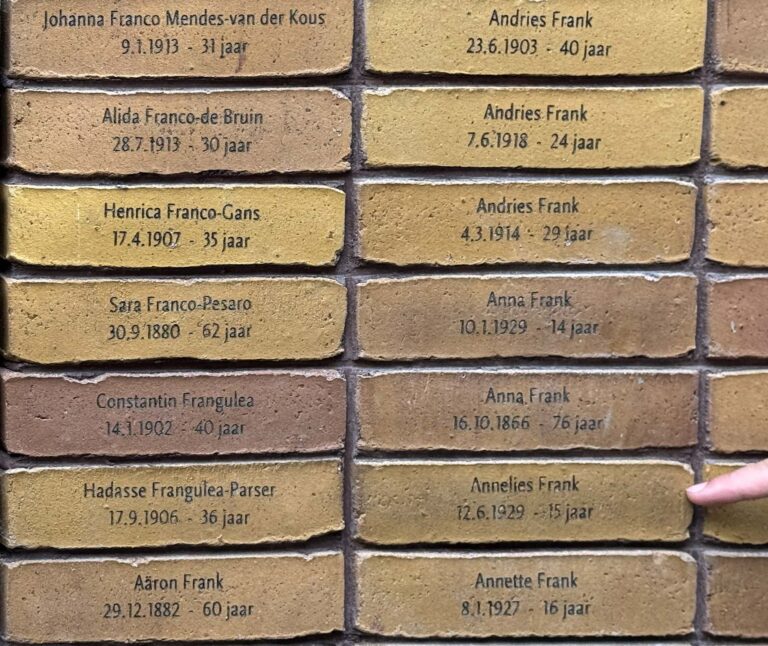
Lastly, there is the brick for Anne (Annelies) Frank, the fifteen-year-old diary writer who died of typhus at the Bergen-Belsen concentration camp. Her sister, Margot, also died of typhus at the same camp. Their mother, Edith Frank, died of starvation and disease at Auschwitz. Otto Frank survived the war and was liberated by the Russians. He returned to Holland and searched for his family, but upon realizing he was the only survivor and being given Anne’s diary, he named the Anne Frank Foundation as his heir and the owner of the Anne’s writings.
4 Responses
Wow, that was a “busy day!” You all must be in great shape to endure 10 miles of walking. Amsterdam is a beautiful city so I’m sure it worth all the labor. Great memories for us especially the flower shops. Weather doesn’t look too bad? Dan and Wendy
We have had good weather and not too hot. Amsterdam is crowded but we’re trying to stay out of the museums on the weekend.
Thank you for this, for all this history. Rob
It’s always amazing when you think you know a story like Anne Frank but then you find you had only scratched the surface! We enjoy knowing more.