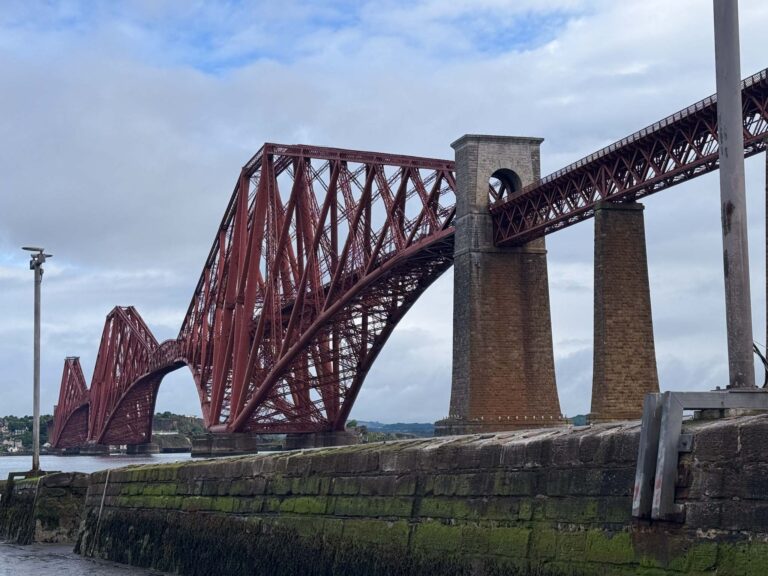
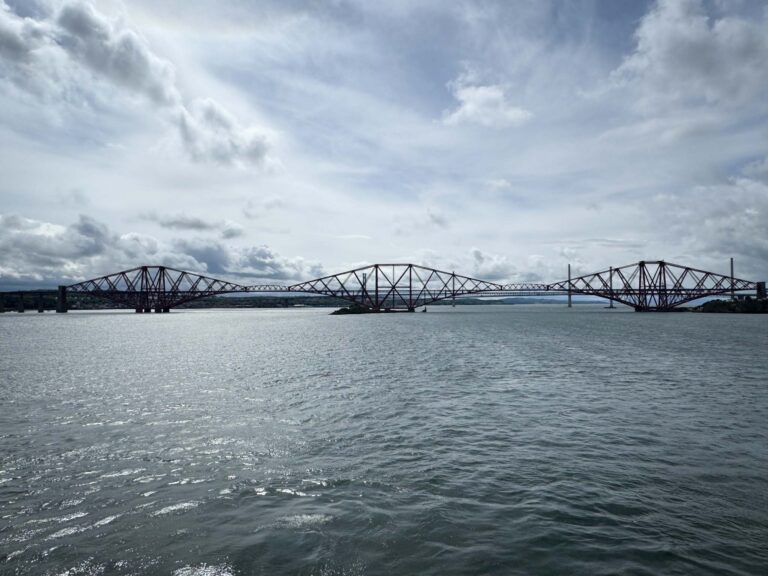
The Firth of Forth Railroad Bridge is a cantilever steel bridge from 1890. It is a UNESCO recognized bridge, and at a length of 8094 feet it has the second longest cantilever span in the world.
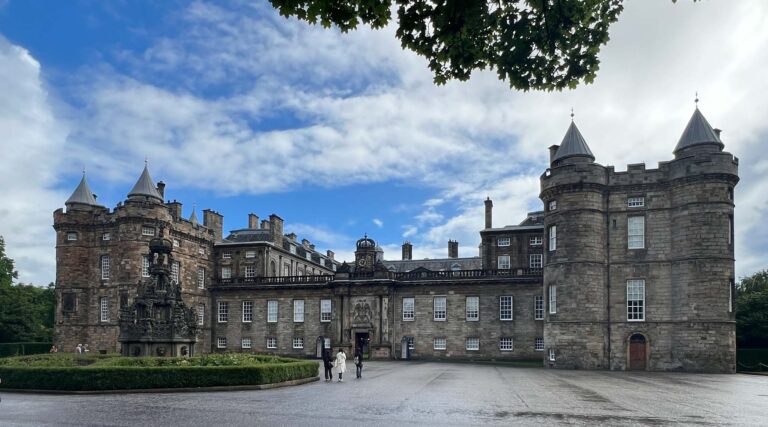
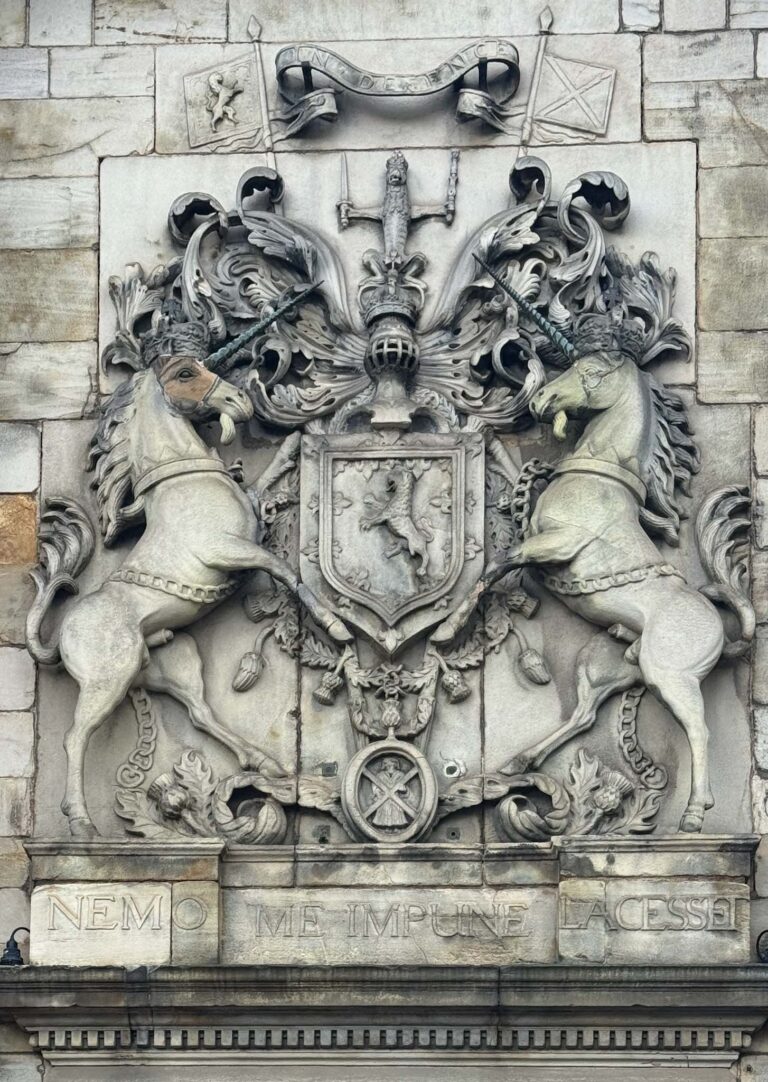
Holyrood Castle is still owned by British royals and is visited by them for relaxation as well as state events. In years past, it was home to the Stuart dynasty, including Mary Queen of Scots.
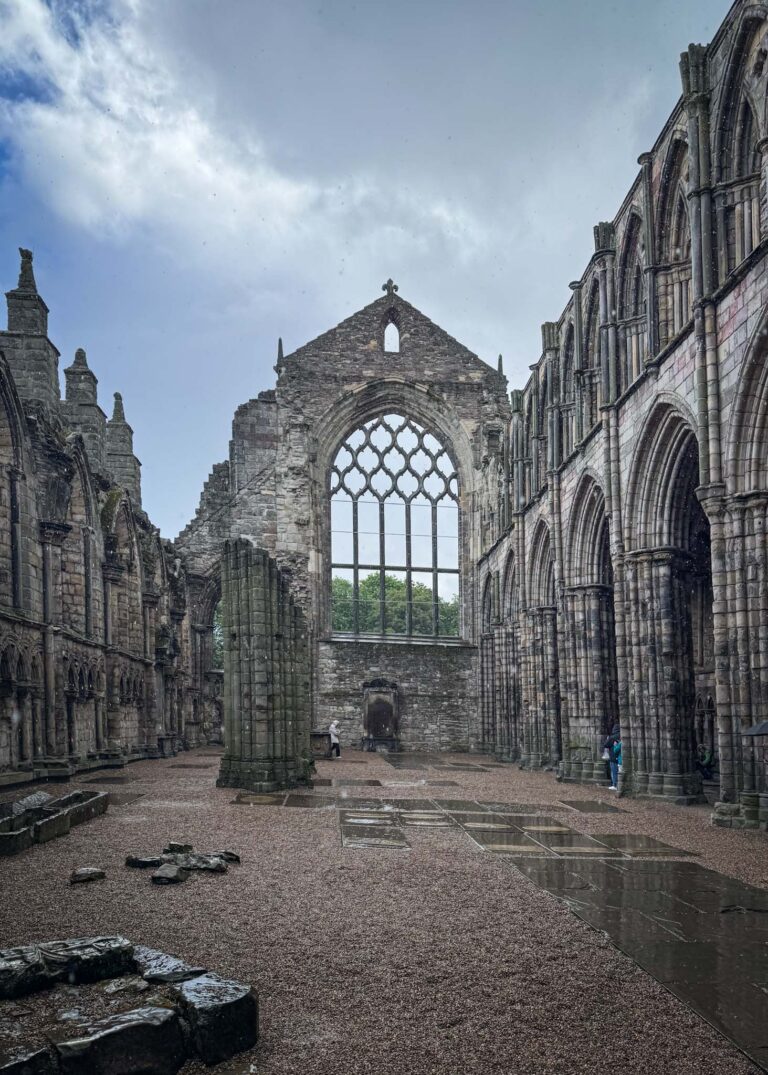
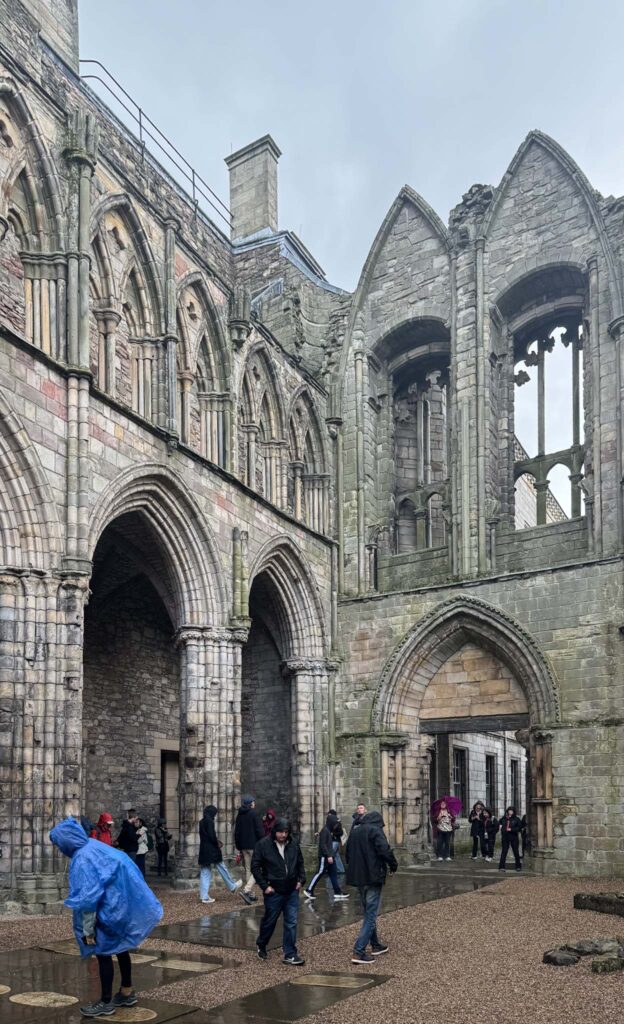
Holyrood Abbey was one of the largest and most impressive abbeys in Scotland by 1500. It was founded by King David I in 1128 as an Augustinian abbey.
The abbey church was used for many ceremonies including the coronations of James V and Charles I.
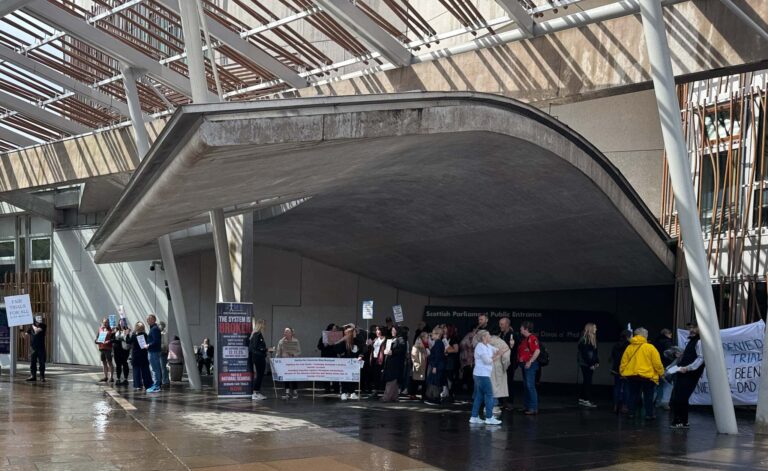
Protestors in front of the Parliament Building express their opinions. The Parliament Building is directly across from Holyrood Castle.
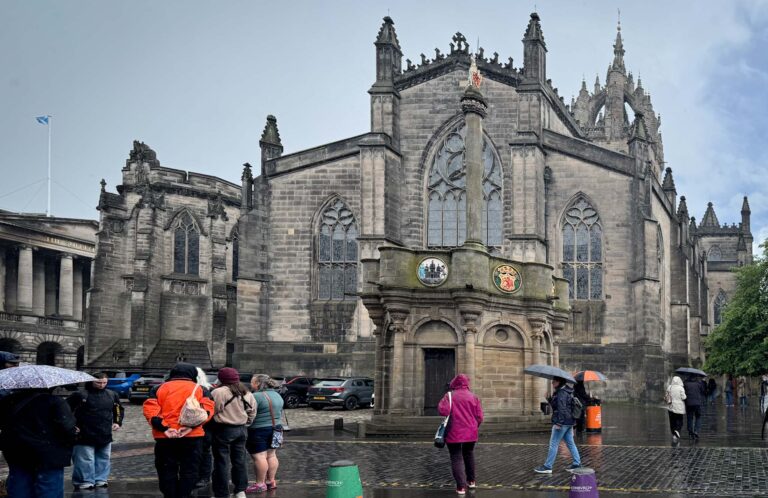
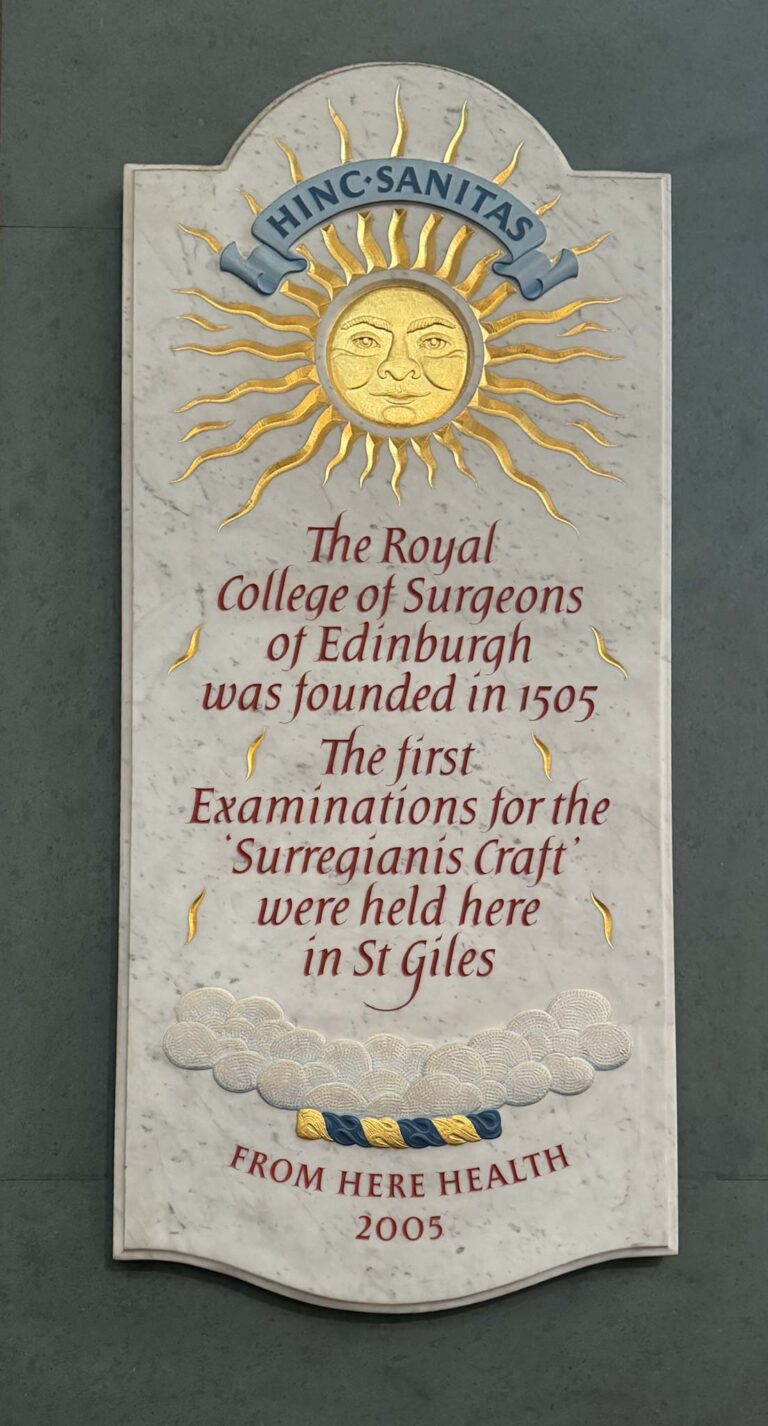
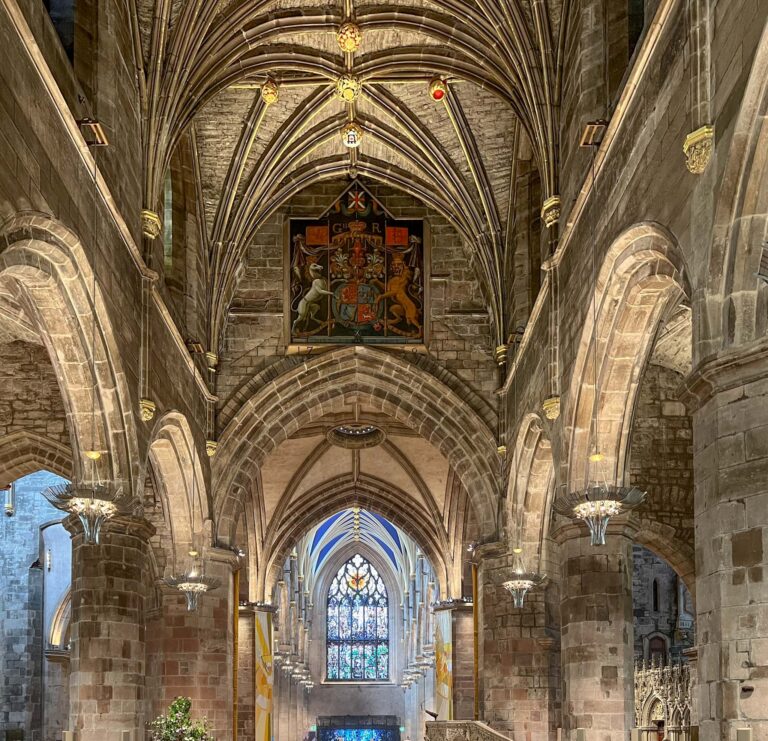
St. Giles’ is the High Kirk of Edinborough. The current church building dates from the 14th to the 17th century.
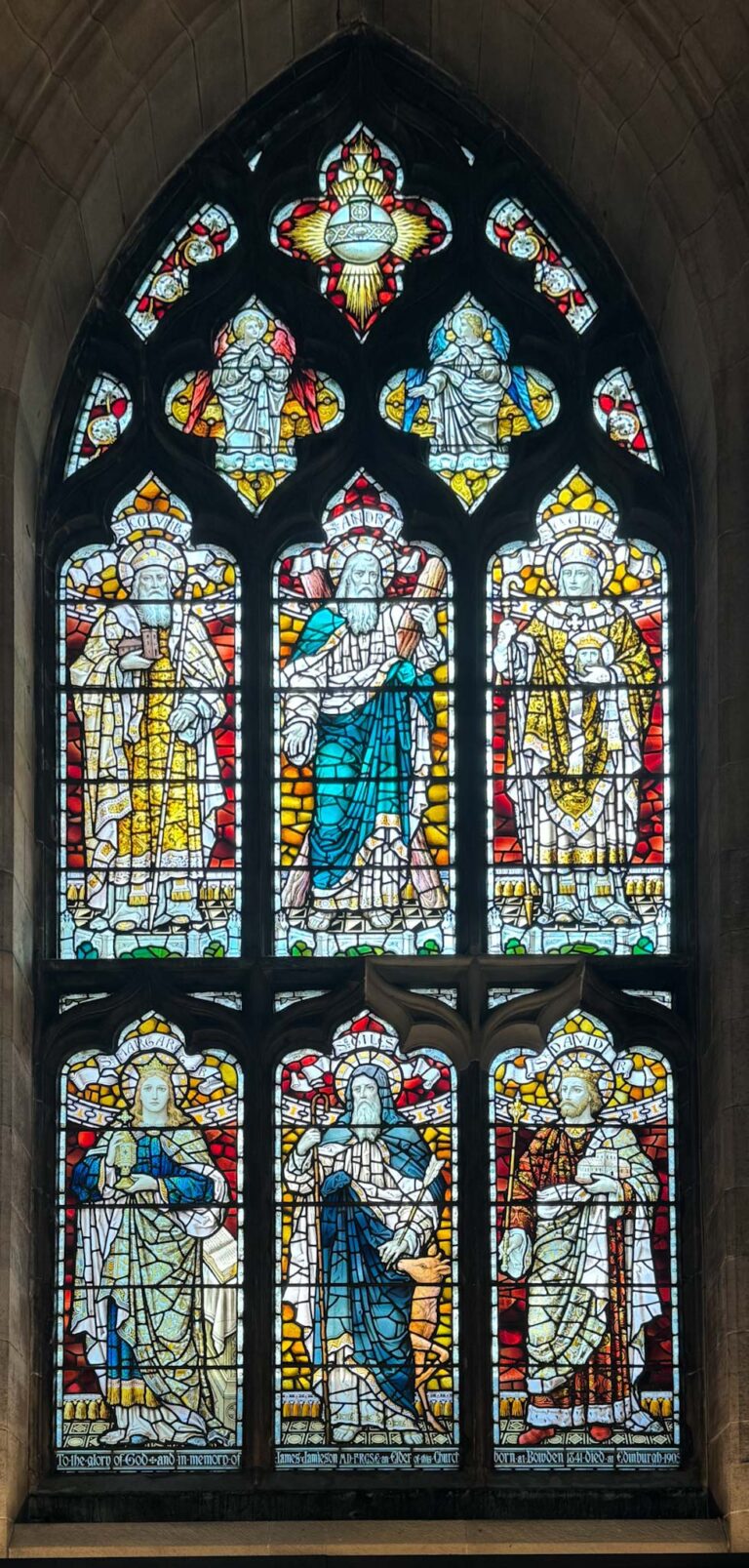
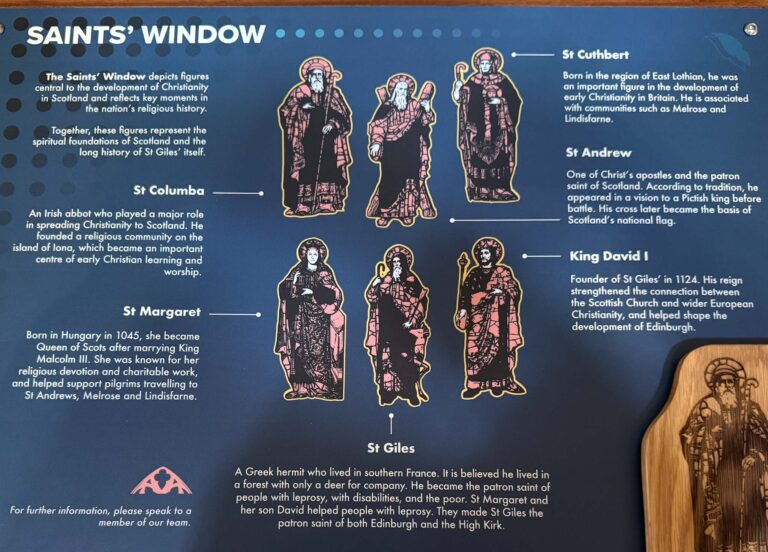
The Saints’ Window depicts figures central to the development of Christianity in Scotland.
Pictured (l-r) St. Columba, St. Andrew, St. Cuthbert, St. Margaret, St. Giles, and King David I.
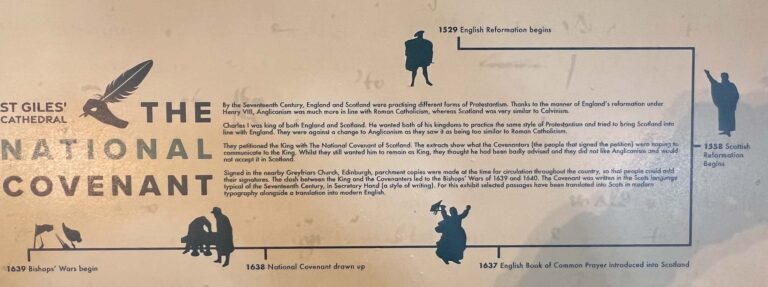
In 1637, King Charles I attempted to introduce a new prayer book in Scotland. The Scottish Church was Presbyterian instead of Anglican and many felt the prayer book was a threat to their independence.
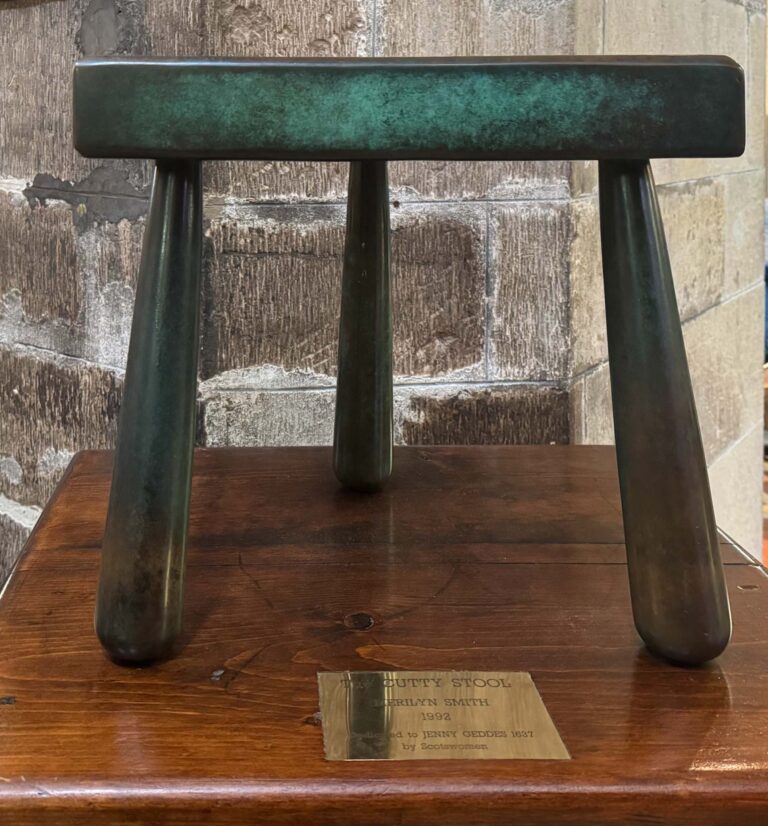
According to tradition, a local woman, Jenny Geddes, protested during a service by throwing a stool at the preacher. A riot broke out in the church, and services were suspended for a week.
Jenny Geddes remains a symbol of resistance, and this stool was added in 1992 in her honor.
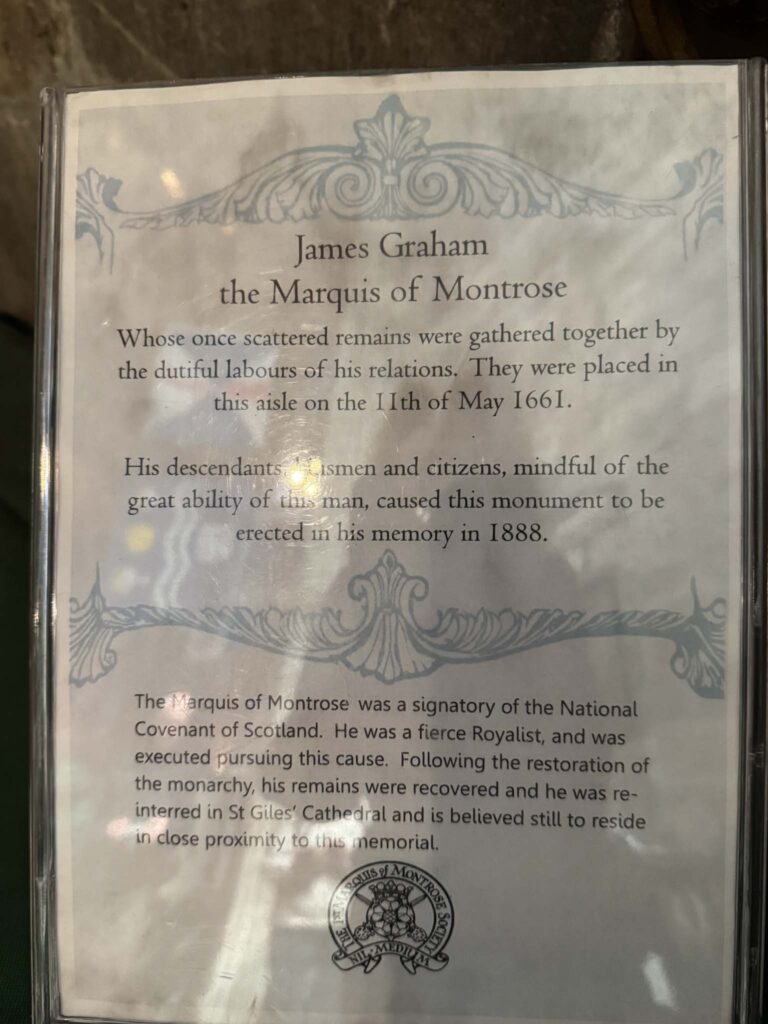
After the riot in St. Giles, resistance to King Charles’s changes grew. In 1638, opponents gathered at Greyfriars Kirk to sign the National Covenant asserting the independence of the Scottish Church.
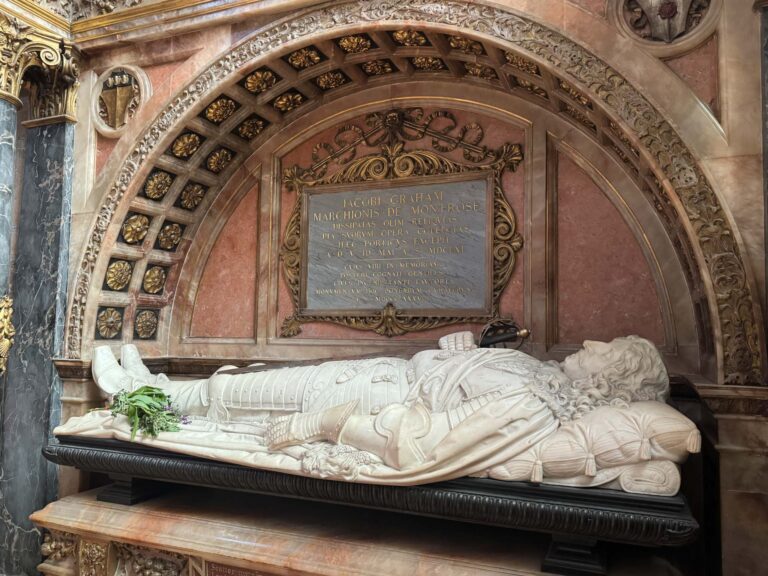
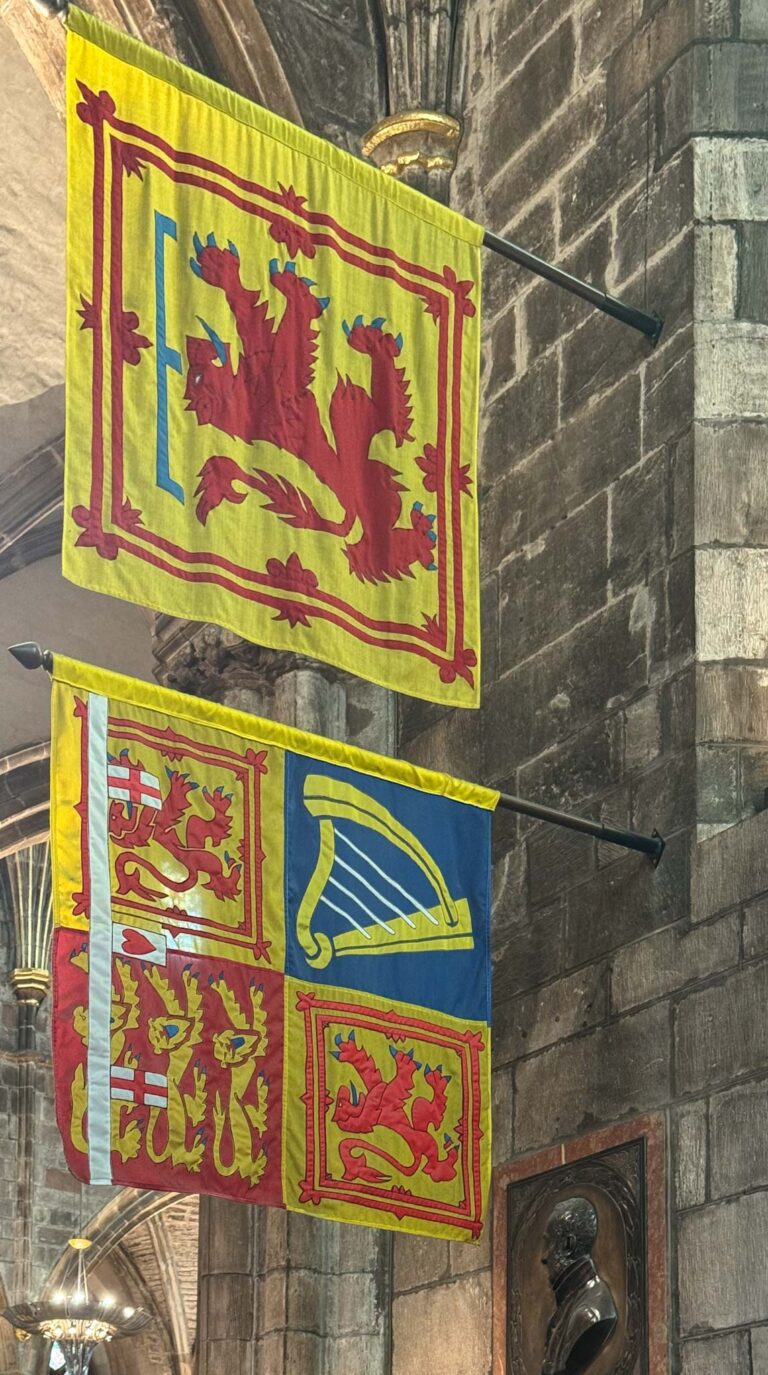
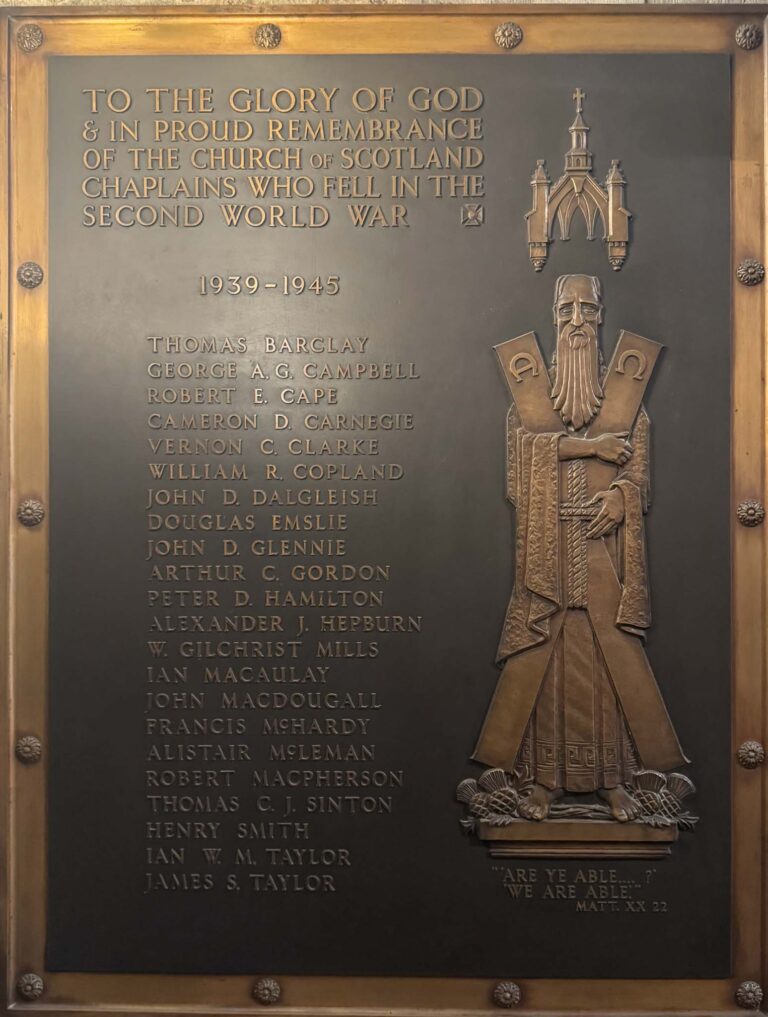
Like many British churches, St. Giles honors war patriots and military companies with banners and honorariums.
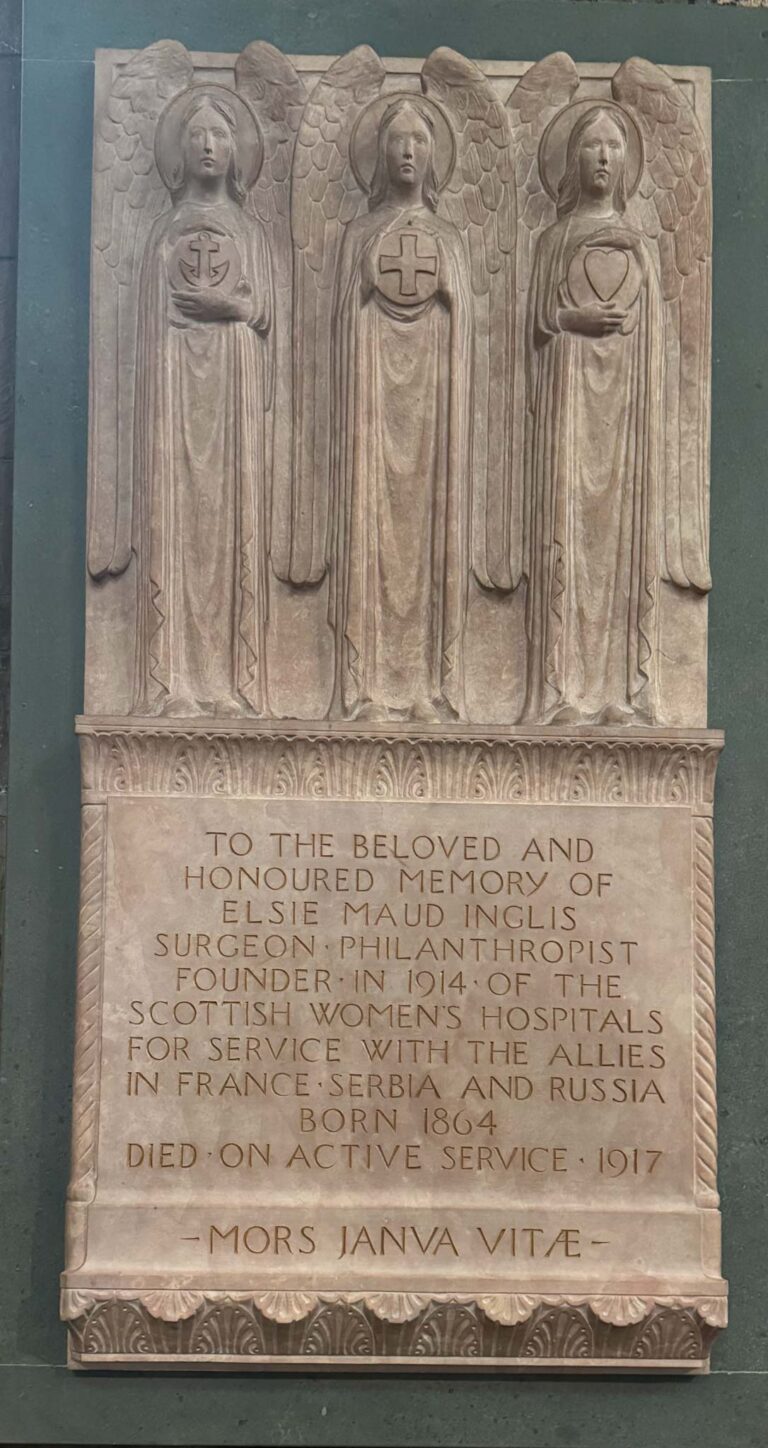
Dr. Elsie Inglis is honored for establishing Scottish Women’s Hospitals, staffed entirely by women and operated in war zones, after her offer to aid the British Army was refused in 1914.
St. Giles is also known as a church for royalty visits. The body of Queen Elizabeth II lay in state after her death in 2022.
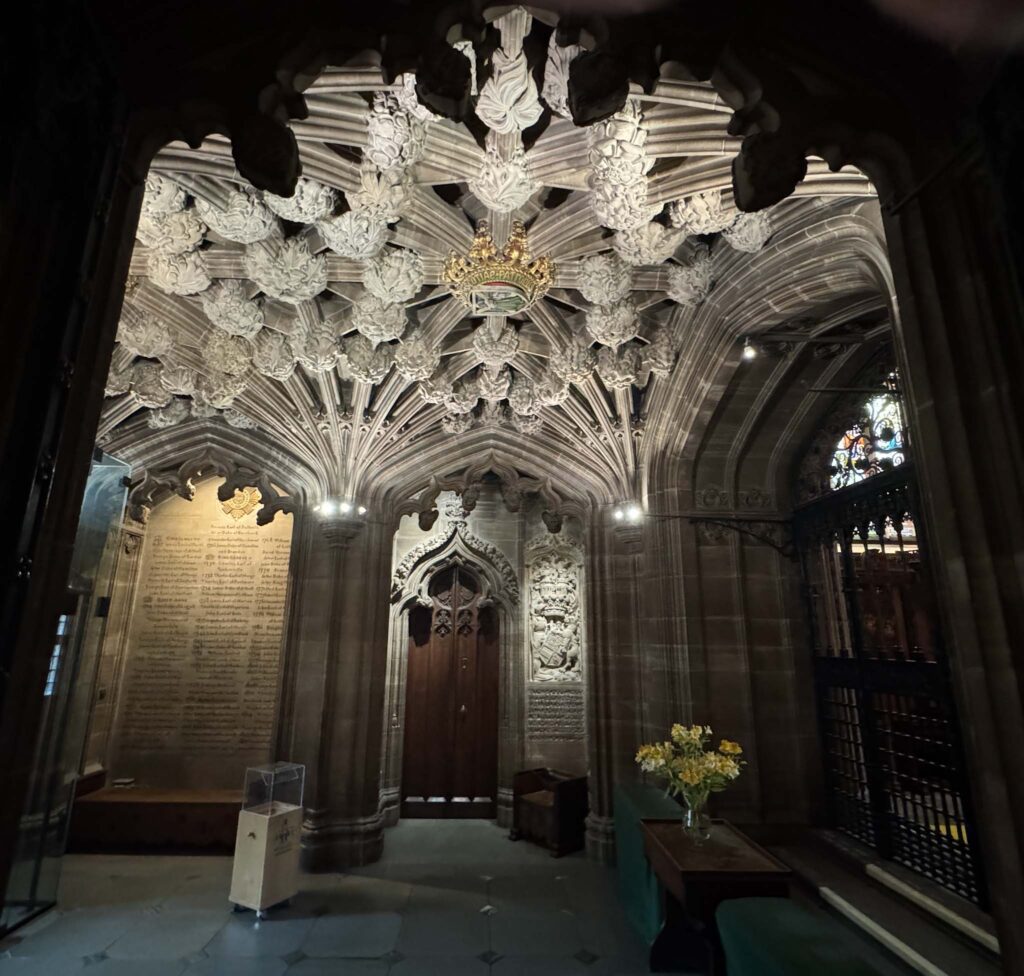
The Thistle Chapel was added in the church in 1909-1911 for the Order of the Thistle.
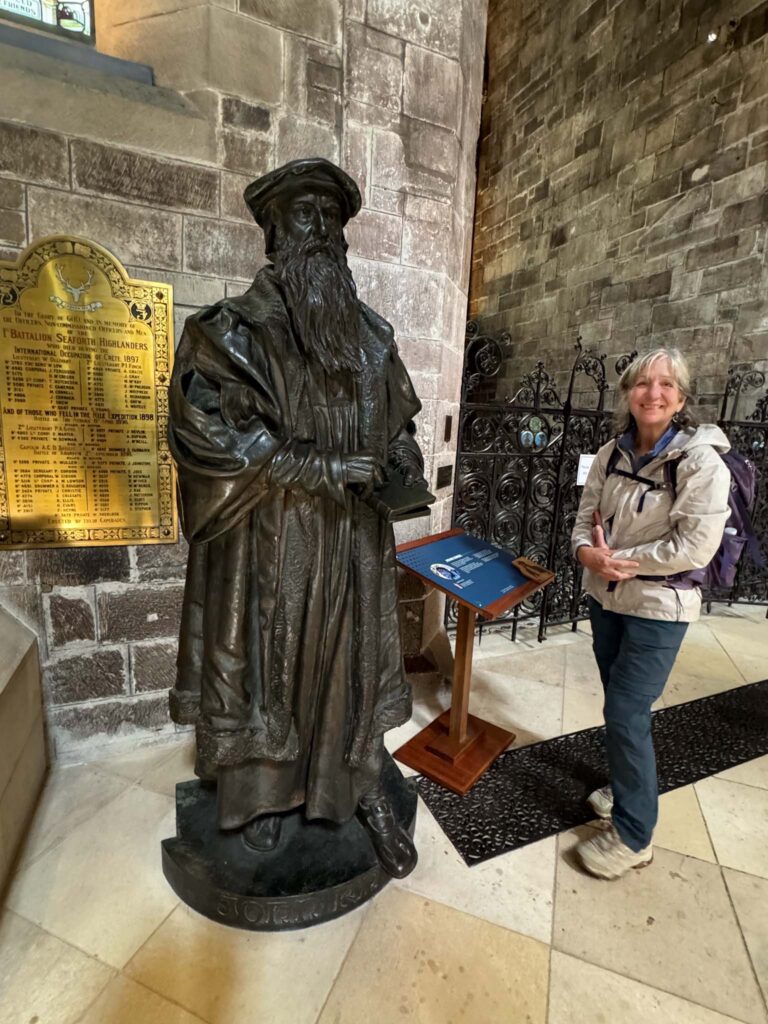
John Knox was born in 1513 and played a decisive role in establishing Presbyterian church governance in Scotland. By his death in 1572, Scotland had largely become a Protestant nation.
He was originally trained as a Catholic priest, but he joined the Protestant movement. He was imprisoned and exiled, and was influenced by John Calvin. He returned to Scotland in 1559 and preached at St. Giles, later becoming its minister. Soon afterwards, Scotland rejected papal authority and became Protestant.
Robert Burns, born in 1759, is widely recognized as Scotland’s National Poet. He was concerned about social inequality, and his works reflected political reform, including those linked to the French Revolution.
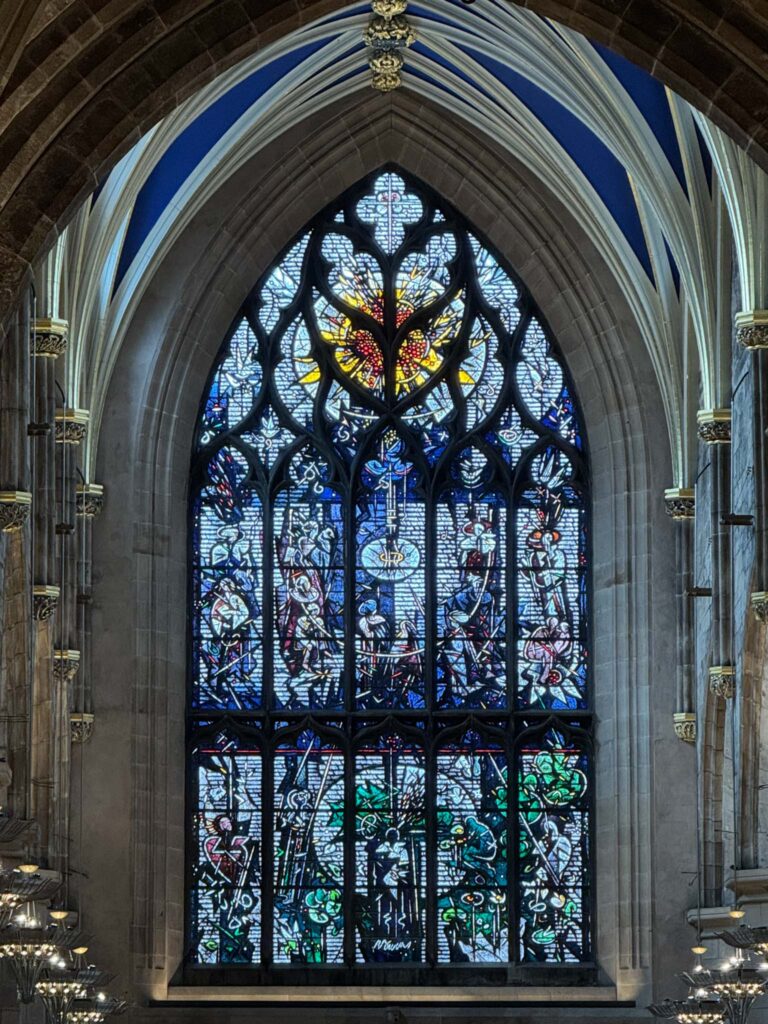
In 1982, St. Giles’ commissioned a stained glass window in honor of Burns. Key themes included by its Icelandic artist, Leifur Breidfjord, include nature, humanity, and love.
The view from our room on the Celebrity Eclipse, showing the three main bridges into Edinborough.
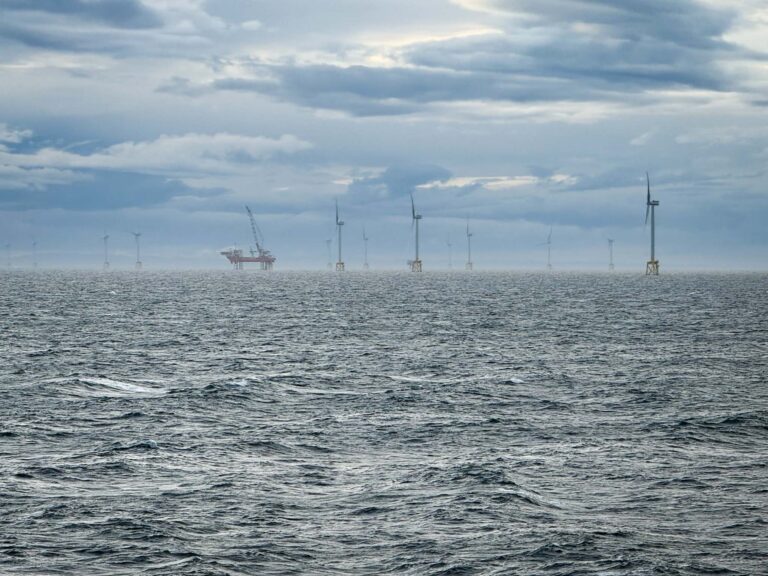
Sailing between Edinborough and our next stop at Kirkwall, we had a good view of offshore wind turbines.

2 Responses
Only 2.42 miles. Boy, that was a lazy day. How will you sleep after such an inactive day.
Dan
I still slept like a baby!