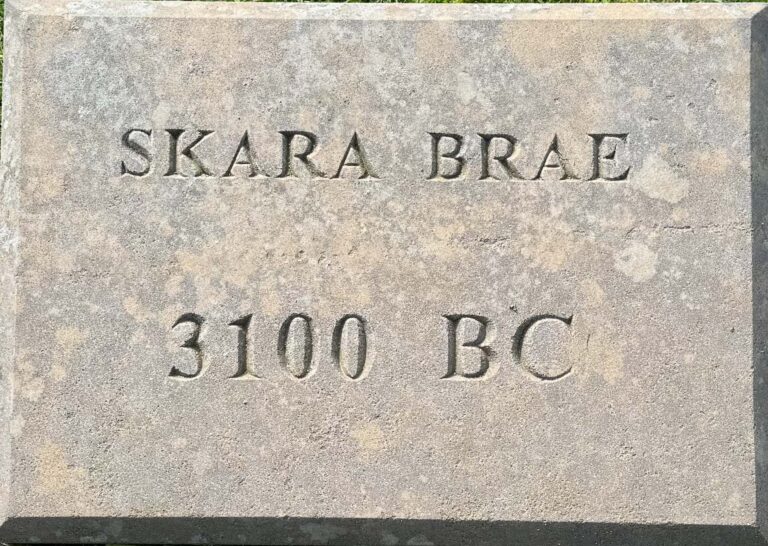
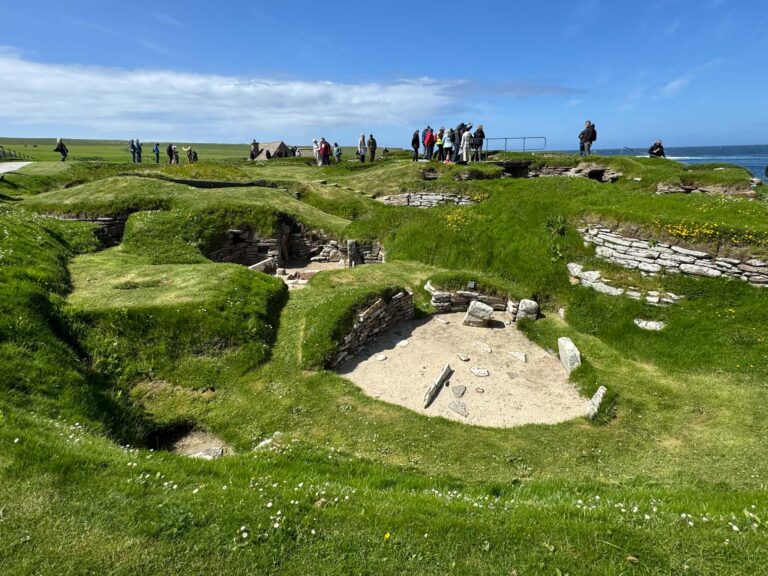
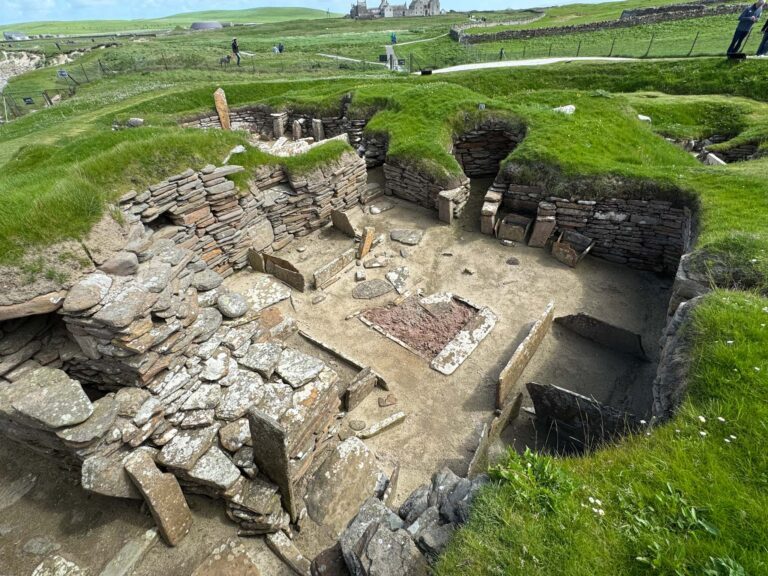
Skara Brae is older than the pyramids of Egypt and Stonehenge in England. It was inhabited by 50-100 people over several centuries. Today only 10 structures, mostly houses, have been unearthed.
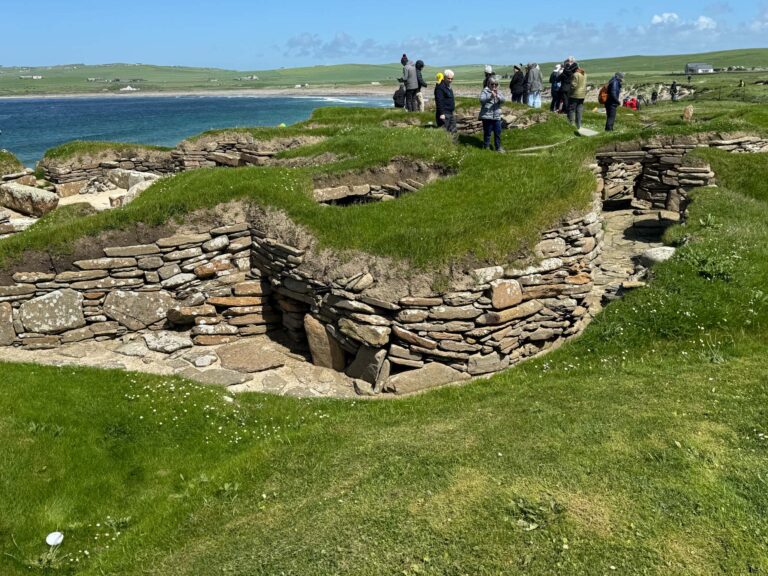
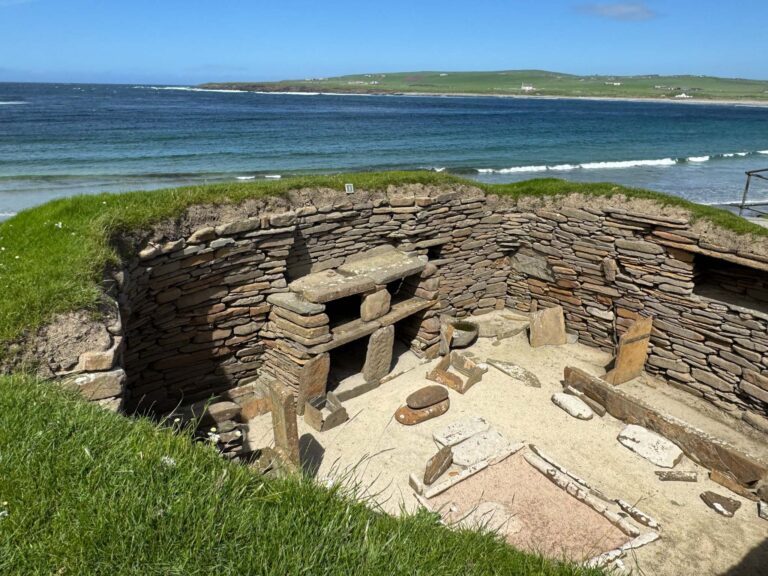
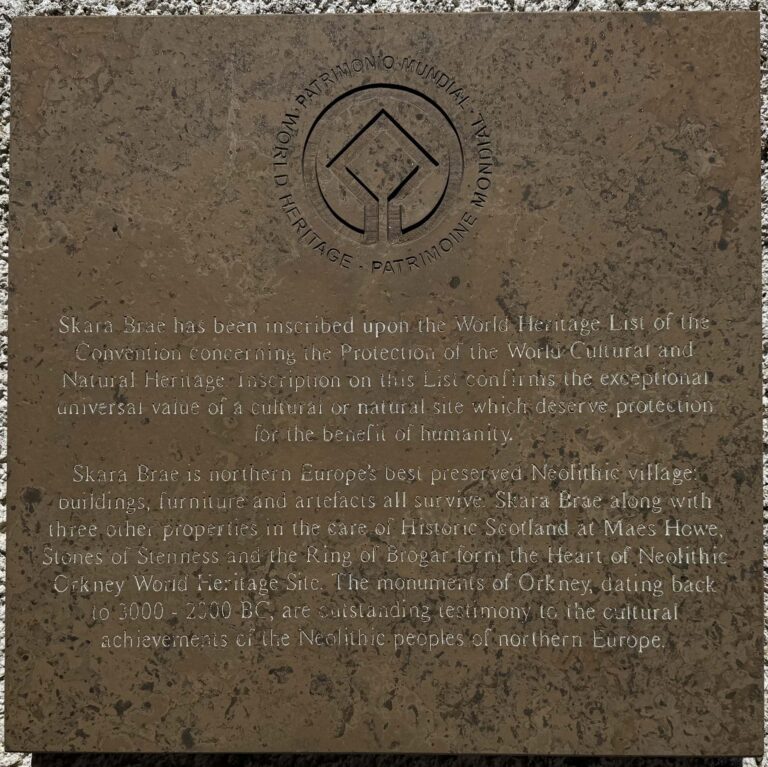
Skara Brae is the best preserved Neolithic village in Northern Europe. Although the roofs are gone, it is part of a tight-knit community in good condition with furnishings.
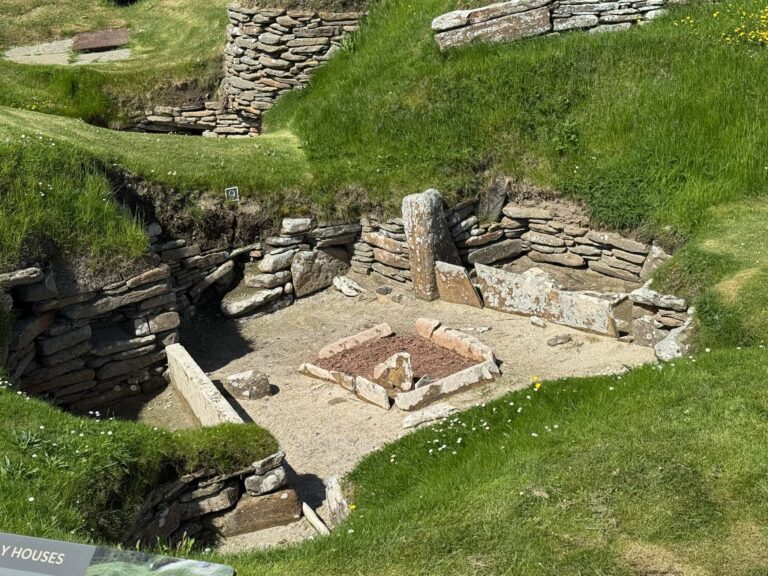
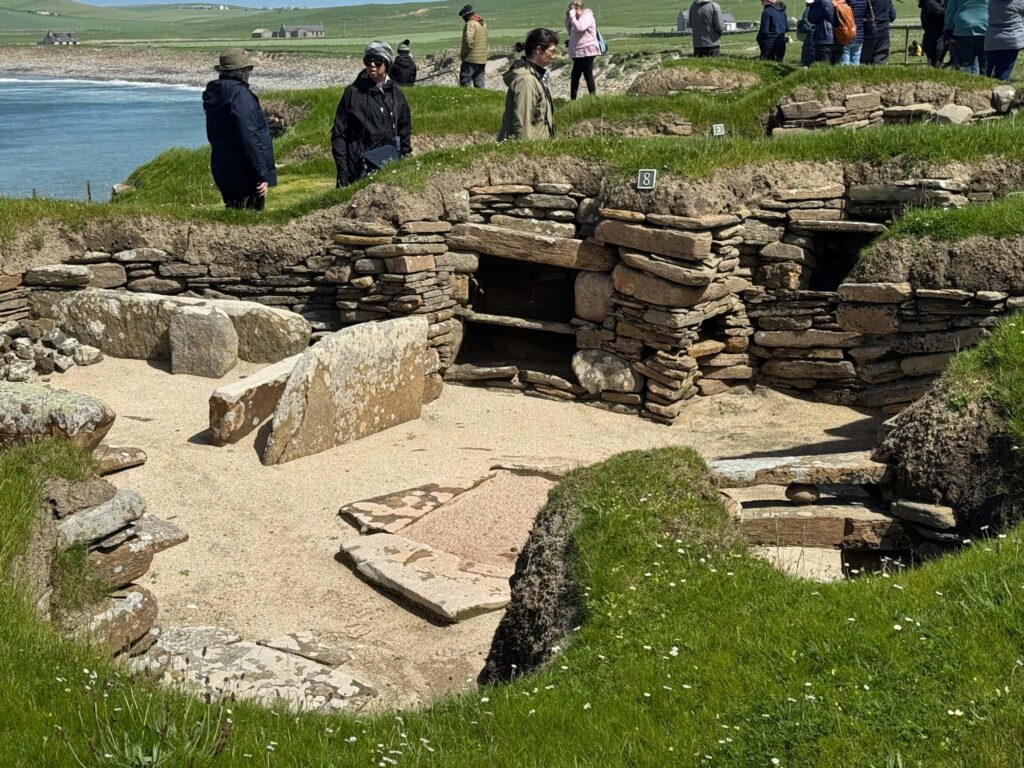
The homes almost all follow the same model: a central hearth, dresser opposite the entrance, and box beds. The oldest homes have the box beds incorporated into the wall; later homes have box beds projected into the room.
Access to the sunken homes was through a covered stone-lined passage. Each house had a stone or wooden slab serving as a door which could be secured with a wooden or whalebone bar.
The fire provided both heat and light. Houses had watertight boxes on the floor with no evidence of lids. These may have stored fresh bait.
The building and entrance passages were set into a mound of domestic refuse (midden) consisting of decomposed food waste, shells and bones, similar to a compost heap. The midden came from an earlier settlement nearby and was brought here as the first stage of building the village. It provided stability for the walls and helped insulate the houses.
One building had a hearth but no beds nor dresser. It appears to have been a workshop for making stone tools and perhaps pottery.
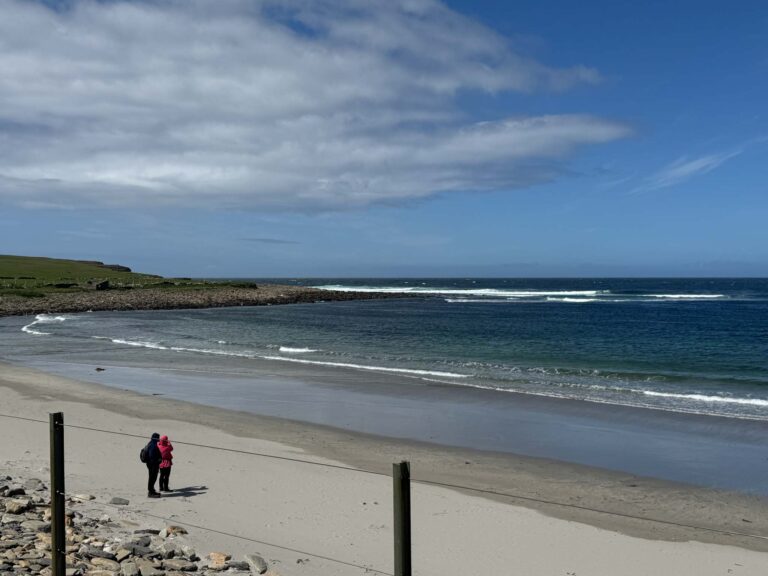
The village was discovered in 1850 when a storm uncovered a sand dune covering the structures. Being next to the water, there may have been other ruins. The Laird of Skaill discovers the site on his land.
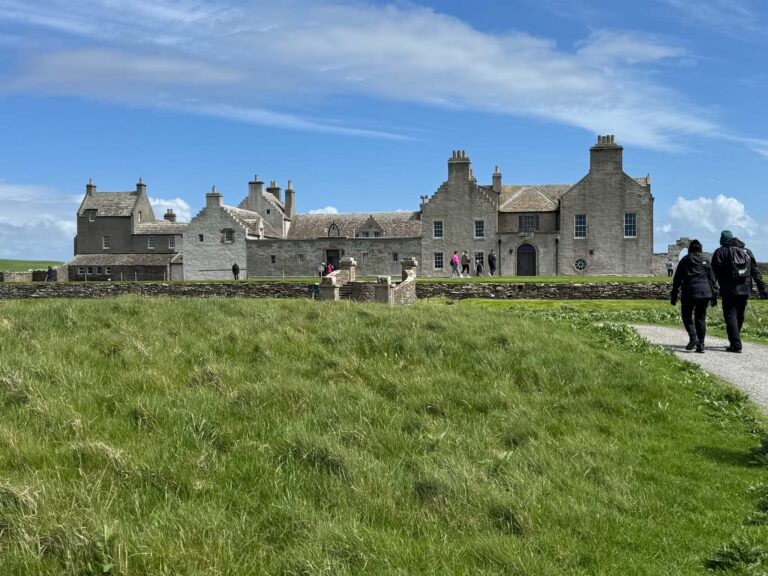
Skaill House began as a simple home in 1620 but has been expanded over the years. It has become part of the largest private estate in Orkney, the Breckness Estate.
It gets its name from a Norse word for drinking hall that suggests a Norse settlement may have been here.
there have been twelve Lairds of Breckness, all related. The house opened to the public in 1997.
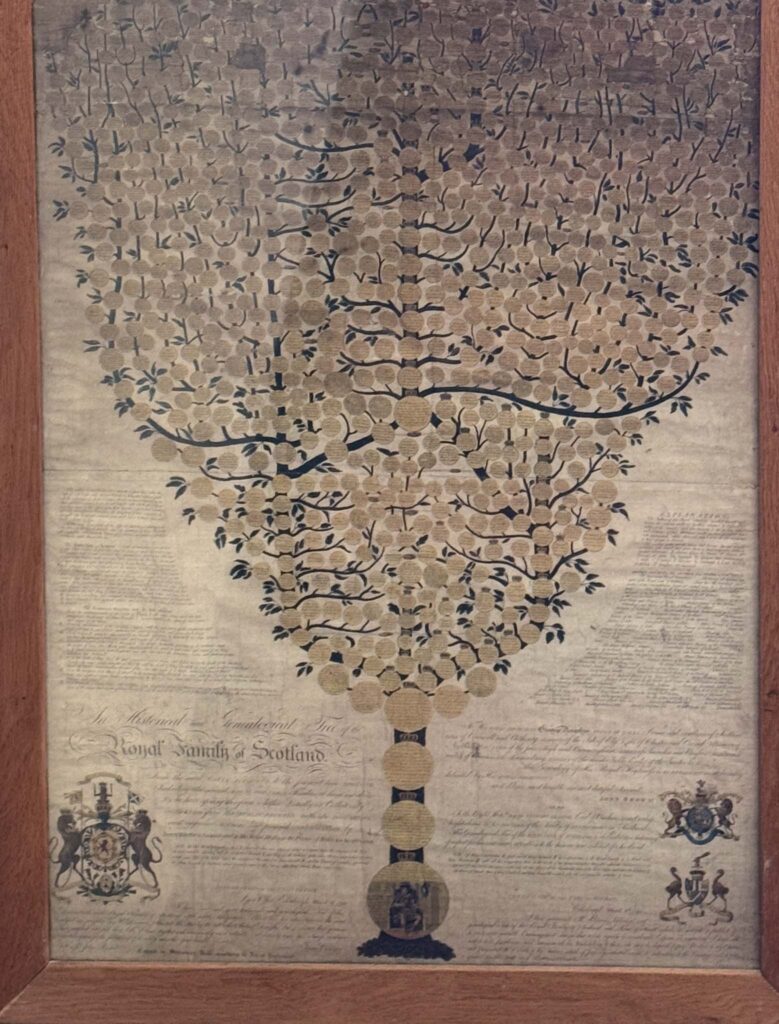
The family tree was on the wall but too high to be read.
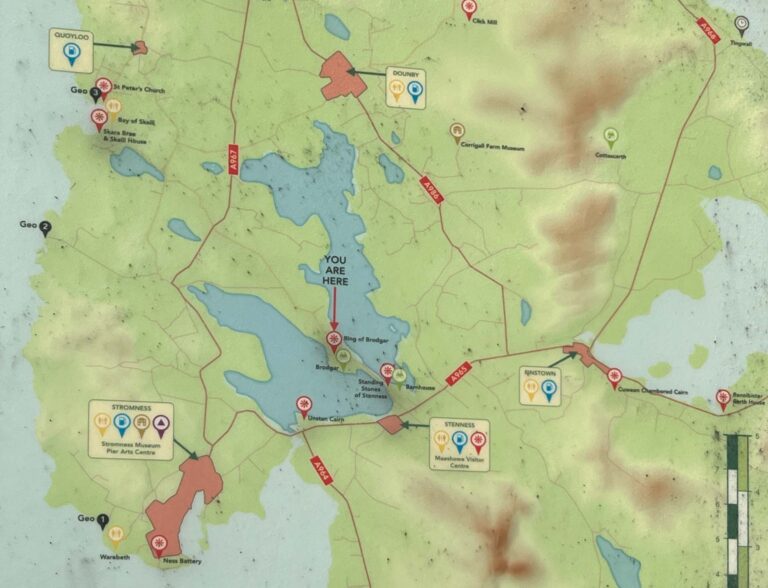
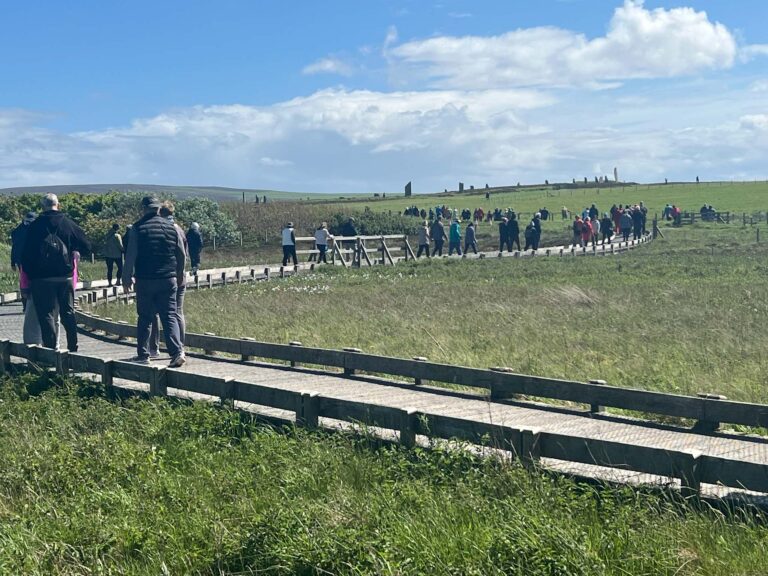
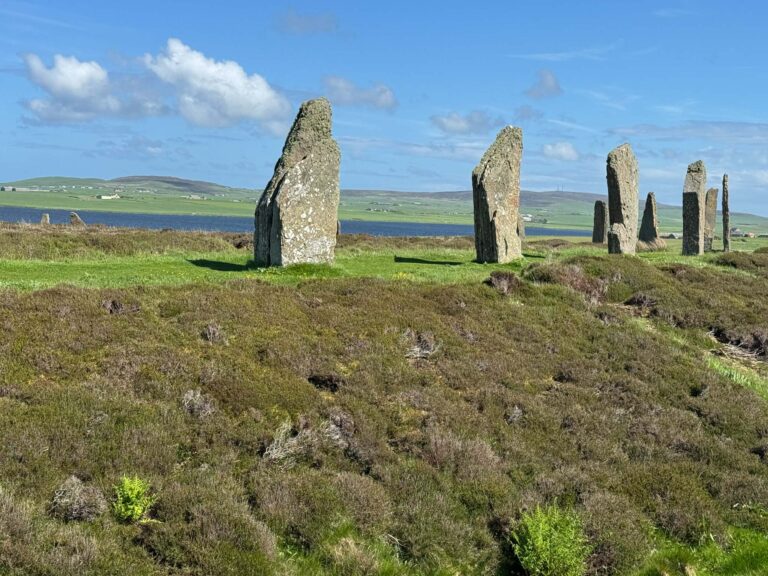
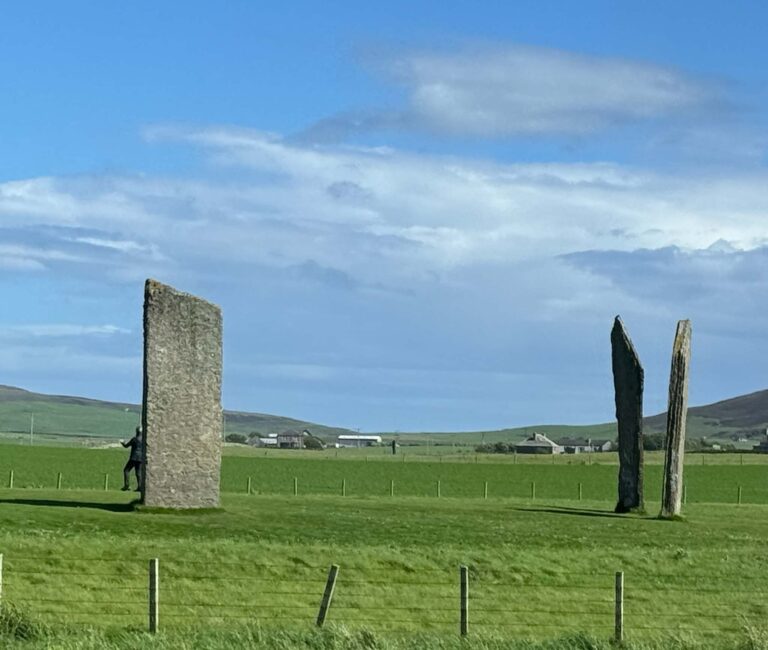
The Ring of Brodgar and Standing Stones of Stanness are between the Loch of Harray (fresh water)and the Loch of Stenness (sea water).
They are ceremonial and ritual centers.
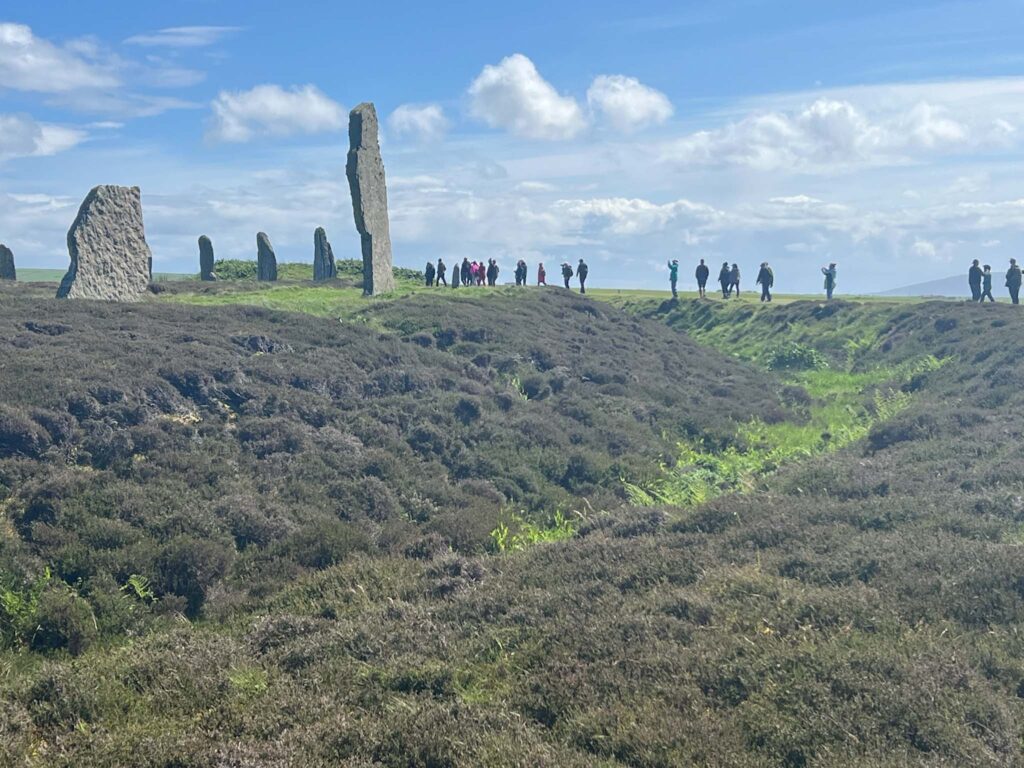
The Ring of Brodgar is a Neolithic stone circle and circular ditch. It is the only major henge and stone circle in Britain that is almost a perfect circle. The Ring originally had up to 60 stones, but only 27 remain standing.
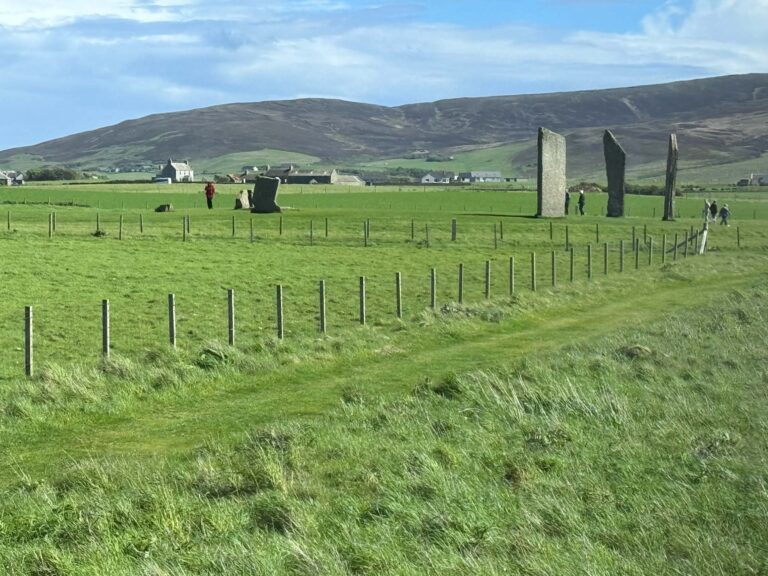
Nearby the Standing Stones of Stenness are even older, possibly the earliest henge monument in the British Isles, dating back 5000 years.
Today there are only four upright stones up to six meters in height in a circle that originally held 12 stones. The focus of the interior was a large hearth, and the stones were encircled by a ditch and bank
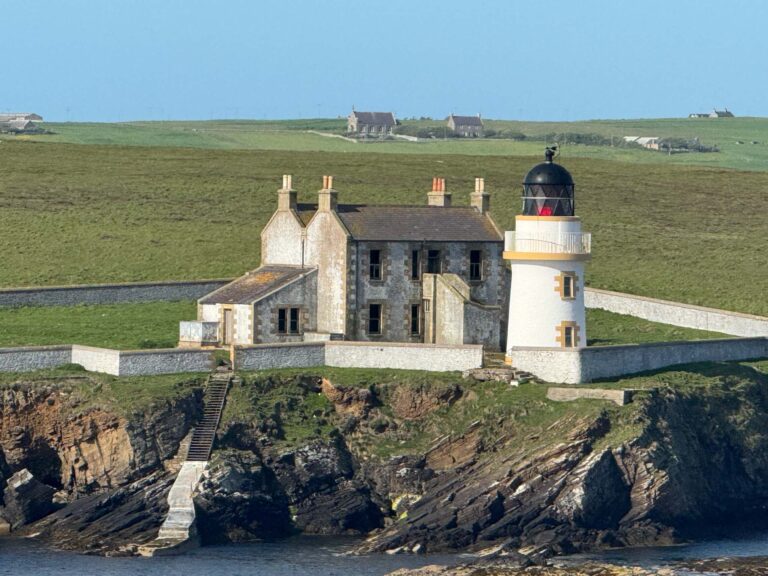
As we leave Orkney, we sail past this lighthouse bidding us farewell.

One Response
The Neolithic homes on Orkney Island are fascinating! 3,100BC – Did people even cook their food then? Where? Over the central fireplace? I have so many questions – what is there to eat on that Island then, other than fish? And where is the wood with which to build a fire? I suppose nobody really knows for sure?And of course I love the family tree…