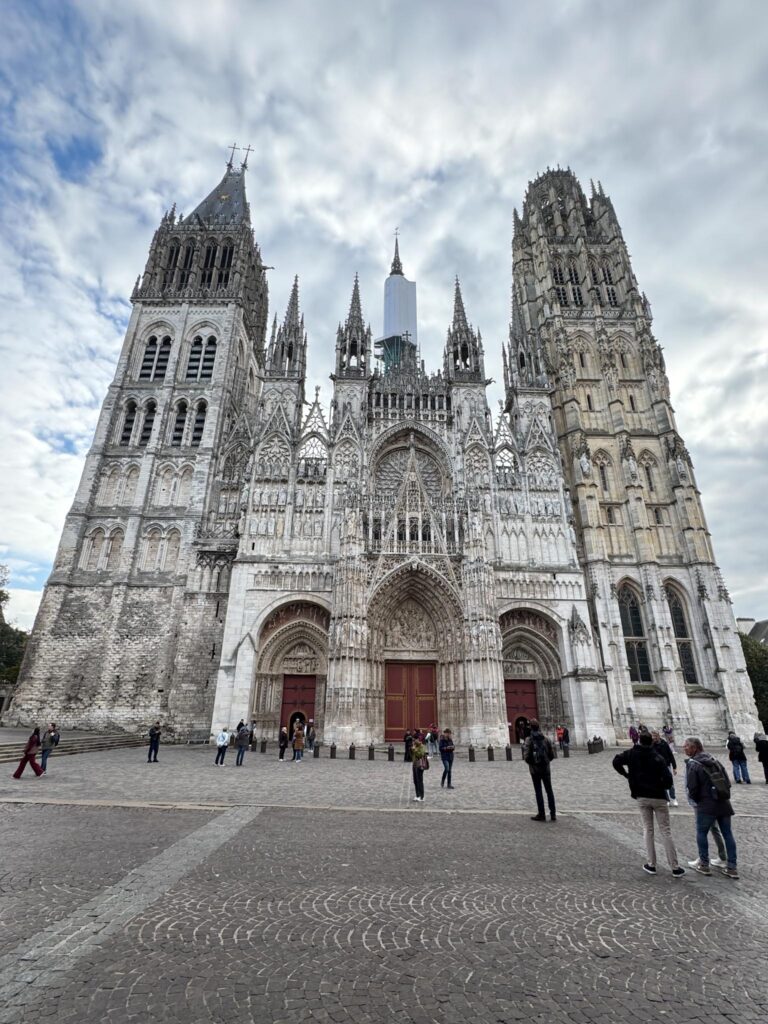
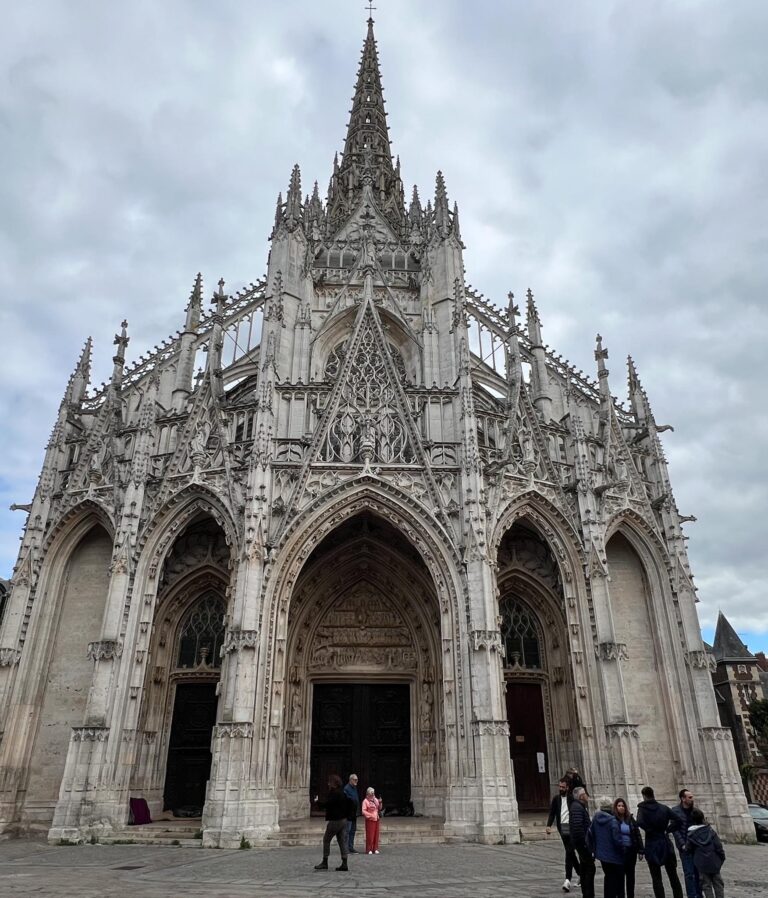
The Cathedral Notre-Dame de Rouen boasts two towers and a spire, all in different architectural styles.
The Saint-Romaine tower on the left side of the west portal was begun in 1145 as part of the Gothic church. The top of the tower was added in the 15th century.
The Butter Tower, so named because the Pope offered the Cardinal dispensations to consume milk and butter during Lent in exchange for tower donations, was built 1488-1506 in the Gothic Flamboyant style.
The spire once allowed the church to be considered the tallest building in the world from 1876 to 1880. It is an iron Renaissance spire over the lantern tower.
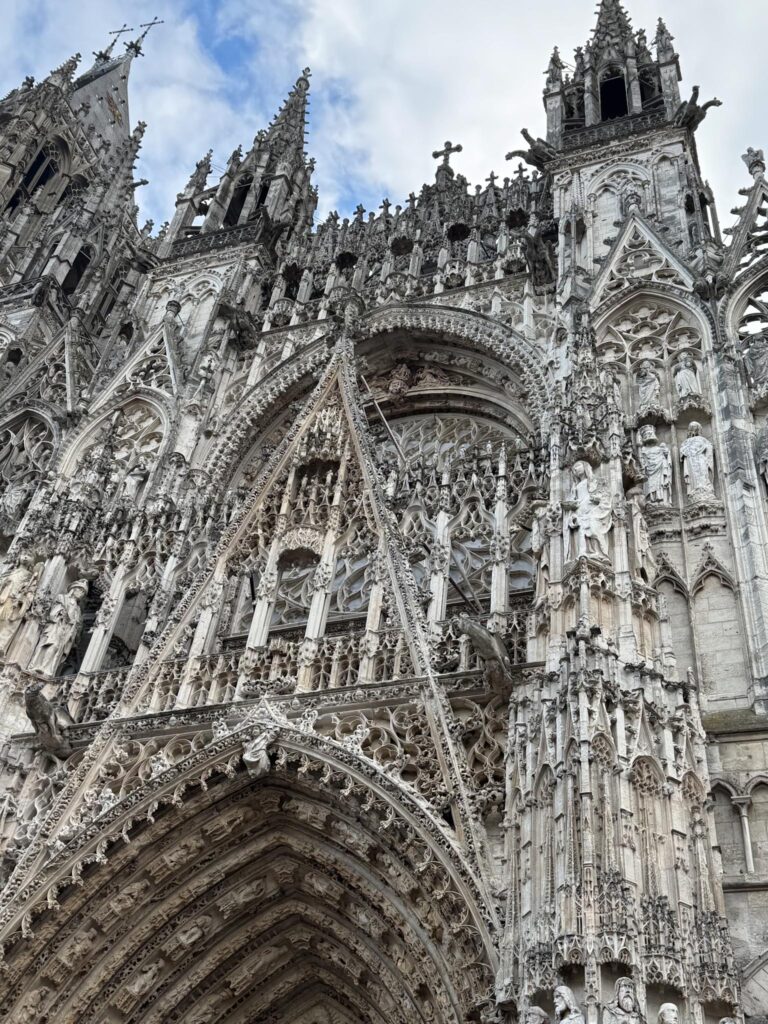
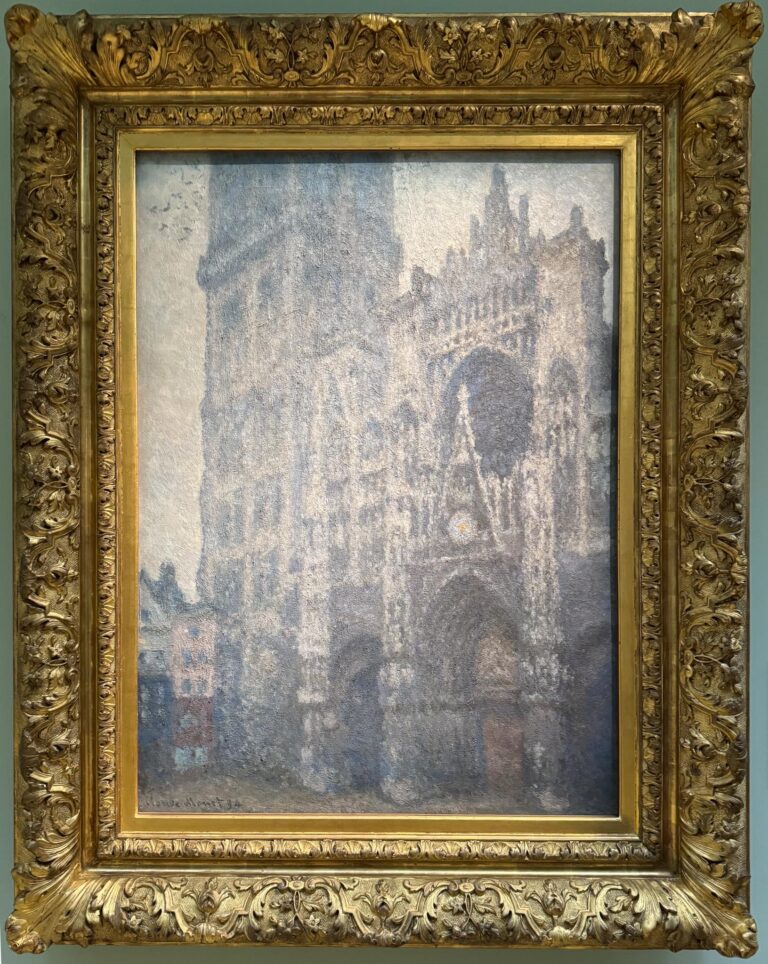
The west portal is also famous as an artist’s subject, particularly for multiple paintings by Claude Monet. Please see the picture from the Rouen Museum of Fine Arts later in the day.
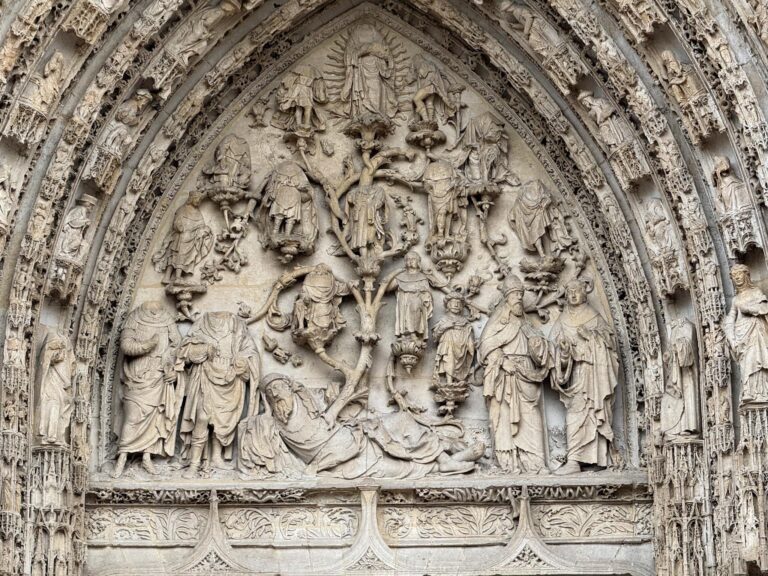
The main arch over the portal represents the tree of Jesse, with the Virgin Mary at the top with a halo of sun and stars.
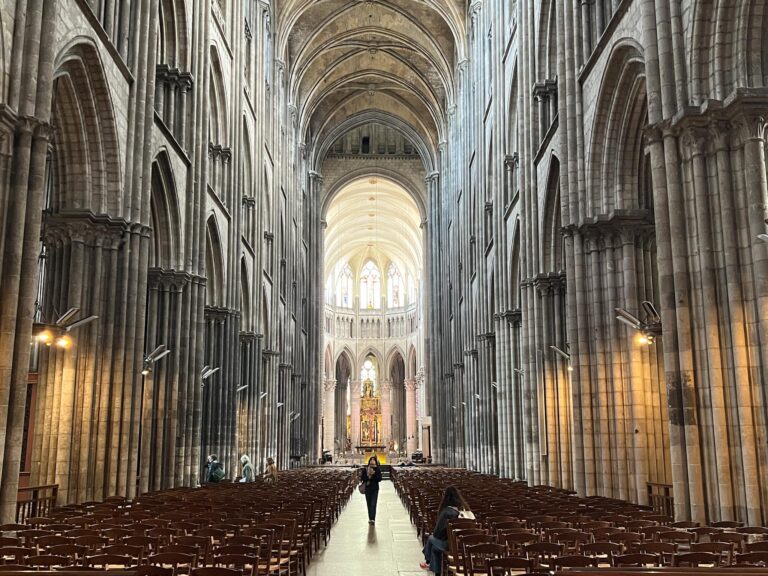
The nave extends 60 meters with main vaults 28 meters tall. Impressive!
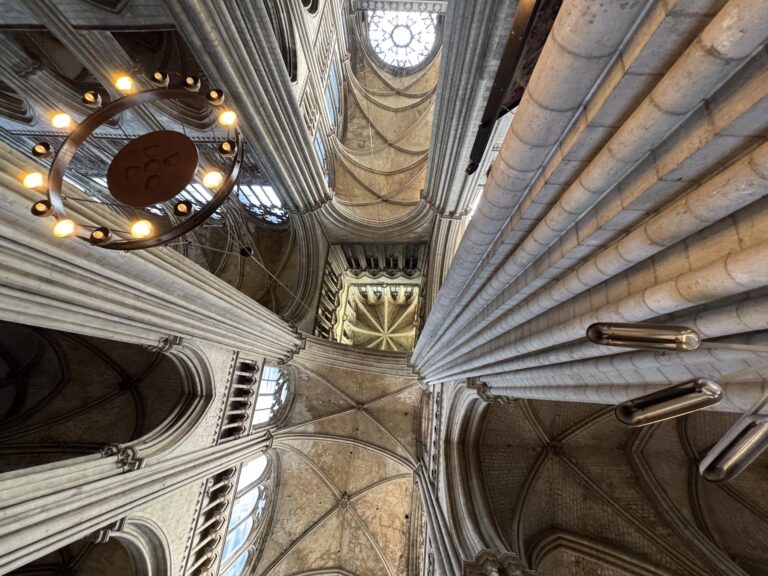
The interior of the lantern tower (the spire’s tower) viewed from the transept.
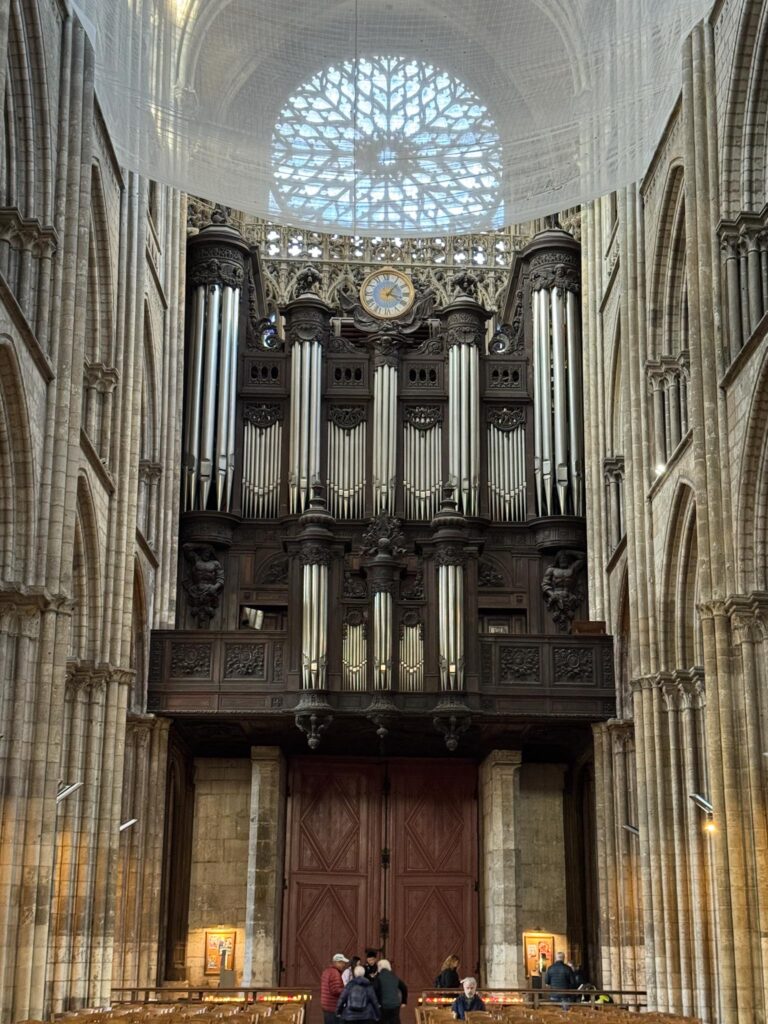
Though not as great as the organ in the church in Saint-Oren’s Abbey, it is still an impressive instrument.
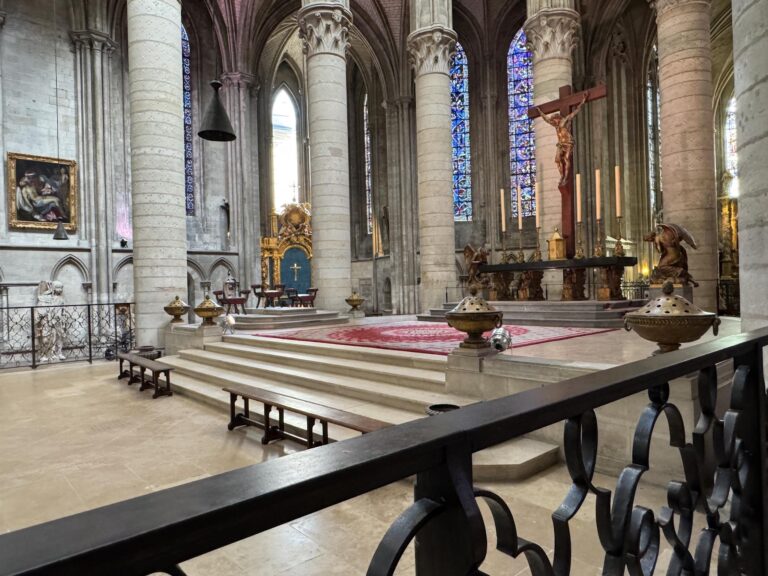
Just below this railing is a reclining statue of Richard the Lionhearted. His embalmed heart is buried here while his entrails and other body parts are buried elsewhere.
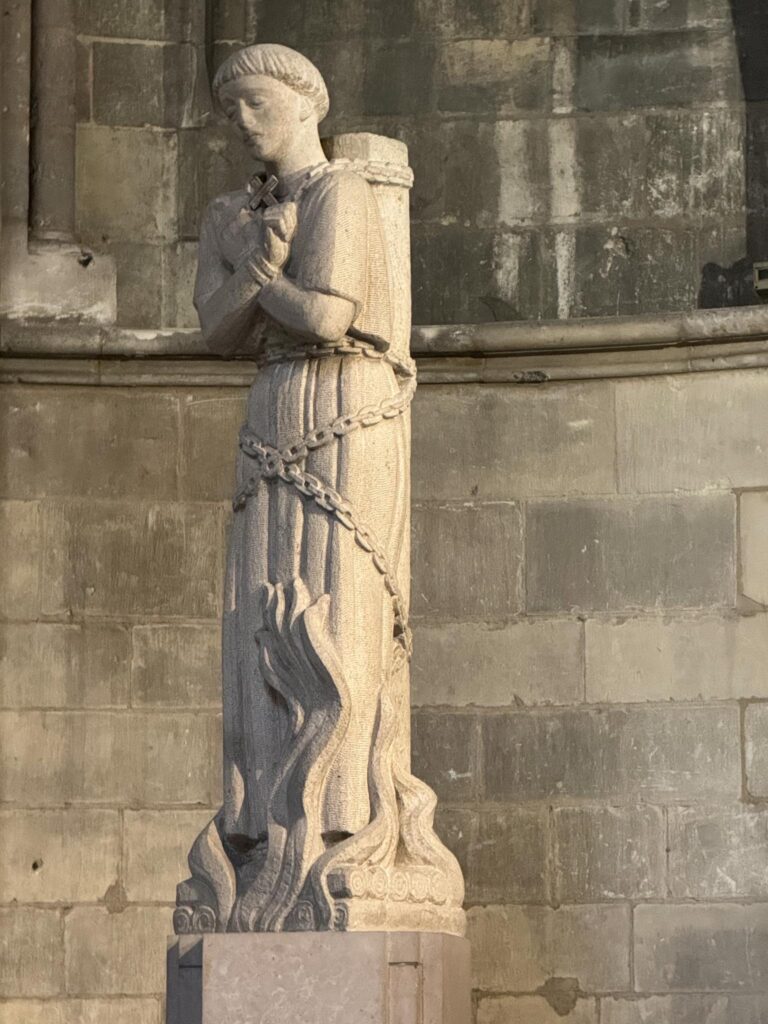
Joan of Arc has a chapel in the Rouen Cathedral. The stained glass windows with her story are newer, made in the 1950’s.
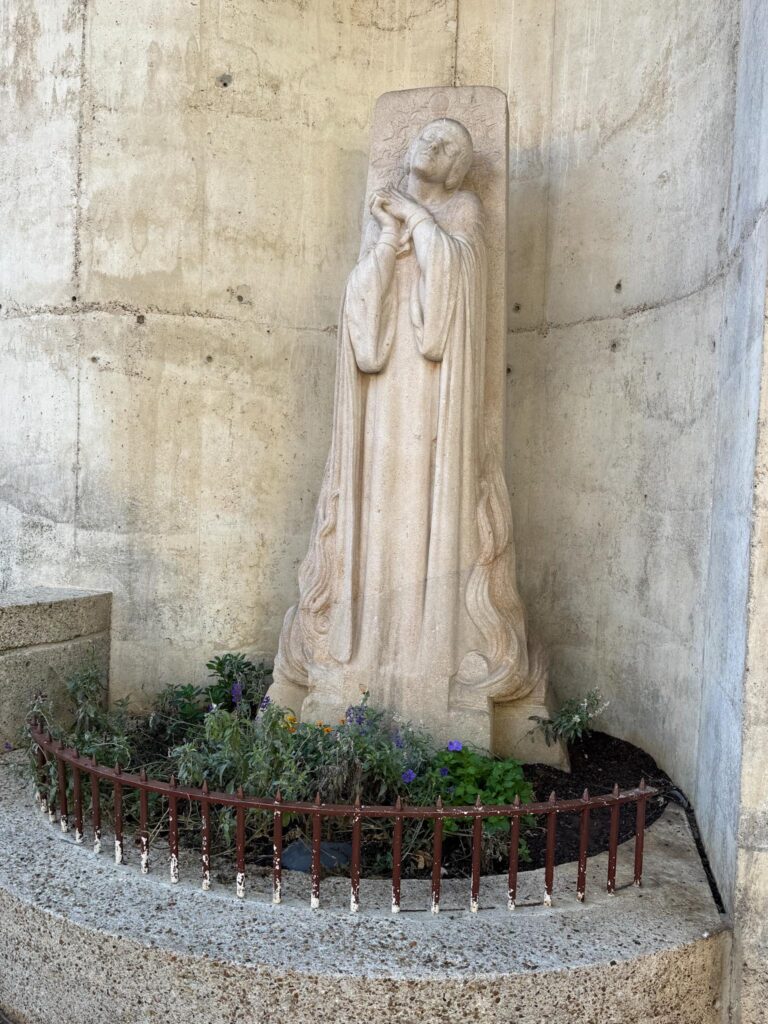
She was actually questioned and tried in the Castle of Philippe Augusti after being captured by the English. She was condemned to be burned alive on May 30, 1431, and her ashes were thrown into the Seine. Her mother requested a rehabilitation trial 25 years later, and with the agreement of the Pope, Joan of Arc was tried again with 114 witnesses being heard, and the first trial was declared invalid.
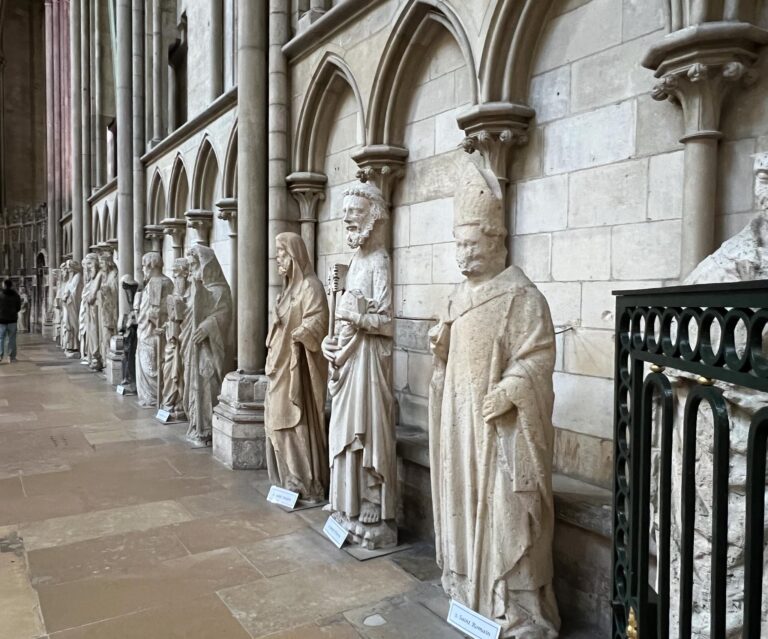
We surmise that these may be outside statues that have weathered poorly and are inside to preserve them. No explanations were given.
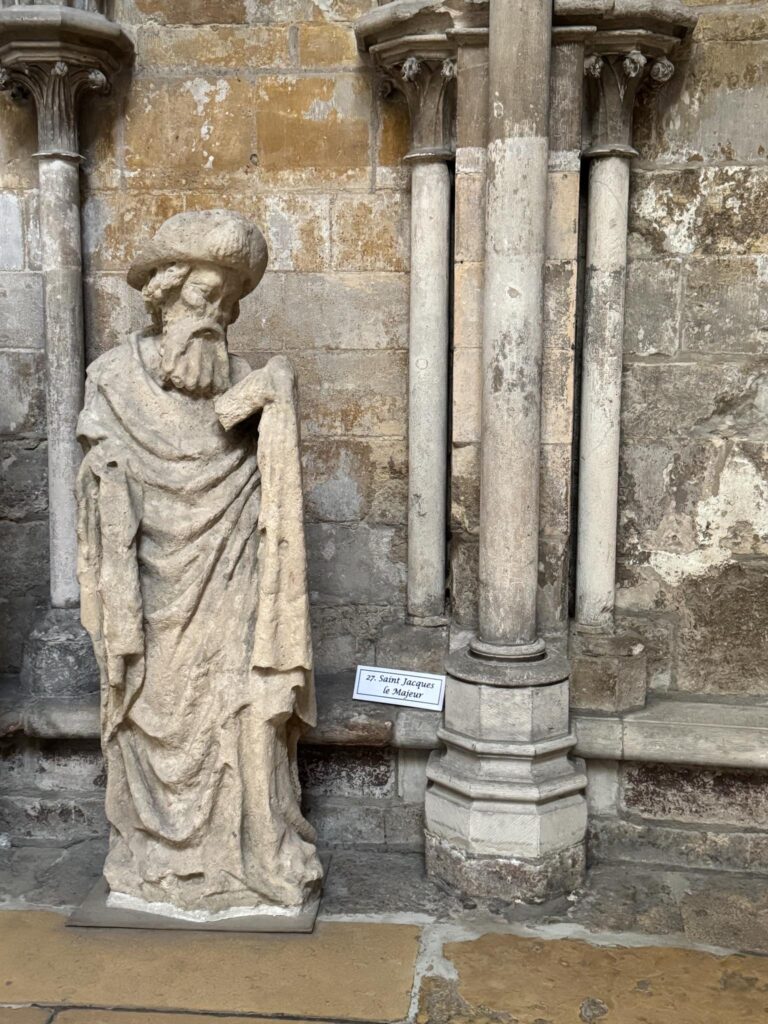
St. James, complete with the shell icon on his hat.
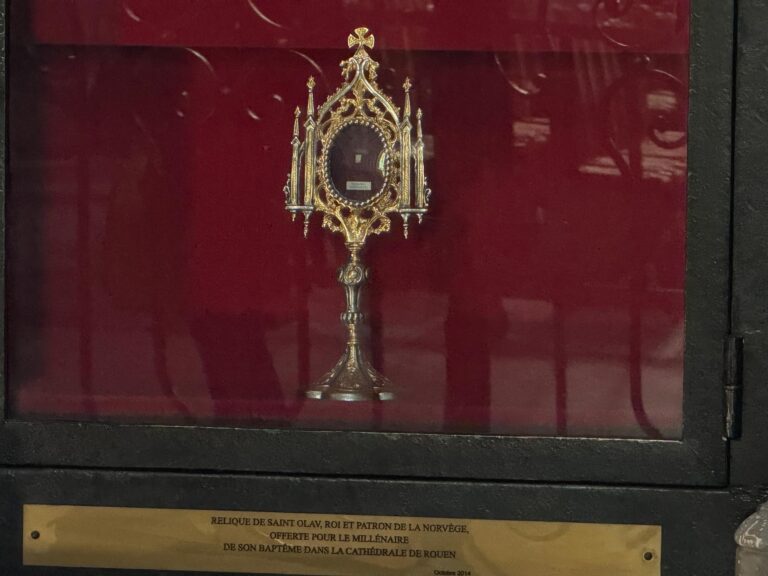
This relic of Saint Olav was offered by the King of Norway on the occasion of the cathedral’s Millenium. Saint Olav was a pagan Viking who converted to the Christian faith and was baptized at Rouen Cathedral in 1014. He later moved back to Norway and became King from 1015 to 1028. He is considered the founder of the Norwegian nation, and is credited with bringing Christianity to Norway.
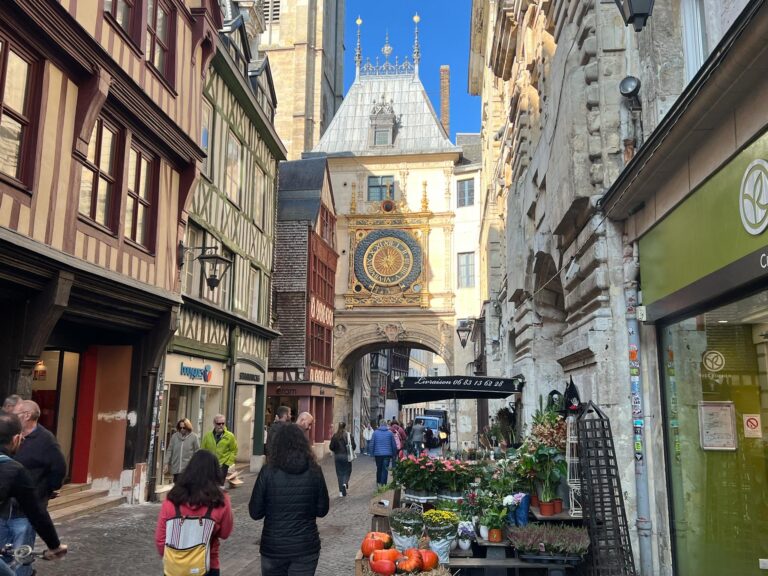
The Gros Horloge is an astrological clock whose movement was made in 1389 and is the oldest in France. The clock was originally constructed without a dial; one revolution of the hour hand designated 24 hours. A facade was added in 1529 when the clock was moved to its current position. It shows a golden sun with 34 rays on a blue starry background. The phases of the moon are shown in an oculus near the top of the dial. The days of the week are shown in an opening at the bottom.
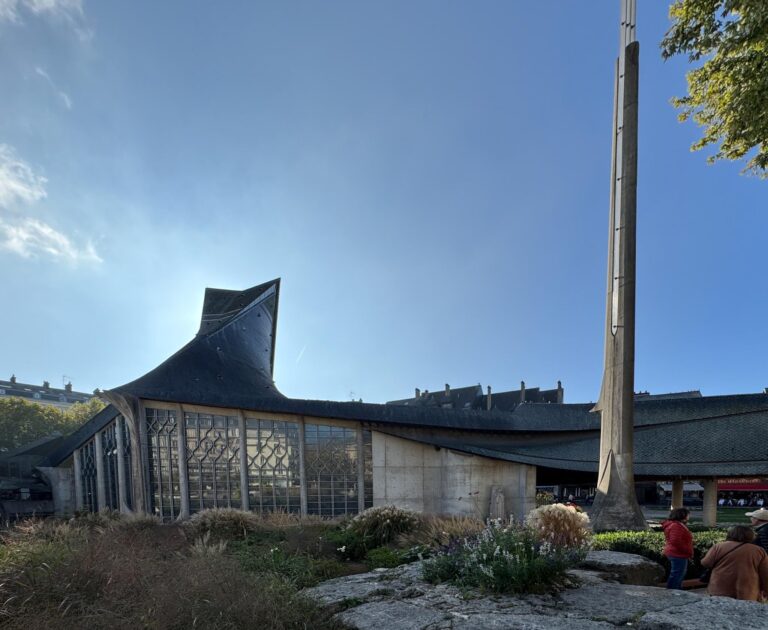
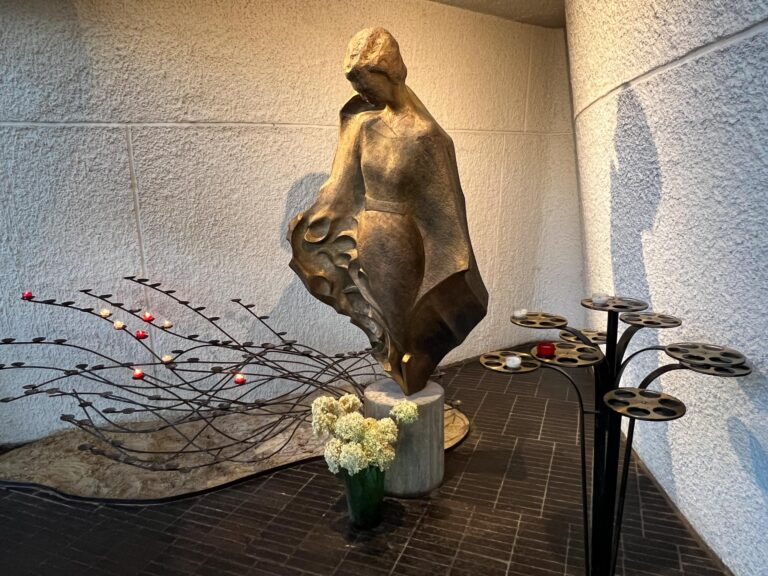
The Church of Saint Joan of Arc was complete in 1979 in the center of the market square where she was burned at the stake for heresy in 1431. It was designed to resemble the flames and also an overturned longboat. The market stalls resemble smaller longboats and fish with gaping mouths.
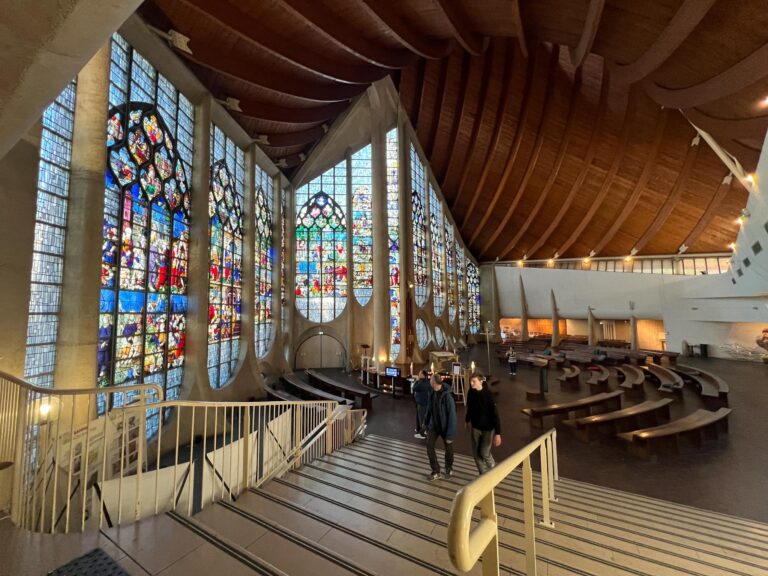
The stained glass windows are not picturing the life of Joan of Arc, but are from the 16th c. Church of St. Vincent which was destroyed in WWII and whose ruins are nearby. The 13 window panels cover Christ’s life, St. Peter, St. Anne, and St. Anthony of Padua.
We had planned to visit Saint-Ouen’s Abbey known for its architecture and massive organ. Unfortunately it was closed on Friday, so we could only reflect on its outside.
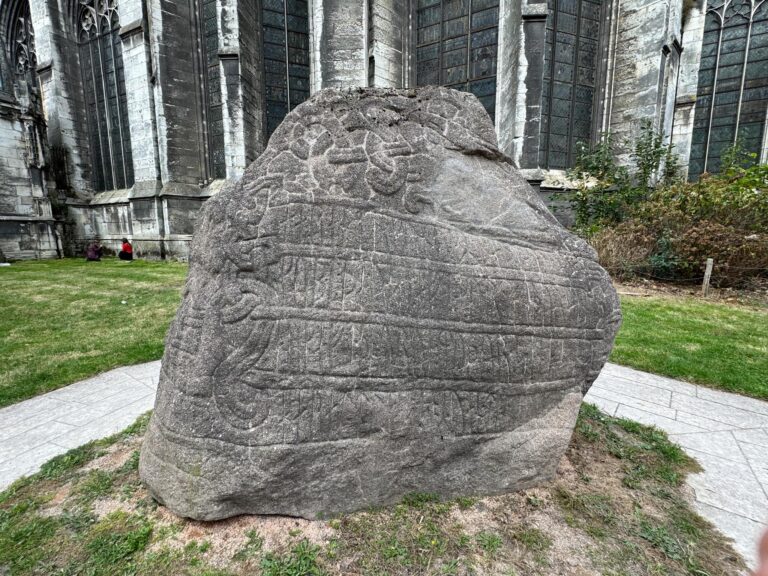
This is a copy of the Jelling stones found in the 10th entury at the town of Jelling, Denmark. The runic inscriptions are considered the best known in Denmark, celebrating the conquest of Denmark and conversion of the Danes to Christianity. The copy was gifted in 1911 to celebrate the Millenium of Normandy.
The Vikings had arrived in the 9th century. One Viking warrior, Rolf, agreed to peace when the King of the Franks offered Rolf territory along the Seine and in exchange Rolf was expected to convert to Christianity. Rollon, (Rollo in English) became the first Count of Normandy and the first ruler of Normandy. Richard II, Rollon’s great-grandson, would become the first Duke of Normandy. William the Conqueror was also a distant grandson. Rollo is buried in the Rouen Cathedral.
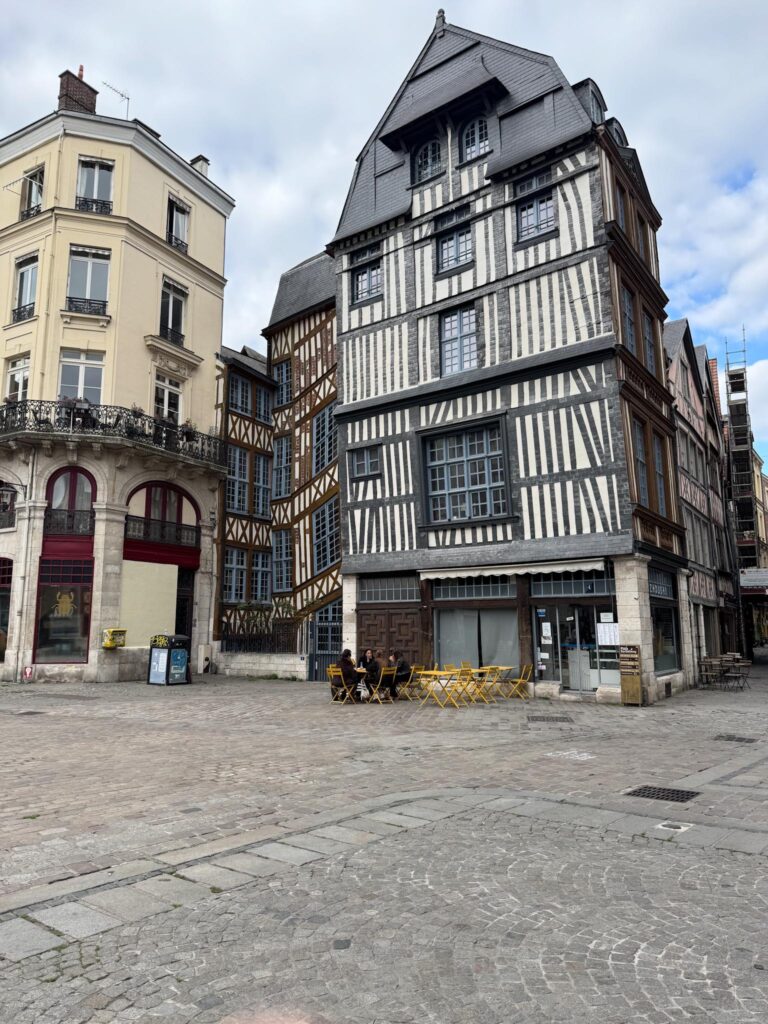
Rouen is also known for its many stone timber houses.
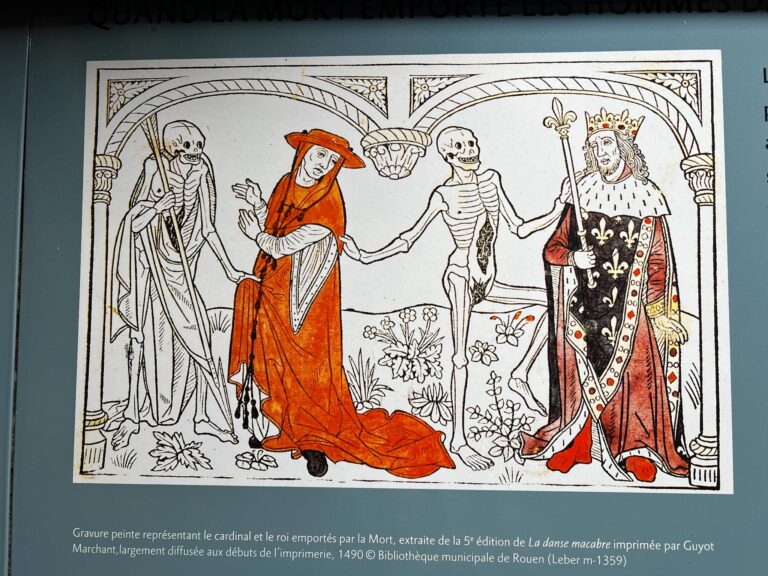
Between 1337 and 1352, waves of Plague “Black Death” decimated Europe. In Rouen, it is estimated that three-quarters of the population died in the 14th century. This pictures points out that death did not respect position, but the plague could take anyone.
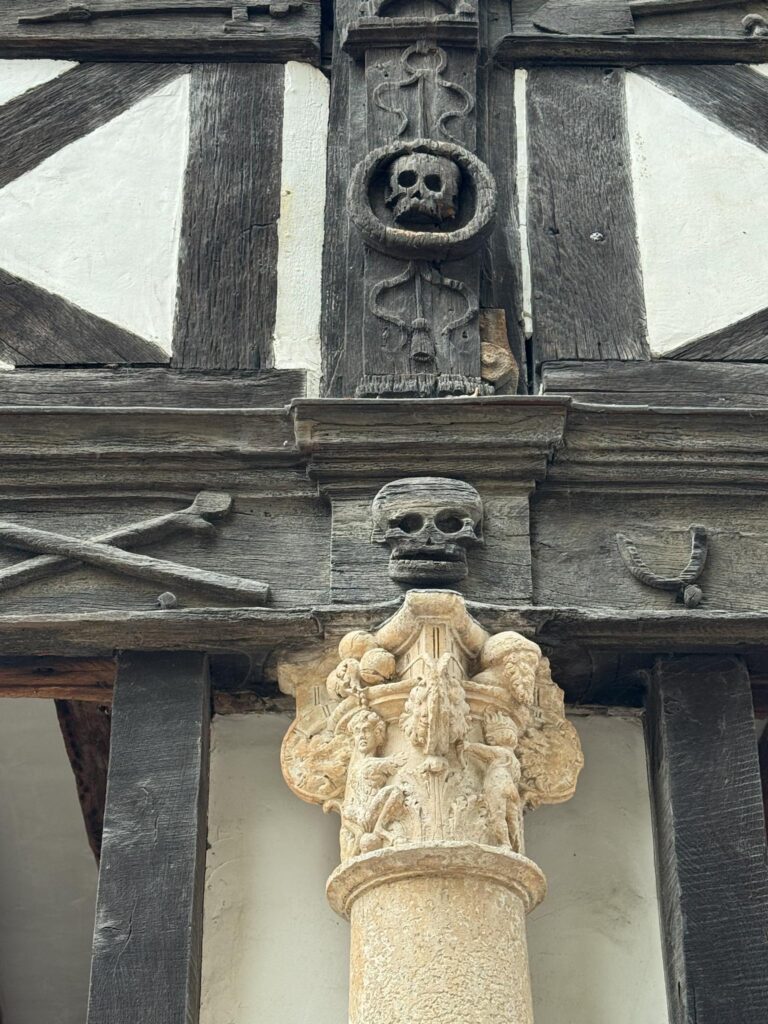
Cemeteries were overwhelmed, and Saint Maclou, the largest area church, added another cemetery, Aitre Saint-Maclou. Buildings sprang up around it to accommodate the large numbers of bones. Today you can still see the carvings in this building that is one of the last with an ossuary in Europe.
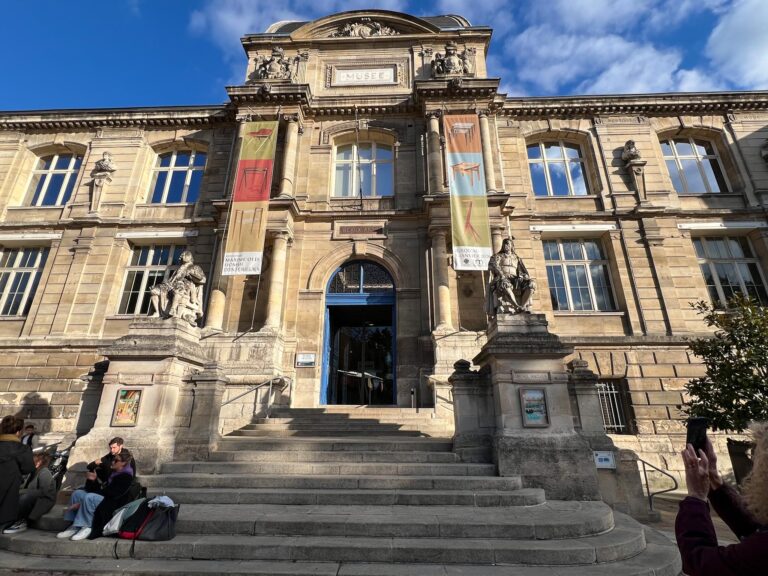
With just a little time left before catching our train home to Paris, we decided to visit the Rouen Museum of Fine Arts.
Monet’s “Portail de la Cathedral de Rouen, temps gris” (overcast weather).
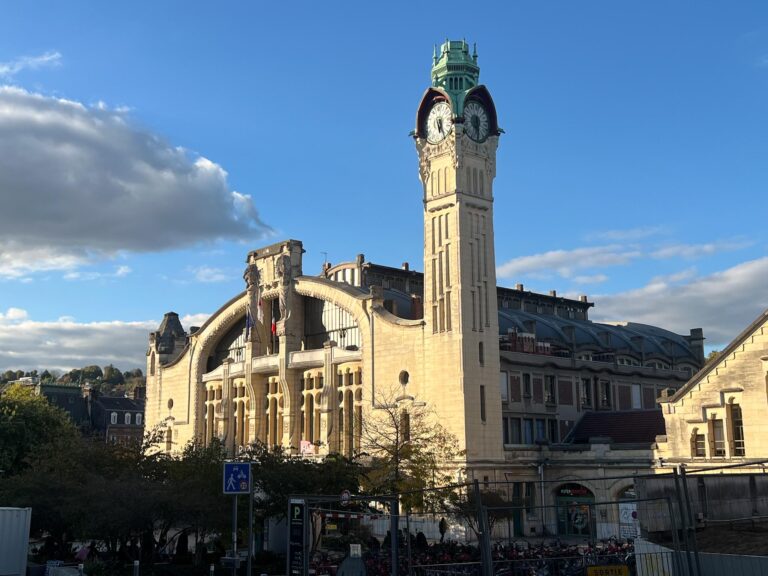
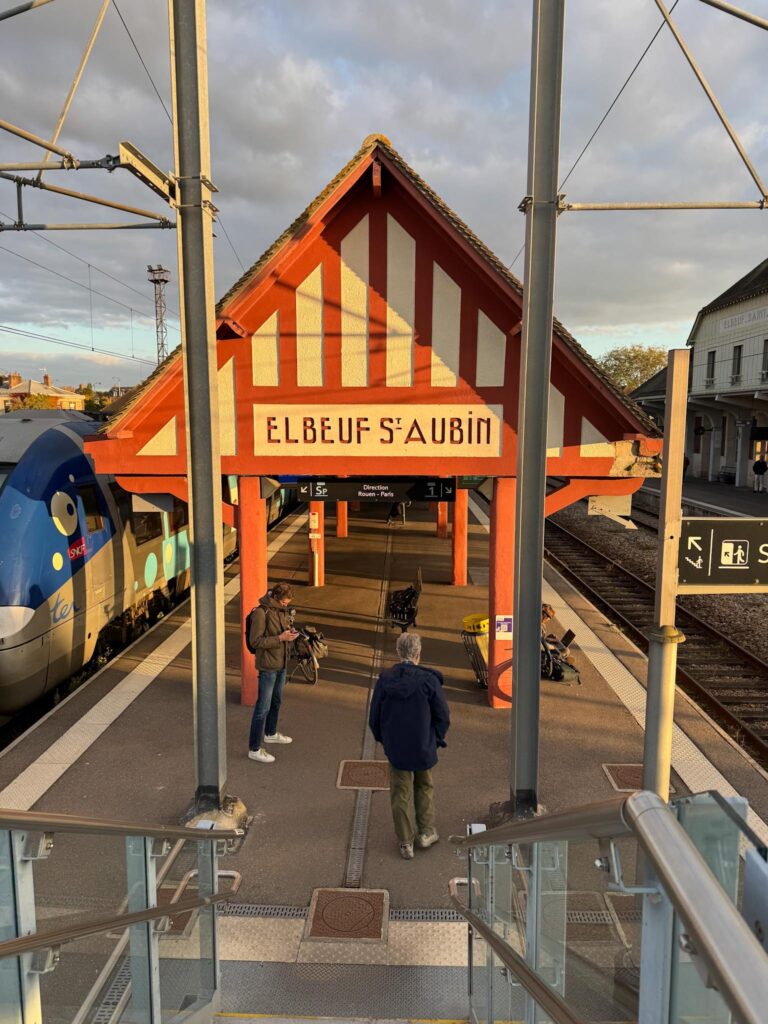
We headed to the busy station to catch our 6 pm train. The line was posted on the departure board so we got on. Oops! It left at 5:45! We got off at Elbeuf St. Aubin, the first station with a quick return to Rouen. With a Eurail pass, our only charge was our time and a seat reservation charge.
Not even dark yet, but it was when we arrived in Paris. The good news that we missed much of the rush hour subway traffic and we had a good laugh.

4 Responses
Another beautiful Notre Dame Church. Looked up how many in France named Notre Dame and the answer was “unknown” because there have been so many. Did learn Notre Dame refers to Mary which I didn’t know. Always felt it referred to football! How are you going to manage with our very modest church when you return home?
There are so many churches dedicated to Mary both in France and also Italy. I was surprised to learn how often the government interfered with churches—King Henry VIII in England and Napoleon in France. It makes you appreciate the separation of church and state in the US.
We’ll see how our church is faring when we get home.
This reminds us of our Normandy cruise.
I’m glad it struck a chord with you.