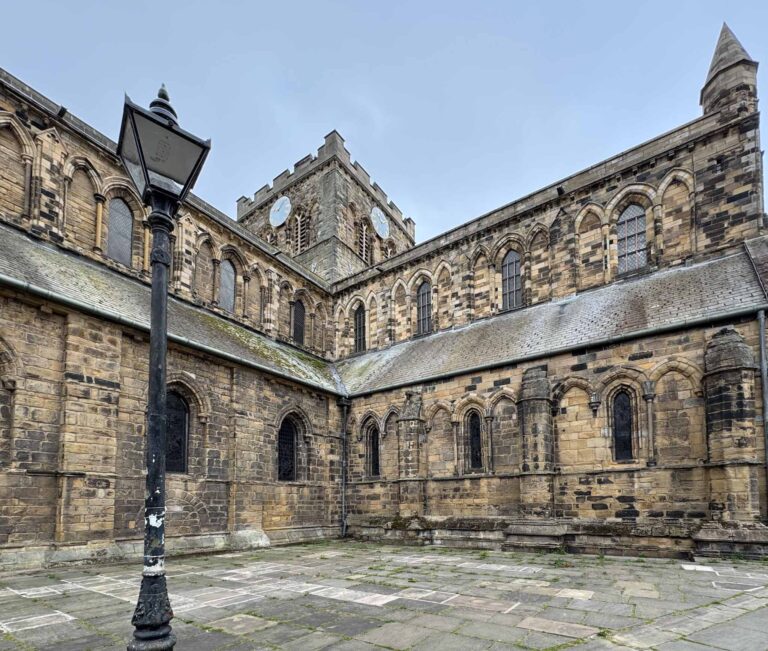
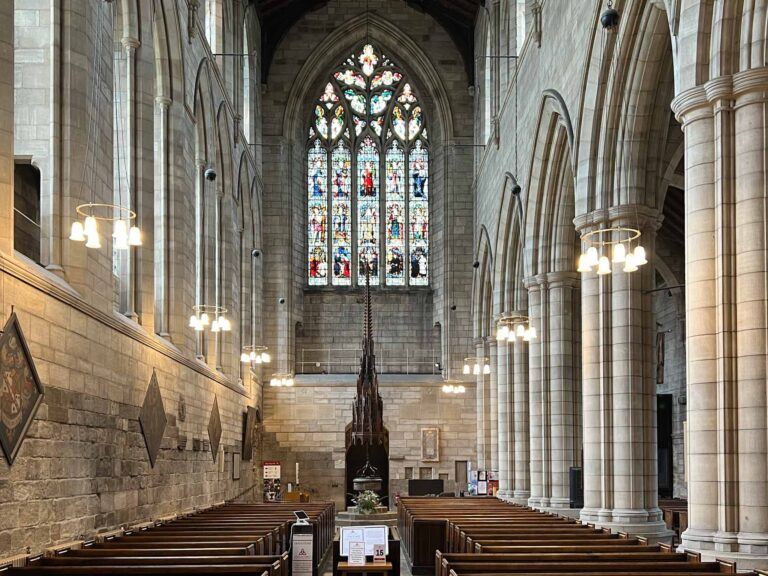
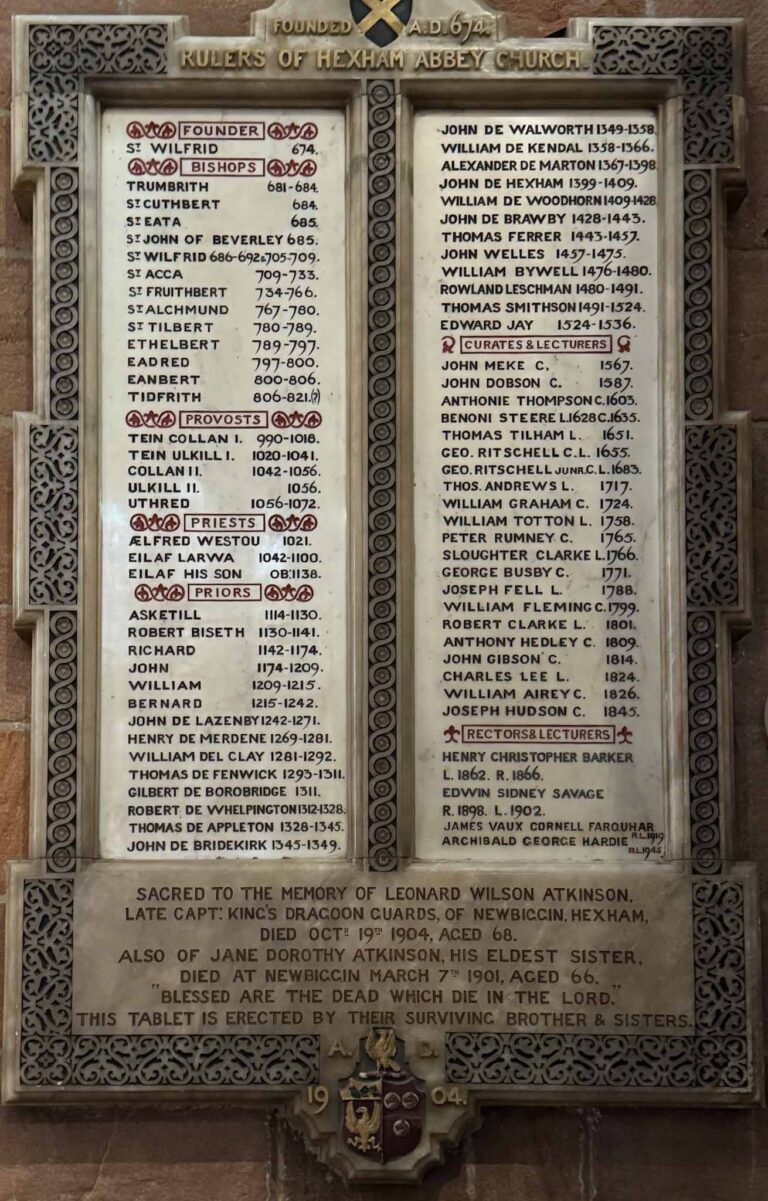
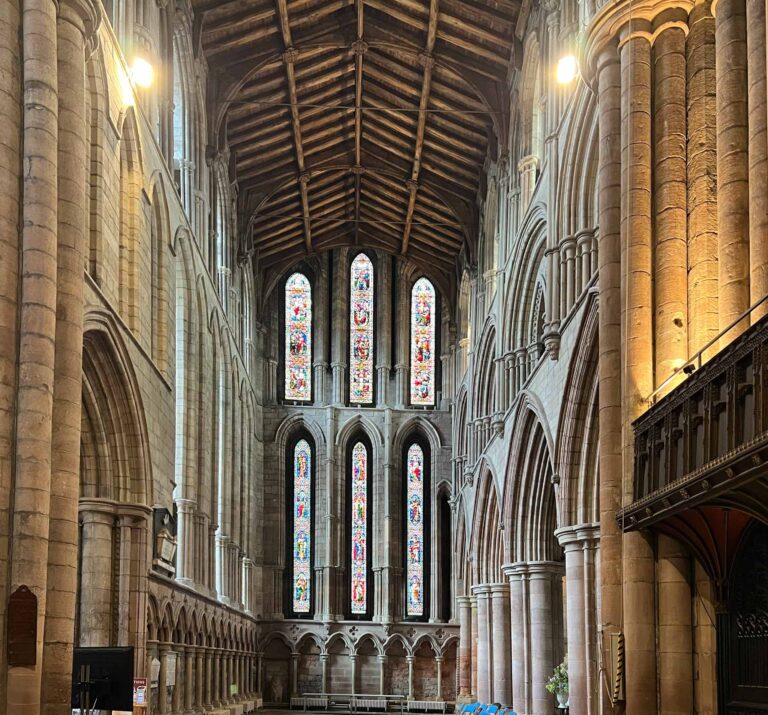
There has been a church on this site for over 1350 years since Queen Etheldewda made a grant of lands to Wilfred, Bishop of York, in around 674. Today’s building is mostly from the 12th and 13th centuries.
The west door is traditionally the main entry to the church where the baptismal font is placed. Baptism is considered the entry into Christian life.
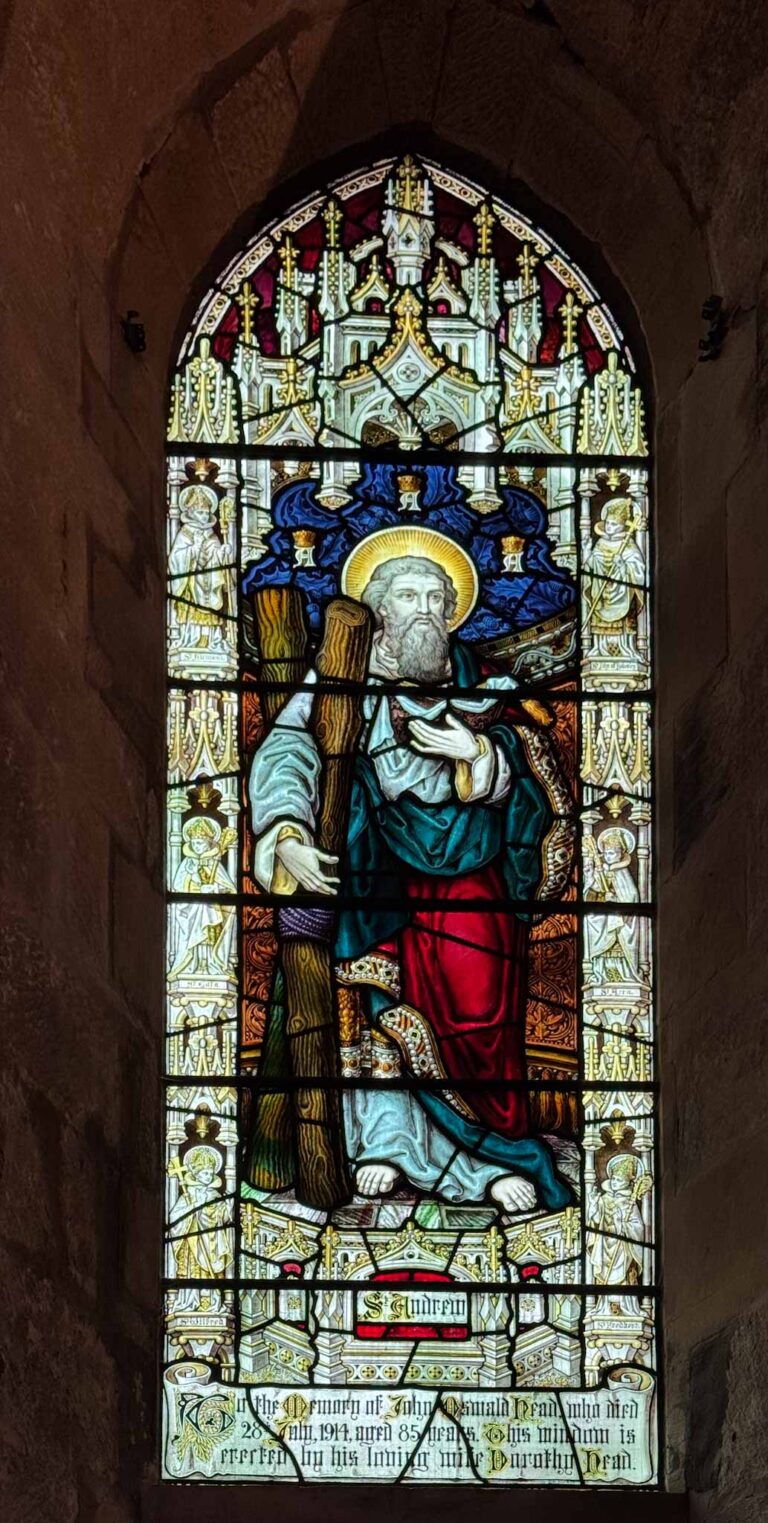
St. Andrew, Hexham Abbey’s patron saint, is shown here. Although the stonework surrounding the window dates back to the 13th century, the stained glass was installed in 1873. Sadly, none of the medieval glass survived in the Abbey.
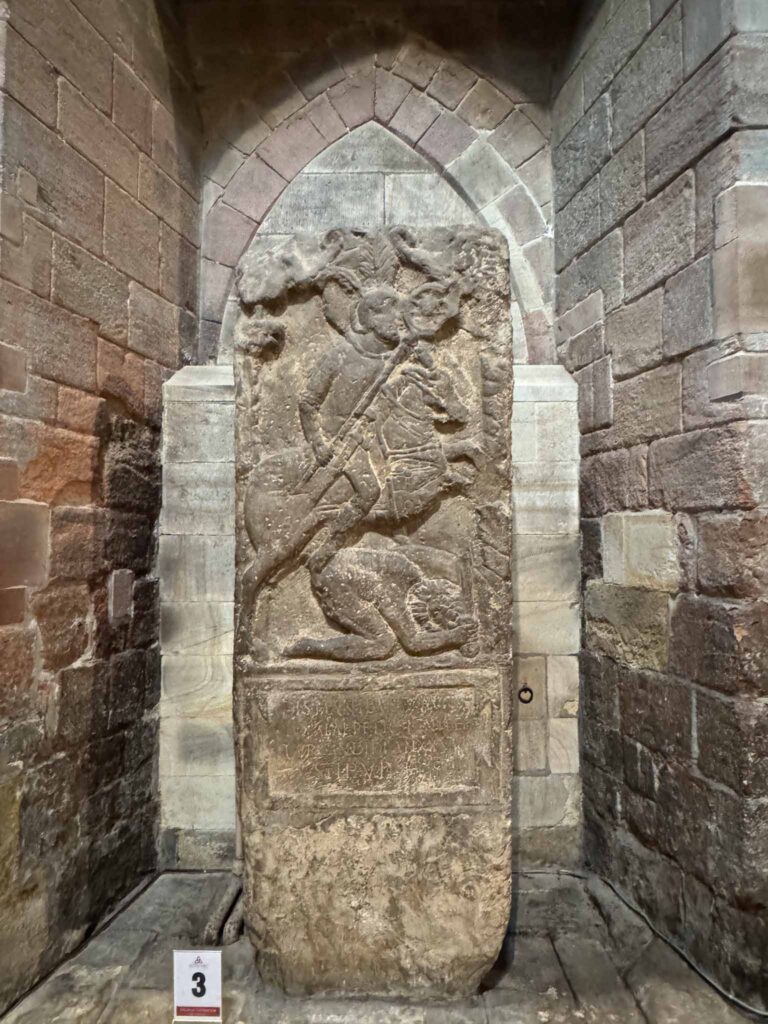
This stone was one of the foundation stones of the Abbey, unearthed in 1881 to discover that it was a grave stone of a Roman soldier, Flavinus, whose cavalry regiment arrived as part of the Roman conquest of Britain. He died at age 25, toward the end of the first century.
The stone is nearly nine feet high, the largest example of its kind to have been found in England. The scene carved on the stone represents a mounted soldier riding over a barbarian. Flavinus, the soldier, is wearing a helmet with a high crest, carrying a standard that displays the sun god in a circle. The barbarian is naked and holds a large oval shield and a short leaf-shaped sword.
The stones dedication reads “To the Venerated Departed Here Lies Flavinus A Horse Rider of the Cavalry Regiment of Petriana Standard Bearer of the Troopnof Candidus Aged 25 of 7 Years’ Service.”
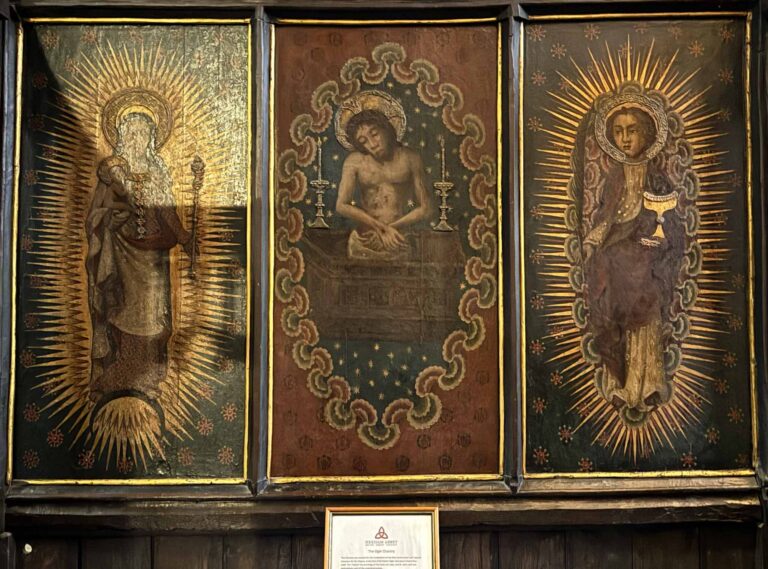
This painted triptych is from a small chantry chapel where masses were said for the dead. The chapel was dedicated under the will of Sir Robert Ogle after he died during an outbreak of plague in 1410. Instead of being buried in the costly family chapel at Whalton, the body was buried quickly with only the paintings in the richest style of medieval ornamentation.
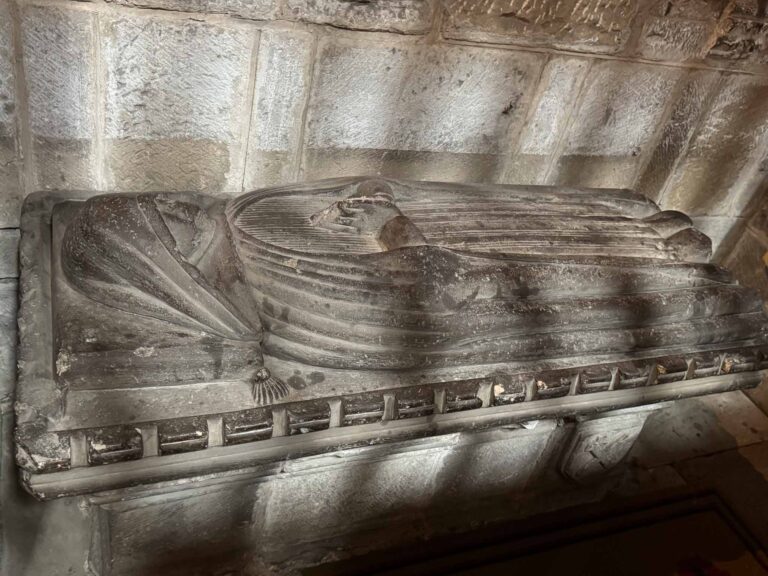
On the other side of the nave, the chantry chapel commemorates Roland Leschman who was Prior from 1480 to 1499. Leschman came from a humble local family of stonemasons. There is a tomb topped with an effigy of an Augustinian Canon with his cowl pulled over his face in death, usually identified as Leschman. As Prior, he oversaw about 20 canons. His is the only grave with an effigy where the canons could pray for his soul.
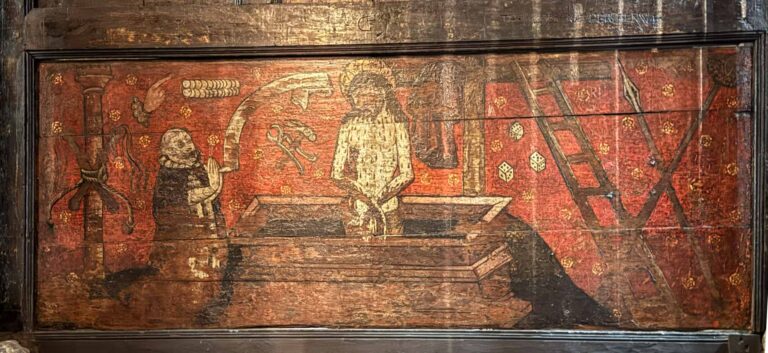
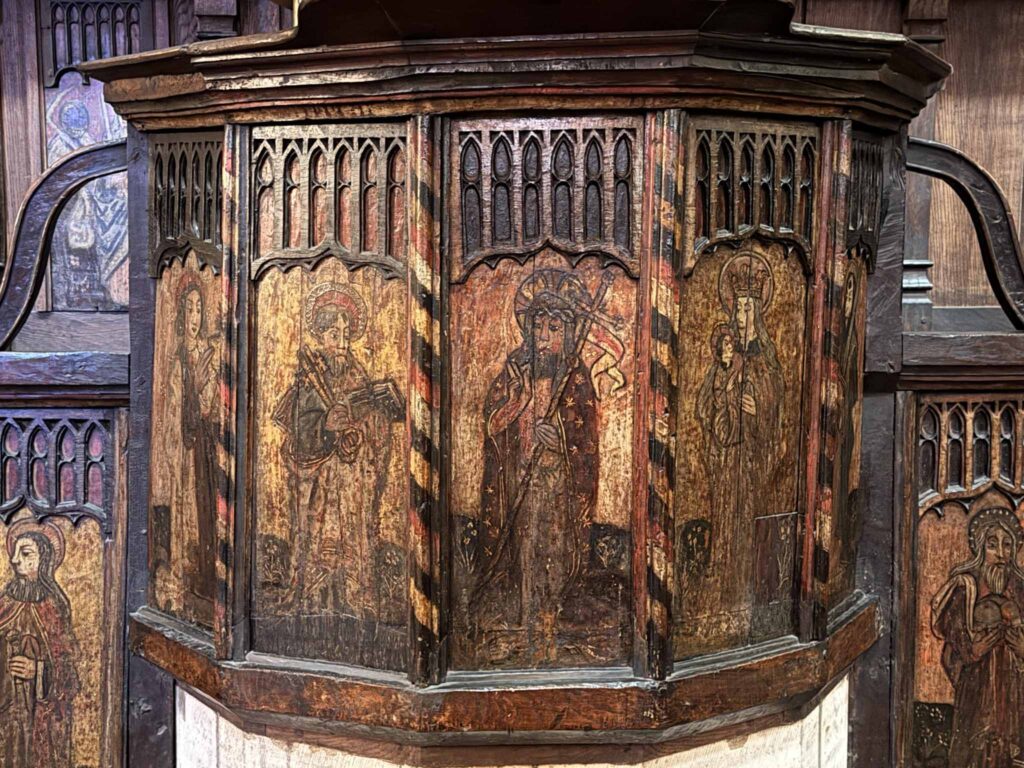
Underneath painted pictures of St. Peter, St. Paul, and St. Andrew, this panel portrays Christ as the Man of Sorrows, standing in the tomb and surrounded by symbols of the Passion and worshipped by the kneeling figure of the donor, Prior Leschman.
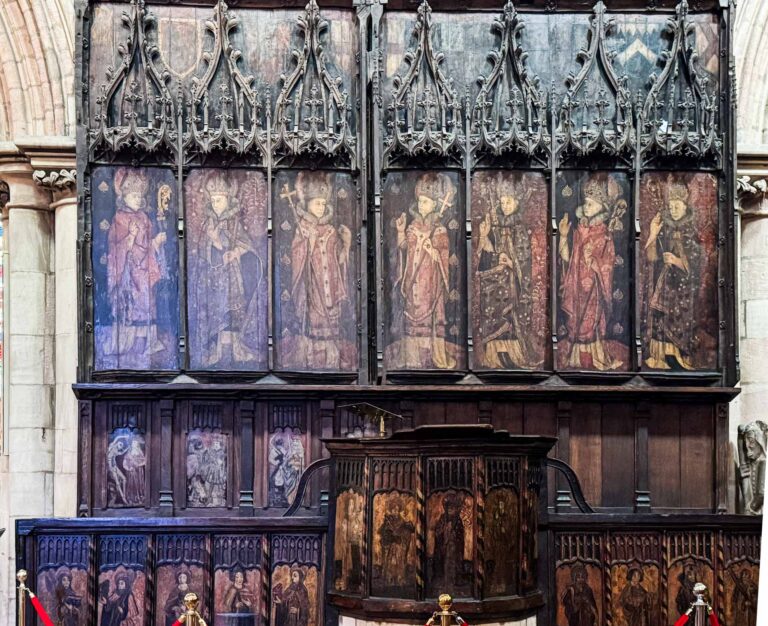
These painted panels from the fifteenth century depict some of the bishops of Hexham Cathedral from the seventh and eighth centuries.
Panel paintings, on a single piece of wood or a number of pieces joined together, were the norm before canvas become the more popular medium in the 16th century.
Hexham Abbey houses one of the largest collections of medieval wooden panel paintings in the country, as many other collections within churches did not survive the Reformation under Henry VIII and later iconoclasms.
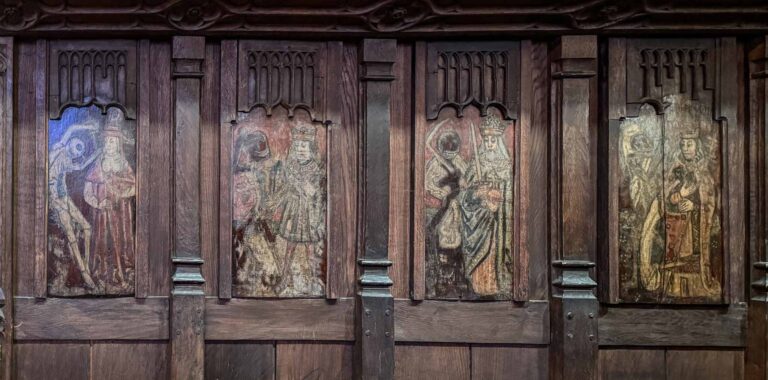
These four paintings, called Dance of Death from the 15th century, show various representations of Death dancing, in turn, with a cardinal, a king, an emperor, and a pope. This was a common medieval theme, emphasizing the irrelevance of rank and power in the face of universal human mortality.
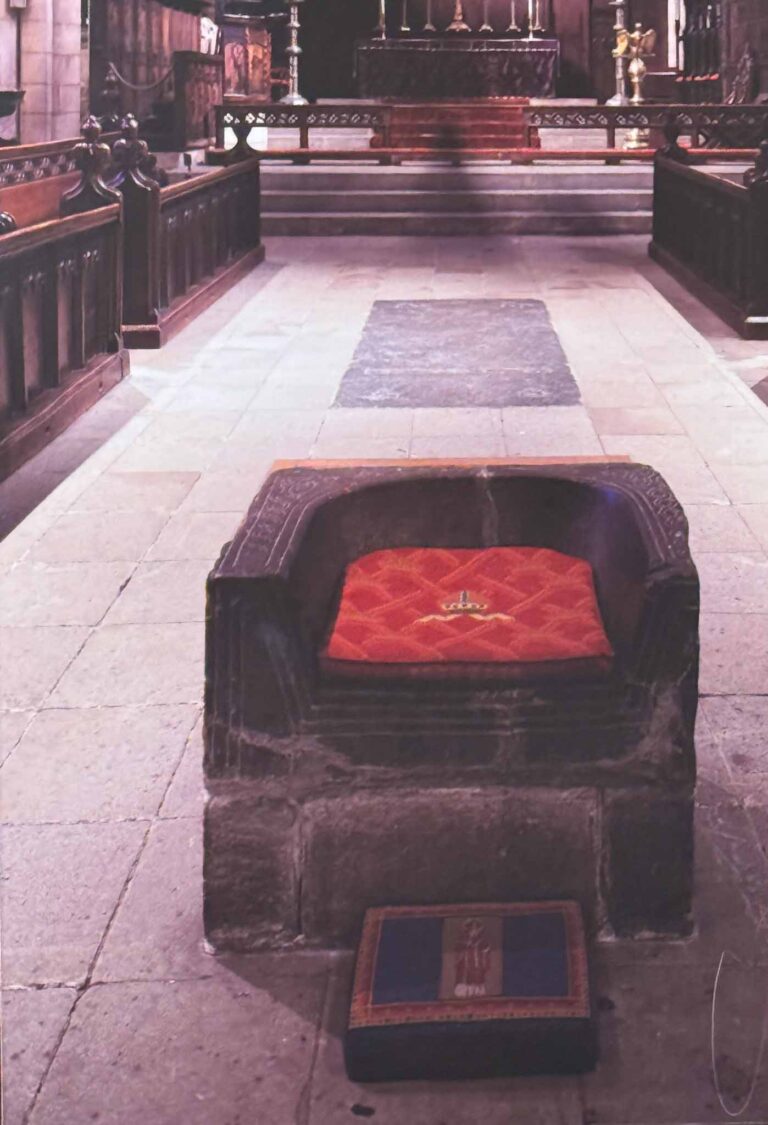
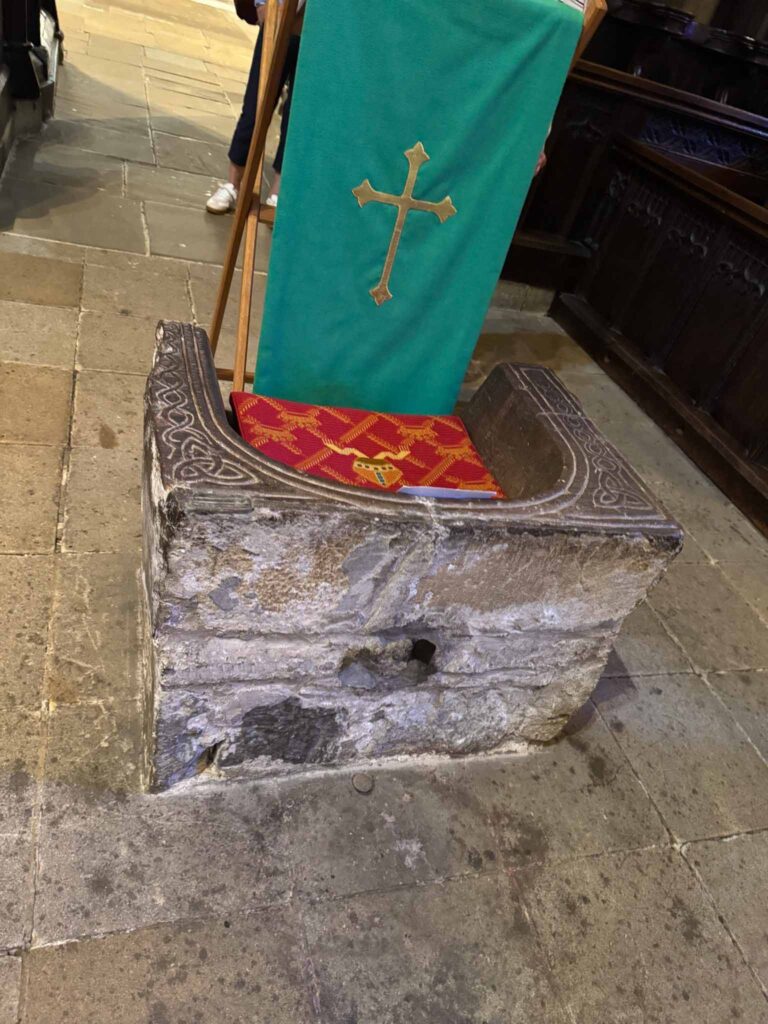
It is possible that Wilfred had this solid block of sandstone fashioned into a seat when he first founded the monastery in 674. It has simple carved interlace patterns on the arms and front.
The word “frith” is of Anglo-Saxon origin, and means peace, security, and freedom from molestation.” In medieval England, it was possible for those fleeing conflict and persecution, and even justice, to claim sanctuary in a church. The frith stool was considered to be the safest and most protected place in the church for such refugees.
We met Ray and Ann in the abbey where they were visiting on a U3A tour.
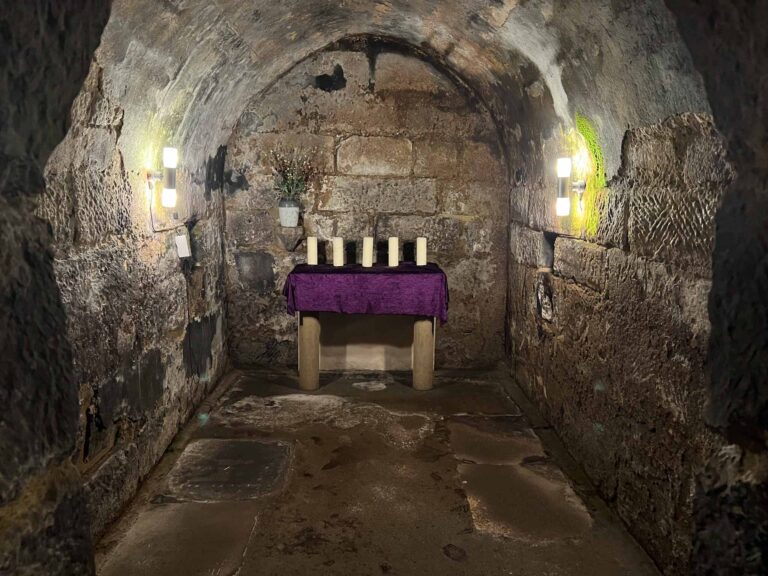
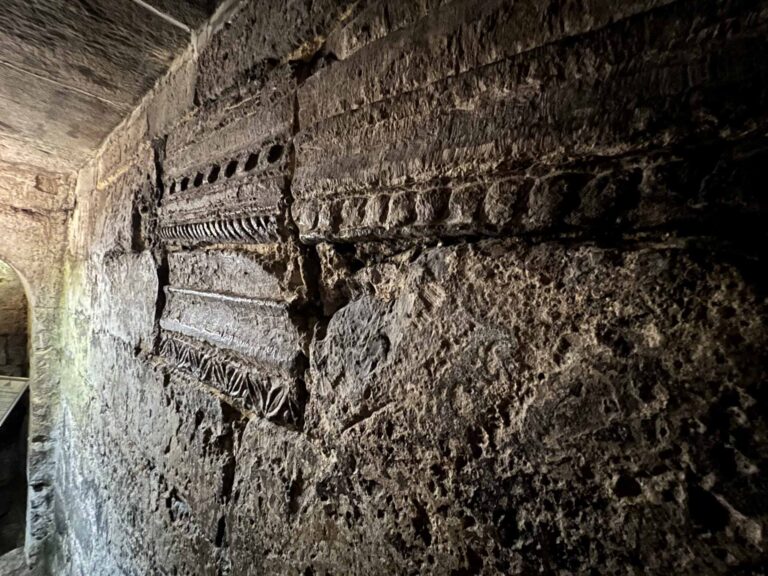
The Anglo-Saxon crypt is the oldest part of the Hexham Abbey, from around 674. Much of Winfrid’s church was built from stones taken from local Roman remains, notably from Cotia, the Roman settlement near Corbridge, and possibly from the Bridge near Chester’s fort attached to Hadrian’s wall.
The shrine here was built for the Saint’s relics which Wilfred brought back from his travels.