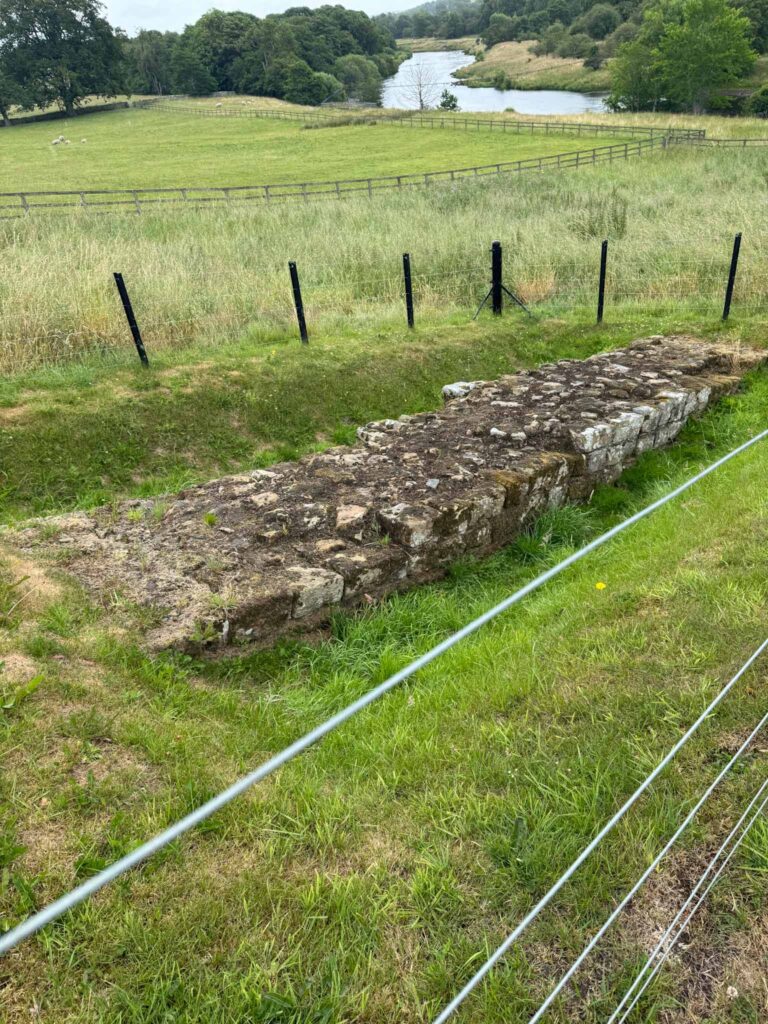
This portion of Hadrian’s Wall crosses the river North Tyne (the bridge is no longer here). The gentle terrain of the river valley made the spot vulnerable to attack, so Chester’s Roman Fort was added.
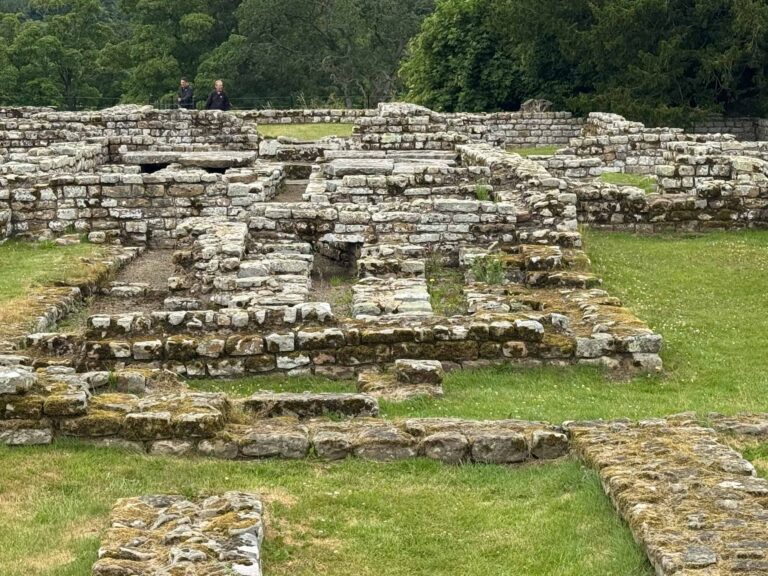
The fort used gravity to move water and sewage through under-floor channels. In the case of the commanding officer’s house, under floor cavities were used for heat.
500 men, their horses, and their slaves lived together in barracks. At any point in time, approximately one-third of the garrison would be on patrol, one-third fighting, leaving about one-third at the fort. A large civilian population was needed nearby to support the fort including growing crops to feed the horses.
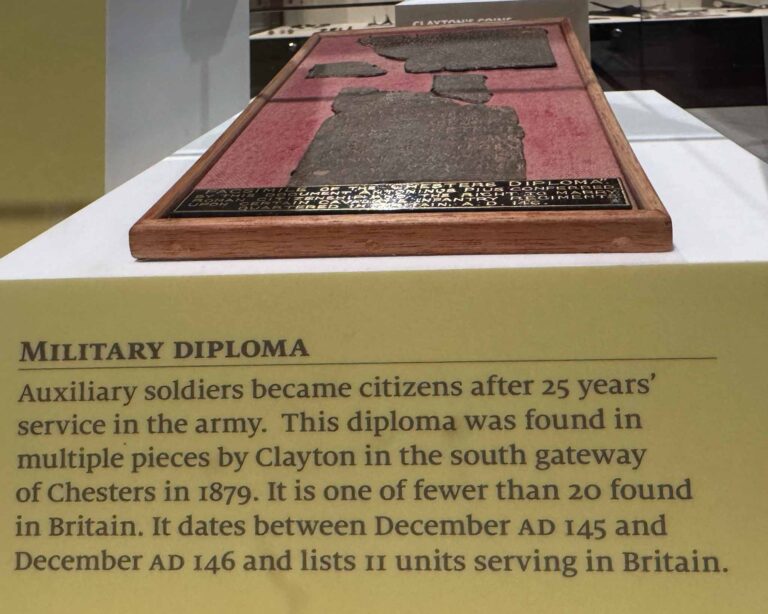
From 189 AD to the end of the Roman era, the cavalry regiment here was the Second Asturian Cavalry Regiment, non-Roman auxiliary troops from northern Spain. They generally signed on for a 25-year term, after which they would be granted Roman citizenship. Commanding officers rotated every three years, hoping for a more powerful post at the end of each term.
The Roman army was strictly run, with death as punishment for cowardice or insubordination.
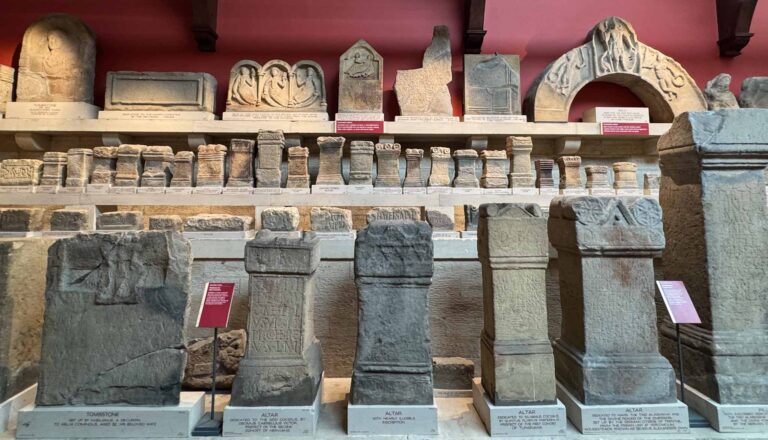
John Clayton inherited his family’s estate at Chesters in 1832. Intrigued by ancient ruins on the land, he spent the next 50 years uncovering the fort, collecting artifacts, and purchasing other land to preserve and study it, His pioneering work encouraged public interest in Roman Britain.
The John Clayton Museum displays the many artifacts found in the excavation process.
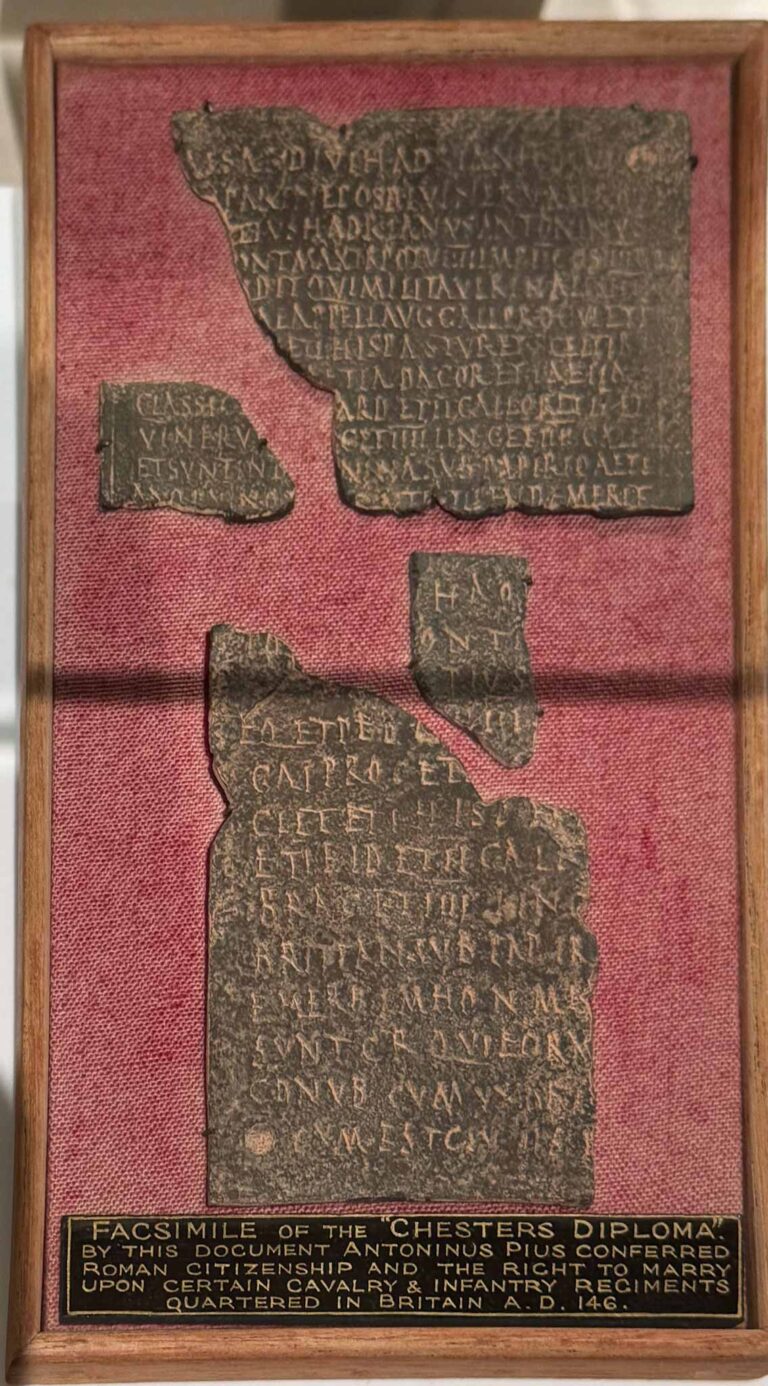
This is a copy of a diploma for a soldier being granted Roman citizenship after his 25-year service. The original is the only artifact John Clayton donated to another museum, the British Museum, as he recognized its national value.
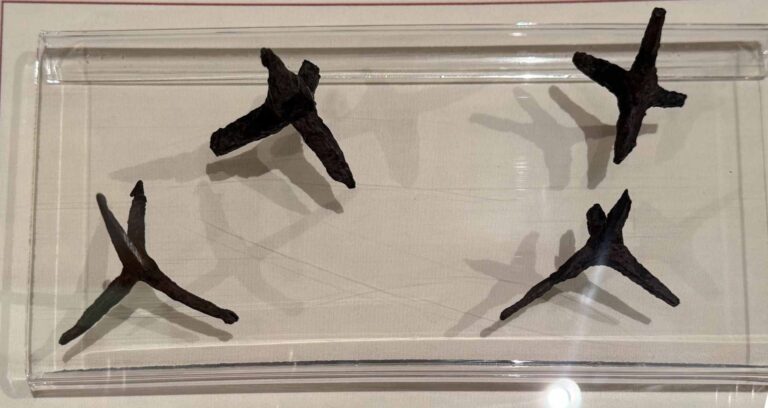
These iron caltrops were used to stop a cavalry charge. The spikey pieces of iron would severely injure horses’ hooves. The same principle today is used by police to puncture vehicle tires.
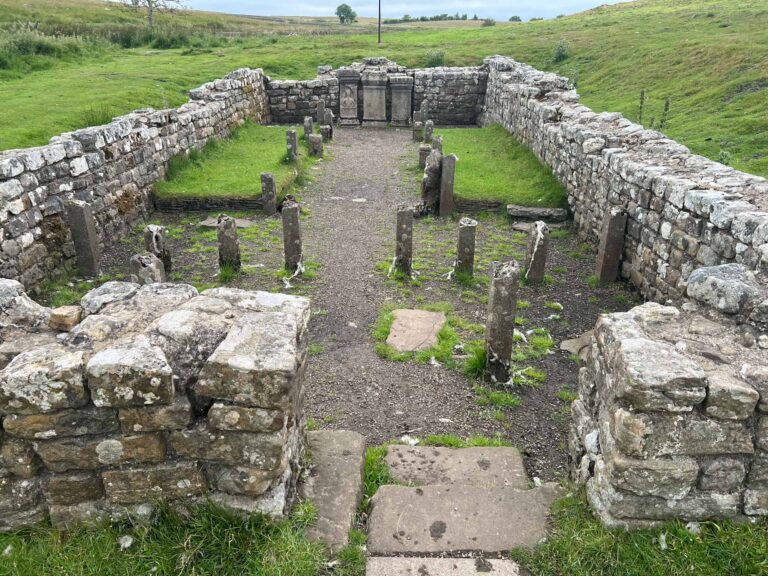
The Temple of Mithras adjoins Hadrian’s Wall near the Carrawburgh Fort. The temple was probably built around 200, dedicated to a god of Roman religious practice that emerged in the first century AD, inspired from the eastern Empire. Worship took place in small, secluded temples resembling the cave in which Mithras was said to have killed a sacred bull and feasted with Sol, god of the sun. It is thought that each temple represented the cosmos, where worshippers underwent a spiritual journey from life to the afterlife.
A door led to the ante-chapel, used for initiation tests where worshippers had to pass before being allowed to proceed to the next grade in temple hierarchy. There were seven grades: Raven, Bridegroom, Soldier, Lion, Persian, Courier of the Sun, and Father. In the nave, benches were available on either side of the central aisle for worshippers to recline during ceremonies. At the far end of the nave, the sanctuary contained the altars. On one, Mithra appears as a Charioteer of the Sun with carvings to shine through when a candle was placed in the hollow behind.
Mithra was especially disliked by Christians who saw the Mithrian ritual of taking bread and water a caricature of their own holy sacrament. It may have been Christians who destroyed the temple in the fourth century, rather than barbarians.
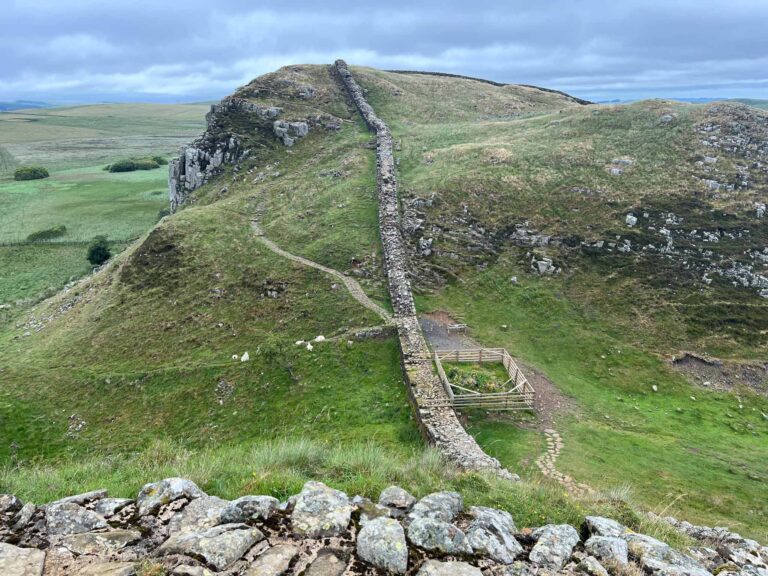
We stopped at an area called Steel Rigg where the section of Hadrian’s Wall called Sycamore Gap included a much-loved view of a tree that was vandalized in 2023.
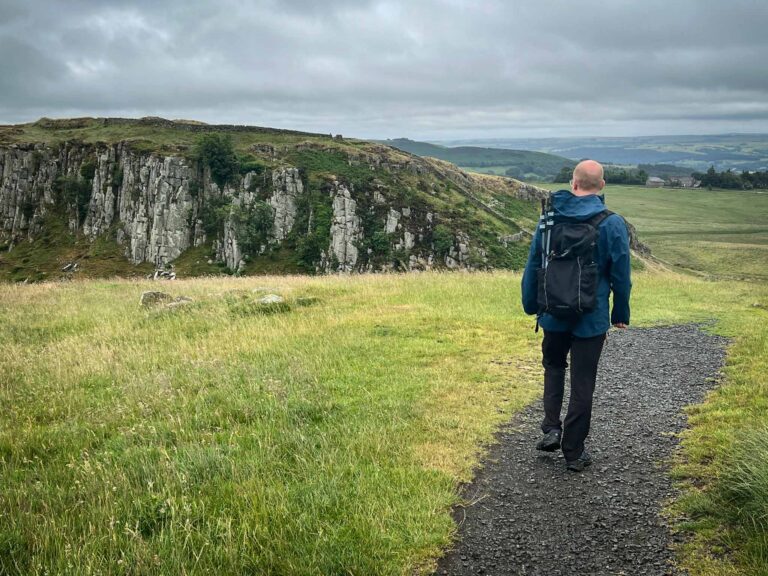
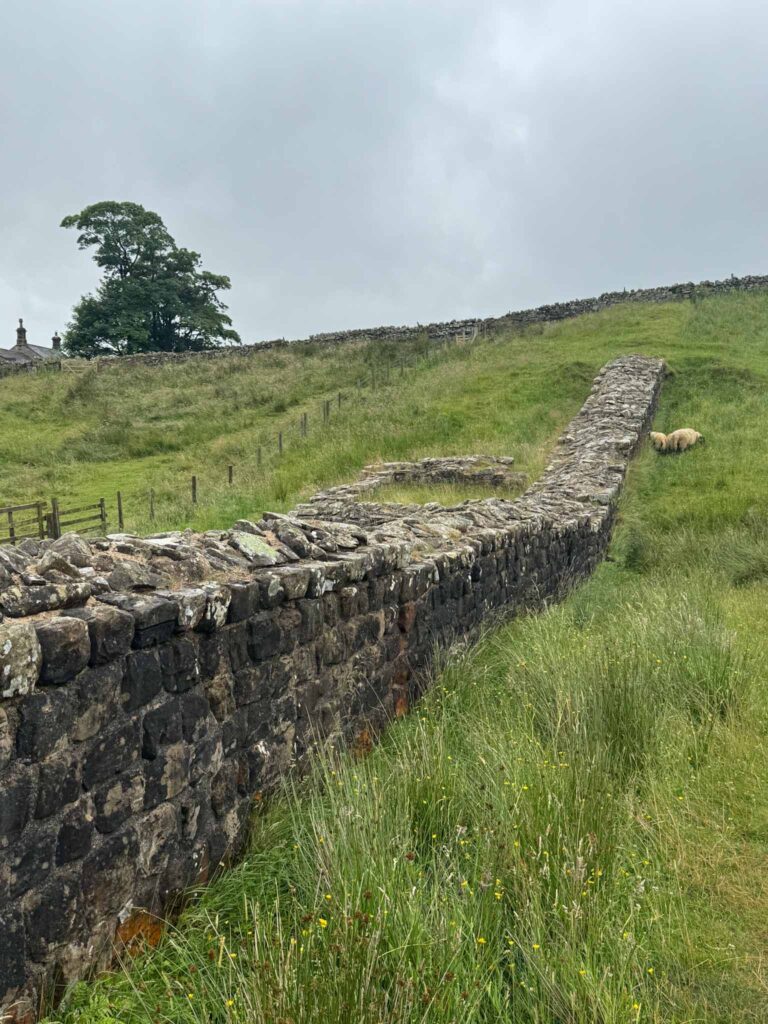
The Walk follows the land, rising over the crags and dipping into ‘gaps’ where the ditch usually reappears briefly. On a gentle slope, the courses follow the contour, but when the slope steepens, the courses are laid horizontally and the Wall is stepped down the hill.
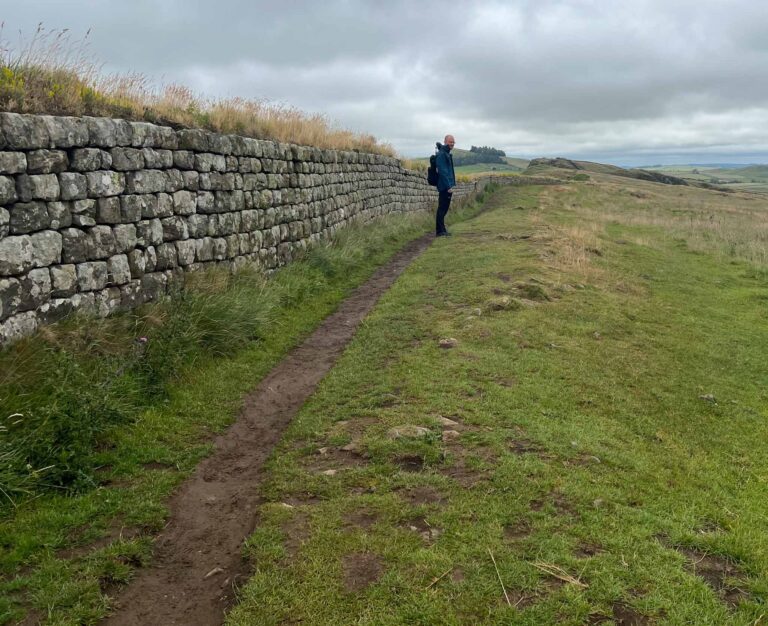
The wall is broad and in one area, as high as three meters. In some of the Wall, the top of the wall is covered with earthen plants.
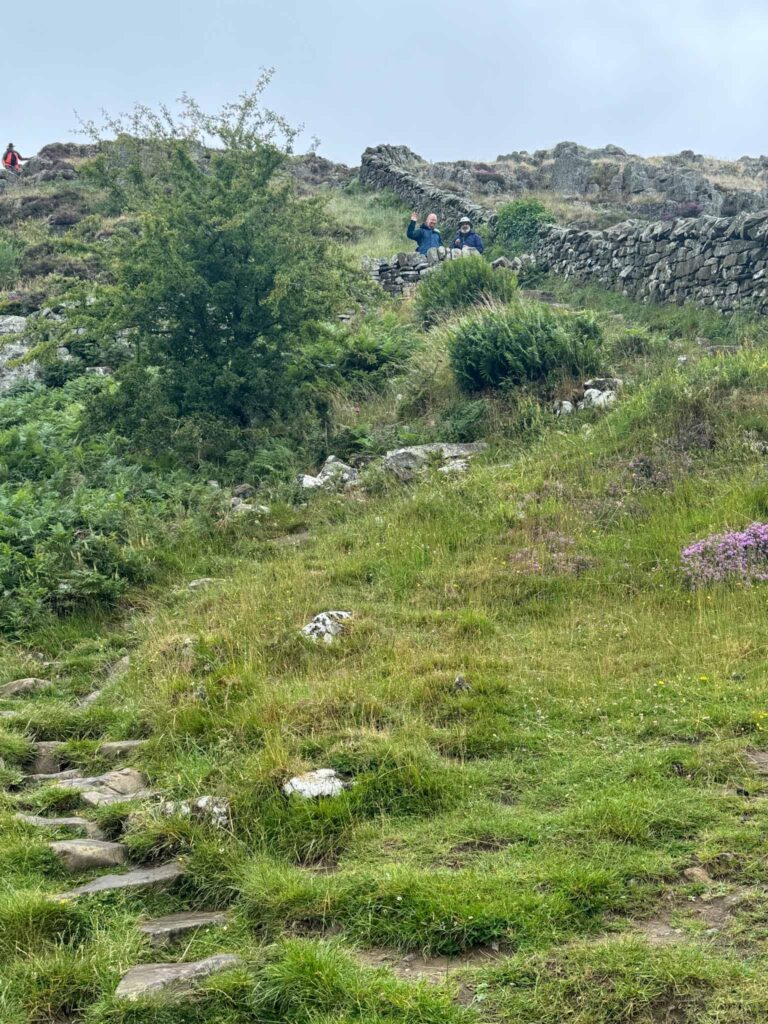
Richard and Simon wave near the top of the hill as they head out for Sycamore Gap.
The square enclosure marks the spot where the tree lived for a century. The spot was famously used in the film “Robin Hood: Prince of Thieves..”
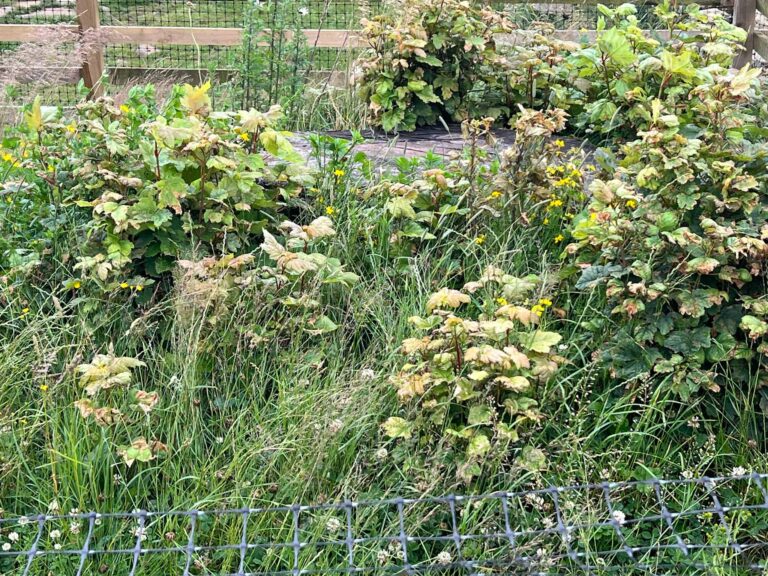
Today the Sycamore tree stump is sprouting, with hopes that future generations will be able to see the beauty in this spot.
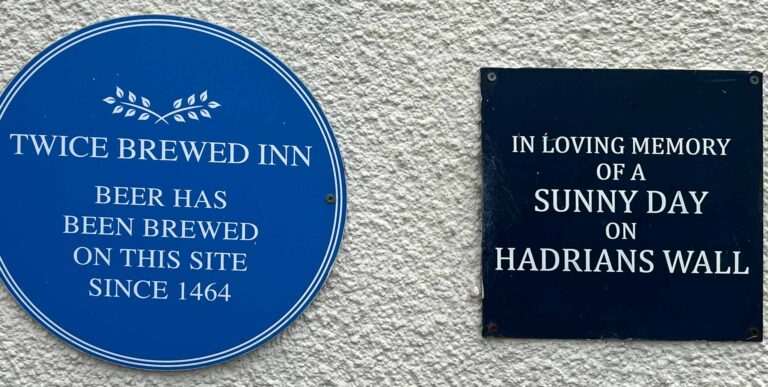
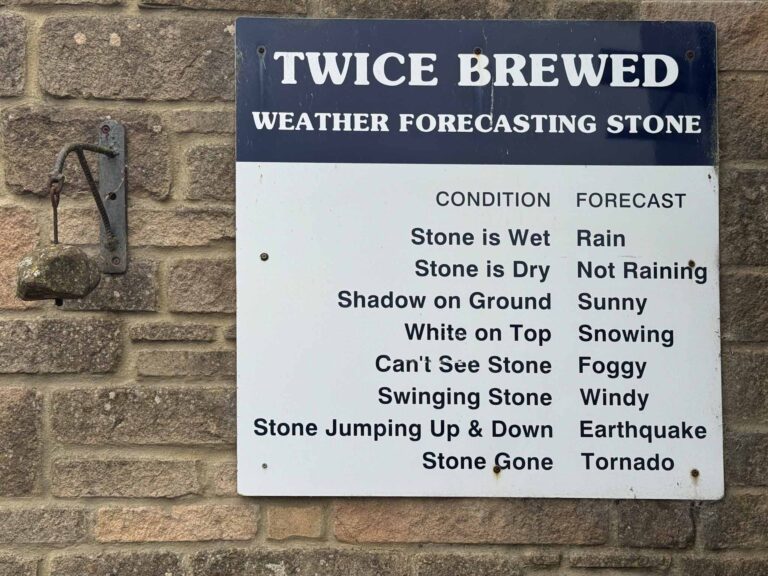
We had dinner in this remote spot that caters to and celebrates Hadrians Wall walkers.

One Response
Fascinating! It’s definitely not a Mary-friendly hike!