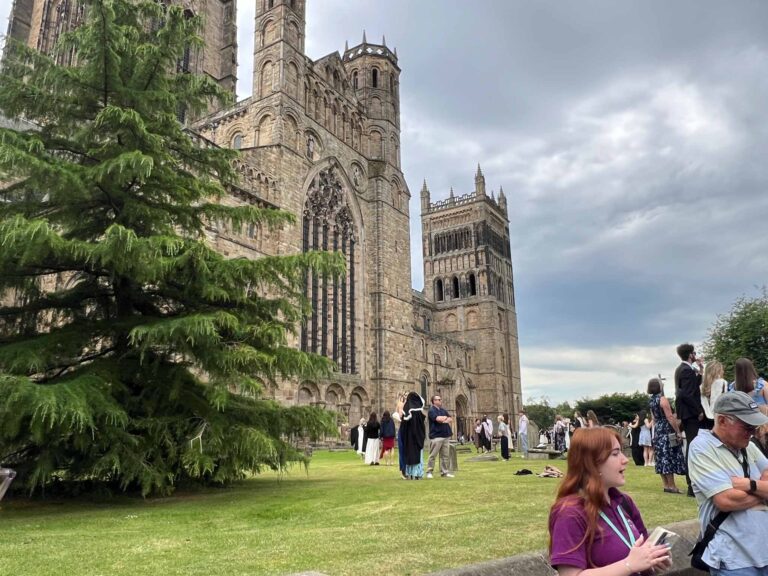
Durham Castle and Cathedral is a UNESCO World Heritage Site owned and managed by Durham University in partnership with Durham Cathedral.
Since the Cathedral was closed to visitors until at least 6 pm, we elected to take a guided tour of the town.
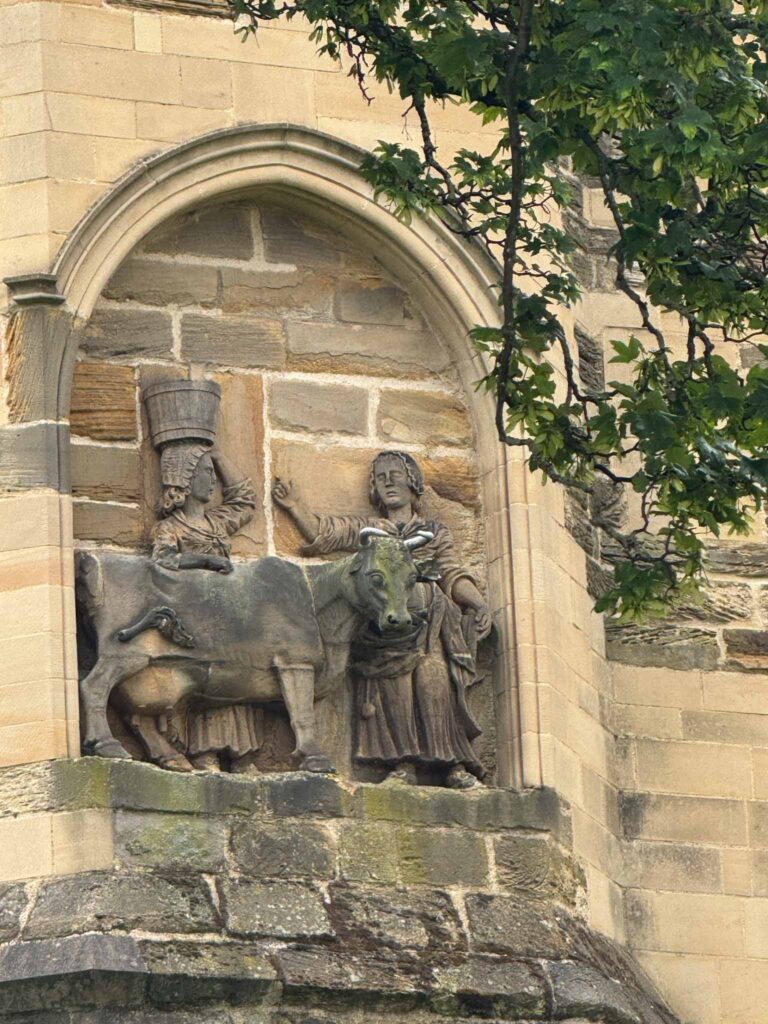
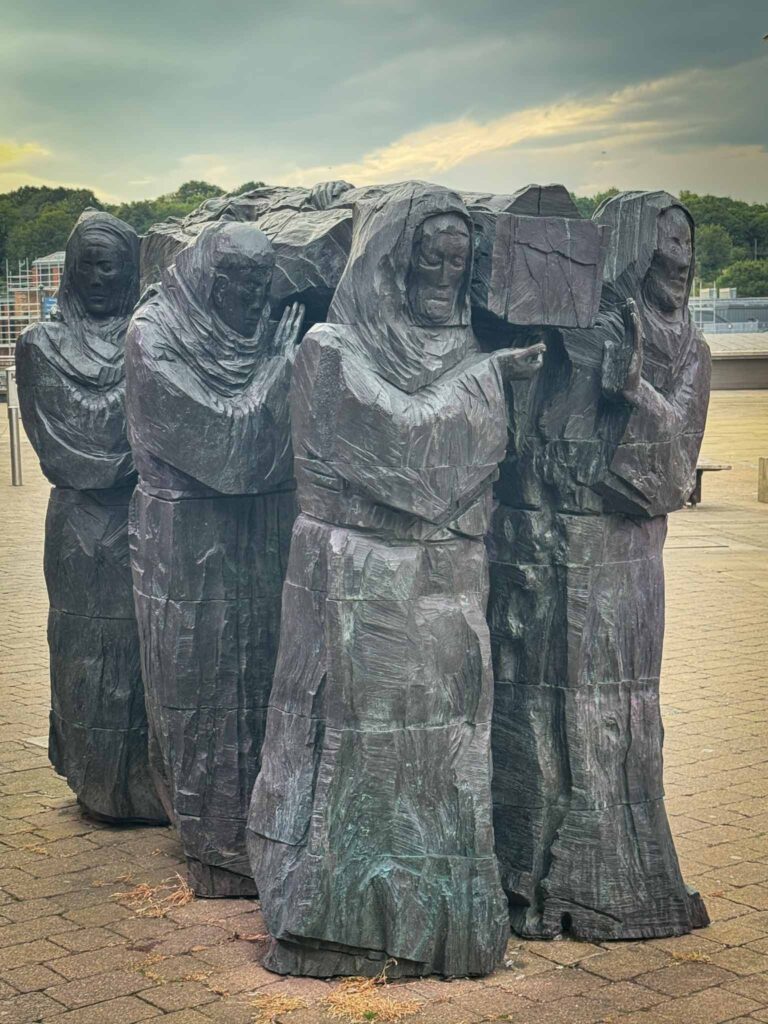
The legend of Dun Cow is illustrated on a Cathedral Wall. When the monks were wandering with the body of St. Cuthbert, the cart carrying the coffin suddenly stopped and could not be moved. The leader of the community, Bishop Aldhun, had a vision of St. Cuthbert demanding to be taken to a place called ‘Dunholme’, but no one knew where that was. A cow maiden walked by and asked another young woman if she had seen a lost dun (brown) cow. The second woman said she had seen the cow heading in the direction of Dunholme and pointed out the way. The monks, overhearing the exchange, decided to follow the cow maiden and found that St. Cuthbert’s coffin moved readily in that direction. They continued along the way and got to Dunholme (Durham) where the church was established as a shrine to St. Cuthbert.
The University is divided into 17 colleges. Departments perform research and provide teaching to students while colleges are responsible for their domestic arrangements and welfare.
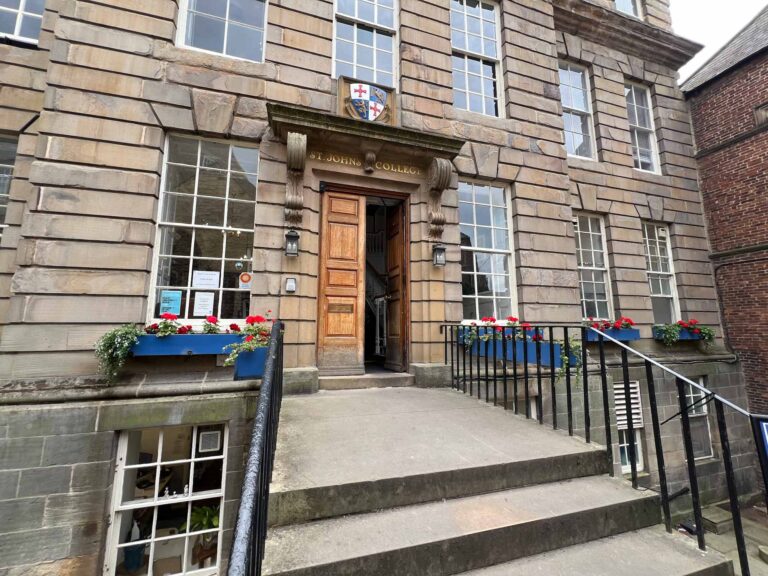
The Bailey and Palace Green form the historic center of the university and contain several colleges, usually identified by unique door colors. Here is a building of St. John’s College.
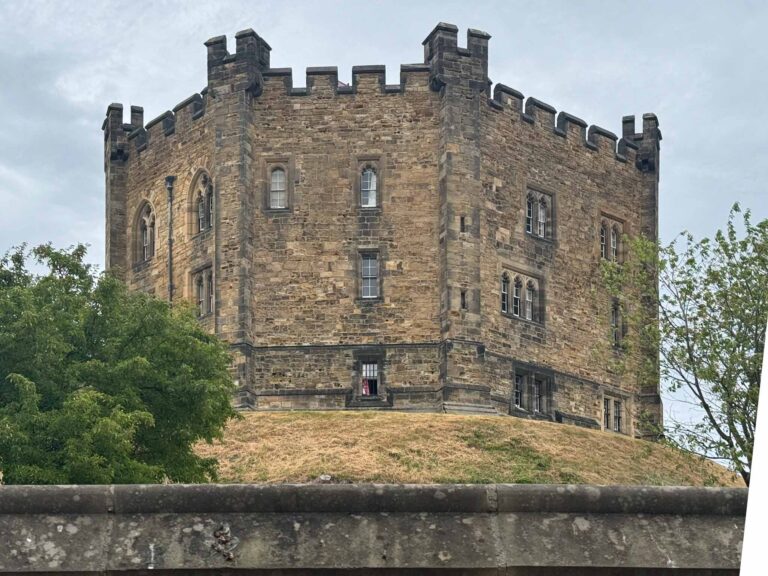
Durham Castle is a Norman Castle built by William the Conqueror in 1072 to defend the north of England. It is usually open for guided tours, and also is home of one of Durham University’s colleges, housing students and staff.
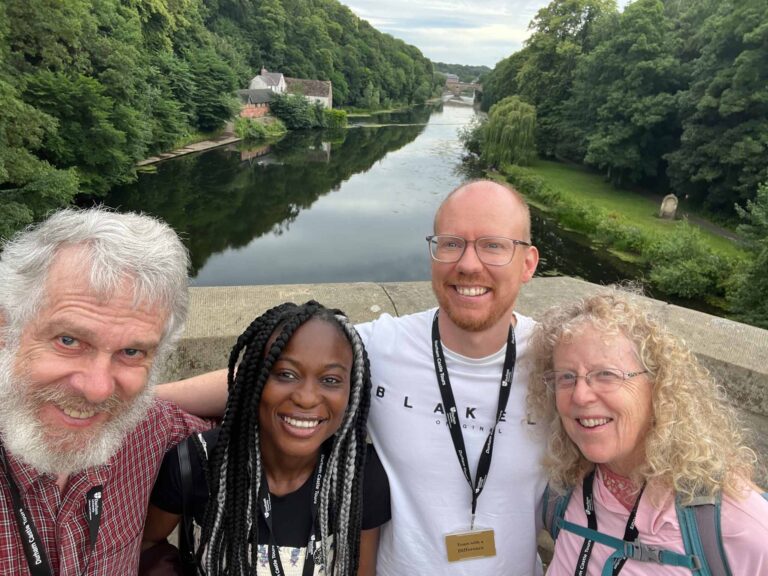
Richard, Nelly, Simon, and Jan took a selfie on the bridge over the River Wear.
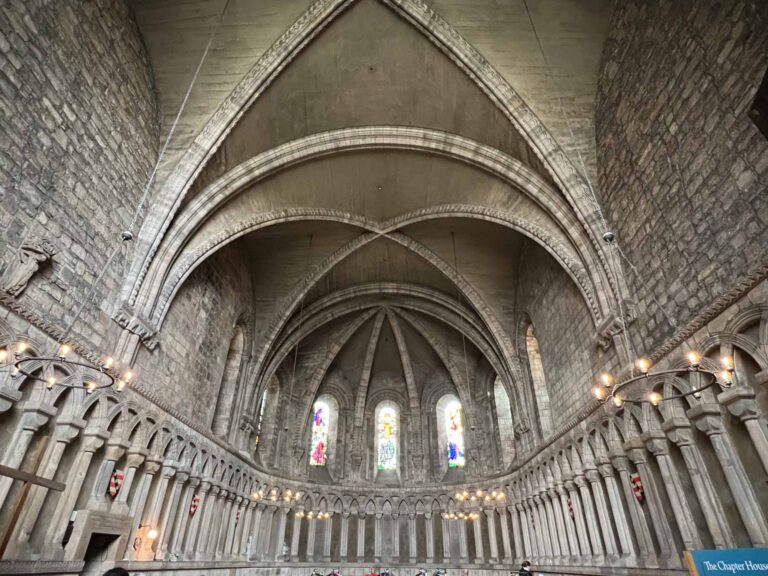
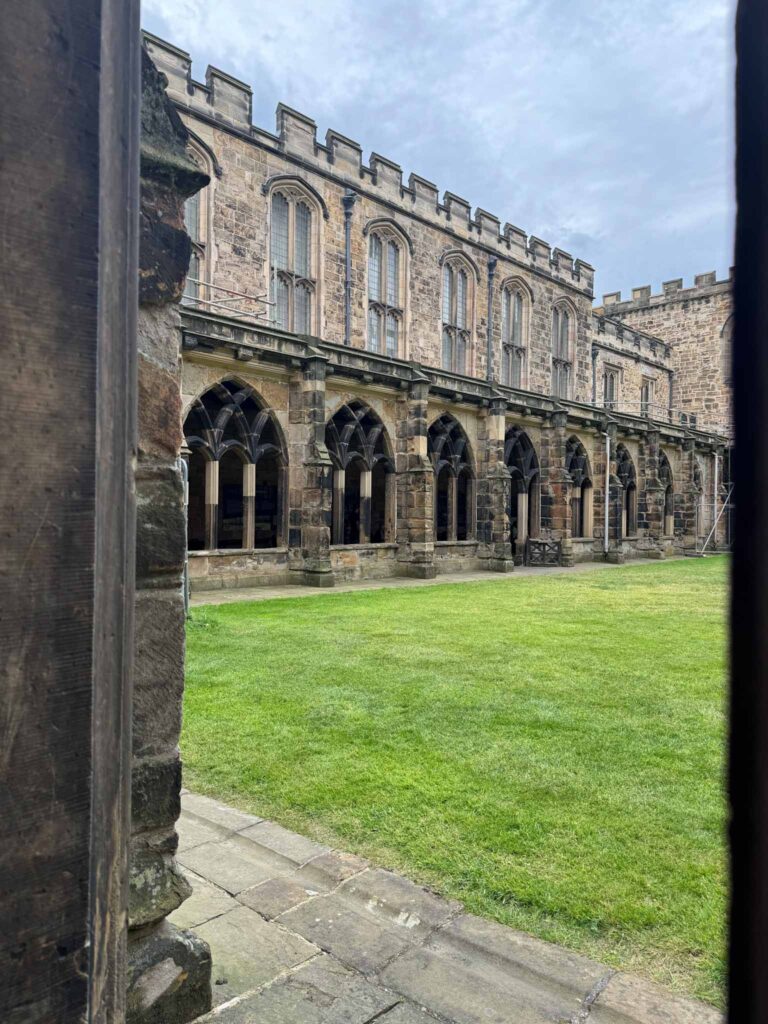
Our tour ended in the Cathedral cloister where we were able to peek into a classroom being used to distribute graduation robes. Nelly recognized it from Harry Potter films.
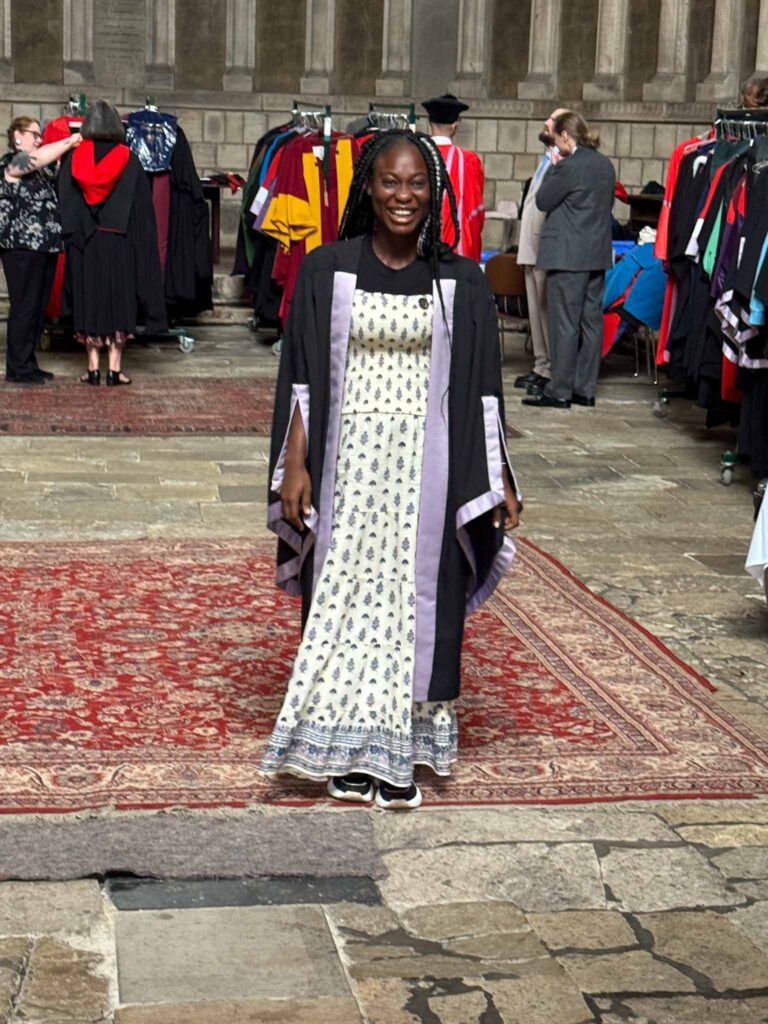
Nelly was excitedly posing for pictures, so one of the workers loaned her a robe.
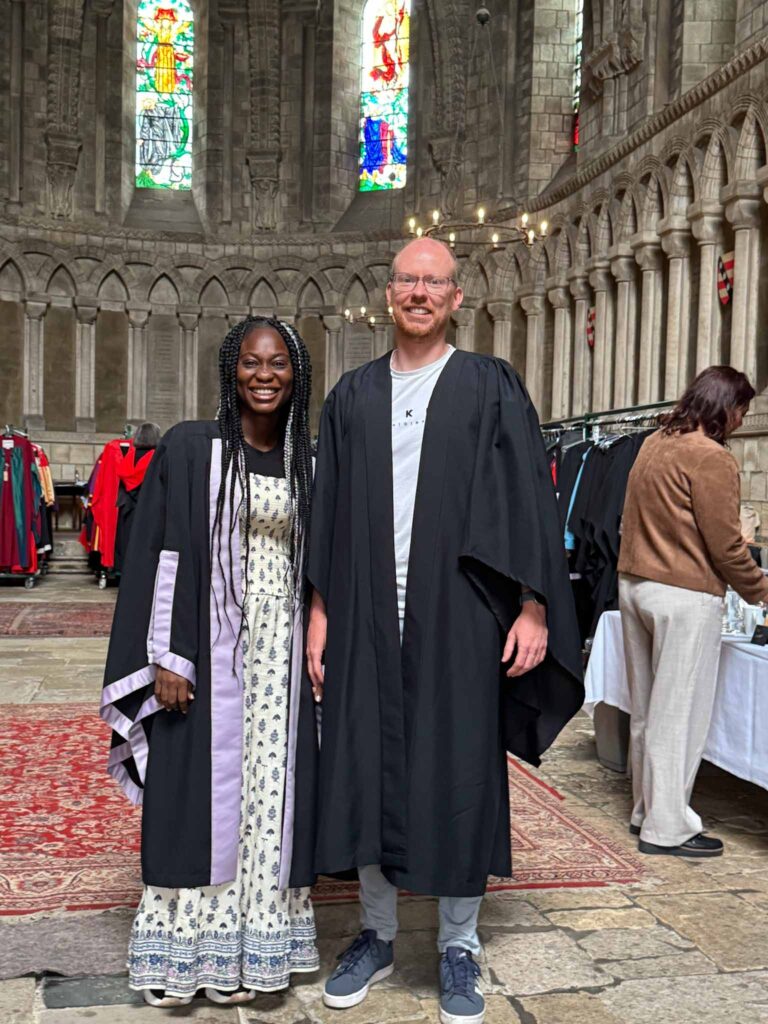
Not to be outdone, they loaned Simon a robe as well.
The cloister has been used as a scene for several films.
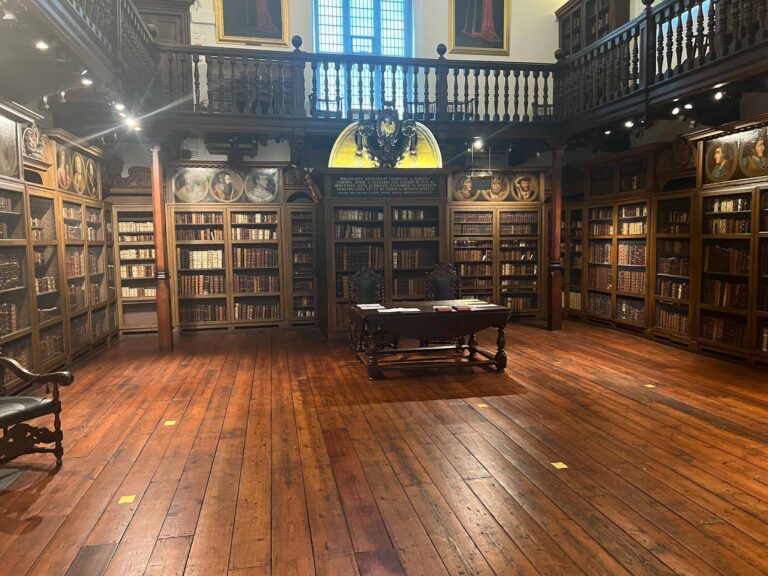
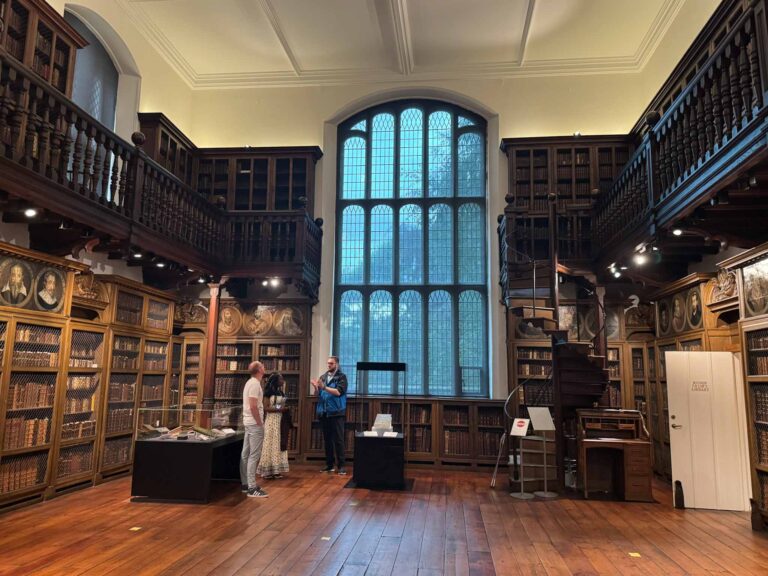
We still had free afternoon time, so we visited the Cosin Library, now part of Durham University. It is the earliest public library in notheast England that survives to this day. Established by John Cosin in 1660, he returned to England after a 20-year exile in France for his beliefs and loyalty to the King of England. In 1660 the newly restored King, Charles II, appointed Cosin the Bishop of Durham. For the next twelve years until his death, he dedicated time and money to building projects, one of which was his library.
Many traditional libraries have shelving that comes out into the room, but the Cosin Library shelves line the walls. Portraits above the shelves used to identify the books stored in shelves below. Cosin was very clear about the type of books he wanted for his library: only good books were allowed.
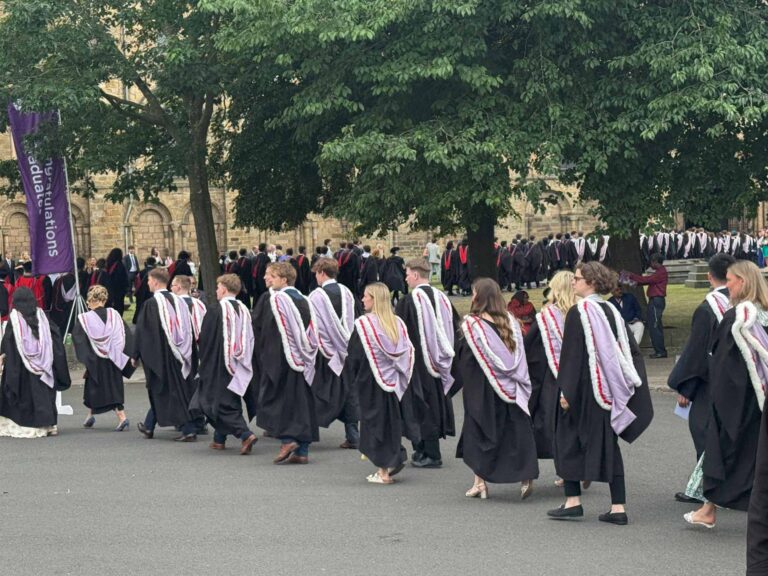
Graduates parade into the Durham Cathedral.
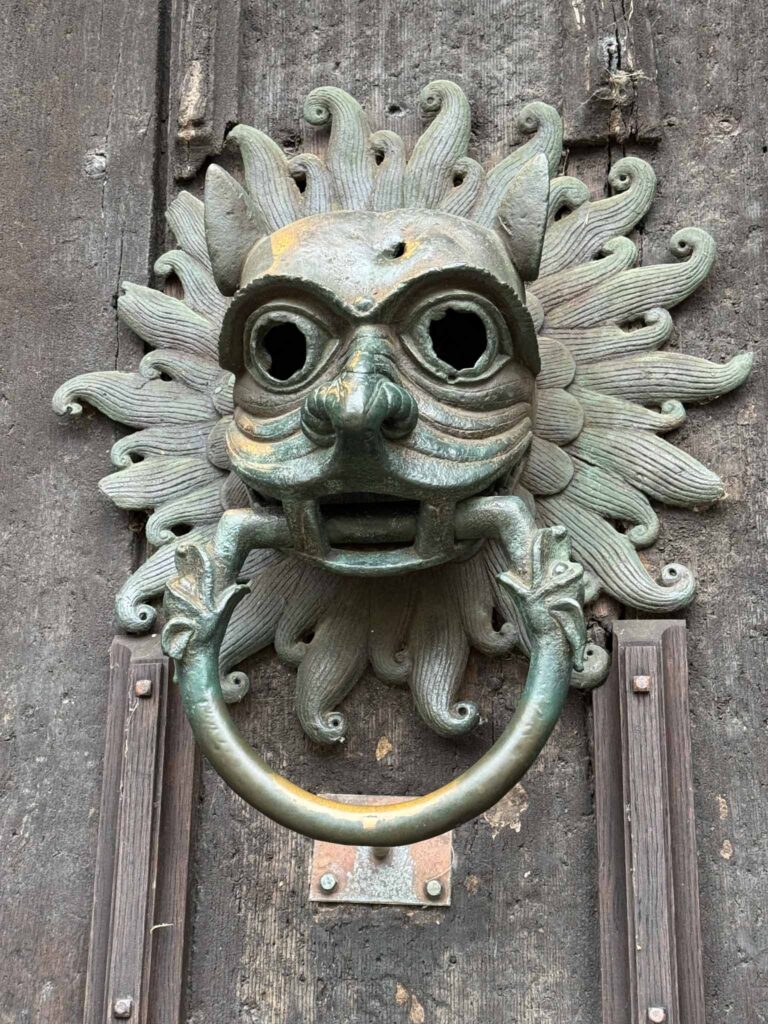
This replica of the Sanctuary Ring of Durham Cathedral greets the visitor at the main entrance. Based on the medieval “Hellmouth” images, it was designed to frighten away evil, and probably dates from the 1170s.
In medieval times, cathedrals were places of sanctuary where criminals could find temporary refuge from the law. Anyone who touched the Ring would be granted sanctuary for 37 days. They then had to choose between facing trial and going into voluntary, lifelong exile.
The original bronze Ring is displayed in the Cathedral Museum.
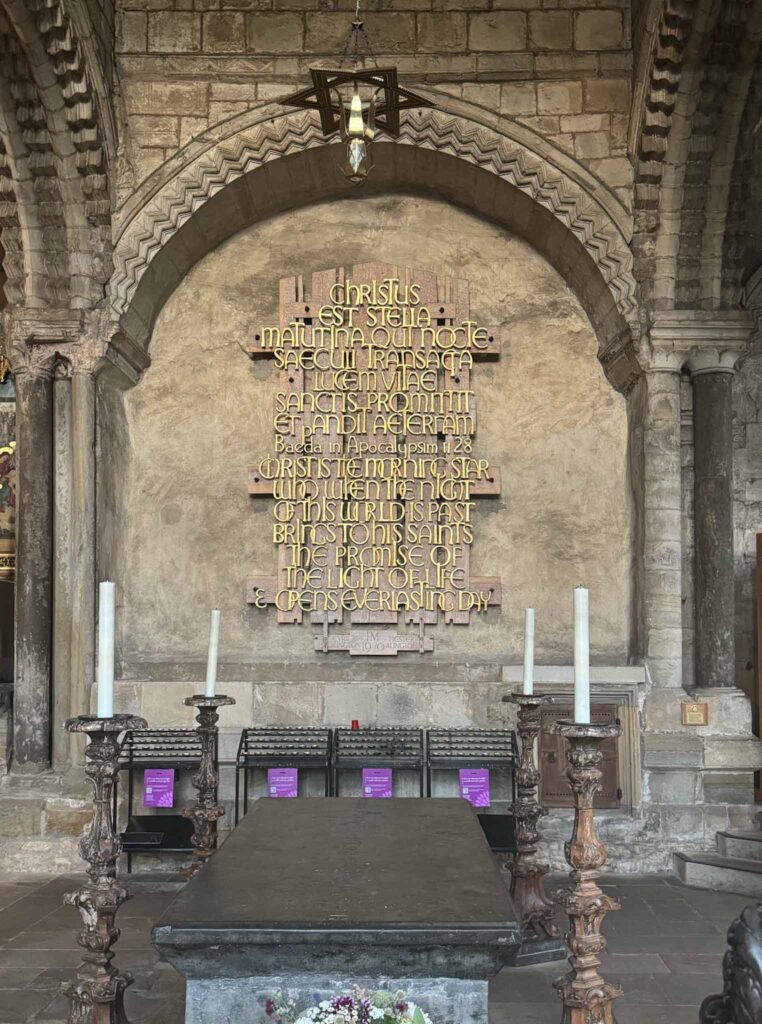
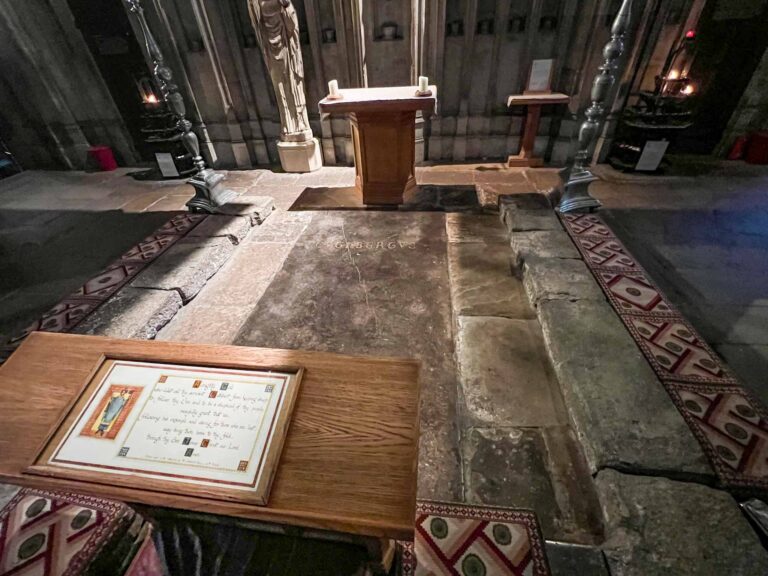
This is the grave of St. Bede in the Galilee chapel of Durham Cathedral. The Venerable Bede dedicated himself to God and to learning, and wrote or translated around 40 books on subjects including the Bible, science, mathematics and language. His writings on the early history of the Church and England are still used by historians today.
He died at his monastery in 735 but his remains were moved to Durham Cathedral about 1022.
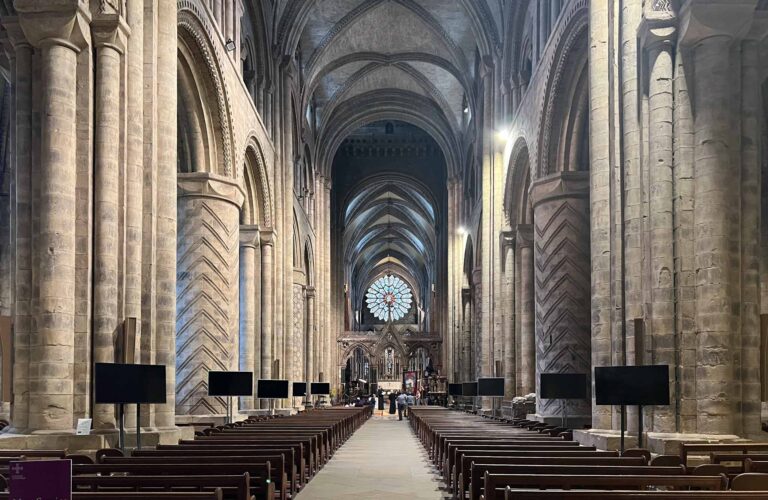
The Nave is the largest part of the cathedral. The large columns here are one of the Cathedral’s most recognizable features and remind people of the strength and majesty of the Creator God. At the west end of the Nave, the baptismal font is the sign of beginning a journey in the Christian faith.
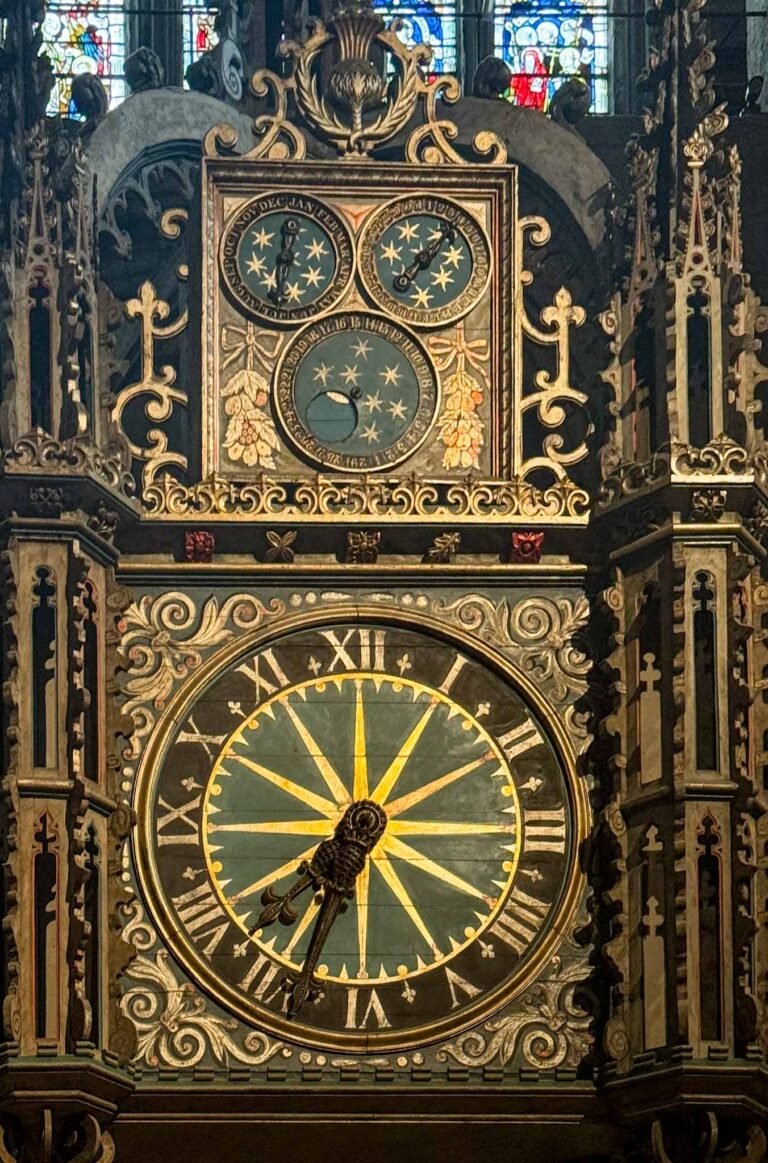
The Prior Castell’s Clock was commissioned in the time of Prior Castell, 1494-1519. Parts of the clock may be older—from an earlier church timepiece.
The clock has a unique face and originally had only one hand. Instead of the typical sixty divisions that mark minutes, it has forty-eight marking the quarter hours. The three dials on the top show the month, the day, and the phase of the moon.
At the top, a Scottish thistle has several legends. One is that Henry VIII saved the Durham Cathedral from his Acts of Dissolution because he feared the power of the Scots. Another theory is that Henry was afraid of the miracles of St. Cuthbert, whose body had not decayed.
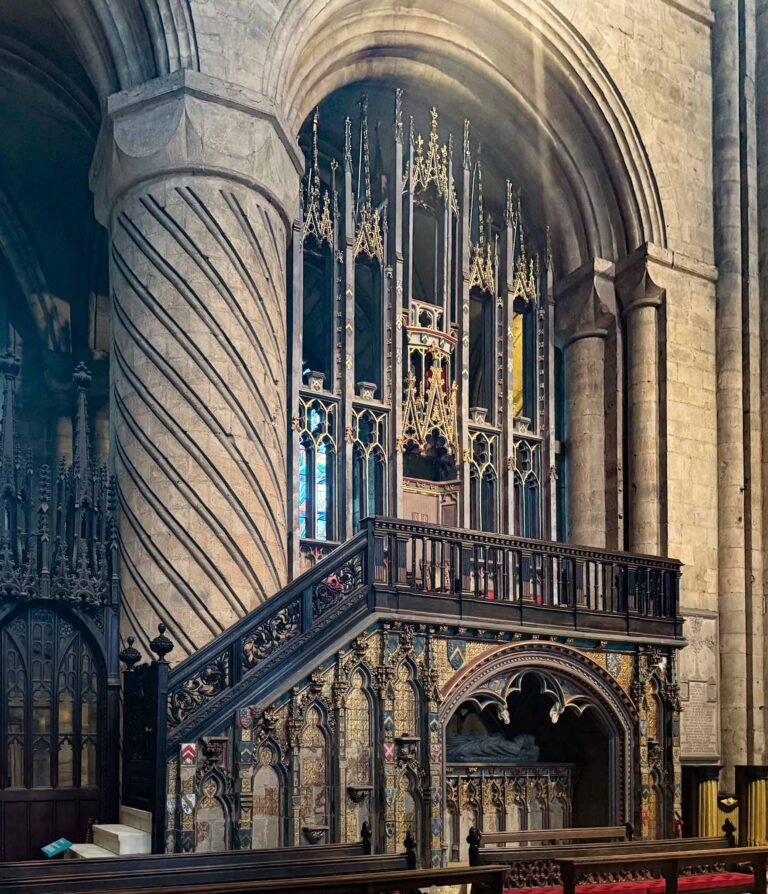
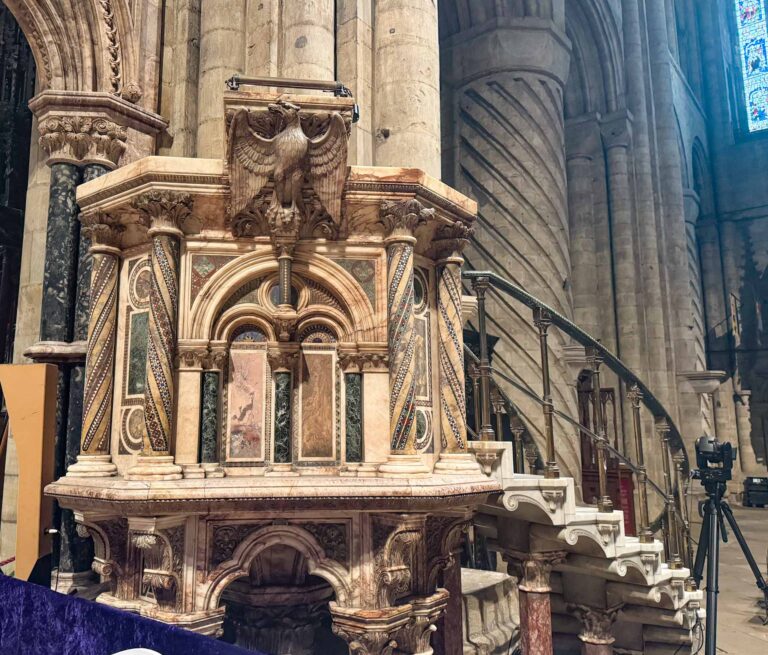
The Bishop’s Throne or Cathedral is the official seat of the Bishop. The throne was designed by Thomas Hatfield and he designed his own tomb to sit below the throne.
Legend has it that Hatfield sent two monks to measure the Pope’s throne in Rome, along with other bishop’s thrones throughout Europe. Hatfield made sure his throne was two inches higher than the tallest measurement. The Pope was so furious that he had a thick cushion put on his throne so he would sit taller again.
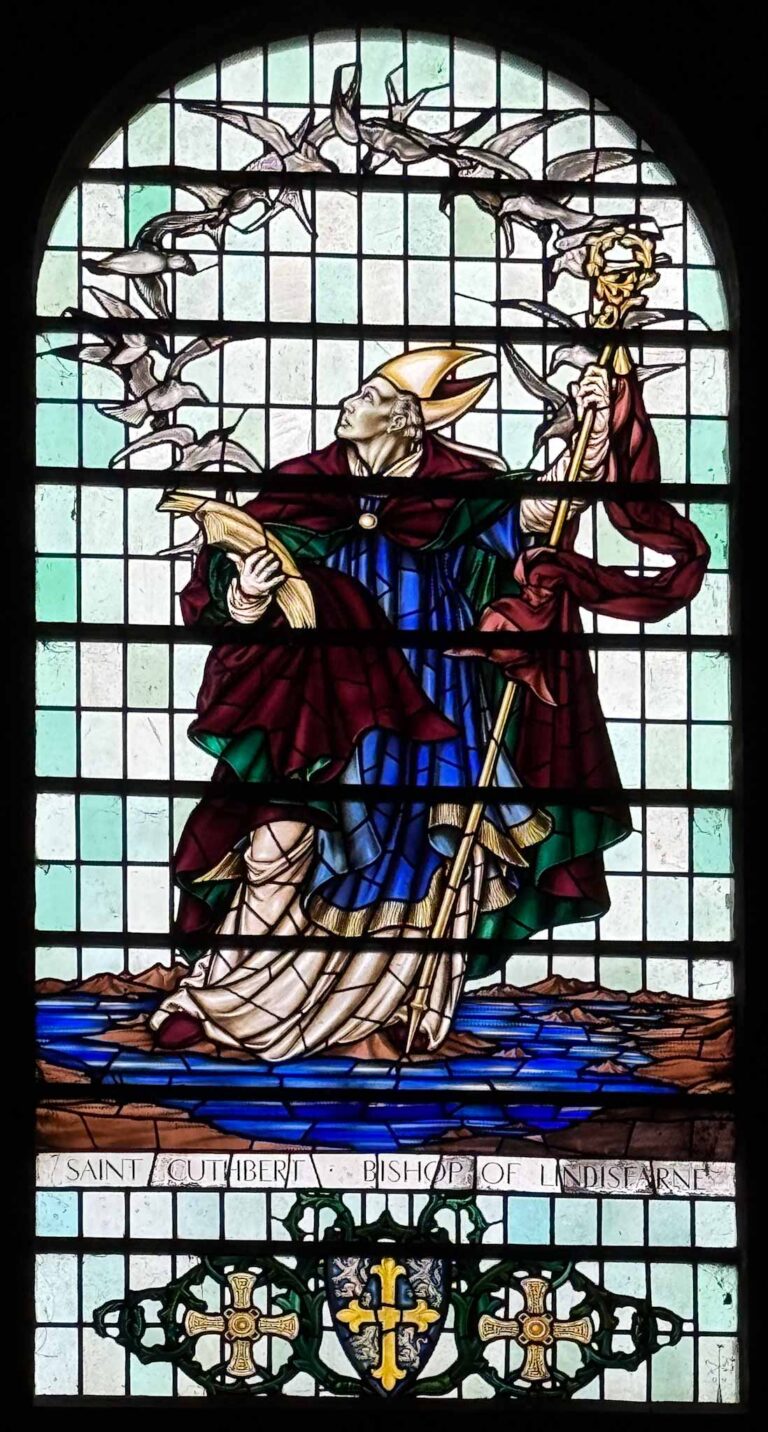
St. Cuthbert’s body was brought to Durham from Lindisfarne in 995. A second skull in the tomb is traditionally thought to be that of King Oswald in Northumbria. An Anglo-Saxon church was built around Cuthbert, and was later replaced by this magnificent Norman cathedral. In the Middle Ages, the shrine was covered with precious items given by pilgrims. In 1537, the King’s commissioners came to dismantle the shrine but, finding Cuthbert’s body to be “fresh, safe, and not consumed,” they did not destroy it but removed its treasures.
The Gregory Chapel is dedicated to St. Gregory (540-604), a monk who later became Pope. Gregory sent St. Augustine to England in 597 to restore the Christian faith in the country.
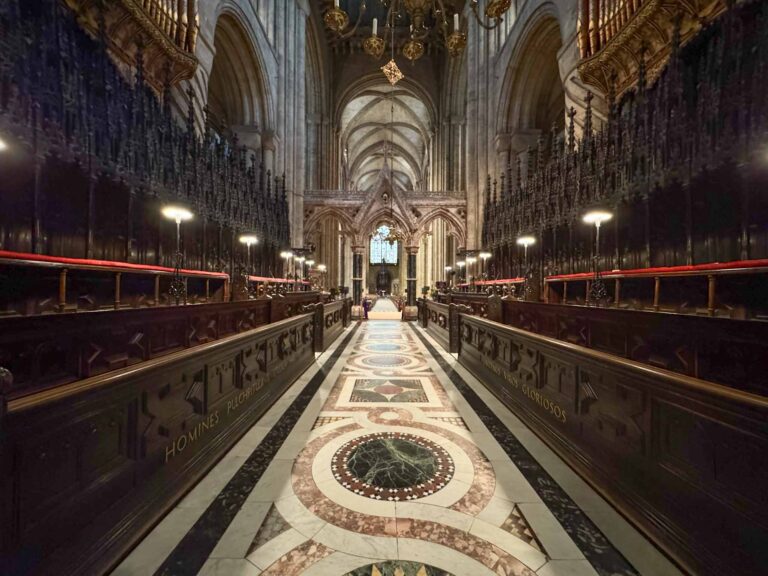
The Quire was one of the earliest parts of the cathedral to be built, completed in 1099. Daily prayer and praise has been offered here for over 900 years. Quotations on the front of the wooden choir stalls, dating from the 1660s are based on the Psalms, and describe the joyful worship of God.
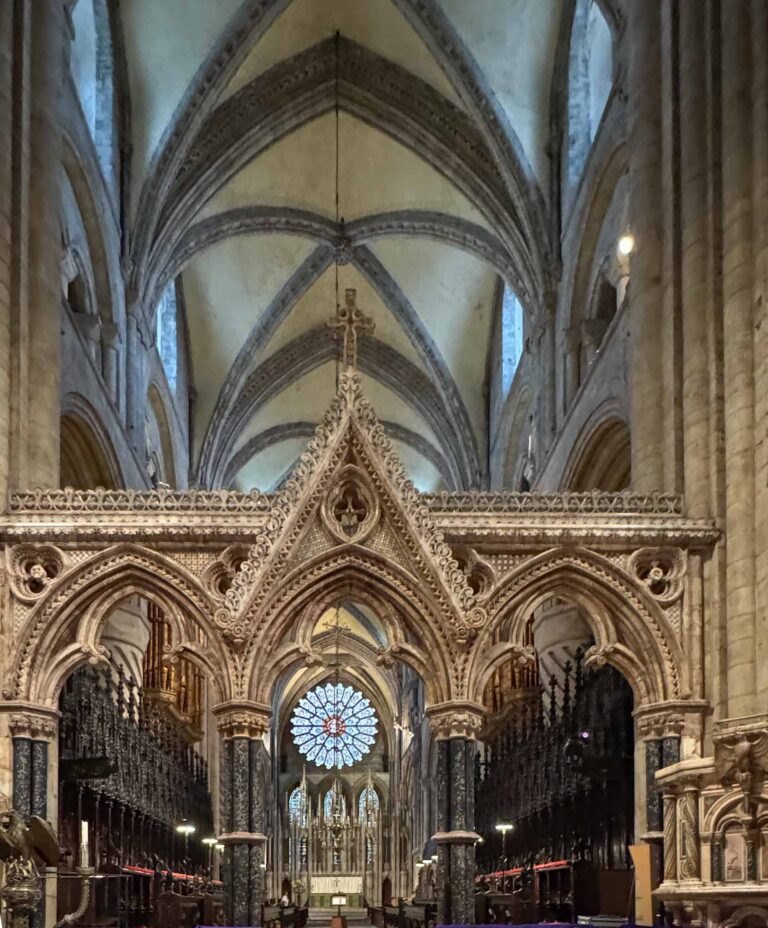
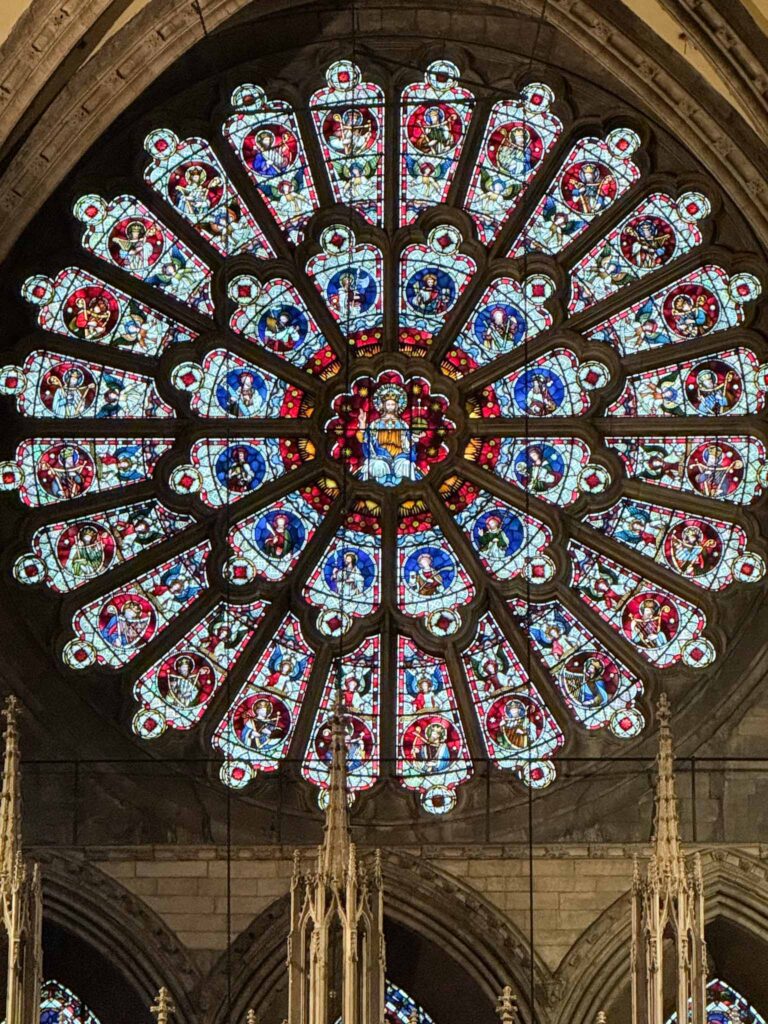
The Rose Window is centered by the risen Jesus, surrounded by the twelve apostles. The outside ring is twenty-four crowned elders of the Book of Revelation.
A sculpture of the monks removing the body of St. Cuthbert’s and other treasures from Lindisfarne.
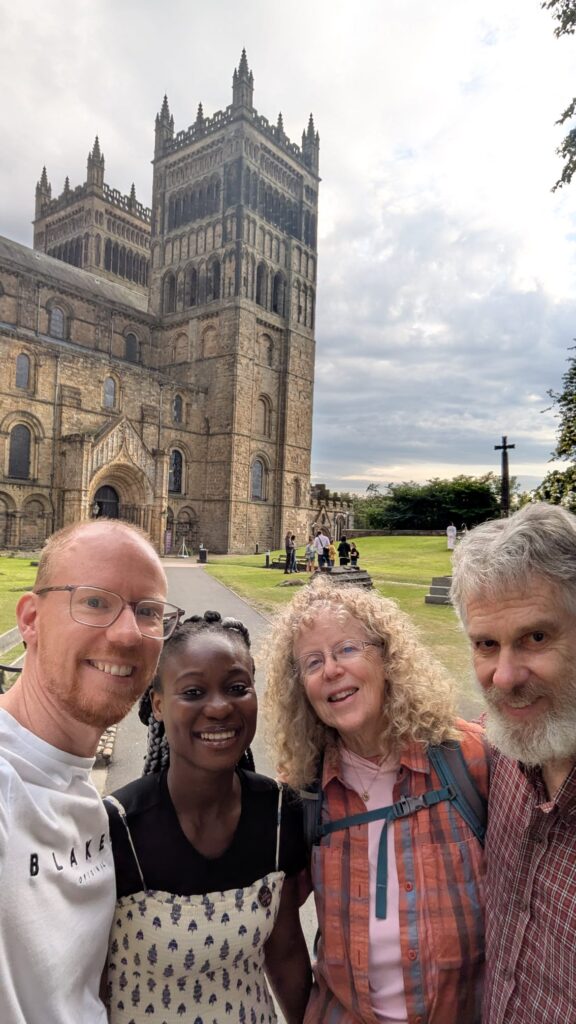
One more selfie as we are ready to leave the Cathedral after a long day.


One Response
Glad that you enjoyed reasonable temperatures & didn’t need to touch the ring for temporary refuge. I wonder if Pope Leo sits the highest now… Thanks for the info on the Rose Window. I’ve seen so many but never inquired about the significance.