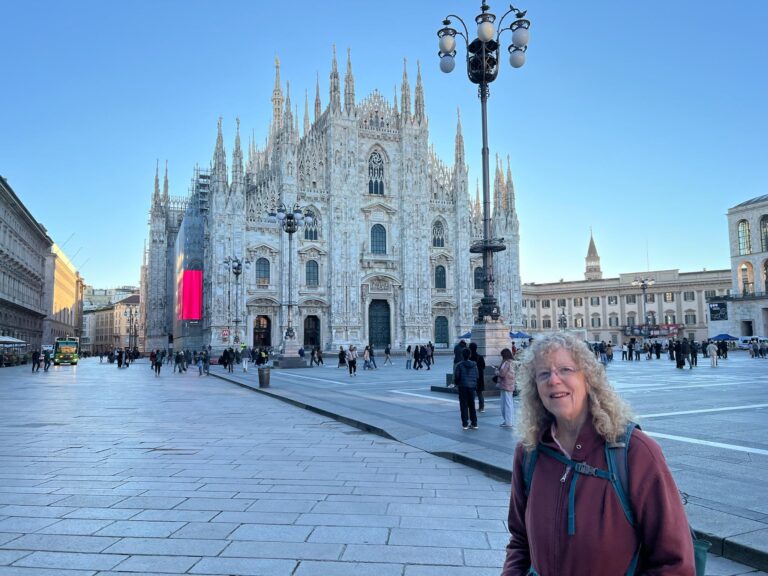
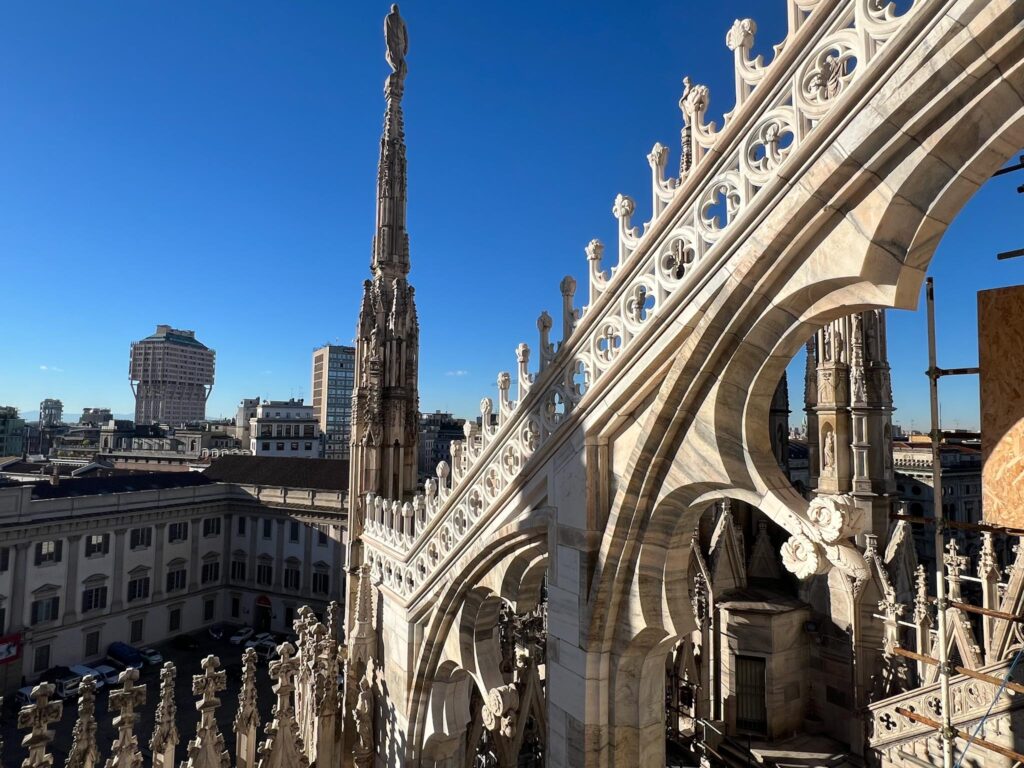
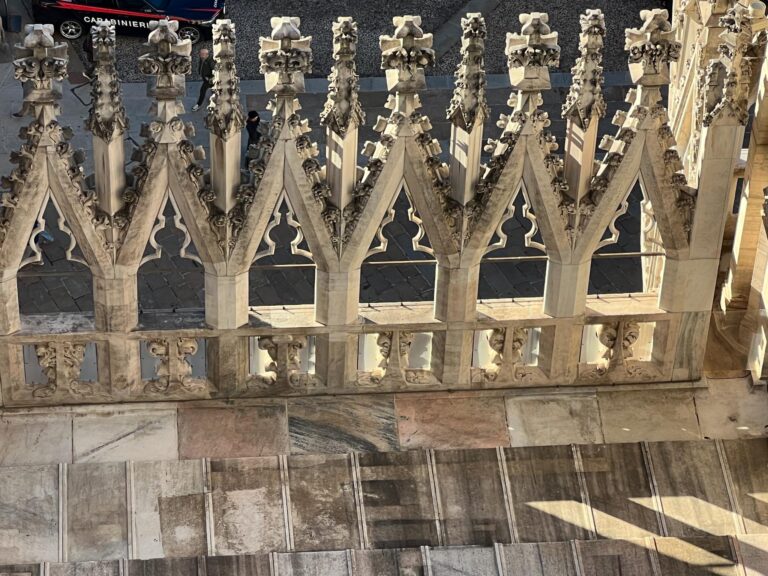
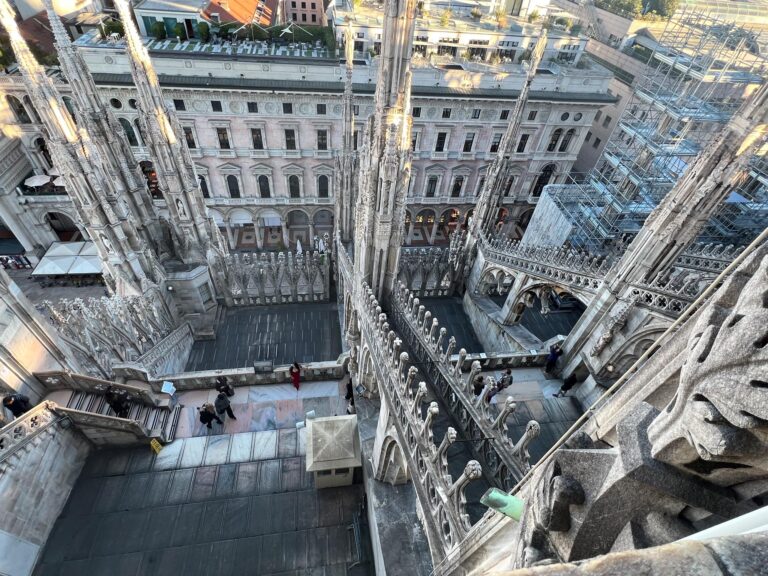
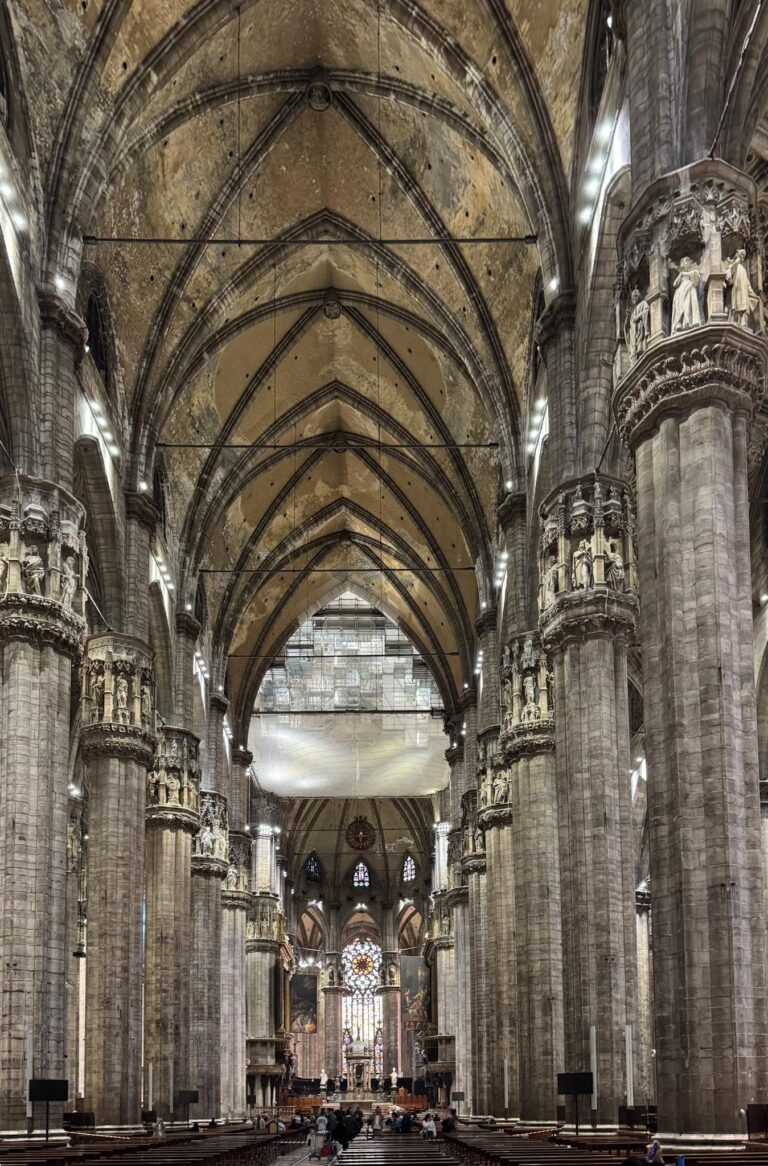
Construction on the Duomo began in 1386 on the site of the ancient basilica of Santa Maria Maggiore. Building continued for six centuries and was only completed in the 1960’s. It is unique in sculptural detail (over 3400 statues, 135 spires, 52 pillars with monumental capitals), and the use of prized Candoglia marble quarried near Lake Maggiore and brought here by canal.
The gilt copper statue of the Virgin Mary was added to the main spire in 1774 and stands 108.5 meters off the ground.
We had a combination ticket including a “terrace view” so we climbed to the roof first.
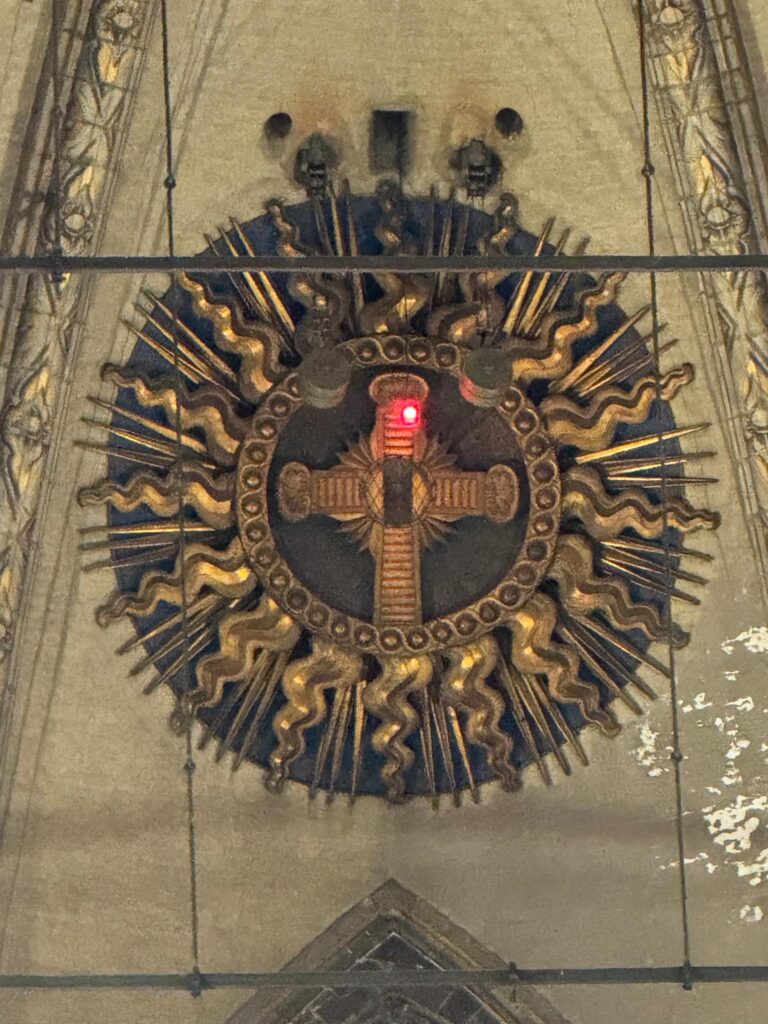
The relic of the Holy Nail, one used in the Crucifixion discovered by St. Helena when she discovered the relics of the true cross in Jerusalem. This reliquary is normally kept in a tabernacle at the very back of the Duomo’s apse forty meters above the floor. Its place is marked by a red light that burns before it continually. Each year the reliquary is brought down September 13 and left for a week in the main sanctuary.
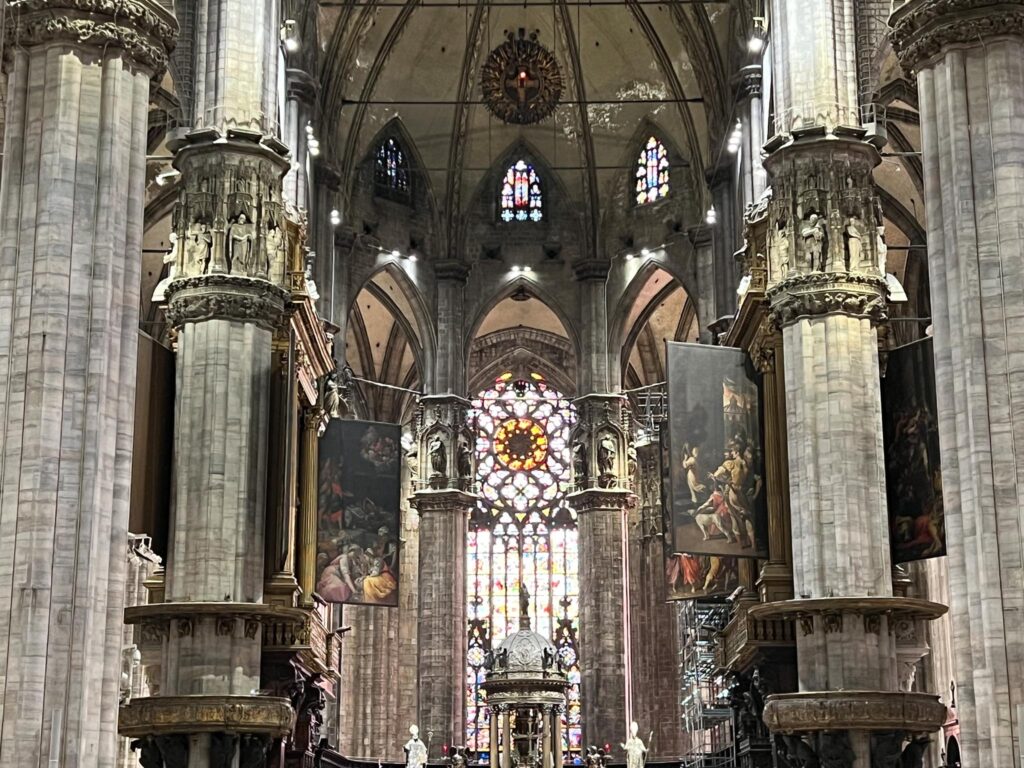
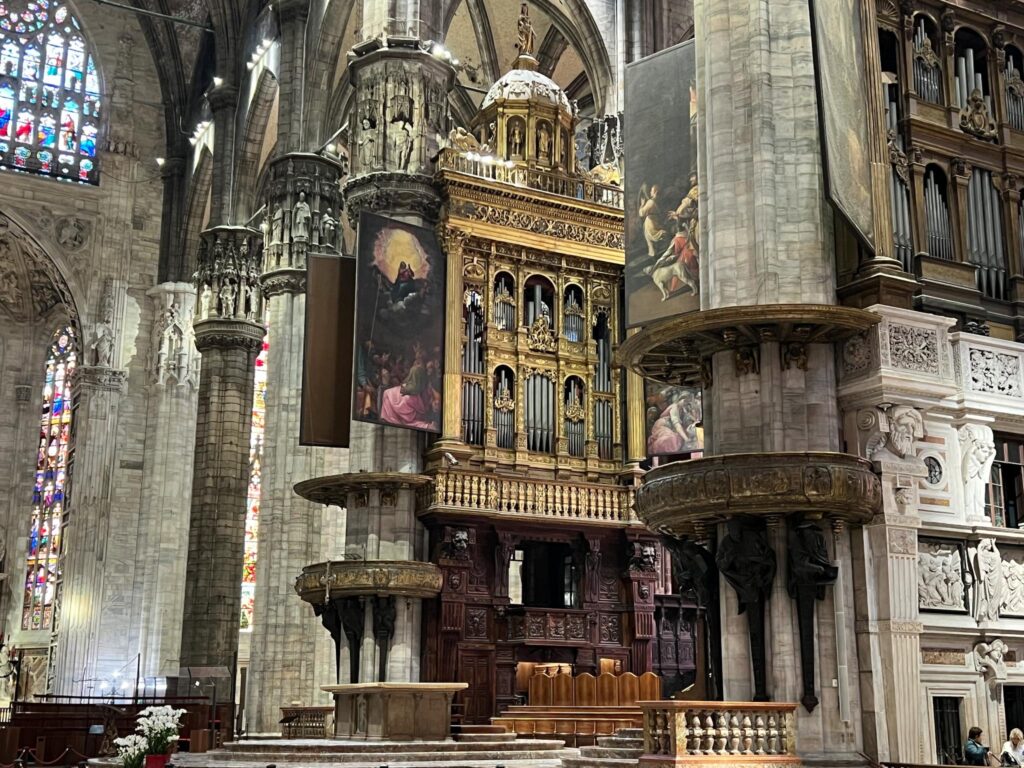
The organ, and banners hung around the columns. These banners will be changed every November 4 through Epiphany to show episodes in the life of St. Charles Borromeo. He was Archbishop of Milan 1564-1584, and is buried in the crypt of the Duomo.
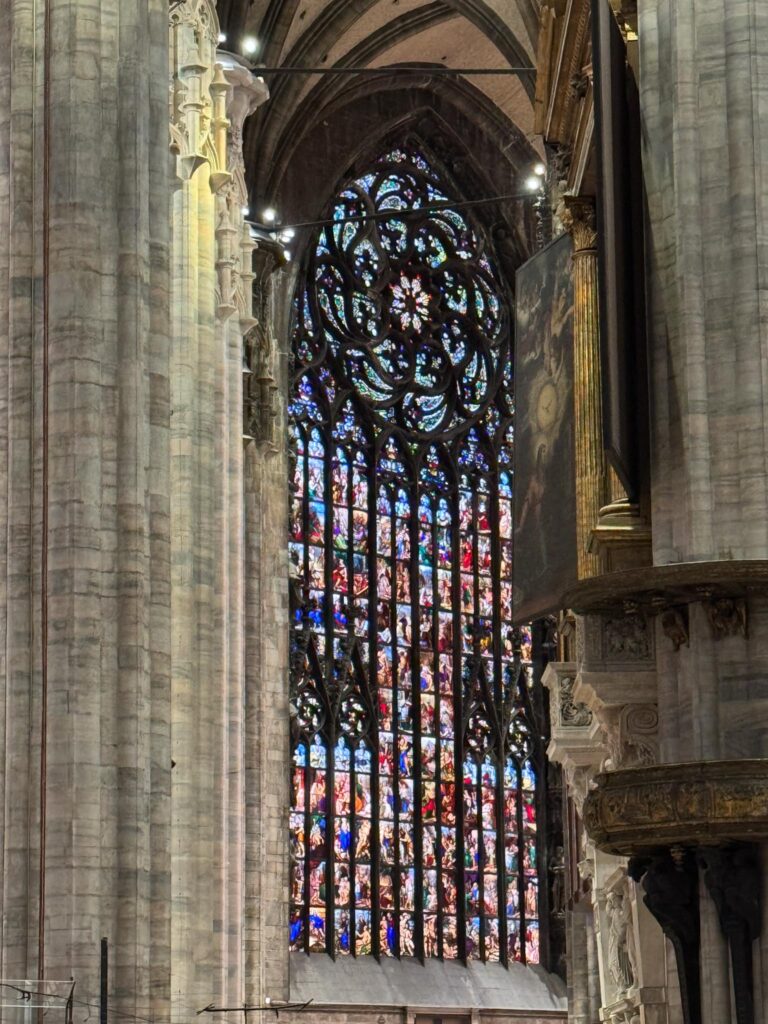
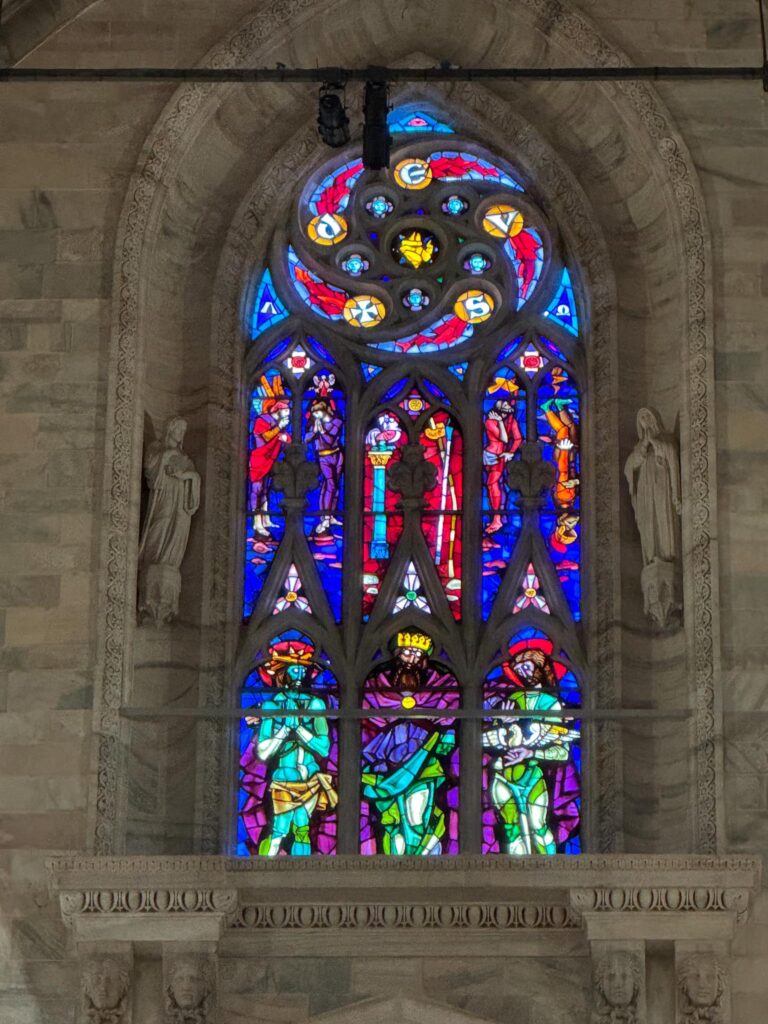
Instead of rose windows as many other cathedrals have, the Duomo has this unique swirl topping many of their largest windows.
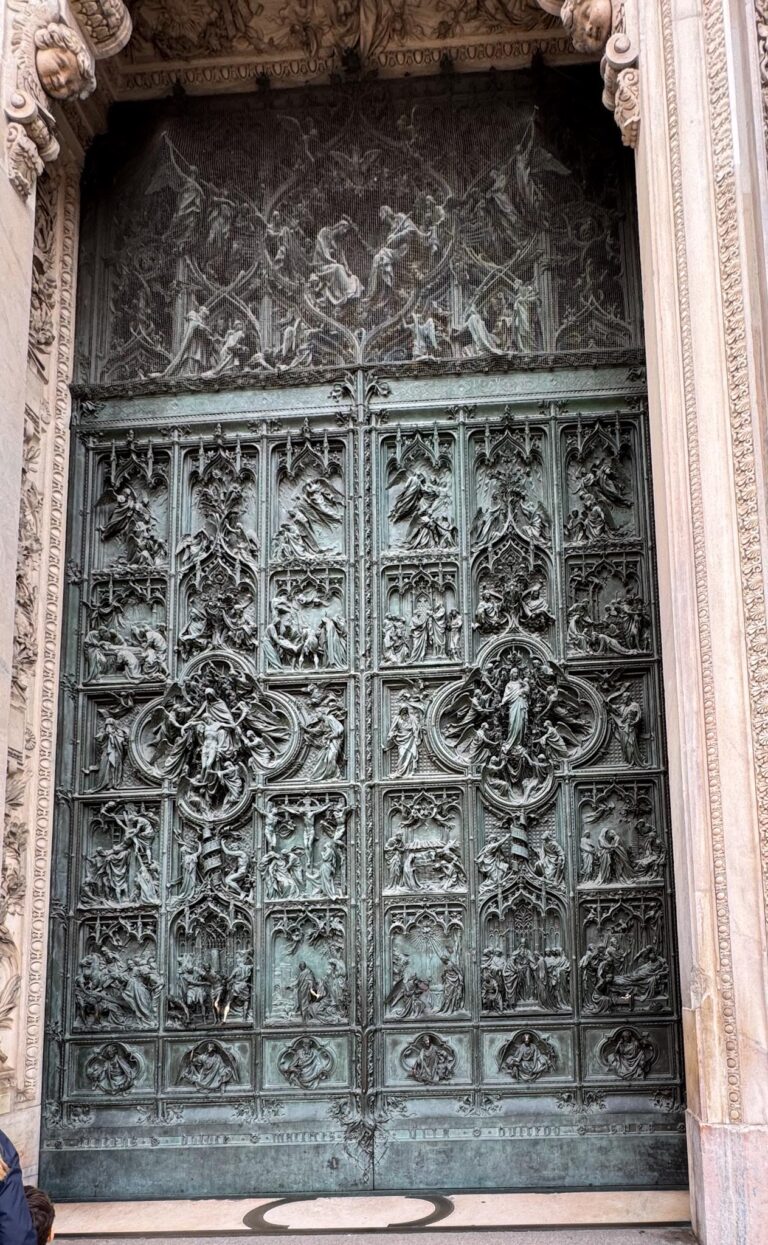
The main door was inaugurated in 1906 and is dedicated to the Joys (right side) and Sorrows (left side) of the Virgin Mary..
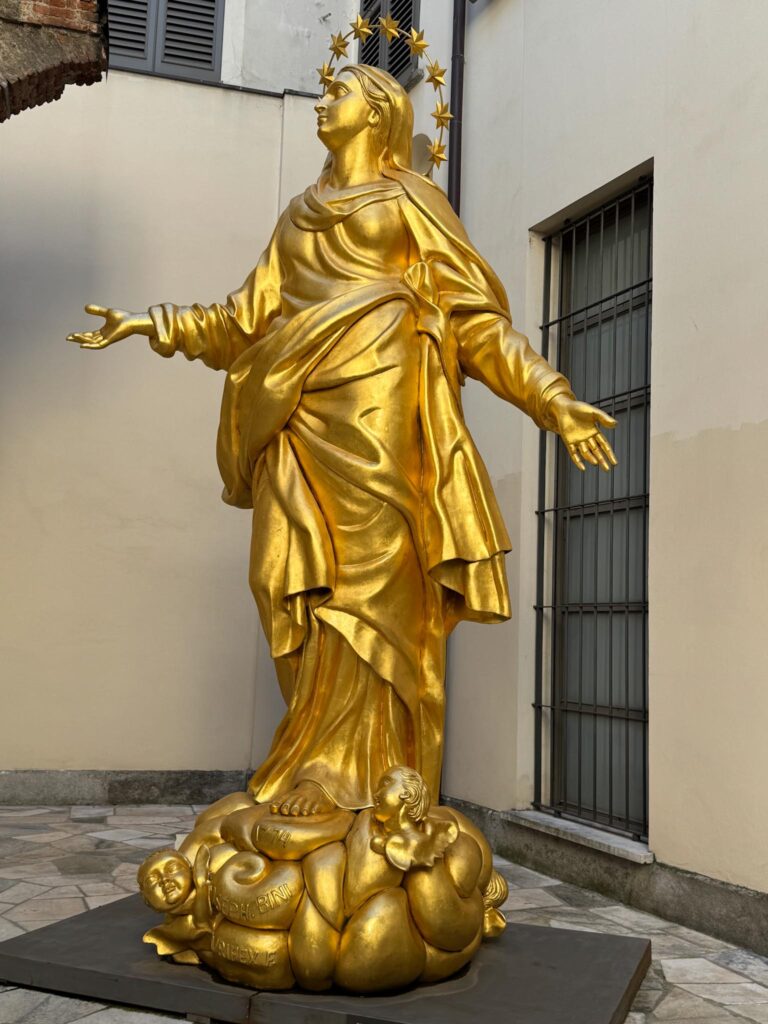
Our Duomo ticket also entitled us to visit the Duomo Museum. Here is a full-scale reproduction of the Duomo’s Madonna in 24k gold-leaf gilded bronze.
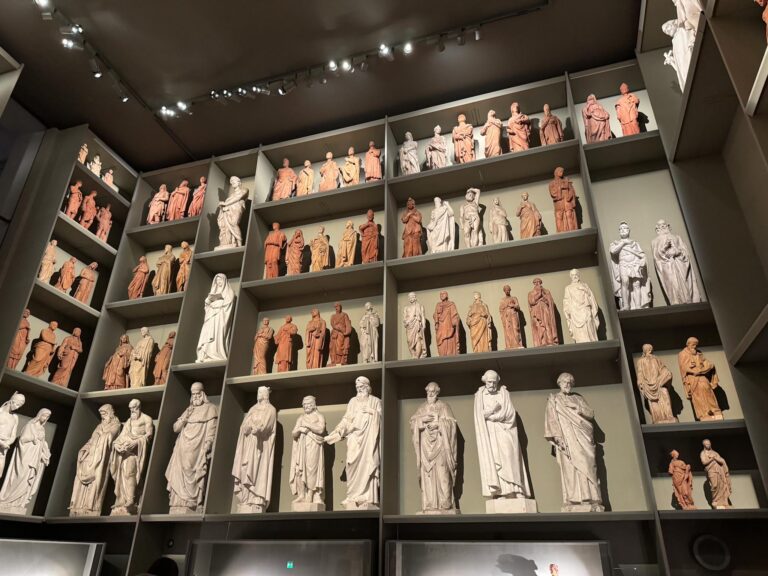
These sculptural models date from the 17th to 19th century. From the first half of the 1600’s, it was decided that the execution of statues in marble must pass the scrutiny of the artists appointed with making the Cathedral’s ornamental statuary. An entire room, called the Composanto Gallery, was allocated to collect these models. Over 700 plaster and terracotta models are preserved.
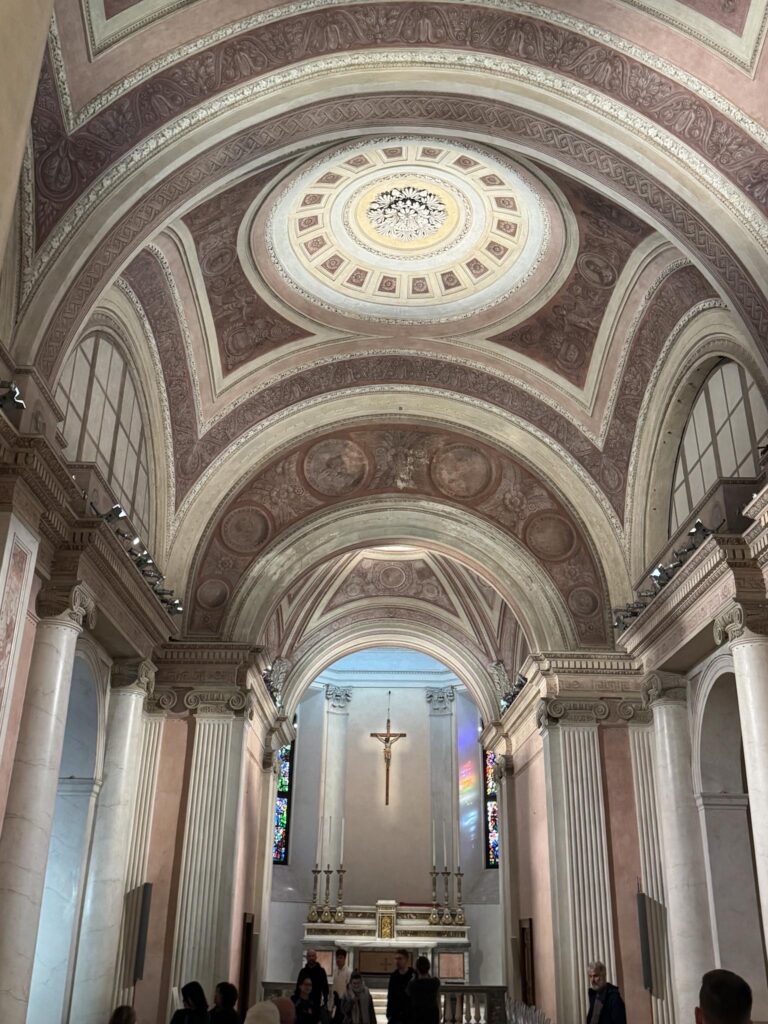
The Church of San Gottardo in Corte, built in 1336, is connected with the Duomo Museum’s Palace. Its pink brick bell tower is home for the city’s first public clock.
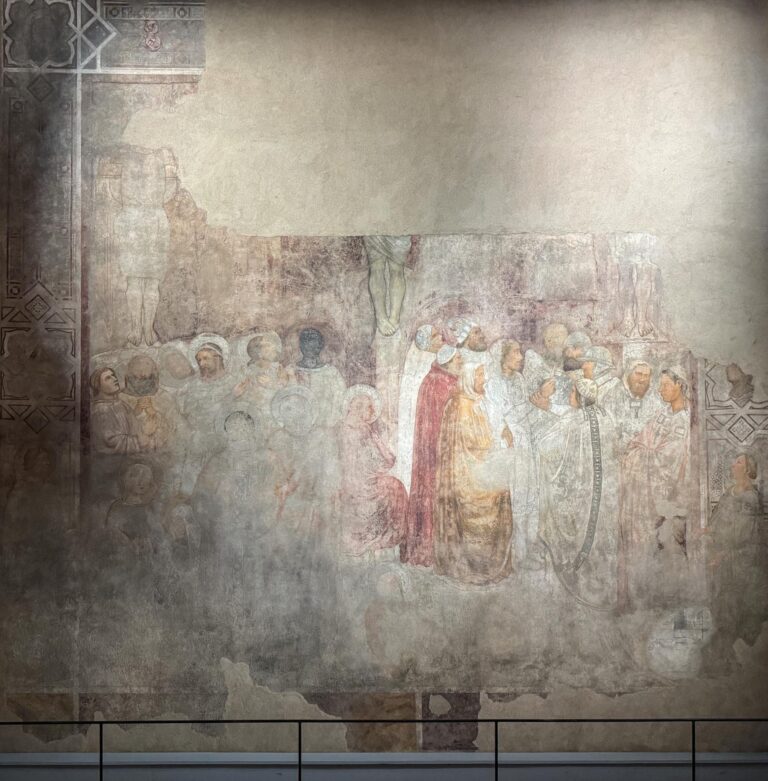
This fresco of the Crucifixion from the Giotto school was rediscovered in the early 20th century at the base of the bell tower, and was moved inside the church.
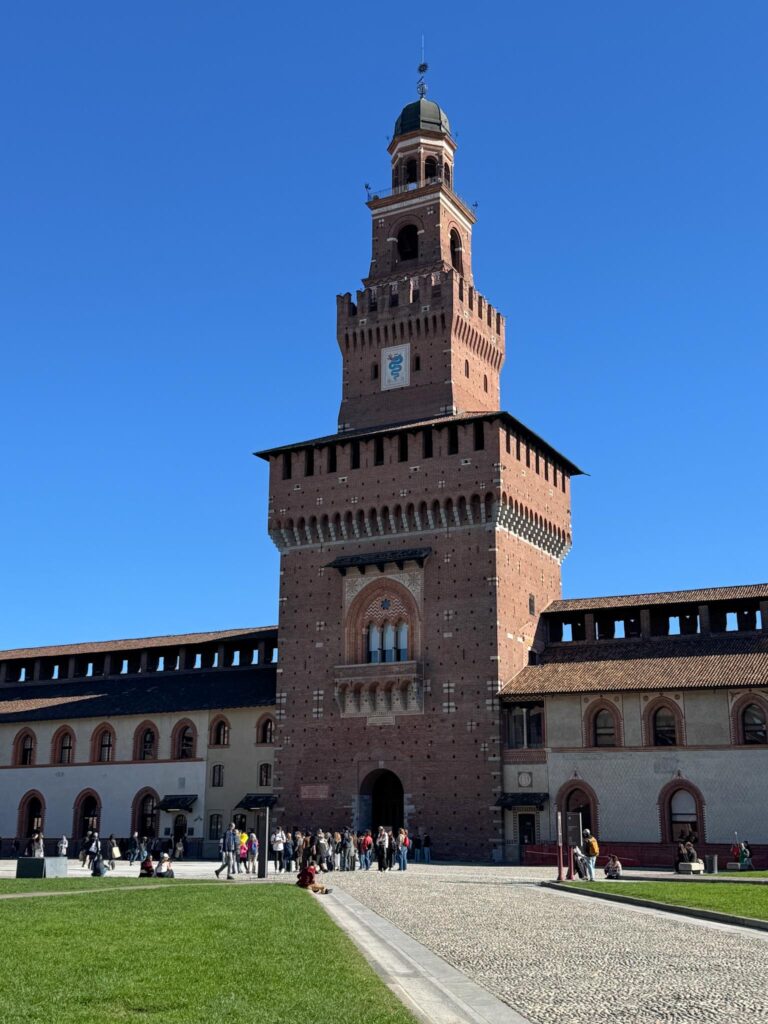
We had afternoon tickets for the Sforza castle museums. There is a lot to see, and like many museums, there were schoolchildren visiting in groups as well.
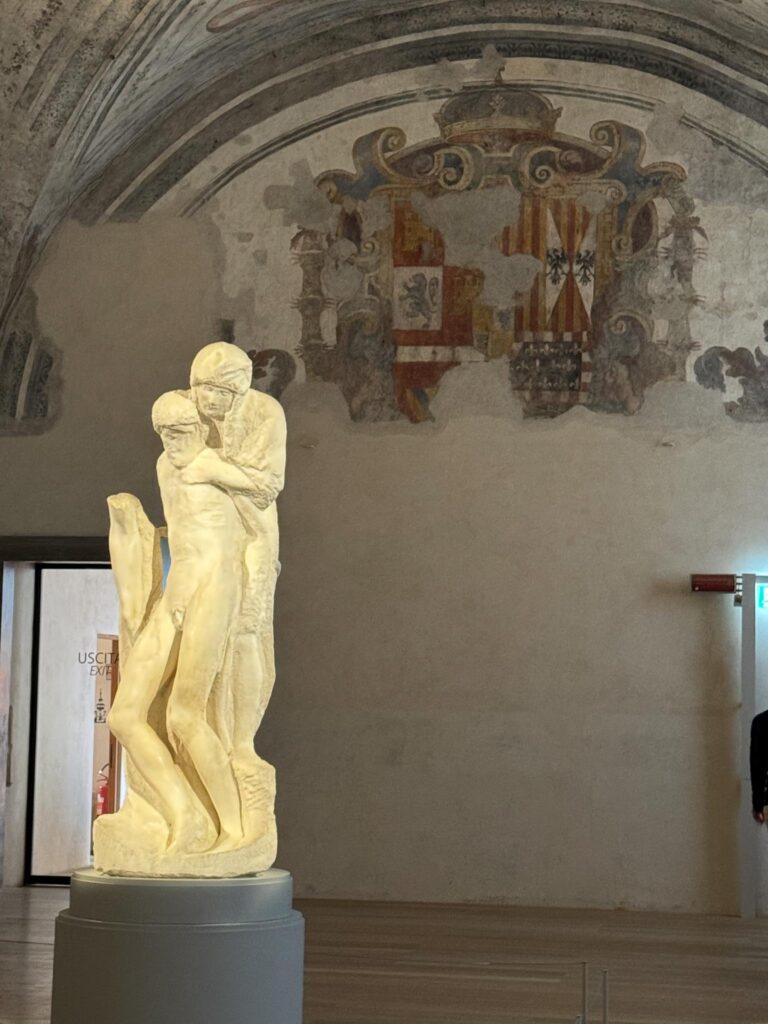
The Pieta Rondanini by Michaelangelonwas unfinished at his death in 1564 although he had worked on this block of marble for a decade. It shows the Madonna on her feet supporting the dead body of her son Jesus after the Crucifixion. The relationship of the two, almost fused into a single body, should be seen in the light of Michaelangelo’s extreme religiousness.
The sculpture was in Michaelangelo’s Rome workshop when he died but then disappeared until 1807 when it resurfaced in the palazzo of the marches I Rondinini; thus the name by which the work is known. In 1952, the City of Milan purchased the piece after a public fundraising.
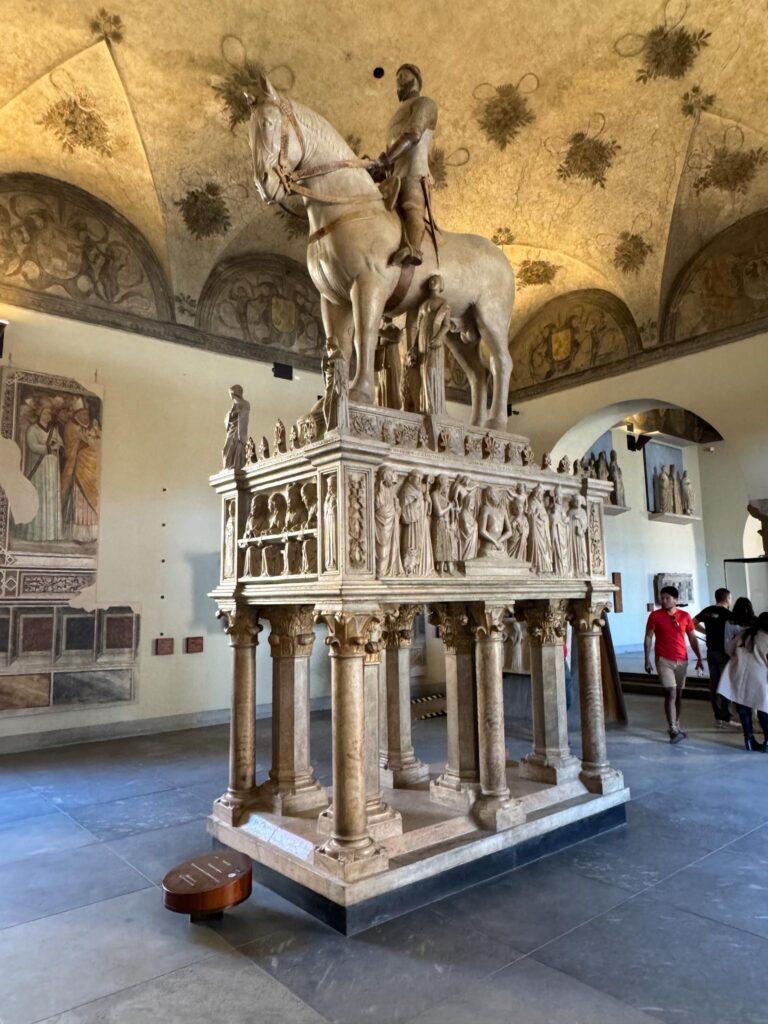
This sepulchre of Bernabo Visconti dates from the 14th century. He was a Lord of Milan assassinated in 1385.
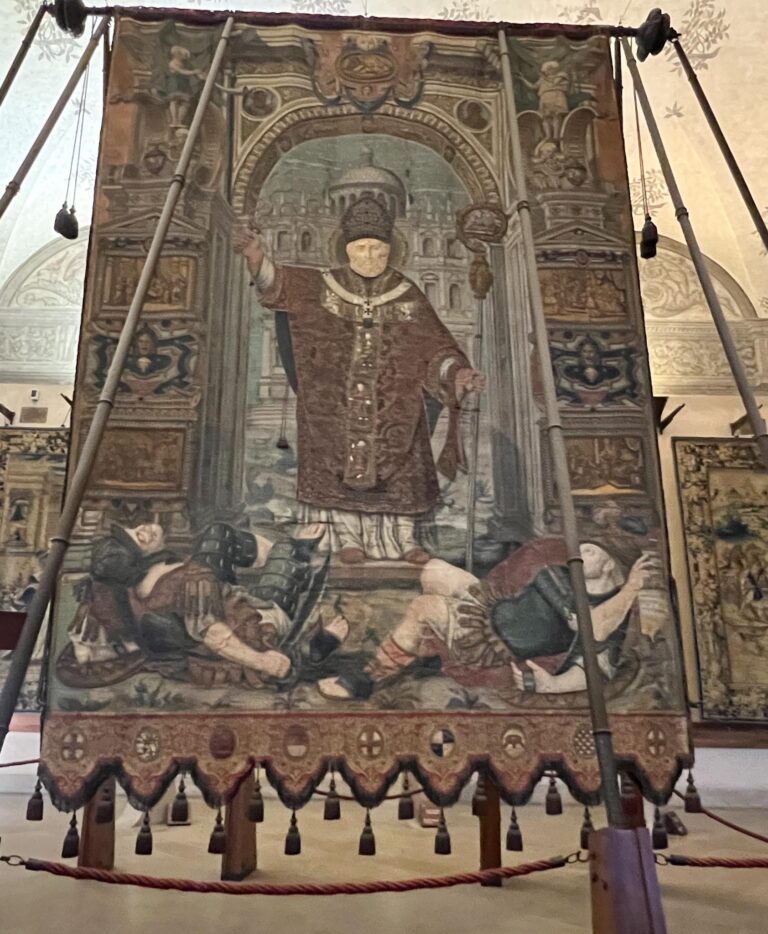
The Gonfalon (heraldic banner) of the city Milan is 5 meters high and 3.5 meters wide. It is crafted with embroidery, tempera paints, and inserted precious stones, and was the main gonfalon after its creation in 1566 until it became a museum exhibit in the 1870’s. It depicts St. Ambrose standing in the middle of an elaborately decorated arch holding the whip he is traditionally associated with. At his feet are two soldiers, face down, symbolising the episode of the saint driving out the Aryans.
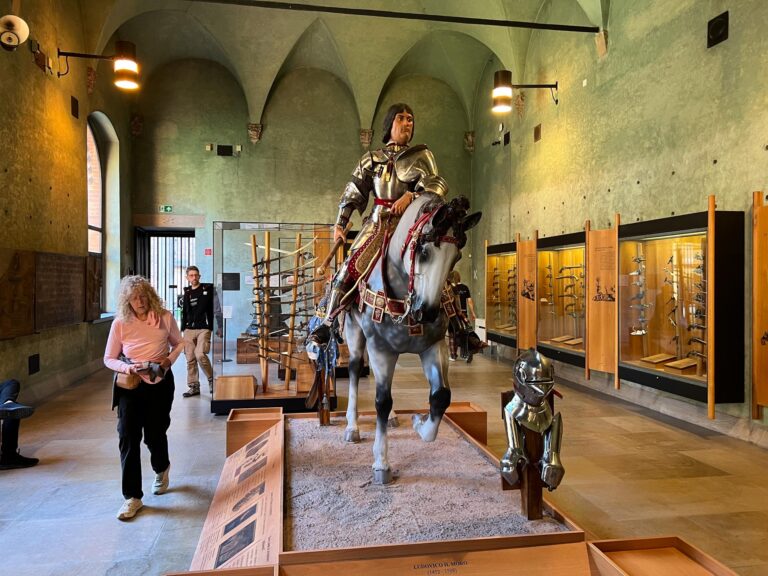
There was a large display of war and defensive weaponry of the time.
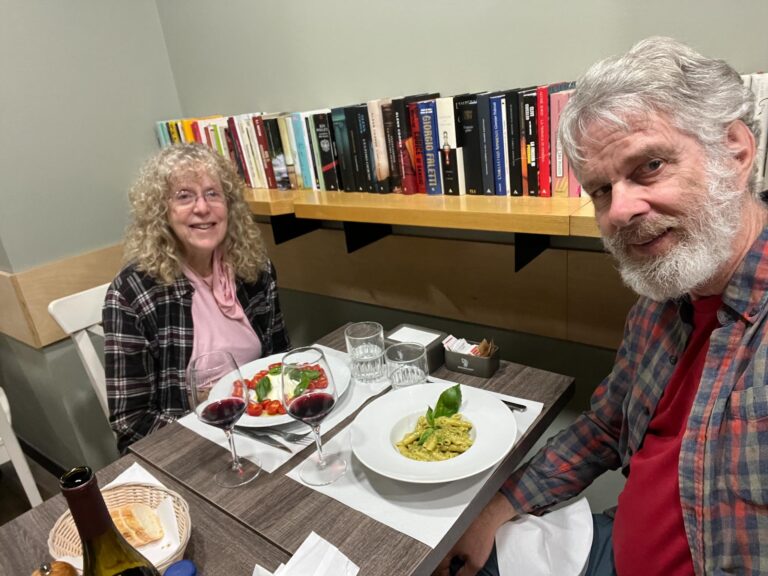
After a long day of sightseeing, we headed back to our neighborhood restaurant for our last dinner in Milan.
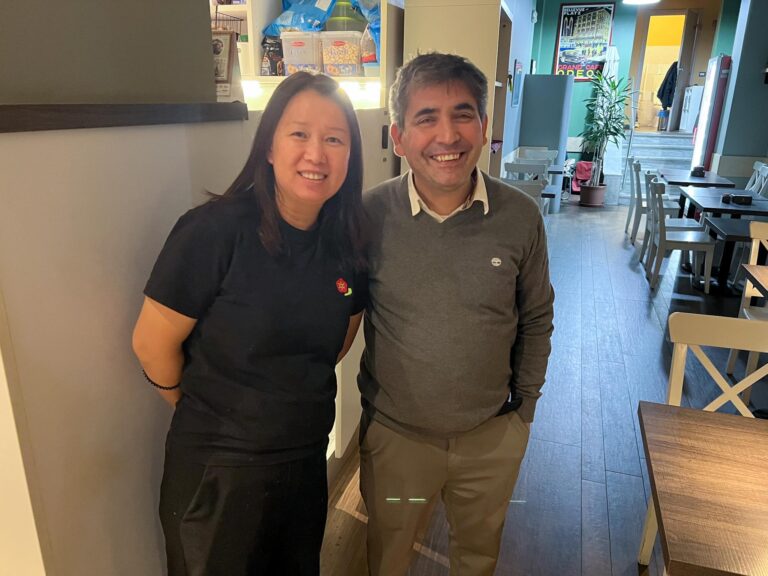
Wanli and Daniele were our restaurant hosts. After we said goodbye, they admitted that they were curious how we could have stumbled into their neighborhood restaurant, and had returned for dinner three times.
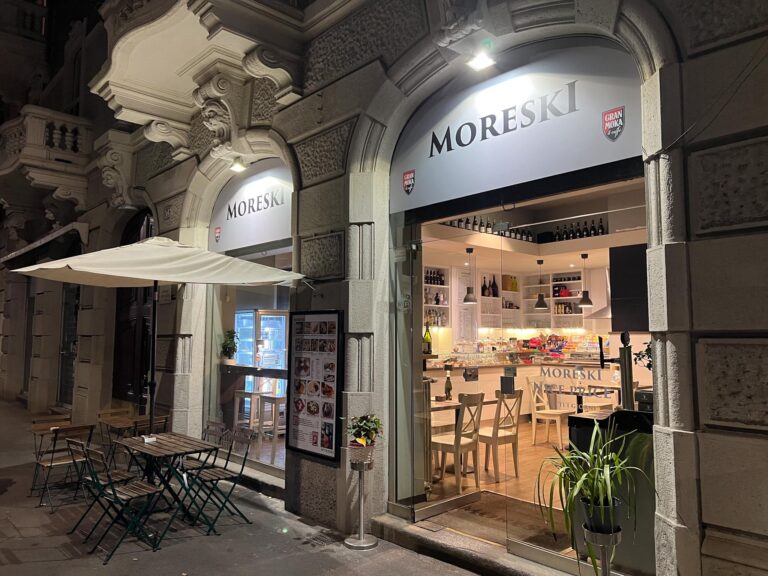
Goodbye, Moreski, until next time.

2 Responses
The Duomo really is a major highlight of Milan. Glad you were able to get tickets and see this “wonder.” Off to your next adventure, Rome. Look forward to seeing what you chose to see / visit. Have fun relaxing on your cruise which I notice actually starts tomorrow. Be nice to have some relaxing time to get caught up with your wonderful postings. Don’t know how you find the time to do them.
Dan and Wendy
We’re struggling to get up to date and would hope to finish on the cruise but it really depends on the WiFi. Sometimes we’re just tired but sometimes we can’t upload pictures and video so it puts a crimp in our schedules. Anyway, please be patient and we’ll upload as we can. There’s lots to see in Assisi and Rome!