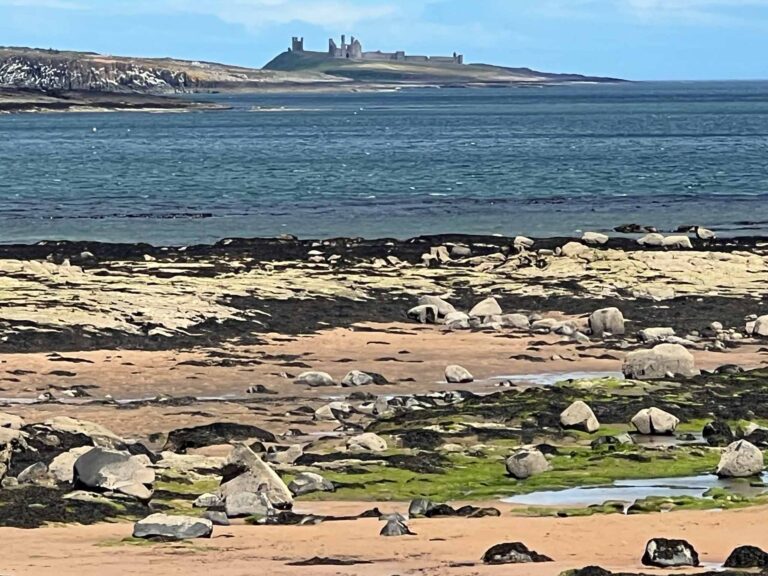
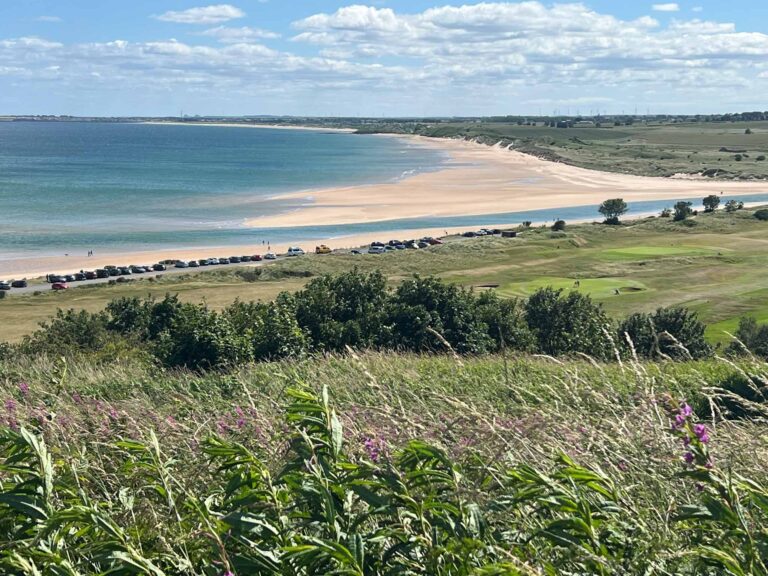
Looking back, we can still see the imposing profile of Dunstanburgh Castle.
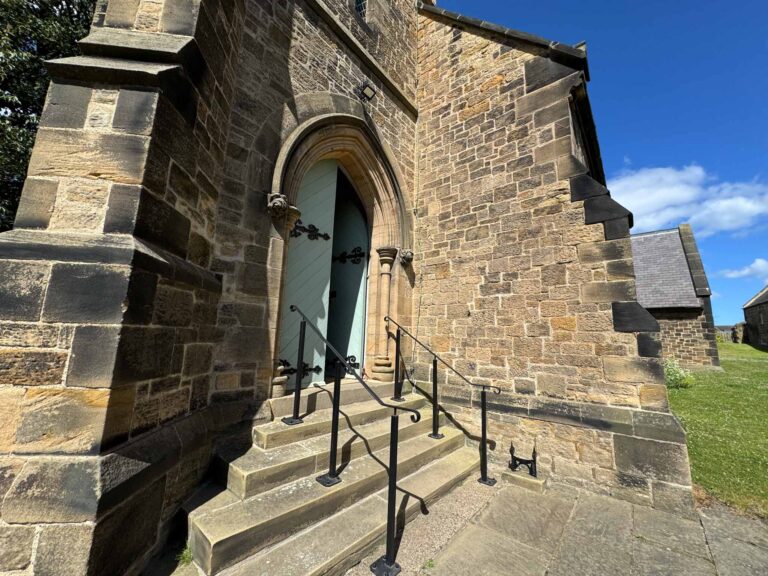
We stopped in at St. John the Baptist Church in Alnmouth that Simon had discovered had stained glass windows to see. They are not old, but relate to our pilgrimmage.
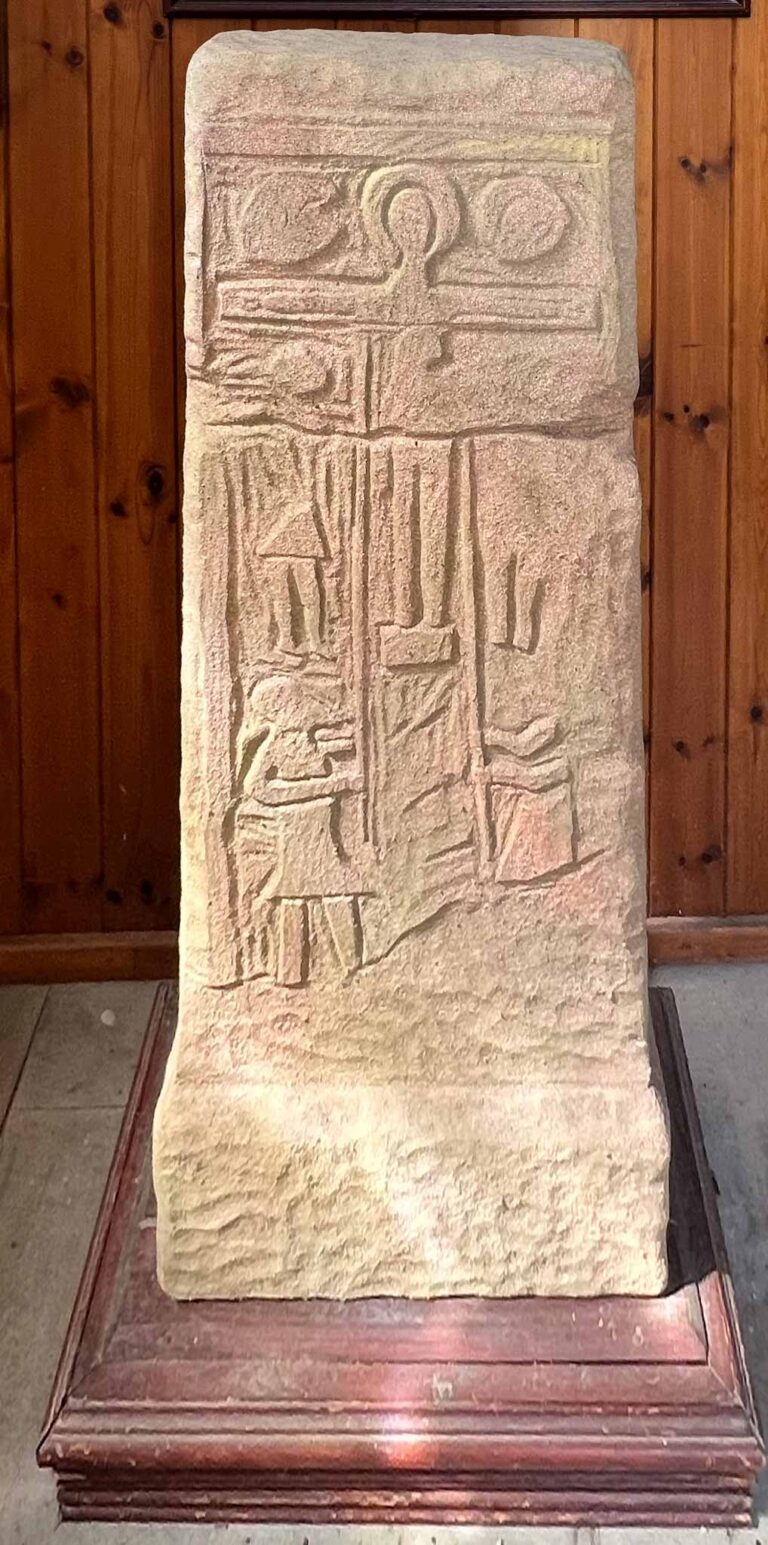
This is a representation of the Almouth Cross, an Anglo-Saxon stone uncovered in the 19th century. It is supposed to be from the 9th-10th century. All inscriptions are in Roman letters except a few runes, showing that a literate society existed, confirming an important ecclesiastical site.
The stone’s front shows the crucifixion with the two thieves, and below, the lance bearer piercing Christ’s side and the sponge or cup bearer.
The top and bottom thirds of the back are covered with designs, and an Old English inscription that may read “Myredah made me.”
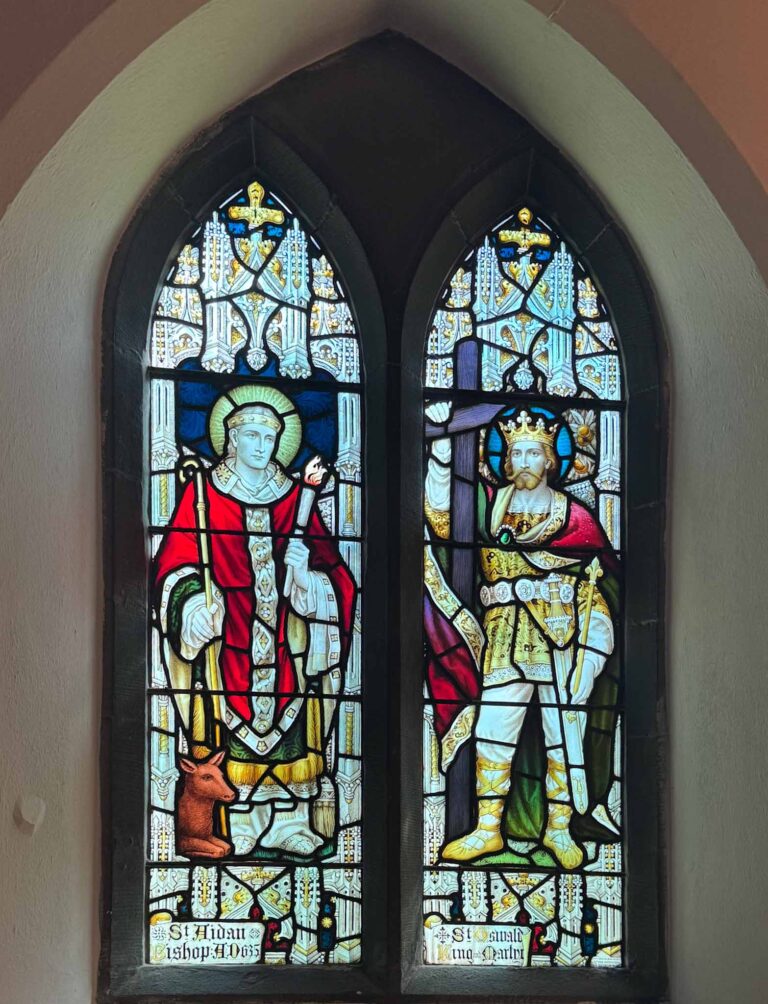
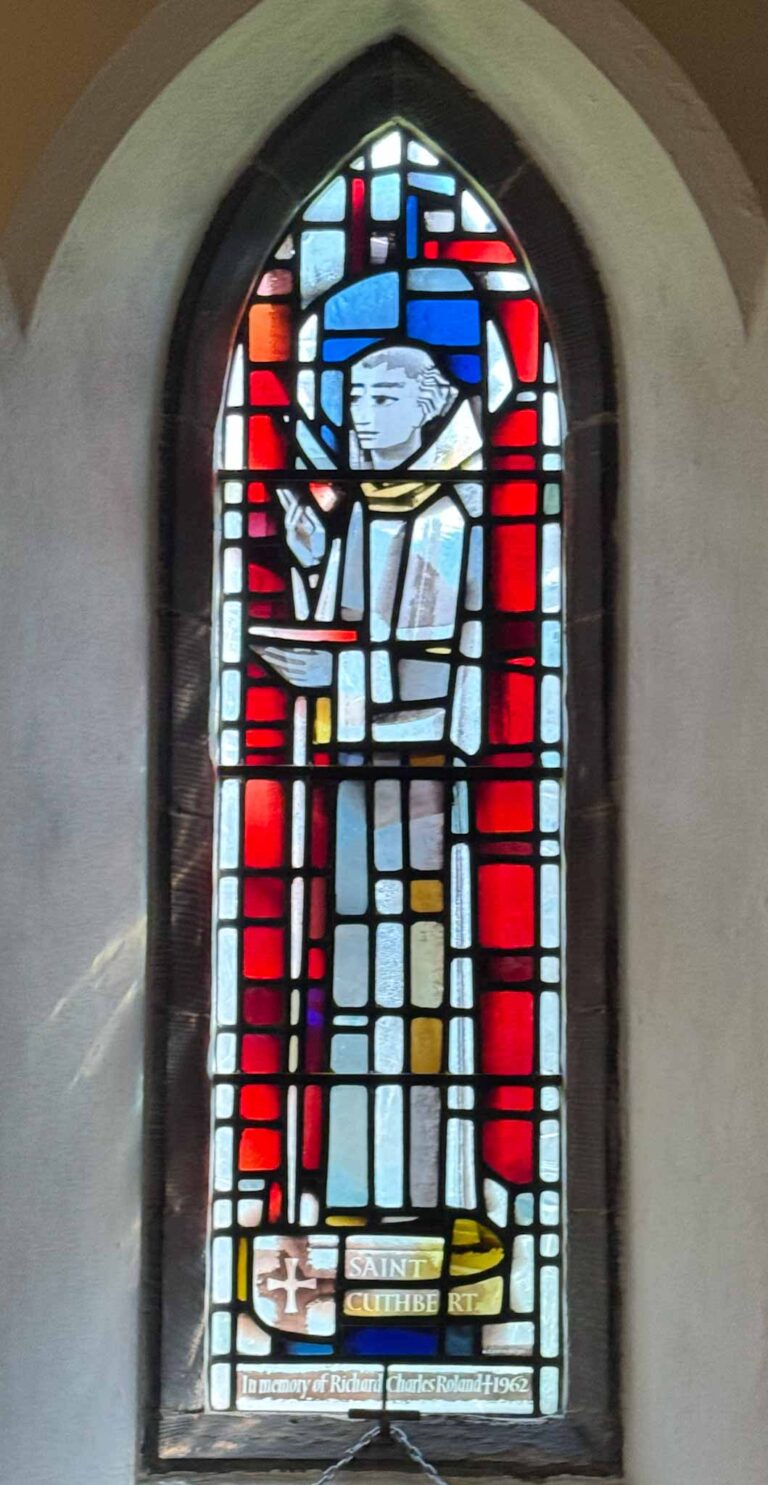
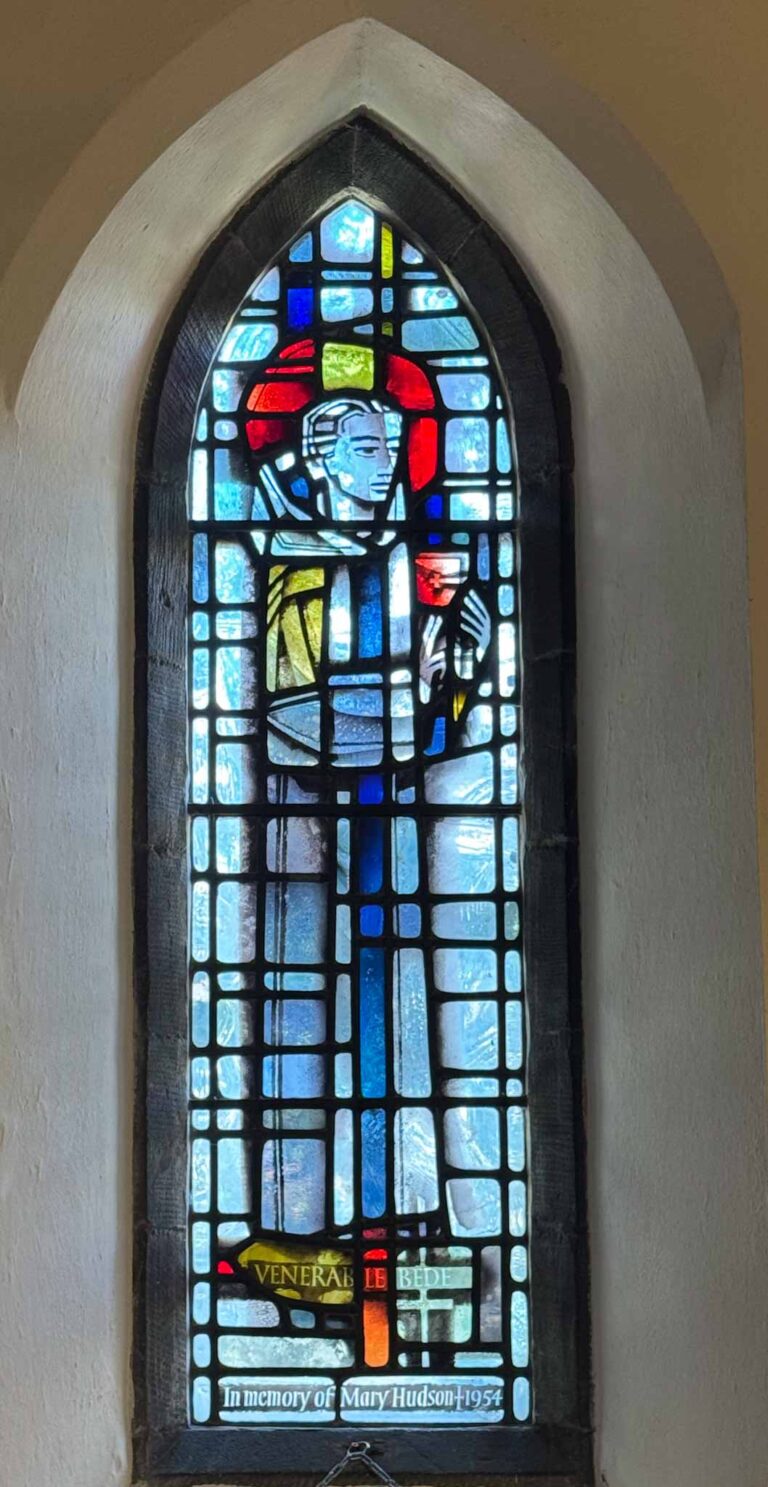
When we entered the St. John the Baptist Church, we were surprised at the number of stained glass windows with explanations, and even as they were newer, they were characters important to our pilgrimage.
At different times, both St. Aidan (?-651) and St. Oswald (605-642) spent time at Iona, an island founded by the Irish monk St. Columba. Oswald was exiled there with his mother and brother after the death of his royal father in battle. Later, King Oswald wanted to establish Christianity throughout Northumberland, and he enlisted the help of St. Aidan who founded the Lindisfarne monastery.
St. Aidan has a stag symbolizing solitude, piety, and prayer, as well as a flaming torch, Gaelic for “fire,” showing his mission work.
Oswald has a wooden cross representing the one he erected in battle at Heavenfield, where he regained the title King of Northumbria. Oswald is a soldier saint and Patron Saint of soldiers.
St, Cuthbert (635-687) of Lindisfarne was Prior of Melrose and then Lindisfarne. He was a venerated religious figure, a hermit, and a successful preacher who spread Christianity in the North of England. He is Patron Saint of Northumbria.
Venerable Bede (673-735), also known as St. Bede, holds a leather-bound book symbolizing his scholarship. He rarely left his home monastery at Jarrod, but it was said of him “Bede lived hidden away in the extreme corner of the world, but after his death he lived on in his books and became known to everyone all over the world.”
He wrote about the life of St. Cuthbert.
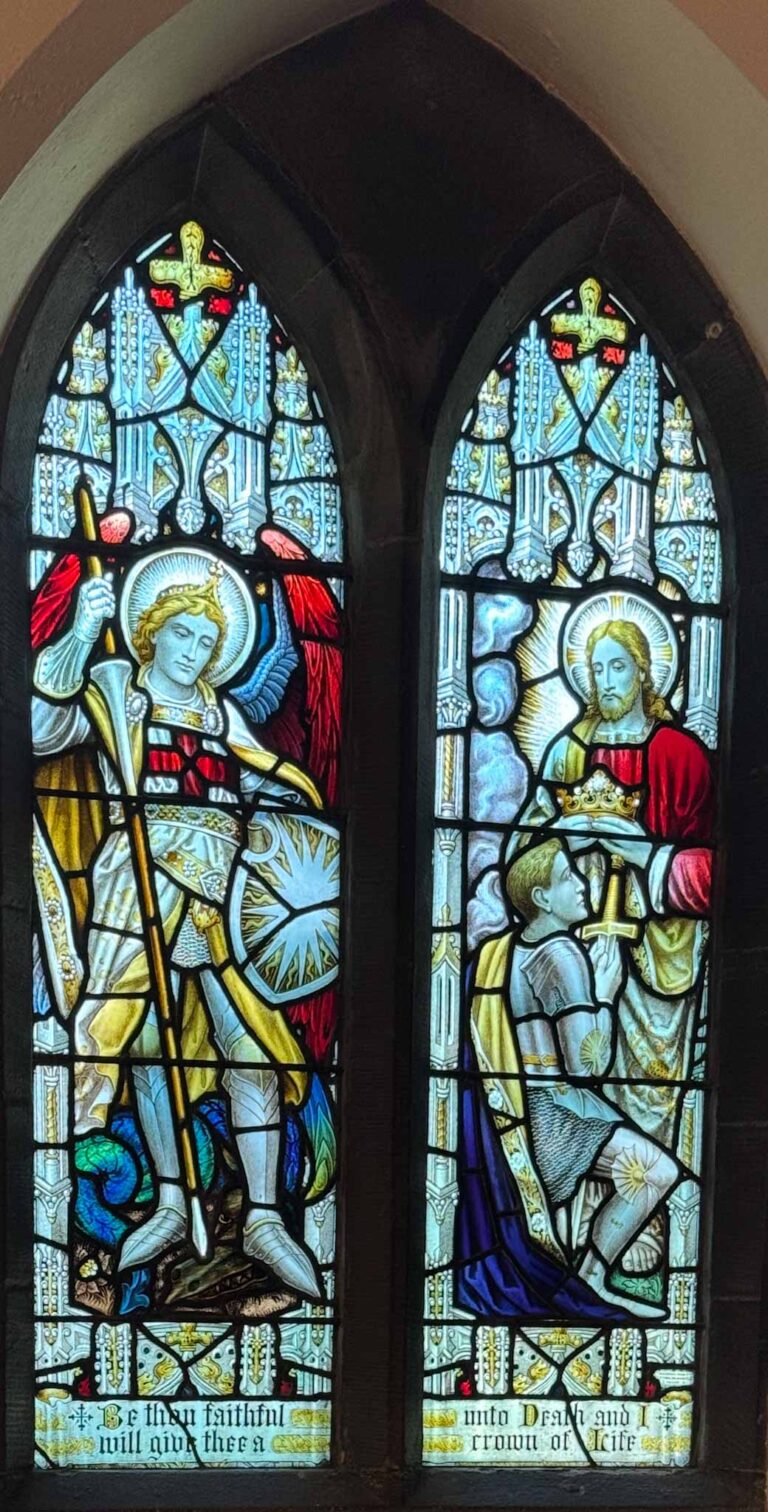
This window is known as the World War One memorial window. It was installed in 1921 to memorialize those from this parish who died in WWI. On the left, the Archangel Michael is a warrior of God in Christianity, Judaism, and Islam. He is slaying a dragon representing evil.
On the right, a young soldier receives the crown of Life (or Victory) from Christ.
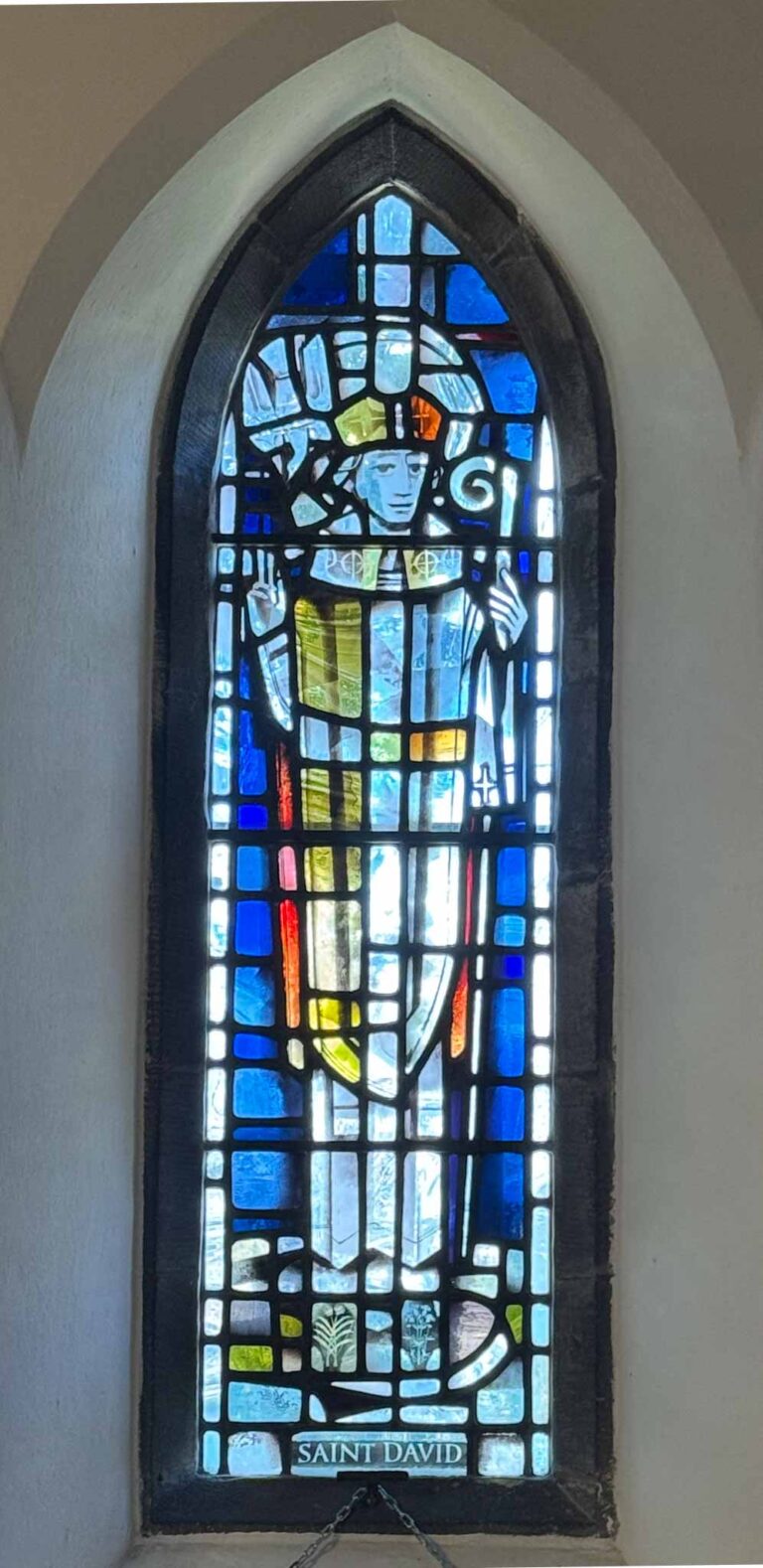
St. David (between 462 and 515-589) is the Patron Saint of Wales. He established many communities and gives his name to the smallest city in Britain.
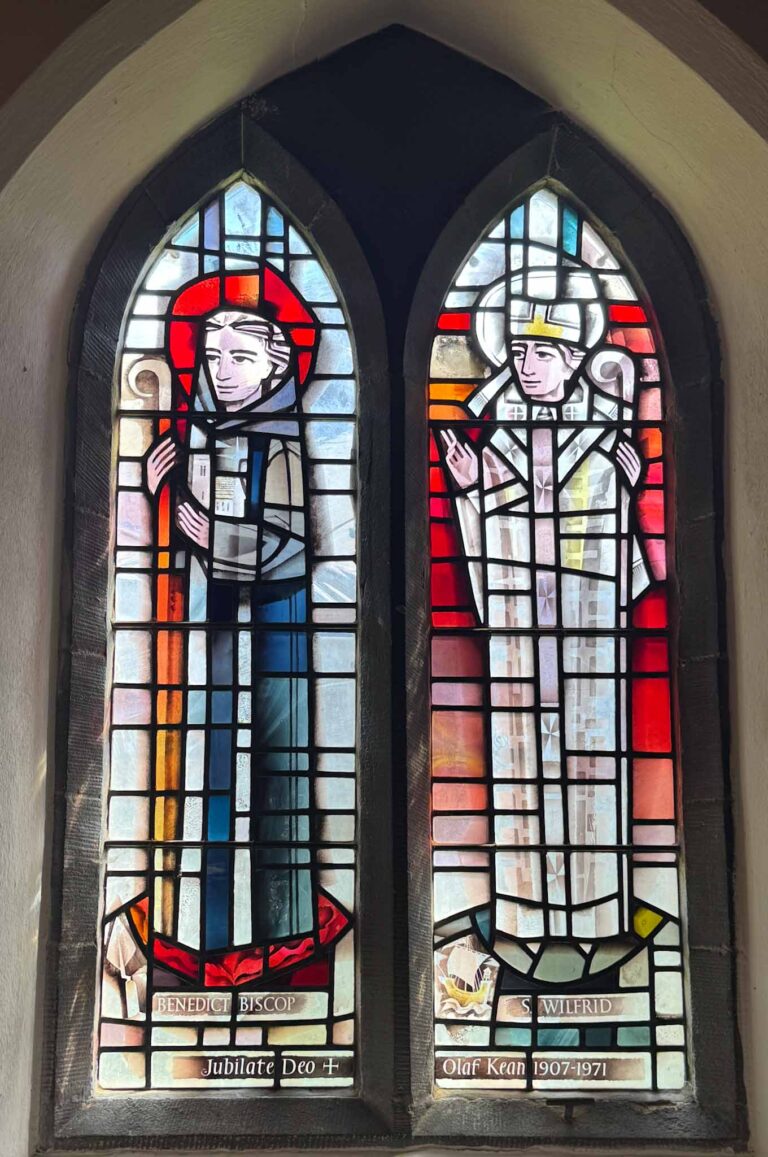
Benedict Biscop (628-690) was an Anglo Saxon abbot and founder of the Monkwearmouth-Jarrow Priory.
St. Wilfred (633-709) was an English bishop and saint who studied at Lindisfarne, Canterbury, and Rome. He returned to Northumbria and acted as spokesman for the Roman position at the Synod of Whitby.
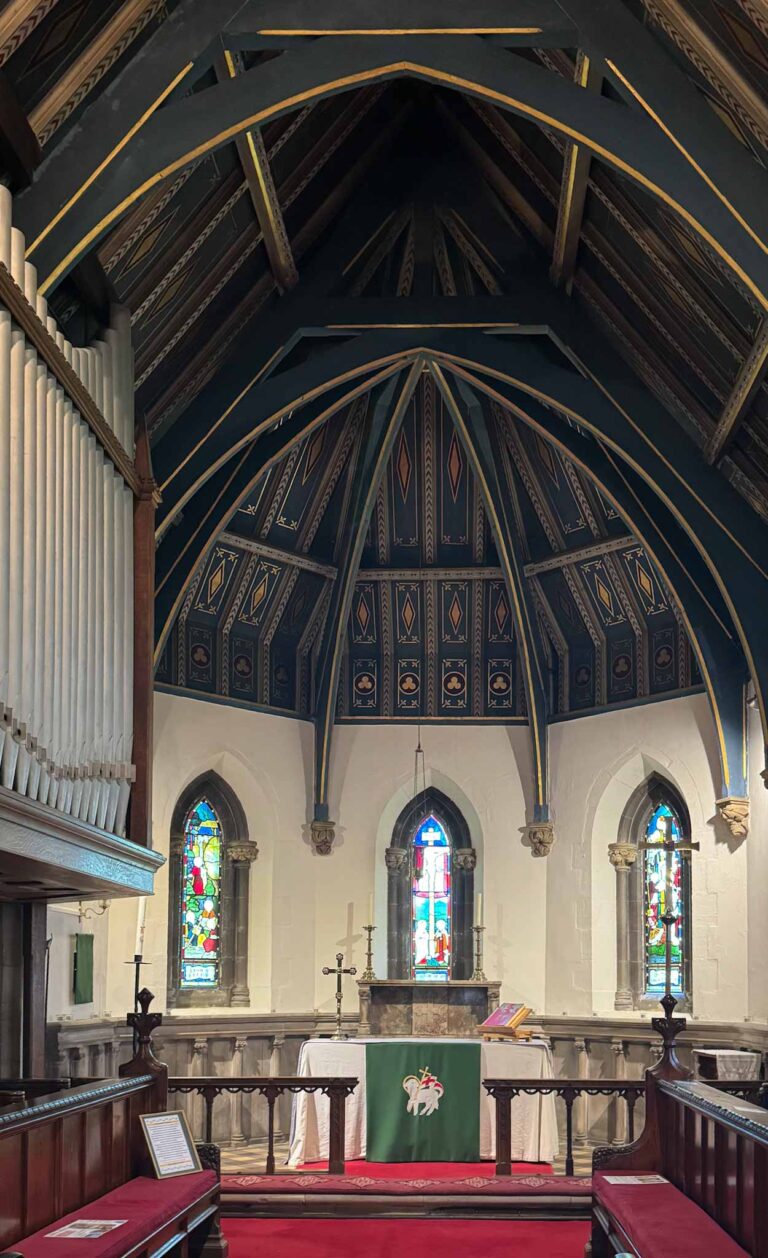
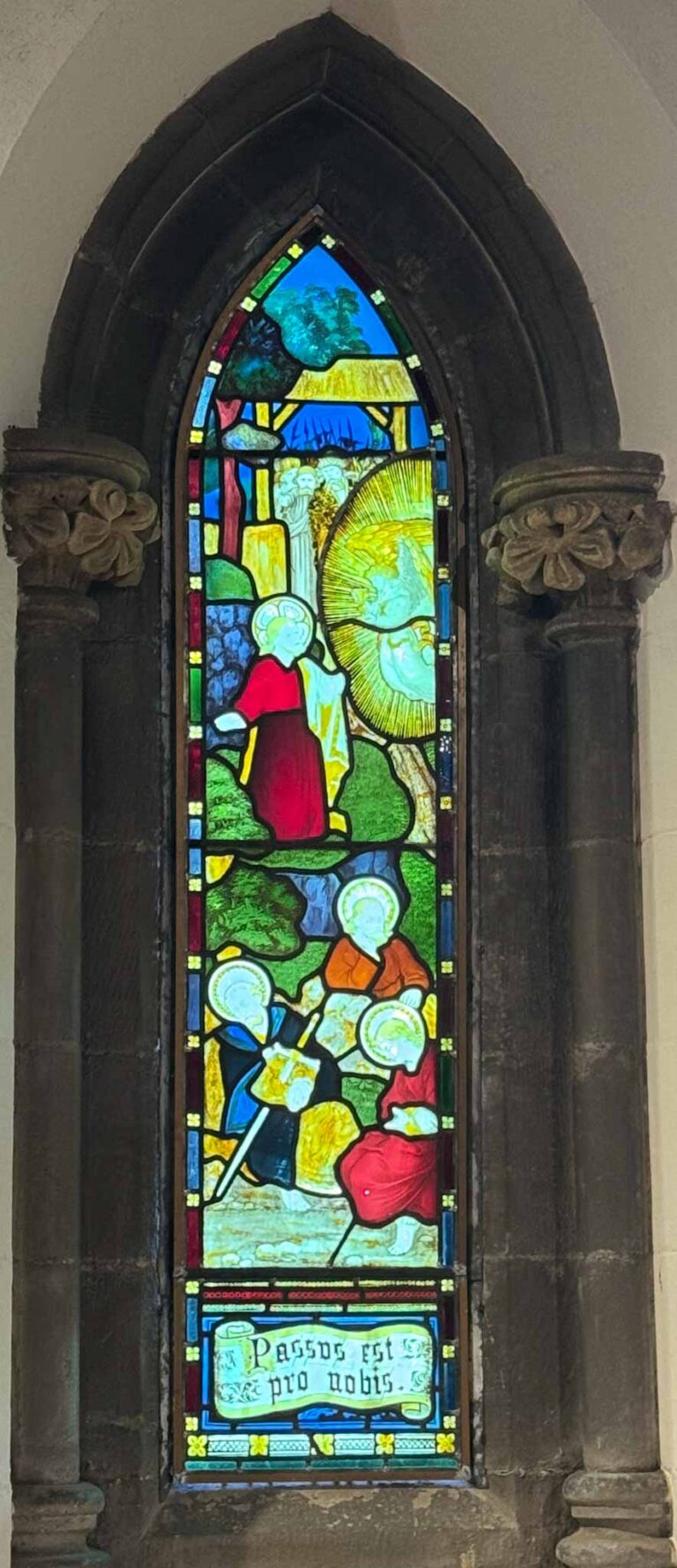
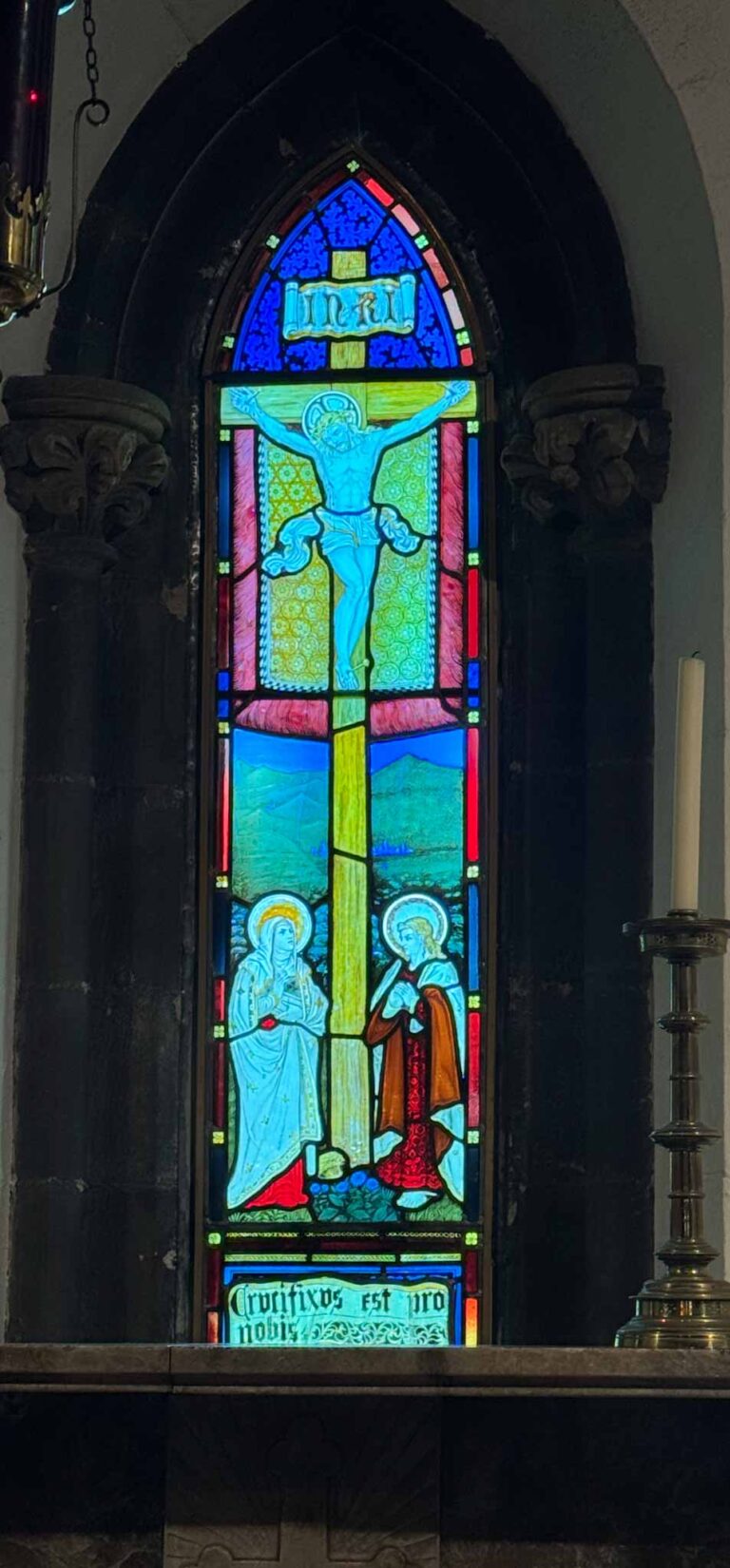
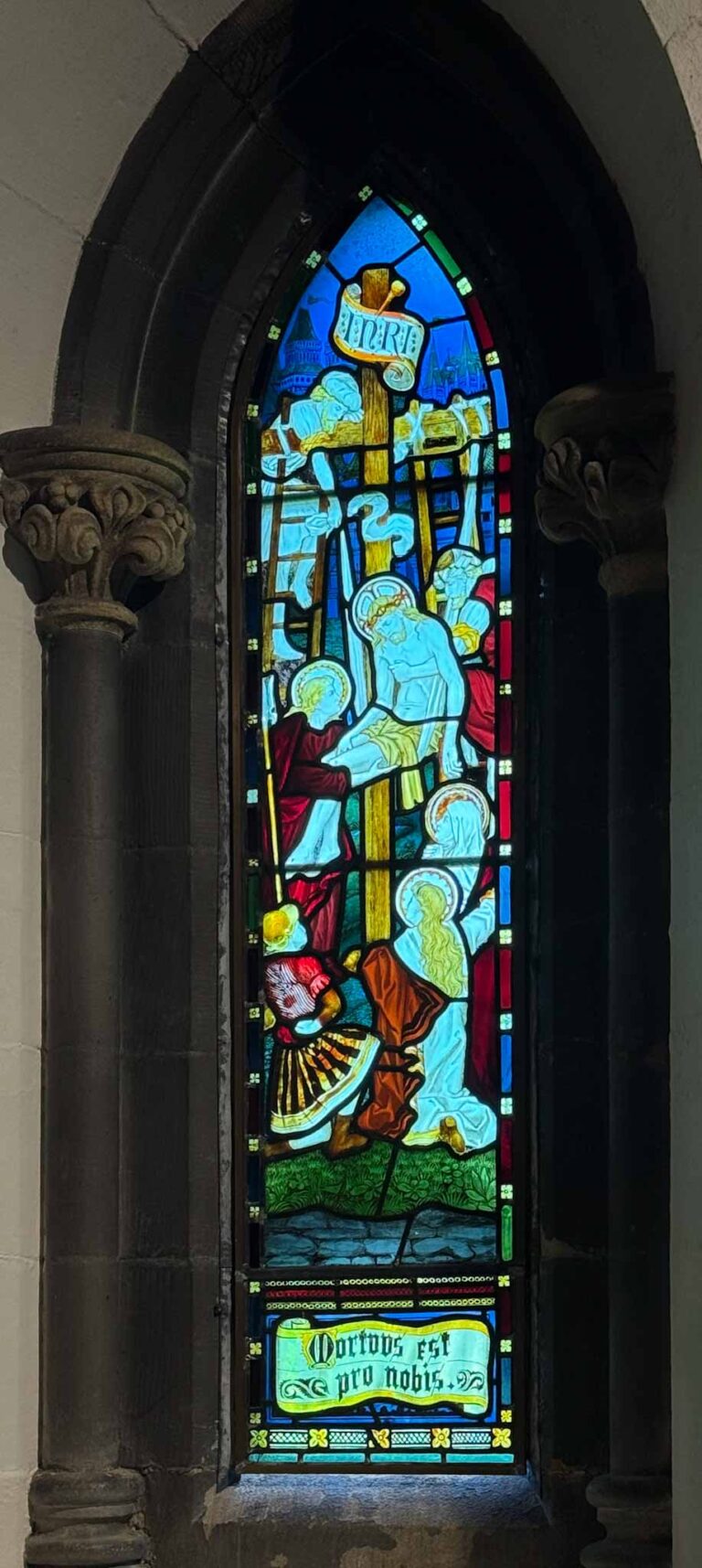
The oldest stained glass in the church is above the altar, showing the Passion of Christ. They were installed in 1878, soon after the church was opened in 1876..
Despite all the beautiful windows we had just seen in Alnmouth, our guidebook gives John Wesley’s review of the town on his visit as “a small seaport town famous for its wickedness.”
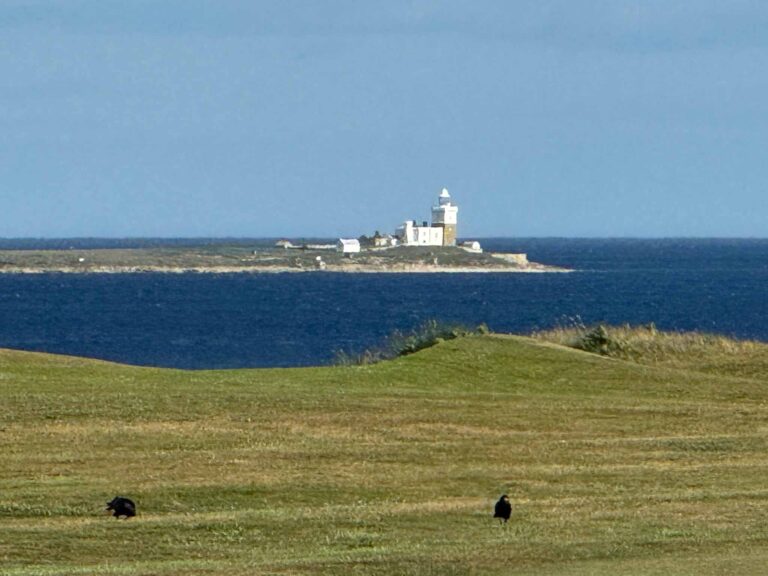
We’re nearing our final city on the Oswald Way, and can see an island and lighthouse off the coast on Coquet Island. The lighthouse was built in 1841 and its first lighthouse keeper was Grace Darling’s brother.
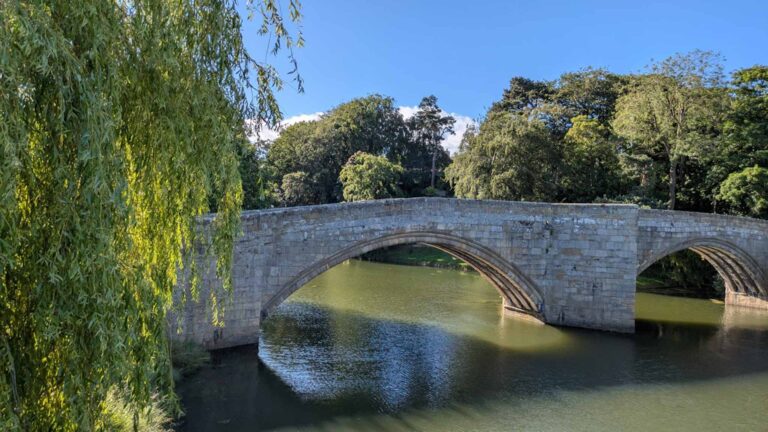
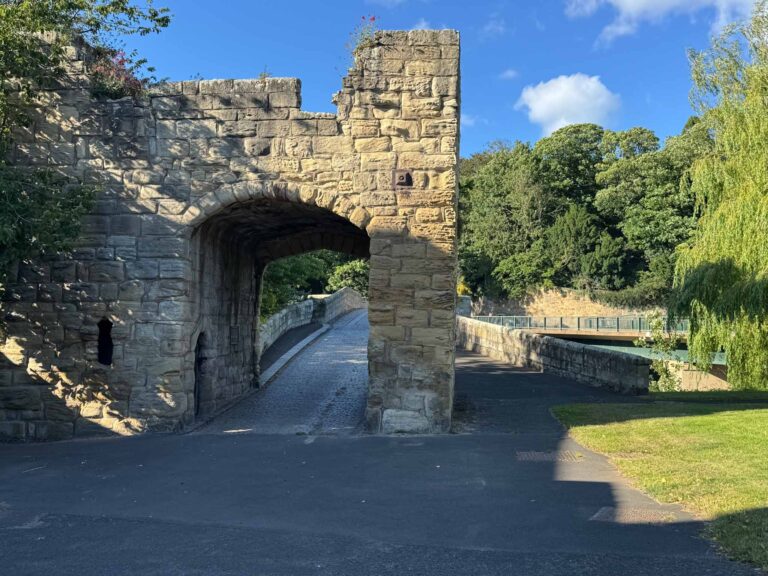
Warkworth has a medieval bridge across the Coquet River. It was a 14th century fortified bridge that carried all the traffic across the river for 600 years. A new bridge replaced it in 1965. Both the stone bridge and its tower are designated ancient monuments. Warkworth Bridge is one of only two medieval bridges in Britain.