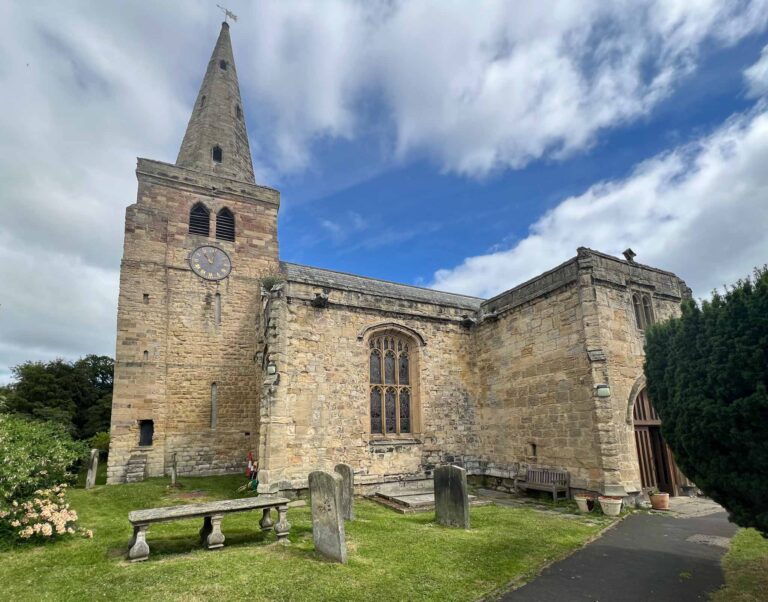
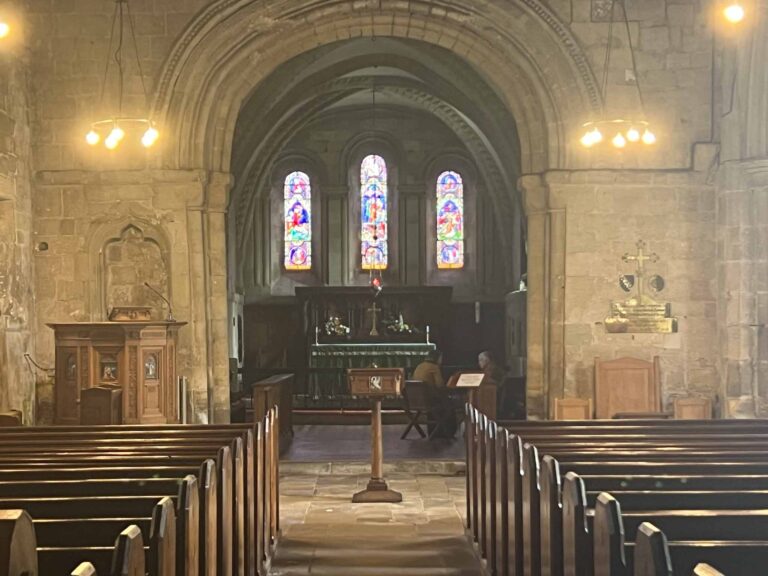
The present-day Church of St. Lawrence dates from the 12th century on the site of a wooden Saxon church founded in the 730’s by King Ceolwulf.
Norman churches were not only used for worship, but were refuges in time of danger. The chancel has a stone roof and the nave is a long narrow space enclosed by immensely thick stone walls. In a Scottish raid in 1174, Warkworth was set on fire and 300 people who had taken refuge in the church were put to death.
Warkworth was an important village in the Magna Carta of 1215. John Fitzrobert, Baron of Warkworth, was chosen as one of the 25 enforcer barons at Runnymede. If King John threatened to renege on the Magna Carta, these twenty-five barons pledged to raise an army to uphold it. The Magna Carta guaranteed liberties of the English Church and established every Englishman’s right to a fair trial and the end of imprisonment without trial. It limited Royal power and King John was forced to accept that the sovereign power of the Land was the Law, which protected the rights of citizens, and not the Royal will.
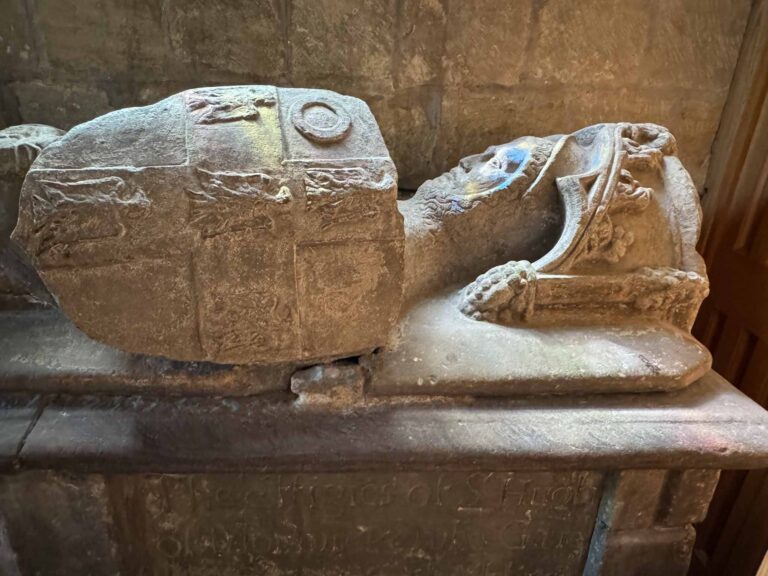
The “Knight’s Tomb” is an 17th century table tomb on which the 1330 effigy rests. The knight is in a cross-legged pose with his feet resting on a lion.
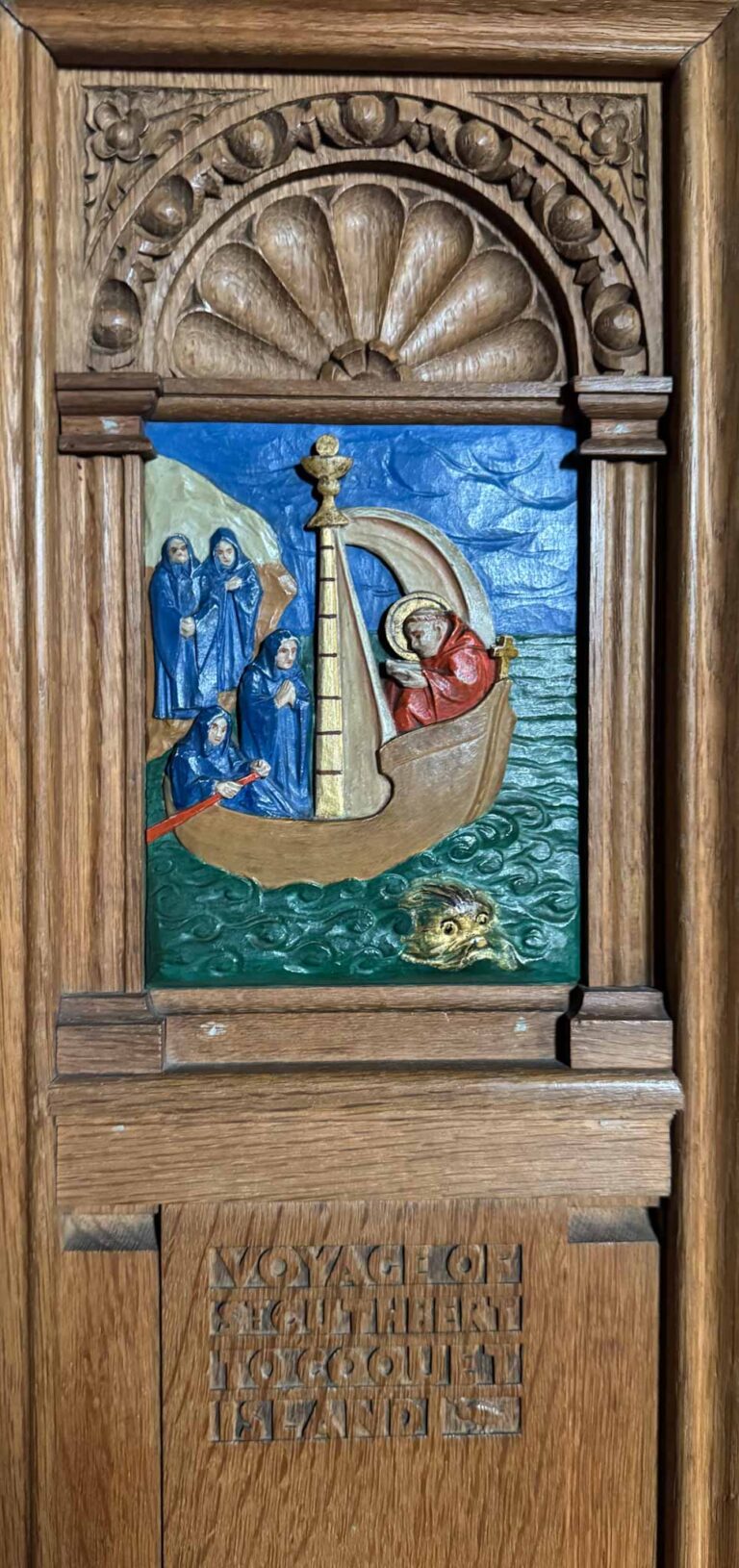
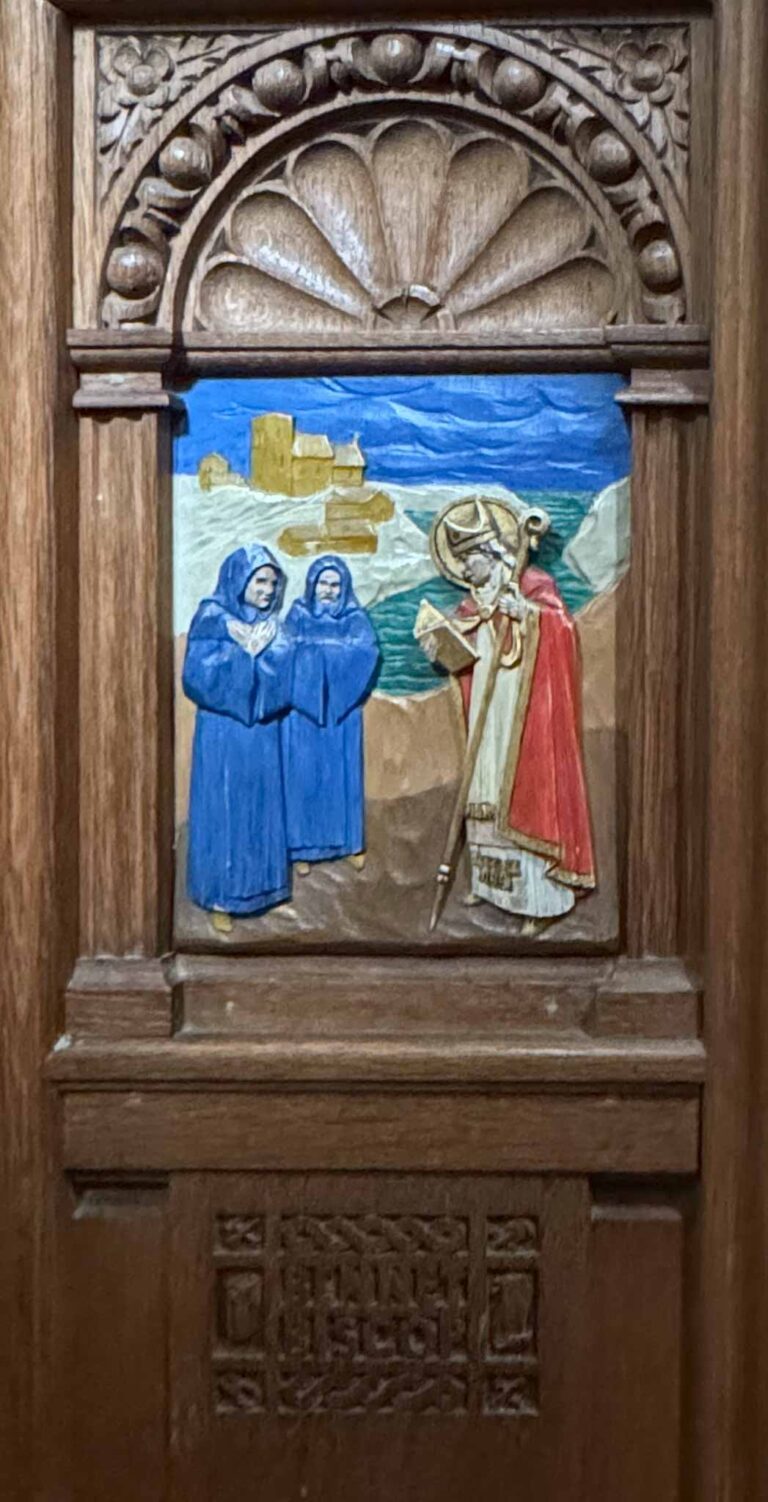
There are 20th century pulpit carvings depicting some history of the church. This picture represents St. Cuthbert visiting Coquet Island to meet the Abbess of Whitby.
This is Benedict Biscop, the first Abbot of Wearmouth..
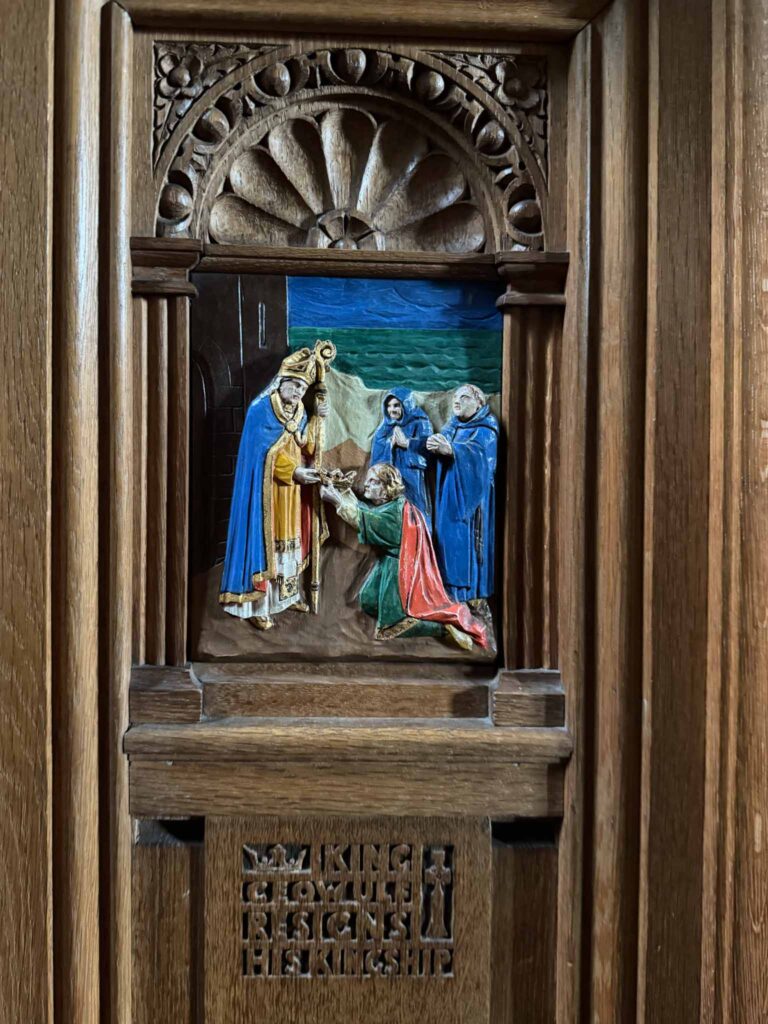
King Ceolwulf of Northumbria gave the original church to the Abbot and monks of Holy Island. St. Bede dedicated his history to King Ceolwulf. Two years after Bede’s death, Ceolwulf gave up his crown and entered Lindisfarne as a monk, as is shown here.
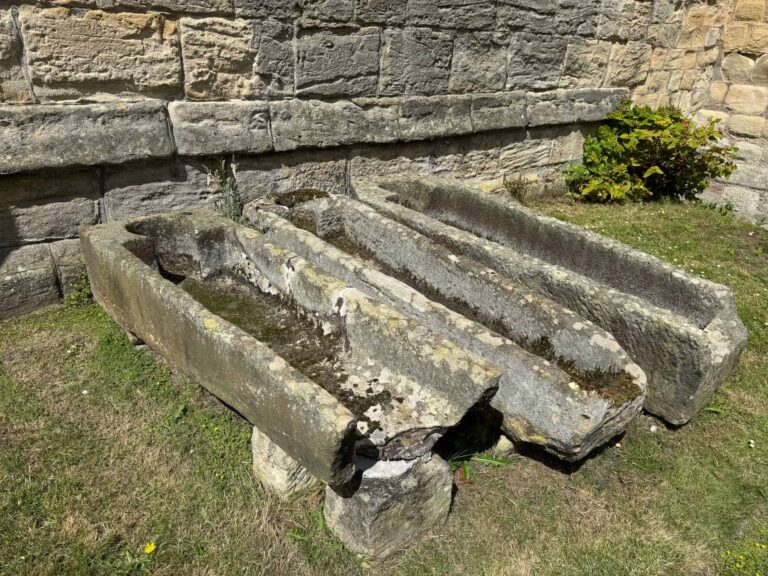
These three medieval coffins were found under the church floor.
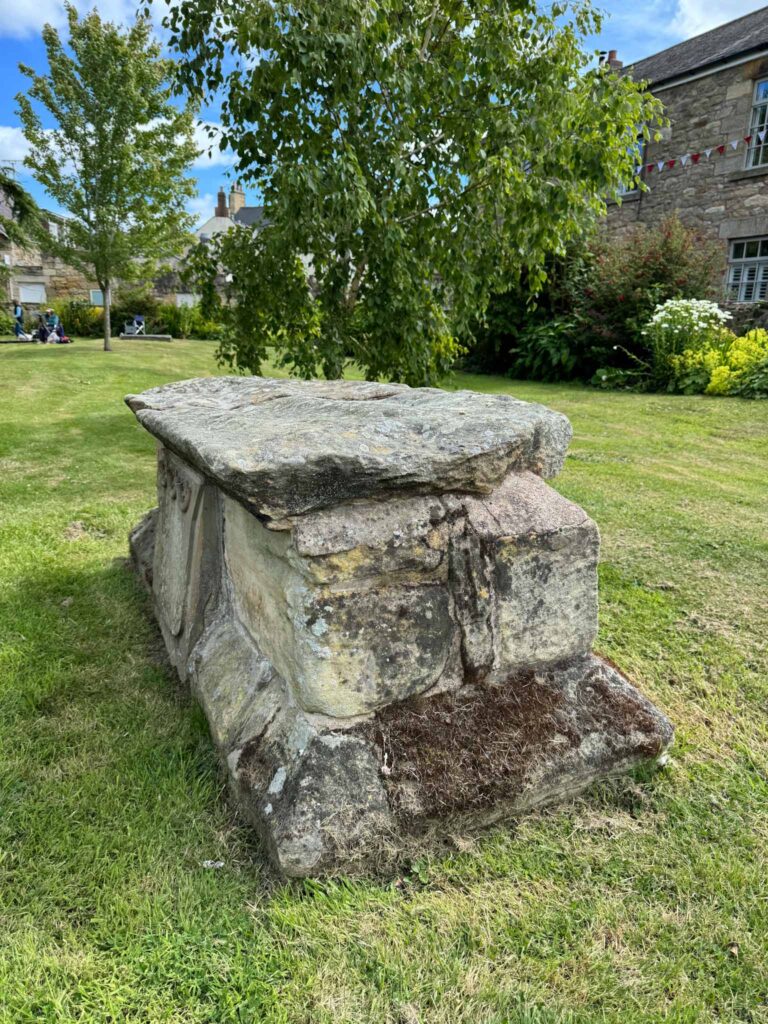
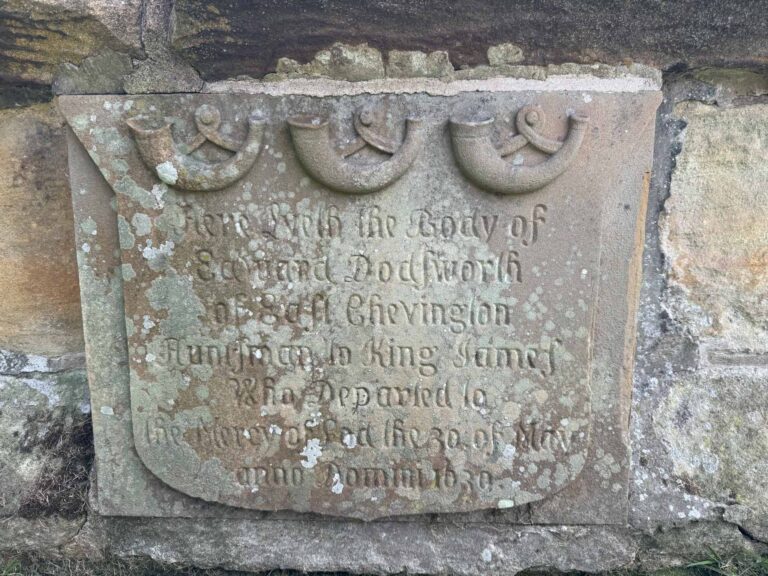
This is the tomb of the huntsman to King James. “Here lyeth the body of Edward Dodsworth, East Chevington, huntsman to King James, who departed to the mercy of God the 30th May Anno Domini 1630.”
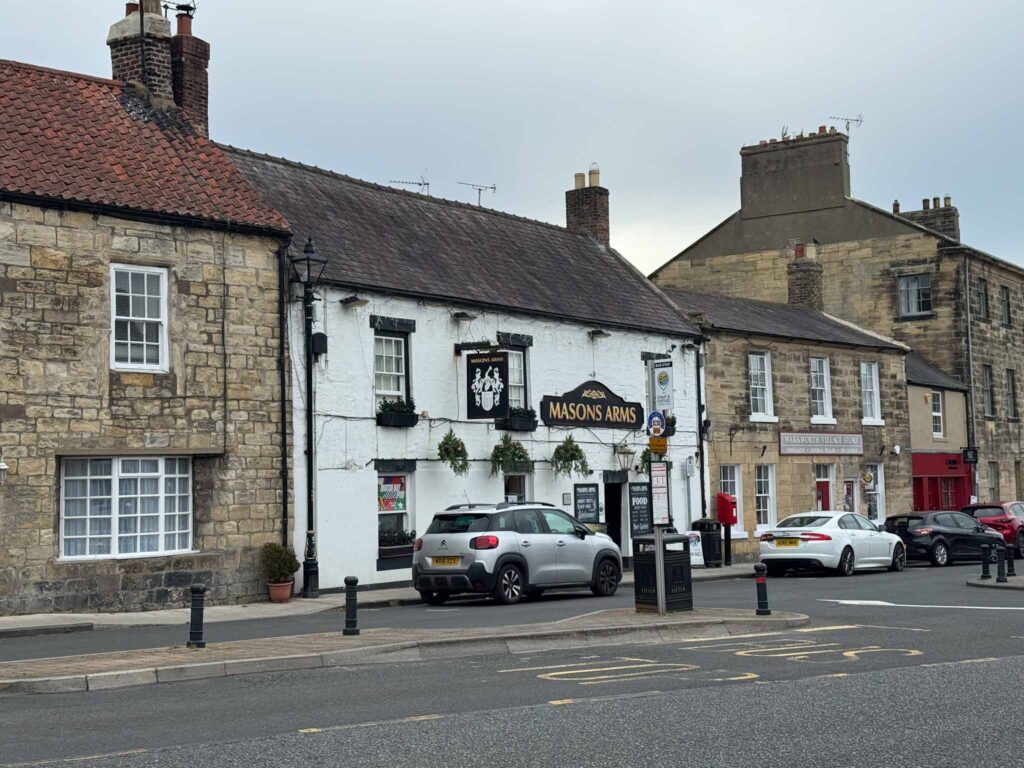
We had lunch at Mason Arms and discovered it had history in the 1715 Jacobite rising. Warkworth was the first town to declare James Stuart as King James III of Great Britain, France, and Ireland.
A few days later, about 300 men set out which ended when an estimated 1500 Jacobites surrendered to the Hanoverians after the Battle of Preston. Many Northumbrians died in prison, were executed, or were transported to the colonies into slavery.
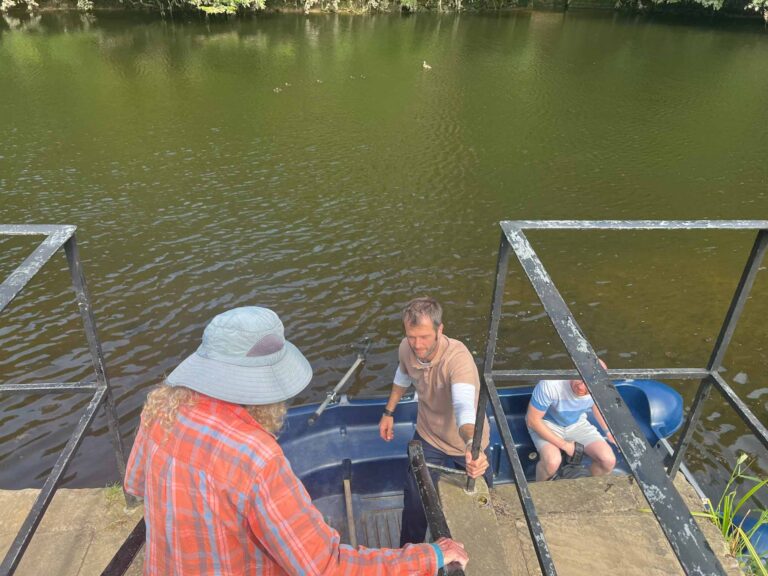
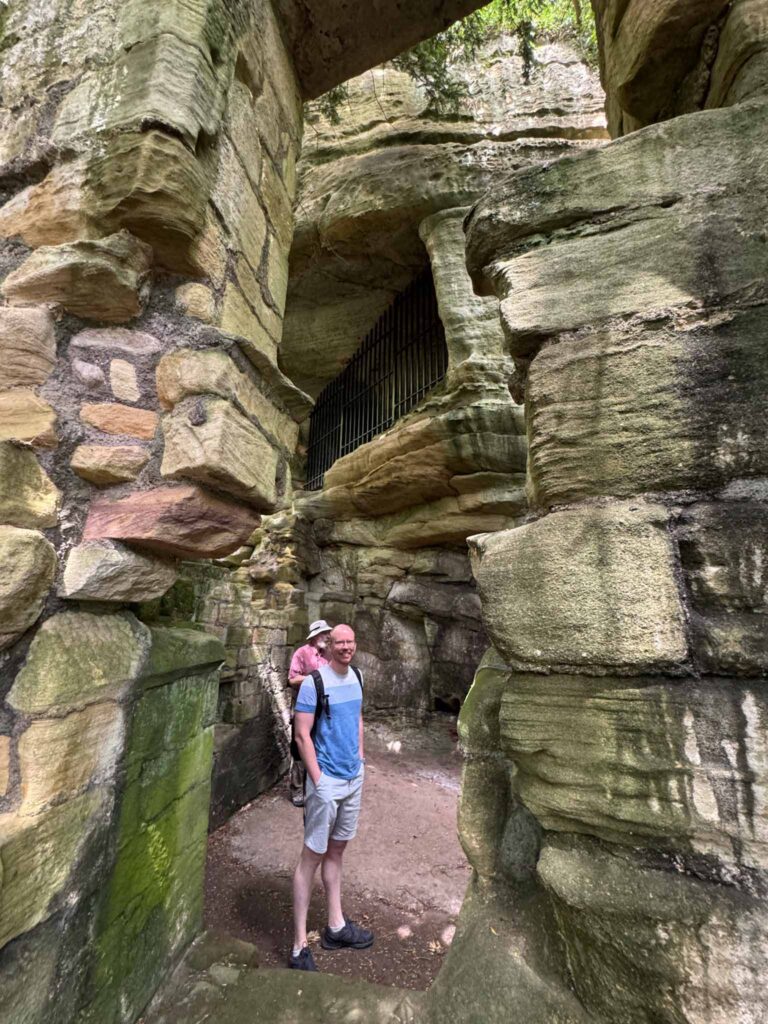
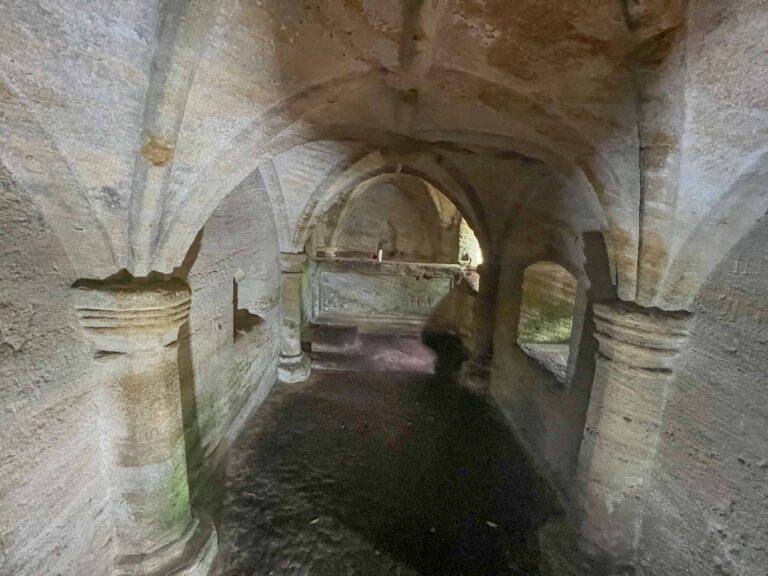
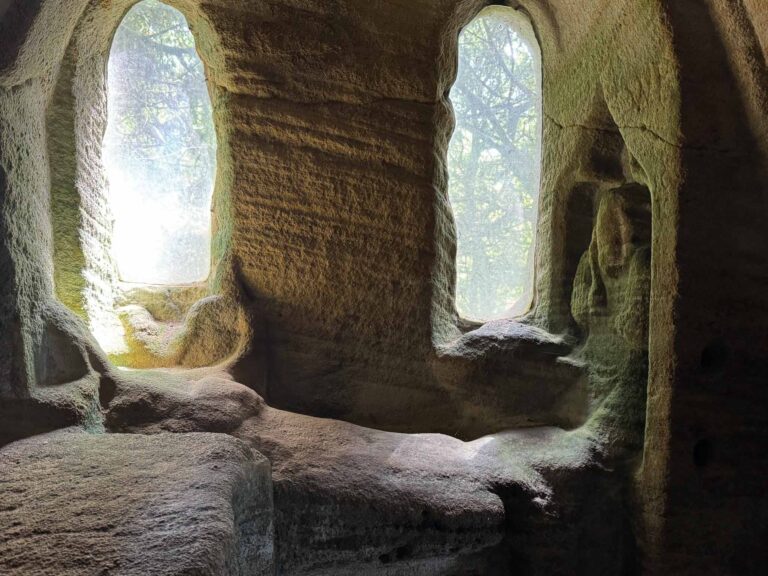
Warkworth Hermitage is only reached by being rowed across the Coquet River. The chapel and sanctuary were carved out of sandstone about 1330-40. In the 15th century, some small domestic buildings were added to this small hermitage.
According to tradition, the first hermit and Hermitage builder was Sir Bertram, a knight who mistakenly killed his lover and his brother as he tried to rescue them from the Scots. Hermits generally rejected the world and lived simply.
John Wesley reports that he was invited to preach at Warkworth May 16, 1761. Although many churches refused Wesley permission to preach, here the congregation was quiet and attentive according to Wesley. Later in the day Wesley crossed over the river and visited the Hermitage.
The Hermitage chapel (6 meters by 2 meters).
On the right side of the chapel is a simple nativity scene. You must look closely to see the reclining Mary (left) with the baby on her chest, and Joseph standing by her feet.
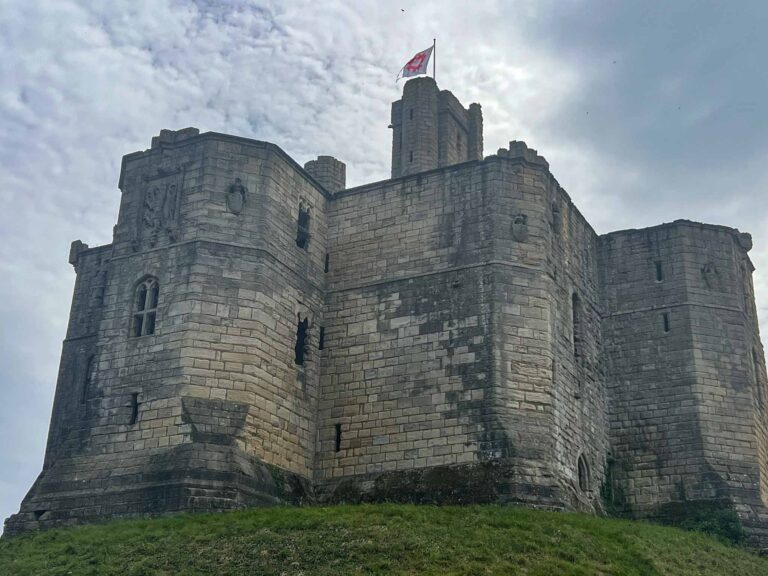
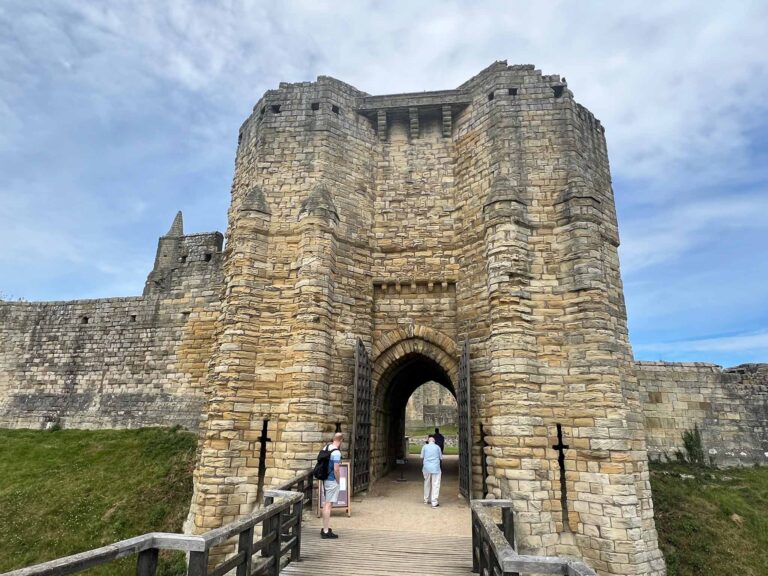
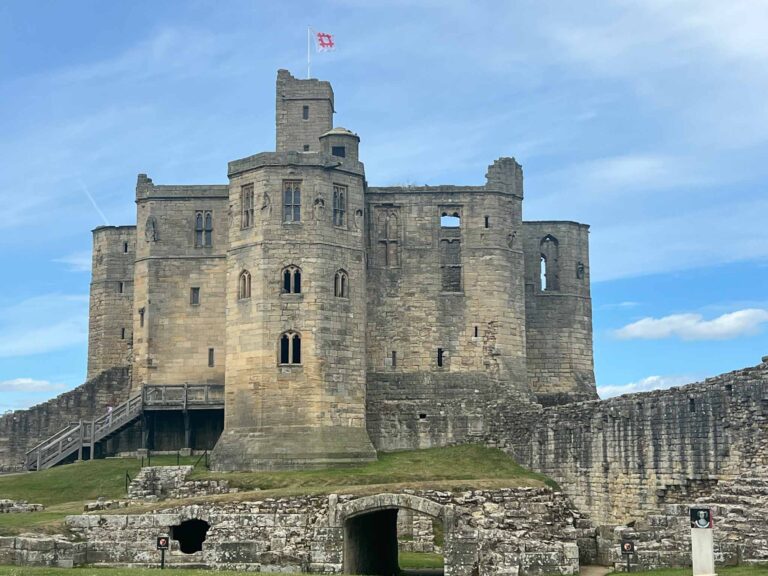
The Warkworth Castle dominates the village.
In 1158, Henry II gave Warkworth to Roger FitzRichard who began building the first stone castle. Ownership eventually passed to Henry de Percy IV, who became the first Earl of Northumberland who had the keep built in the 1380s and 1390s.
Ownership passed between the Percy family and royal family for centuries, but it was given to the nation in 1922.
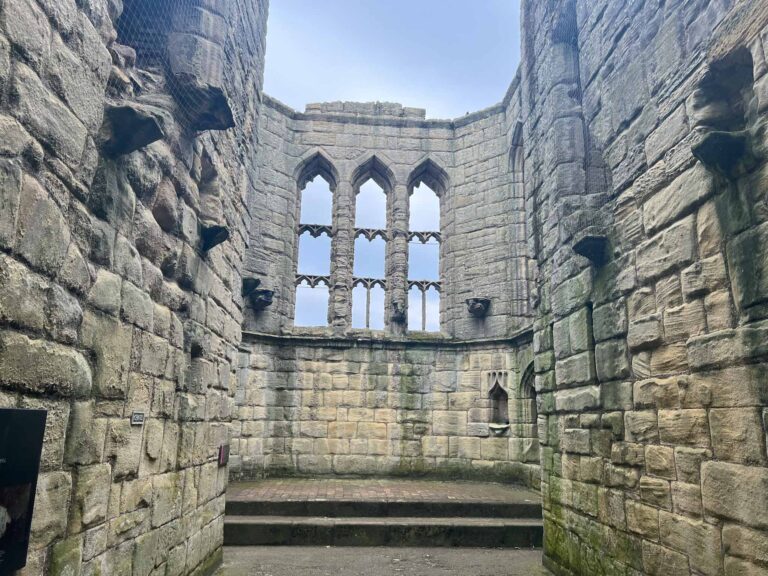
This is the Great Tower, directly opposite the gate house entry. This structure dates from the early 1400s, commissioned by Henry Percy, the first Earl of Northumberland (1341-1408). Through its innovative, cutting-edge design, Percy intended to broadcast a clear message: the North had its first resident Earl in over 150 years.
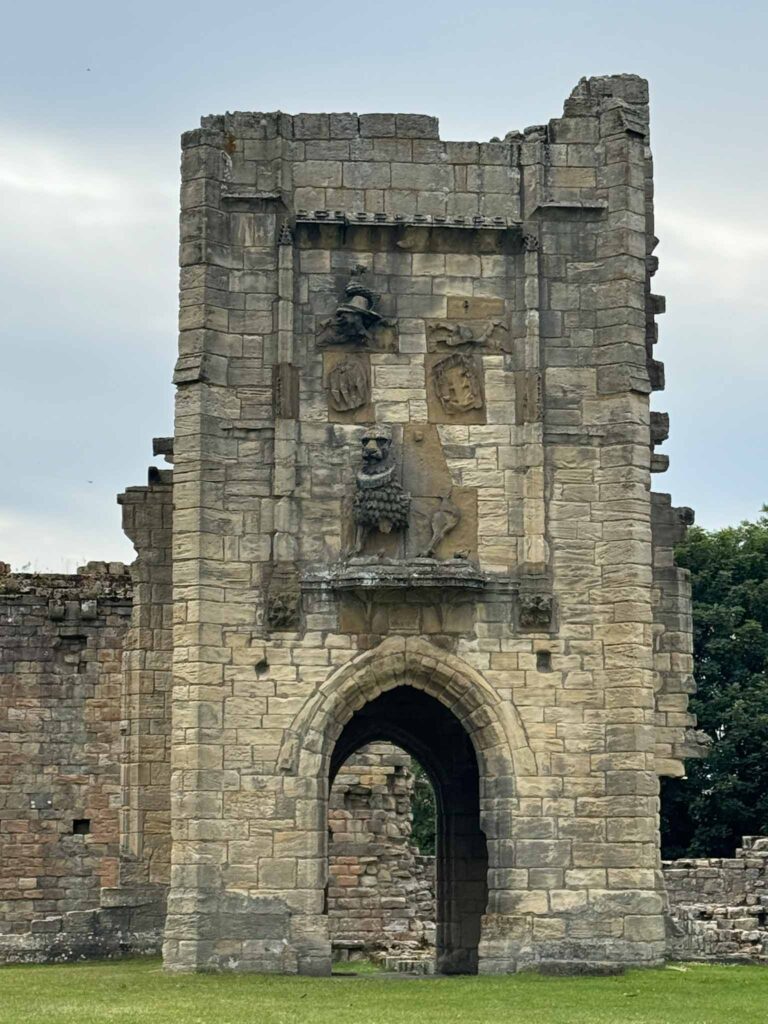
The Lion’s Tower, from the 1480s, was a porch for the Great Hall with a staircase and rooms above. It features a lion rampant (on its hind legs), the Percy heraldic device. The lion is surrounded by emblems of other families close to the Percy’s.
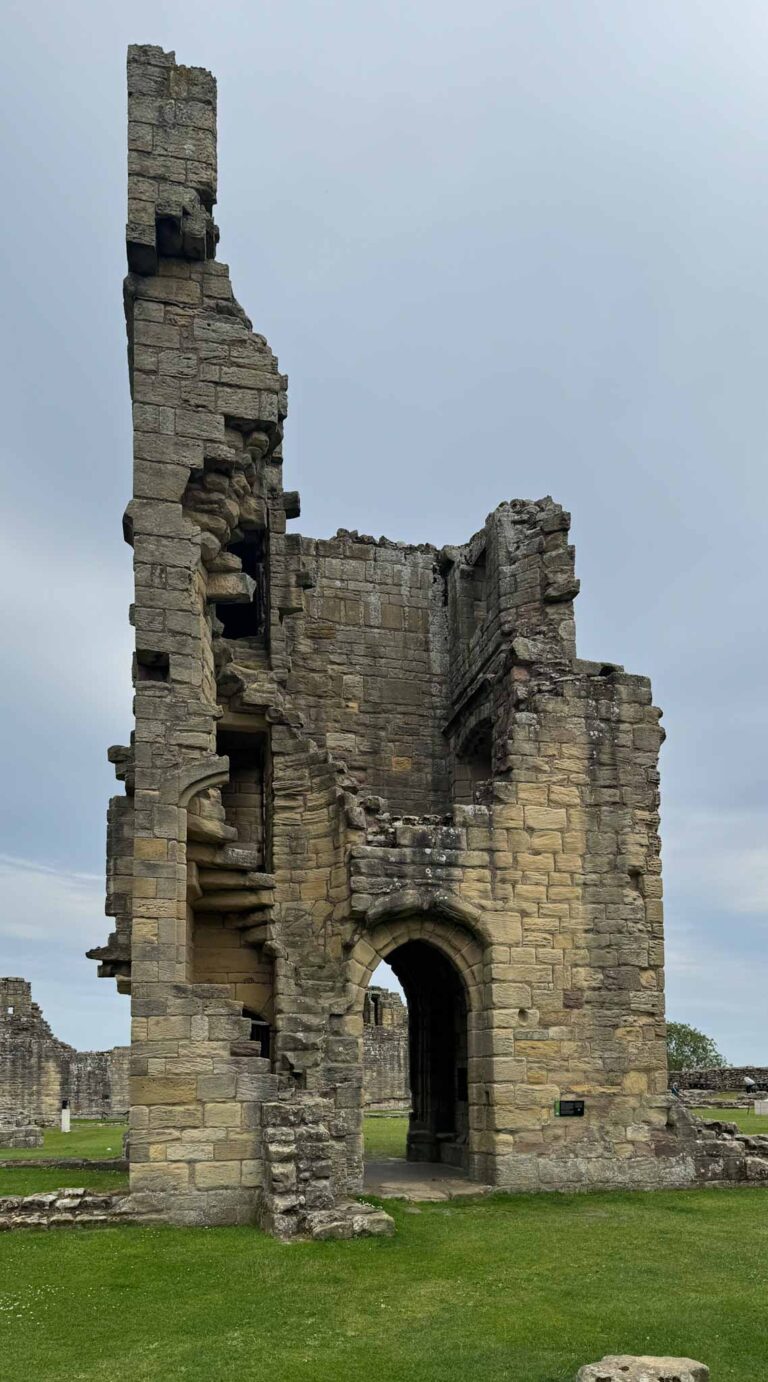
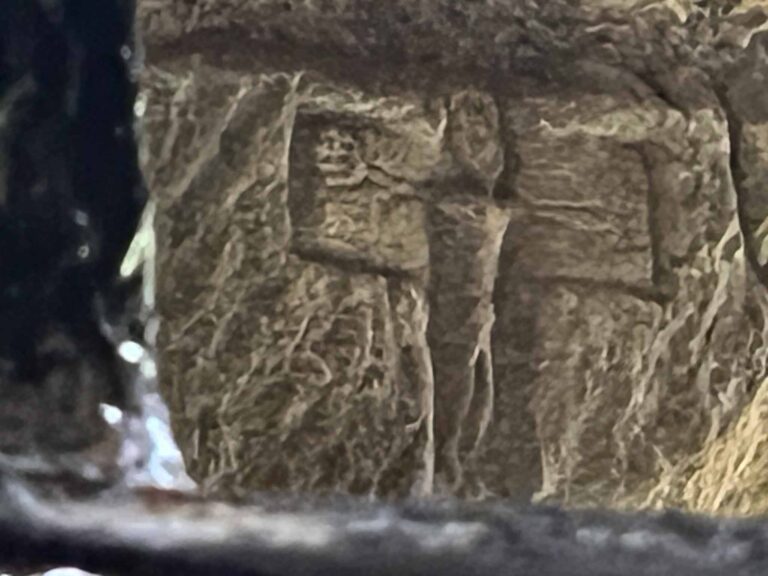
Grey Mare’s Tail Tower overlooks the south but was not suitable for fighting. It is not exactly known how it was used, but there is graffiti, showing the crucifixion, in an arrow shaft.
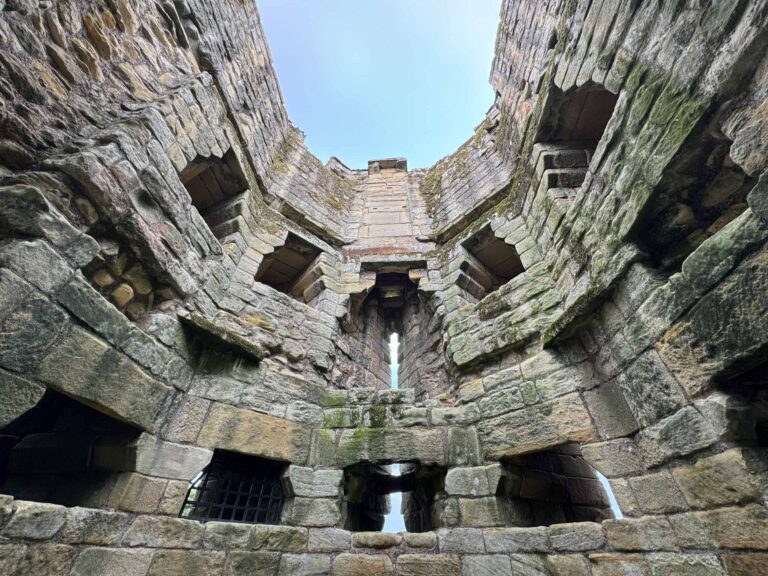
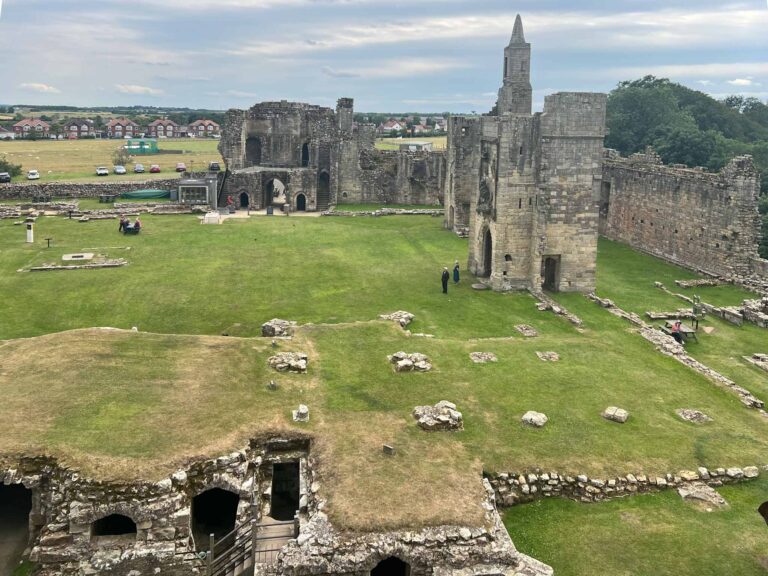
Views from the Great Tower.
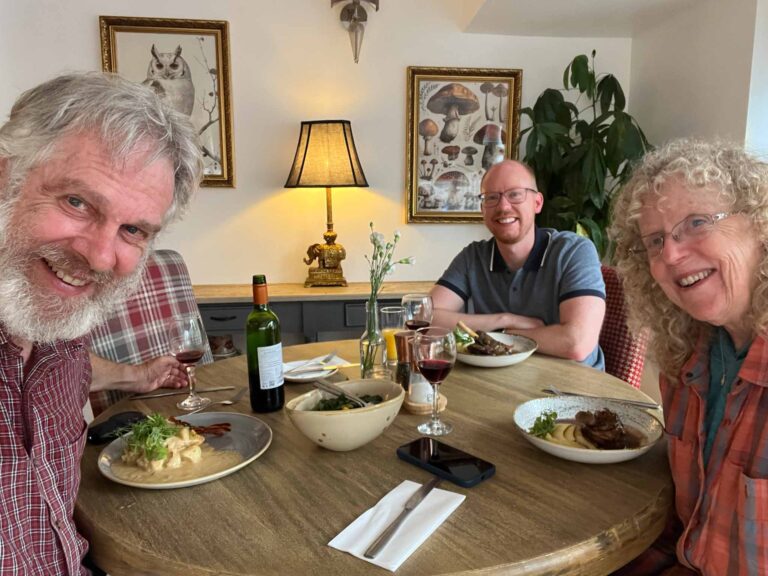
We celebrate the completion of St. Oswald’s Way with dinner at the Warkworth Hotel.